

Community-Focused Residential Architecture: A Deep Dive into the "Rise & Connect" Project
This article delves into "Rise & Connect," highlighting its role in transforming Ranwar Village through community-focused architecture.


In the bustling suburban neighborhood of Ranwar Village, Mumbai, the "Rise & Connect" project stands out as a testament to innovative urban redevelopment. Spearheaded by designers Gauri Pattiwar, Ayush Pallathery, Gautami Rajendra Pathrikar, and Aarya Desale, this runner-up entry for the Nano Nest competition epitomizes the evolution of community-focused residential architecture.

The Heart of Ranwar Village
Background and Inspiration
Ranwar Village, with its colonial charm and dense urban environment, presents unique challenges and opportunities for architects. The "Rise & Connect" initiative addresses these by transforming the area into a growth hub while preserving its quaint, narrow lanes and promoting high employment opportunities.
The Evolution of Architecture in Ranwar
Tracing the historical growth from 1710 to 2010, the project showcases a commitment to retaining cultural identity while adapting to the needs of modern residents. This balance between old and new is a hallmark of thoughtful community-focused residential architecture.

Design Philosophy
User-Centric Approach
The project targets a diverse demographic, including a botanist, a designer, and a lawyer, each with unique lifestyles and needs. This user-centric approach ensures the space is not just a residence but a place where individuals can thrive and interact.
Morphing Diagram and Design Evolution
The innovative morphing diagram represents the physical embodiment of the project's philosophy. It emphasizes the transition from individual to shared spaces, fostering a sense of community among residents.

Architectural Features
Optimizing Social Interaction
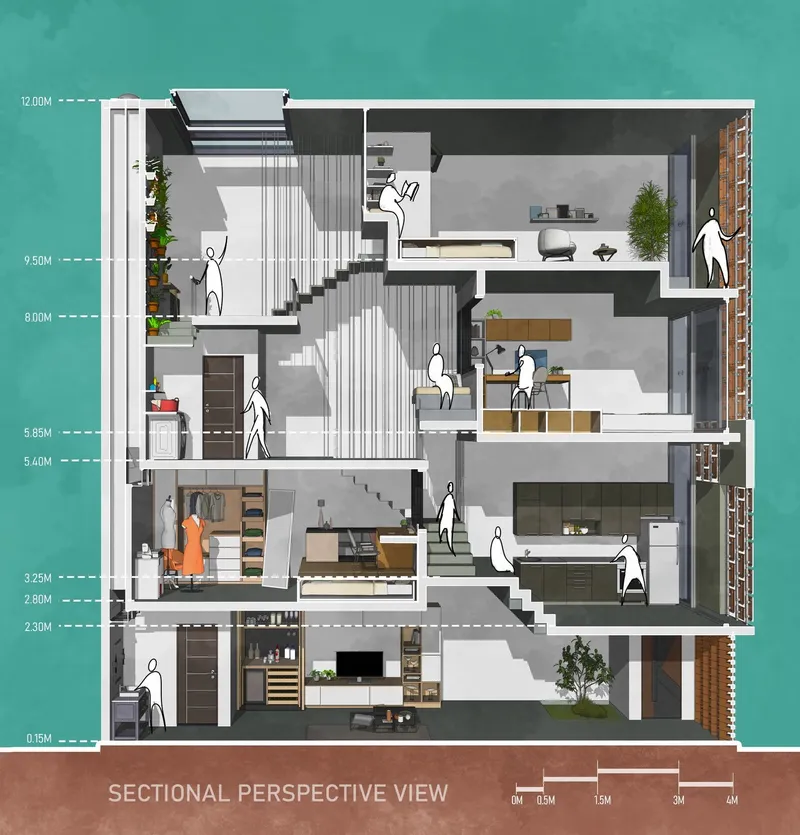
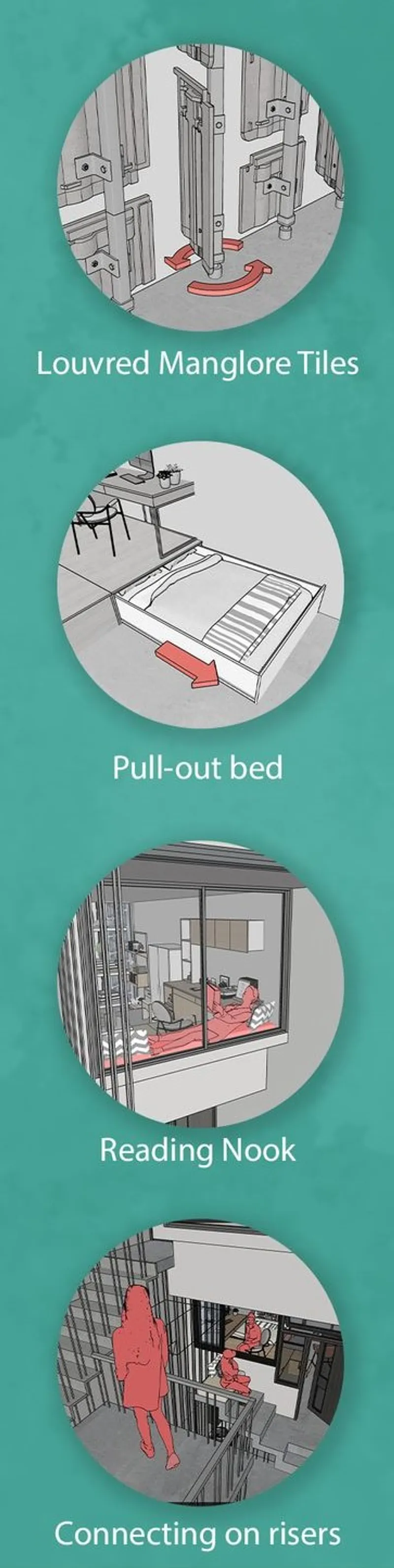
The design strategically integrates shared spaces to promote interactions among residents, thereby nurturing a vibrant community. The inclusion of communal balconies, shared living areas, and interactive zones like the reading nook and internal balcony enhances social engagement.
Sustainable and Natural Elements
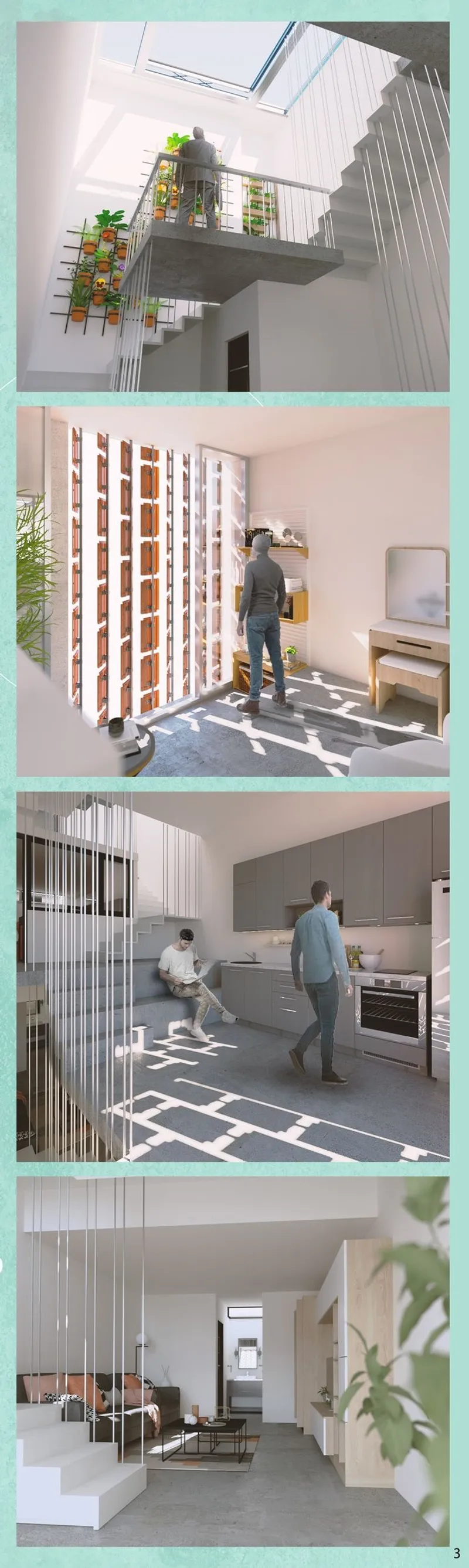
Incorporating natural lighting, ventilation, and materials like Mangalore tiles, the project also emphasizes environmental sustainability. These elements are not only cost-effective but also contribute to the overall well-being of the residents.
The "Rise & Connect" project is a pioneering example of community-focused residential architecture. It addresses the pressing needs of urban development while fostering a sense of community and belonging. As cities continue to evolve, projects like these are crucial in shaping livable, sustainable, and engaging urban environments.


Popular Articles
Popular articles from the community


Juan García Correa, John González and Claudia Rueda Sink a Circular Amphitheater into a Manizales Engineering Building
On the La Nubia campus in Manizales, Colombia, the S1 Building folds labs and offices into a hillside of ramped lawns that double as a campus route.

David Ortega Stacks a Two-Story Mexico City Penthouse Around a Steel Stair and a Pergola-Shaded Roof Terrace
In Colonia Roma, a 300 m² penthouse uses oak joinery, a planted steel stair and a slatted roof pergola to make a new-build apartment feel like a house.

David Macias Steps a Doorless Stone and Plaster House Down a Tropical Colombian Hillside
In the humid hills of Colombia, Threshold House replaces the front door with an open void and terraces its 850 m² down the slope instead of fighting it.

Cube Design Draws an Ecological Corridor Between Two Shenzhen Hills with the Nankai Building
Beside Shenzhen's container docks, the Nankai Building pairs stacked balconies with a climbing green screen to connect two hillsides across its height.

Similar Reads
You might also enjoy these articles


Vereda Arquitetos Renovates a 40-Square-Meter Apartment Inside Niemeyer's Copan Building
A compact unit in São Paulo's most iconic residential tower gets a material overhaul that pairs exposed concrete with bold blue Formica.

Shakur's House: Exposed Brick as an Interior Organiser in a 168 m² Mashhad Residence
Brick moves indoors in this Mashhad residence, where masonry walls, glass partitions and teal planes sequence a compact home without closing it off.

Day and Night Park: A Time-Based Urban Newsstand in Beijing
A temporary urban newsstand in Beijing blending travel, light, and reading through poetic colors, compact form, and community-focused design.

Modernist Patio Renovation in El Masnou, Barcelona by Oliver Segura Arquitectura + Cebrià Arquitectura
Modernist patio renovation blending tradition and innovation with a movable pool, leveled floors, and Catalan materials in El Masnou.

Explore Community Architecture Competitions
Discover active competitions in this discipline

Challenge to reimagine the Iron Throne

Photograph architecture without architects

Illustrate the lost glory of Angkor Wat - Render Challenge

Design challenge to reuse E-waste
Comments (0)
Please login or sign up to add comments
No comments yet. Be the first to comment!