

Contemporary Coastal Architecture in Ireland: Four Winds House by Brennan Furlong
Discover Four Winds House, a masterpiece of contemporary coastal architecture in Ireland, blending history, resilience, and environmental harmony.


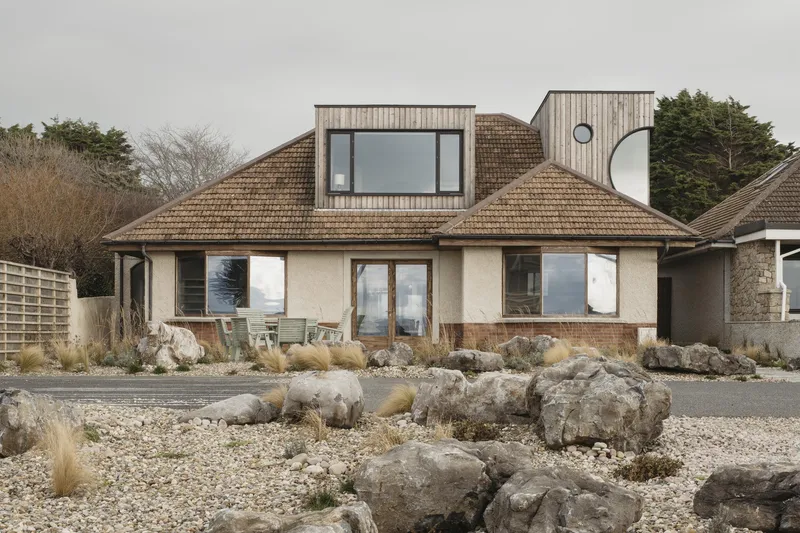
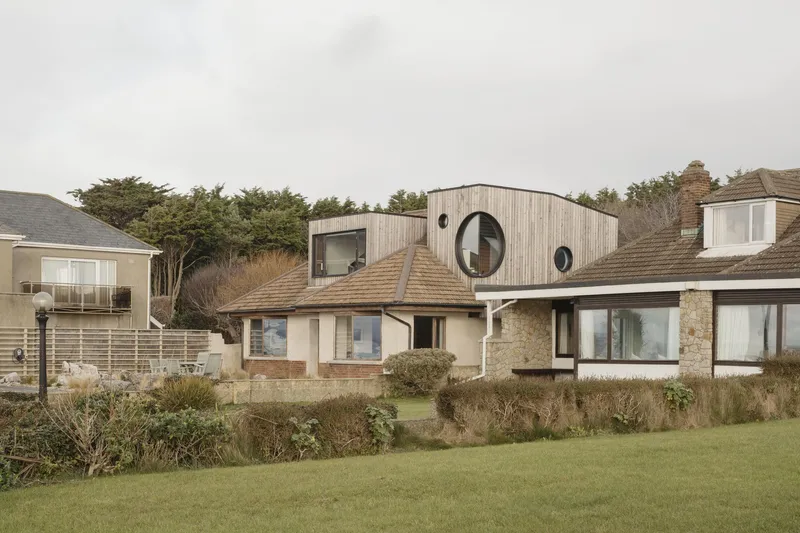
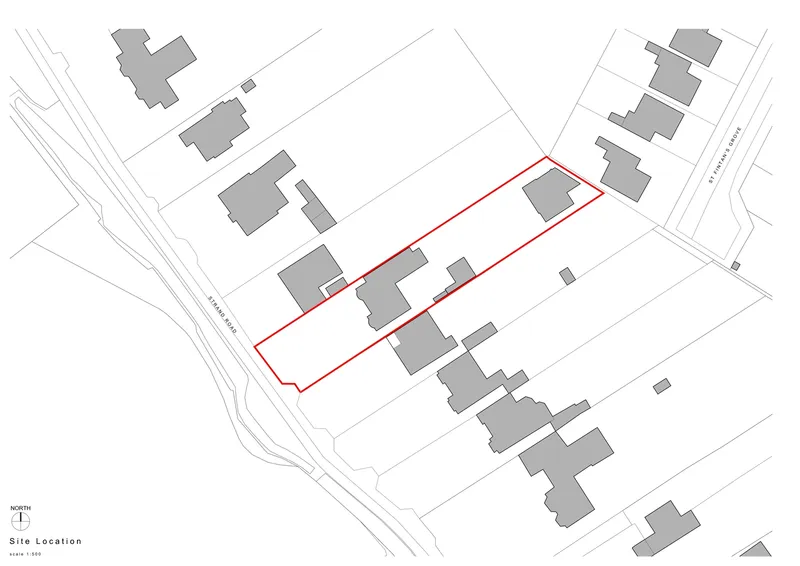
Nestled on the dramatic northern shoreline of Dublin Bay, Four Winds House is a remarkable manifestation of contemporary coastal architecture in Ireland. Designed by the esteemed Brennan Furlong Architects, this residence reflects the intersection of heritage, human connection, and resilience. The house stands as a testament to enduring design principles while embracing the challenges of its unique environmental context.
A Historical Perspective
For over six millennia, humans have inhabited the coastal region surrounding Dublin Bay, leaving behind layers of history that shape the area. Nearby, remnants of a promontory fort from 500 AD whisper tales of an ancient world, while the 18th and 19th-century seawalls safeguard what was once a perilous bay for seafarers. The shoreline also bears memories of tragedy: over 1,500 shipwrecks occurred before the construction of navigable channels, and many unidentified sailors found their final resting place in the Mariners Church graveyard, which still overlooks the bay.
As the centuries progressed, the coastline became fortified with Martello Towers, structures built in 1804 as a defense against potential Napoleonic invasions. One such tower, with its imposing 2.4-meter-thick walls, remains less than a kilometer from Four Winds House. Inspired by this history, the house was conceived as both a sanctuary and a vantage point—a place to shelter from storms while offering panoramic views of the surrounding seascape.
The Design Vision
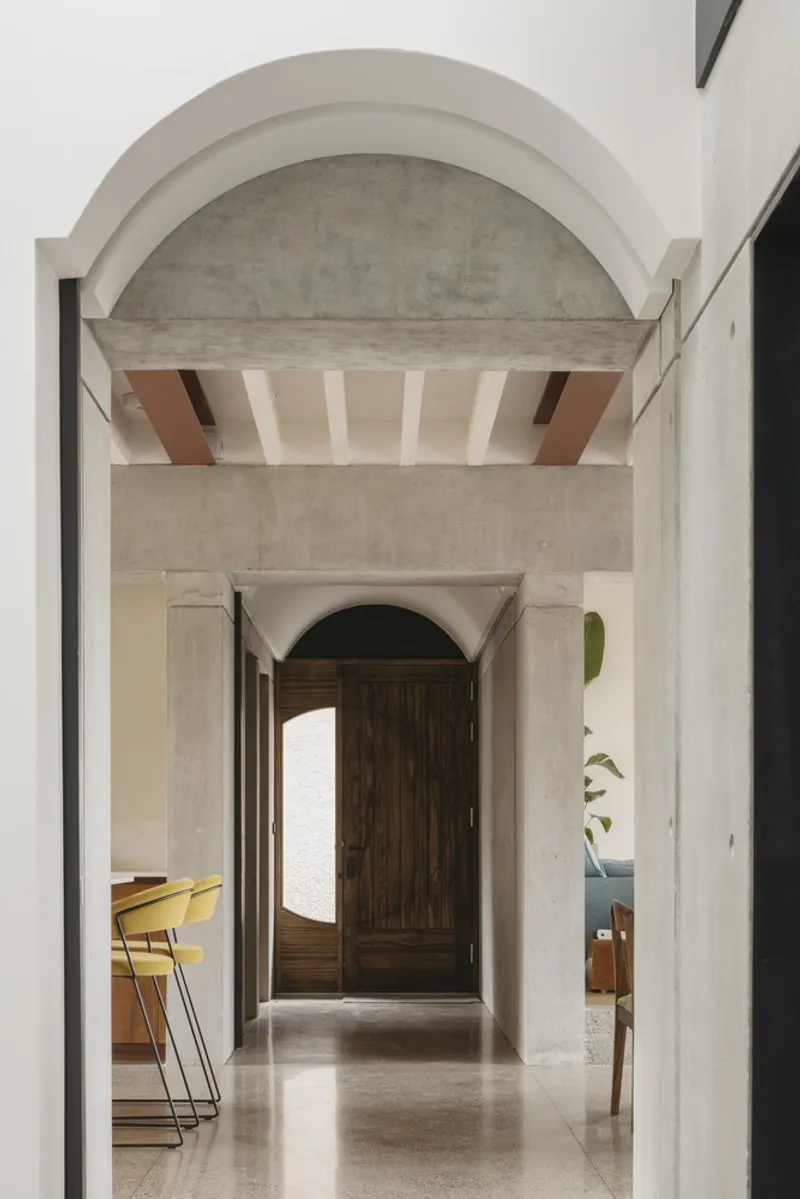
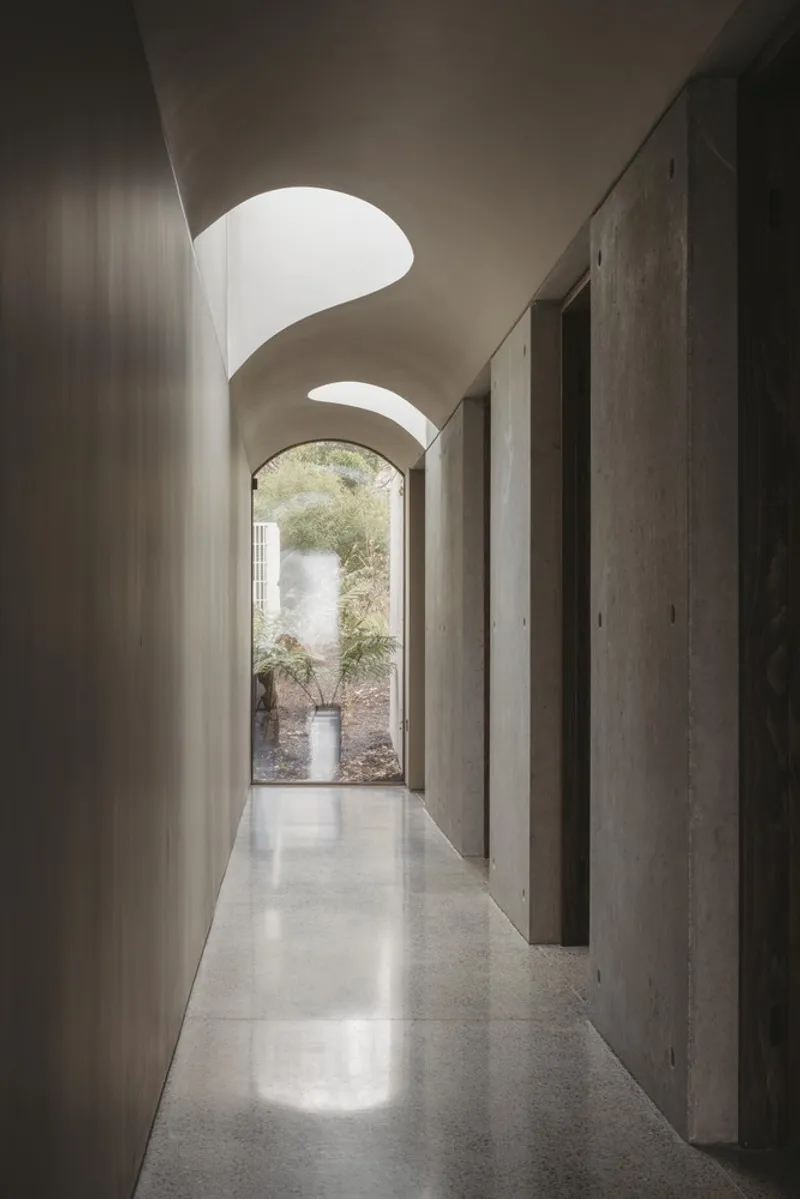
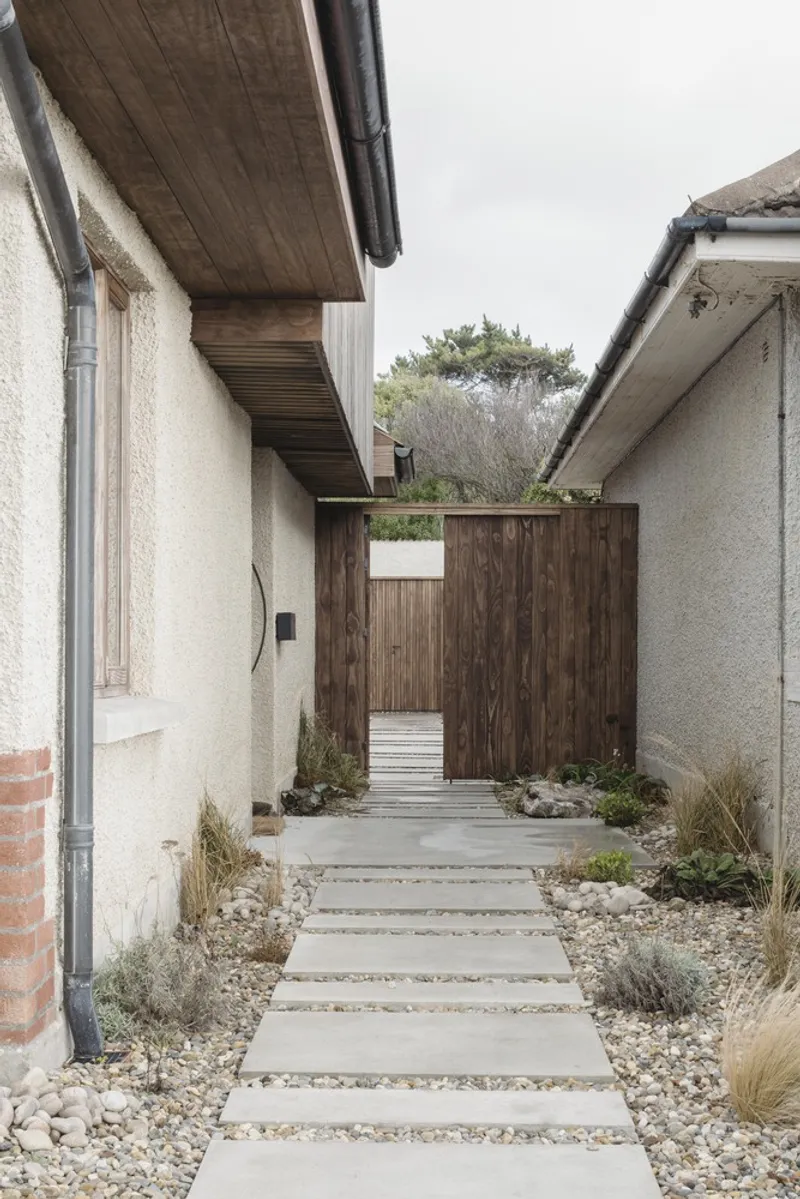
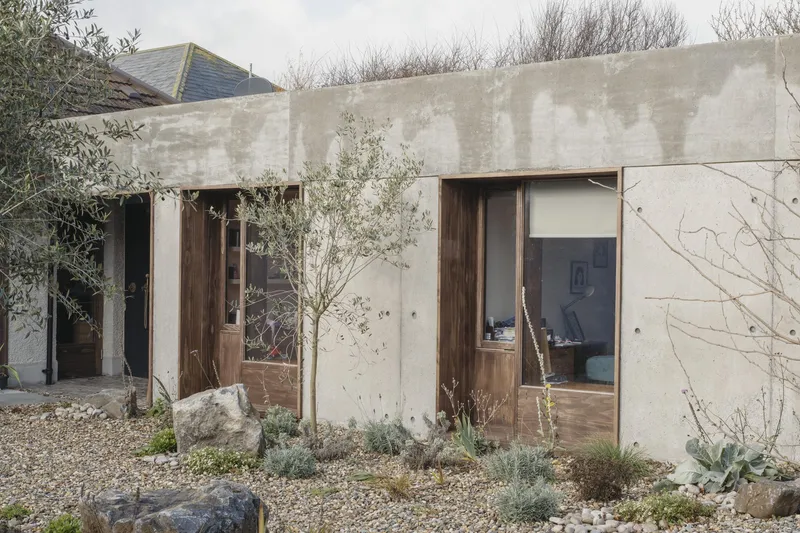
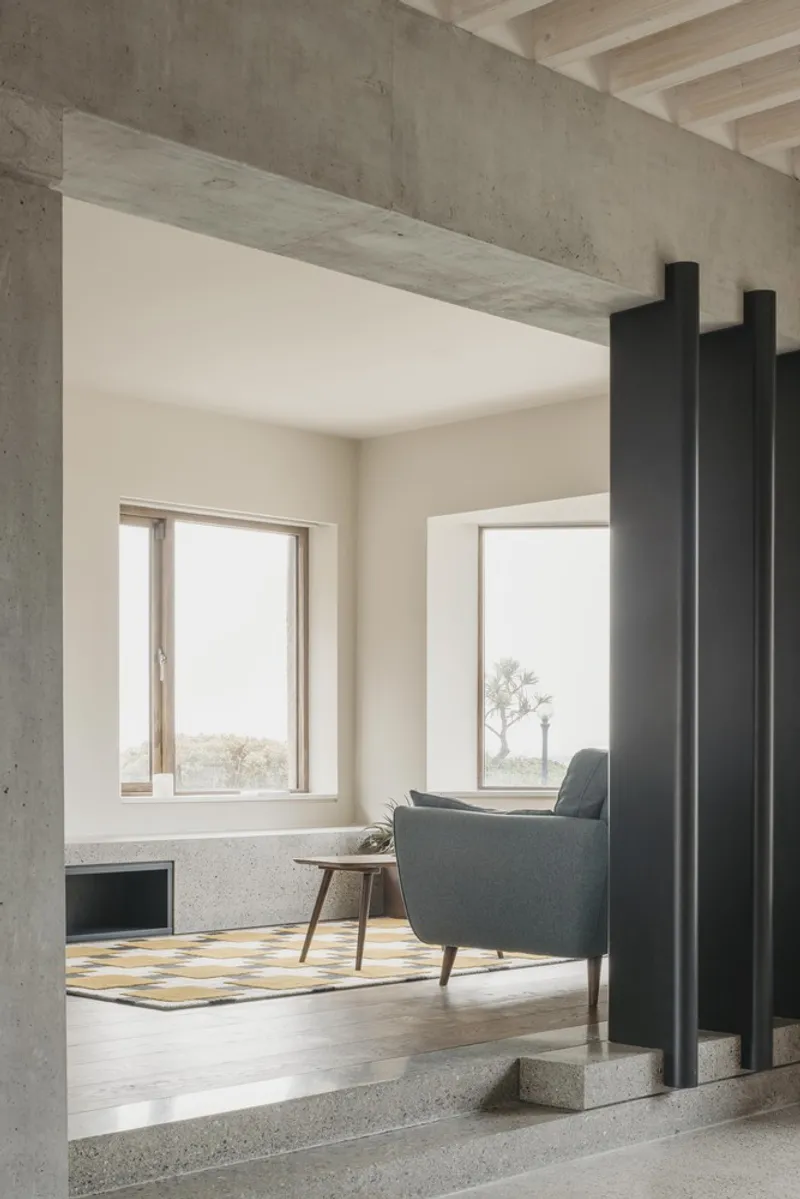
Four Winds House embodies a design philosophy that harmonizes resilience with the beauty of vulnerability. The residence is more than just a structure; it is a thoughtful response to its environment and the passing of time. The architectural form takes cues from the weathered history of the area, with exposed concrete serving as the core material. This choice conveys permanence and stability, complemented by softer materials such as accoya timber and charred larch. These natural elements evolve with exposure to the elements, creating a dialogue between the house and its surroundings.
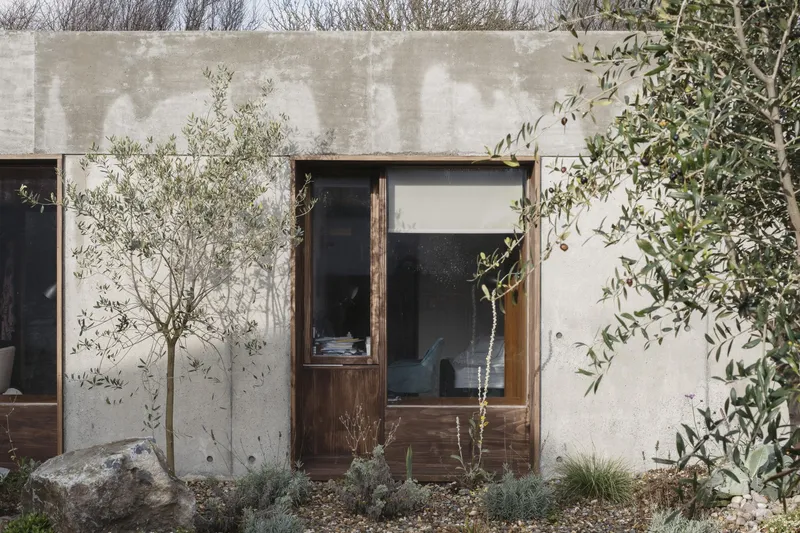
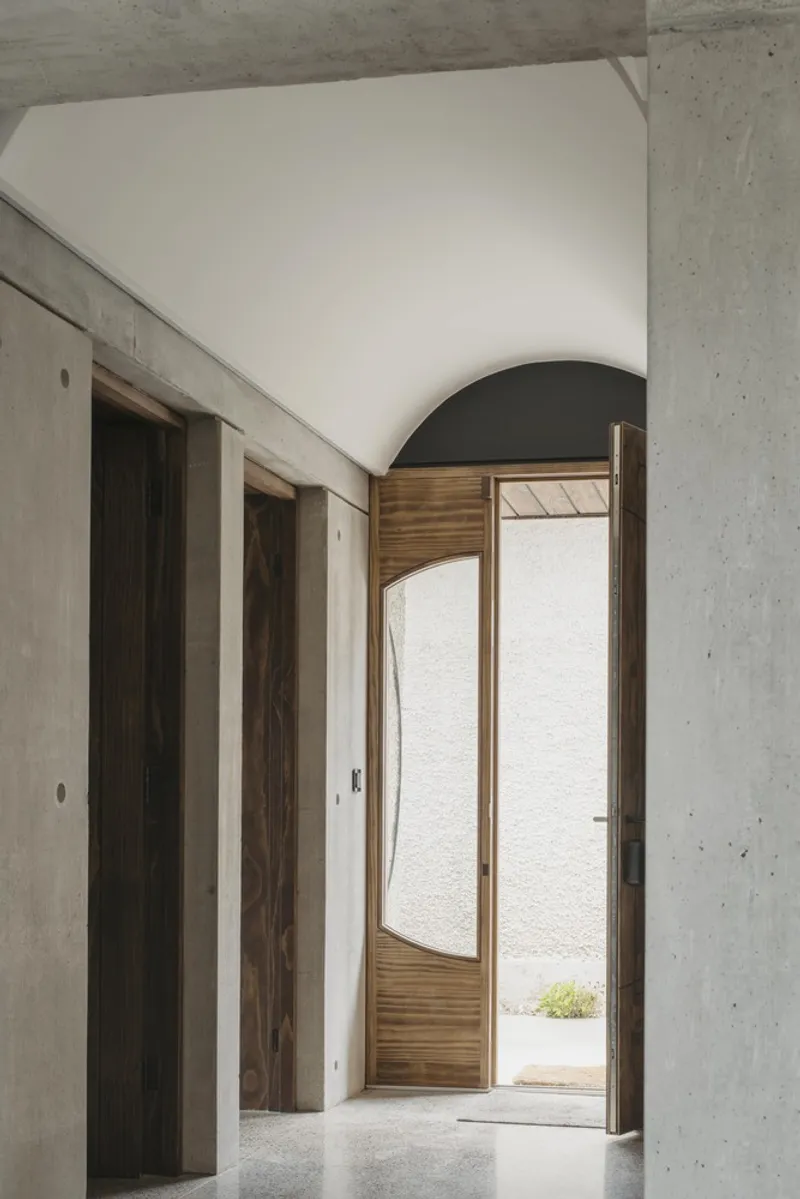
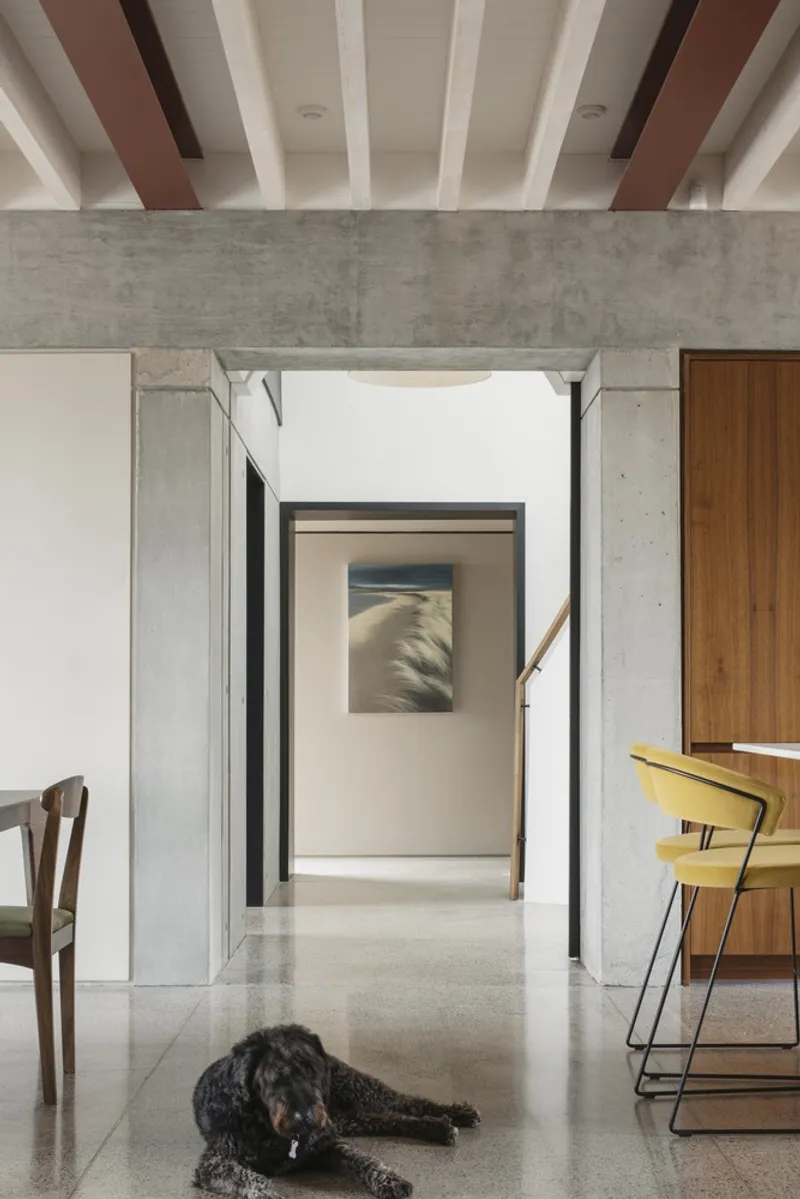
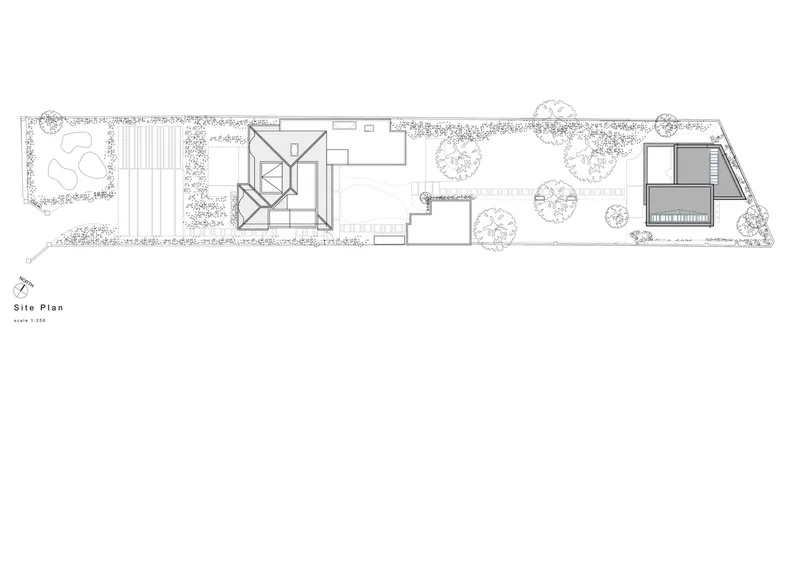
The plan of the house is cruciform, centered on four concrete pillars that support two substantial beams spanning the structure. These beams frame the main living space, which is oriented to maximize dual-aspect views: the dynamic expanse of Dublin Bay to the front and the tranquility of the sheltered courtyard garden to the rear. The integration of natural light and framed vistas reinforces the sense of connection between the occupants and their environment.
Responding to a Changing World
The design process for Four Winds House began in 2020, a year defined by the global upheaval of the COVID-19 pandemic. During the ensuing pause, the design team and clients reflected on their values and priorities, shaping the project with deeper meaning. Loss, resilience, and the poignancy of life became central themes. Every detail, from the robust concrete work to the carefully chosen materials, speaks to the enduring human spirit.
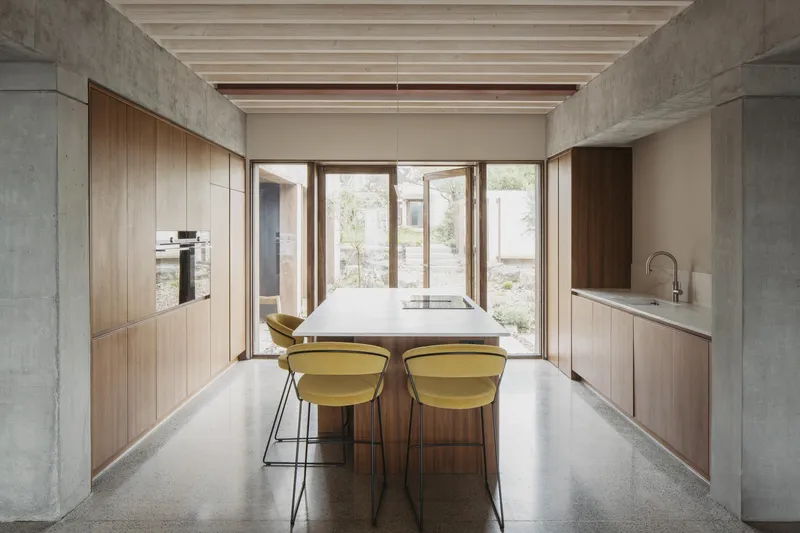
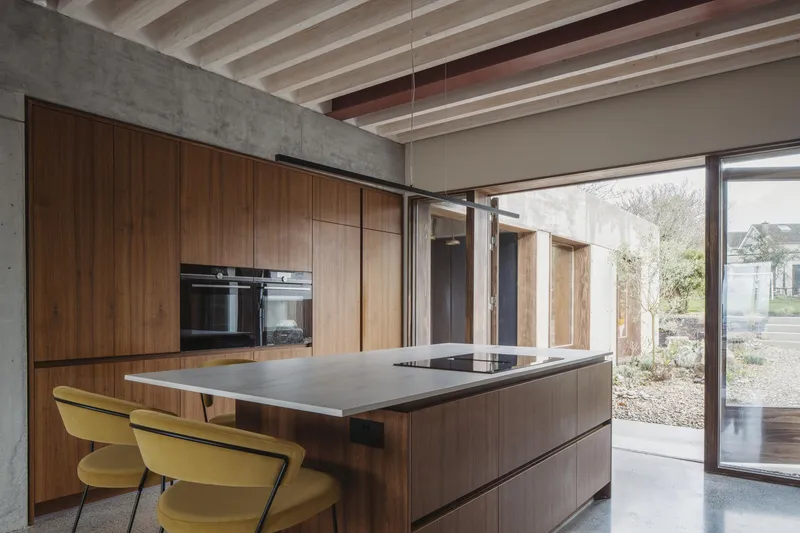
The house also addresses the challenges posed by its exposed coastal location. By balancing solid, weather-resistant materials with adaptive design elements, Four Winds House is a model of contemporary coastal architecture. It creates a warm, inviting refuge, capable of withstanding the relentless battering of wind and rain while offering its inhabitants comfort and security.
Living in Harmony with Nature
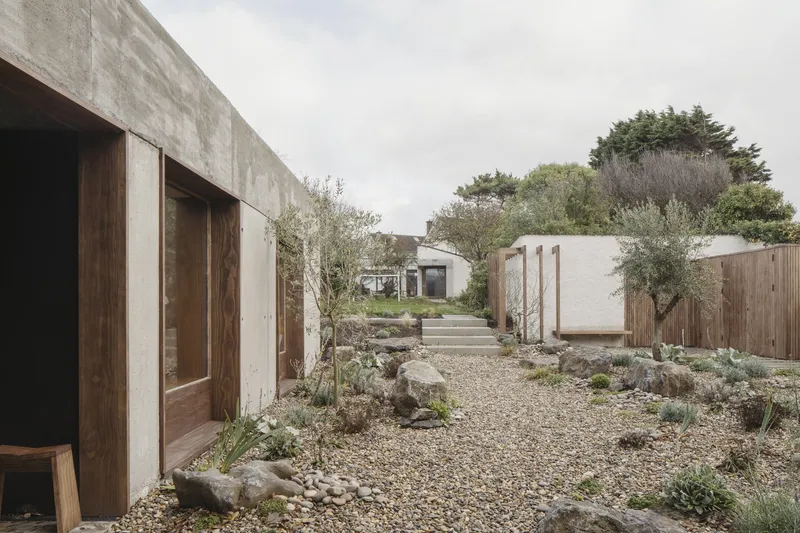
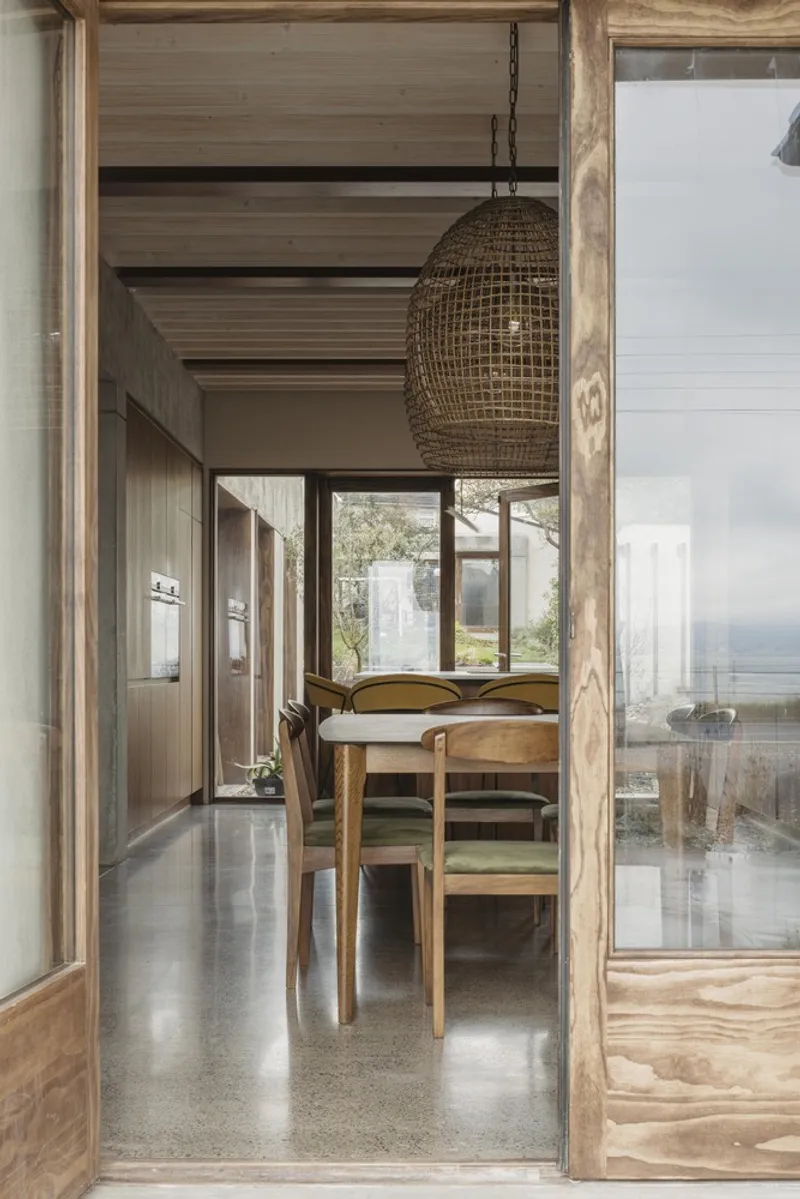
The interplay between indoor and outdoor spaces is a defining feature of Four Winds House. The design extends into the garden, where concrete beams frame sheltered outdoor areas, seamlessly connecting the built environment with the natural world. The courtyard offers a calm retreat, contrasting with the raw energy of the bay beyond. This duality reflects the very essence of the project: a balance between the rugged and the refined, the enduring and the evolving.
As the house weathers over time, its materials will tell their own story, mirroring the centuries of change that have shaped the Dublin Bay shoreline. Four Winds House is not just a home; it is a living monument to the enduring connection between people, place, and time.
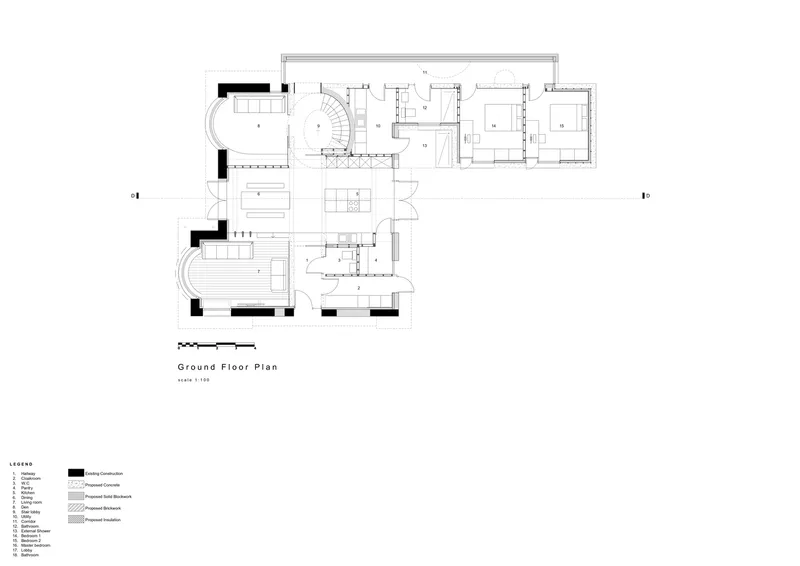
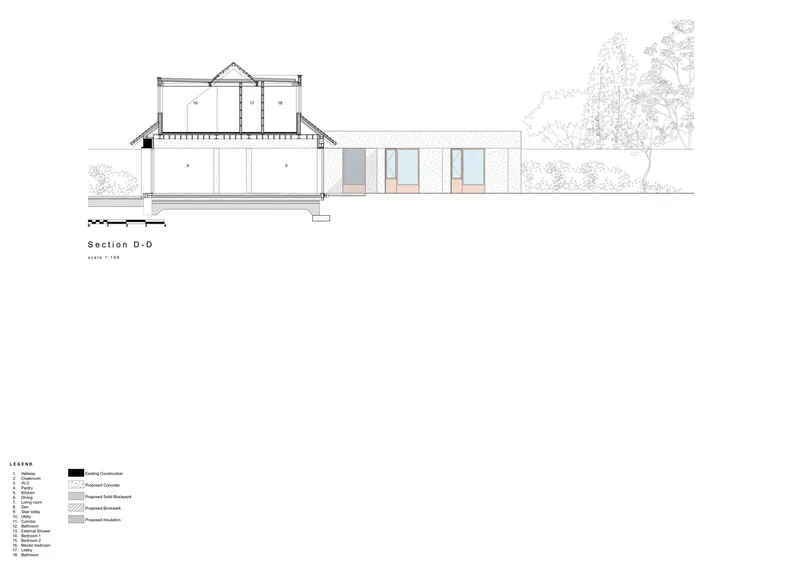
Four Winds House by Brennan Furlong Architects is a stunning example of contemporary coastal architecture in Ireland. It weaves history, environment, and human connection into a design that is both timeless and deeply relevant. Set against the backdrop of Dublin Bay, this home is a sanctuary and a symbol of resilience, embodying the essence of shelter, beauty, and enduring design.
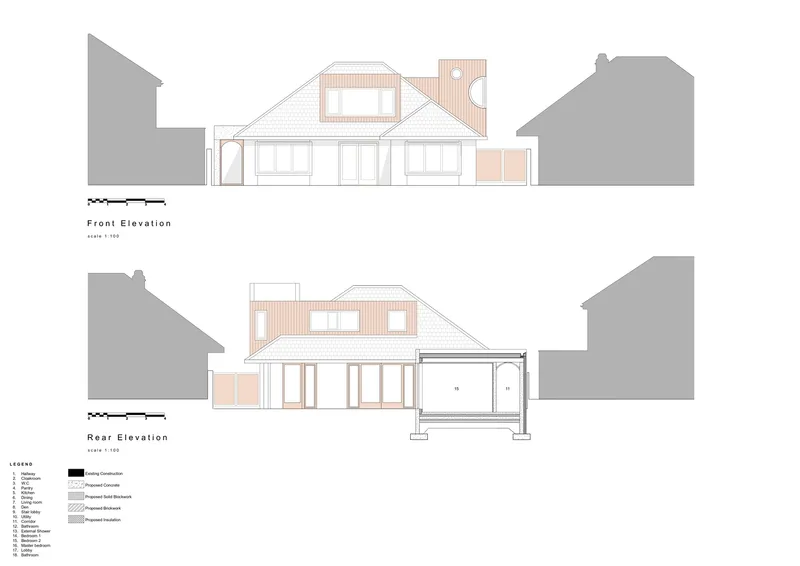
All Photographs are work of Fionn McCann Photography


Popular Articles
Popular articles from the community


U.GA Architects Wraps an Oval Rooftop Pool in Curved Board-Formed Concrete on Busan's Jeollidan-gil
In Busan's Jeonpo-dong, a 454 m² mixed-use block stacks a neighborhood facility, guest rooms and an oval rooftop pool inside spiraling concrete walls.

David Macias Steps a Doorless Stone and Plaster House Down a Tropical Colombian Hillside
In the humid hills of Colombia, Threshold House replaces the front door with an open void and terraces its 850 m² down the slope instead of fighting it.

Jaramillo Van Sluys Arquitectura and Urbanismo Turn a Demolished Registry Lot in Quito into an Orchard Plaza
In Quito's Centro Histórico, a 2,800 m² plaza exposes the San Agustín convent wall and redraws its lost Augustinian orchard in volcanic stone.

longwave studio Reorganizes a 112 m² Tainan Apartment Around the Daily Routines of a Family and Two Cats
In Tainan, Taiwan, birch plywood, rust-red furniture and a freestanding plaster wall link arrival, storage, work and family life in one apartment.

Similar Reads
You might also enjoy these articles


Hodi-Mandai Geram
Project Function: Preservation and revitalization of the Intangible heritage and socio-spatial identity of the Hodi by Housing, Cultural Memory Center, Sacred Grove, landscape, local tourism economy


Olio Towers: A Mid-Rise for Performers That Fuses Housing, Rehearsal, and Stage
Located blocks from Houston's Theater District, this modular tower stacks living units around a central performance atrium.

Oasis: Modular Green Housing Carved into Dhaka's Urban Fabric
A shortlisted Plugin Housing entry reclaims unauthorized settlements in Dhaka with stepped concrete volumes, green roofs, and ventilation-driven design.

Black Hole: A Floating Megastructure for the Post-Physical Era
Emiliano Mazzarotto envisions a spherical, self-scaling arena where e-sports, digital hotels, and holographic stadiums replace traditional public space.

Explore Architecture Competitions
Discover active competitions in this discipline

Challenge to reimagine the Iron Throne

Photograph architecture without architects

Illustrate the lost glory of Angkor Wat - Render Challenge

Design challenge to reuse E-waste
Comments (0)
Please login or sign up to add comments
No comments yet. Be the first to comment!