
Contemporary Recreational Architecture: The Tamboré Club by DMDV Arquitetos in Jundiaí, Brazil
DMDV Arquitetos’ Tamboré Club blends landscape and architecture to create a serene, multifunctional leisure retreat in Jundiaí, Brazil.


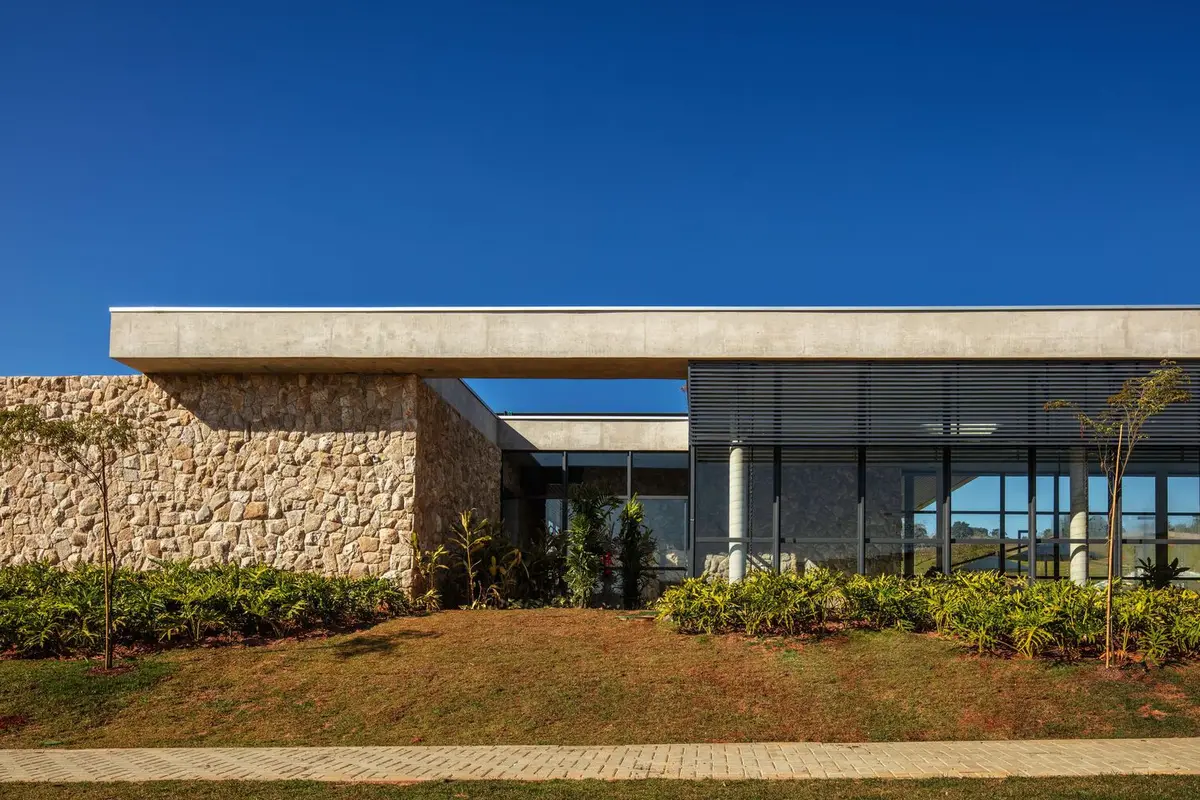
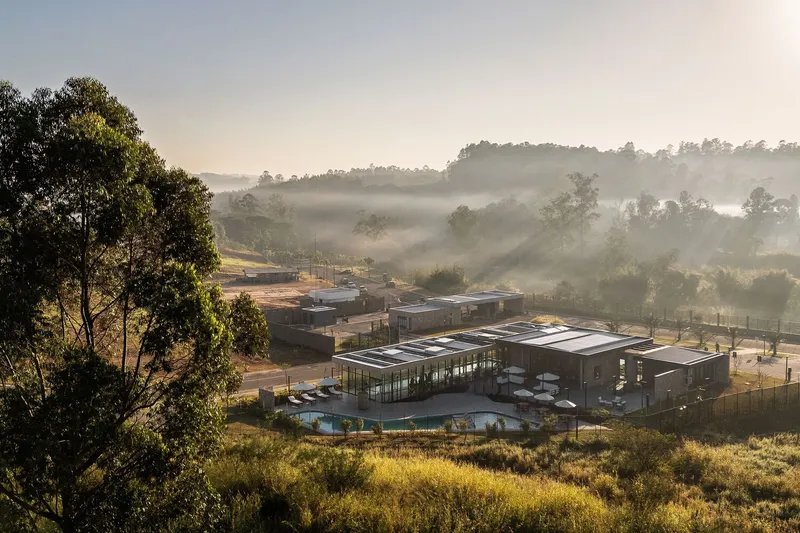
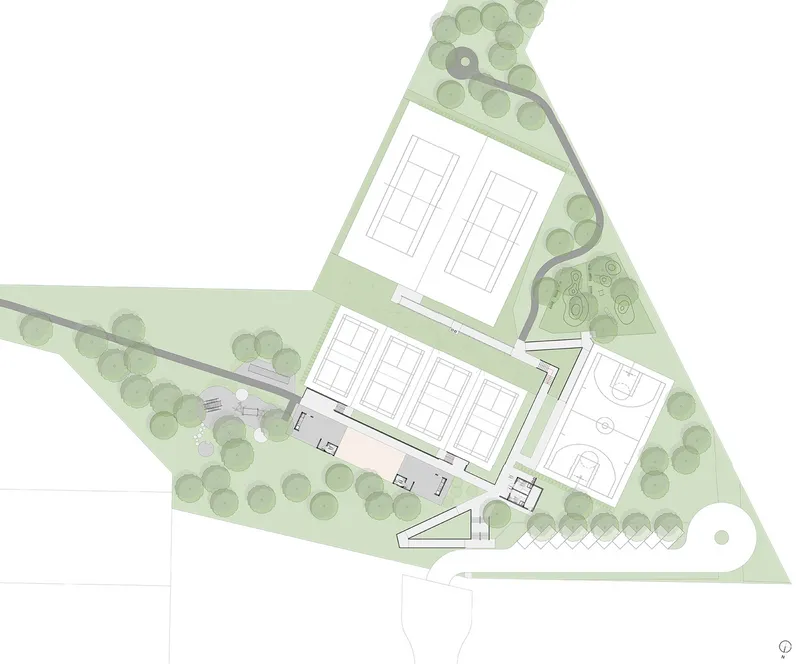
The Tamboré Club by DMDV Arquitetos exemplifies the latest trends in contemporary recreational architecture, where spatial elegance meets environmental sensitivity. Located in Jundiaí, Brazil, the 988-square-meter project embraces its lush surroundings with a design that harmonizes built form and native landscape, offering a serene and multi-functional space for leisure, wellness, and social engagement.
Embracing Nature Through Architectural Transparency
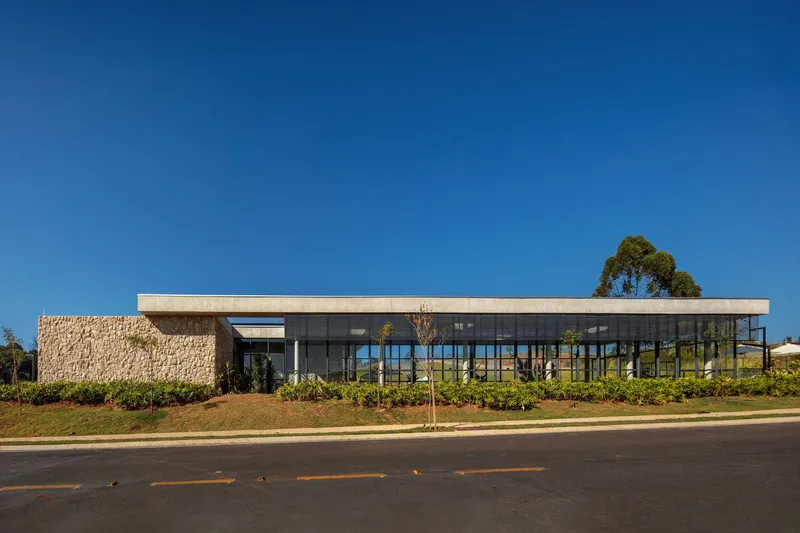
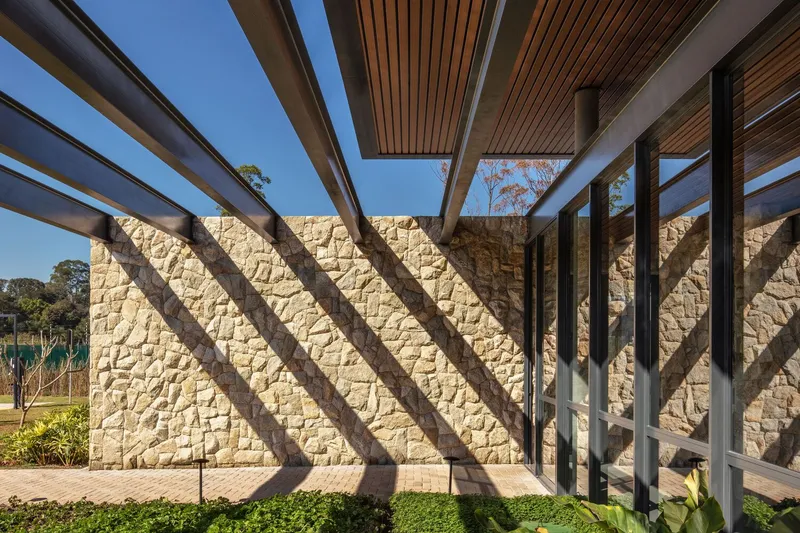
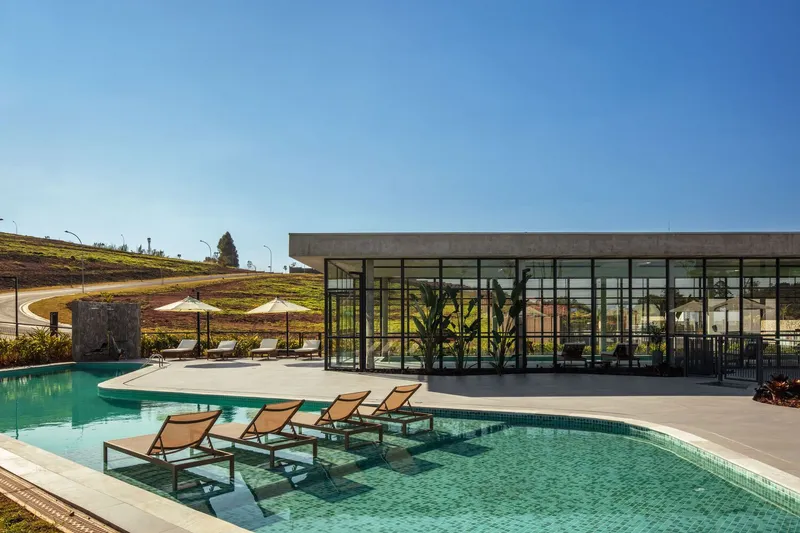
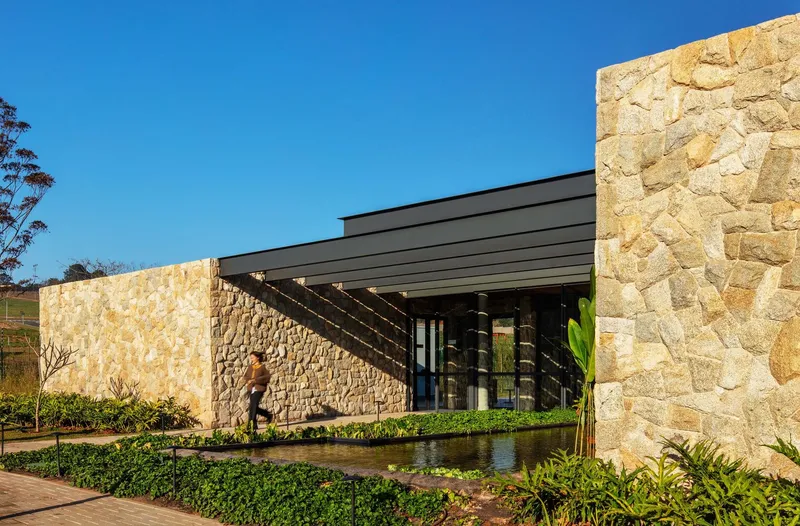
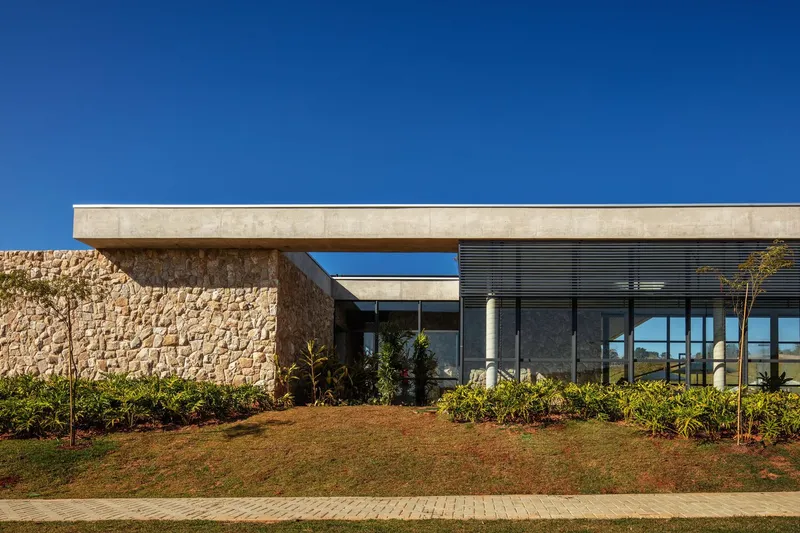
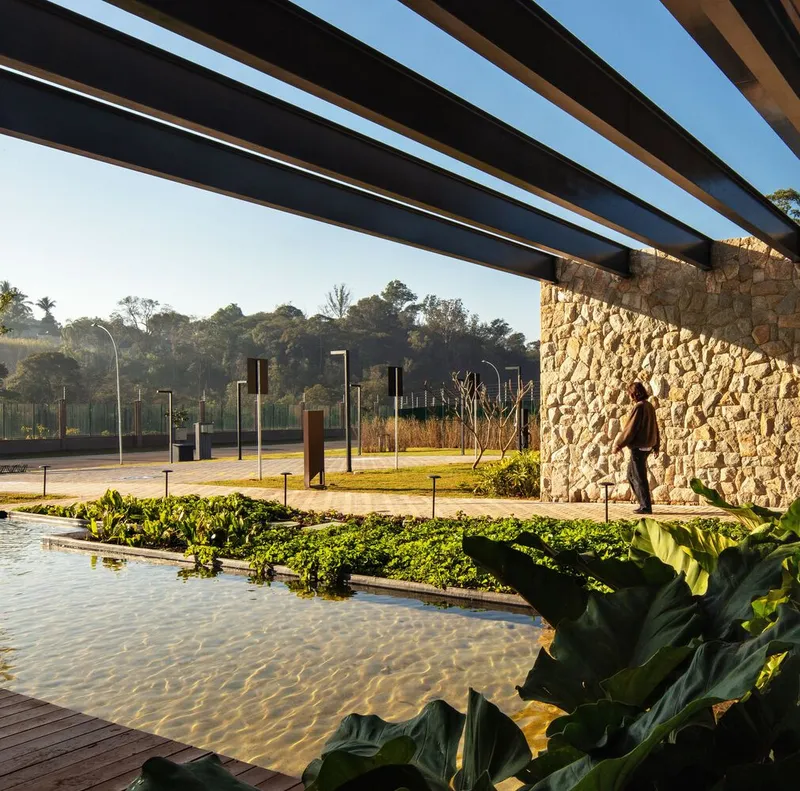
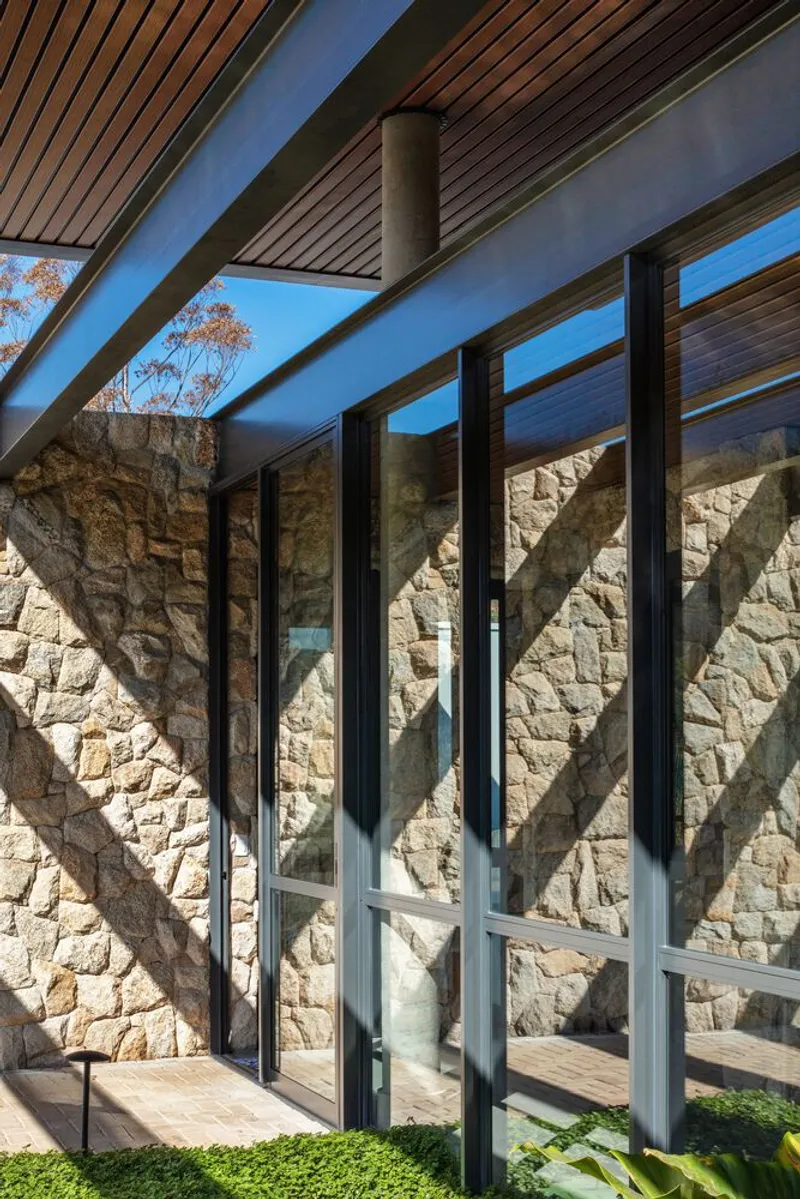
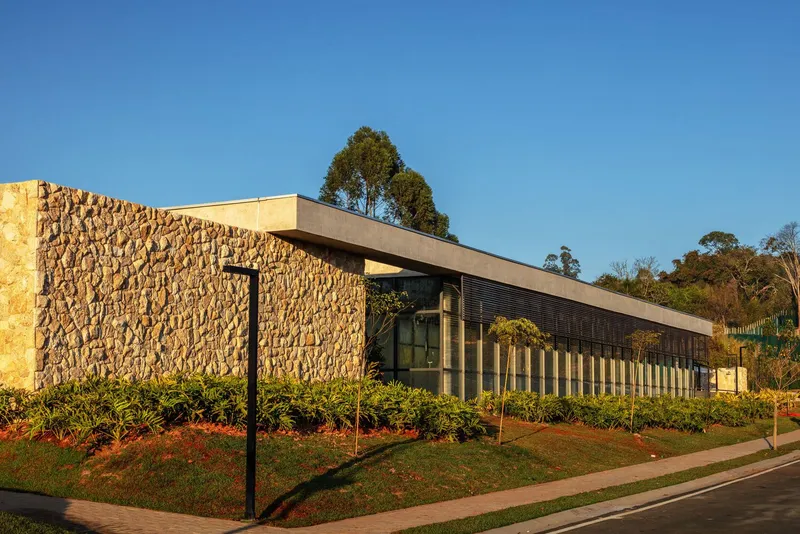
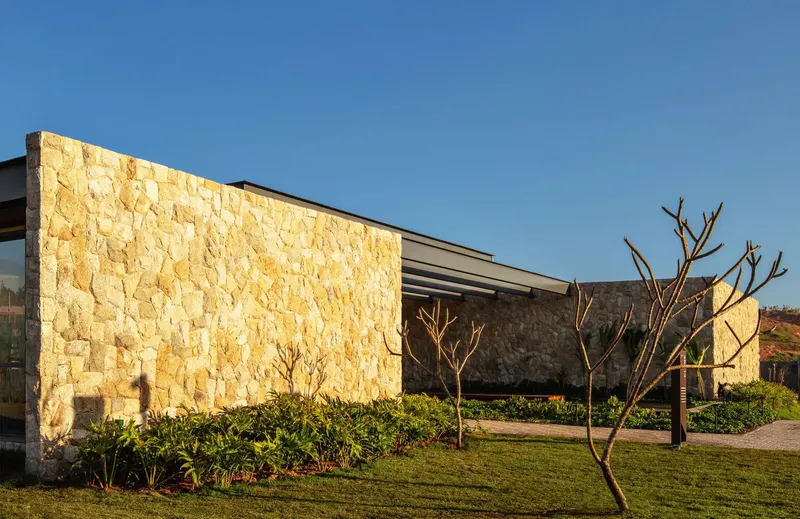
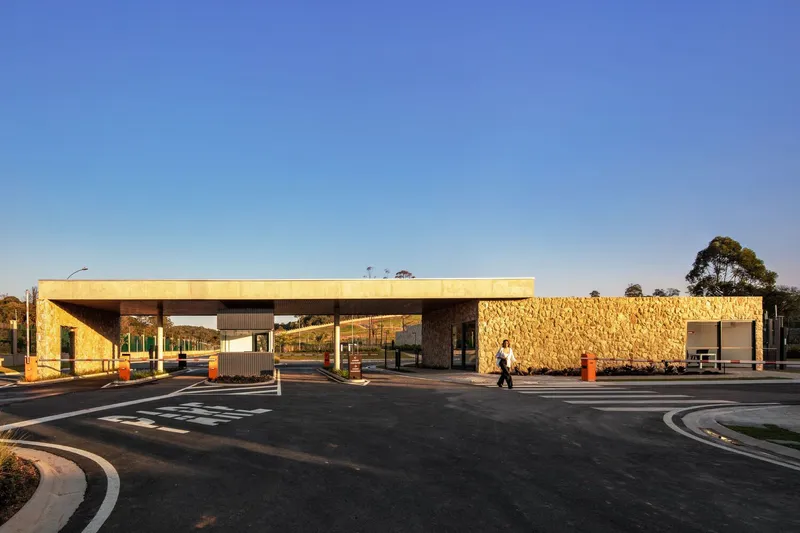
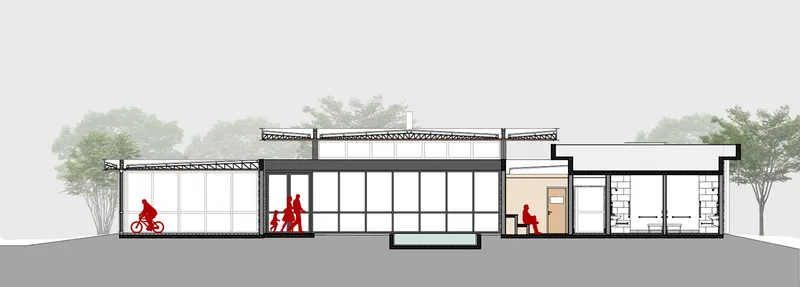
The architectural narrative begins with contrast: solid, stone-clad volumes containing the core functions of the club are interspersed with transparent expanses that visually dissolve boundaries between interior and exterior. This dialogue between opacity and openness is heightened upon arrival, where visitors enter via a striking metal pergola suspended over a reflecting pool. This ceremonial gesture is underscored by lush landscaping, creating an immersive and symbolic entry sequence that prepares guests for the spatial experience within.
Spatial Organization Around a Central Green
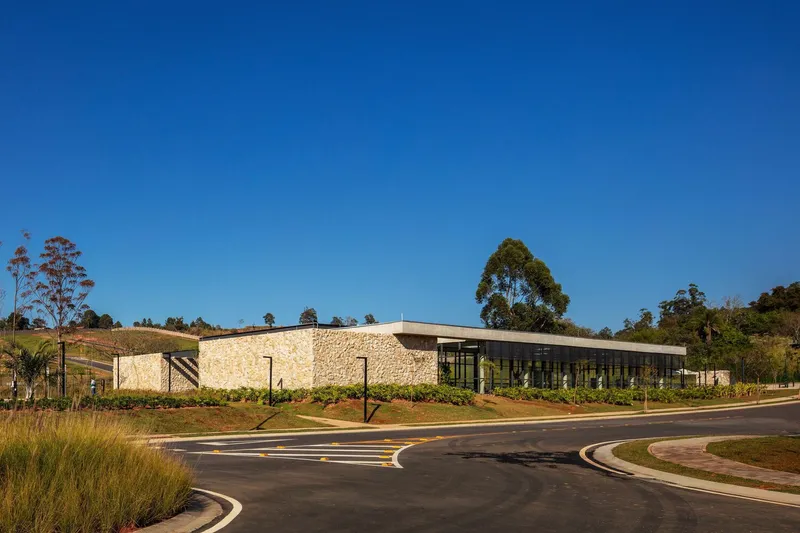
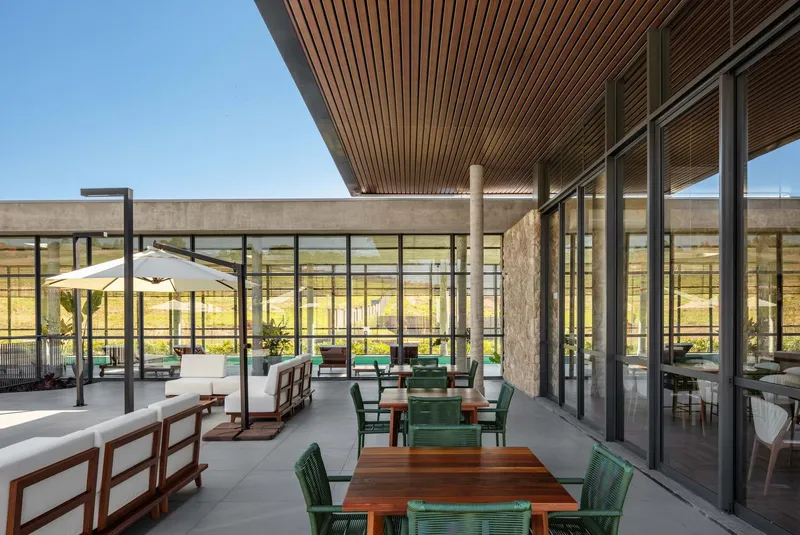
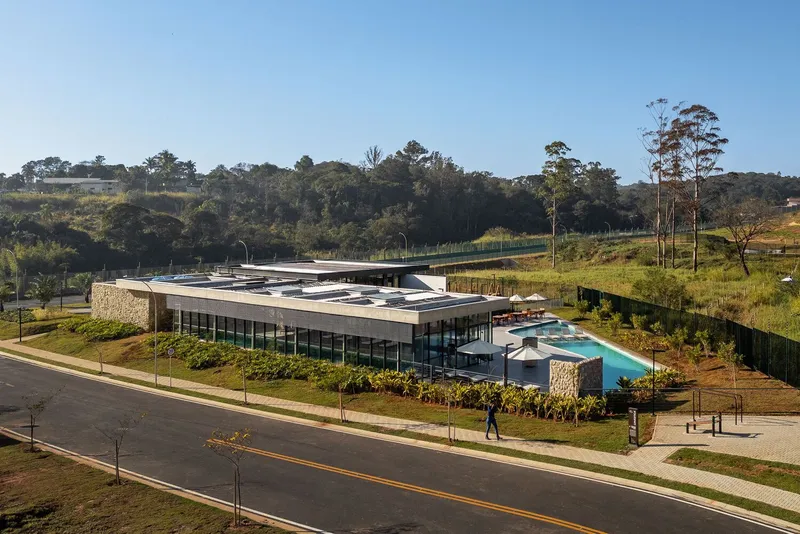
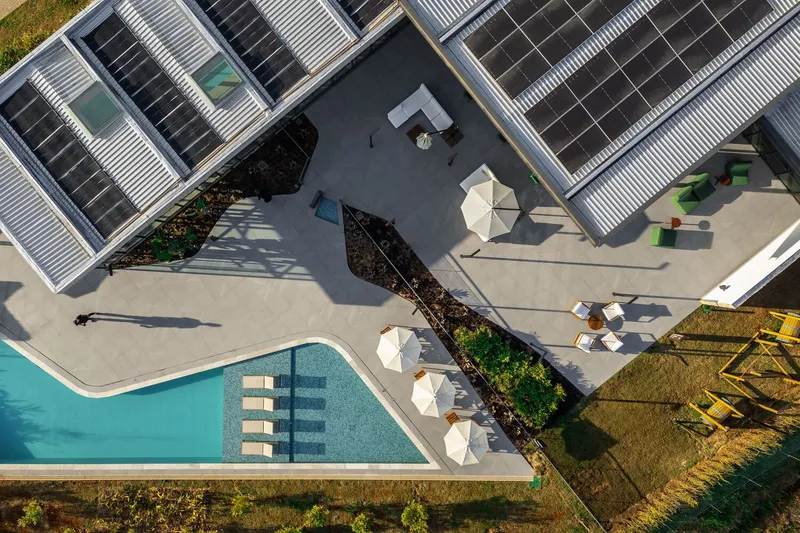
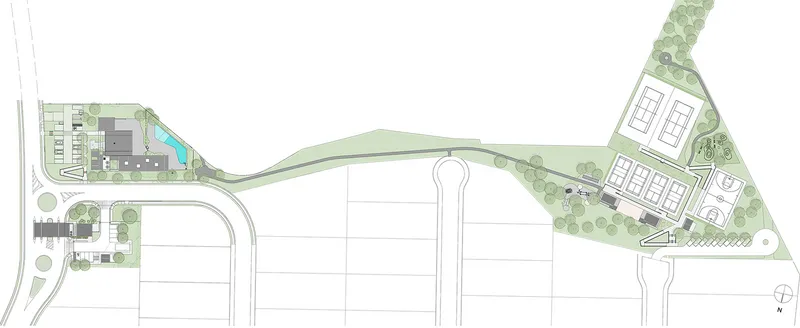
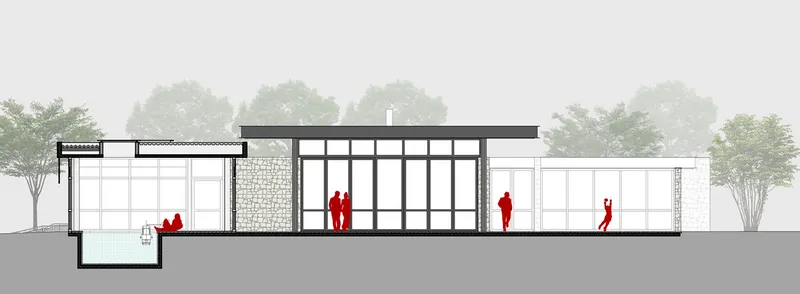
The club is divided into four clearly defined blocks, each oriented inward to foster intimacy and engagement with the preserved natural area at the site’s core. This inward-facing configuration frames the landscape like a courtyard, offering layered views and a constant interplay between architecture and nature. The central event hall, marked by its elevated metal roof, becomes the focal point of the site, facing the organically shaped outdoor pool and anchoring the club’s social activities.
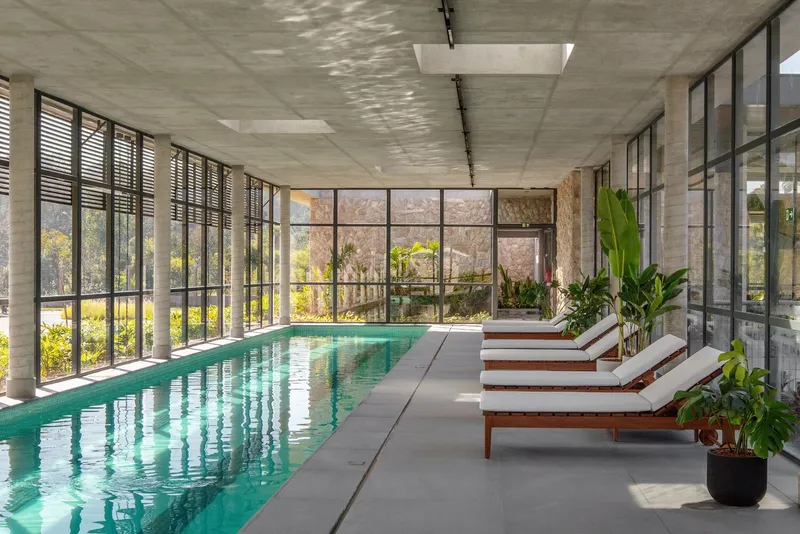
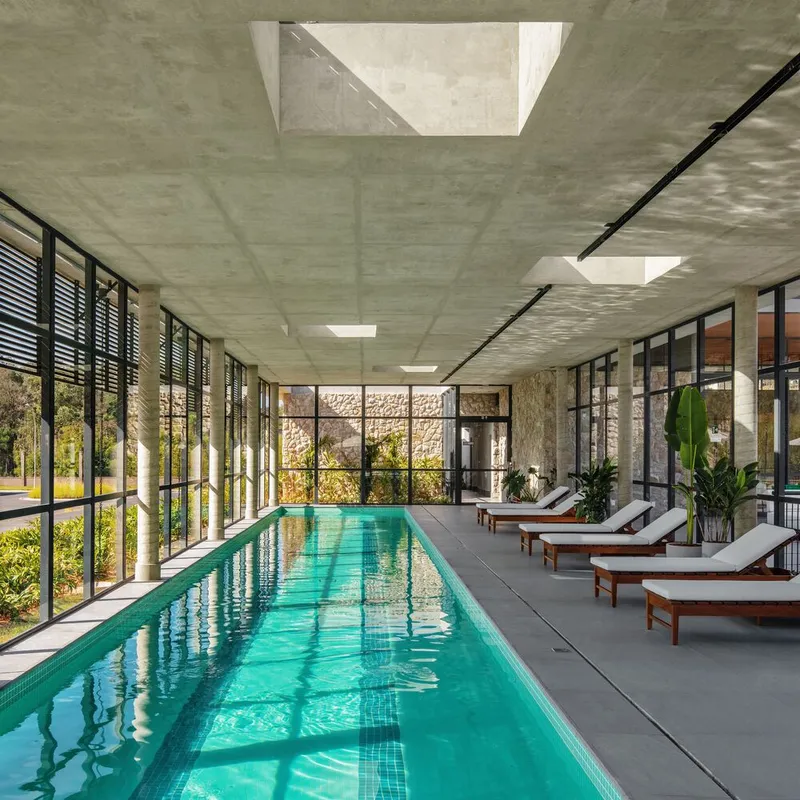
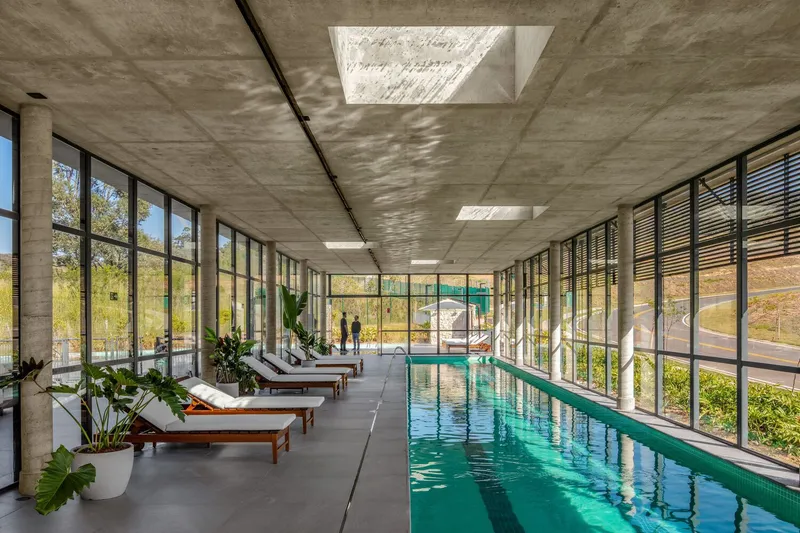
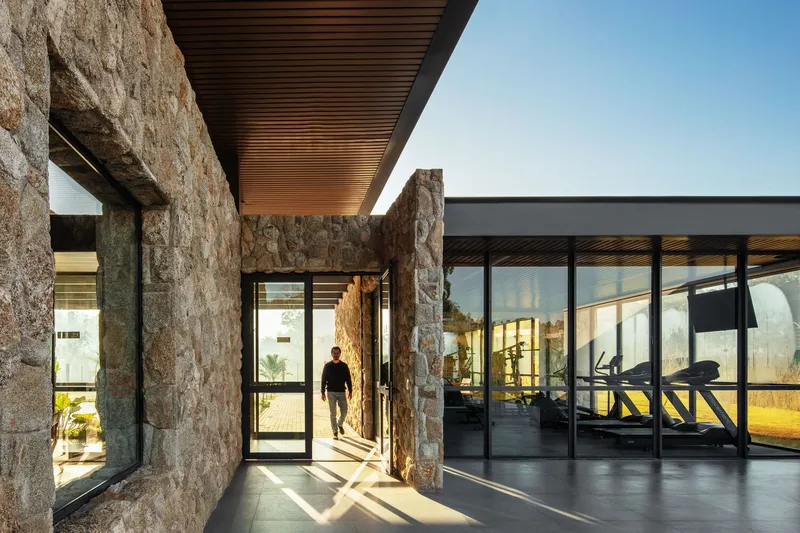
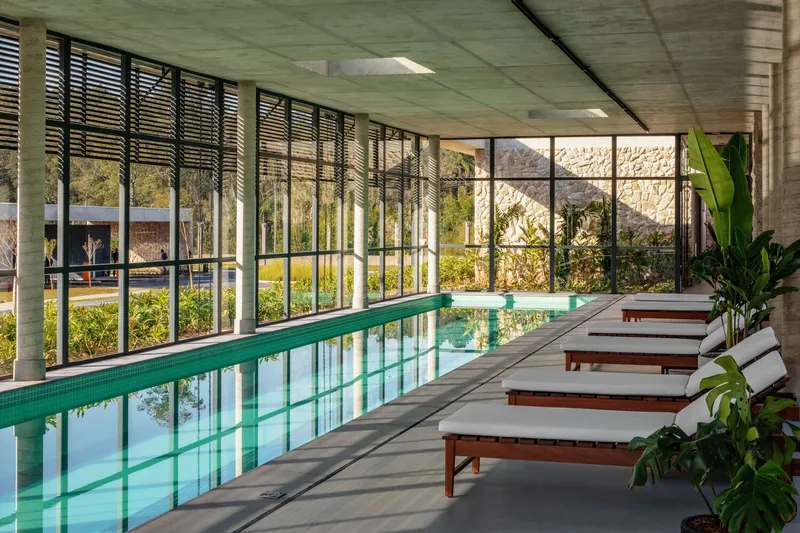
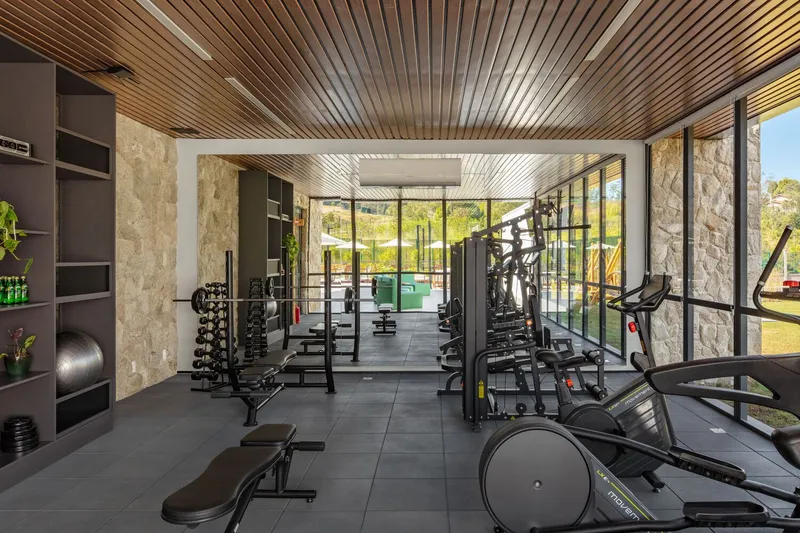
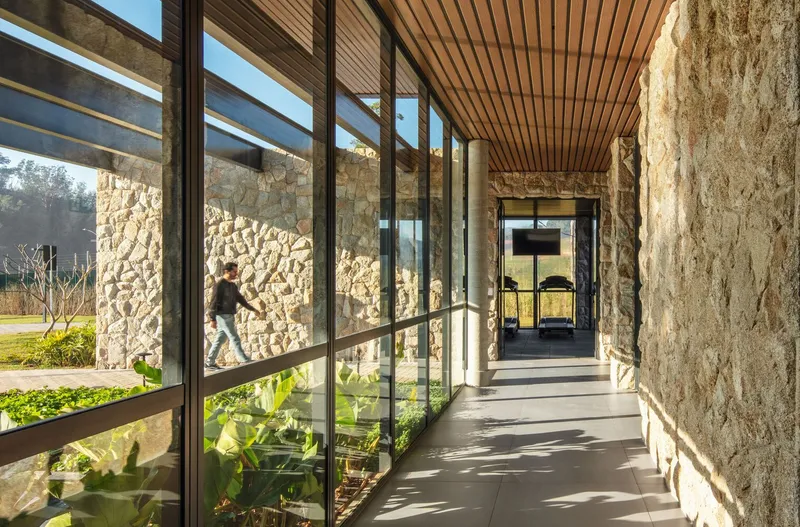
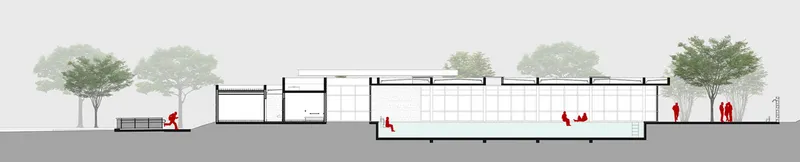
A linear heated indoor pool stretches along the site's edge, reinforcing the project’s axial composition while serving as a tranquil space for relaxation. Adjacent to this, a fully equipped gym opens toward the same green expanse, inviting users to exercise within sight of native vegetation, reinforcing the therapeutic quality of the landscape.
Outdoor Integration with Functional Fluidity
The heart of the project lies in its ability to merge architectural function with outdoor leisure. Between the event hall and the gym, a courtyard functions as an open-air cinema, cleverly using the side of the building as a projection screen. This multipurpose space exemplifies the club’s fluid programming, where transitions between uses are seamless and guided by environmental logic.
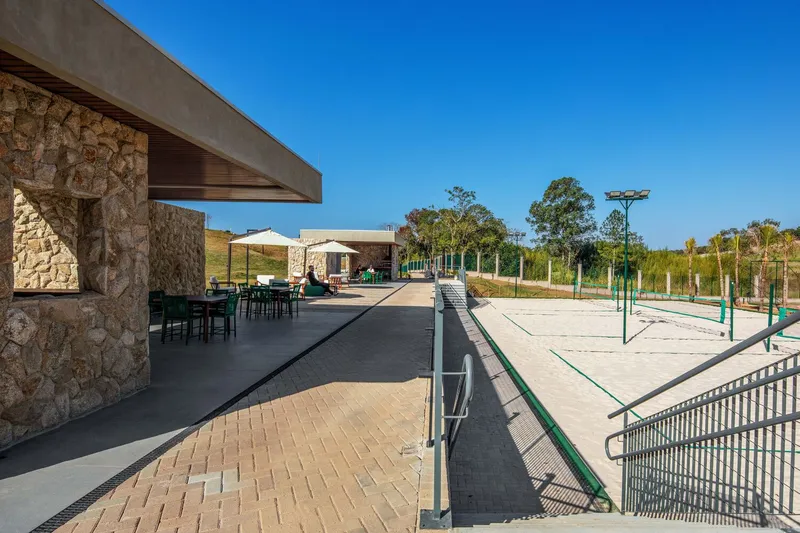
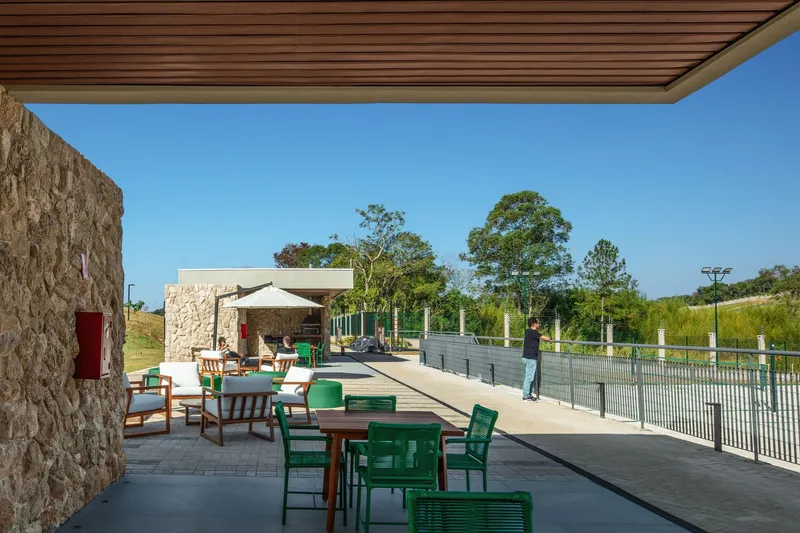
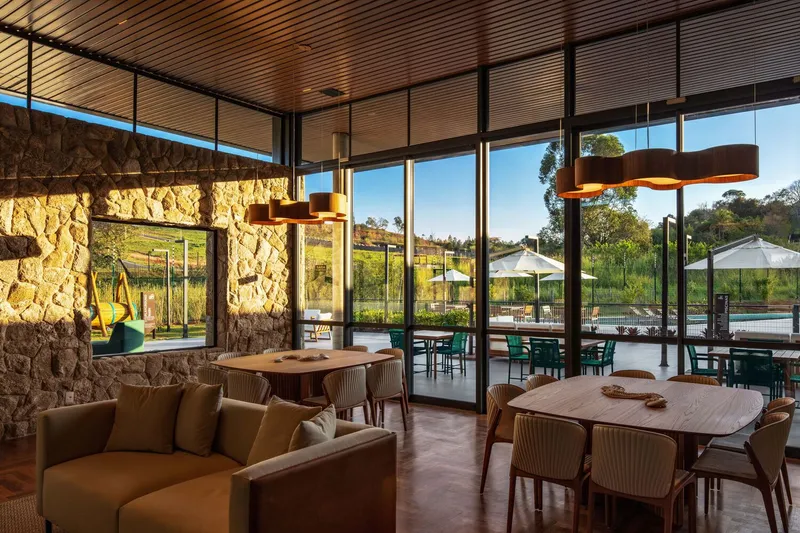
Natural materials—stone, wood, and exposed concrete—define both the exterior and interior character of the Tamboré Club, creating an atmosphere of refined rusticity. This palette emphasizes comfort and tactility, aligning the built space with its ecological context and offering a sensory counterpoint to the precision of the architectural volumes.
A Hilltop Sanctuary for Community Wellness
At the site’s highest elevation, two barbecue areas overlook the surrounding landscape, offering panoramic views and creating social anchors for informal gatherings. These elevated platforms celebrate the terrain’s topography and encourage communal experiences with nature as a backdrop.
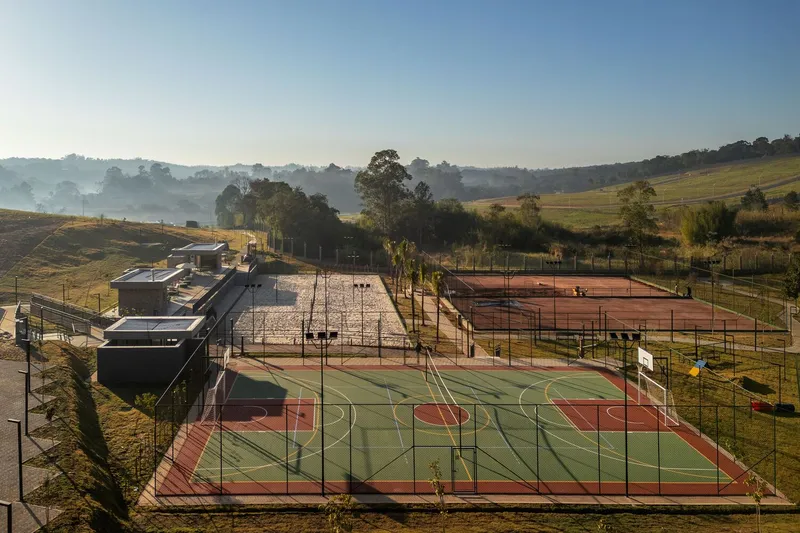
The program is rounded out with a playground, tennis courts, beach tennis, and a multi-sports court, allowing for diverse recreational options across all age groups. These elements are distributed across a carefully curated landscape, ensuring visual cohesion and environmental continuity.
Redefining Leisure Through Architecture
With its sensitive site strategy, material authenticity, and deliberate spatial sequencing, the Tamboré Club represents a refined model of contemporary recreational architecture. It seamlessly integrates sports, relaxation, and social interaction within a setting that prioritizes visual harmony and ecological mindfulness. DMDV Arquitetos have created more than just a leisure facility—they have crafted a spatial sanctuary where architecture becomes a medium for well-being, community, and connection to the natural world.


Popular Articles
Popular articles from the community


The Musturak Paradise: Senior Living Architecture for a Connected Future in Temara, Morocco
The Musturak Paradise reimagines senior living architecture in Temara via private homes, social spaces, culture, community, and shared care.

The Ocean Hive: Sustainable Architecture for a Self-Sufficient Civilization at Sea
The Ocean Hive imagines sustainable architecture at sea, where modular habitats, algae, wave power and ocean waste sustain a growing colony.

Co-life: Sustainable Architecture for Age-Friendly Community Living
Co-life reimagines sustainable architecture for seniors through courtyards, rammed earth, shared gardens, and spaces designed for belonging.

Little Red Riding Hood: Architectural Design as a Journey Through Fear, Light, and Storytelling
Little Red Riding Hood reimagines the fairy tale through architectural design shaped by fear, light, scale, memory, uncertainty, and choice.

Similar Reads
You might also enjoy these articles

Bamboo Housing Challenge 2026: Design Affordable, Sustainable Homes Using Bamboo
An international design competition by Bamboo U and IBUKU inviting architects and designers to reimagine affordable housing using bamboo — with the winning design built full-scale in Bali.

Computational Design & Education: Beegraphy Design Awards Introduces 7th Category (Featuring Jiyun's Innovative Approach)
Dive into Beegraphy’s 7th Design Awards category, where computational design meets education to create immersive, interactive learning tools, inspired by Jiyun’s work.

From Parametric Lighting to Urban Furniture: Join the 2nd Workshop in Beegraphy’s Computational Design Series
Dive into Cutting-Edge Design Techniques and Practical Applications with Industry Experts

Last Call: Unleash Your Architectural Genius in SHAK's Kindergarten Design Competition
Urgent call for architects to join SHAK's kindergarten design competition before the looming deadline

Explore Architecture Competitions
Discover active competitions in this discipline

Challenge to reimagine the Iron Throne

Photograph architecture without architects

Illustrate the lost glory of Angkor Wat - Render Challenge

Design challenge to reuse E-waste
Comments (0)
Please login or sign up to add comments
No comments yet. Be the first to comment!