
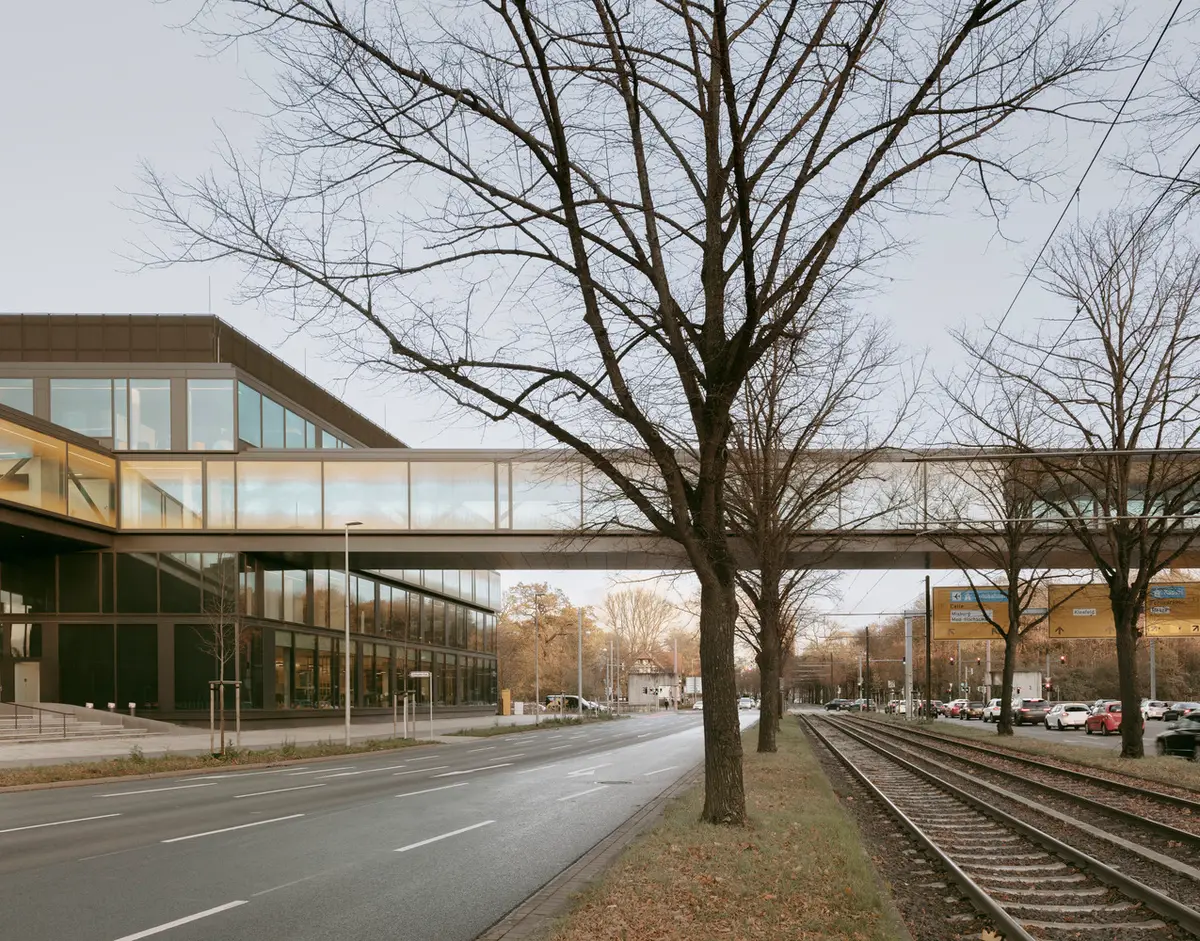
Continental Headquarters Architecture: A Modern Vision for the Future of Mobility
The article explores the innovative architecture of Continental's new headquarters, focusing on design, collaboration, sustainability, and employee well-being.


The Continental Headquarters Architecture, designed by HENN, is a monumental project that highlights the innovative and dynamic future of architecture in the automotive industry. Located on the eastern outskirts of Hanover, Germany, this new headquarters reflects Continental AG's transformation from a traditional tire manufacturer to a cutting-edge technology group. The design not only addresses the company's evolving needs but also integrates elements that foster collaboration, sustainability, and a forward-thinking approach to work environments.
Introduction: The Vision Behind the Continental Headquarters
The Continental Headquarters is a large-scale development that consolidates multiple functions into a single location, previously dispersed across the city. The project is a representation of Continental AG’s commitment to innovation, efficiency, and sustainability, marking a significant milestone in the company's history. The headquarters is more than just an office building—it is an environment designed to enhance collaboration and provide a space that inspires creativity and future technological advancements.
The Dynamic Design Concept
A Motor Racing-Inspired Ground Plan
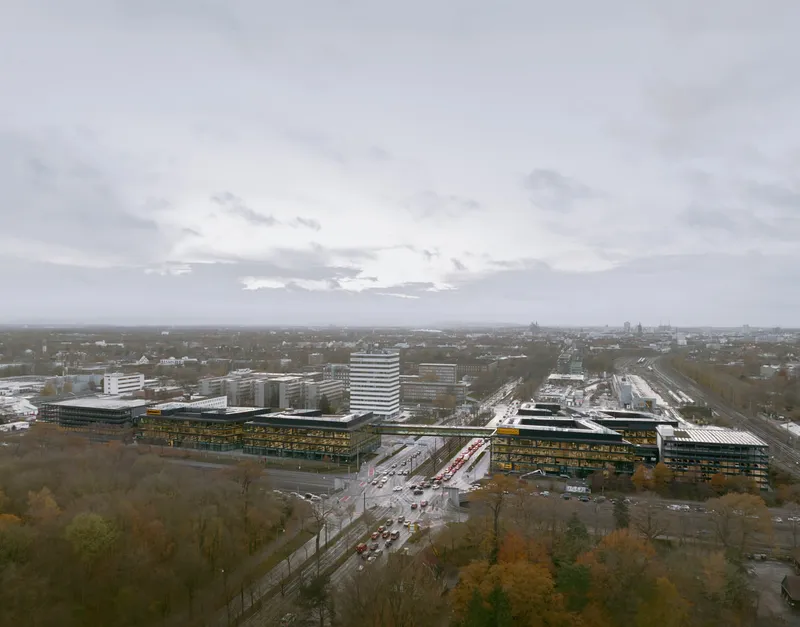
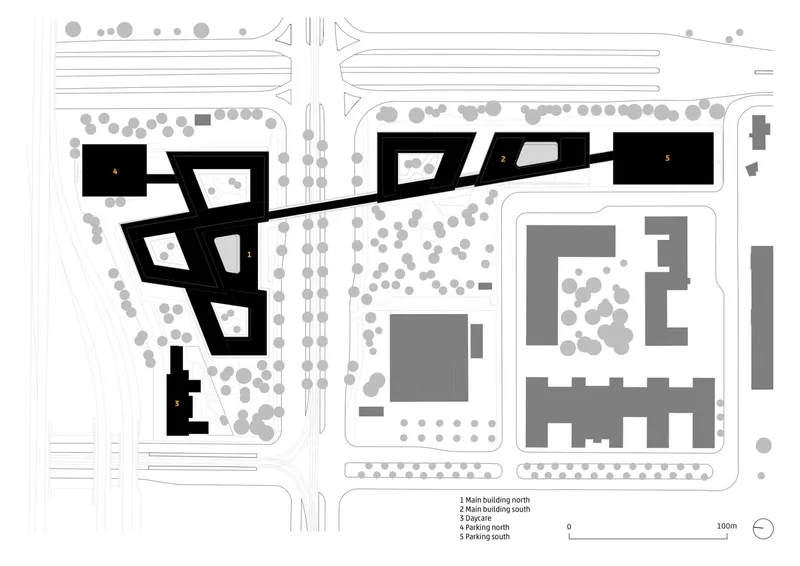
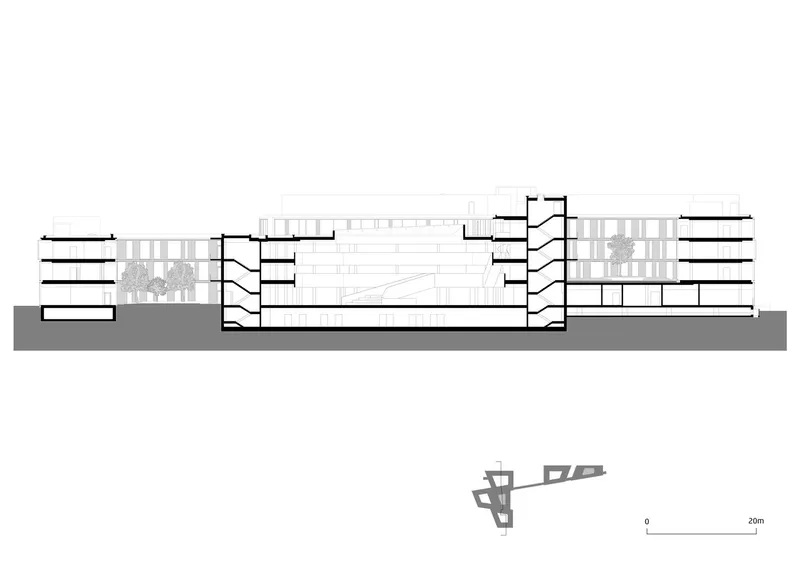
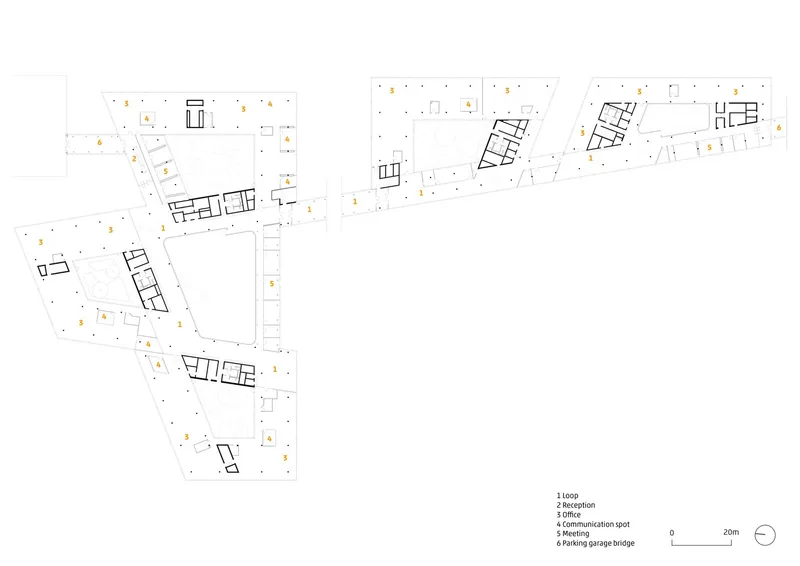
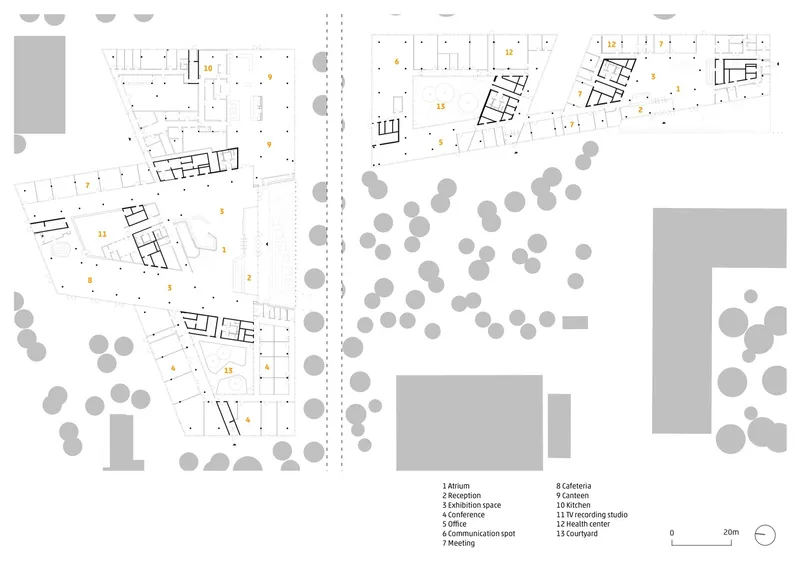
The architecture of the Continental Headquarters stands out due to its dynamic and purpose-driven design. Inspired by motor racing circuits, the campus layout connects multiple buildings, creating a fluid, interconnected campus. The layout strategically uses two plots of land separated by an eight-lane road, where the design concept ensures seamless integration across the entire space.
A 70-meter-long bridge links the two parts of the campus, offering a connection between the buildings north and south of the road. This bridge acts as a symbol of the seamless connectivity and cohesion that Continental aims to promote within the workplace. The architecture's circular, dynamic structure allows employees to move freely and encourages constant interaction, making the headquarters a hub for innovation and collaboration.
The Loop: A Centerpiece of Connectivity
Bridging Spaces and People
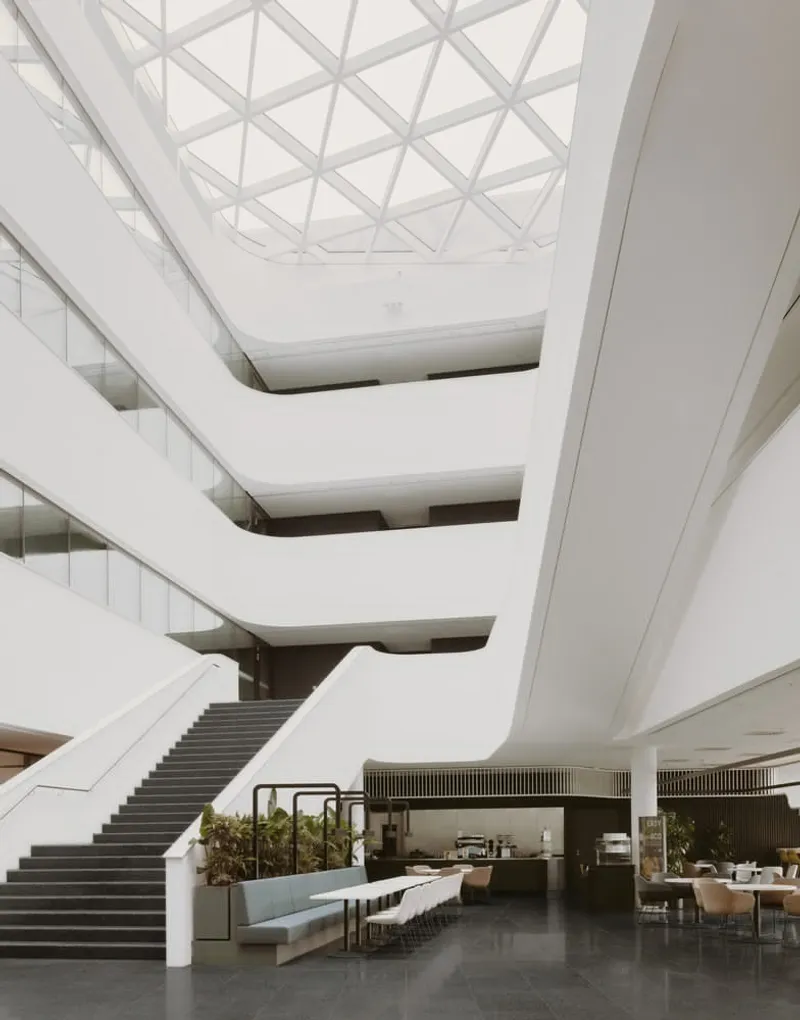
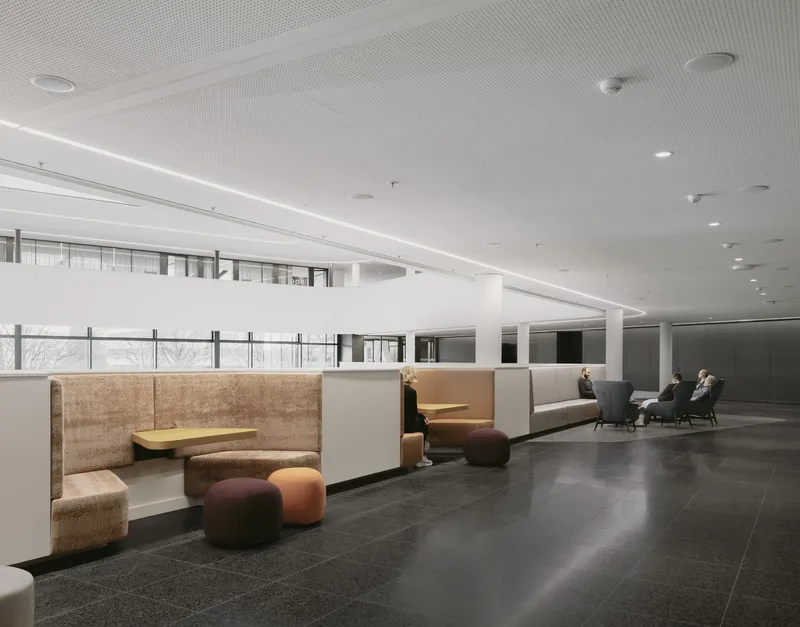
At the heart of the Continental Headquarters architecture is the "Loop" — a continuous, circular corridor that runs across all the buildings, even connecting them through the bridge. This loop functions as the communication center, bringing together employees from all areas of the campus in one cohesive space. It features collaborative work zones, meeting rooms, and informal gathering areas that foster knowledge sharing and social interaction.
The Loop not only facilitates collaboration but also creates a sense of community within the organization. It serves as a gathering point, where employees can meet informally, exchange ideas, or take a break. The thoughtful integration of this element ensures that the headquarters is not just a place of work but a space for continuous learning and creative synergy.
Sustainable and Energy-Efficient Design
A Modern Glass Facade
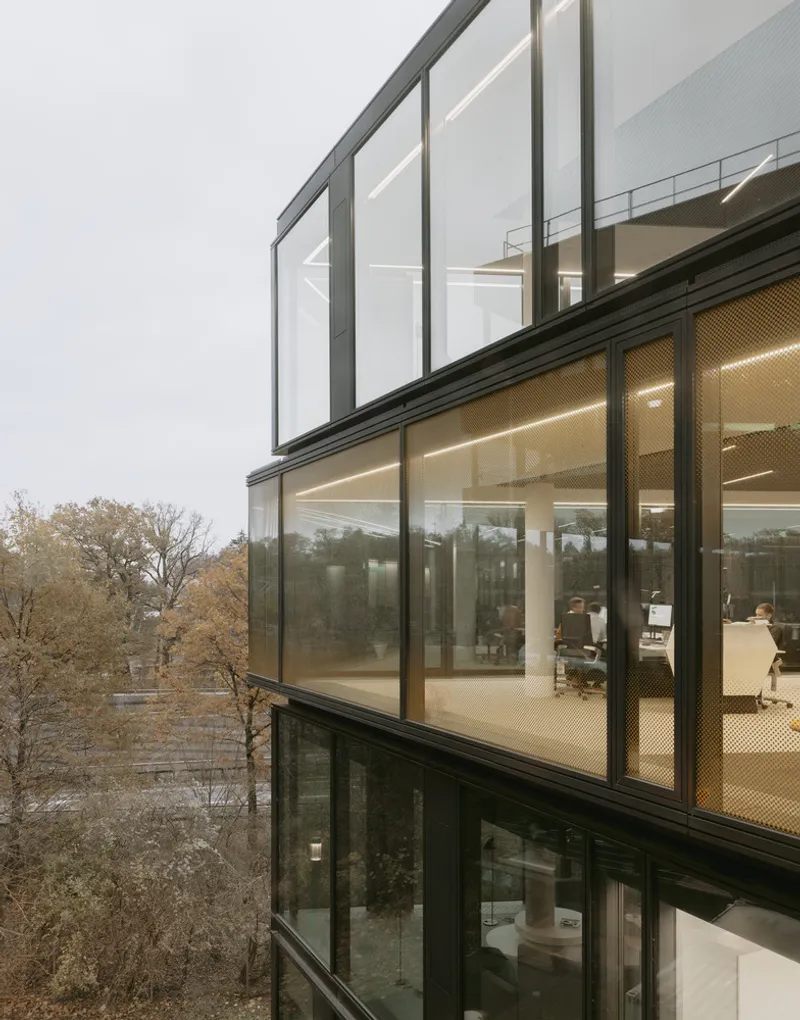
The architectural facade of the Continental Headquarters plays a key role in the building's energy efficiency. The smooth glass facade is paired with dark grey profiles, offering a sleek, modern look while ensuring the structure remains energy efficient. The use of color-printed glass panels highlights the Loop, visually connecting all the buildings and giving the complex a unified appearance.
The buildings feature an inverted facade design, which eliminates the need for external solar shading, further enhancing energy efficiency. This thoughtful design strategy minimizes the environmental impact of the campus while offering employees a bright, comfortable environment to work in.
Interior Spaces: Functionality Meets Innovation
An Environment Designed for Collaboration
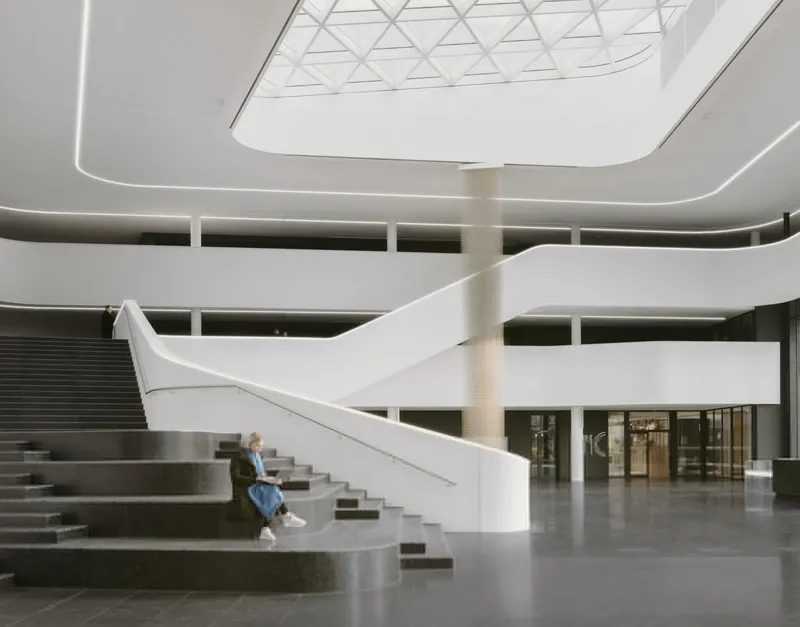
Inside the Continental Headquarters, the focus is on creating an environment conducive to both focused work and creative collaboration. The interior design, crafted by Ippolito Fleitz Group, offers a mix of quiet areas for concentrated work and open spaces for teamwork and spontaneous discussions.
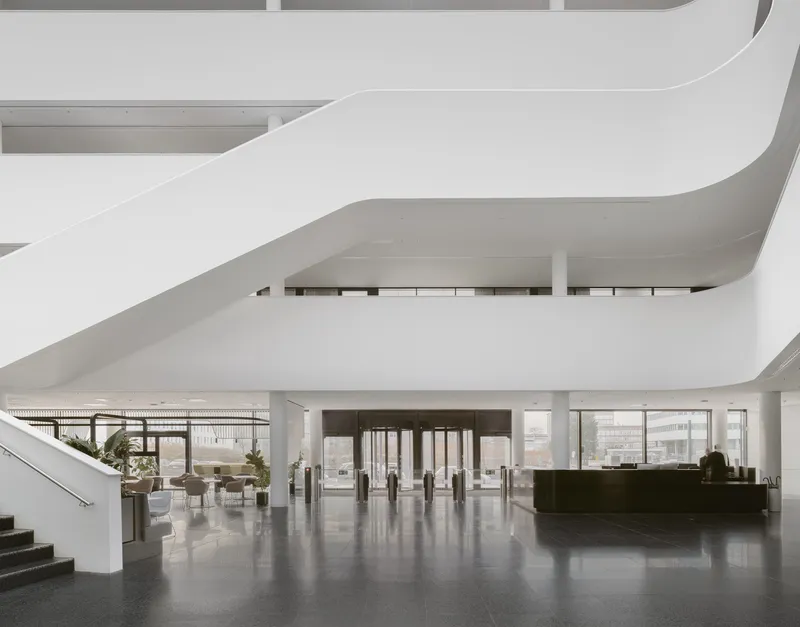
The two main atria, which serve as entry points to the building, create a welcoming atmosphere for both employees and visitors. These spaces provide easy access to key areas, including the company canteen and a TV recording studio, further enhancing the collaborative spirit of the headquarters. The design also incorporates a health center, ensuring that employees have access to wellness facilities.
A Green Campus: Integrating Nature
Outdoor Spaces for Work and Recreation
The Continental Headquarters is situated within a beautifully landscaped area that merges the built environment with the natural surroundings. The campus is surrounded by trees, with green courtyards providing a peaceful environment for outdoor workspaces and relaxation. The integration of nature is a key component of the design, promoting wellness and enhancing the overall work experience.
The design encourages outdoor meetings and provides employees with ample space to take breaks in a serene, natural setting. The combination of nature and architecture helps foster a sense of balance and well-being, contributing to the long-term health of the workforce.
The Future of Mobility Begins Here
The Continental Headquarters is a state-of-the-art example of modern architecture, where functionality, innovation, and sustainability intersect. Its dynamic design not only represents Continental AG's evolution but also creates an environment that promotes collaboration and the exchange of ideas. By integrating cutting-edge design elements, sustainable practices, and a focus on employee well-being, the headquarters is a reflection of the future of mobility.
In this architectural marvel, the vision for the future of work and technology is clear: collaboration, innovation, and a commitment to a sustainable future. The Continental Headquarters is more than just a building; it is a symbol of the company’s ambition to shape the future of the automotive and technology industries.
All photographs are work of Simon Menges


Popular Articles
Popular articles from the community


LT2A and OPEN Architectes Thread a Brick and Glass High School Through a Wooded Belgian Campus
In Braine-l'Alleud, a 3,000 m² wing for Collège Cardinal Mercier pairs pale brick with a glazed colonnade, deferring to a small chapel and a dense wood.

Architekt Andreas Gruber Scatters 23 Dark Timber Chalets Across a South Tyrolean Forest Edge
In Molini di Tures, Amonti Chalets breaks a resort into a hamlet of gabled timber houses, with parking, storage and services pushed into the slope.

longwave studio Reorganizes a 112 m² Tainan Apartment Around the Daily Routines of a Family and Two Cats
In Tainan, Taiwan, birch plywood, rust-red furniture and a freestanding plaster wall link arrival, storage, work and family life in one apartment.

Cube Design Draws an Ecological Corridor Between Two Shenzhen Hills with the Nankai Building
Beside Shenzhen's container docks, the Nankai Building pairs stacked balconies with a climbing green screen to connect two hillsides across its height.

Similar Reads
You might also enjoy these articles


Hodi-Mandai Geram
Project Function: Preservation and revitalization of the Intangible heritage and socio-spatial identity of the Hodi by Housing, Cultural Memory Center, Sacred Grove, landscape, local tourism economy


Olio Towers: A Mid-Rise for Performers That Fuses Housing, Rehearsal, and Stage
Located blocks from Houston's Theater District, this modular tower stacks living units around a central performance atrium.

Oasis: Modular Green Housing Carved into Dhaka's Urban Fabric
A shortlisted Plugin Housing entry reclaims unauthorized settlements in Dhaka with stepped concrete volumes, green roofs, and ventilation-driven design.

Black Hole: A Floating Megastructure for the Post-Physical Era
Emiliano Mazzarotto envisions a spherical, self-scaling arena where e-sports, digital hotels, and holographic stadiums replace traditional public space.

Explore Automobile Design Competitions
Discover active competitions in this discipline

Challenge to reimagine the Iron Throne

Photograph architecture without architects

Illustrate the lost glory of Angkor Wat - Render Challenge

Design challenge to reuse E-waste
Comments (0)
Please login or sign up to add comments
No comments yet. Be the first to comment!