

Cyclorama: A Mobile Architecture Spectacle
Cyclorama: A fusion of art, engineering, and motion, creating spectacles powered by cycling ingenuity.


A bicycle. A gear train. A tub of soap solution. A revolving wand. That is the entire parts list. Cyclorama, designed by Namira Budhwani, is a lightweight device that clips onto a bicycle and, when the rider pedals, produces a continuous stream of giant soap bubbles that trail behind through the street. No motor. No battery. No electricity. The spectacle runs on legs.
Shortlisted in the Madrid Art Bioscope competition on uni.xyz, Cyclorama treats the bicycle as a performance platform. The competition asked entrants to design a mobile art device for Madrid's streets. Most entries proposed screens, projectors, or speakers. Cyclorama proposed soap. The simplicity is the argument.
The Mechanism: How Pedalling Makes Bubbles
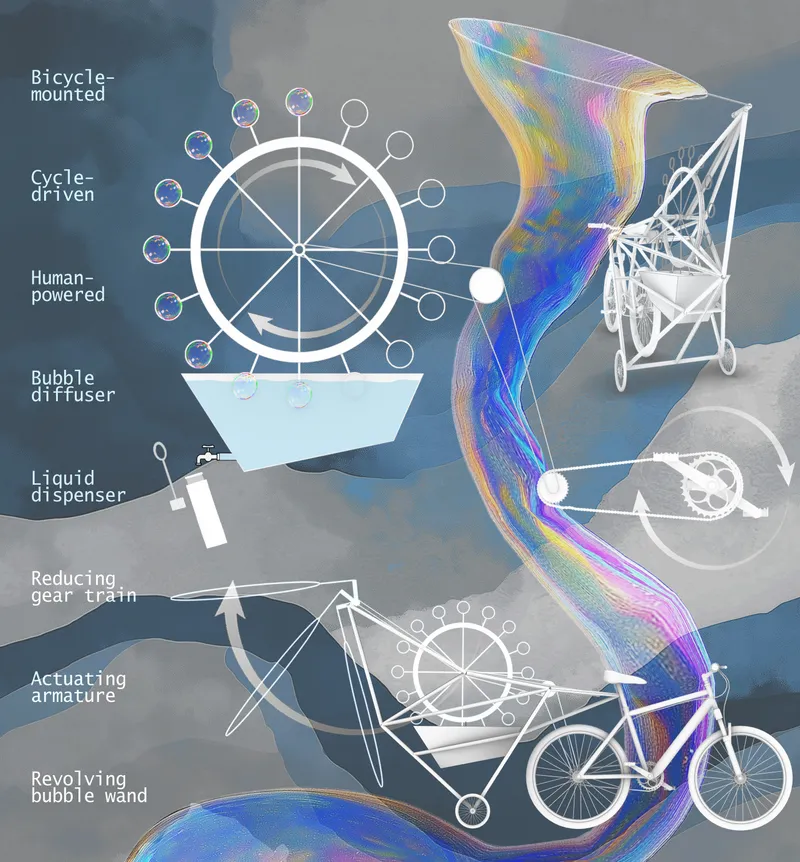
The mechanism diagram is the project's key drawing. Every component is labelled, from the bicycle-mounted frame at the top to the revolving bubble wand at the bottom. The pedalling motion drives a reducing gear train, which slows the rotation to a speed that produces large, stable bubbles rather than a fast spray. An actuating armature dips a wand into a liquid dispenser. The wand rises, catches air, and releases a bubble. The cycle repeats with every revolution.
This level of mechanical specificity is rare in an art competition entry. Most conceptual projects stop at the render. Cyclorama draws the gear ratios, the wand geometry, and the reservoir position. The project is buildable from the diagram alone, with standard bicycle parts and a hardware-store wand. That buildability is the design's strongest claim: anyone with a bike and a toolbox can produce the spectacle.
The Device: Fold It, Carry It, Ride It
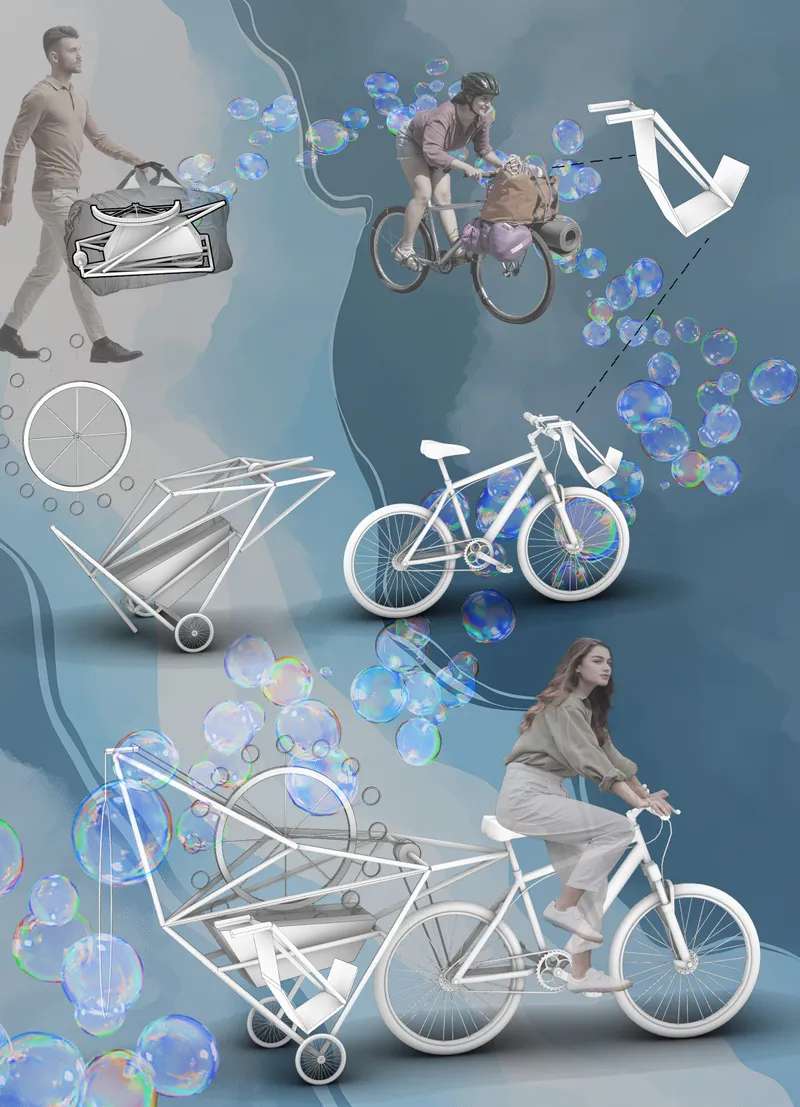
The use-case collage shows the three states of the device. Folded, it is a compact package a pedestrian can carry in one hand, small enough to fit into a bag or strap to a backpack. Unfolded and mounted, it clips to the rear of any standard bicycle. In motion, it trails a cloud of bubbles. A parent and child ride together on a tandem with the device producing bubbles behind them. A woman rides solo through a street.
The folding matters because it makes the project truly mobile. A device that only works mounted on a bike is limited to the ride. A device that folds into a carry-on is a performance you can take on the metro, check at a hotel, or ship to a festival. Cyclorama is designed to travel the way a street musician's guitar travels: always with you, ready to perform in any city.
The Street: Perform Anywhere
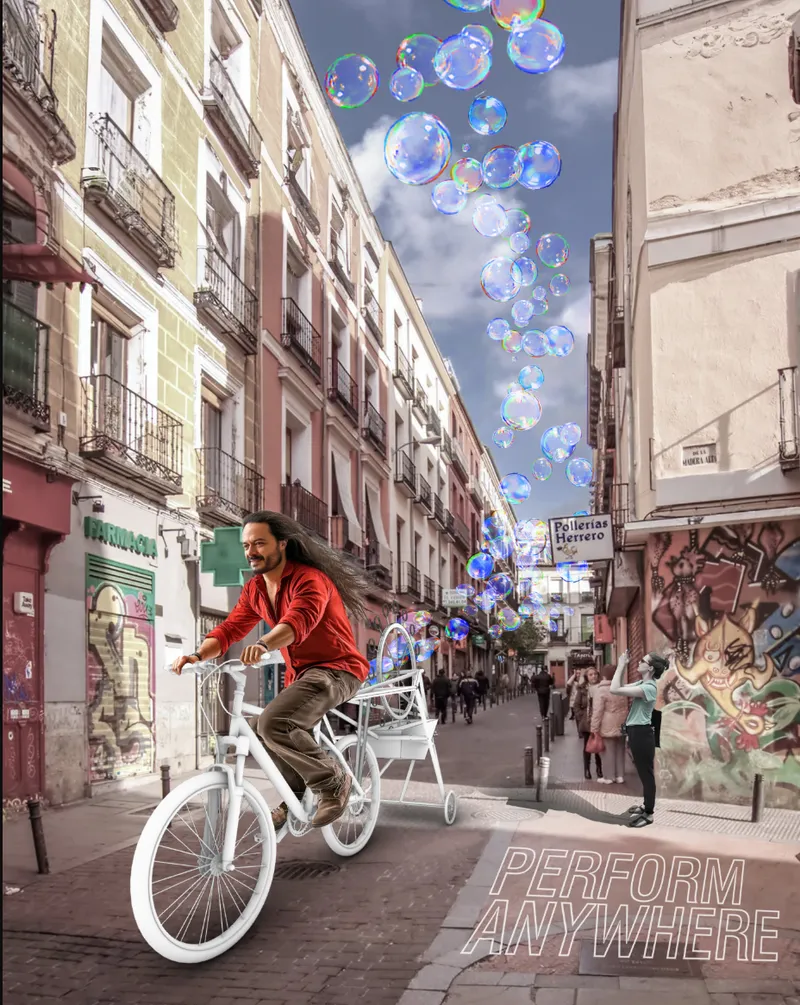
The Madrid street scene is the project's proof of concept. A cyclist rides down a narrow lane in what appears to be the Malasaña or Lavapiés quarter. Overhead, a cloud of iridescent soap bubbles drifts above the buildings. Pedestrians look up. The tagline at the bottom reads PERFORM ANYWHERE. The image is a photomontage, but the claim is real: the device works on any street wide enough for a bicycle, and the audience is anyone who happens to be there.
This is the project's most important insight. Public art usually requires a venue: a gallery, a plaza, a stage, a permit. Cyclorama requires a bicycle lane. The performance starts when you start pedalling and ends when you stop. The audience gathers spontaneously, drawn by the visual of hundreds of soap bubbles drifting above a city street. No ticket, no schedule, no curator. Just soap and motion.
The Spectacle: A Guitar Inside a Bubble
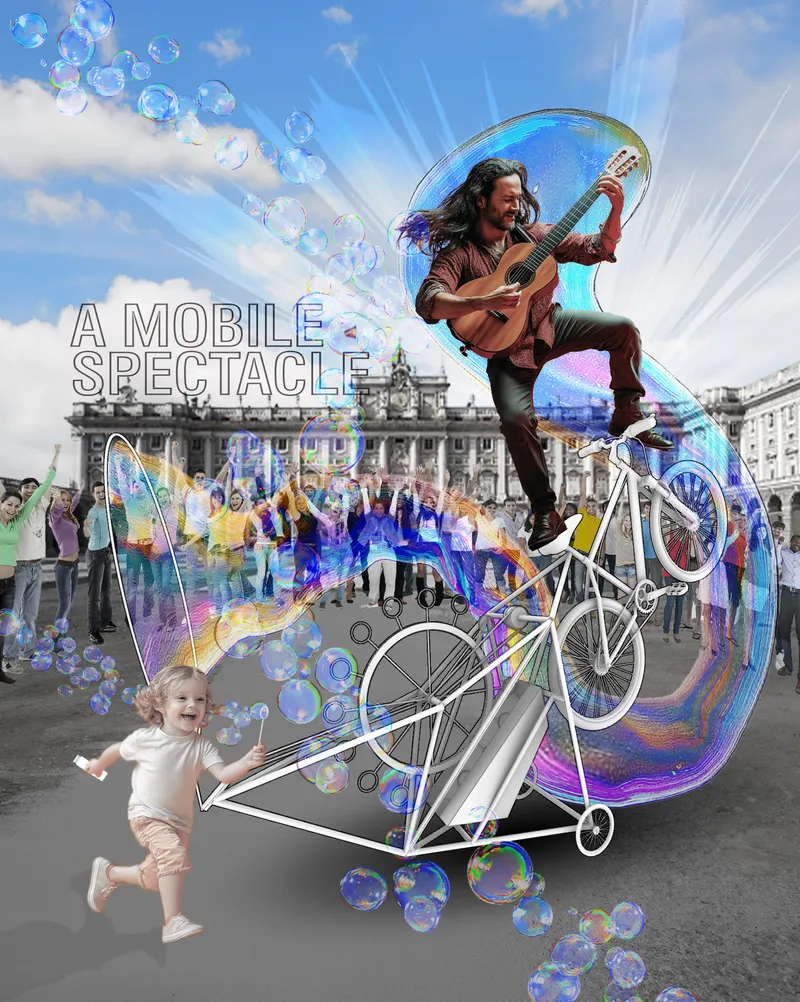
The spectacle collage is the project's most joyful image. A guitarist is shown suspended inside a giant soap bubble above the Cyclorama bicycle, playing to a cheering crowd. A child runs through smaller bubbles in the foreground. The image is deliberately surreal, part physics, part circus, part street art. It communicates what the experience feels like rather than what it literally is. The bubble is not really large enough to hold a guitarist. But the emotion of seeing hundreds of bubbles released into a city plaza is real, and this collage captures it.
The crowd in the background is the real subject. Cyclorama is not designed for the rider. It is designed for the people who see the rider pass. The project turns every street into a potential audience and every cyclist into a potential performer. That inversion, where the spectator is unplanned and the performer is moving, is what makes the project an art piece rather than a toy.
Why This Project Matters
The Madrid Art Bioscope competition asked for mobile art devices. Cyclorama answered with the simplest possible machine: a gear, a wand, and a soap reservoir mounted on a bicycle. The elegance is in the reduction. No electronics. No screens. No sound system. Just human power and the physics of soap film. The result is a spectacle that can be fabricated at home, carried on public transport, and performed on any street in any city.
For anyone studying mobile architecture, human-powered devices, or the design of public spectacle, Cyclorama is a useful reference. It proves that the most effective public art does not need a budget or a building. It needs a mechanism, a material, and a street. The rest is physics and delight.
View the Full Project
About the Designer
Designer: Namira Budhwani
Enter a Design Competition on uni.xyz
If mobile art, human-powered devices, or public performance architecture is the kind of work you want to explore, uni.xyz runs competitions year-round that reward proposals where the invention is as compelling as the drawing.
Project credits: Cyclorama by Namira Budhwani. Shortlisted, Madrid Art Bioscope (uni.xyz).


Popular Articles
Popular articles from the community


Singing Woman: Contemporary Architecture Inspired by Estonia’s Voice and the Sea
Singing Woman turns Estonia’s song culture into flowing opera house architecture, blending public life, landscape, sea, and national memory.
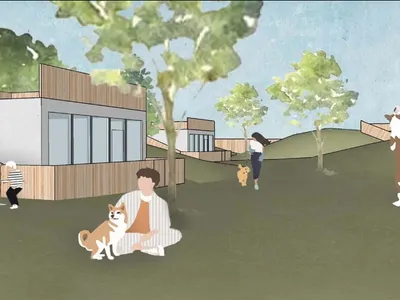
Temporary Home for Dogs: A Reversed Zoo Rethinks Animal Shelter Architecture
In Bucharest, a sinuous corridor and freed landscape flip the logic of containment, designing a shelter that works to make itself unnecessary.

Cloaked Colonization: A Mobile Underwater Habitat That Moves Like a Fish
Micah Abaya's shortlisted EHC Pacific entry reimagines ocean settlement as a dispersed network of self-sustaining architectural organisms.

The Amber Palace Opera: A Geological Fiction Surfaces on Tallinn's Baltic Waterfront
Pierre Brillard reimagines a Baltic legend as a public landscape, opera house, and waterfront promenade rooted in Tallinn's coastal identity.

Similar Reads
You might also enjoy these articles

Day and Night Park: A Time-Based Urban Newsstand in Beijing
A temporary urban newsstand in Beijing blending travel, light, and reading through poetic colors, compact form, and community-focused design.

Modernist Patio Renovation in El Masnou, Barcelona by Oliver Segura Arquitectura + Cebrià Arquitectura
Modernist patio renovation blending tradition and innovation with a movable pool, leveled floors, and Catalan materials in El Masnou.

Alto Residencial Coop: Cooperative Housing Development in Santiago de Compostela by Carbajo Barrios Arquitectos
A linear cooperative housing complex blending white volumes and perforated metal façades, enhancing community living, natural light, privacy, and urban integration.
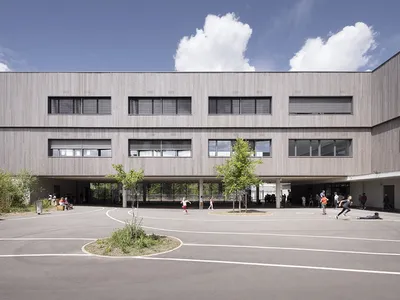
Vil Genis School by BPA ARCHITECTURE – Massy, France
Vil Genis School in Massy, France, features sustainable design, south-facing classrooms, community integration, accessible spaces, and modern educational architecture.

Explore Cycling Bridge Competitions
Discover active competitions in this discipline

Challenge to design a portable theatre

Challenge to design a portable music platform

Challenge to design an open learning module for the elderly
Comments (0)
Please login or sign up to add comments
No comments yet. Be the first to comment!