

DeHue Coffee: A Modern Take on Traditional Vietnamese Coffee Shop Architecture
DeHue Coffee blends traditional Vietnamese architecture with modern design, creating a sustainable, culturally rich coffee shop experience.


DeHue Coffee: Blending Tradition with Modernity
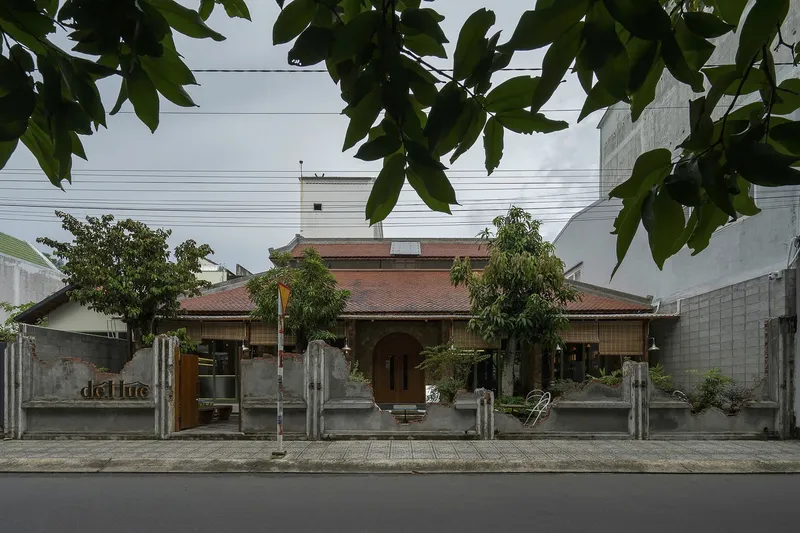
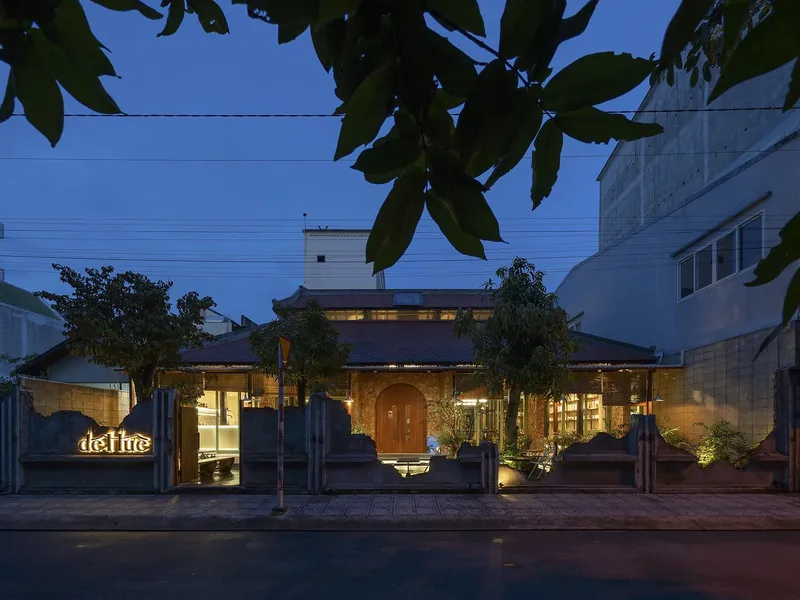
Nestled in Rạch Giá, Vietnam, DeHue Coffee by son.studio exemplifies the union of traditional Vietnamese architecture and modern design sensibilities. Architect Nguyen Bao Son meticulously transformed a classic wooden Hue house into a contemporary coffee shop while preserving its cultural heritage. This architectural renovation not only revives a historical building but also aligns with sustainable practices and modern aesthetics, appealing to a new generation of visitors.
Architectural Vision and Preservation
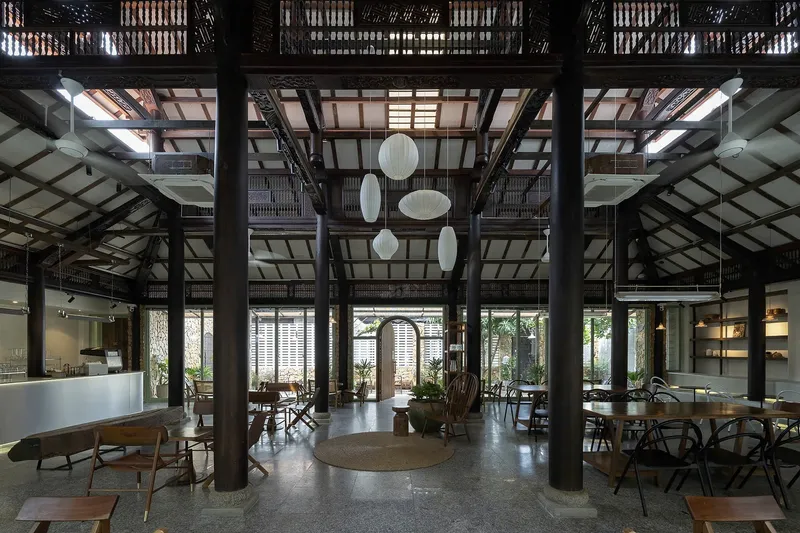
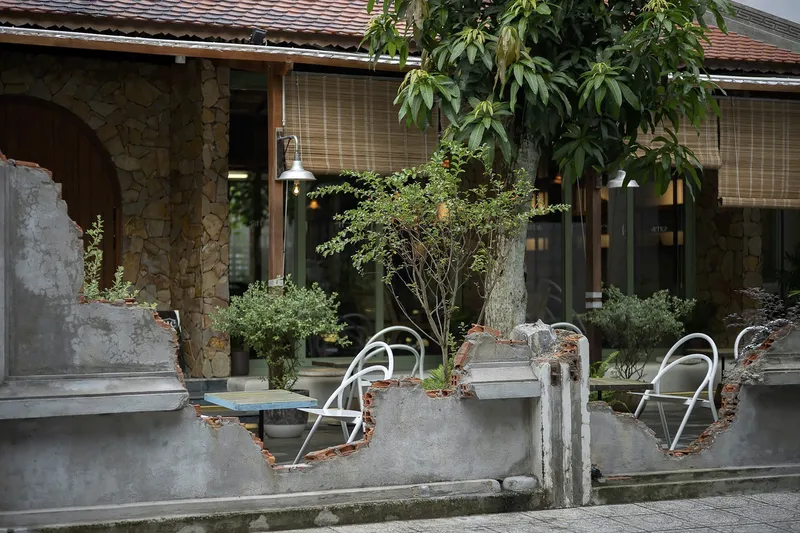
DeHue Coffee’s design integrates the traditional elements of Hue architecture, retaining original columns, beams, and roof structures. This structural preservation was vital to maintaining the authenticity of the building. To contrast with the preserved wooden framework, stone cladding was added to border columns, merging historical craftsmanship with modern elements that accentuate the rustic appeal of the original structure.

Key Modifications:
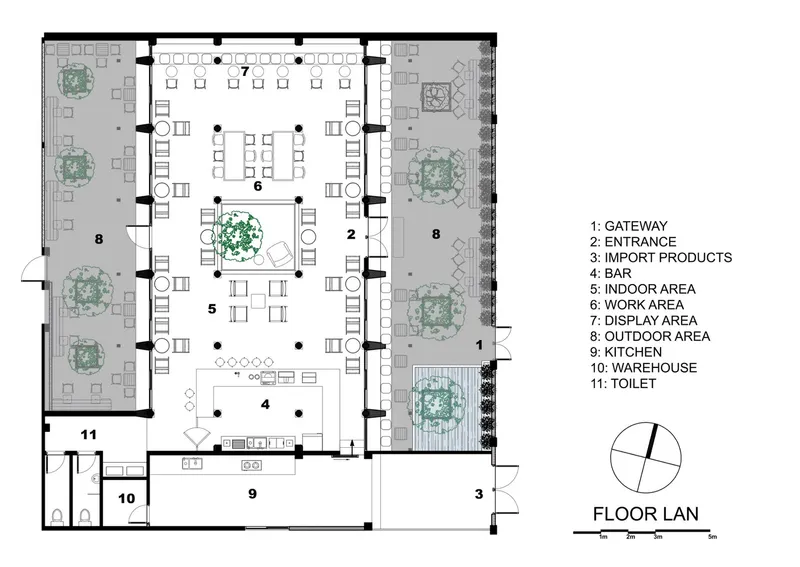
- Bar Area: A bar was constructed in a strategic corner to improve functionality without disturbing the spatial flow of the original design.
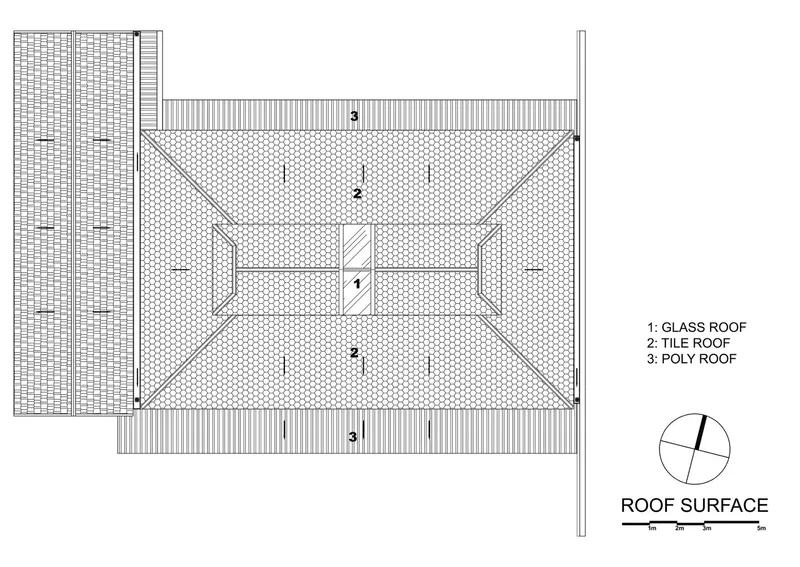
- Open Roof: By installing an open roof, the design enhances the influx of natural light, brightening the interior and reducing energy needs.
Sustainable Design Elements
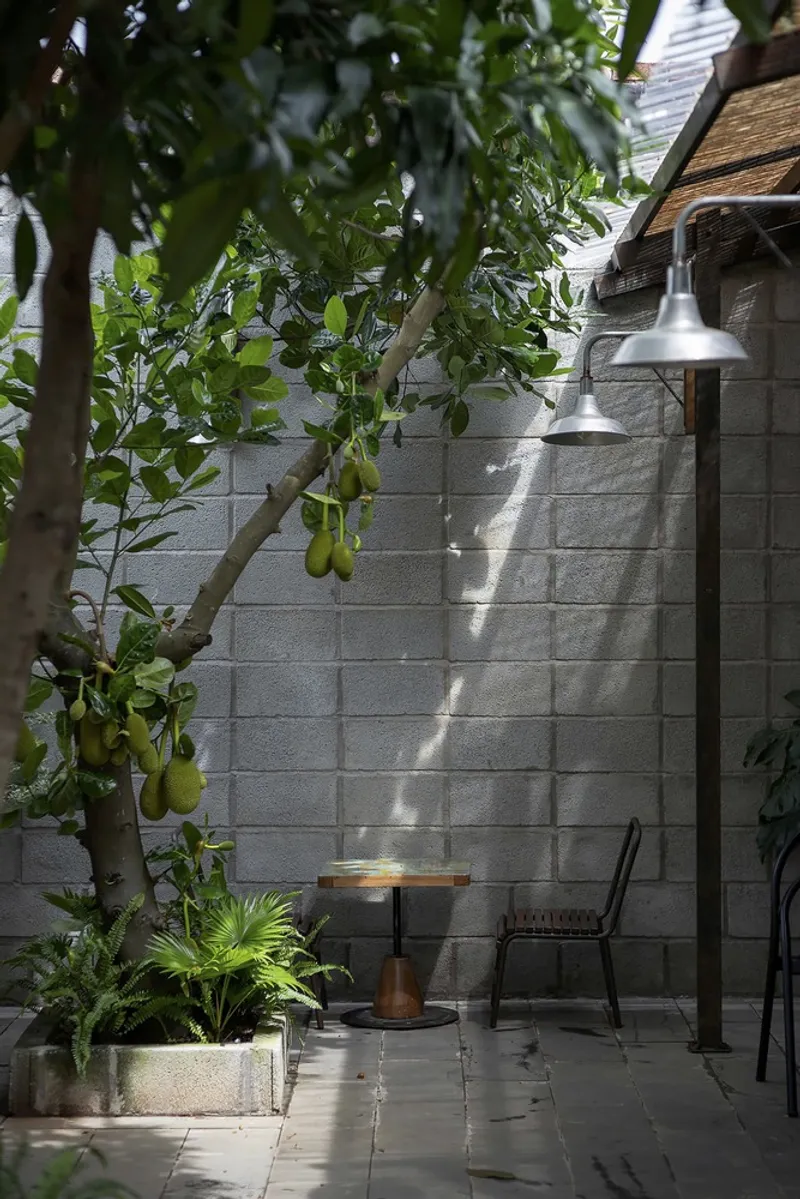
Incorporating sustainable materials, the design utilizes reclaimed wood sourced from various traditional homes in Hue. This practice of upcycling not only aligns with DeHue’s commitment to eco-friendly practices but also enhances the unique character of the space. The use of glass to connect the indoor space with a lush garden allows for natural cooling, optimizing the energy footprint of the café.
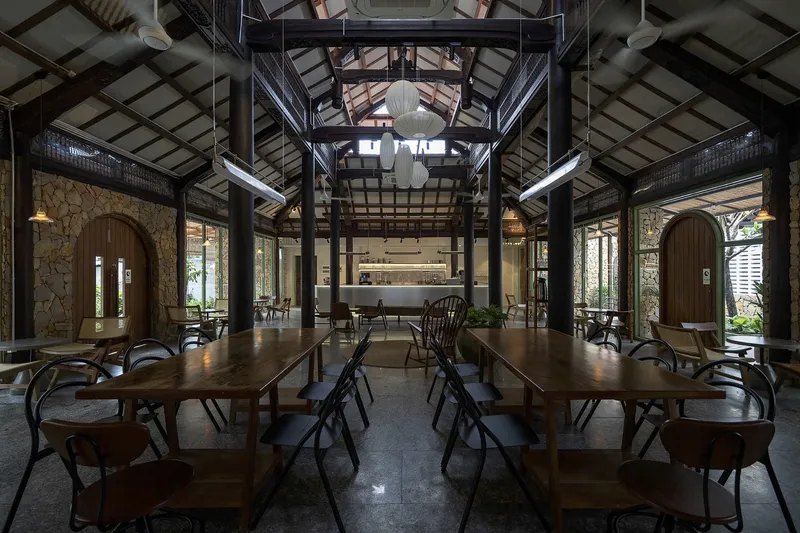
Garden and Landscaping:
The garden, rich with fruit trees, creates a serene environment and provides shade, minimizing direct sunlight exposure. A pond strategically placed near a large tree in the front yard further moderates the temperature, providing a naturally cooler microclimate for patrons.
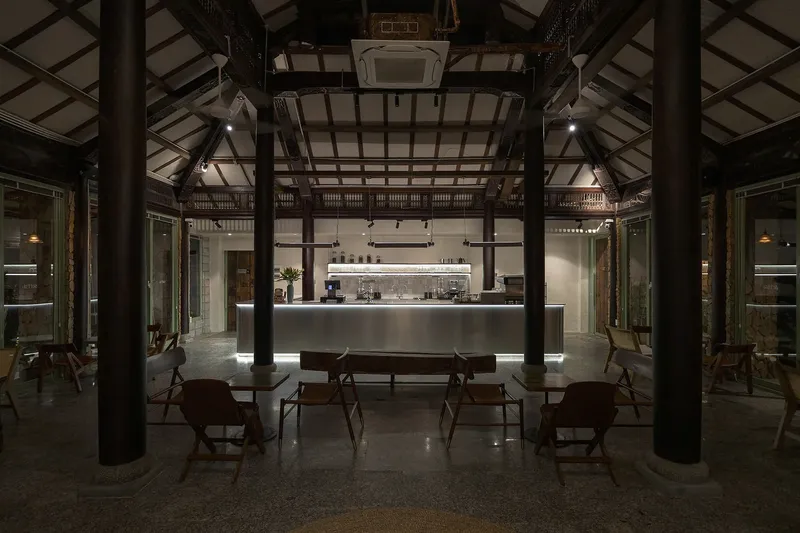
The Front Yard and Community Visibility
DeHue Coffee’s front yard is an invitation to the public, designed to improve visibility and accessibility. By lowering the fence, the architects created an open atmosphere, allowing the community to appreciate the historical architecture from the outside. This open design choice reflects the intent to integrate traditional Vietnamese architecture into the surrounding urban landscape.
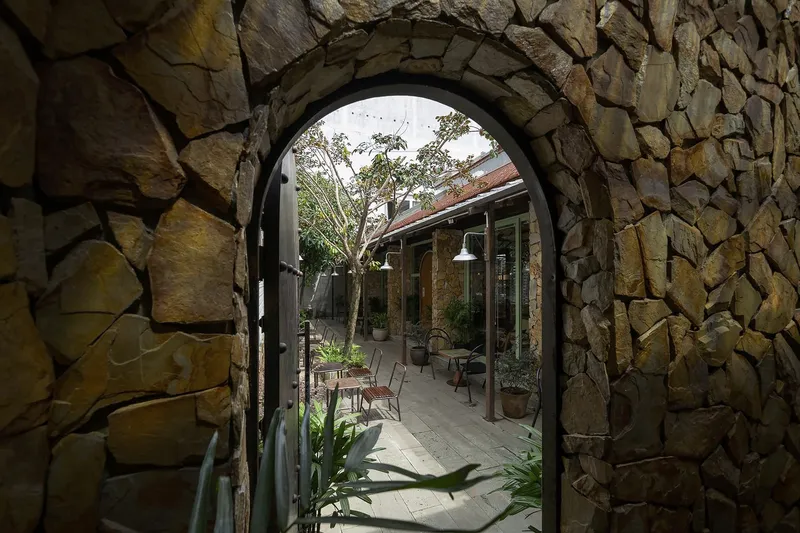
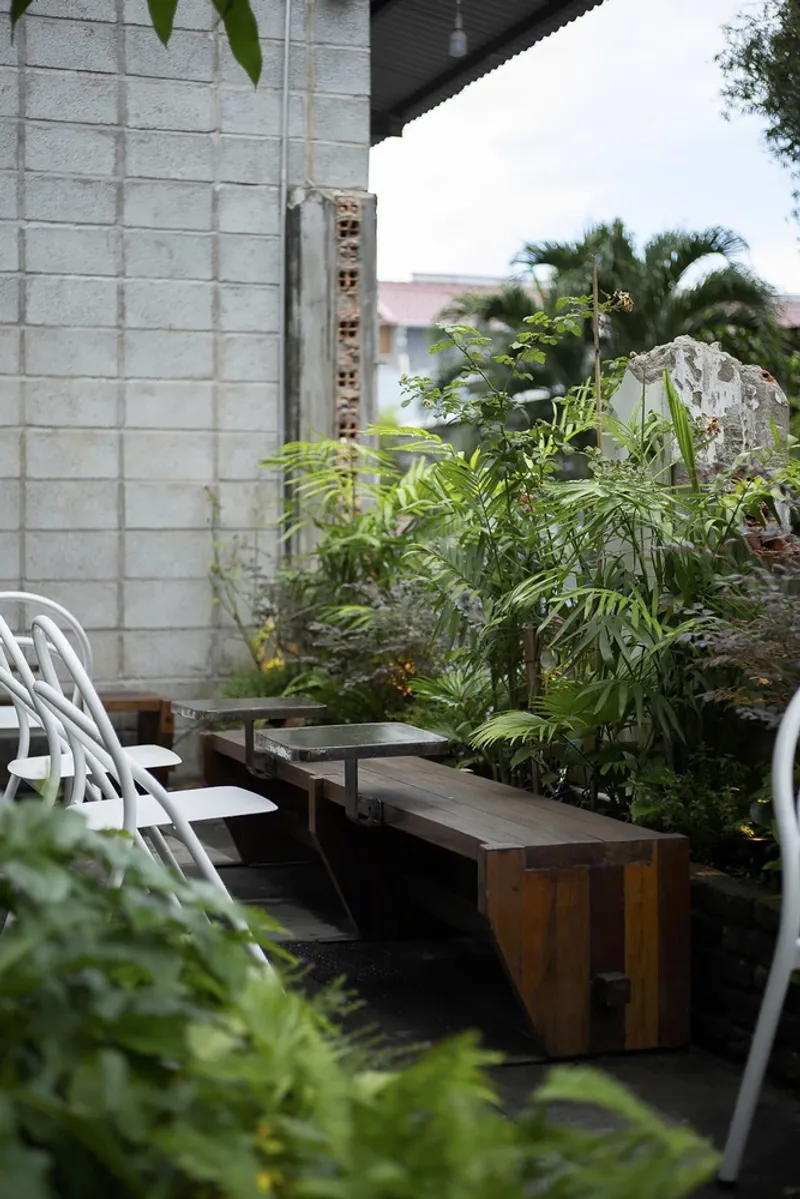
Innovative Roof Extensions for Weather Protection
Due to its coastal location, the café required structural adaptations to withstand varying weather conditions. Roof extensions at the front and rear serve as protection from the elements, especially during the rainy season. This addition maintains the building’s integrity and enhances the comfort of visitors while aligning with traditional Hue architecture’s practical and aesthetic principles.
Interior Design: A Fusion of Hue’s Heritage and Modern Comfort
Inside, the reclaimed wood adds warmth and character, a tribute to the original home’s legacy. Modern furnishings, such as tables and chairs with minimalist designs, complement the rustic aesthetic, ensuring comfort while respecting the historical ambiance. The blend of reclaimed wood and contemporary décor embodies the balance of heritage and modernity that defines DeHue Coffee.
A Tribute to Vietnam’s Architectural Heritage
DeHue Coffee is more than a coffee shop; it’s an homage to Hue’s rich architectural history, adapted for modern tastes and sustainability. This project challenges the notion that traditional Hue architecture is bound to antiquity, presenting a forward-thinking, environmentally conscious reimagining of an iconic Vietnamese style. By blending the past and the present, DeHue Coffee provides a meaningful, aesthetic experience, inviting patrons to appreciate the timeless beauty of Vietnamese architecture.
Photographs are work of Quang Dam


Popular Articles
Popular articles from the community


U.GA Architects Wraps an Oval Rooftop Pool in Curved Board-Formed Concrete on Busan's Jeollidan-gil
In Busan's Jeonpo-dong, a 454 m² mixed-use block stacks a neighborhood facility, guest rooms and an oval rooftop pool inside spiraling concrete walls.

GROUP A Strips a 1969 Rotterdam Harbor Headquarters to Its Frame and Wraps It in Timber Louvers
In Rotterdam's M4H harbor district, Ferro Offices reuses a 1969 frame, adds one timber storey and reaches BREEAM-NL Outstanding.

David Ortega Stacks a Two-Story Mexico City Penthouse Around a Steel Stair and a Pergola-Shaded Roof Terrace
In Colonia Roma, a 300 m² penthouse uses oak joinery, a planted steel stair and a slatted roof pergola to make a new-build apartment feel like a house.

Architekt Andreas Gruber Scatters 23 Dark Timber Chalets Across a South Tyrolean Forest Edge
In Molini di Tures, Amonti Chalets breaks a resort into a hamlet of gabled timber houses, with parking, storage and services pushed into the slope.

Similar Reads
You might also enjoy these articles


Hodi-Mandai Geram
Project Function: Preservation and revitalization of the Intangible heritage and socio-spatial identity of the Hodi by Housing, Cultural Memory Center, Sacred Grove, landscape, local tourism economy


Olio Towers: A Mid-Rise for Performers That Fuses Housing, Rehearsal, and Stage
Located blocks from Houston's Theater District, this modular tower stacks living units around a central performance atrium.

Oasis: Modular Green Housing Carved into Dhaka's Urban Fabric
A shortlisted Plugin Housing entry reclaims unauthorized settlements in Dhaka with stepped concrete volumes, green roofs, and ventilation-driven design.

Black Hole: A Floating Megastructure for the Post-Physical Era
Emiliano Mazzarotto envisions a spherical, self-scaling arena where e-sports, digital hotels, and holographic stadiums replace traditional public space.

Explore Architecture Competitions
Discover active competitions in this discipline

Challenge to reimagine the Iron Throne

Photograph architecture without architects

Illustrate the lost glory of Angkor Wat - Render Challenge

Design challenge to reuse E-waste
Comments (0)
Please login or sign up to add comments
No comments yet. Be the first to comment!