
Dining With Vincent
Vincent Van Gogh was recording the sight he saw with painting throughout his lifetime. Our intense is to trend the site as our painting board, drawing the city of Arles with a “filter” of Vincent Van

The concept behind the project
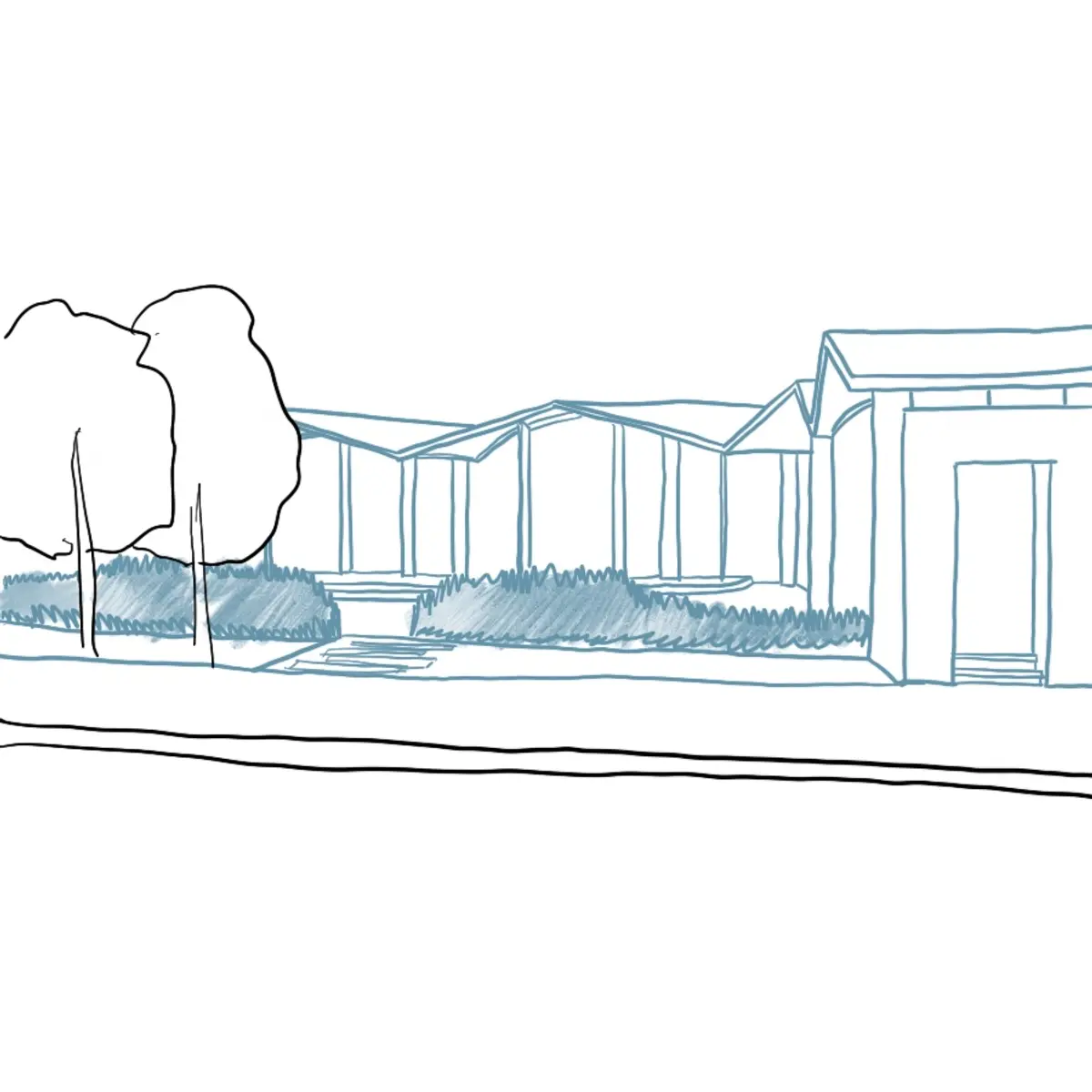
Vincent Van Gogh was known as an unappreciated genius when he was alive. Some studies claimed that he was keeping a low profile and feared success. However, such facts are hard to prove after his death and are kept as a mystery. We are trying to create a mysterious experience throughout the journey as the main theme of the restaurant. Far away from the street, one can see a modern single-storey building sharing the language of the neighboring residential area with a solid light-colored body and a reddish-pitched roof. Once getting closer, one can discover another side of the restaurant, an opened and fully glazed curve building with elements from Vincent Van Gogh’s painting.
 Far away from the site
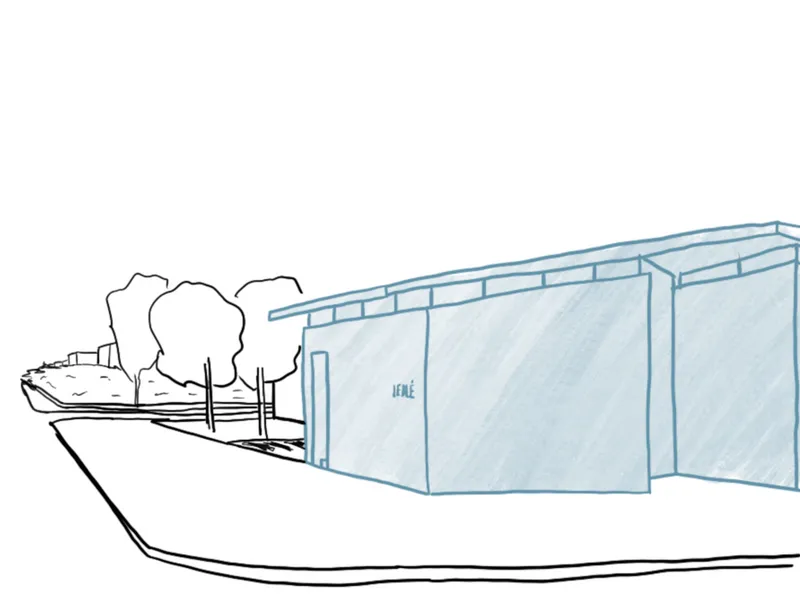 Getting closer...
 Discover the hidden side of the building!
 Elements from Vincent Van Gogh's artwork: Circle and Vortex
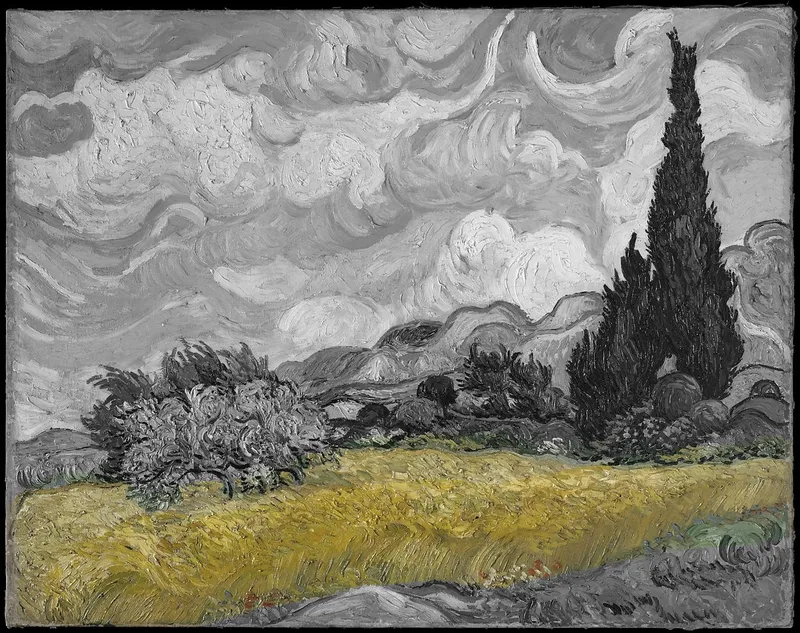 Elements from Vincent Van Gogh's artwork: Wheat
The journey and experience of the project
Besides the basic programs, we introduced the transition spaces and divided the massing into three parts to create a unique experience inside the facilities. From the reception to the main dining area, we created an abstract atmosphere with the painted transition. We tend to draw the customers from reality to the painting world of Vincent Van Gogh, and we designed the main dining area to immerse the customers into a painting of him.
The design concept for the interior of the restaurant is referenced in Vincent Van Gogh’s brush strokes, color tone, and ratio. The material chosen for the interior design is based on imitating the heavy-body paints and the haphazard brush stroke of his artworks. Since the signature of his artworks consist of many dashes and curls which formed a vibrant surface texture, we designed the furniture by considering and applying the details, colors, and shapes to the interior furniture. From ceiling pendant light, tile wall, flooring, and carpet to loose furniture for example sofa, dining table, and chair, we aim to provide an immersive experience of dining with Vincent in his sight and style.
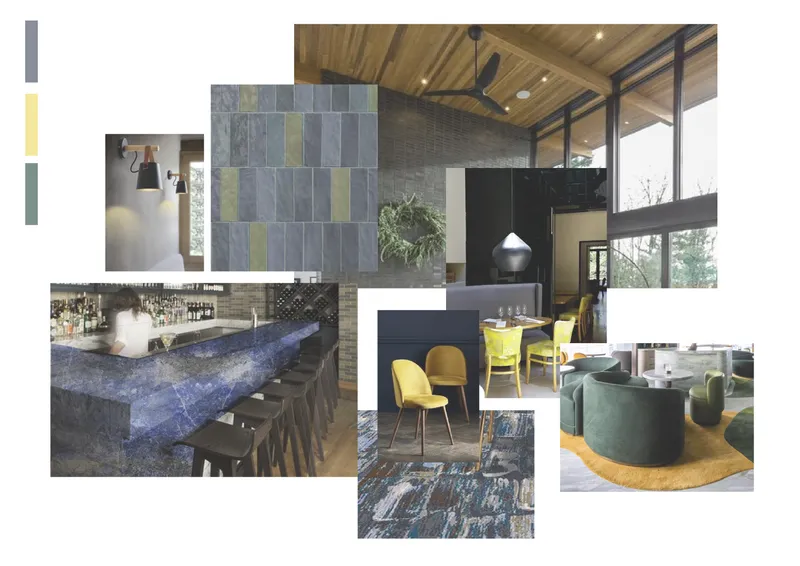 Mood board of the interior design
From the dining area to the recreational space, the clear and open transition tends to bring the users back to reality. After experiencing the sight of Vincent Van Gogh, one may learn more about his works through the reading lounge and art studio.
The curve facade extended and established the form of the landscape. Two levels of wooden decks provided outdoor spaces for the dining area and art studio, increasing the variety of experiences. Furthermore, there’s a layer of wheat-like bushes spread out from the center of the site, influenced by the well-known “Wheat fields” series. With the frosted glass used for the curved facade, the view of the landscape could create a feeling of Vincent Van Gogh’s brush strokes and work in concert with the design of interior space and the transition spaces.
On the south side of the site, a car park space was used to accommodate visitors' vehicles to minimize the impact on the neighboring residents. The brick wall of the car park and trees aside act as a solid block wall to the building, echoing the concept of keeping the mystery of the building inside the site. The orientation of the landscape inclined from the site boundary to achieve such an idea and keep the exposure of the building in the narrowest way.
Future planning
In the future, the brick wall of the car park can be demolished and replaced with a new block for the restaurant’s expansion. On top of that, the restaurant may adopt the abandoned ground opposite and create a pocket courtyard in between.
 Future expansion
The story behind the final product
In the beginning, we were trying to design the restaurant with influences from Vincent Van Gogh’s art pieces. We came up with two twisted blocks with a pitched roof. However, it was incompatible with the neighborhood of Arles. Therefore we decided to take a step back and design differently. We focused on the personalities and life of Vincent Van Gogh and established the concept of our design. We appreciated his lofty personality of low profile and we would like to celebrate it with our design. After various tries to adjust the balance of the contrast between the two faces, the outcome has been arrived.
 Process 1
 Process 2
 Process 3

Popular Articles
Popular articles from the community


The Amber Palace Opera: A Geological Fiction Surfaces on Tallinn's Baltic Waterfront
Pierre Brillard reimagines a Baltic legend as a public landscape, opera house, and waterfront promenade rooted in Tallinn's coastal identity.

Opera by the Sea Estonia: Three Shells Dissolving Architecture into Tallinn's Coastline
A winning opera house proposal replaces monumental form with interconnected shells that blur the boundary between building, park and Baltic Sea.

Temporary Home for Dogs: A Reversed Zoo Rethinks Animal Shelter Architecture
In Bucharest, a sinuous corridor and freed landscape flip the logic of containment, designing a shelter that works to make itself unnecessary.
Faces of the Soviet Avant-Garde: Turning Moscow's Street Names into an Open-Air Museum
A network of sculptural installations across a Moscow residential district transforms forgotten architect names into spatial encounters with cultural memor

Similar Reads
You might also enjoy these articles
The Rhythm of Seasons
A Farmers' Market Connecting Nature and the City

More Than a Building-Designing a Living System
More Than a Building-Designing a Living System
Base Beyond
DESERT COMPOUND ARID: TOURISM OF ABSENCE AND ABUNDANCE

Explore Conceptual Architecture Competitions
Discover active competitions in this discipline


Challenge to reimagine the Iron Throne

Photograph architecture without architects

Illustrate the lost glory of Angkor Wat - Render Challenge

Design challenge to reuse E-waste
Comments (0)
Please login or sign up to add comments
No comments yet. Be the first to comment!