

ec OASIS tem
A challenge for designing a modern sustainable cultural center in Morocco

What could be more exciting for a student of sustainable architecture than climatic design?
For us it happened when we were searching for a competition related to our studying field and guess what? We faced the oasis cultural center competition. our great interest in Morocco and its colorful architecture made us dive into it, and of course the harsh climate of this region intensified it too.
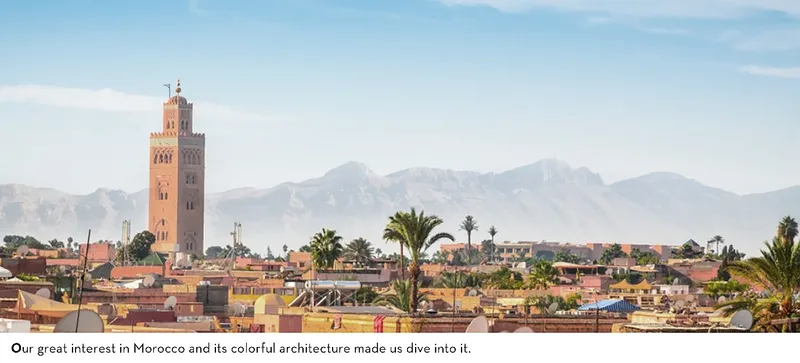
The design began with a study of Morocco, from culture to climate and architecture and the history of this ancient land. Because the goal was to design a cultural center with the effects of green architecture, and how it fits in with the rich culture of this region.
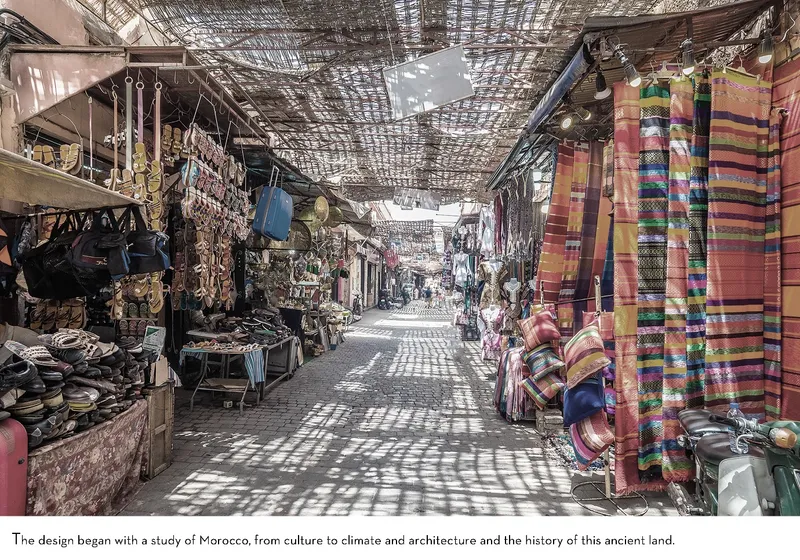
First of all, the word “OASIS” made us think deeply, a word that, after further study, we became familiar with its different aspects and finally became the main idea of forming our project.
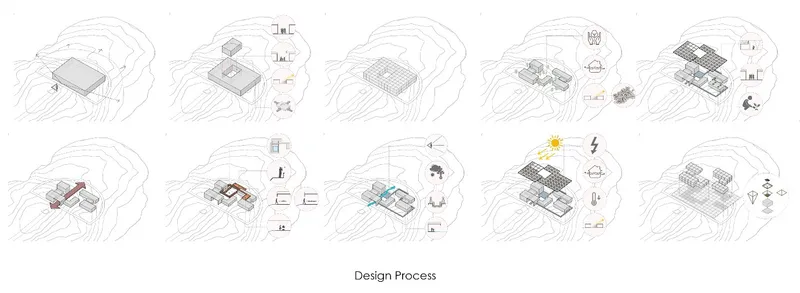
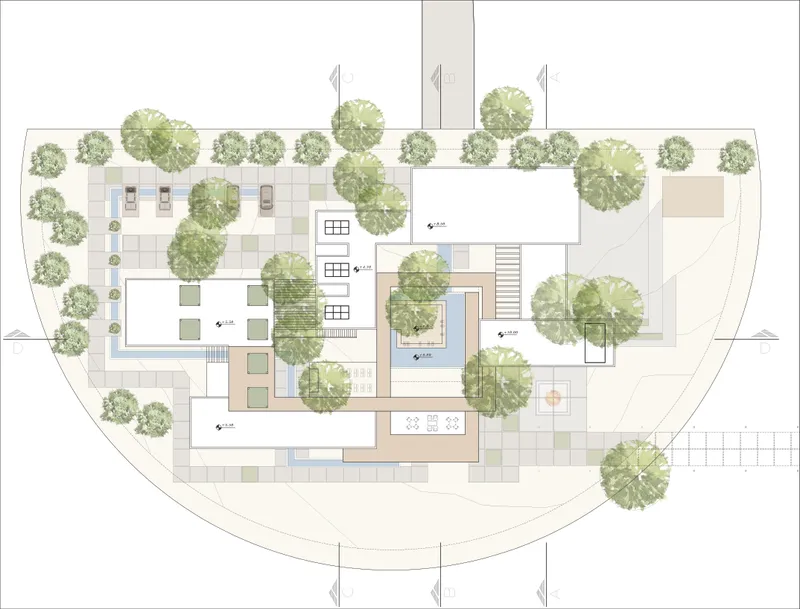
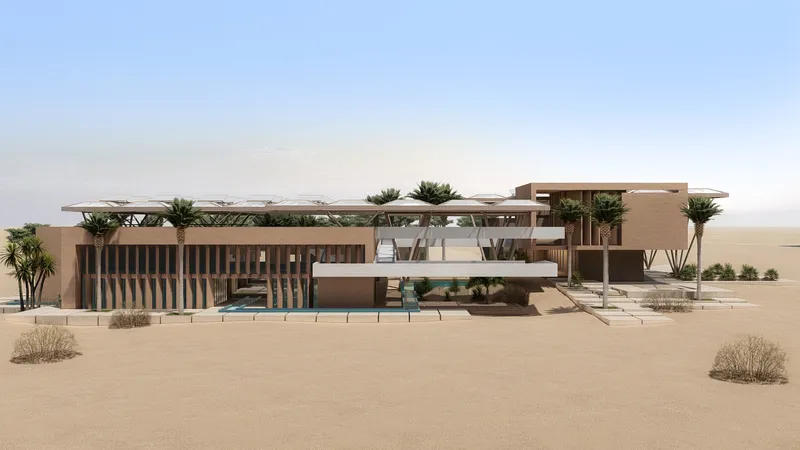
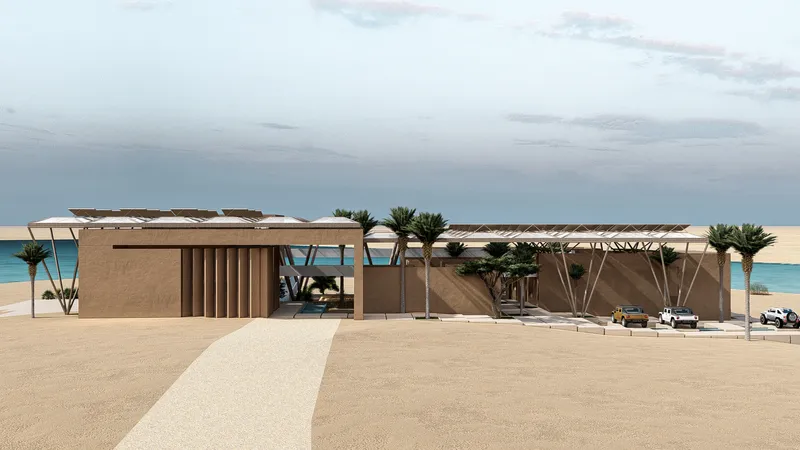
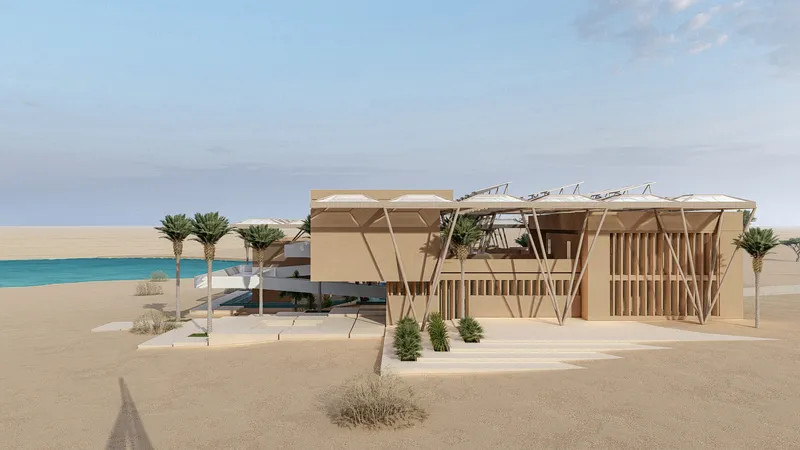
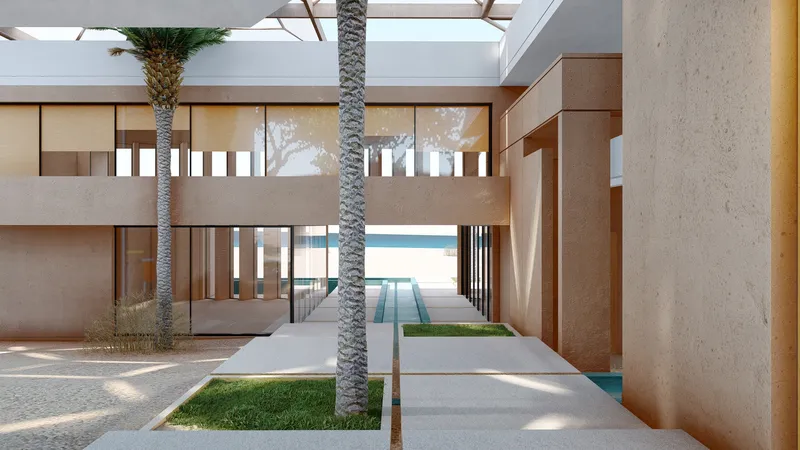
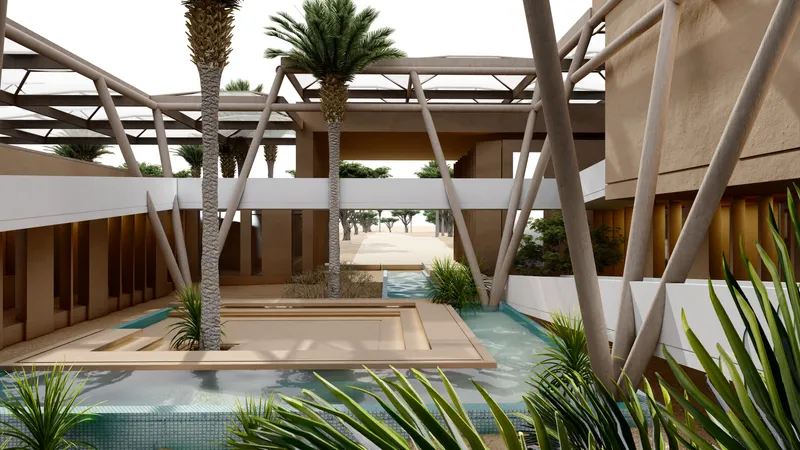
The main concept of our project as mentioned, is “oasis” and its historical dimension, and we have tried to design a building which performs like a microclimate and compatibles with the environment. A complex that contrasts with the harsh climate outside and creates a favorable atmosphere inside. Preserving the existing vegetation and using the native Moroccan architecture, paying attention to the view and landscape and the desert sky were other points of interest in our design.
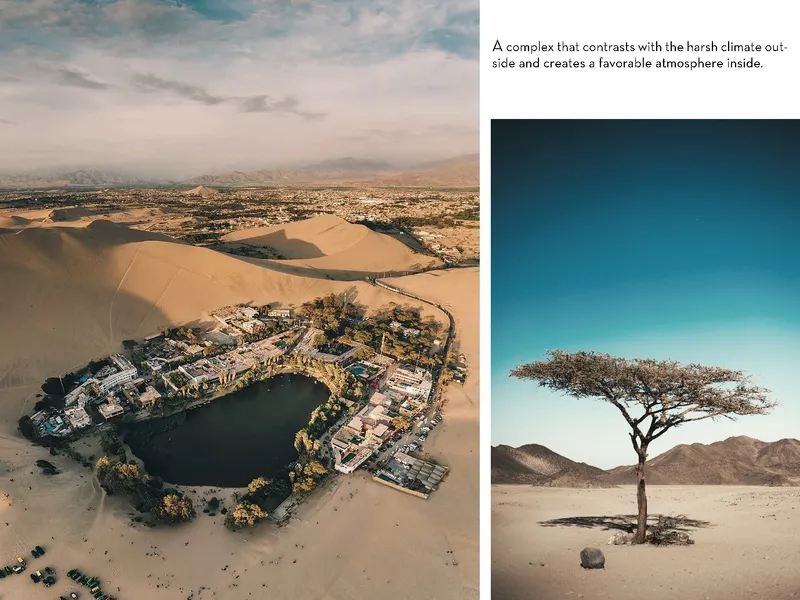
During the design, many efforts were made to achieve the right answer, and finally, based on SWOT method by examining the strengths and weaknesses, potentials and threats of the alternatives, the best option was chosen to be developed.
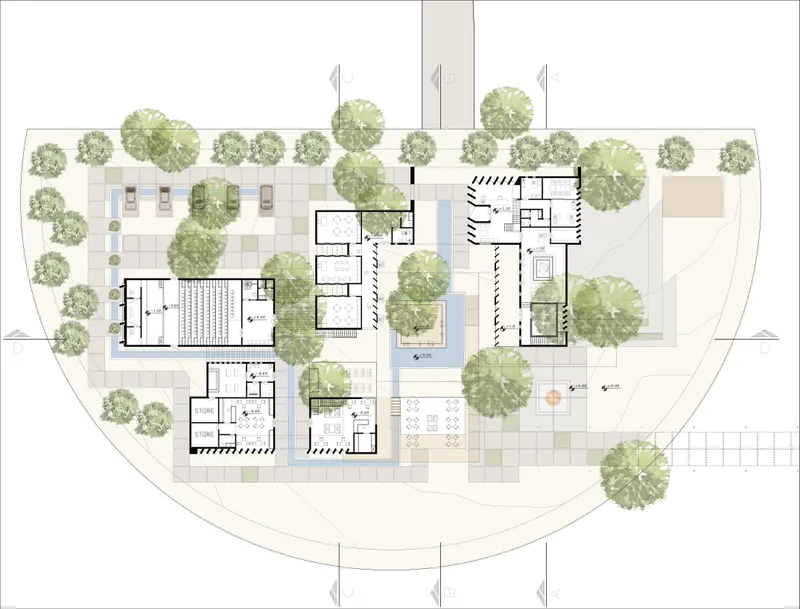
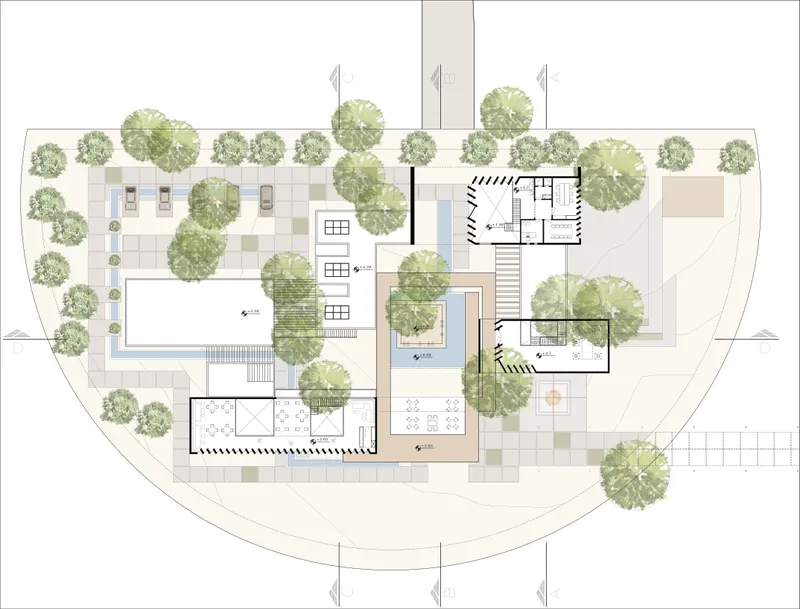
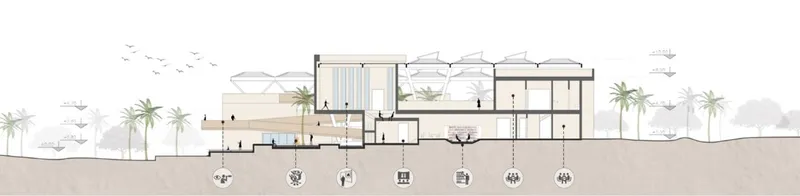
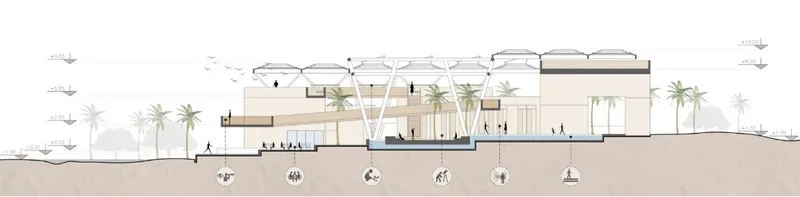
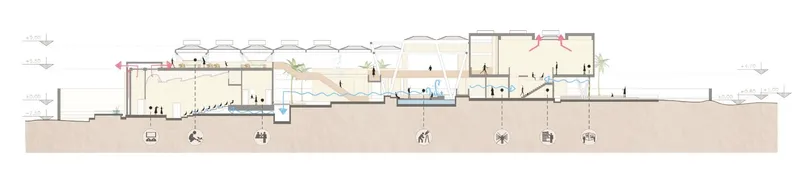
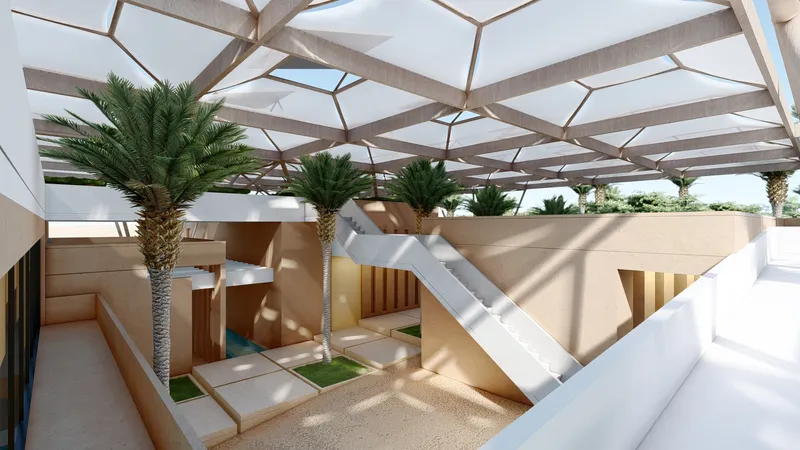
An important issue in this design was the connection of the masses and the site, which occurred by the middle-storyteller ramp, that provides not only a path for movement but also spaces to pause along its length. In addition to access to the main spaces, this ramp provides a view deck to the lake. In fact, entering this ramp, one goes on a journey planned by the architect!
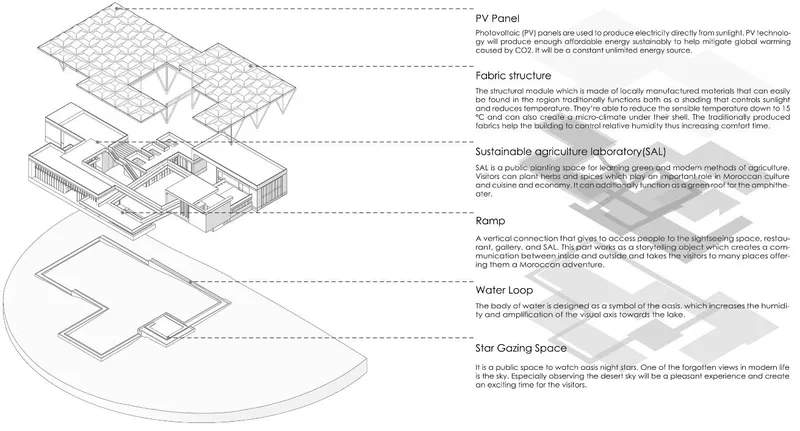
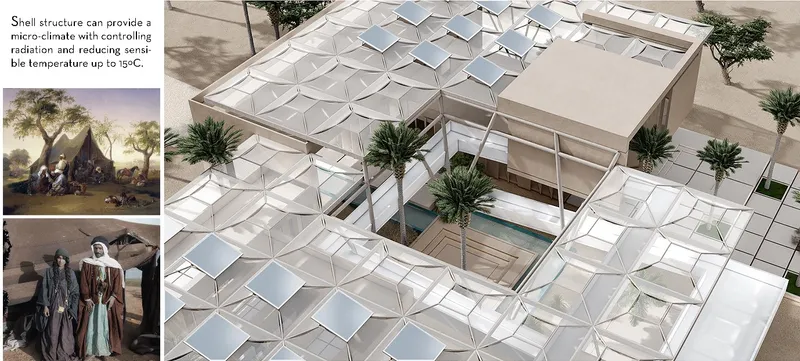
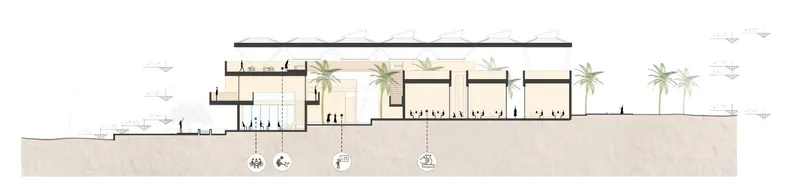
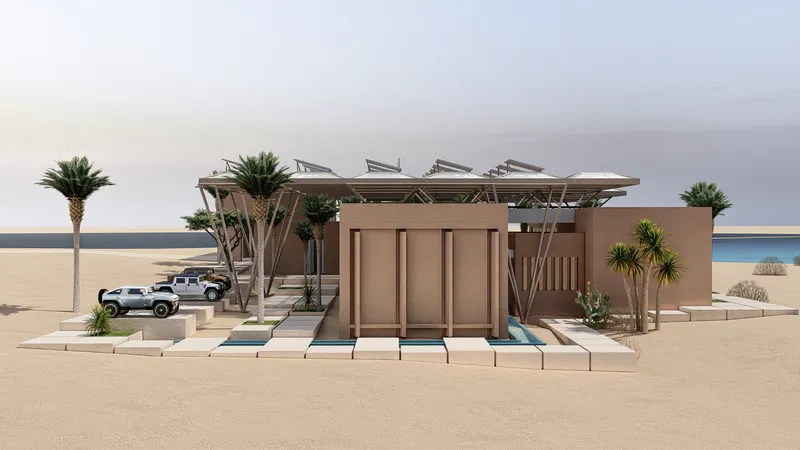
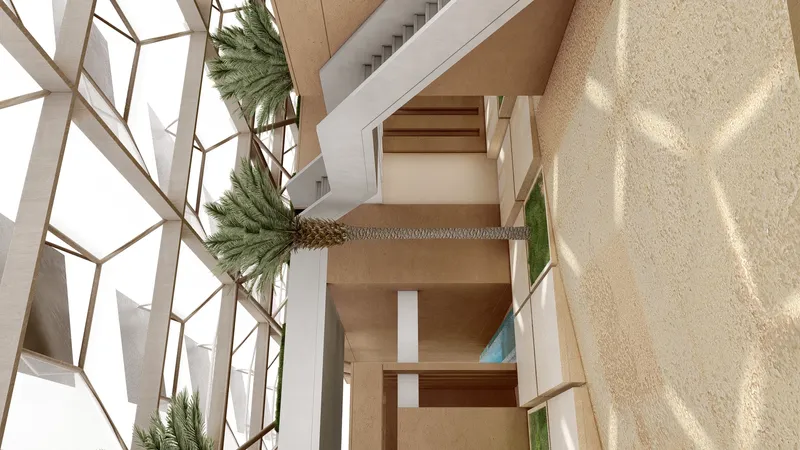
The impact of the climate on our project is undeniable. The harsh Moroccan climate and the analyzes we did on it, led us to solutions to adapt it to the environment. As one of the solutions, designing a multi-function shell can be mentioned that covers our cultural center like a second layer. Shell structure can provide a micro-climate with controlling radiation and reducing sensible temperature up to 15ºC.
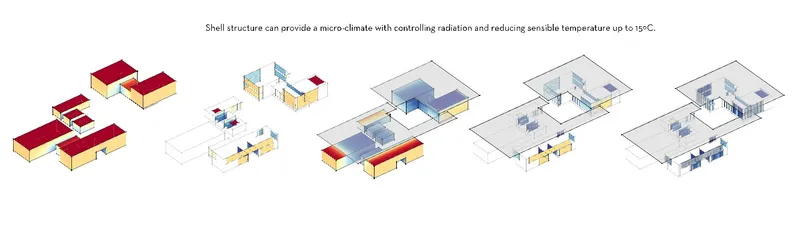
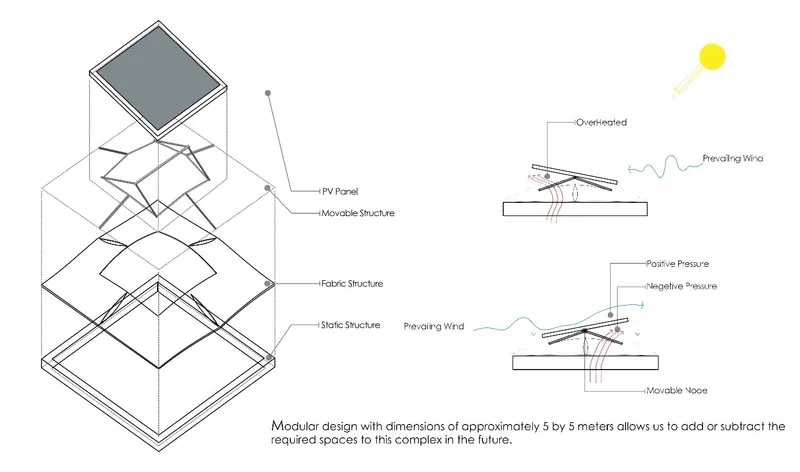
Evaporative cooling was one of our climatic strategies which this shell could help create a shadow on it and save vapor in a hot-dry climate therefore we can install a humidification system to the shell. Based on analysis one of the best potentials of our site is high radiation so we need a structure for installing PV panels. The modular shell which can extend for installing more PV panels can do this. the designed modules not only provide the above climatic strategies but also make a sustainable planting place and direct airflow to spread Moroccan spices aroma everywhere to the complex.
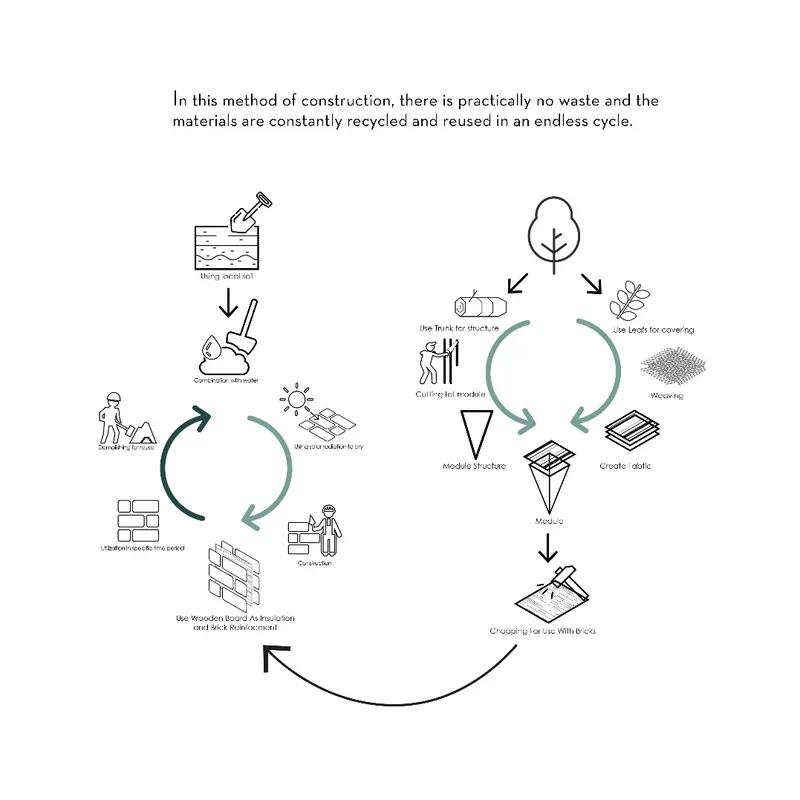
The next essential issue in such a project is the choice of materials. The use of indigenous materials and traditional methods reduces carbon emissions, eases access to materials, reduces pre-use material processing, eliminates the need for transportation, and is prepared by indigenous people. These are all the reasons that encouraged us to study indigenous manufacturing methods and use them. In this method of construction, there is practically no waste and the materials are constantly recycled and reused in an endless cycle.
In addition to environmental and economic, social sustainability plays a very important role that we tried to have an answer to this by architectural design and creating multiple cultivation spaces, as well as sustainable and training planting space and, and finally provide all three aspects of sustainability in this cultural center.
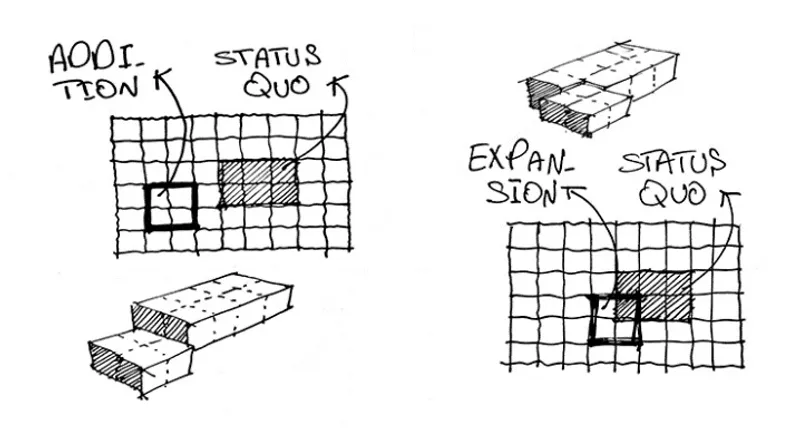
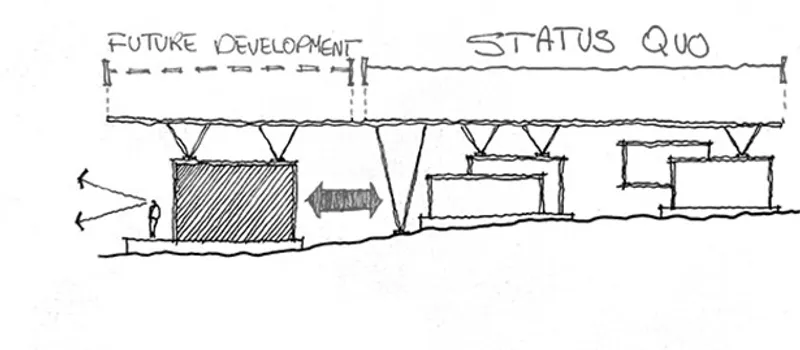
Over time, the thing that makes a project worthwhile is its ability to be developed, for which a solution has been devised in this project and it is nothing but a modular design. Modular design with dimensions of approximately 5 by 5 meters allows us to add or subtract the required spaces to this complex in the future.
Two Different ways of development are suggested, each suitable for a unique purpose. In the first method, Addition, the skin functions as a joint, while in Expansion the joint is the mass itself.
Some achievable uses for the future development and further prosperity of the complex are as follows:
The Oasis provides our site with many unique opportunities, among which water sports and entertainment might come to mind first. Since sailing and water-related activities have always been traditionally practiced in Morocco, it fits our cultural center the best.
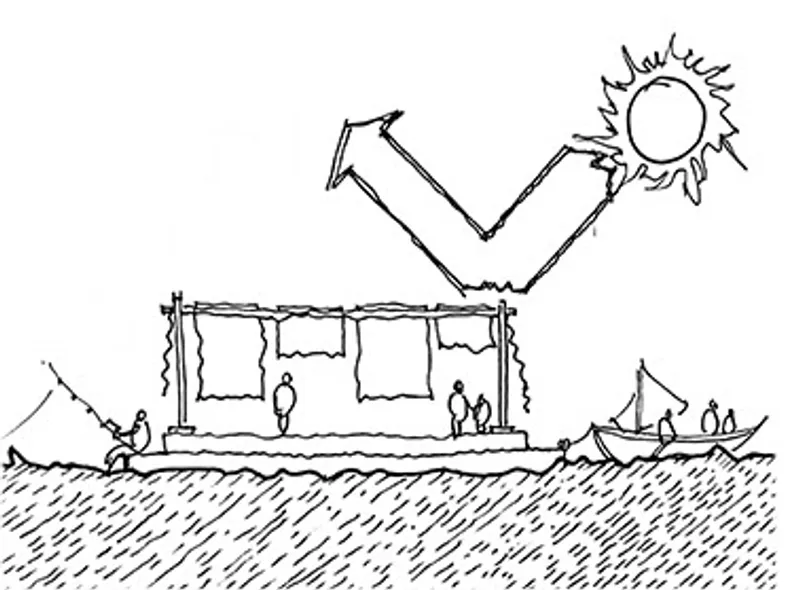
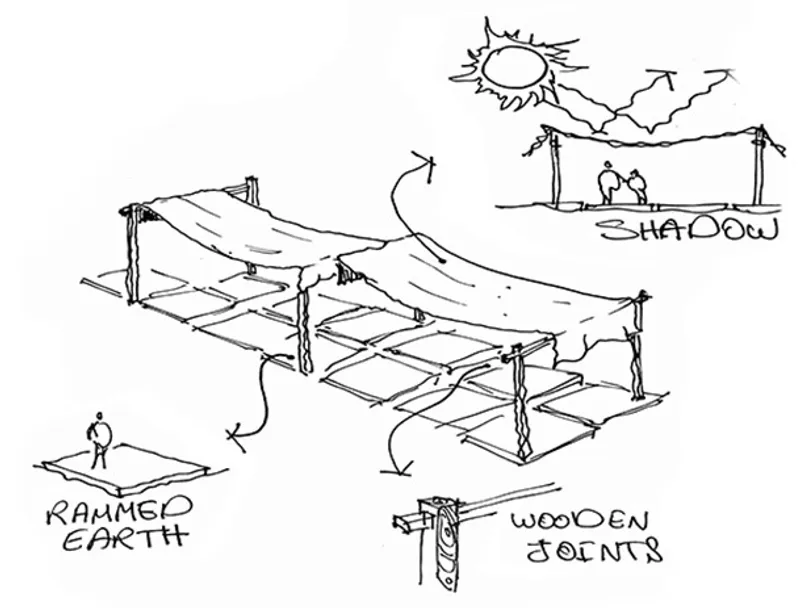
Suggesting solutions for connecting the cultural center with the oasis and water itself in a way that provides the users with qualities such as enough shadow, proper view and flooring is of utmost importance.
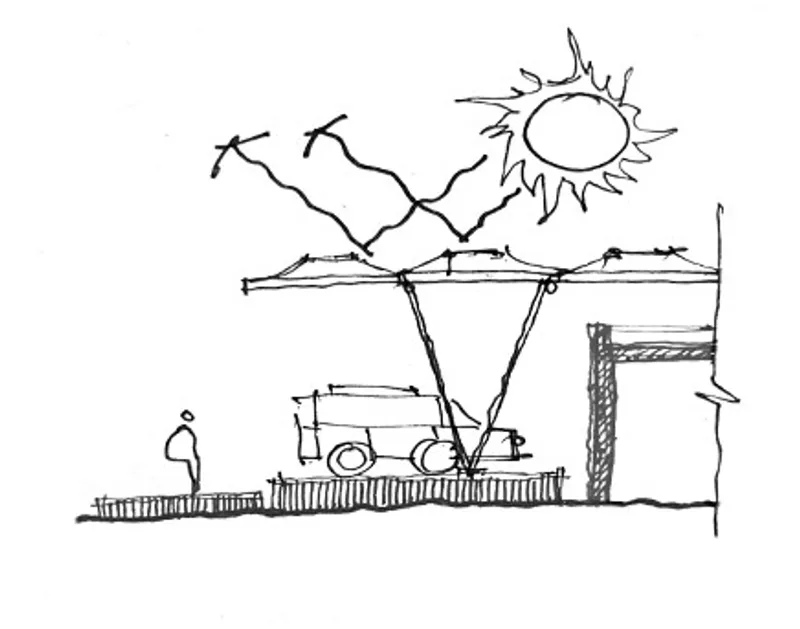
Safari and off-road driving are now a significant part of the desert culture and it was our decision to suggest design solutions to overcome the challenges facing the off-roaders by designing parking lots, a safari trail and other facilities.
This temporary accommodation is suggested since it can provide tourists and visitors with a place to stay and embrace the oasis life style more and deeper.
Taking into account the environmental, historical, financial and social parameters, we have achieved a sustainable ecosystem design that is compatible with both the environment and its inhabitants, which has become part of the environment and has a long shelf life. This stable set, which has the ability to meet its needs, adapts to the environment in case of any change over time. The combination of these factors has led to the creation of a resilient complex and in this process, we tried to create the oasis cultural center with the same principles.


Popular Articles
Popular articles from the community


Manzana Morphosis: Stretching Barcelona's Grid into a Living Landscape for 2050
A radical reworking of the Eixample manzana turns density into a tool for generous public space, vertical ecology, and environmental performance.
Opera by the Sea Estonia: Three Shells Dissolving Architecture into Tallinn's Coastline
A winning opera house proposal replaces monumental form with interconnected shells that blur the boundary between building, park and Baltic Sea.

Temporary Home for Dogs: A Reversed Zoo Rethinks Animal Shelter Architecture
In Bucharest, a sinuous corridor and freed landscape flip the logic of containment, designing a shelter that works to make itself unnecessary.

Tsunami Convergenics: Turning Catastrophic Ocean Forces into Underwater Housing Infrastructure
A speculative underwater settlement off the coast of Onagawa, Japan, treats tsunamis and typhoons as energy sources rather than threats.

Similar Reads
You might also enjoy these articles

Day and Night Park: A Time-Based Urban Newsstand in Beijing
A temporary urban newsstand in Beijing blending travel, light, and reading through poetic colors, compact form, and community-focused design.

Modernist Patio Renovation in El Masnou, Barcelona by Oliver Segura Arquitectura + Cebrià Arquitectura
Modernist patio renovation blending tradition and innovation with a movable pool, leveled floors, and Catalan materials in El Masnou.

Alto Residencial Coop: Cooperative Housing Development in Santiago de Compostela by Carbajo Barrios Arquitectos
A linear cooperative housing complex blending white volumes and perforated metal façades, enhancing community living, natural light, privacy, and urban integration.
Vil Genis School by BPA ARCHITECTURE – Massy, France
Vil Genis School in Massy, France, features sustainable design, south-facing classrooms, community integration, accessible spaces, and modern educational architecture.

Explore Green Oasis Competitions
Discover active competitions in this discipline


Comments (0)
Please login or sign up to add comments
No comments yet. Be the first to comment!