
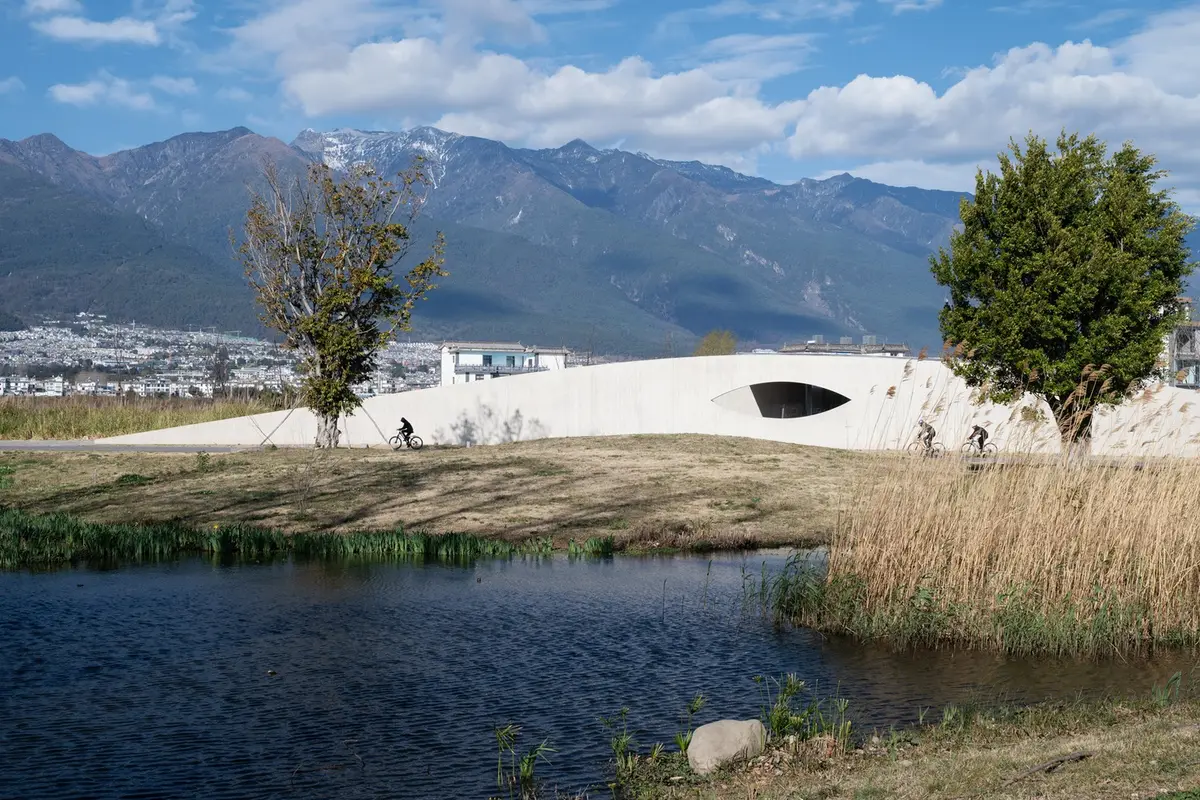
Eco-Friendly Architecture in China: Jiapeng Village Service Station by Zhaoyang Architects
This article explores the Jiapeng Village Service Station in Dali, China, showcasing its eco-friendly architectural design by Zhaoyang Architects.


The Jiapeng Village Service Station, designed by the renowned Zhaoyang Architects, stands as a paragon of eco-friendly architecture in China. Located in the picturesque region of Dali, this project is part of the Erhai Lake Ecological Corridor initiative, aimed at enhancing the area’s natural landscape while providing essential amenities to both residents and tourists.
The Role of Jiapeng Village Service Station in the Ecological Corridor
Strategic Location and Design
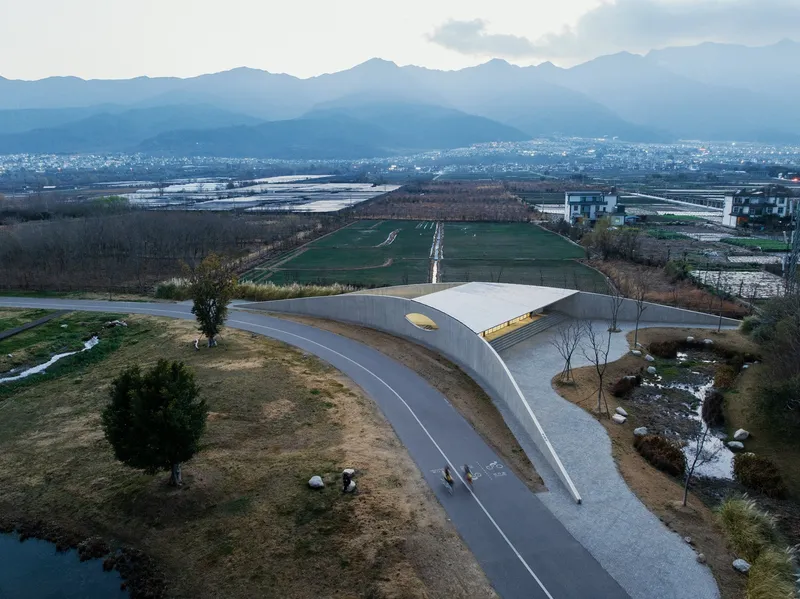
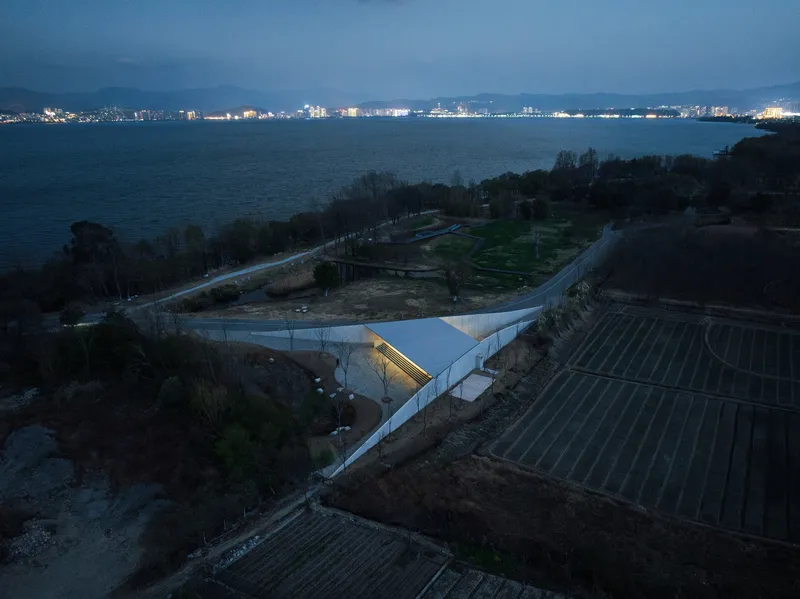
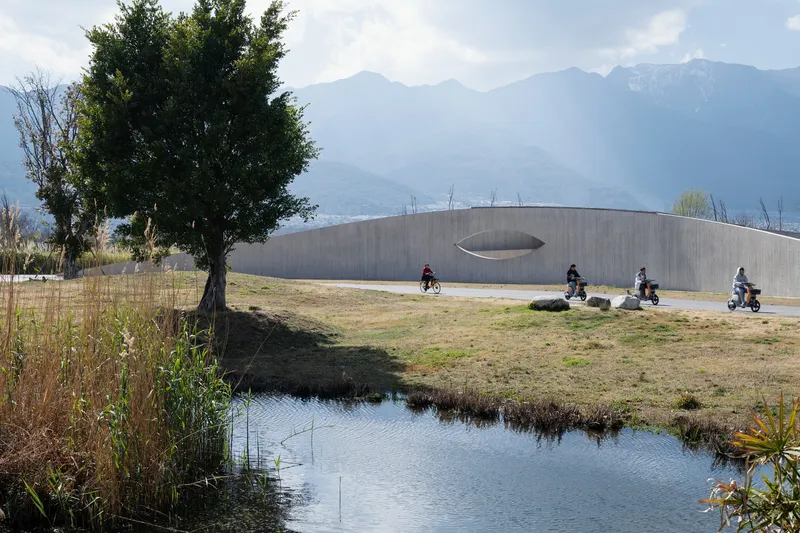
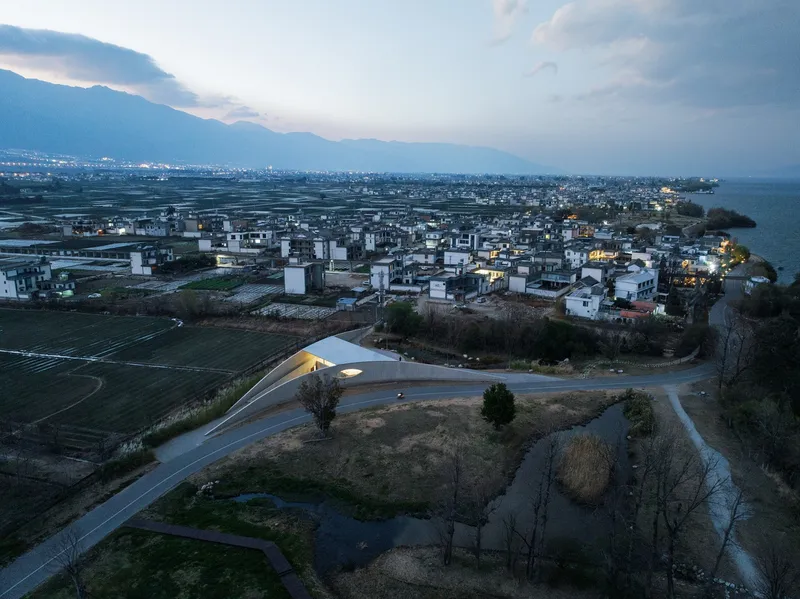
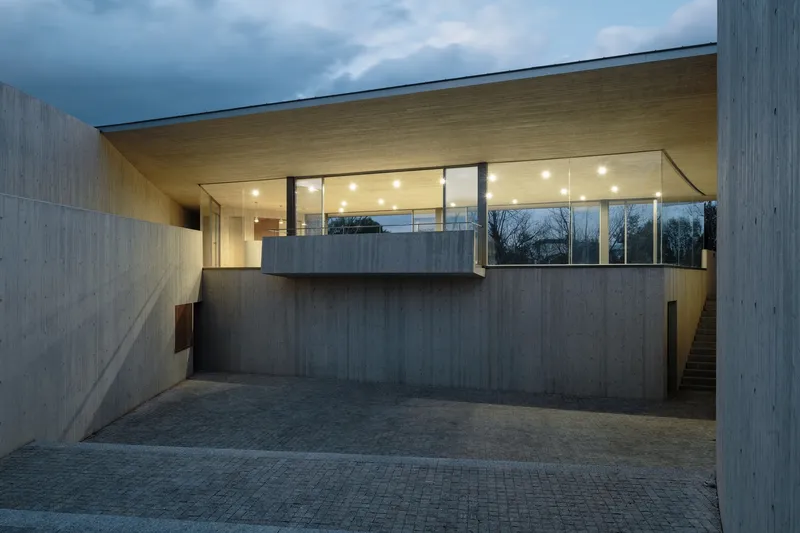
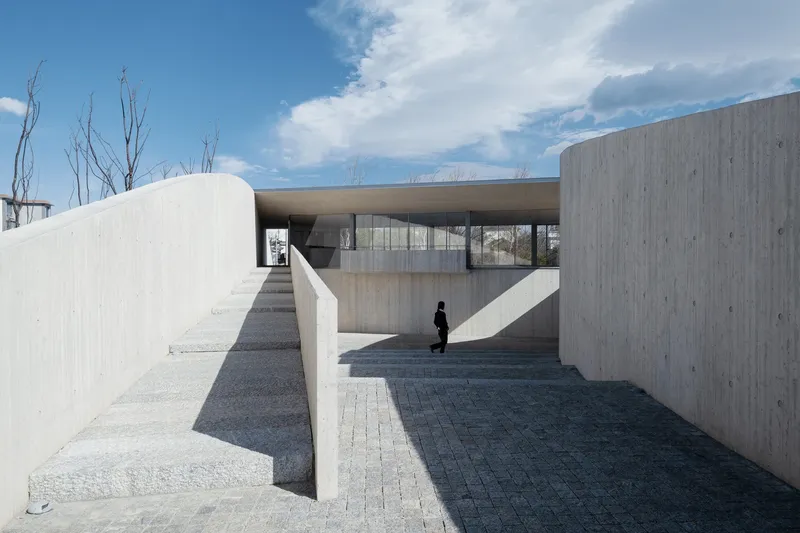
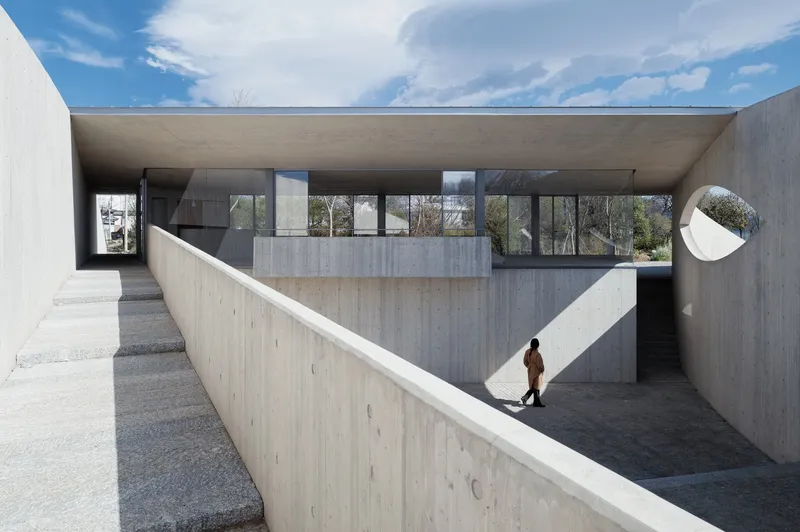
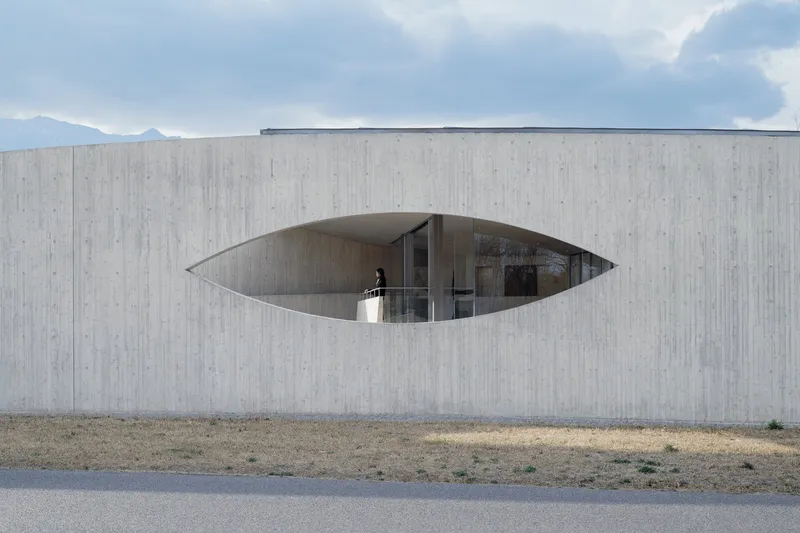
Situated along the southern stretch of the 129-kilometer lakeside corridor, the Jiapeng Village Service Station occupies a triangular-shaped site. The design of the building is uniquely responsive to the curvatures of the surrounding landscape, featuring an 80-meter-long concrete wall that elegantly separates the internal and external environments.
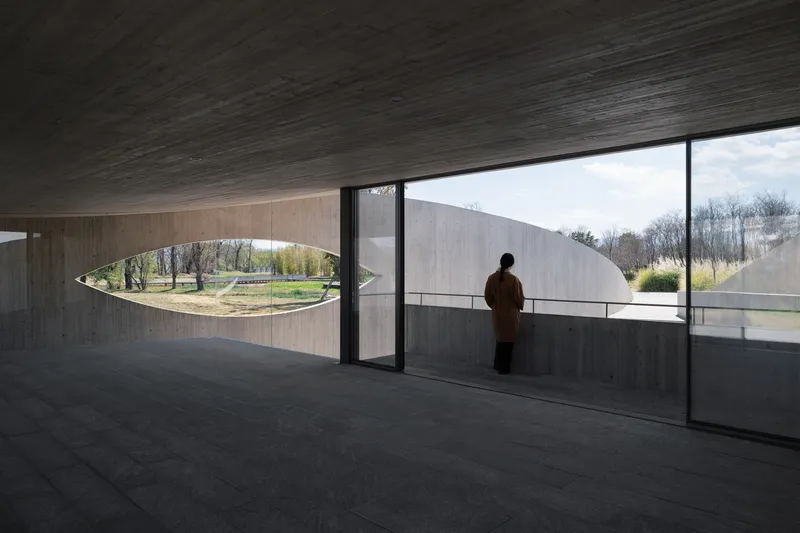
Innovative Architectural Features
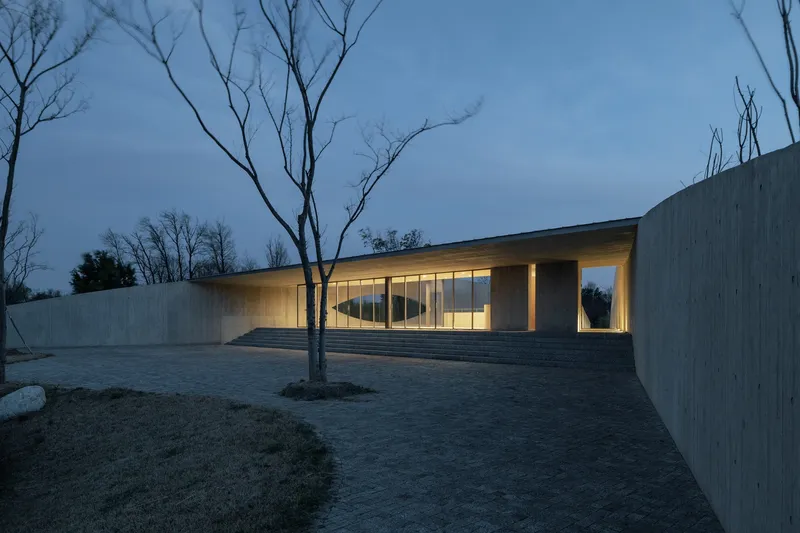
The service station is more than just a building; it's an integration of multiple layers that promote ecological and social interaction. The structure is divided into three main sections:
- A Central Cafeteria: Located in the middle layer, it serves as the heart of the station, offering refreshments and a place to relax.
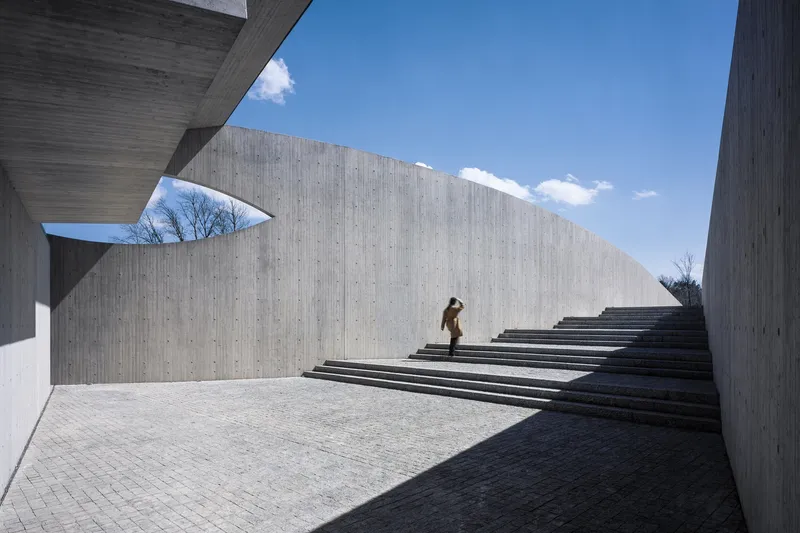
- A Northern Plaza: This open area provides a gathering space for community events and social interaction.
- A Southern Sunken Courtyard: Designed to offer a quiet retreat and closer engagement with nature.
Each area is designed with sustainability in mind, from materials to the management of natural light and airflow.
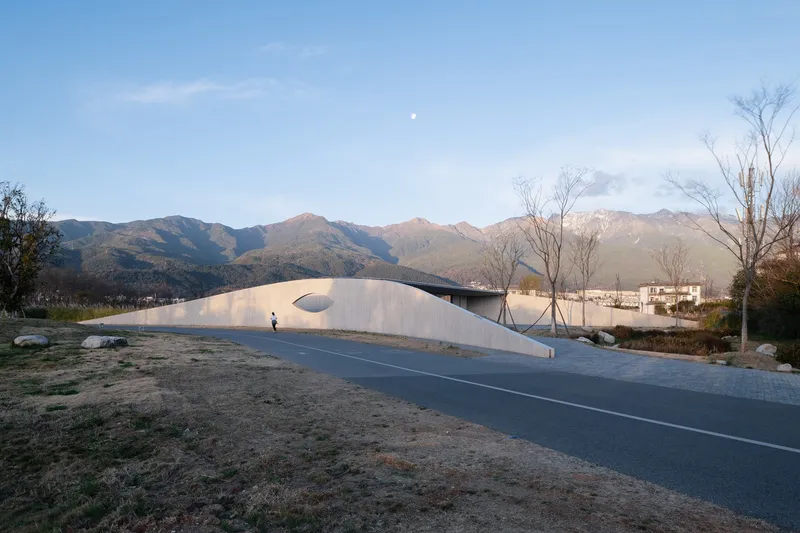
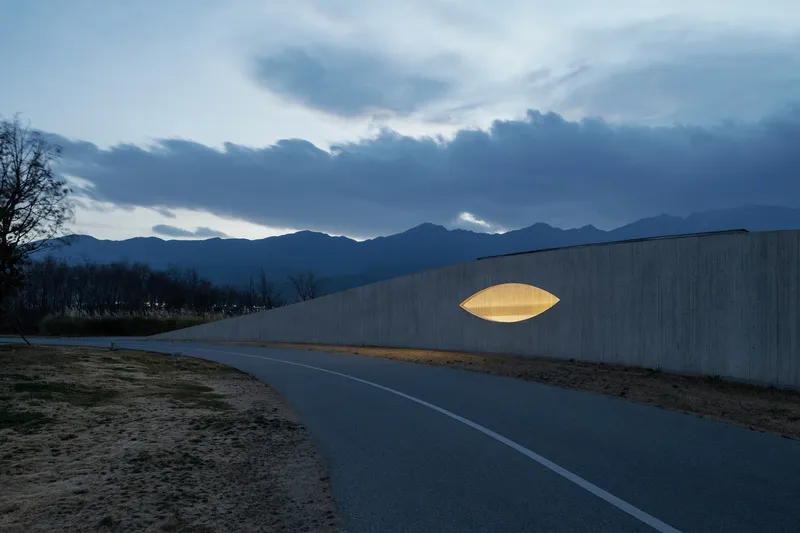
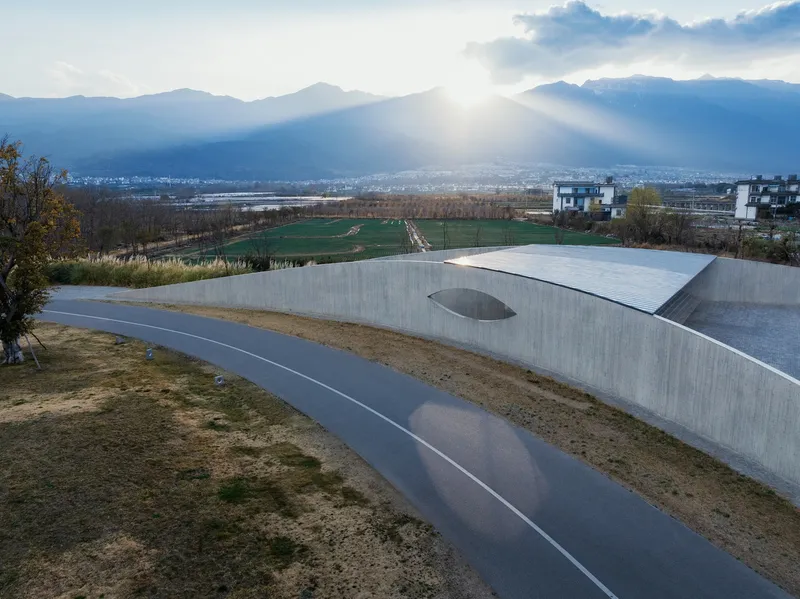
Dynamic Interaction with the Environment
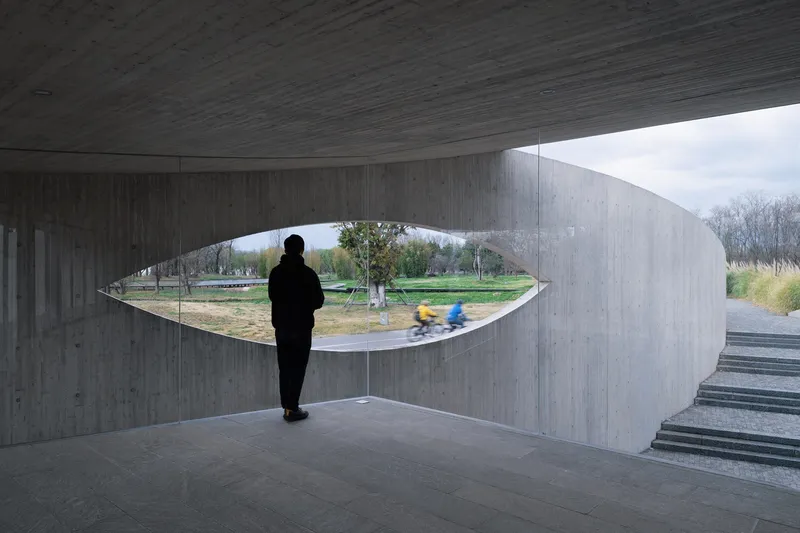
The architecture of the Jiapeng Village Service Station is a testament to eco-friendly design. The rise and fall of the building’s profile not only complements the natural landscape but also enhances the experience for cyclists and joggers passing by. An eye-shaped opening in the center wall allows for a visual connection between the two sides of the corridor, embodying the principle of transparency and openness in eco-friendly architecture.
Impact and Importance of Eco-Friendly Design by Zhaoyang Architects
Enhancing Local Ecosystems
Zhaoyang Architects' approach goes beyond aesthetics and functionality; their designs are aligned with ecological preservation and enhancement. The Jiapeng Village Service Station contributes to the creation of a healthy water-land buffer zone, serving as an ecological barrier that protects the lake from urban impact while promoting biodiversity.
Attracting Eco-Conscious Visitors
The service station not only serves the local population but also attracts tourists who are conscious about sustainability and eco-friendly practices. It stands as an example of how modern architecture can align with environmental conservation principles, making it a model for future projects around the world.
A Model for Future Eco-Friendly Projects
The Jiapeng Village Service Station by Zhaoyang Architects is a flagship project in eco-friendly architecture in China. It exemplifies how thoughtful architectural design can contribute to environmental sustainability and enhance community life. As China continues to expand its efforts in sustainable development, projects like this will play a crucial role in shaping a green future.
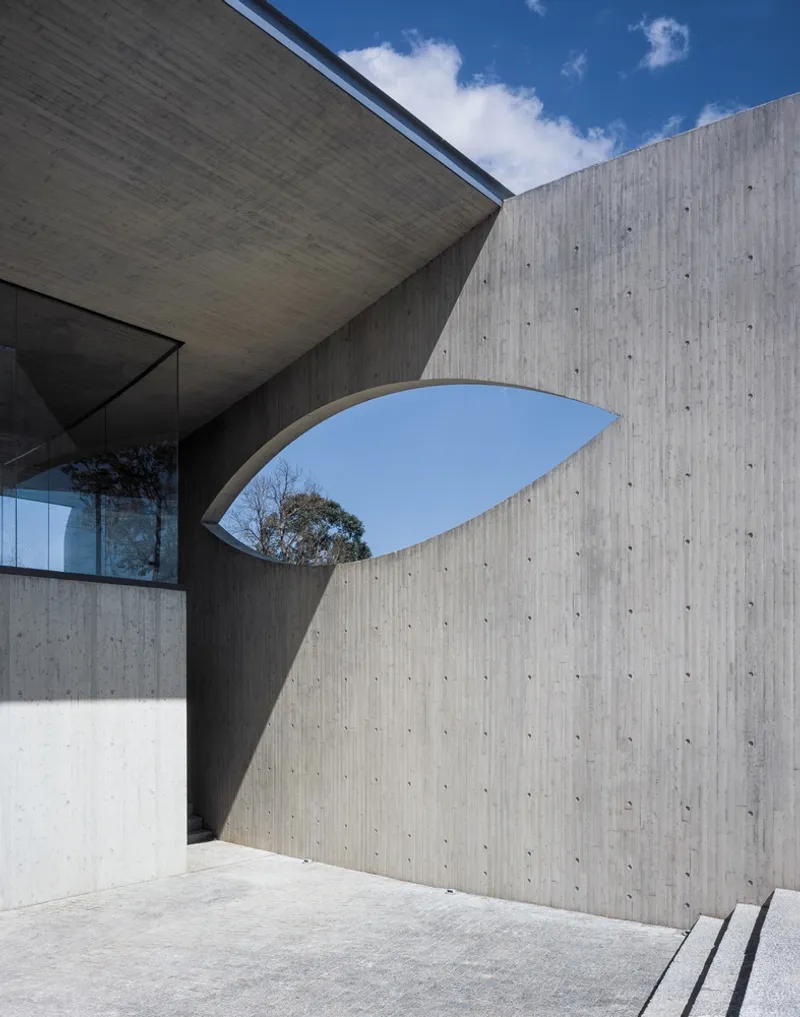
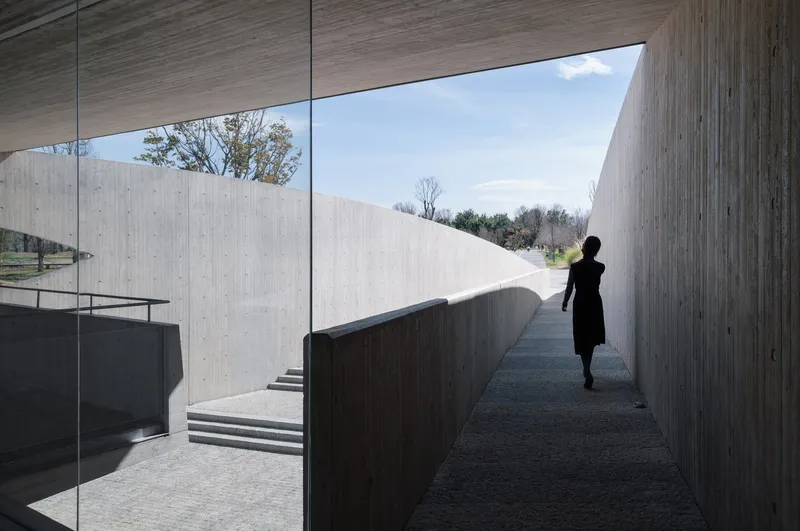
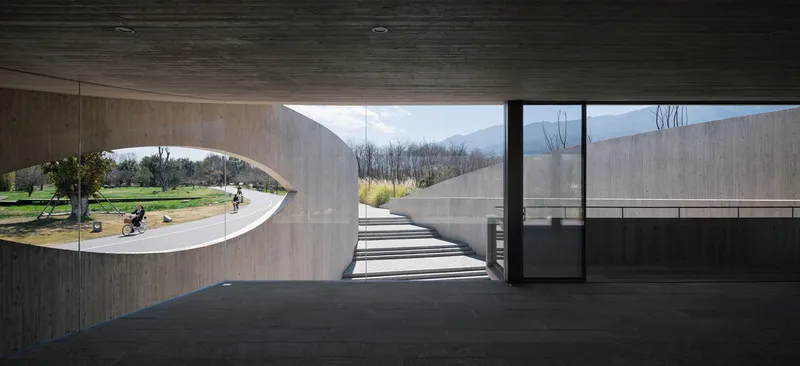
All photographs are work of Hao Chen


Popular Articles
Popular articles from the community


LT2A and OPEN Architectes Thread a Brick and Glass High School Through a Wooded Belgian Campus
In Braine-l'Alleud, a 3,000 m² wing for Collège Cardinal Mercier pairs pale brick with a glazed colonnade, deferring to a small chapel and a dense wood.

Juan García Correa, John González and Claudia Rueda Sink a Circular Amphitheater into a Manizales Engineering Building
On the La Nubia campus in Manizales, Colombia, the S1 Building folds labs and offices into a hillside of ramped lawns that double as a campus route.

Cube Design Draws an Ecological Corridor Between Two Shenzhen Hills with the Nankai Building
Beside Shenzhen's container docks, the Nankai Building pairs stacked balconies with a climbing green screen to connect two hillsides across its height.

David Macias Steps a Doorless Stone and Plaster House Down a Tropical Colombian Hillside
In the humid hills of Colombia, Threshold House replaces the front door with an open void and terraces its 850 m² down the slope instead of fighting it.

Similar Reads
You might also enjoy these articles


Maya Harvest: A Cacao Resort Village Rooted in Mayan Tradition and Local Craft
Situated within a Tabasco cacao plantation, this shortlisted resort proposal merges vernacular materials with hands-on cultural immersion.
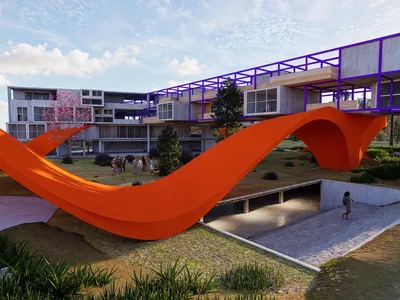
Harmonia: A River-Shaped Community That Grows Over Decades in Boa Vista
Curved pathways and modular grid structures along the Branco River create a phased settlement designed to evolve from 2030 to 2050.

The Architecture of Bathing: A Mughal Hammam Reimagined Across the Yamuna
Charlotte May's honorable mention entry for The Black Taj reinterprets Agra's bathing rituals through red sandstone, water, and framed views of the Taj Mah

Om-1: A Wall-Hung System That Moves Your Workspace Off the Desk
Modular plywood boards, magnetic pegs, and utility elements migrate clutter from the horizontal surface to the vertical plane.

Explore Environment Friendly Competitions
Discover active competitions in this discipline

Challenge to design locus for the upliftment of human rights

Challenge to reimagine the Iron Throne

Photograph architecture without architects

Illustrate the lost glory of Angkor Wat - Render Challenge
Comments (0)
Please login or sign up to add comments
No comments yet. Be the first to comment!