
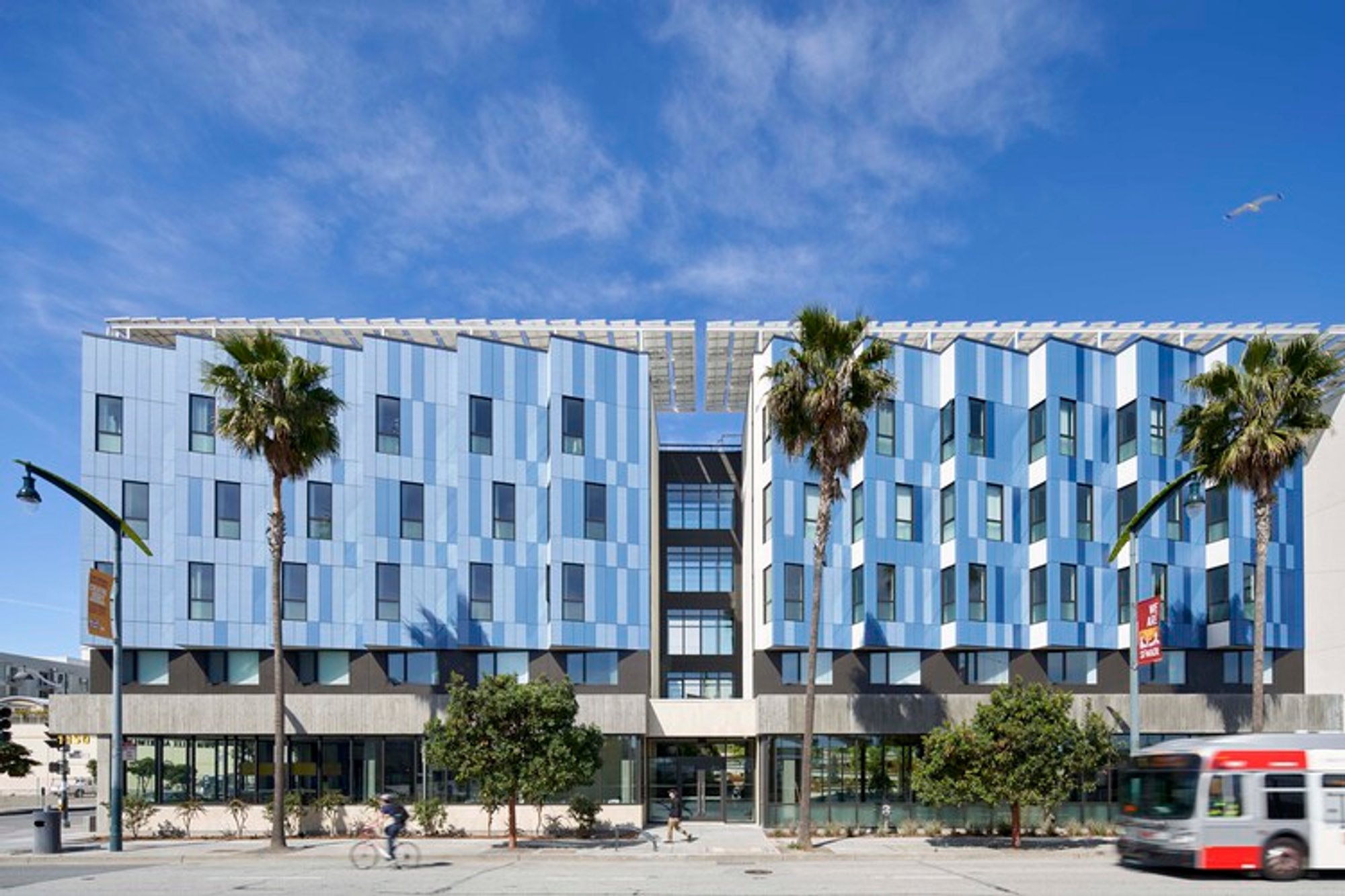
Edwin M. Lee Apartments – Leddy Maytum Stacy Architects
Supportive housing for veterans and families, uniting community, sustainability, landscape and dignity through compassionate architecture in San Francisco’s Mission Bay.

Supportive Housing for Veterans and Families in San Francisco’s Mission Bay
The Edwin M. Lee Apartments is more than a housing development. It is a civic gesture, a social framework, and a built embodiment of community responsibility. As San Francisco faces deep challenges surrounding affordability, displacement, and support for vulnerable populations, this project stands as a milestone in inclusive architecture. Designed by Leddy Maytum Stacy Architects (LMS Architects) in collaboration with Saida + Sullivan Design Partners, Swords to Plowshares, and the Chinatown Community Development Center, the building represents the first development in San Francisco to combine supportive housing for formerly homeless veterans and low-income families within a single residential environment.
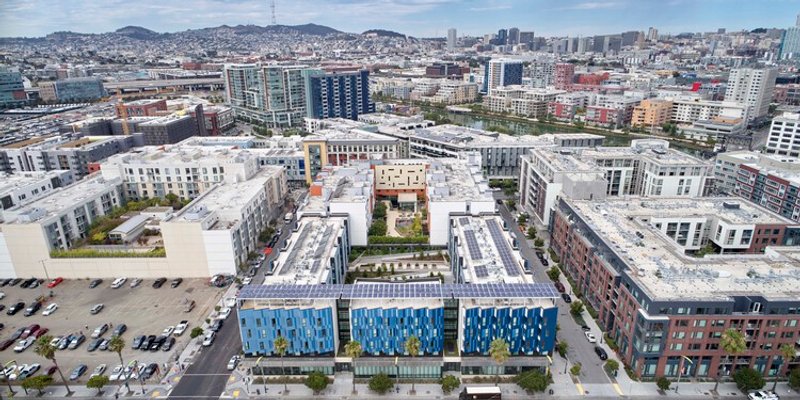
Completed in the Mission Bay district — an area once industrial and now rapidly transforming — the building offers 124,000 square feet of living, social infrastructure, therapeutic support spaces, and landscape. It provides 119 homes: 62 dedicated to unhoused veterans and 57 to low-income families. The project demonstrates that housing can be dignified, socially layered, environmentally ambitious, and rooted in long-term viability. It does not merely shelter—it repairs.
The late San Francisco mayor Edwin M. Lee championed housing equity and veteran support throughout his tenure, and the building is named in his honor. It stands today as a built continuation of his mission: to bring individuals home, not temporarily, but permanently.
1. The Architecture of Belonging
Mission Bay is a district of wide boulevards, new construction, and rapid growth. In such an evolving landscape, the challenge was not only to build housing, but to craft a sense of place. The Edwin M. Lee Apartments balances civic scale with domestic character: large in urban presence, human in atmosphere.
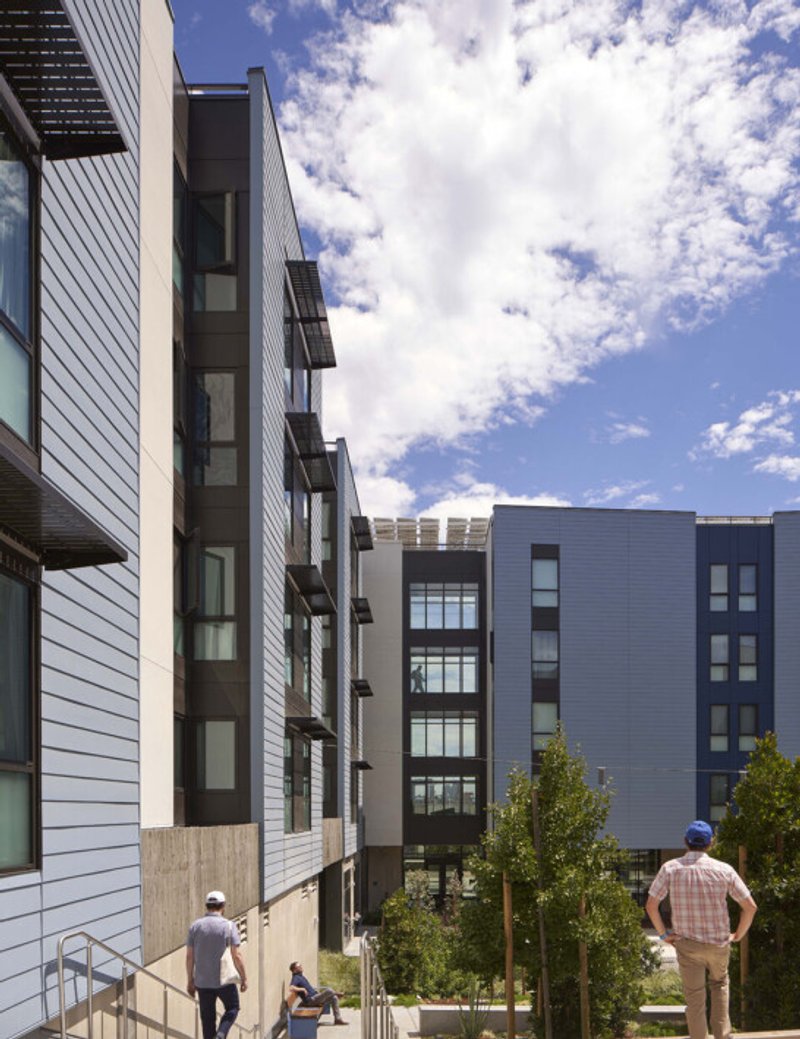
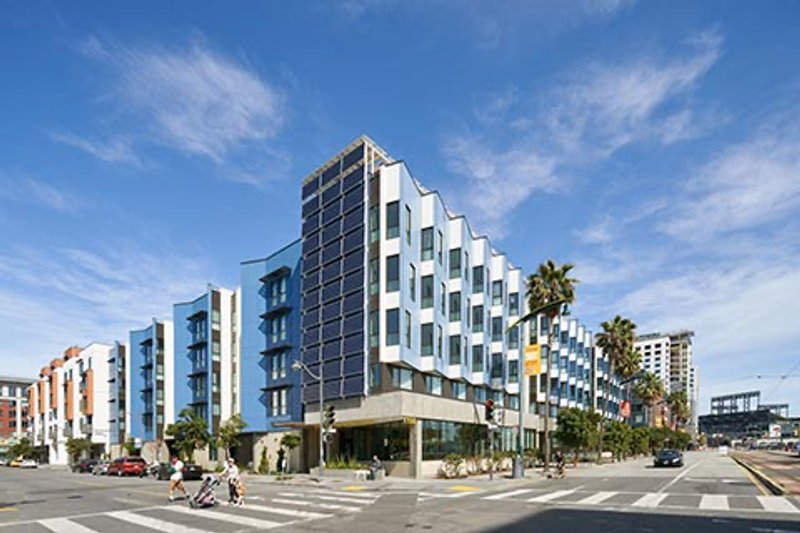
Rather than adopting a monolithic massing typical of multi-story affordable housing, LMS Architects designed a composition that breathes. Facades are broken into volumes, articulated by recesses, varying window patterns, material shifts and warm neutral tones. The structure is honest, modern, and unornamental — but its simplicity carries a quiet generosity. The building sits with confidence, yet never intimidates. Its presence invites approach instead of commanding distance.
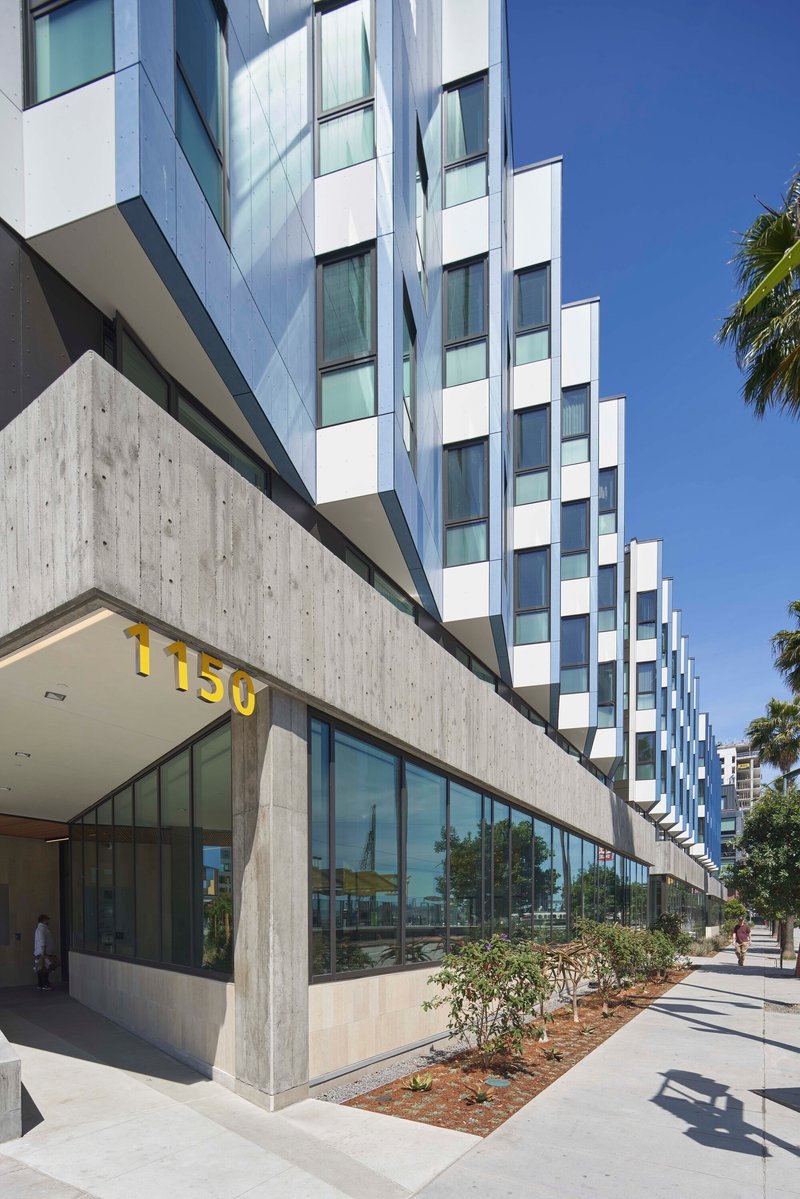
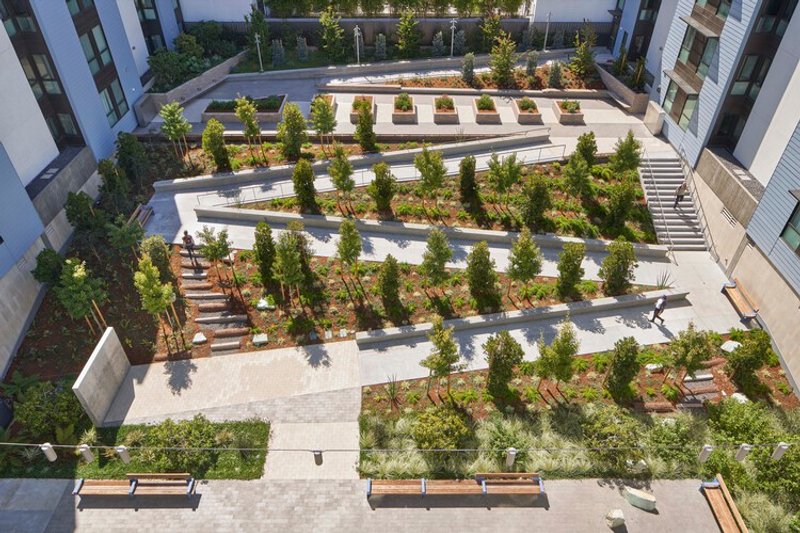
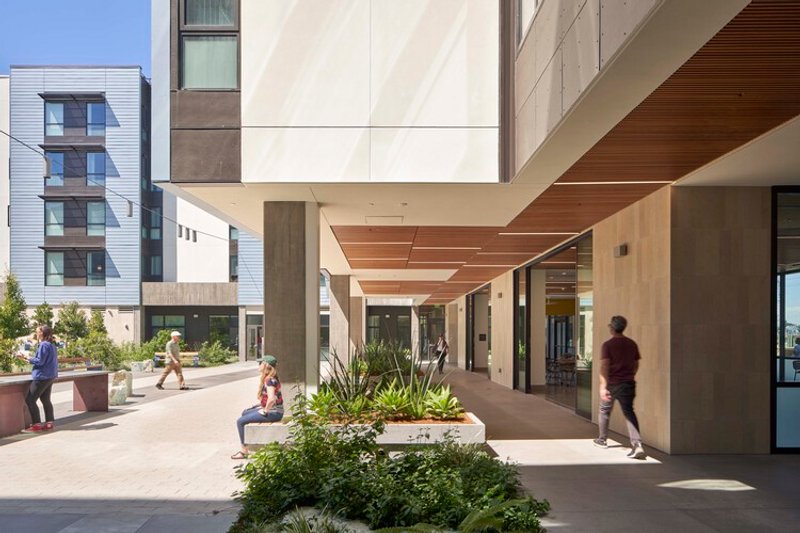
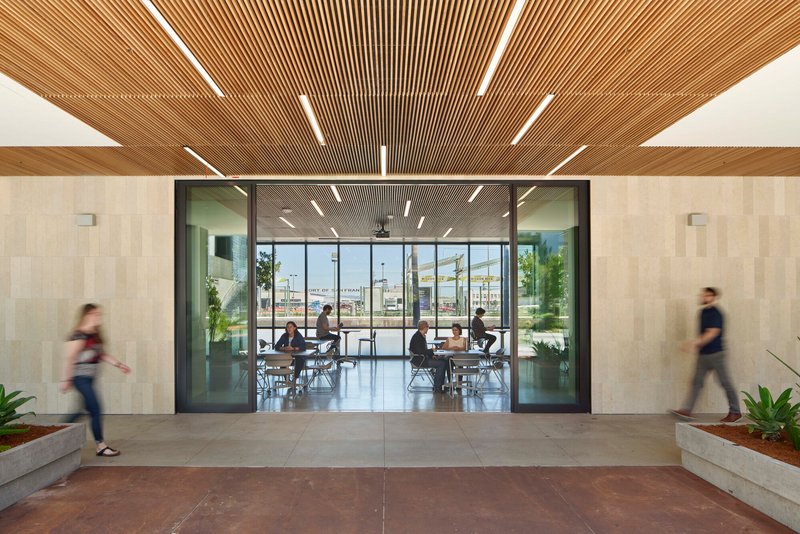
At ground level, transparency is fundamental. Glass frontages along the street reveal community spaces, counseling offices, and shared amenities. Passers-by see life occurring inside: children running in the courtyard, veterans in conversation, families arriving home. Housing becomes visible civic life rather than invisible social infrastructure. In a city where homelessness is often hidden, visibility matters.
2. Two Populations, One Community
A central innovation in this project is the merging of two groups—formerly homeless veterans and low-income families—into one integrated residential community. Rather than isolating residents by need, age, or background, the design encourages connection through shared architecture.
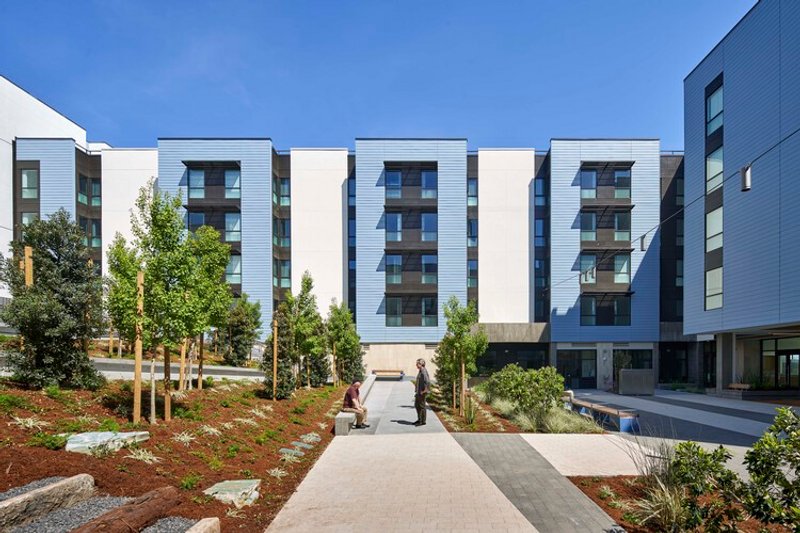
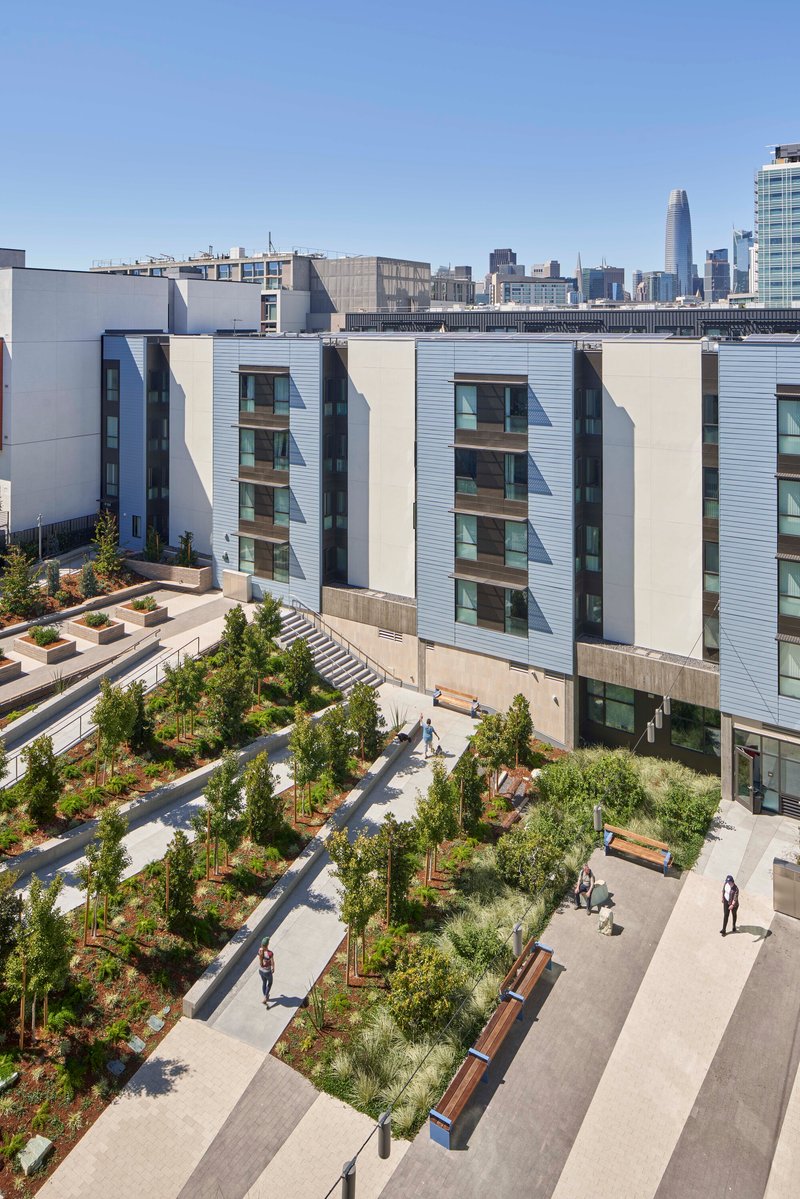
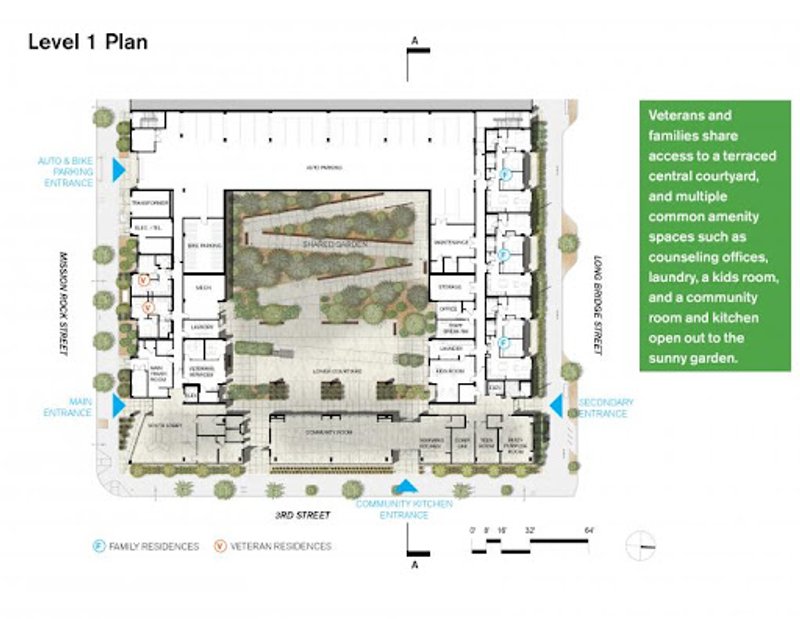
The building's internal layout is organized around a large planted courtyard, a space of exchange, play, rest, and observation. For parents, it is a safe place for children to explore. For veterans, it is a space of healing and grounding — the presence of life, movement, and growth fosters stability. Benches, planting beds, paved paths, and communal tables are structured to support both peaceful solitude and shared interaction.
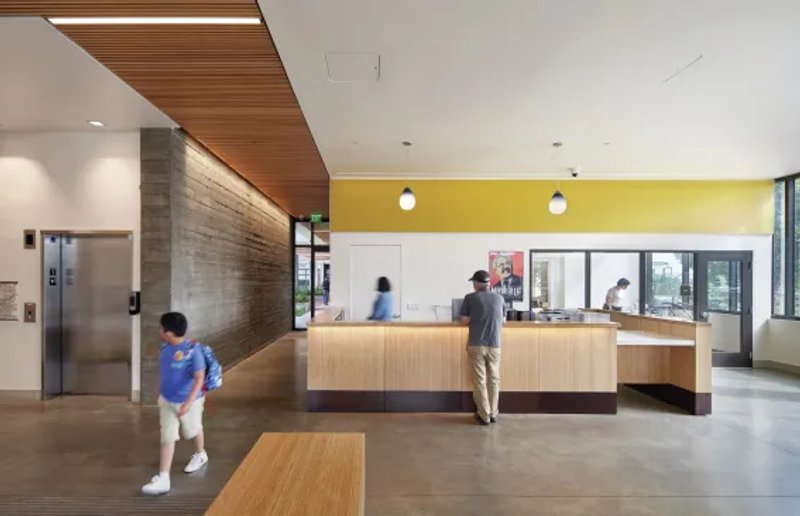
The architecture acknowledges that belonging cannot be forced, but it can be enabled. Circulation is designed to encourage casual encounters rather than avoidance. Long corridors open to daylight, lobbies provide seating instead of pass-through emptiness, and stairs present themselves as social connections rather than hidden service routes.
Homes overlook shared spaces instead of turning inward, creating passive safety and a gentle visual network of care. A parent sees a neighbor walking, a veteran hears children playing, a resident watches the evening lights change. The building becomes a village disguised as multifamily housing.
3. A Model for Supportive Living
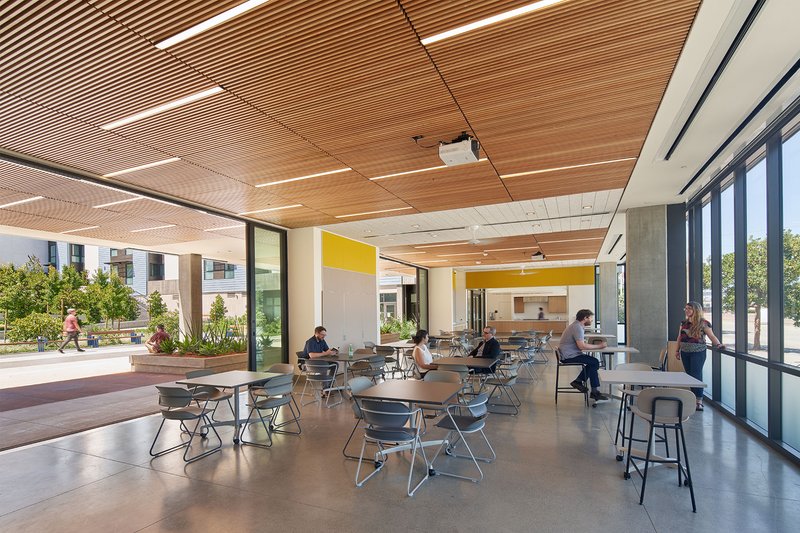
Physical housing alone cannot solve homelessness — support infrastructure is essential. That is why the ground floor holds more than lobbies. Here, social programs operate daily: counseling offices, veteran services, family services, case management rooms, community kitchens and multi-purpose spaces that host workshops, health education, and cultural gatherings.
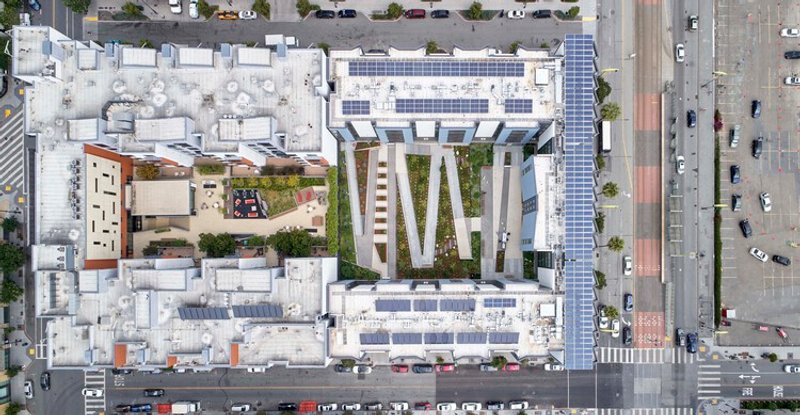
Swords to Plowshares, a veteran advocacy organization with deep roots in San Francisco, provides ongoing assistance on-site. Families access dedicated resources as well, supported by social workers and program staff. The building ensures that residents do not simply receive a room—they receive a support network.
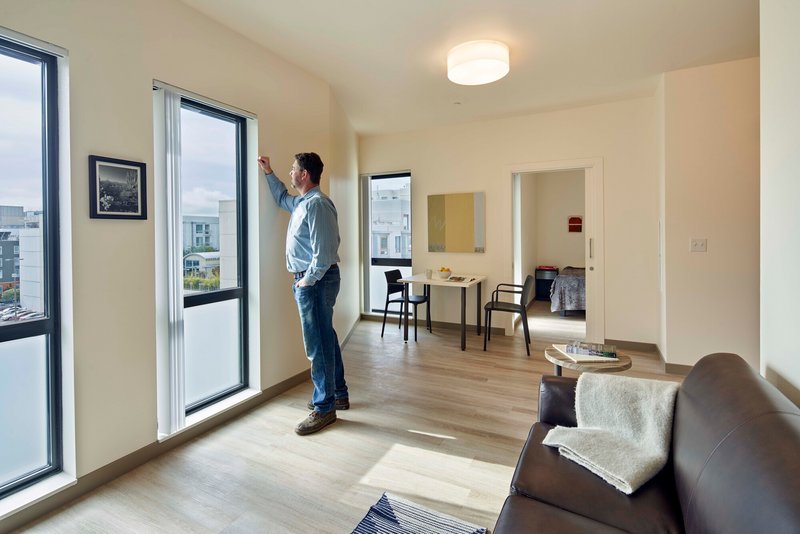
The architecture responds to this model with spatial generosity. Rooms are not narrow; windows are not incidental; light is not luxury. The indoor environment is designed for wellness and dignity, with daylight penetrating corridors, lounge spaces placed near view corridors, and private apartments positioned to maximize ventilation and exterior connection.
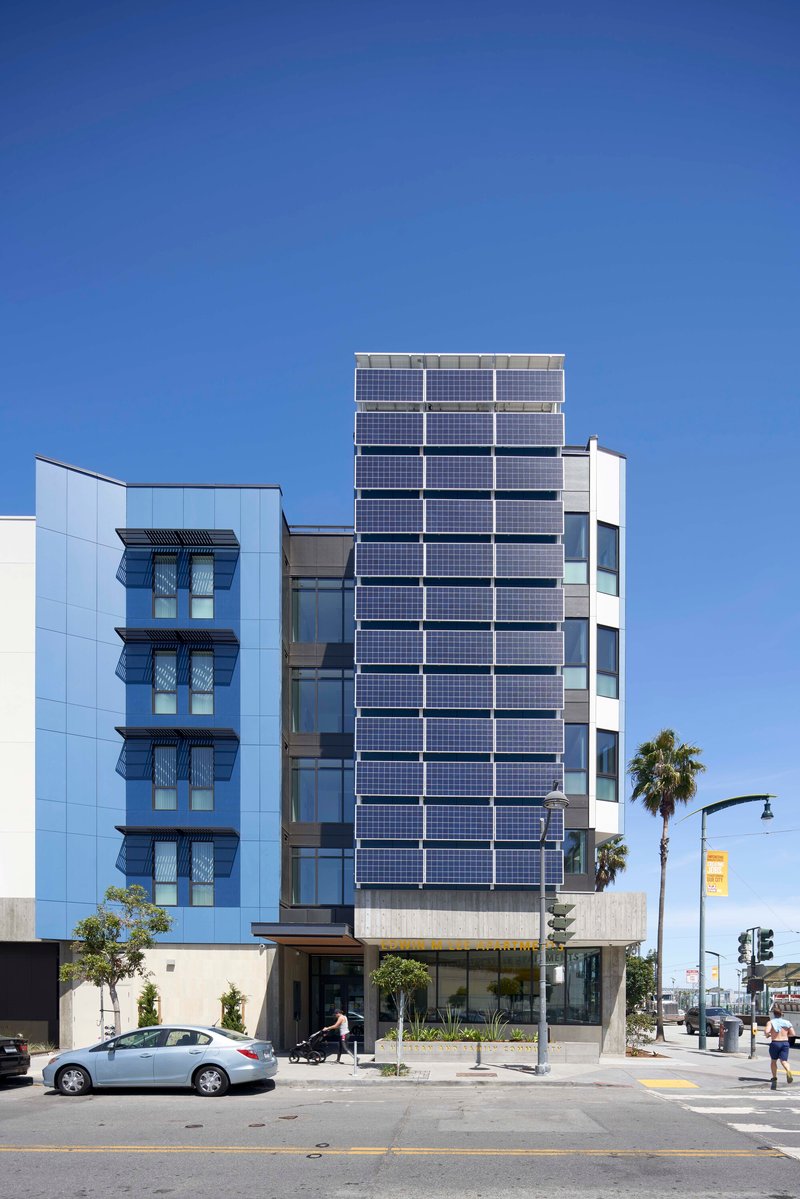
With trauma-sensitive design guiding decisions, the spatial atmosphere is gentle, legible, and predictable. Wayfinding is intuitive; corners soften instead of disorient; thresholds transition gradually rather than abruptly. Architecture becomes a therapeutic partner, not an indifferent container.
4. Environmental Responsibility and Resilience
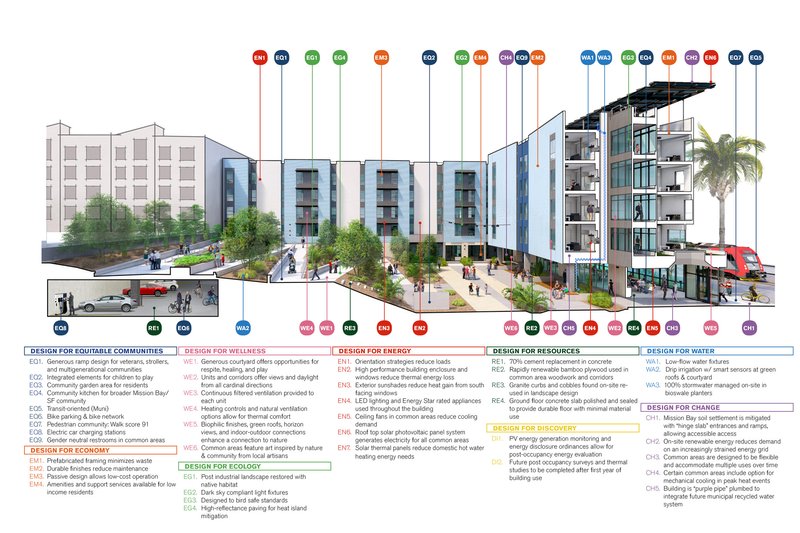
A core ambition of the design is long-term sustainability — operationally, economically, and environmentally. The project achieves GreenPoints Rated Platinum certification and integrates multiple sustainable systems as permanent architectural features:
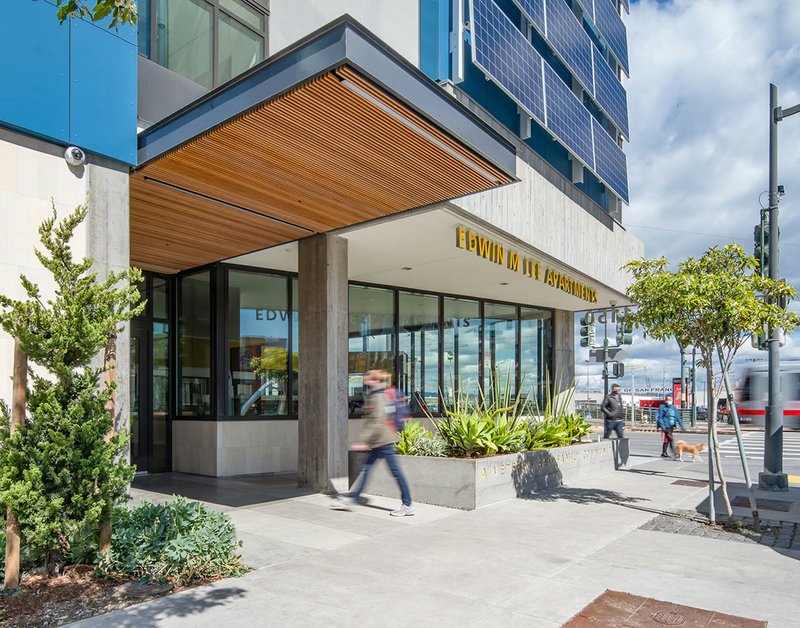
• Extensive rooftop photovoltaics generate renewable energy• Solar hot water systems reduce energy consumption• Durable exterior materials reduce maintenance over decades• Landscape design uses low-water native planting• Daylighting strategies reduce artificial lighting loads• Ventilation is natural whenever possible, supported by operable windows
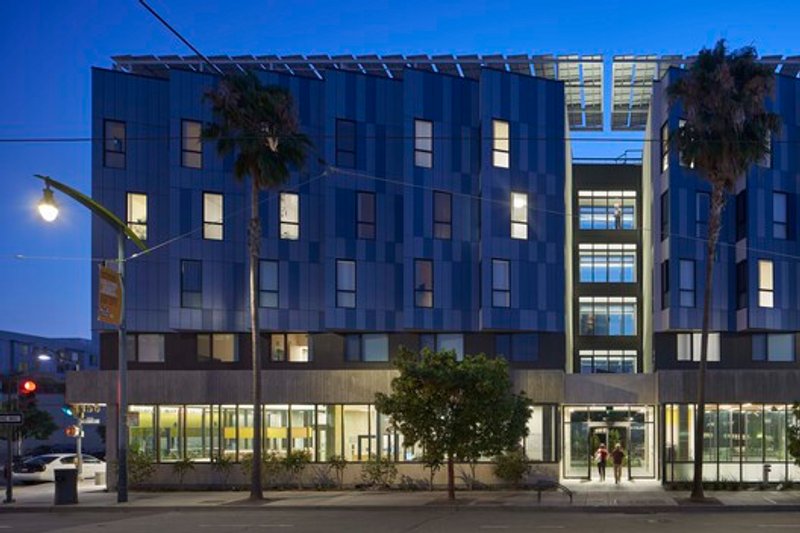
Importantly, these sustainability features are visible. The photovoltaic array is not hidden; it is celebrated. Panels act as public signal—evidence that affordable housing can lead environmental progress. In a region threatened by climate risk, resilient housing must become standard, not exception.
The courtyard doubles as environmental infrastructure, moderating heat and creating a microclimate that supports passive comfort. Planting encourages pollinators, seasonal variation, and emotional uplift. Children interact with nature daily. Veterans rest under trees. Environmental strategy becomes human well-being, not technical checklist.
5. Material Warmth and Texture
The palette is calm, natural, and enduring. Stone, metal, timber accents, warm-coloured facade panels — all selected to express grounded stability. Interiors continue this language: muted tones, durable finishes, acoustic softness. Nothing is ostentatious, but everything is intentional.
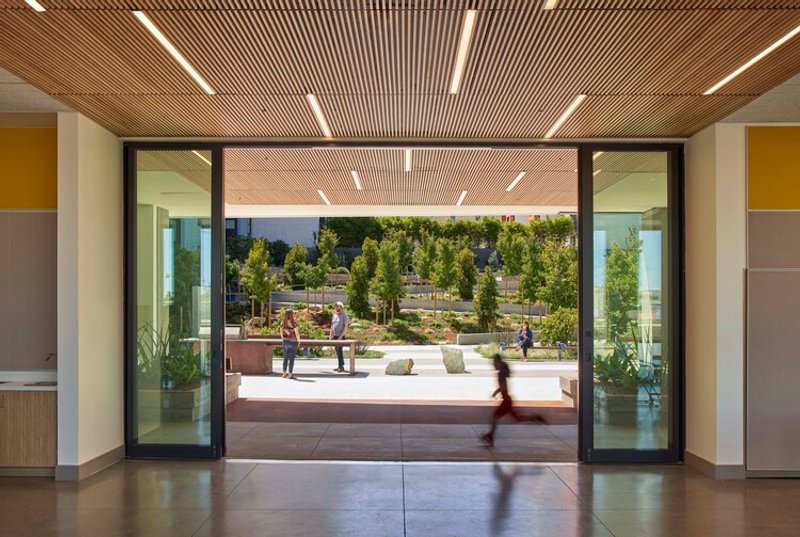
Materials communicate reliability. For residents who have experienced instability, architecture proves permanence. Doors close securely. Walls feel solid. Windows frame real sky, not institutional sterility. Domesticity becomes affirmation.
Lighting, too, is gentle. Fixtures diffuse rather than glare. Public spaces feel safe without shining harshly. The atmosphere supports evening life as much as daytime brightness. This is housing that understands emotional temperature.
6. A Tribute to a Mission
Edwin M. Lee, San Francisco’s late mayor, believed strongly in veteran housing equity. This building is the physical legacy of that vision. It transforms policy into walls, empathy into space, public promise into shelter. It acknowledges that cities must care for those who defended them — and for families who struggle within them.
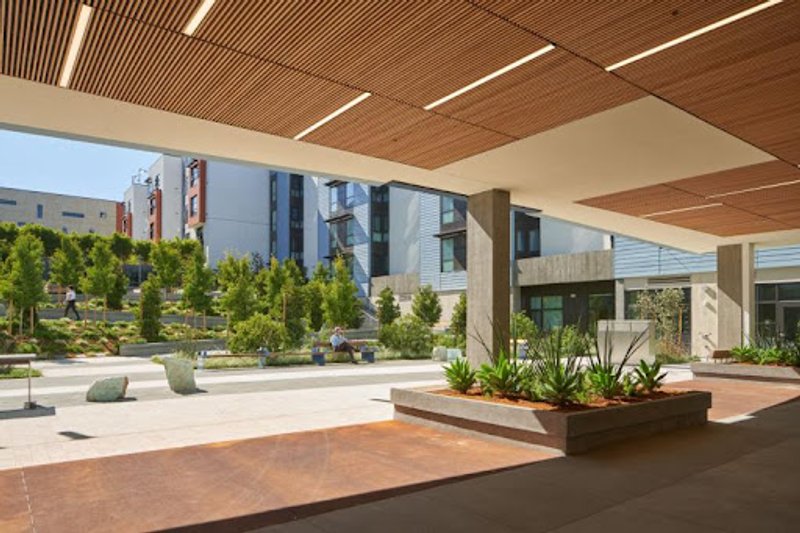
The building is not monumental in form; it is monumental in purpose. It asks architecture to heal. It asks community to share. It asks a city to remember.
All the Photographs are works of Bruce Damonte



Popular Articles
Popular articles from the community

Fifth NRE Jazz Club – De Bever Architecten: Eindhoven’s Revitalized Cultural Hub
Historic gas factory transformed into Fifth NRE Jazz Club blending modern sustainability, jazz culture, dining, and heritage architecture seamlessly.
Alton Cliff House: A Harmonious Retreat by f2a Architecture in Lake Country, Canada
Alton Cliff House blends corten steel, prefabrication, and sustainable design, creating a luxurious, energy-efficient retreat perched on Canadian cliffs.

Free Architecture Competitions You Can Enter Right Now
No entry fees, real prizes. Here are the best free architecture competitions open for submissions in 2026.



Similar Reads
You might also enjoy these articles


The Ken Roberts Memorial Delineation Competition (Krob)
As the most senior architectural drawing competition currently in operation anywhere in the world, it draws hundreds of entries each year, awarding the very best submissions in a series of medium-based categories.

Waterfront Redevelopment and Urban Revitalization in Mumbai: Forging a New Dawn for Darukhana
A transformative waterfront redevelopment project reimagining Darukhana’s shipbreaking heritage into an inclusive urban future.

OUT-OF-MAP: A Call for Postcards on Feminist Narratives of Public Space
Rhizoma Design and Research Lab invites artists, designers, architects, researchers, and students to reflect on how feminist perspectives can reshape public space. Selected works will be exhibited in Barcelona, October 2026. Submissions open until 15 April 2026.

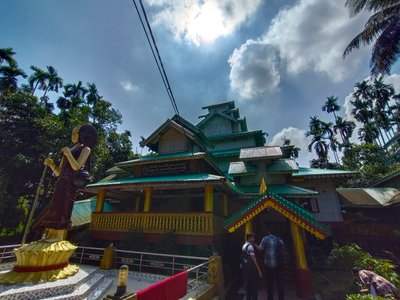
Documentation Work on Buddhist Wooden Temple
Architectural syncretism and cultural hybridity: A comparative study of the Buddhist temples in Chattogram Hill tracks

Explore Architecture Competitions
Discover active competitions in this discipline




The International Standard for Design Portfolios


The Global Benchmark for Architecture Dissertation Awards


The Global Benchmark for Graduation Excellence


Challenge to reimagine the Iron Throne
Comments (0)
Please login or sign up to add comments
No comments yet. Be the first to comment!