
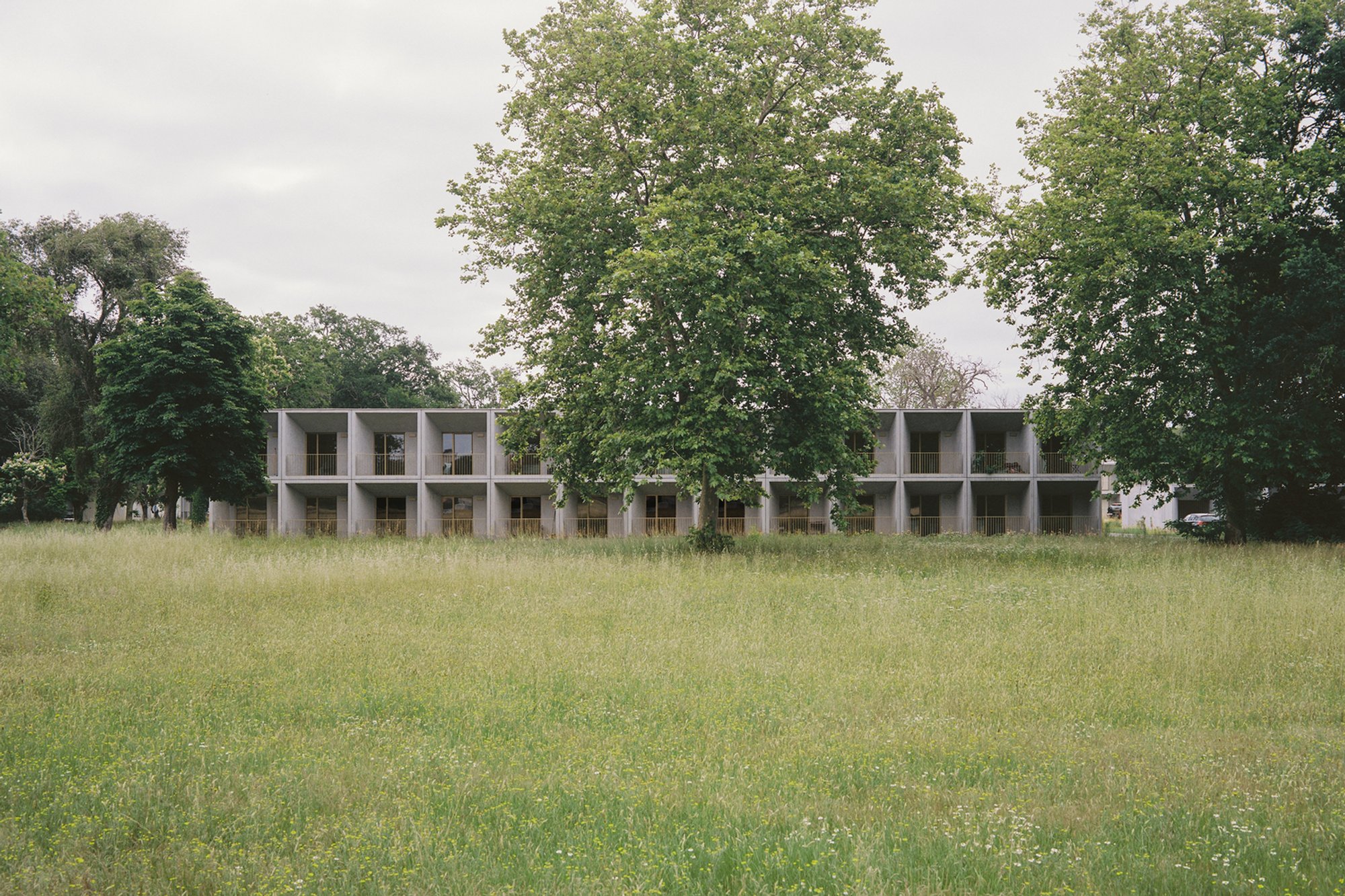
ESID BCC Housing by Faye Architectes & Associés: A Modern Approach to Military Housing
ESID BCC Housing by Faye Architectes blends modular design, concrete aesthetics, and spatial harmony to create functional, efficient, and sustainable military housing.

A Vision for Functional and Harmonious Housing
The ESID BCC Housing project redefines residential architecture within a military base by balancing functional efficiency and spatial harmony. Designed by Faye Architectes & Associés, the development introduces a contemporary yet contextually integrated architectural approach, ensuring that new structures respect the existing military layout while enhancing the quality of living for residents.
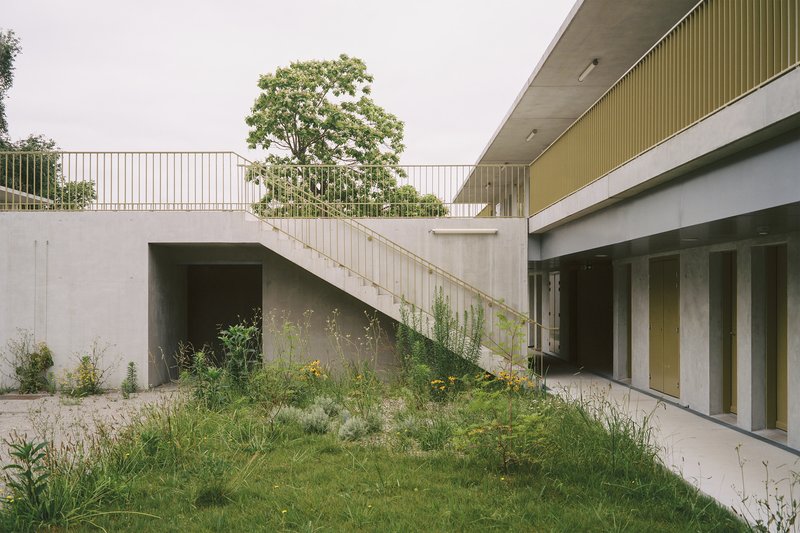
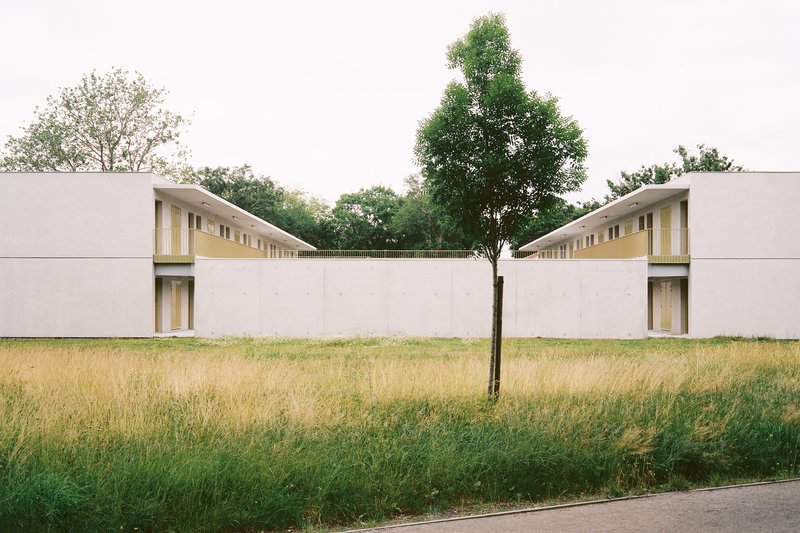
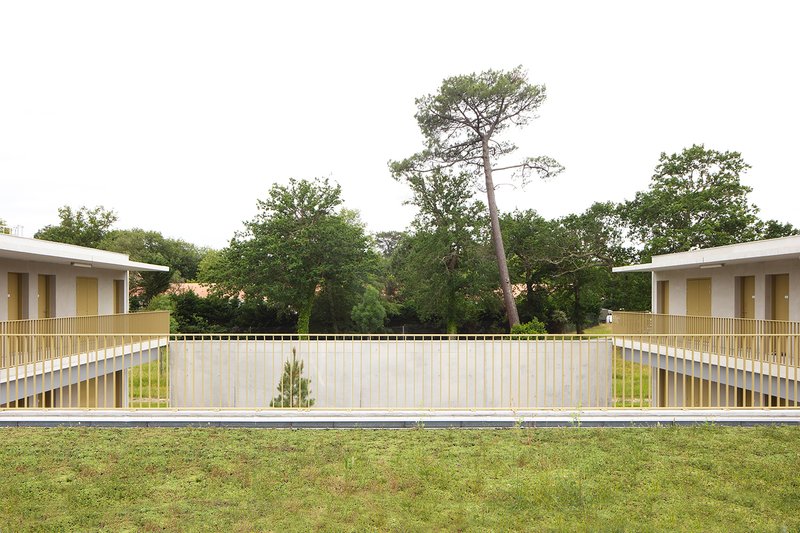
Located within Military Base 120 in Cazaux, the project explores the relationship between built spaces and voids, emphasizing how intermediate spaces influence the overall user experience. By incorporating open courtyards and interstitial green spaces, the architects have introduced a sense of community and openness within a structured military environment.
Architectural Concept: Clarity in Design
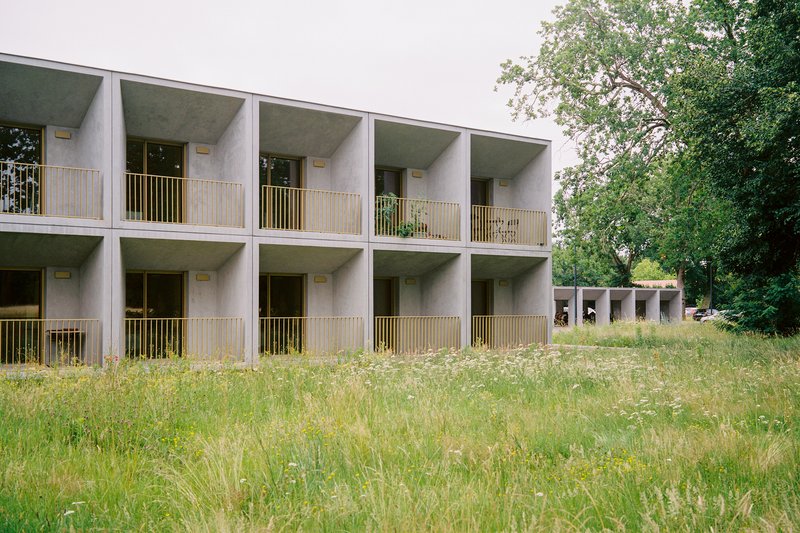
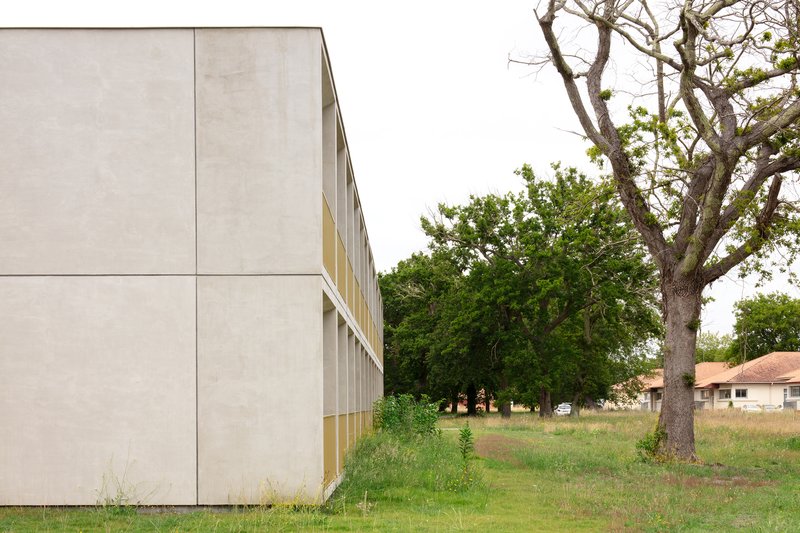
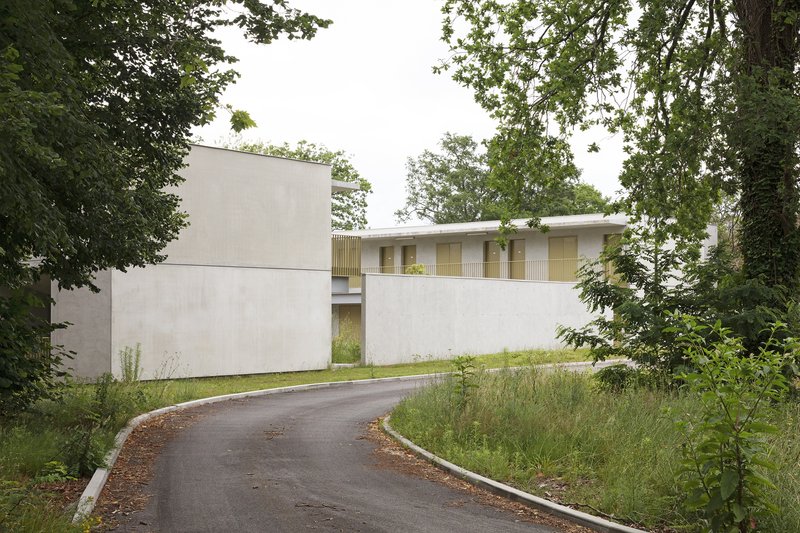
The strict, organized nature of the military base dictated the project's low-rise character, with buildings limited to ground level or R+1 to maintain the overall visual cohesion. This careful urban integration ensures that the new housing units blend into the existing architectural rhythm, rather than disrupting it.
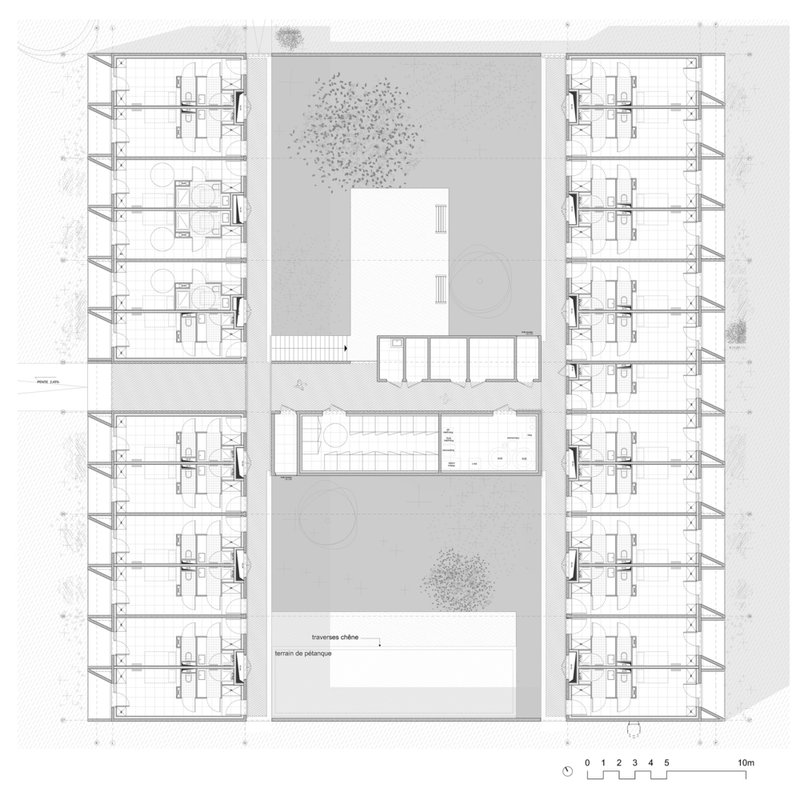
The central entrance hall acts as a connection hub, strategically positioned to optimize circulation and create a clear hierarchy within the complex. This transparent layout enhances wayfinding and ensures efficient movement between different functional areas.
Prefabrication & Modular Construction for Efficiency
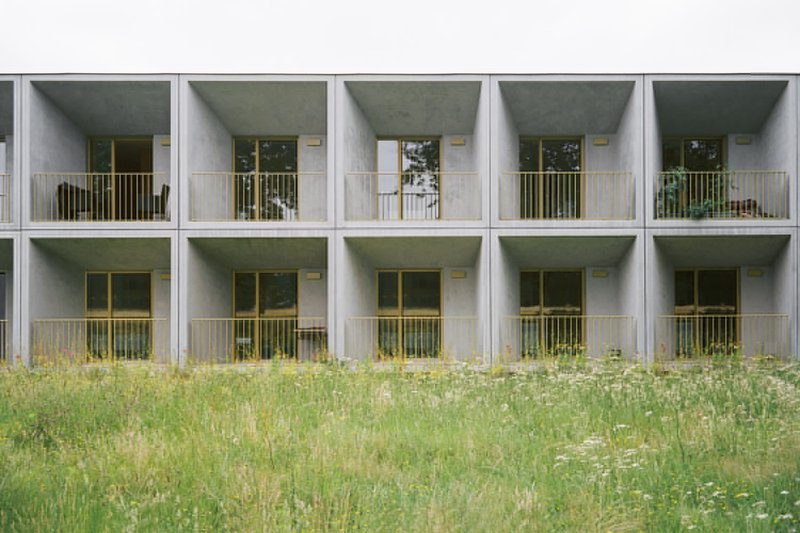
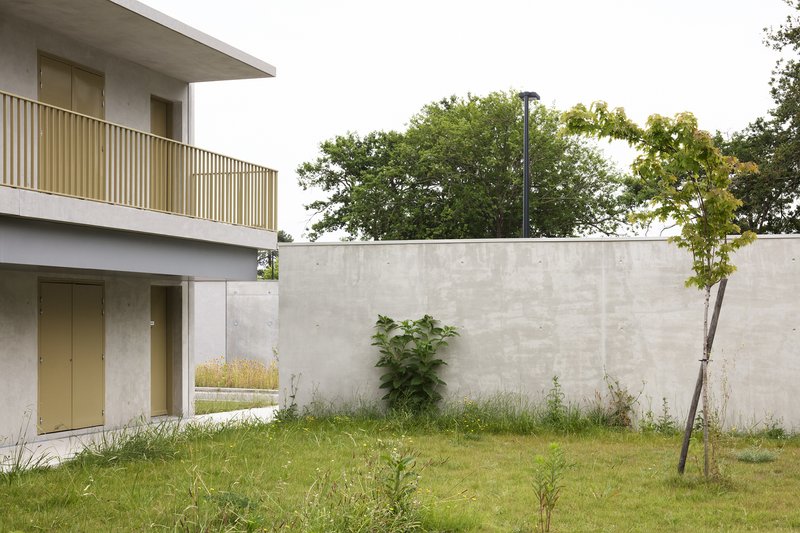
The project features 100 identical residential units, organized into two building blocks. To streamline construction and maximize efficiency, the architects adopted a modular prefabrication approach, repeating a standardized volumetric unit throughout the development. This approach not only reduces construction time but also ensures high-quality execution and cost-effective scalability.
Concrete as a Material of Choice
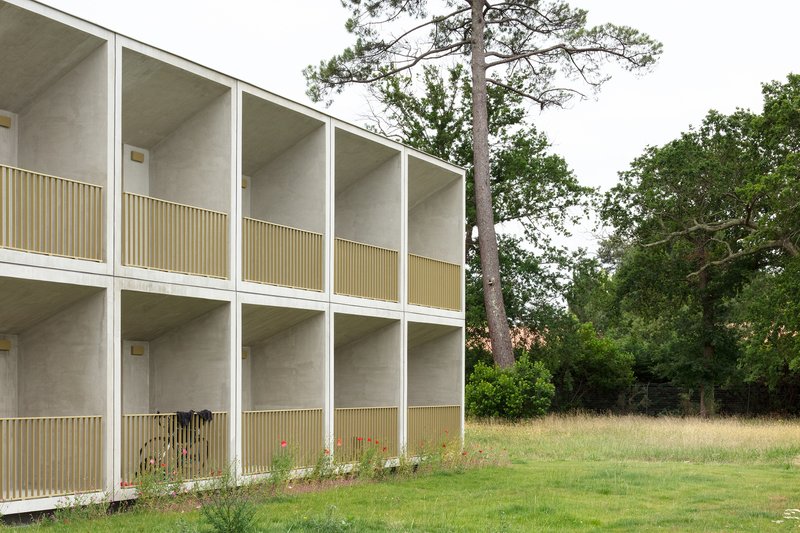
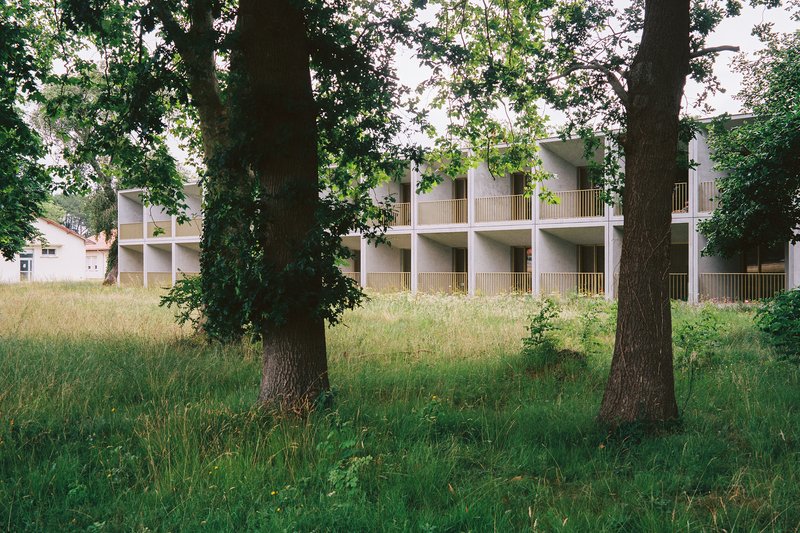
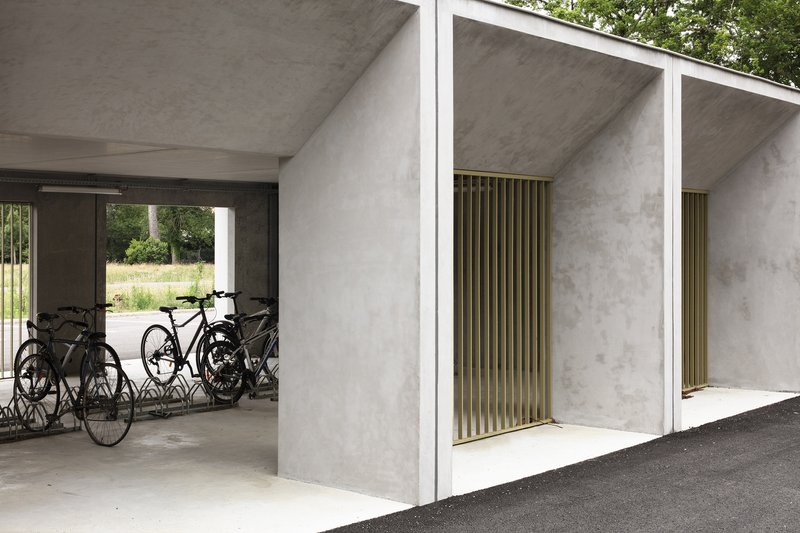
Concrete plays a dominant role in the project’s materiality, chosen for its durability, structural integrity, and timeless aesthetic. Beyond its functional properties, raw concrete surfaces contribute to the architectural identity of the project, reinforcing a sense of solidity and permanence while harmonizing with the site's existing infrastructure.
Sustainable and Contextual Integration
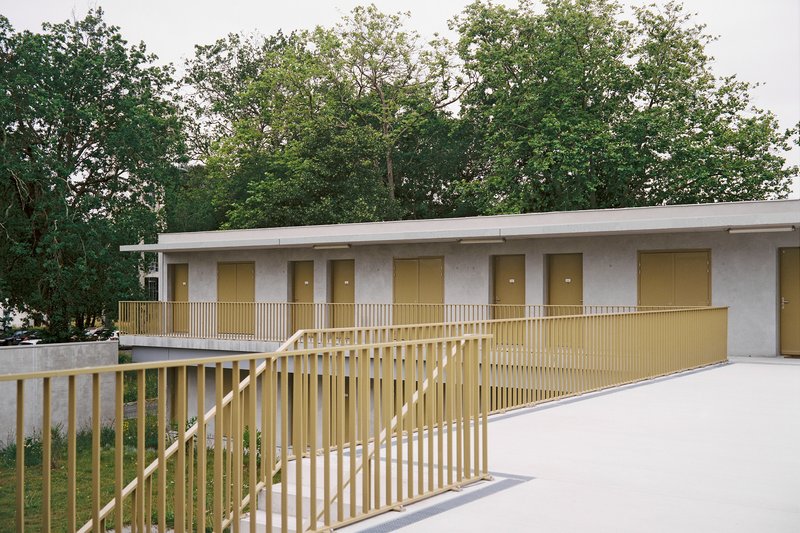
The site layout respects the existing footprint of previous structures, ensuring a seamless fit within the base’s master plan. Rather than imposing a new, disruptive arrangement, the architects followed a logic of continuity, maintaining the balance between built forms and open spaces.
The architectural language remains intentionally minimalist, allowing the quality of spaces—both interior and exterior—to define the user experience. The integration of landscaped courtyards and natural lighting enhances resident well-being, creating a comfortable, livable environment within the constraints of a highly functional setting.
A New Model for Military Housing
The ESID BCC Housing project by Faye Architectes & Associés successfully demonstrates how contemporary architectural strategies can enhance military housing environments without disrupting their ordered frameworks. By focusing on modular construction, spatial clarity, and material efficiency, the project sets a new benchmark for adaptable, efficient, and community-oriented military residences.
All Photographs are works of
Agnes Clotis



Popular Articles
Popular articles from the community


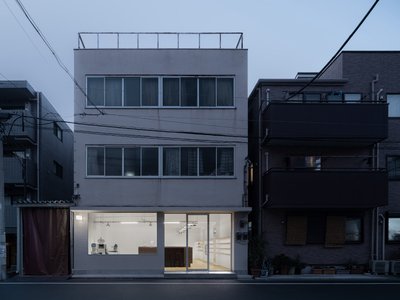
Atelier Macri Concept Store Interior Design by CASE-REAL
Atelier Macri store features a "ko" counter, walnut wood details, cork displays, blending retail, gallery, and seamless customer experiences.
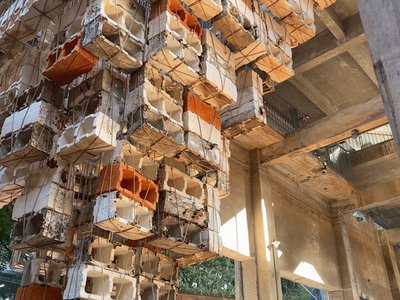
Inverted Architecture Installation by Studio Link-Arc: Exploring the Intersection of Architecture and Living Organisms
Inverted Architecture Installation by Studio Link-Arc blends mycelium, sustainability, inverted design, ecological cycles, and urban adaptive architecture in Shenzhen.
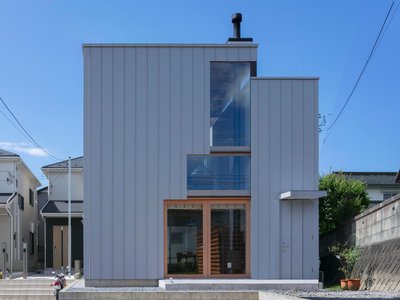
Split House: A Compact Urban Home Blending Privacy, Light, and Flexible Living in Japan
Compact Japanese home featuring DOMA space, flexible café potential, passive lighting, privacy zoning, and sustainable urban living design.


Similar Reads
You might also enjoy these articles

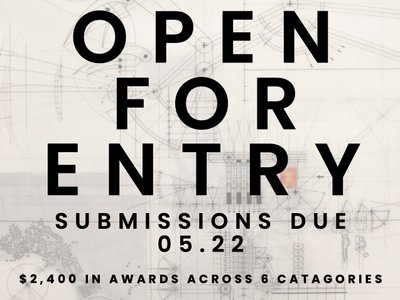
The Ken Roberts Memorial Delineation Competition (Krob)
As the most senior architectural drawing competition currently in operation anywhere in the world, it draws hundreds of entries each year, awarding the very best submissions in a series of medium-based categories.

Waterfront Redevelopment and Urban Revitalization in Mumbai: Forging a New Dawn for Darukhana
A transformative waterfront redevelopment project reimagining Darukhana’s shipbreaking heritage into an inclusive urban future.
OUT-OF-MAP: A Call for Postcards on Feminist Narratives of Public Space
Rhizoma Design and Research Lab invites artists, designers, architects, researchers, and students to reflect on how feminist perspectives can reshape public space. Selected works will be exhibited in Barcelona, October 2026. Submissions open until 15 April 2026.


Documentation Work on Buddhist Wooden Temple
Architectural syncretism and cultural hybridity: A comparative study of the Buddhist temples in Chattogram Hill tracks

Explore Architecture Competitions
Discover active competitions in this discipline




The International Standard for Design Portfolios


The Global Benchmark for Architecture Dissertation Awards


The Global Benchmark for Graduation Excellence


Challenge to reimagine the Iron Throne
Comments (0)
Please login or sign up to add comments
No comments yet. Be the first to comment!