

Faille Cachée des Marais Park Entrance by Martin Gaufryau + Quentin Barthe + Tom Patenotte
Minimal timber structure marks a poetic threshold between urban and natural landscapes, blending public signage, reflection, and sensory engagement.


Reimagining Thresholds Between Urban and Natural Landscapes in Bourg-Saint-Maurice
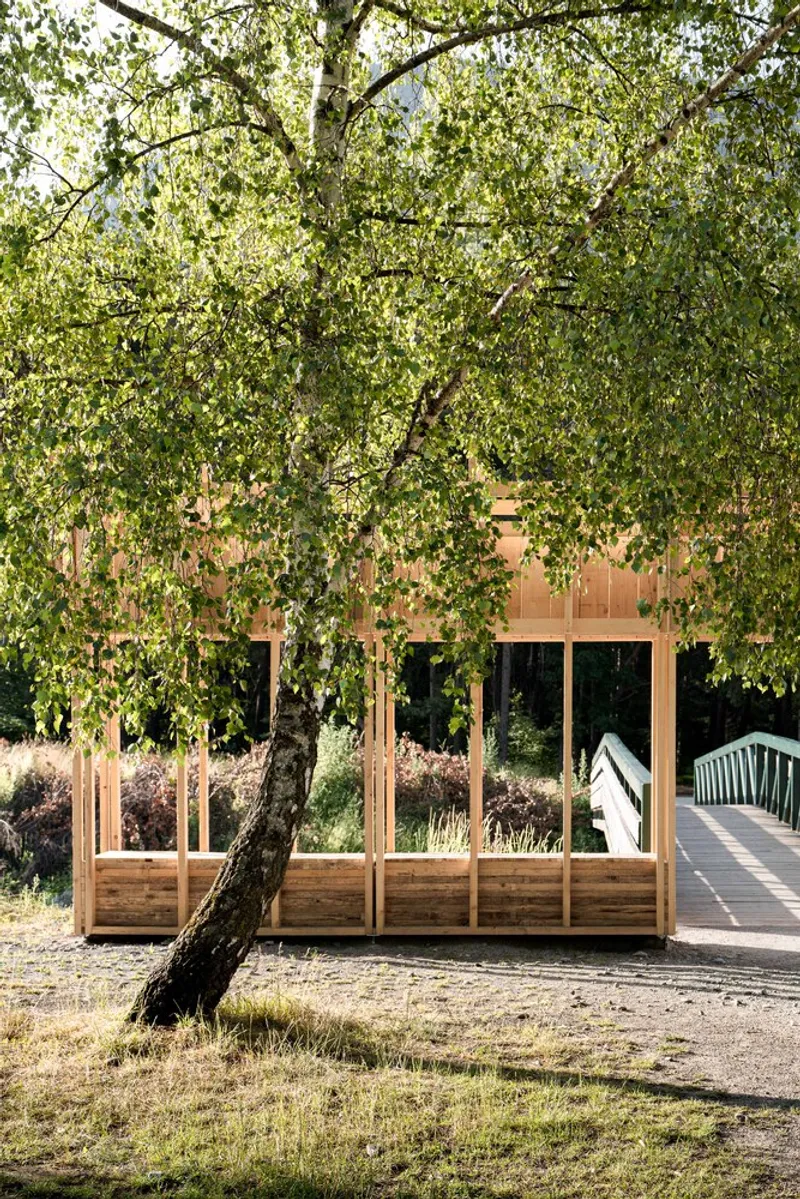
Located in Bourg-Saint-Maurice, France, the Faille Cachée des Marais Park Entrance is a minimalist architectural intervention that redefines the notion of a threshold between city and nature. Designed by Martin Gaufryau, Quentin Barthe, and Tom Patenotte, this 9 m² timber structure stands at a symbolic and physical junction: the boundary between an urban sports ground and a serene wetland park, divided by the Versoyen River and linked by a pedestrian bridge. Completed in 2023, the project enhances the park’s accessibility while celebrating the site’s ecological and spatial transitions.
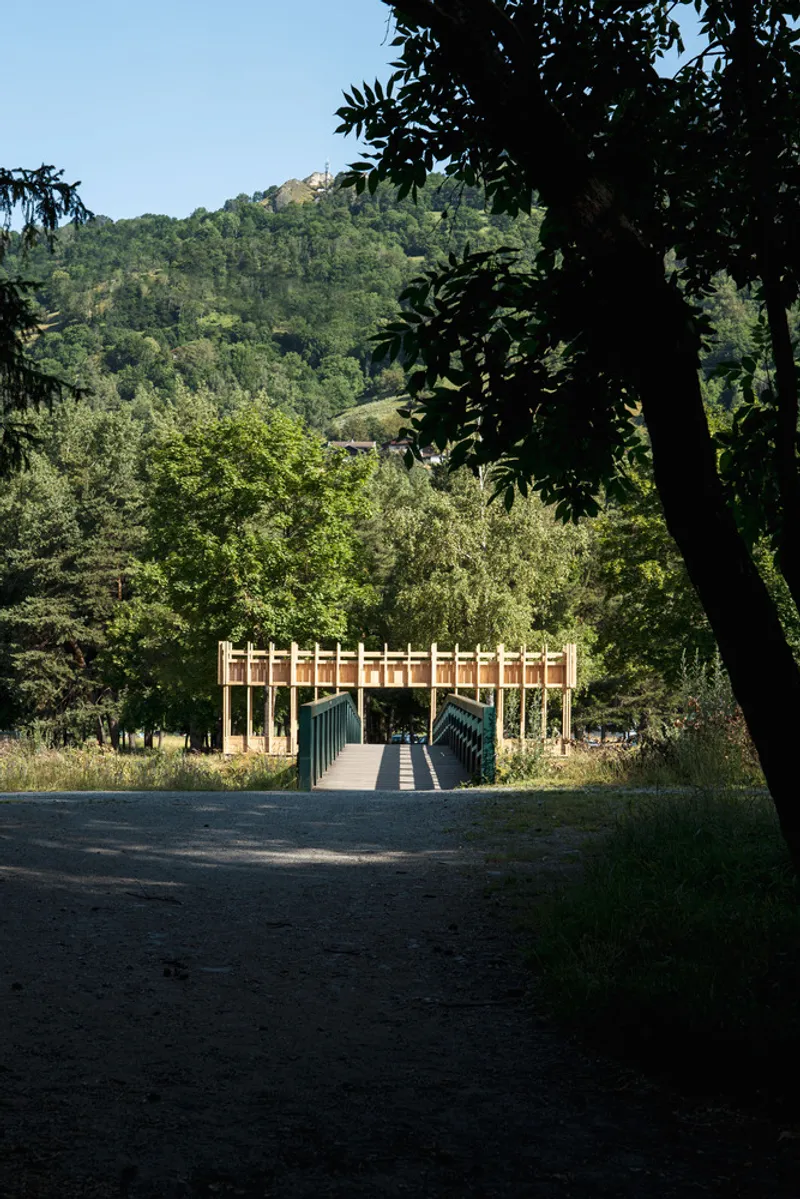
A Symbolic Gateway to Nature
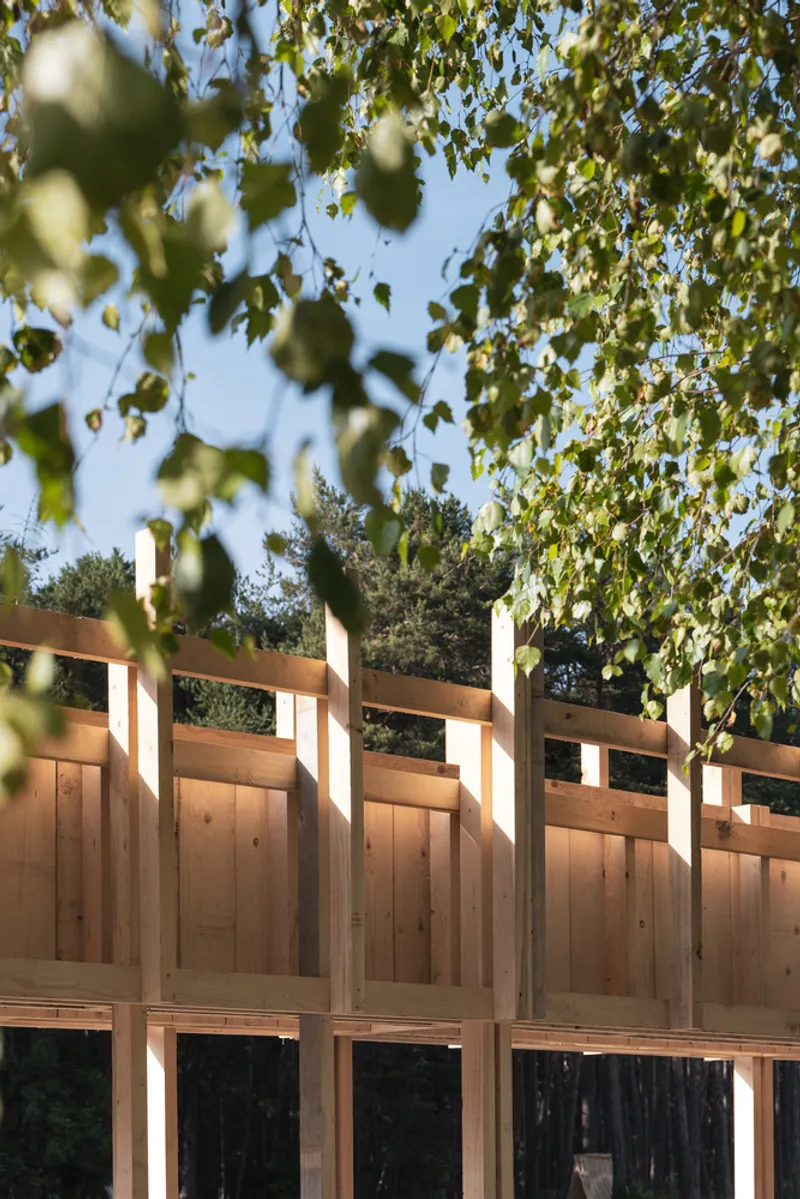
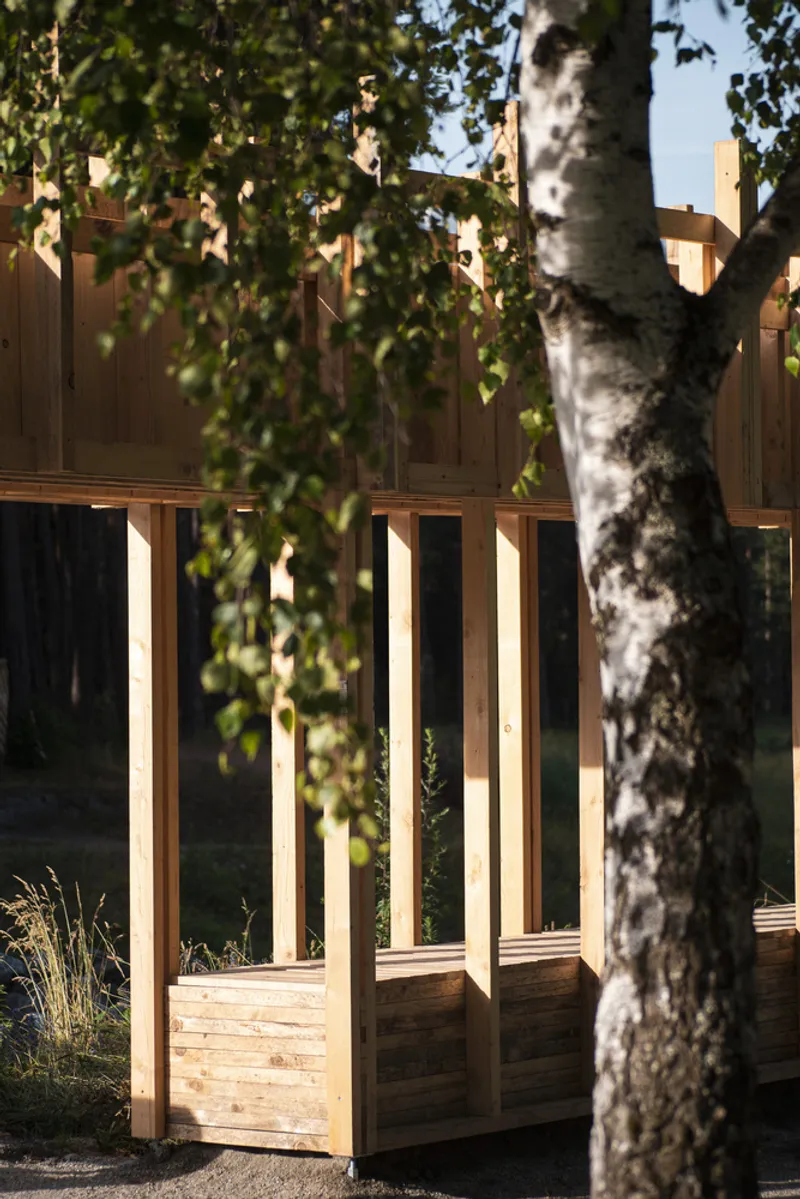
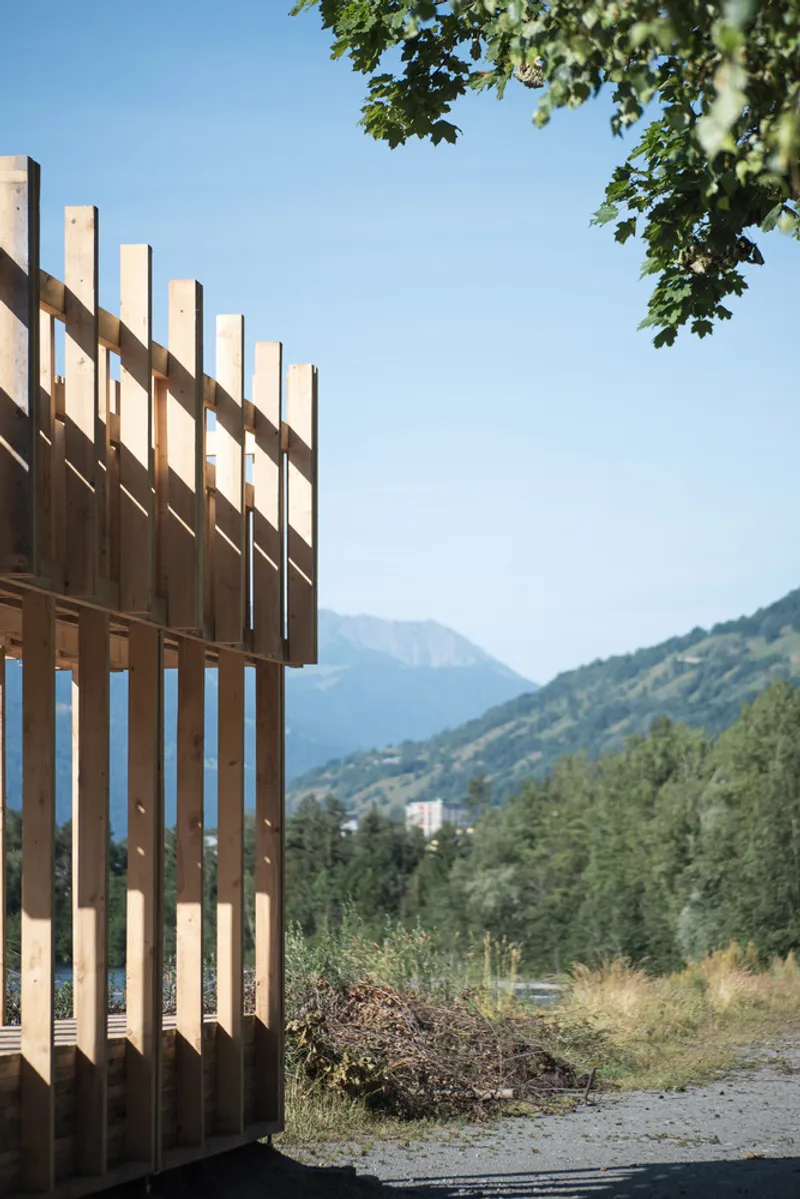
Commissioned through a design competition held by the municipality, the structure addresses a fundamental question: how do you signal the entrance to a park that has no ceiling, no walls, and no defined boundaries? The architects responded by creating a vertical, porous form that echoes the forest beyond it. Composed of slender local pine porticos, the structure blurs the line between architecture and landscape, encouraging introspection and sensory engagement as visitors transition from the built environment to nature.
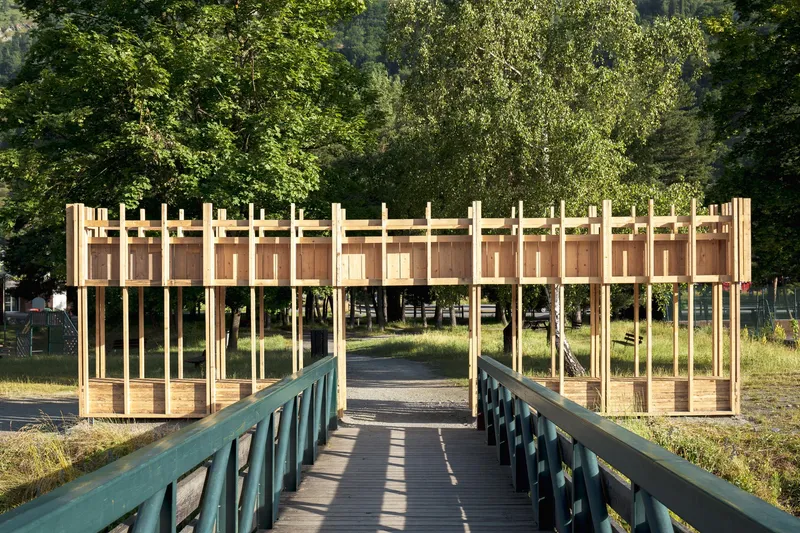
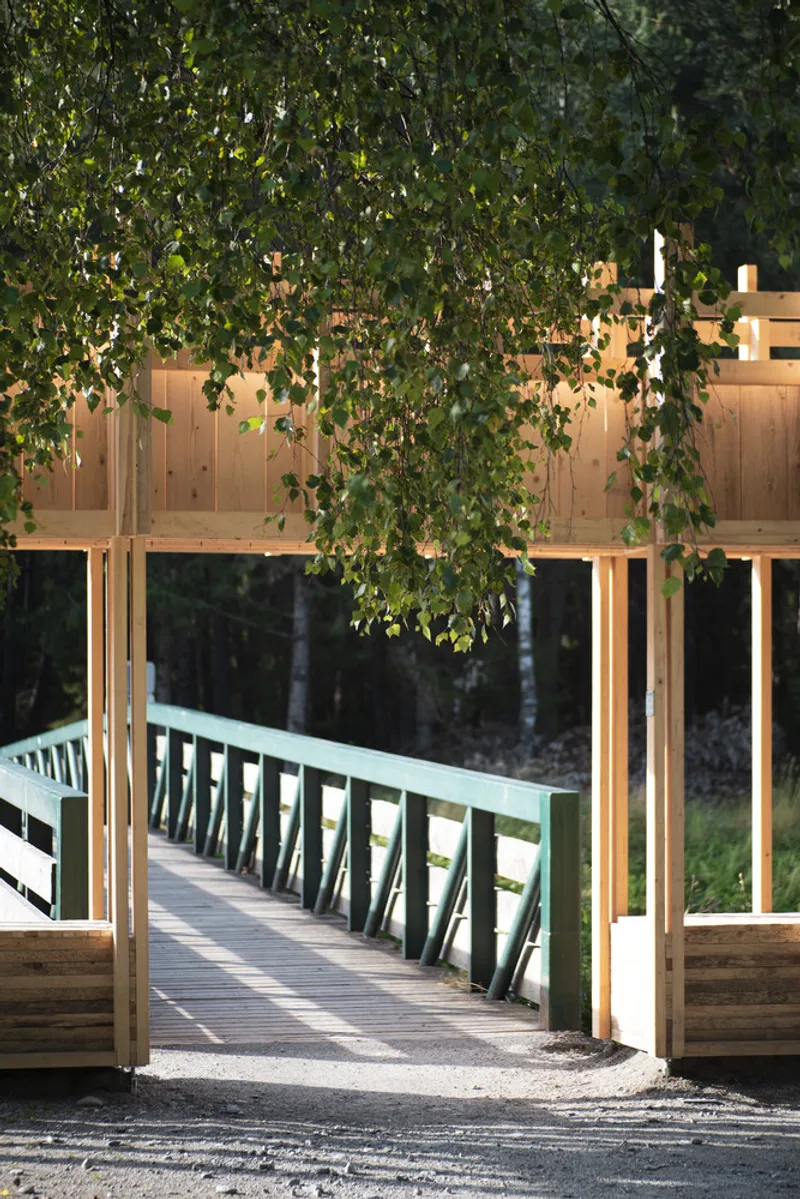
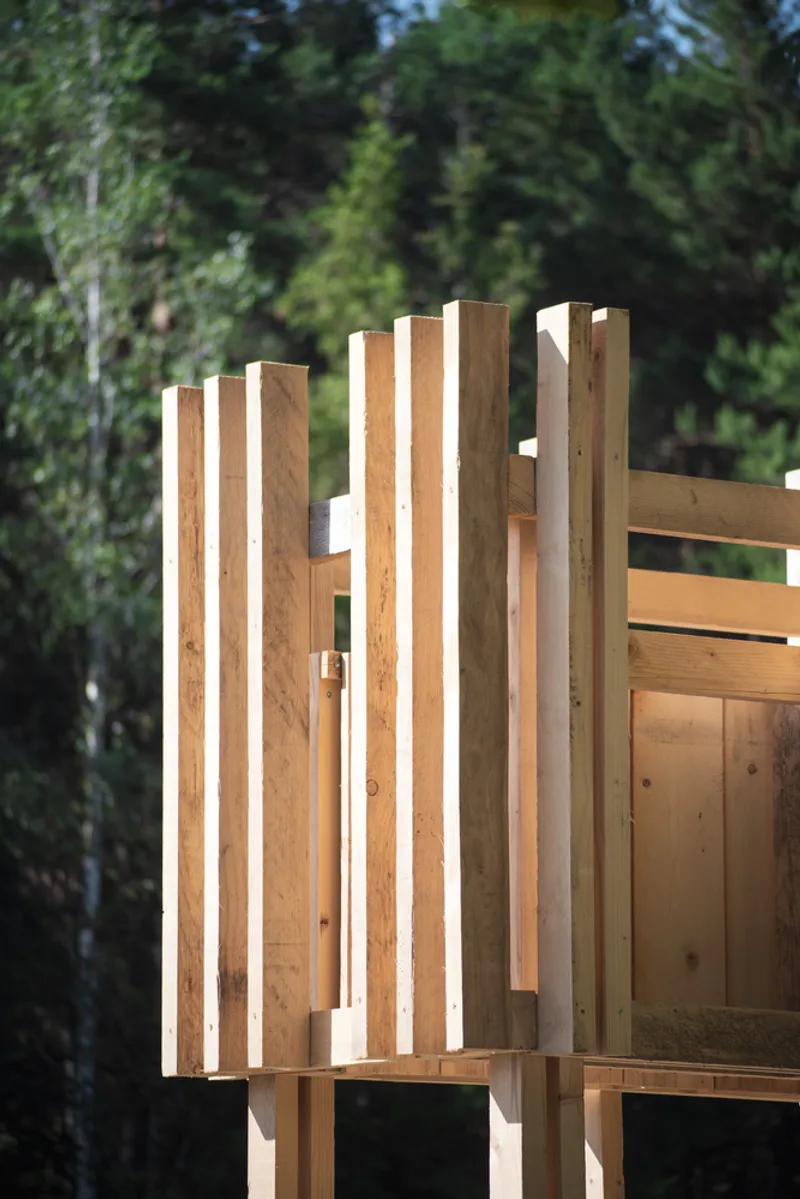
Rather than building a traditional gate or monumental sign, the team designed a “hidden fault line”—a sculptural rhythm of wood beams that gestures upward like the surrounding trees. This radical yet delicate construction provides a new typology for public space entrances, one that fosters reflection, orientation, and community interaction.

Architecture in Dialogue With Its Surroundings
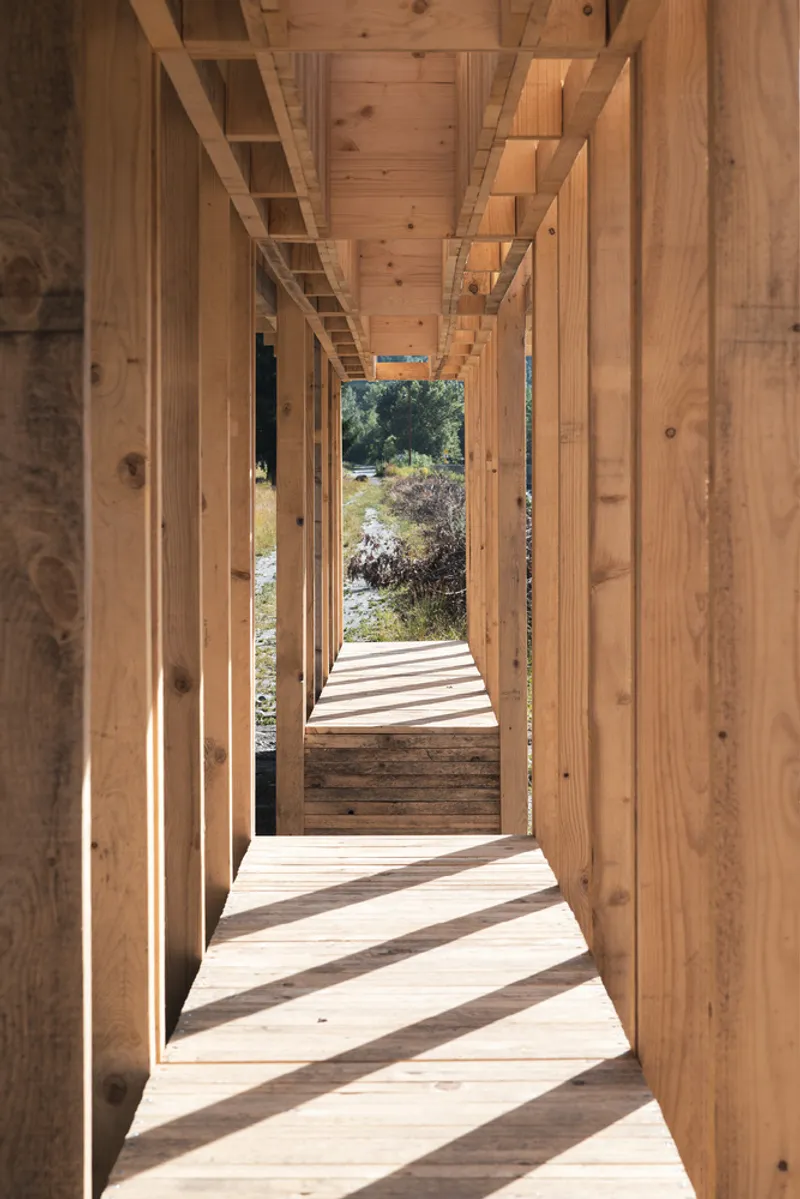
The installation is deliberately minimal, allowing its structural language to resonate with the natural and historical context of Bourg-Saint-Maurice. Its rhythmic verticality mirrors the slender tree trunks of the wetland forest, while its lightweight footprint ensures minimal impact on the ground. Walkers are guided underneath the elevated porticos, compelled to look up through a central gap to view the sky, subtly reconnecting with their surroundings.
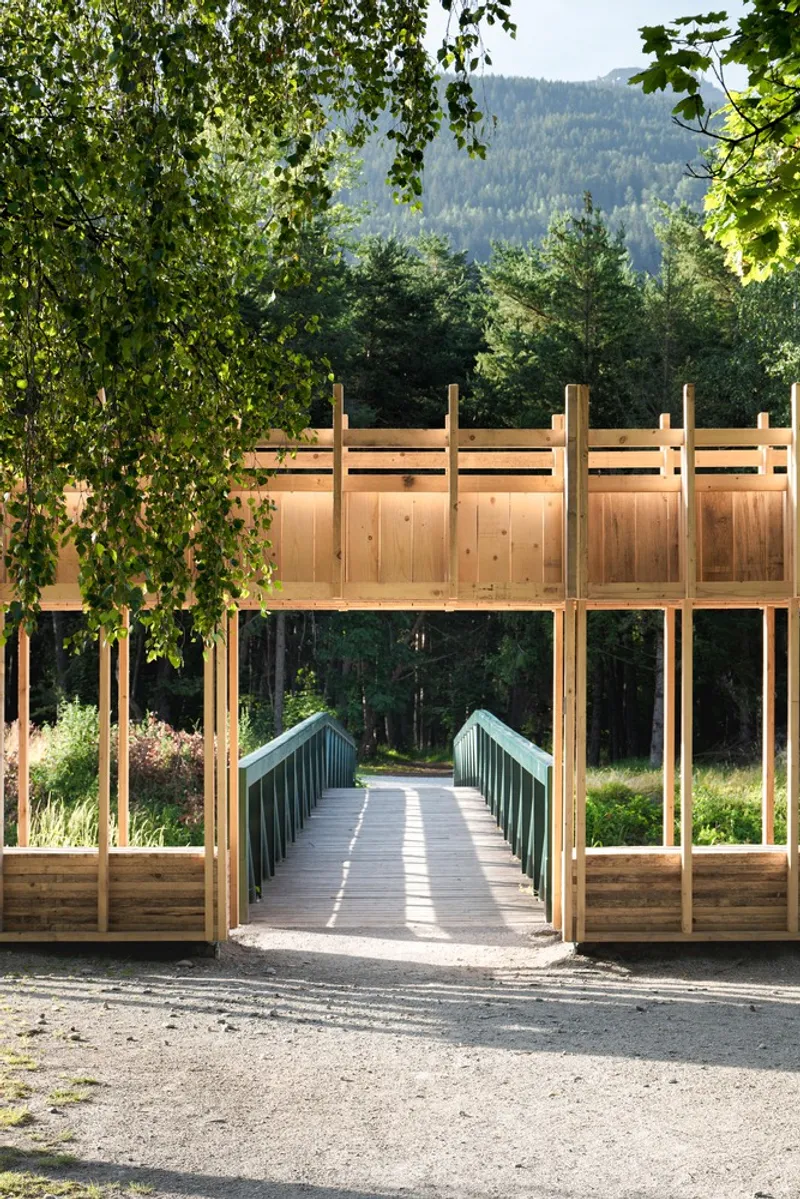
At ground level, an integrated wooden bench offers a place to rest and contemplate the transition between the urban plain and the marsh landscape. This seating component anchors the structure while fostering a human-scale interaction with the site.
Multi-functional and Educational
More than just a passage, the entrance also functions as a flexible signage and exhibition space. Through a discreet system of hooks, the timber frame can host maps, educational boards, or photographic exhibitions, reinforcing its role as a gateway to learning and community engagement. This approach revitalizes the tradition of public wayfinding while introducing contemporary design sensibilities grounded in local materials and environmental awareness.
Bridging the Vernacular and the Contemporary
The project pays subtle homage to Charlotte Perriand’s modernist influence in nearby Les Arcs, balancing vernacular expression with minimalist aesthetics. Its radical discretion and respectful integration make it a quiet yet powerful gesture—a structure that doesn’t dominate the site but reveals its meaning through interaction, context, and natural materiality.
Sustainable, Symbolic, and Site-Specific
With its sustainable timber construction, local sourcing, and reversible assembly, the Faille Cachée des Marais Park Entrance stands as a model of eco-conscious architecture for public spaces. It transforms a simple program—a park entrance—into a poetic experience of arrival, connection, and discovery.
All the photographs are works of Clément Molinier




Popular Articles
Popular articles from the community


The Ocean Hive: Sustainable Architecture for a Self-Sufficient Civilization at Sea
The Ocean Hive imagines sustainable architecture at sea, where modular habitats, algae, wave power and ocean waste sustain a growing colony.
AL-JANNAH: Sustainable Architecture and Permaculture for Afghan Widows
AL-JANNAH uses sustainable architecture and permaculture to create resilient oasis of housing, learning, work and renewal for Afghan widows.

The Musturak Paradise: Senior Living Architecture for a Connected Future in Temara, Morocco
The Musturak Paradise reimagines senior living architecture in Temara via private homes, social spaces, culture, community, and shared care.
EW PARK: Sustainable Architecture Reimagines the Future of Urban Parking
EW PARK reimagines city parking as a modular wooden tower combining automation, solar energy, electric mobility, and adaptable urban design.


Similar Reads
You might also enjoy these articles


Hodi-Mandai Geram
Project Function: Preservation and revitalization of the Intangible heritage and socio-spatial identity of the Hodi by Housing, Cultural Memory Center, Sacred Grove, landscape, local tourism economy


Olio Towers: A Mid-Rise for Performers That Fuses Housing, Rehearsal, and Stage
Located blocks from Houston's Theater District, this modular tower stacks living units around a central performance atrium.

Oasis: Modular Green Housing Carved into Dhaka's Urban Fabric
A shortlisted Plugin Housing entry reclaims unauthorized settlements in Dhaka with stepped concrete volumes, green roofs, and ventilation-driven design.

Black Hole: A Floating Megastructure for the Post-Physical Era
Emiliano Mazzarotto envisions a spherical, self-scaling arena where e-sports, digital hotels, and holographic stadiums replace traditional public space.

Explore Landscape Design Competitions
Discover active competitions in this discipline



Challenge to reimagine the Iron Throne


Photograph architecture without architects


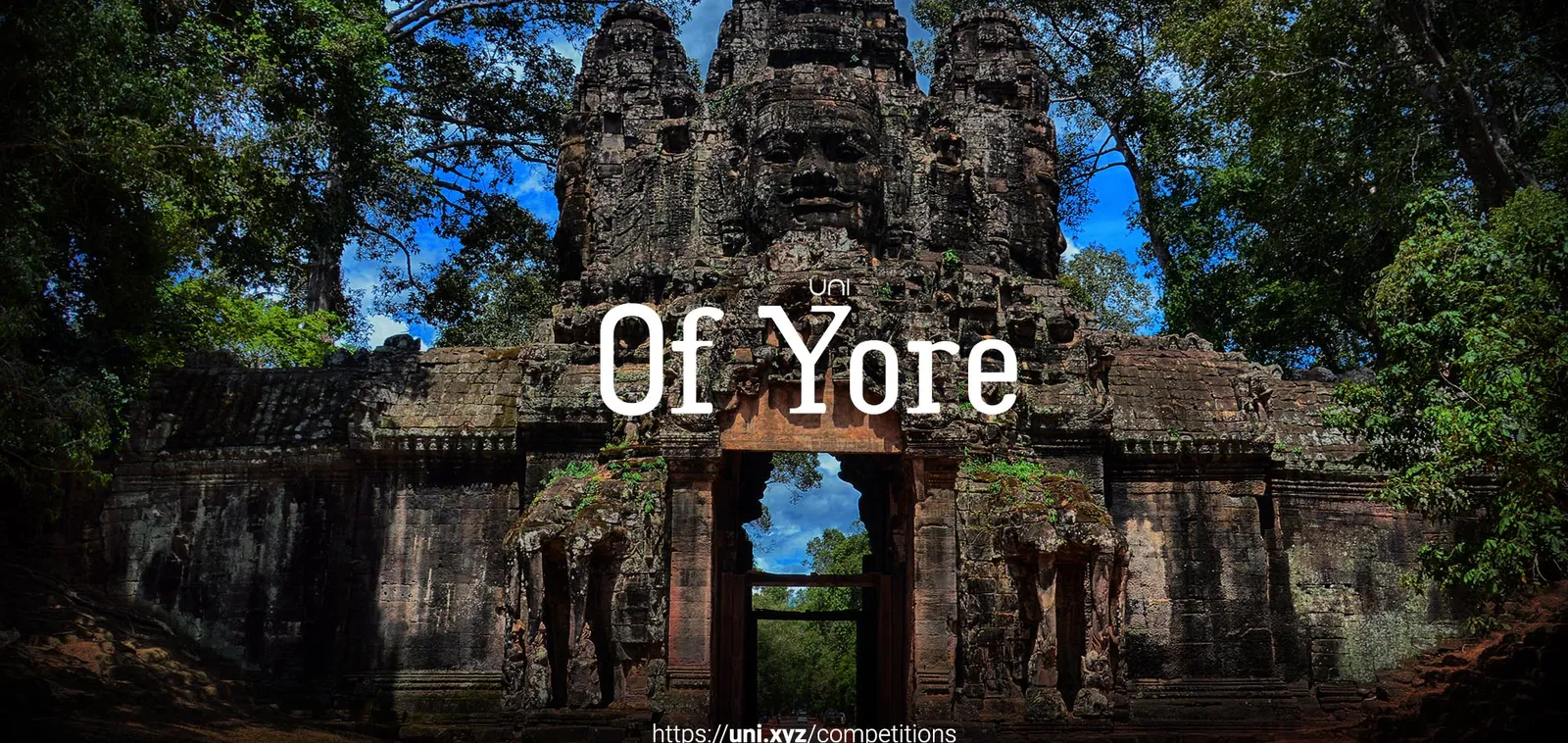
Illustrate the lost glory of Angkor Wat - Render Challenge


Design challenge to reuse E-waste
Comments (0)
Please login or sign up to add comments
No comments yet. Be the first to comment!