
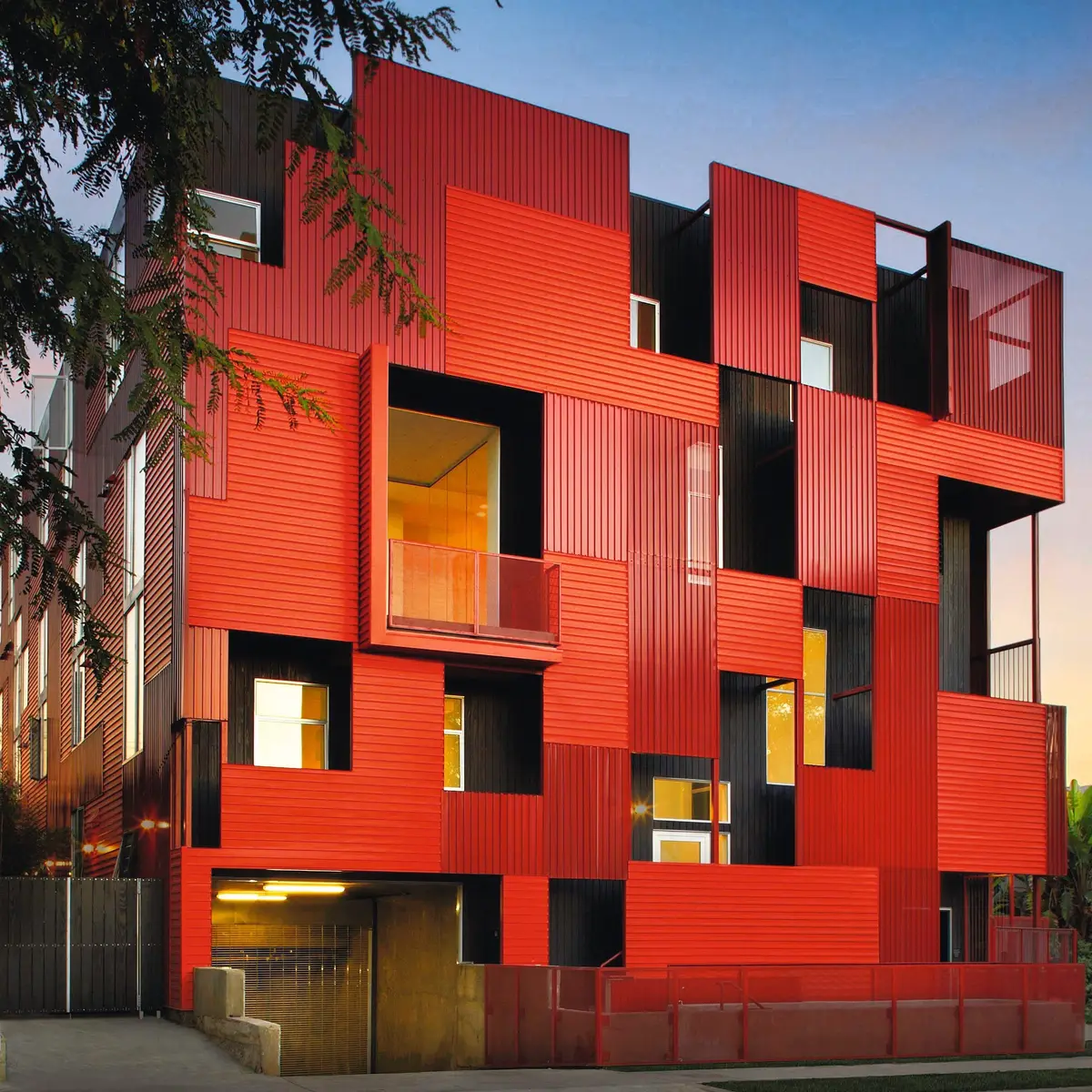
FAQ Questions - Solaris Library
What was the concept behind the project?

"Solaris" is a science fiction novel set in a distant future where humanity has discovered a planet inhabited by a mysterious alien life form called the "Ocean." The story revolves around a group of scientists who are sent to study the planet Solaris and attempt to understand the nature of the Ocean. The book Solaris, written by Polish author Stanisław Lem, is an excellent choice of inspiration for this project, both for its context and its significance. The library will be designed around a book that is meaningful to the local community and to the library itself. Firstly, Solaris was written by one of the most important authors of 20th-century Polish literature and is considered a classic of science fiction. By choosing the book as inspiration for the library, we are celebrating Polish culture and literature, paying homage to one of its most significant writers. Furthermore, the story of Solaris takes place on a space station orbiting an unknown planet, where the characters strive to understand and interact with an alien life form.This space station in the book is a place of exploration and discovery, where the characters are always in search of new knowledge about the planet Solaris and its creatures. Similarly, a library is a place where people can seek new knowledge, learn, and expand their horizons. This theme of exploring the unknown and the quest for knowledge will be used as inspiration for the conception of the library, which will be designed as a place that encourages the pursuit of knowledge and the discovery of new ideas. Just as the characters in Solaris work together to understand the alien life form, the library will be designed as a space that encourages collaboration and the exchange of ideas. Lastly, a library based on the story of a book is a unique idea that can attract new audiences to the library. Instead of just being a space for studying or borrowing books, the library can be seen as a place of cultural interest, attracting visitors who want to learn more about the history and culture celebrated in the library. In summary, choosing the book Solaris as inspiration for this project is an excellent choice as it pays homage to Polish culture and literature, reflects the literary and scientific tradition of the country, and can be designed to encourage the pursuit of knowledge and the exchange of ideas.
How was a specific objective attempted to be met?
Our objective is to completely design/rewrite the universal definition of the public library without neglecting the important social, educational, and cultural role of libraries. To achieve this goal, we must strive to address the needs of readers, entrepreneurs, and educators within the regional base. We aim to provide spaces for information technology and knowledge resources, as well as new forms of media, in addition to the traditional spaces for books. Furthermore, we intend to create an architectural project that is welcoming and inclusive, offering a range of services that cater to the needs of the community and the city.
How will the project transform with the passing time?
In the book Solaris, the planet is an intelligent living organism capable of various actions. We will bring this concept to our library. To achieve this, we will utilize Artificial Intelligence technology, connecting the entire library and its users through an application and screens scattered throughout the library. Based on user-recorded information, Artificial Intelligence will be able to:
- Analyze each user's preferences and suggest books and media based on their recent choices. - Identify currently borrowed books and create weekly lists of book recommendations. - Analyze the main demands and provide solutions within the library's book flow. - Create interactive maps for users to dynamically explore the library. and much more. The Artificial Intelligence system will be connected to the entire building and the information collected, enabling the creation of a unique library experience that evolves with its readers. The architecture will include touch-sensitive surfaces, large-scale image projections, and surround sound to create an immersive experience, all connected to Artificial Intelligence.
How should we envision the Libraries of the Future?
Libraries have been evolving and becoming more complex, containing an increasing number of resources and services to meet the needs of users. Today, they have the important mission of promoting equal opportunities, allowing people from different backgrounds and social conditions to access information and knowledge. The library of the future should be an innovative and adaptable space that offers a wide variety of resources and services to meet the learning and knowledge needs of its community. This library should be accessible, inclusive, and collaborative, working in partnership with other institutions and organizations to promote education, culture, and personal and social development. Integration with technology is the key point for a library in the future. Books are essential, but nowadays, the first contact is often through a computer screen. The interaction between digital knowledge and printed word is dynamic and requires different spatial characteristics from the traditional library reading room. That is why modern libraries are increasingly becoming a combination of books and technology, offering a wide variety of resources for learning and personal development.

Popular Articles
Popular articles from the community


Aquadapt: An Underwater Habitat That Rewrites Its Rooms by the Hour
Curved modules ring the seabed while one shell shifts from breakfast room to cinema, farm and football pitch as residents' needs change.

The Amber Palace Opera: A Geological Fiction Surfaces on Tallinn's Baltic Waterfront
Pierre Brillard reimagines a Baltic legend as a public landscape, opera house, and waterfront promenade rooted in Tallinn's coastal identity.


ETEH Reworks the Shared Spaces of São Domingos School in Brazil Around Timber, Color and Hanging Plants
At São Domingos School in Brazil, 436 m² of hall, refectory and library are recast with timber joinery, a yellow and blue code and trailing greenery.

Singing Woman: An Opera House That Performs Before the Curtain Rises
Ovidiu Cristian Pavel's conceptual opera house translates Estonia's choral identity into a sculpted waterfront landmark facing the Baltic Sea.

Similar Reads
You might also enjoy these articles

The Rhythm of Seasons
A Farmers' Market Connecting Nature and the City


More Than a Building-Designing a Living System
More Than a Building-Designing a Living System
Base Beyond
DESERT COMPOUND ARID: TOURISM OF ABSENCE AND ABUNDANCE

Explore Architecture Competitions
Discover active competitions in this discipline


Challenge to reimagine the Iron Throne

Photograph architecture without architects

Illustrate the lost glory of Angkor Wat - Render Challenge

Design challenge to reuse E-waste
Comments (0)
Please login or sign up to add comments
No comments yet. Be the first to comment!