
Fellenoord 15 Renovation by UNStudio – A Sustainable Transformation in Eindhoven
Fellenoord 15 Renovation by UNStudio transforms Eindhoven office with sustainable design, smart technology, flexible workspaces, daylight optimization, and urban connectivity.


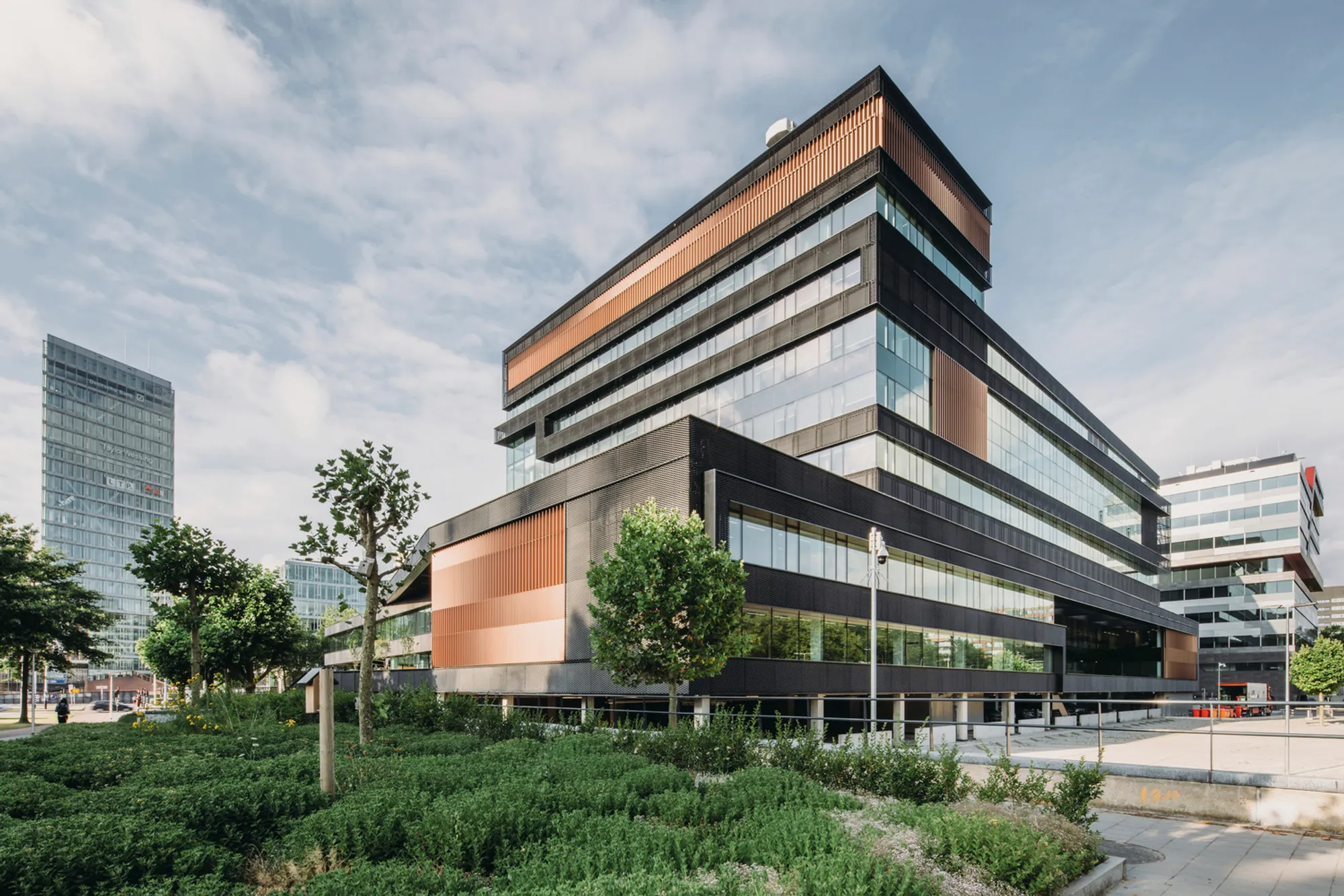
The Fellenoord 15 Renovation in Eindhoven, The Netherlands, designed by UNStudio, is a striking example of adaptive reuse and sustainable office architecture. Completed in 2023, the project transforms the former Rabobank headquarters into a future-ready, eco-conscious workplace that balances historical continuity with cutting-edge design.
Sustainable Architecture and Environmental Responsibility
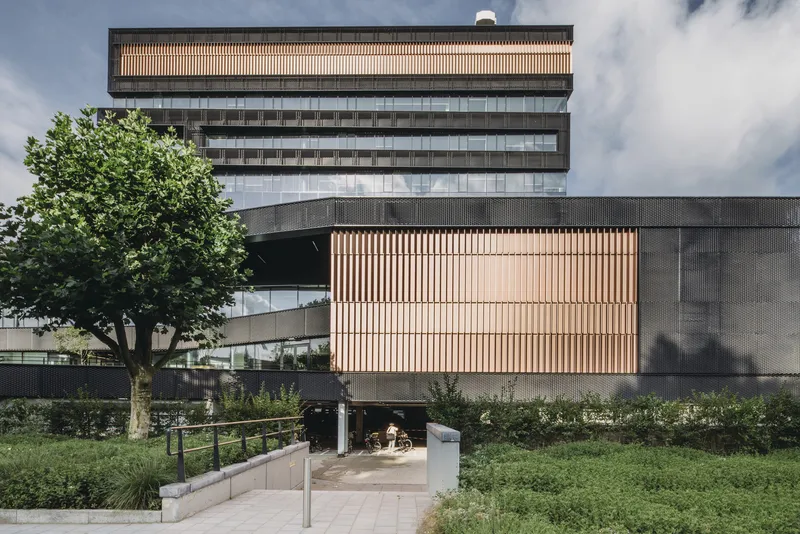
Instead of demolition, UNStudio retained the building’s robust structural shell, reducing the CO2 footprint by nearly 40% compared to new construction. This choice reflects a broader architectural movement toward circular economy principles and the sustainable redevelopment of existing building stock.
The renovation achieved a BREEAM-Excellent certification, thanks to integrated green strategies:
- Geothermal heating and cooling systems
- Water-based climate ceilings
- Solar panels for renewable energy
- Natural, low-impact materials such as stone
The design also enhances urban biodiversity, incorporating insect hotels, nesting boxes, and bat habitats within the landscape, along with carefully selected plant species to support ecological resilience.


Smart Office Design and Technology Integration
Fellenoord 15 is more than a sustainable shell—it is a tech-enabled smart building. Partnering with Edge, UNStudio integrated sensor-based systems to monitor space usage, optimize energy consumption, and adapt to real-time user behavior. These systems personalize the workplace experience, enabling employees to control their microclimates while contributing to the building’s energy efficiency.
The flexible office layouts are designed with a gradient of activity:
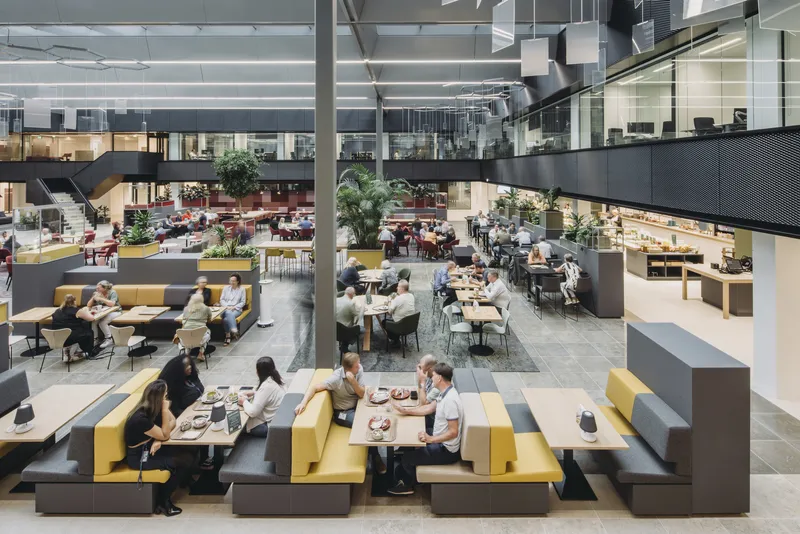
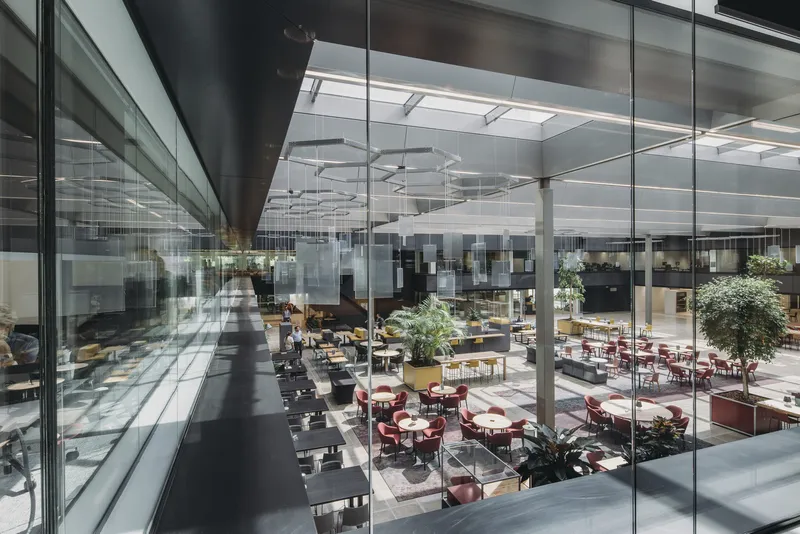
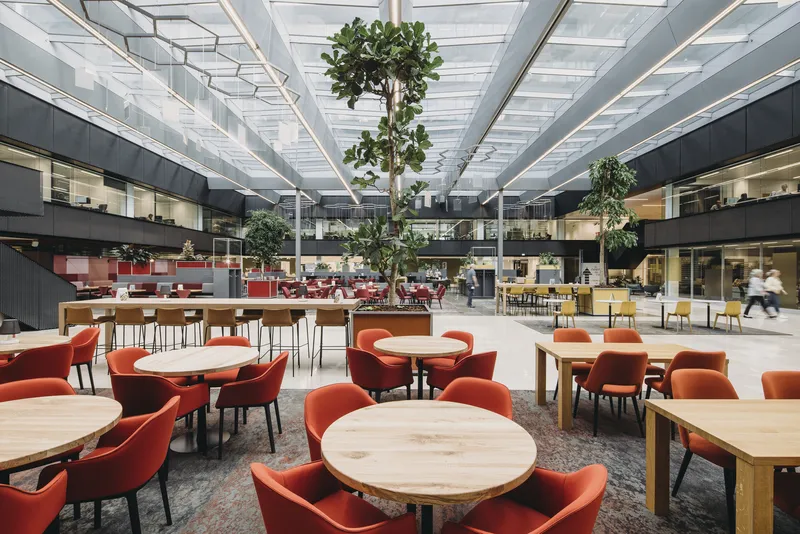
- Central zones serve as vibrant, collaborative hubs.
- Perimeter areas provide quiet, focused workspaces with abundant natural light. This adaptive model ensures the building supports evolving work cultures and employee well-being.
Public Activation and Urban Connectivity
The renovation redefines the building’s relationship with Eindhoven’s urban fabric. By removing a parking lot and designing a new entrance facing the train station, UNStudio opened the building to its surroundings. A semi-public staircase links the street to the atrium, creating a welcoming threshold that encourages public interaction.
From afar, the structure maintains a restrained architectural presence, but closer inspection reveals intricate details:
- Expanded mesh cladding produces a dynamic moiré effect.
- Large windows, voids, and roof articulations enhance transparency.
- A clearly defined entrance improves accessibility and identity.
These interventions transform Fellenoord 15 into an open, connected landmark within the city, bridging private workspace with public life.

A Model for Future Workplace Architecture
Through its holistic approach, the Fellenoord 15 Renovation demonstrates how sustainable design, smart technology, and adaptive reuse can reshape the future of office buildings. The project not only reduces environmental impact but also delivers human-centered, flexible, and connected work environments.

All Photographs are works of Eva Bloem




Popular Articles
Popular articles from the community


The Musturak Paradise: Senior Living Architecture for a Connected Future in Temara, Morocco
The Musturak Paradise reimagines senior living architecture in Temara via private homes, social spaces, culture, community, and shared care.

Riyadh For All: Intergenerational Urban Design for Active Aging in Rabat
Riyadh For All reimagines urban design in Rabat with intergenerational co-living, adaptive courtyards, and Moroccan cultural exchange today.

Co-life: Sustainable Architecture for Age-Friendly Community Living
Co-life reimagines sustainable architecture for seniors through courtyards, rammed earth, shared gardens, and spaces designed for belonging.

Conexión: Biophilic Design Reimagines High-Rise Living in Hong Kong
Conexión reimagines high-rise living in Hong Kong through biophilic design, green facades, shared spaces, daylight, water and nature within.


Similar Reads
You might also enjoy these articles


Hodi-Mandai Geram
Project Function: Preservation and revitalization of the Intangible heritage and socio-spatial identity of the Hodi by Housing, Cultural Memory Center, Sacred Grove, landscape, local tourism economy


Olio Towers: A Mid-Rise for Performers That Fuses Housing, Rehearsal, and Stage
Located blocks from Houston's Theater District, this modular tower stacks living units around a central performance atrium.

Oasis: Modular Green Housing Carved into Dhaka's Urban Fabric
A shortlisted Plugin Housing entry reclaims unauthorized settlements in Dhaka with stepped concrete volumes, green roofs, and ventilation-driven design.

Black Hole: A Floating Megastructure for the Post-Physical Era
Emiliano Mazzarotto envisions a spherical, self-scaling arena where e-sports, digital hotels, and holographic stadiums replace traditional public space.
Explore Office Building Competitions
Discover active competitions in this discipline



Challenge to reimagine the Iron Throne


Photograph architecture without architects


Illustrate the lost glory of Angkor Wat - Render Challenge


Design challenge to reuse E-waste
Comments (0)
Please login or sign up to add comments
No comments yet. Be the first to comment!