
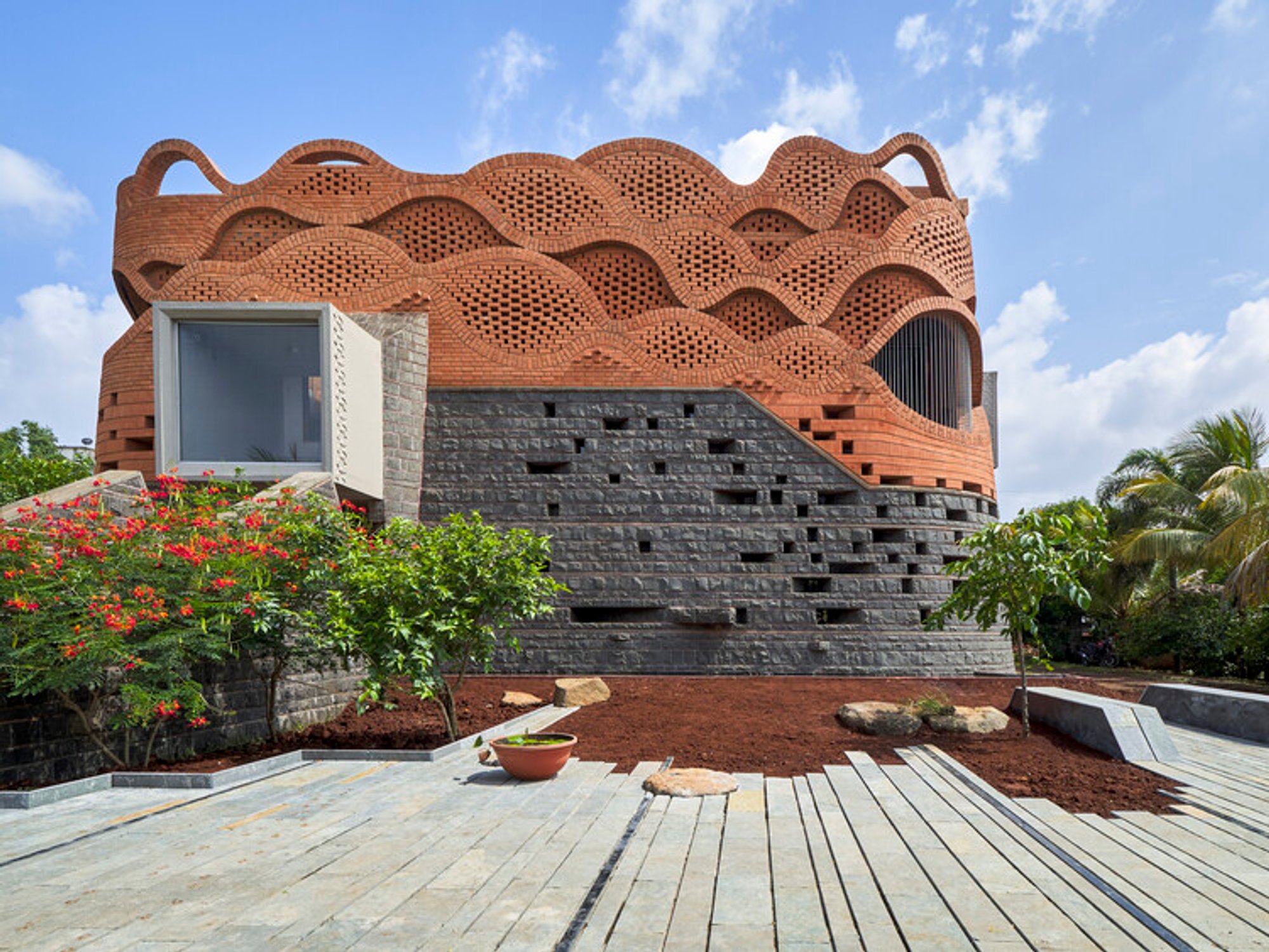
Gadi House by PMA Madhushala - A Contemporary Fortress Rooted in Maratha Memory, Tradition, and Earth
A contemporary fortress-home rooted in Maratha heritage, blending brick, stone, courtyards and climate wisdom into a self-sustaining family sanctuary.

On the quiet periphery of Talegaon Dabhade, where city noise fades into agricultural land and the memory of Maratha history still breathes with pride, stands Gadi House — a residence built not merely as a shelter, but as a symbol, a lineage, and a continuation of identity across generations. Designed by PMA Madhushala for two brothers who belong to a family of Maratha sardars, the house carries the psychological and cultural weight of inherited land, ancestral presence, traditional living patterns, and the immortal desire to build something worthy of legacy.
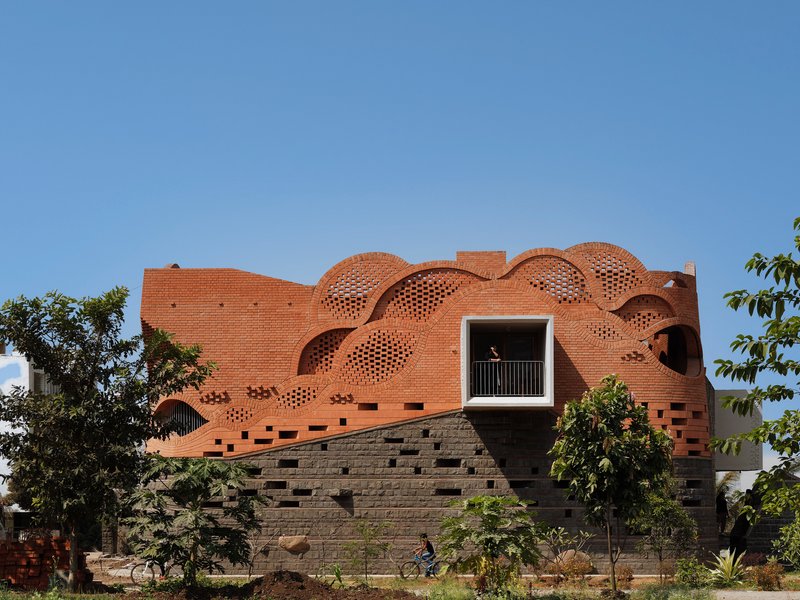
The brothers wanted a home that upheld dignity. A structure that mirrored the pride of their lineage. They envisioned a built form that would stand as solid and self-assured as the Maratha forts of their heritage — a contemporary gadi, which in the Marathi cultural context means a fortified house, a bastion of family strength. What emerged is not architecture alone, but an architectural memory cast into brick and stone, re-interpreted for modern life while remaining loyal to soil, climate, craft, and lineage.
Returning to Ancestral Typologies
For generations, the family lived in wadas — traditional Maratha courtyard houses characterised by thick protective walls, inward-oriented planning, verandas, deep thresholds, and large agricultural surroundings. Life here was self-sustained, intimate, socially cohesive, and deeply rooted in climate-responsive spatial systems. The new home honours this tradition not by mimicking its form, but by translating its principles into contemporary language.
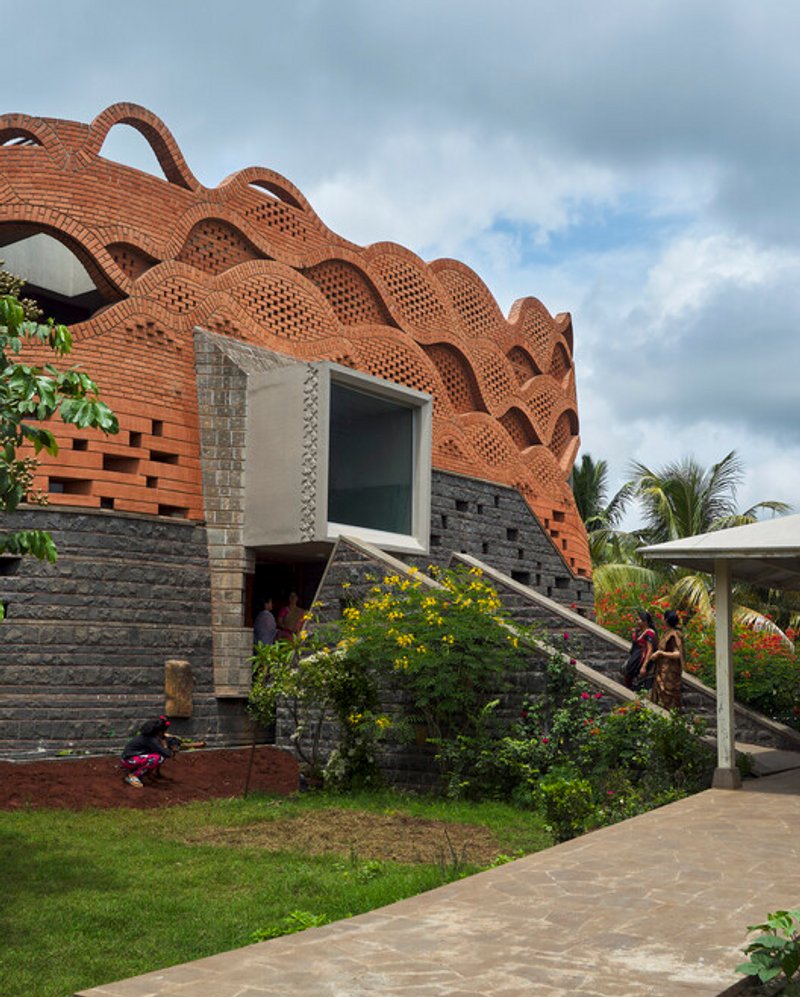
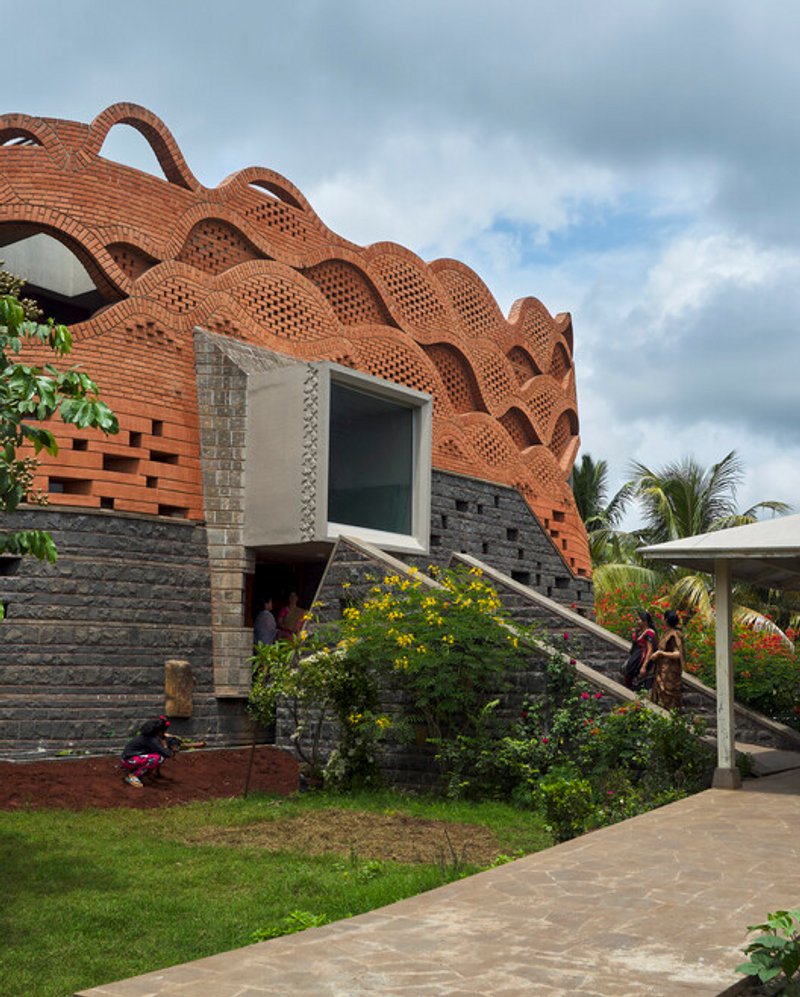
The brief:A house that feels like a wada, behaves like a wada, and protects like a wada — but is shaped for future generations.
The architecture finds this bridge through the typology of the Gadi House — a fortified residential archetype — and uses it as the conceptual spine for the entire project. The house becomes a vessel where relic and renewal coexist, where the past is not frozen, but reactivated.
A Fortress in Form, A Home in Spirit
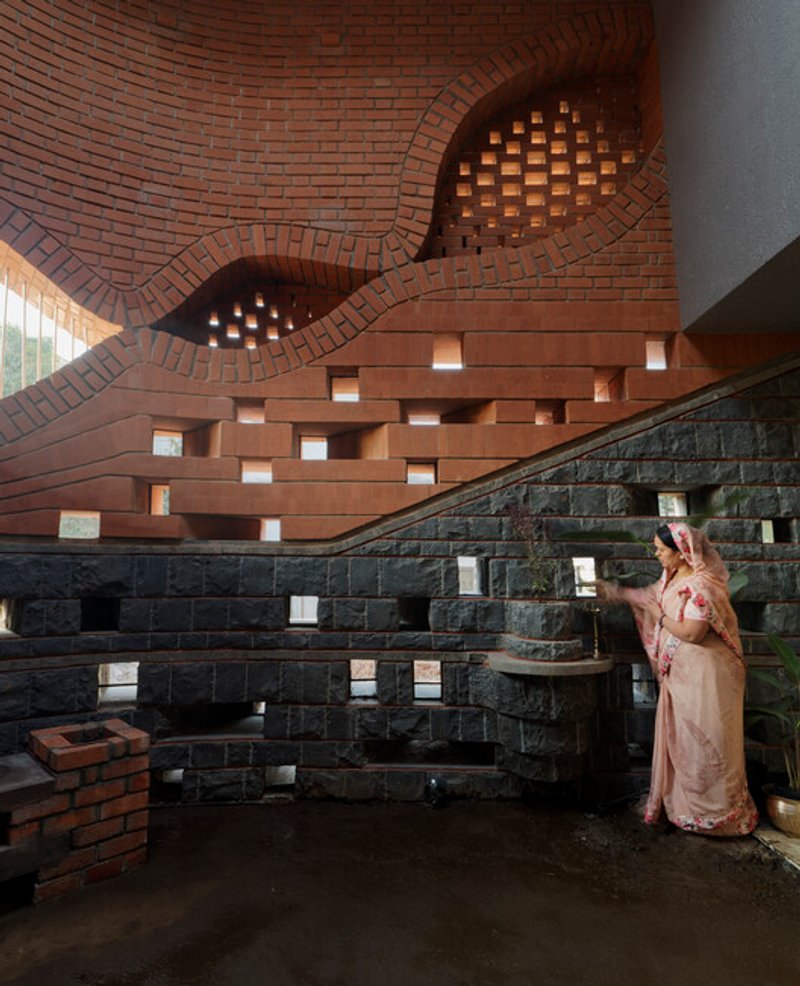
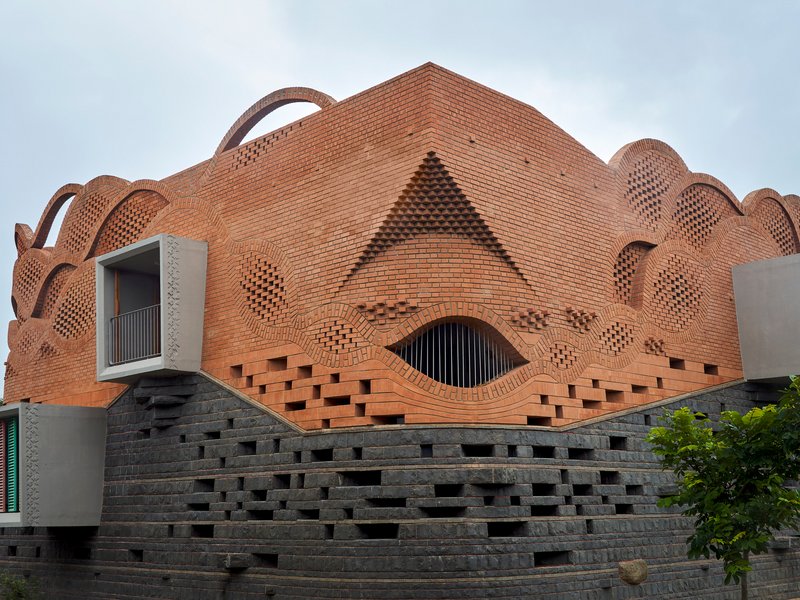
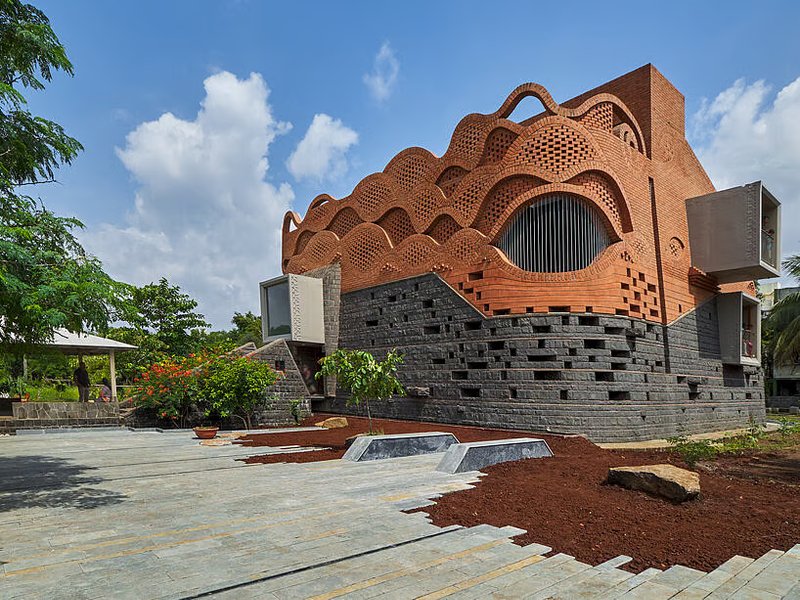
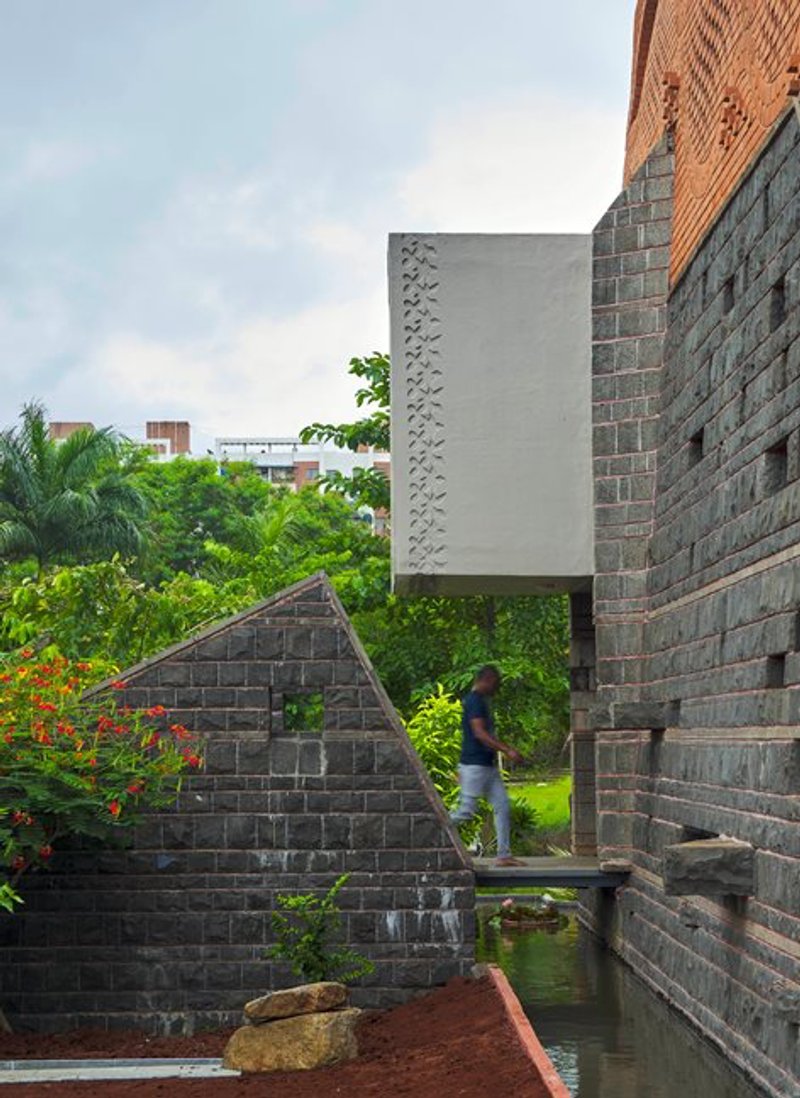
From the outset, the design pivots around the symbolic weight of fort-walls — thick, earthy, grounded, carrying the idea of protection. The external envelope is conceived as a perimeter fortress of brick and stone, folding around the home like armour.
Stone forms the muscular base — strong, heavy, grounded.Brick forms the upper body — lighter, textured, expressive.
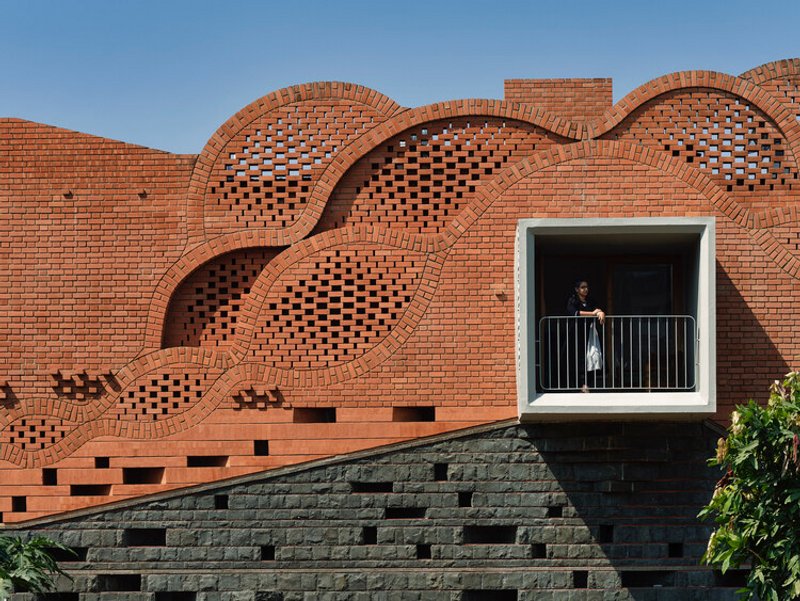
This material duality expresses masculine and feminine balance — an architectural metaphor for structural stability and poetic subtlety. The stone grounds the house in the earth, while the brick crowns it with rhythm, pattern, and permeability.
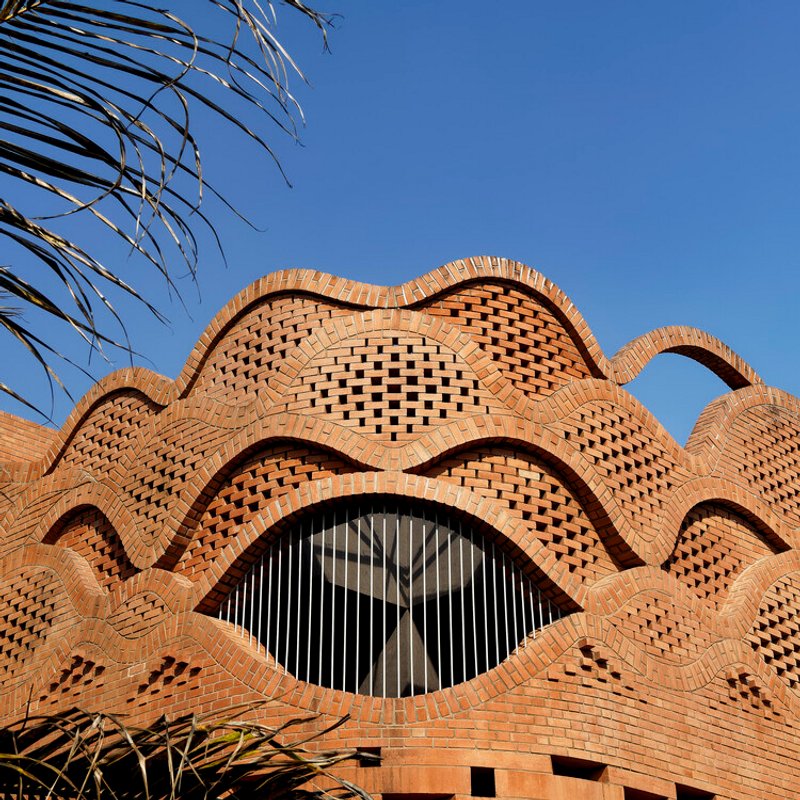
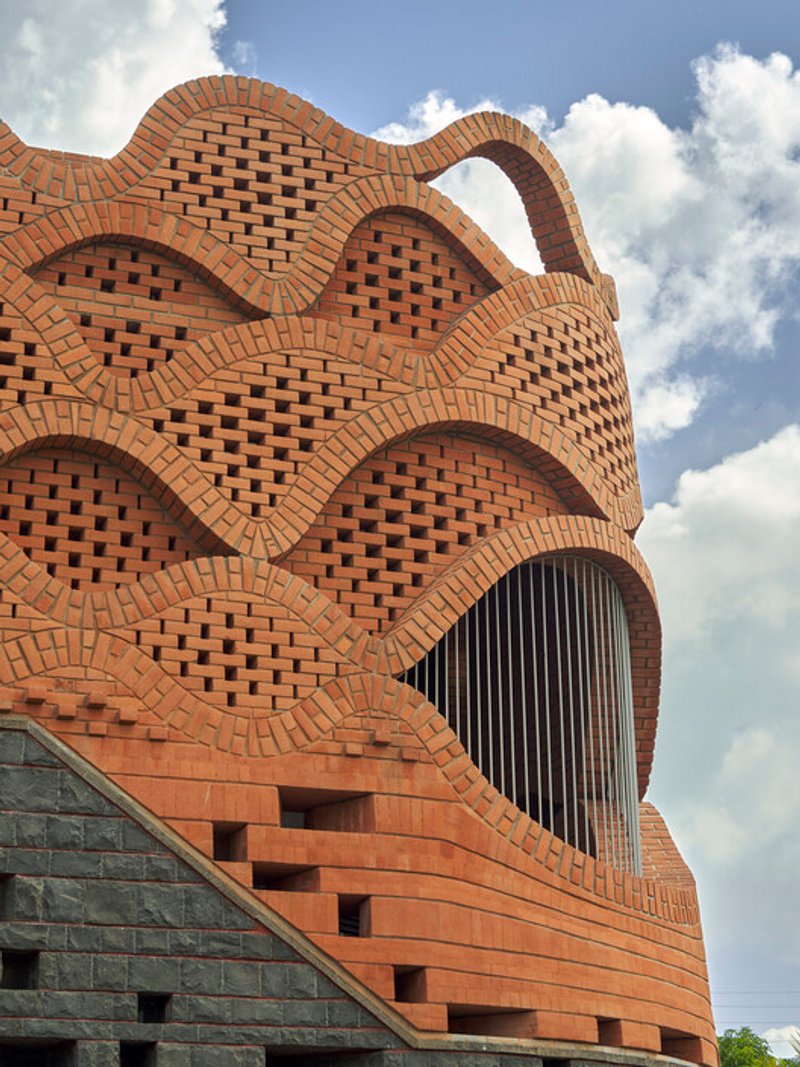
Openings in the lower stone bands are dictated by structural layering. Above them, brick evolves into a breathable honeycomb matrix — a jalis-like perforation system that allows light, wind, and shadow to animate the façade. From the distance, the house wears a crown of brick geometry, timeless yet strikingly contemporary.
The form stands firm like a land-fortress, but breathes like a verandah.
Spatial Planning: The ‘Khand’ System and Modular Intuition
The spatial layout is generated through the traditional proportioning unit known as Khand — the volume required for one person in traditional architecture. Using this as a grid, the architects developed modules that could expand, repeat, shift and interlock to form a house that is both systematic and organic.
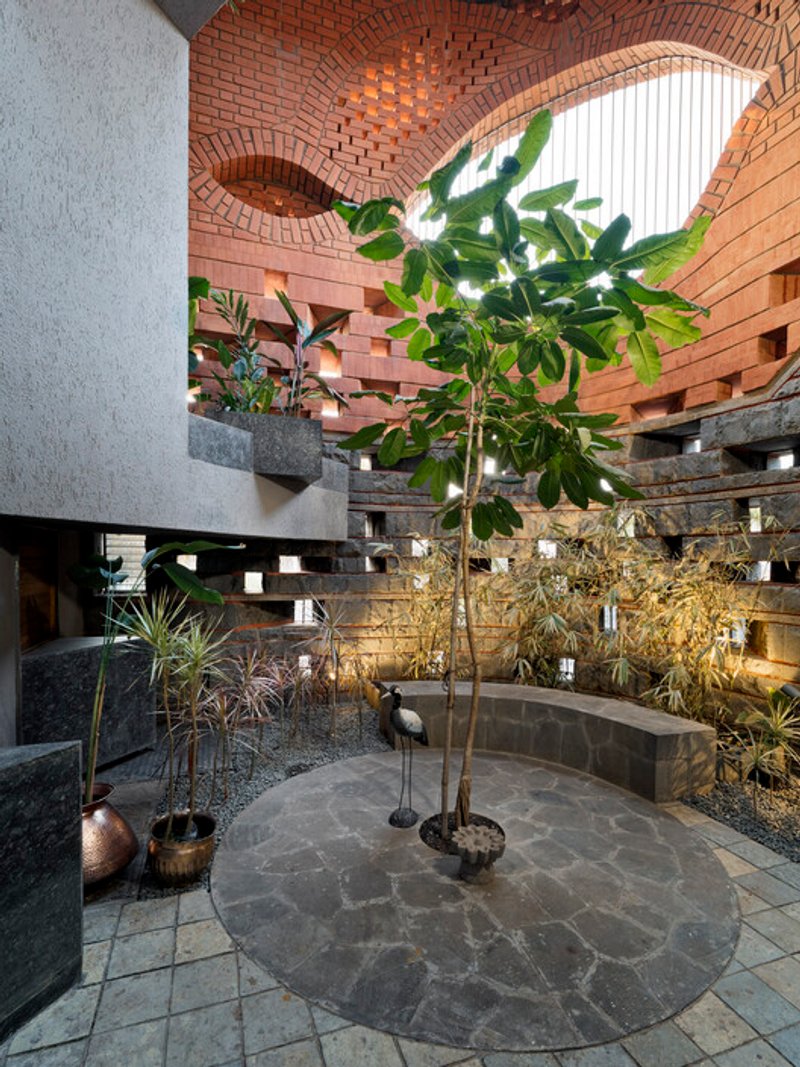
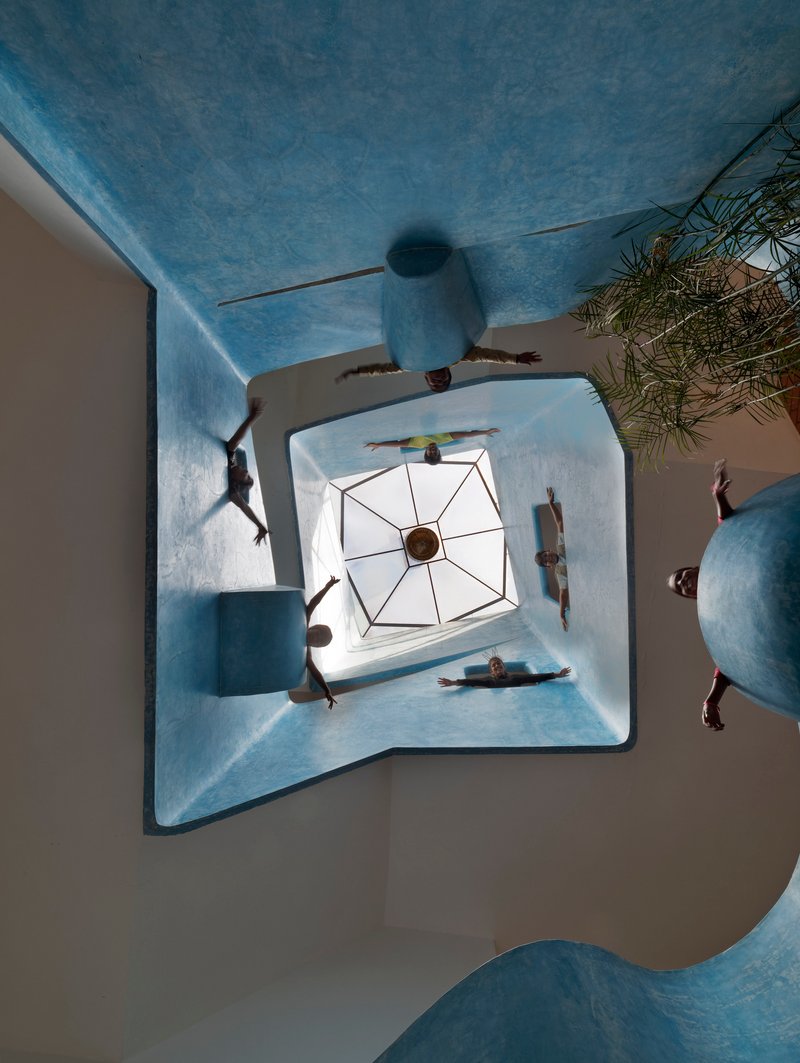
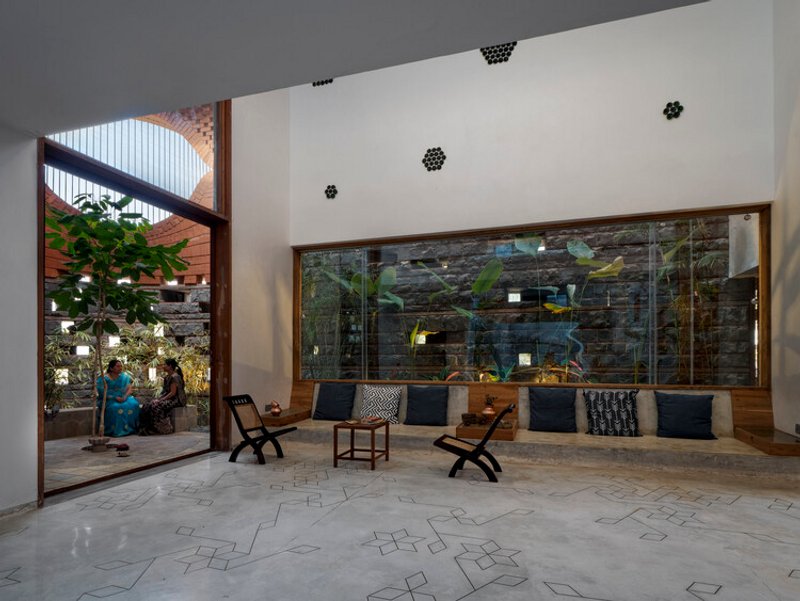
These modules are arranged in a cruciform planning system, leaving four open-to-sky corners like breathing chambers — fragments of sky captured inside the house. Each corner evolves into gardens, courts, transition spaces, or pause-terraces, enriching daily living with varied atmospheres.
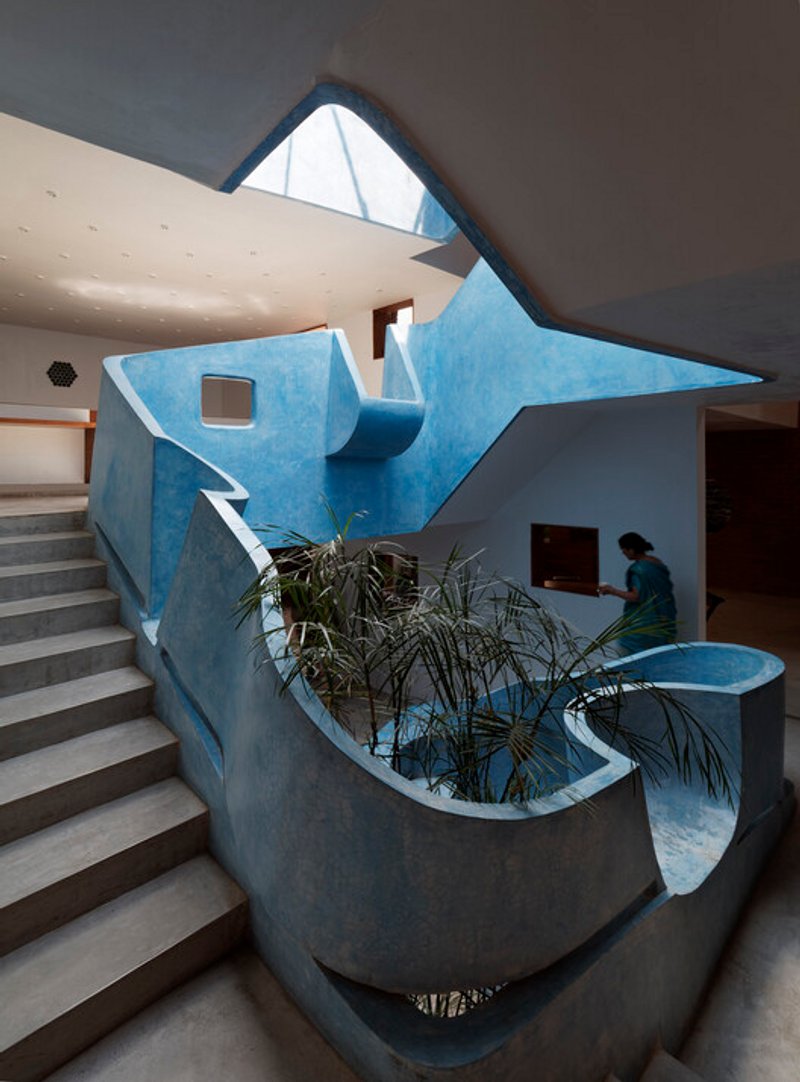
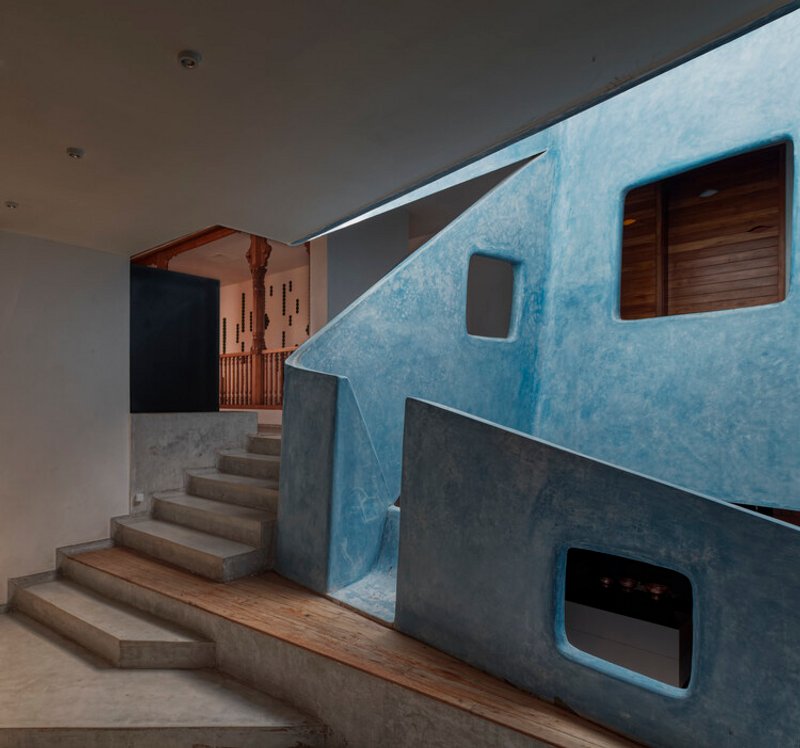
The house unfolds vertically not through abrupt levels, but via a continuous transition of stepped plates, where movement itself becomes spatial narrative. One does not climb floors — one ascends through experiences.
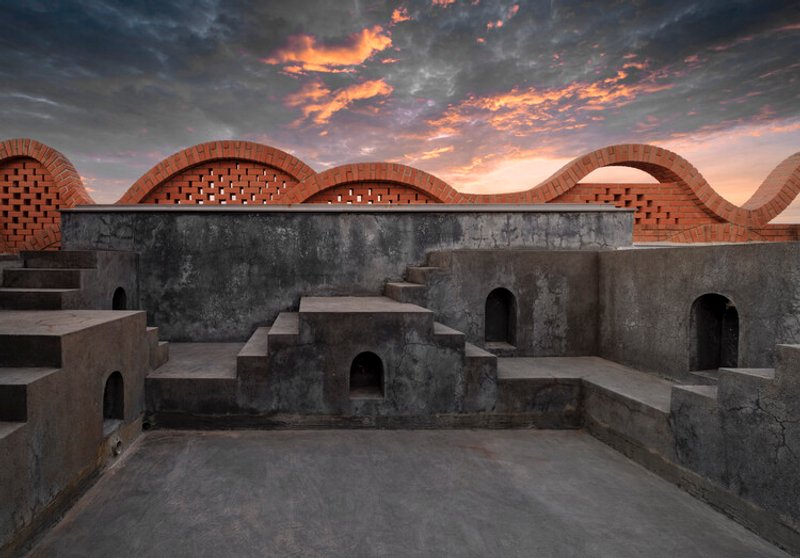
The interior volume is fluid, amorphous, and deeply tactile.Spaces merge, rise, compress, expand.Unexpected voids create surprise.Light guides orientation more than walls do.
Every zone feels rooted in tradition yet free enough for a modern lifestyle.
Interior Life: Privacy and Community in Rhythmic Coexistence
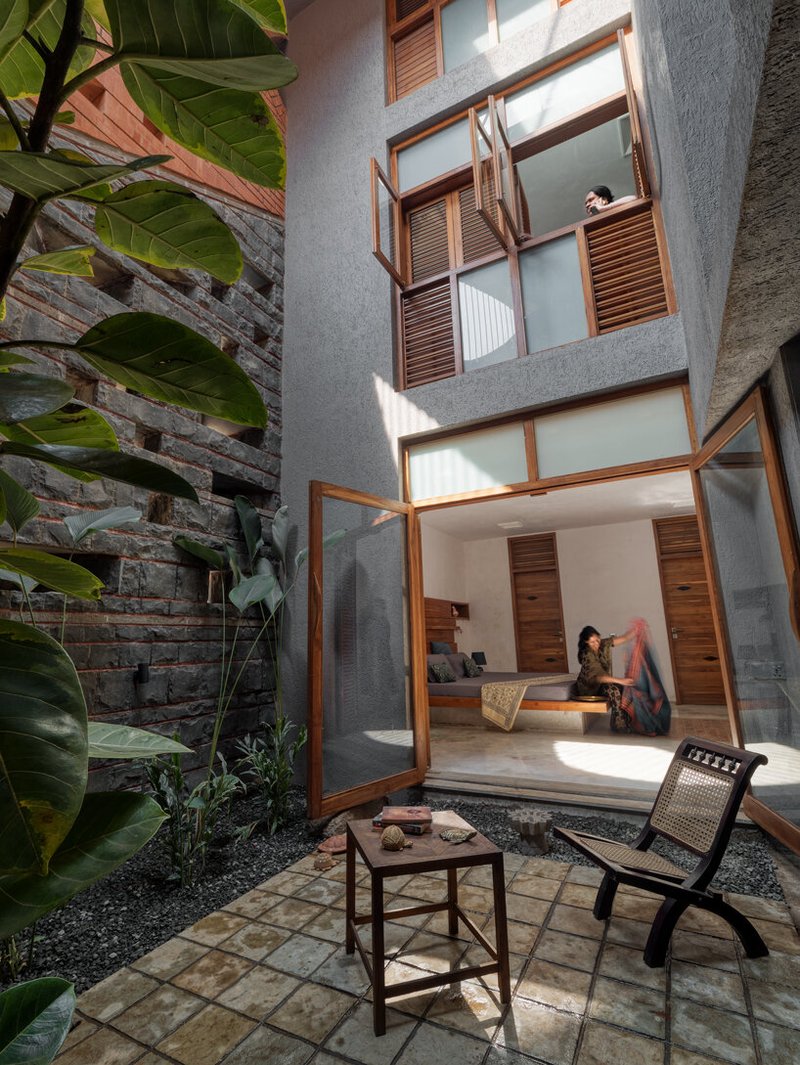
True to wada heritage, the house is inward-looking — prioritising internal courtyards and verandah-like volumes over outward exhibition. Family life is layered across shared and private realms, yet these do not divide the home; they stitch it together.
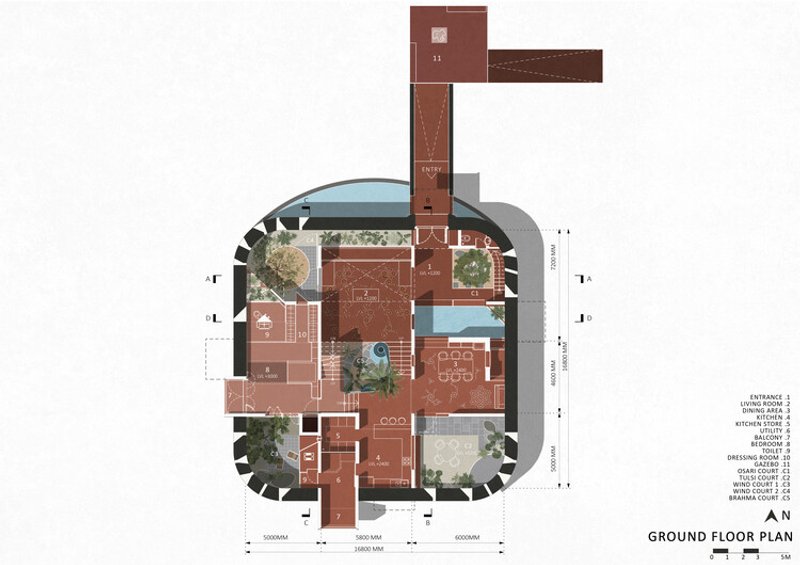
The living and dining areas flow into gardens, creating an environment where cooking, gathering, and pausing become rituals rather than functions. Semi-open verandahs soften thresholds between interior and exterior, ensuring the family remains constantly aware of climate, soil, wind, and cycles of sun.
Intimate areas such as bedrooms sit deeper within the layout, shaded and thermally stable. Shared zones float more freely, celebrating openness. Circulation is not corridor-based, but courtyard-based — one moves through nature, through shadow, through air.
Gadi House is not walked; it is discovered.
Craft, Material Intelligence and the Hand of Local Artisans
More than design, this house is an act of making.Local masons, craftsmen, and artisans were involved in every detail, preserving construction wisdom that rarely finds place in urban projects today.
The external wall, almost a living sculpture, is executed in load-bearing composite masonry, engineered for seismic safety and harsh climate. Its patterning and bands remain visually legible, allowing one to read construction as if reading craft history.
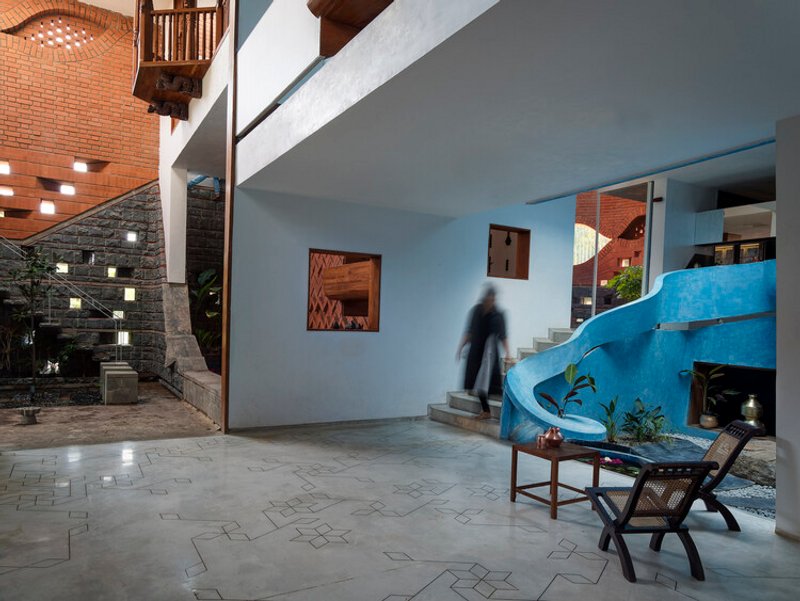
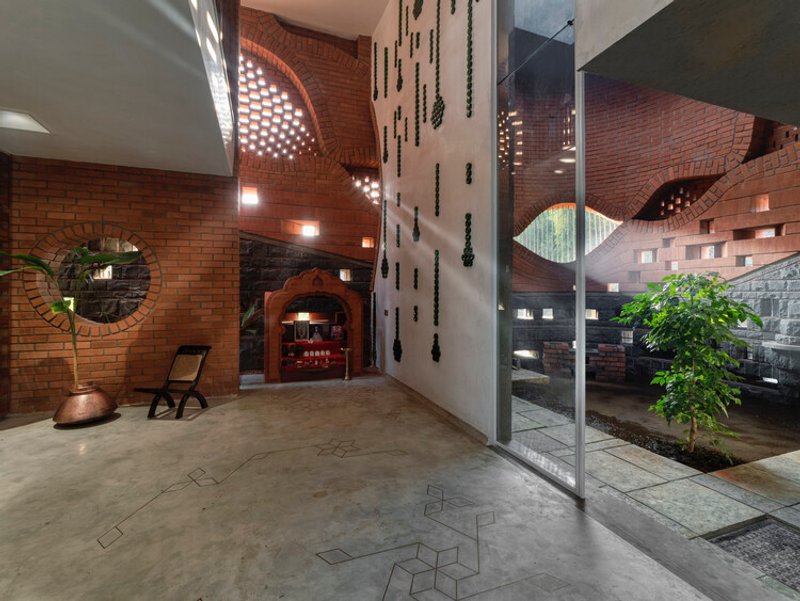
Inside, structure shifts to RCC blocks for flexibility, aligning modern convenience with traditional robustness. Stairs constructed using Ferrogami technique lighten structural load while maintaining artisanal workmanship.
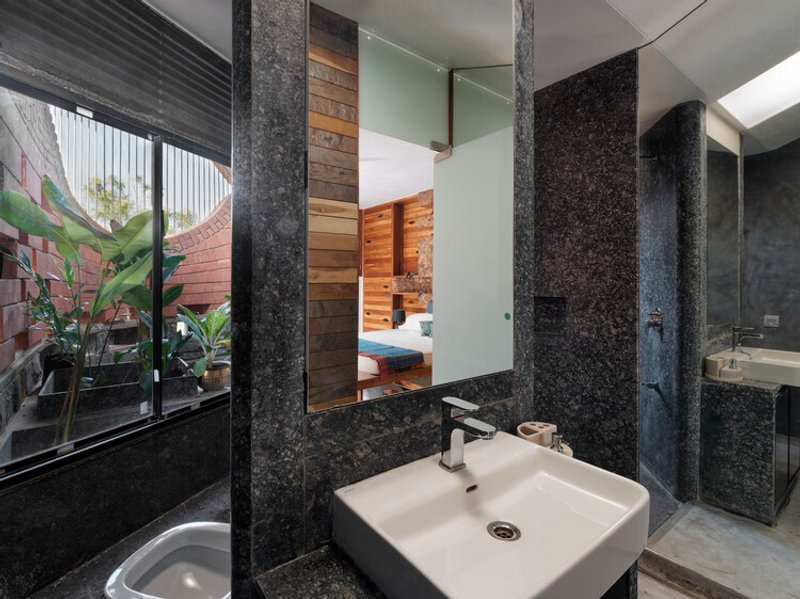
Walls breathe through lime stucco, a material rooted in Indian building history for its breathability, microbial resistance, and warm texture. Interiors glow softly under changing daylight, exuding calm rather than luxury.
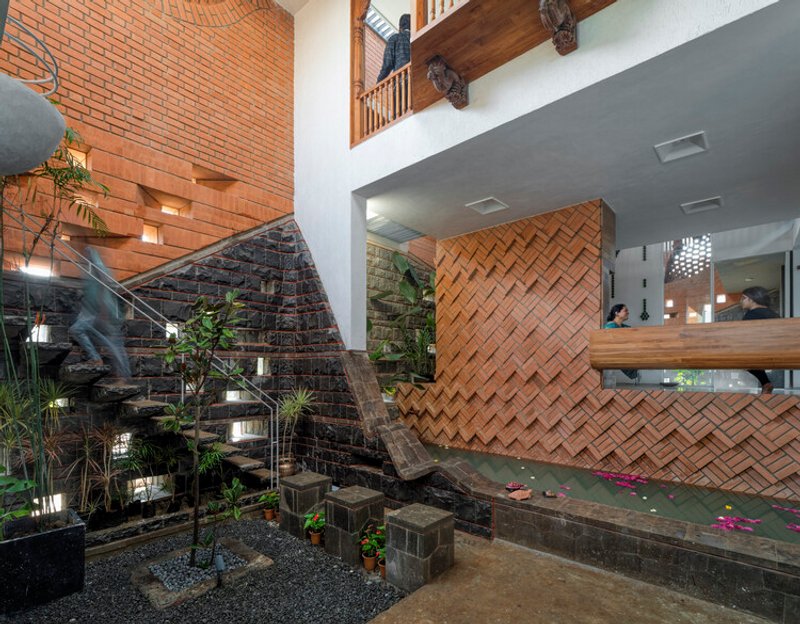
Outside is rugged truth — brick and stone without makeup.Inside is soft tactility — lime, timber, shadow, movement.
The building becomes tactile not only to live in, but to understand.
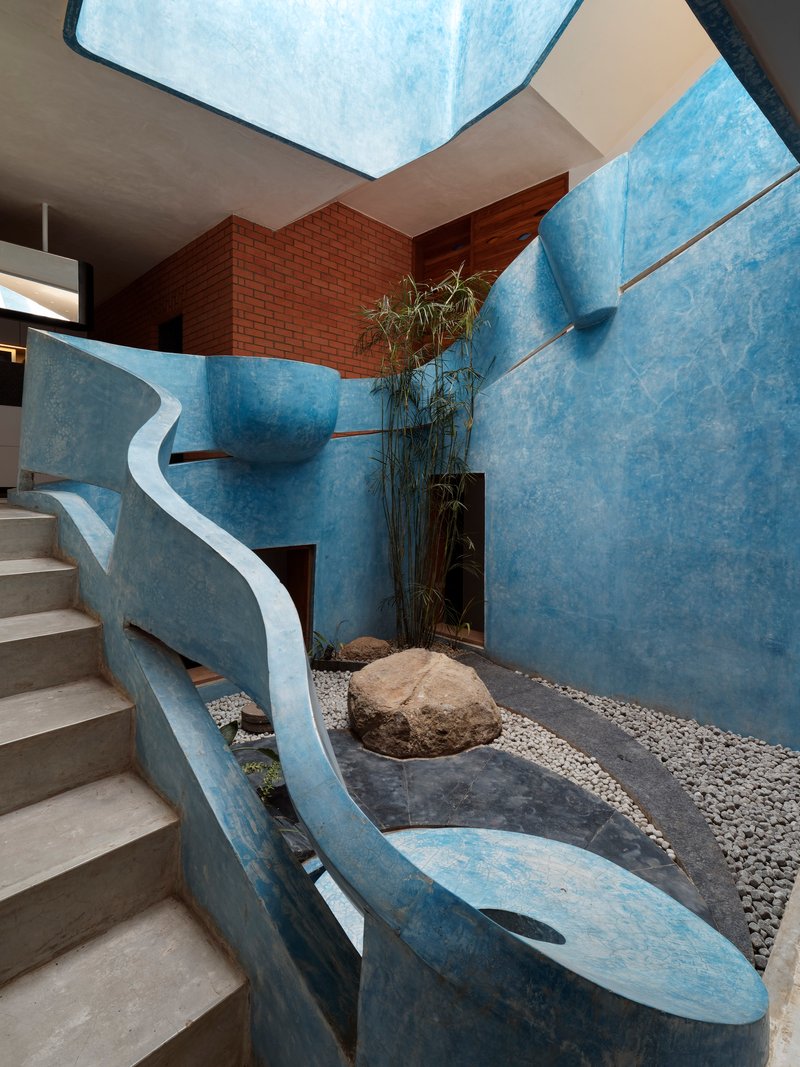
Climate Wisdom and Self-Sufficiency
The house is engineered to sustain generations independently. Climate response is not decorative sustainability — it is structural, spatial, and behavioural.
Wind towers draw cool air inside.Courtyards create pressure balance — a natural Venturi effect.Openings are calculated to channel wind, release heat, and draw daylight.
Photovoltaic solar panels generate energy; rainwater is harvested, recharged, and reused. A dedicated sewage treatment system feeds the kitchen garden, enabling the house to function almost like an ecological microcosm.
A home that remembers past methods, answers present comfort, and prepares for future scarcity.
A Living House, A Breathing Heritage
Gadi House is monumental yet intimate. Proud yet humble. Protective yet open.
It is a house as history —a house as memory —a house as future seed.
Traditional logic shapes its bones. Modern needs shape its organs. Climate shapes its skin. Family shapes its heartbeat.
Here, architecture becomes lineage.
The house does not simply stand on land.It sits in memory —and memory lives inside it.
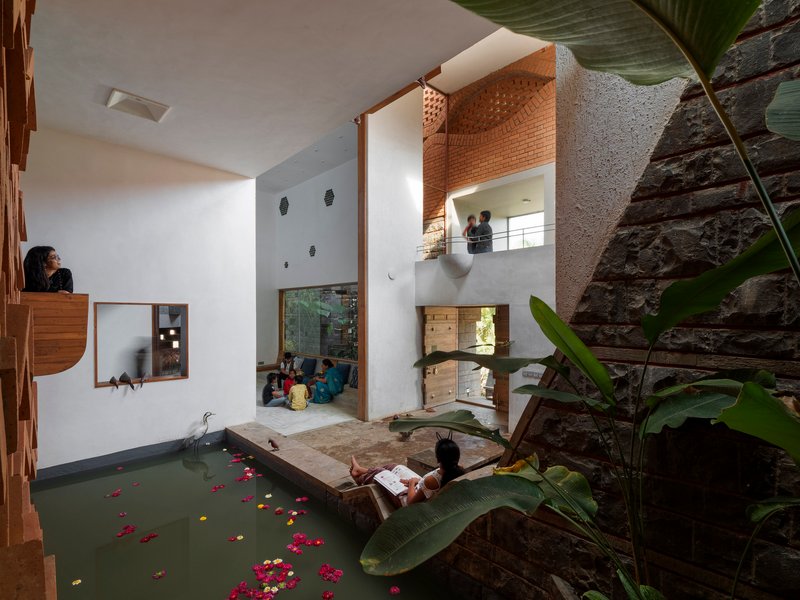
All the Photographs are works of Hemant Patil



Popular Articles
Popular articles from the community

Inverted Architecture Installation by Studio Link-Arc: Exploring the Intersection of Architecture and Living Organisms
Inverted Architecture Installation by Studio Link-Arc blends mycelium, sustainability, inverted design, ecological cycles, and urban adaptive architecture in Shenzhen.
Atelier Macri Concept Store Interior Design by CASE-REAL
Atelier Macri store features a "ko" counter, walnut wood details, cork displays, blending retail, gallery, and seamless customer experiences.

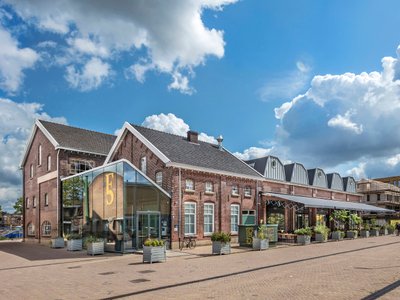
Fifth NRE Jazz Club – De Bever Architecten: Eindhoven’s Revitalized Cultural Hub
Historic gas factory transformed into Fifth NRE Jazz Club blending modern sustainability, jazz culture, dining, and heritage architecture seamlessly.

Similar Reads
You might also enjoy these articles


The Ken Roberts Memorial Delineation Competition (Krob)
As the most senior architectural drawing competition currently in operation anywhere in the world, it draws hundreds of entries each year, awarding the very best submissions in a series of medium-based categories.


Waterfront Redevelopment and Urban Revitalization in Mumbai: Forging a New Dawn for Darukhana
A transformative waterfront redevelopment project reimagining Darukhana’s shipbreaking heritage into an inclusive urban future.

OUT-OF-MAP: A Call for Postcards on Feminist Narratives of Public Space
Rhizoma Design and Research Lab invites artists, designers, architects, researchers, and students to reflect on how feminist perspectives can reshape public space. Selected works will be exhibited in Barcelona, October 2026. Submissions open until 15 April 2026.


Documentation Work on Buddhist Wooden Temple
Architectural syncretism and cultural hybridity: A comparative study of the Buddhist temples in Chattogram Hill tracks
Explore Architecture Competitions
Discover active competitions in this discipline




The International Standard for Design Portfolios


The Global Benchmark for Architecture Dissertation Awards


The Global Benchmark for Graduation Excellence


Challenge to reimagine the Iron Throne
Comments (0)
Please login or sign up to add comments
No comments yet. Be the first to comment!