
Garage Dallegret Exhibition by SUPERVOID: A Radical Tribute to Visionary Architecture and Retro-Futurism
Garage Dallegret showcases François Dallegret’s visionary fusion of architecture, art, and technology in a retro-futuristic, immersive exhibition.


Located on Venice’s Giudecca Island at the cultural venue Spazio Punch, the Garage Dallegret Exhibition by SUPERVOID presents a compelling retrospective of visionary artist and architect François Dallegret. As the first Italian monographic exhibition dedicated to Dallegret, this immersive show blends speculative design, experimental architecture, and technological utopias into a radical sensory experience that defies conventional disciplinary boundaries.
An Interdisciplinary Exploration of the Future
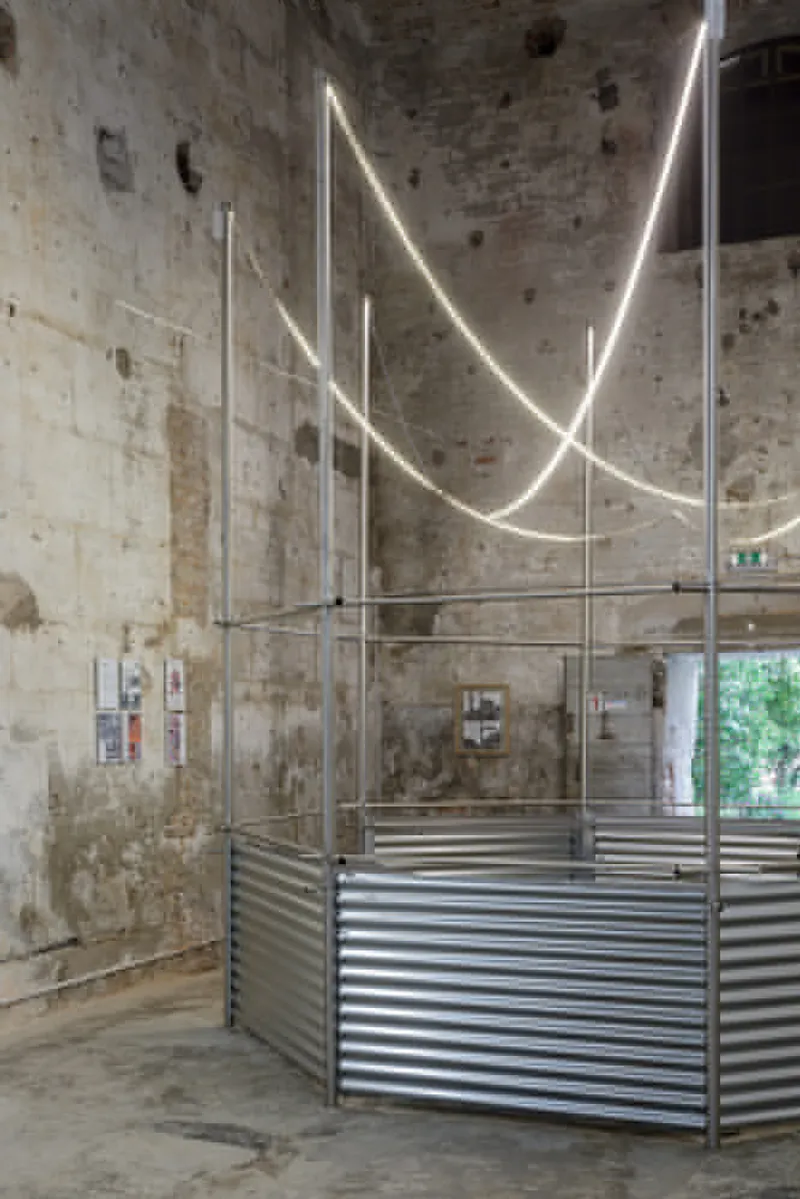
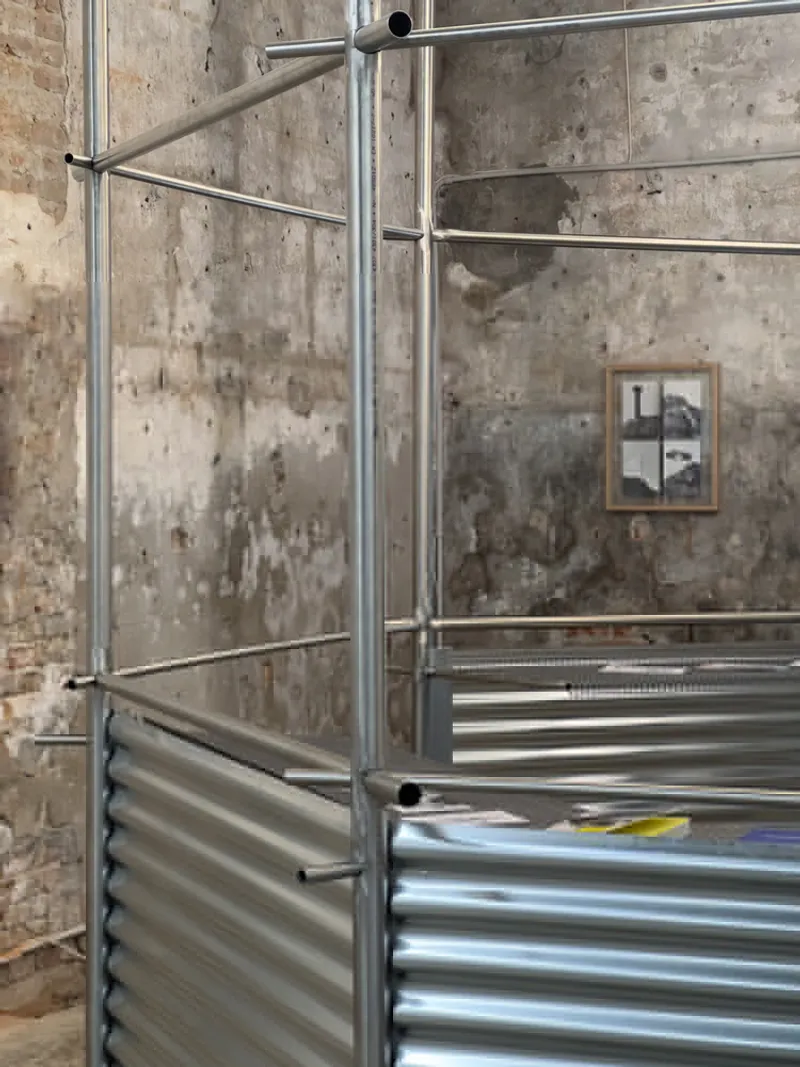
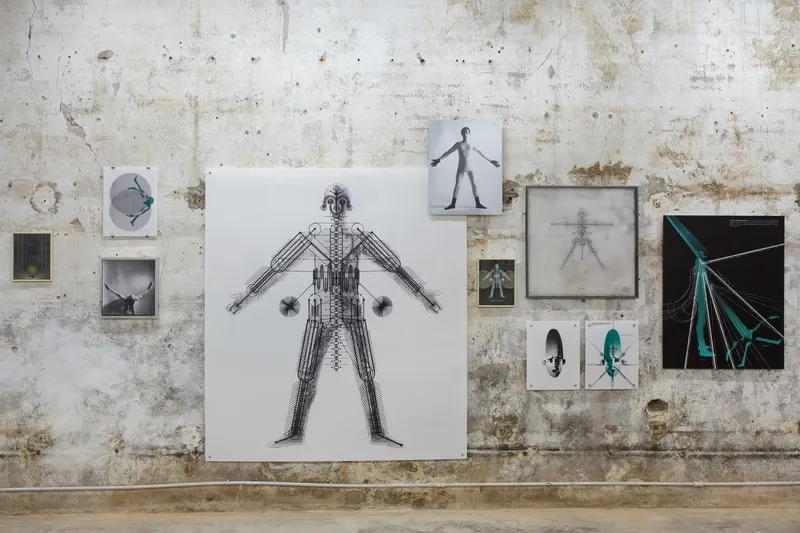
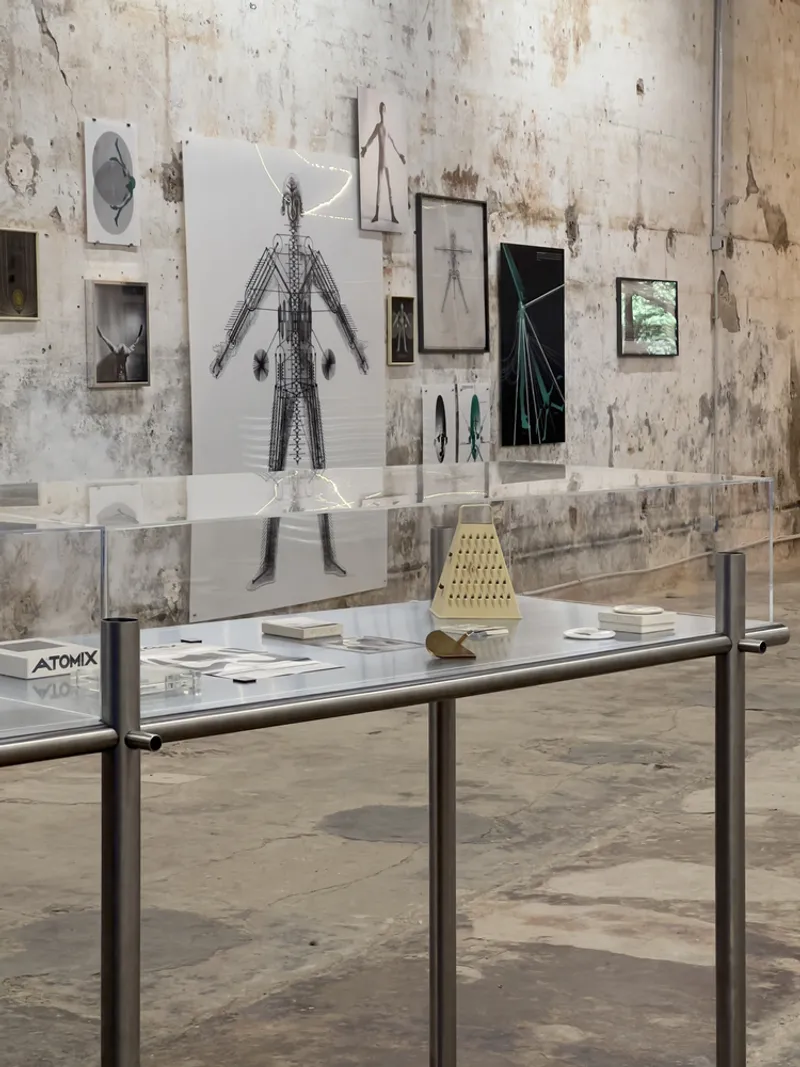
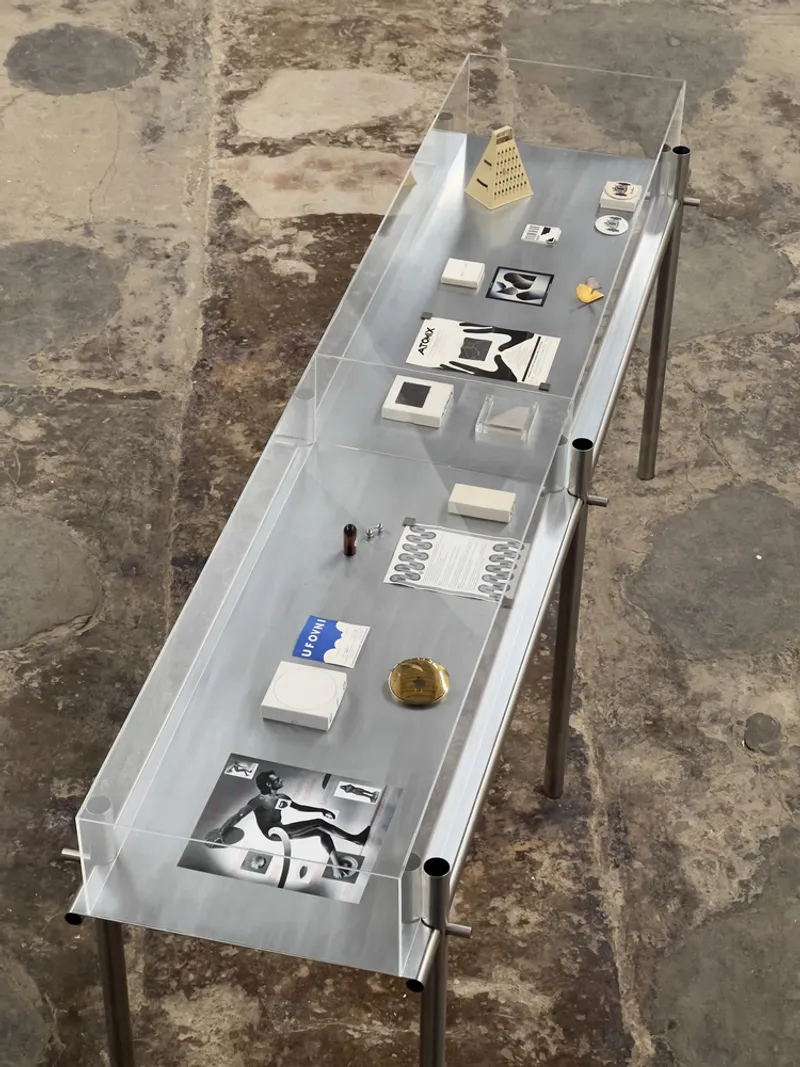
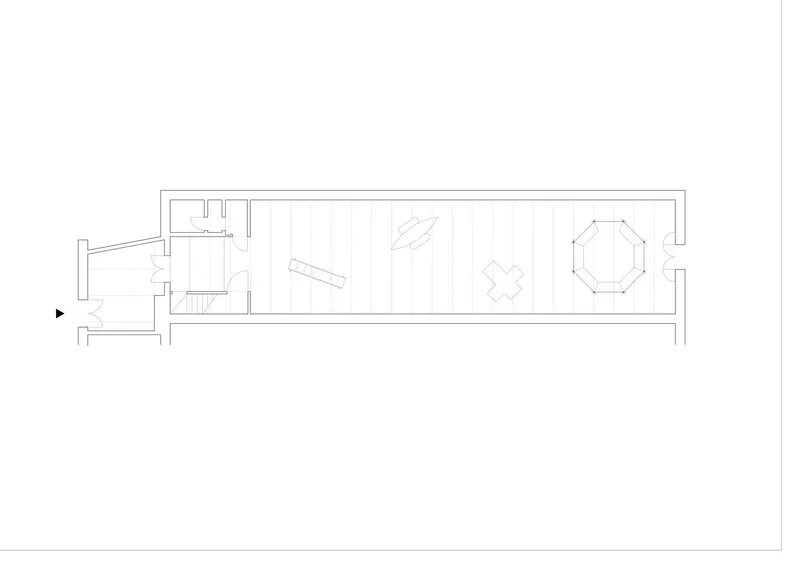
Curated by Paula Pintos and set within a 150 m² former brewery, the exhibition was conceptualized by Augusto Maurandi with Alessandra Ponte, and designed by SUPERVOID architects (Benjamin Gallegos Gabilondo and Marco Provinciali). The exhibition layout transforms the industrial shell into an open, flexible space that fluidly accommodates Dallegret’s multifaceted creations—drawings, ephemera, architectural visions, and surreal objects—presented with no strict hierarchy, mirroring the artist’s disdain for linear narrative or traditional categorization.
Technology, Body, and Architecture Collide
Dallegret’s work investigates the intersections between human body, machine, and urban context, offering a poetic critique of modernist norms and capitalist logic. Through a retro-futurist lens, he questions the functions of domesticity, mobility, and sensory enhancement. Highlights include:
- "La Chaise Enceinte" (1965) – a dysfunctional chair that merges domestic and symbolic function.
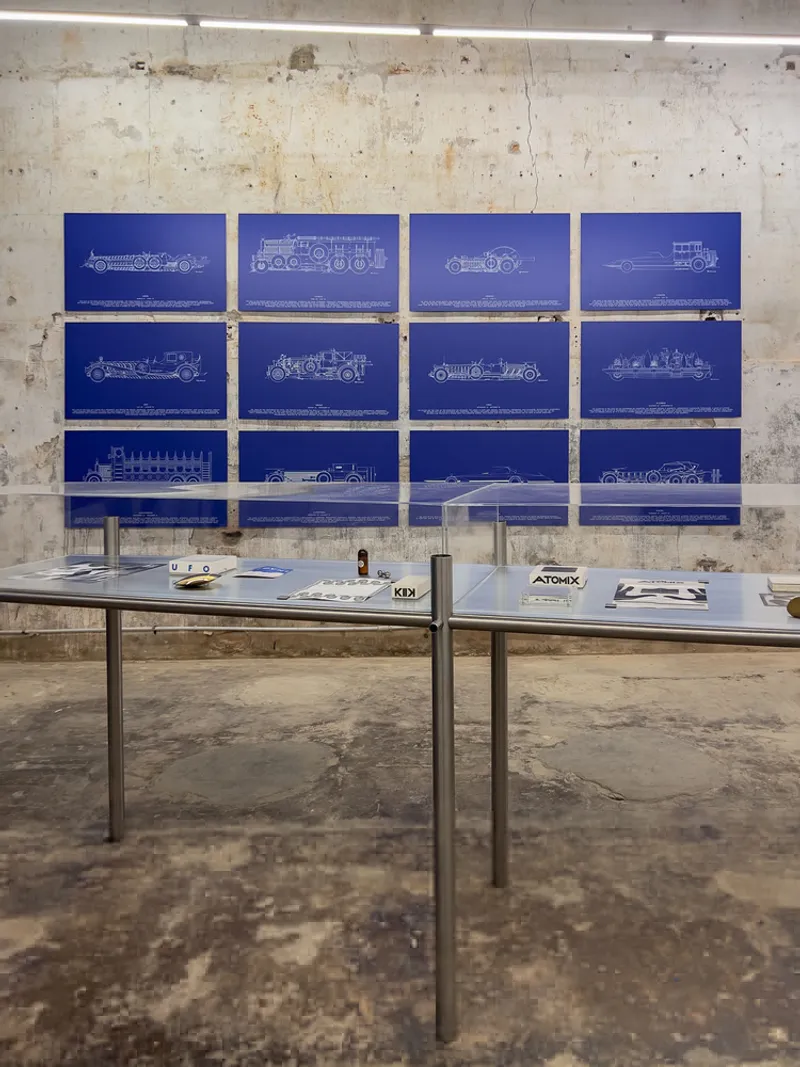
- "Atomix" (1968) – a sculptural model of atomic structures composed of 6000 movable steel spheres.
- "A Home Is Not a House" – a legendary collaboration with Reyner Banham, featuring inflatable environmental bubbles instead of solid walls.
These works subvert our assumptions about architectural space, suggesting that technology, rather than enclosing us, might liberate or even amplify human existence.
Spaces of Play and Counterculture
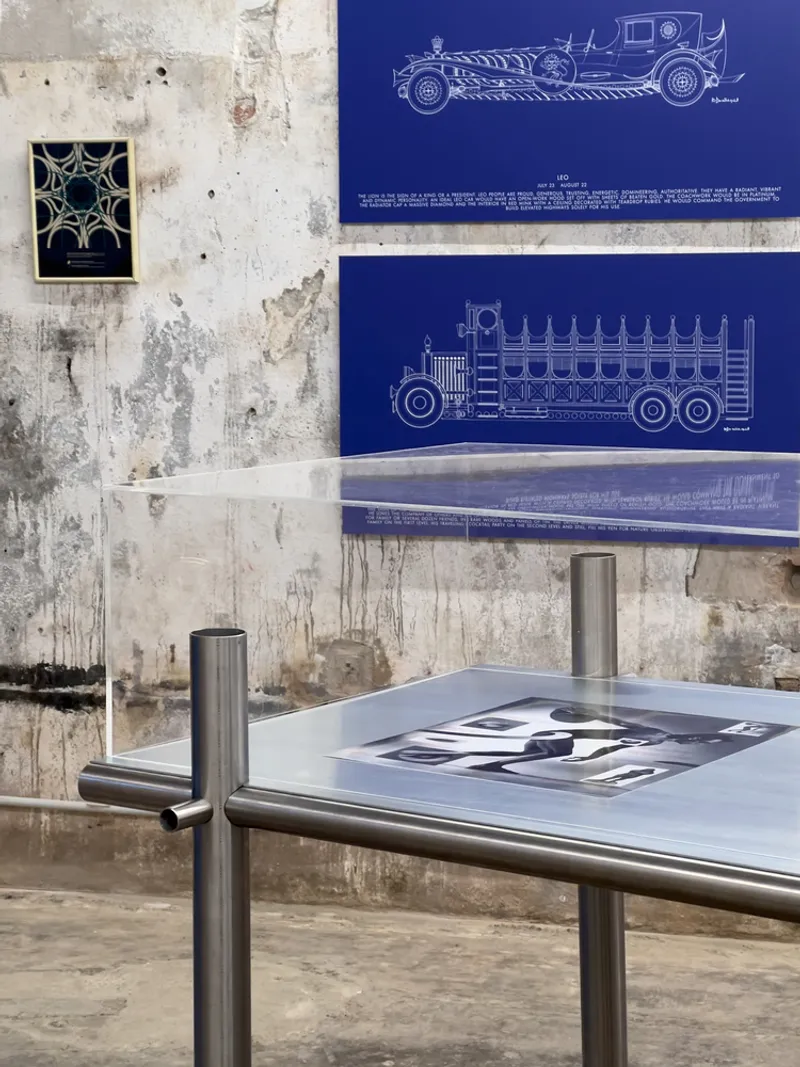
The show traces Dallegret’s vision beyond theory into real-world interventions. From Le Drug, a hybrid pharmacy-nightclub in Montreal, to Eat & Drink, a conceptual venue designed for the World Trade Center New York in 1972, Dallegret’s projects embody radical spatial hybridity. The exhibition revisits these with “New New Penelope”, a reinterpretation by SUPERVOID designed as a space for rest, conversation, and communal experience—reinforcing the show’s invitation to inhabit alternative realities.
Architectural Counterpoints and AI Prototypes
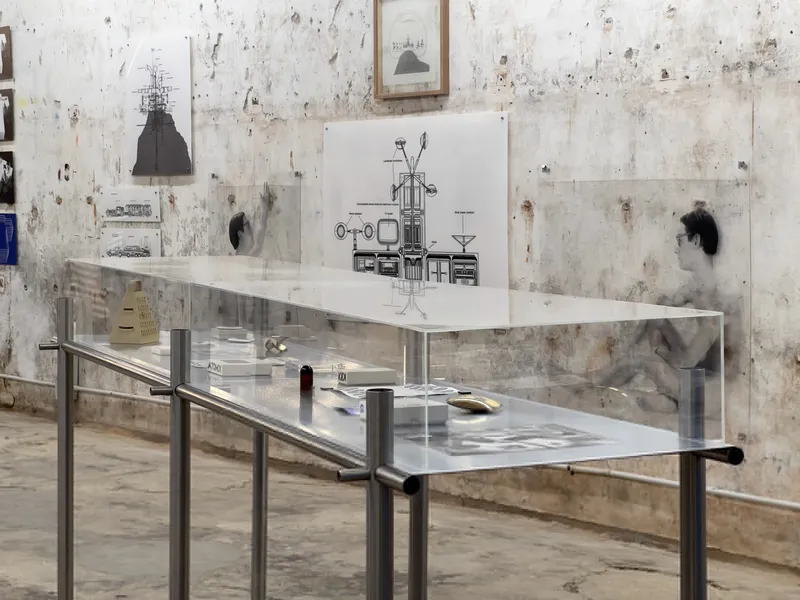
Dallegret’s experimental devices resonate with today's discourse on AI, wearables, and digital mediation:
- “IntroConversoMatic” – a machine for introspective communication, equipped with monitors, microphones, and receivers.
- “Littératuromatic” (1963) – an automated literary machine that predates current AI-generated writing.
- “KIIK” – a metal capsule object that challenges addictions and obsessive behaviors by fusing design with ritual.
These speculative artifacts illustrate a design language of liberation—simultaneously absurd, profound, and delightfully unorthodox.
A Futuristic Legacy Anchored in the Present
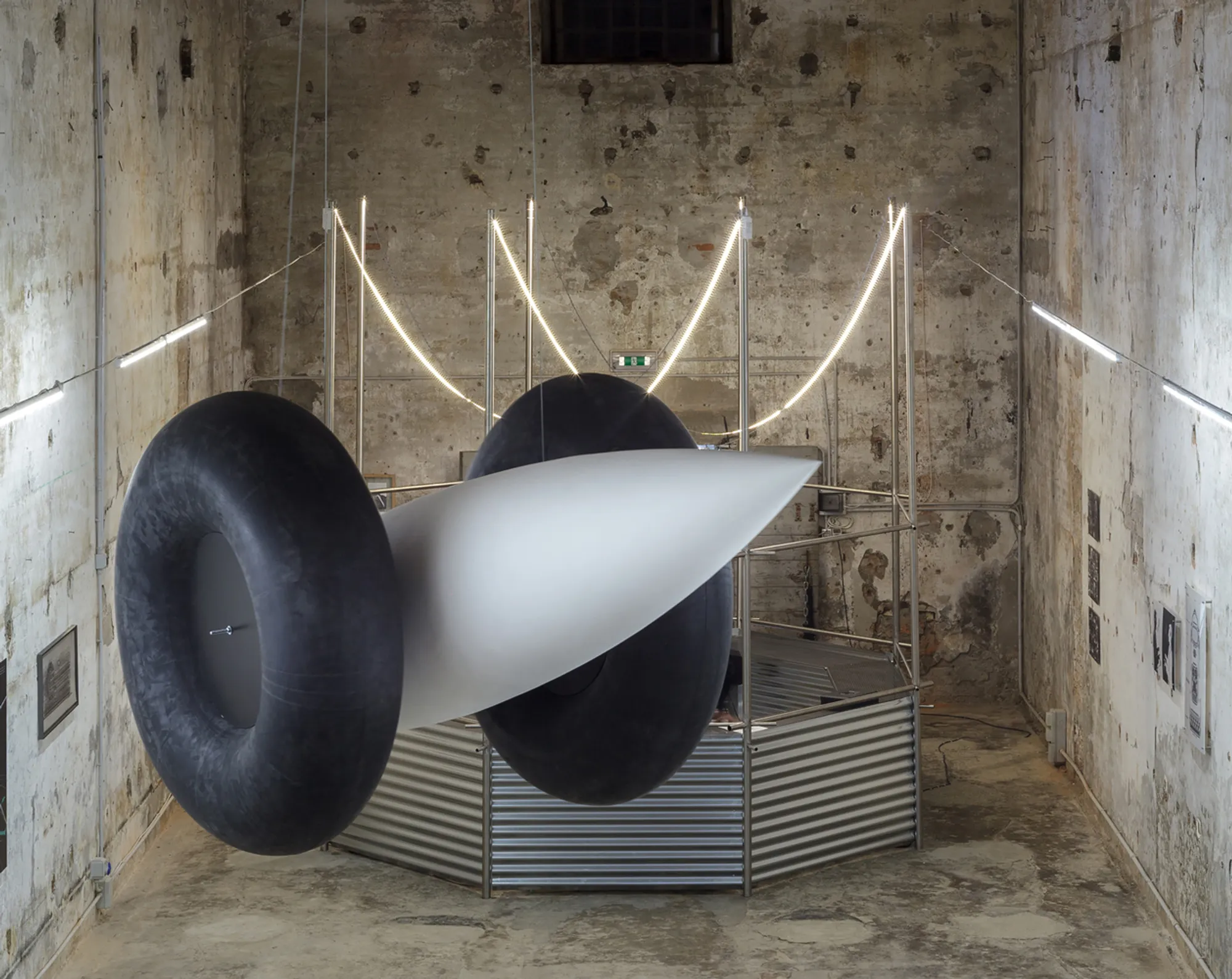
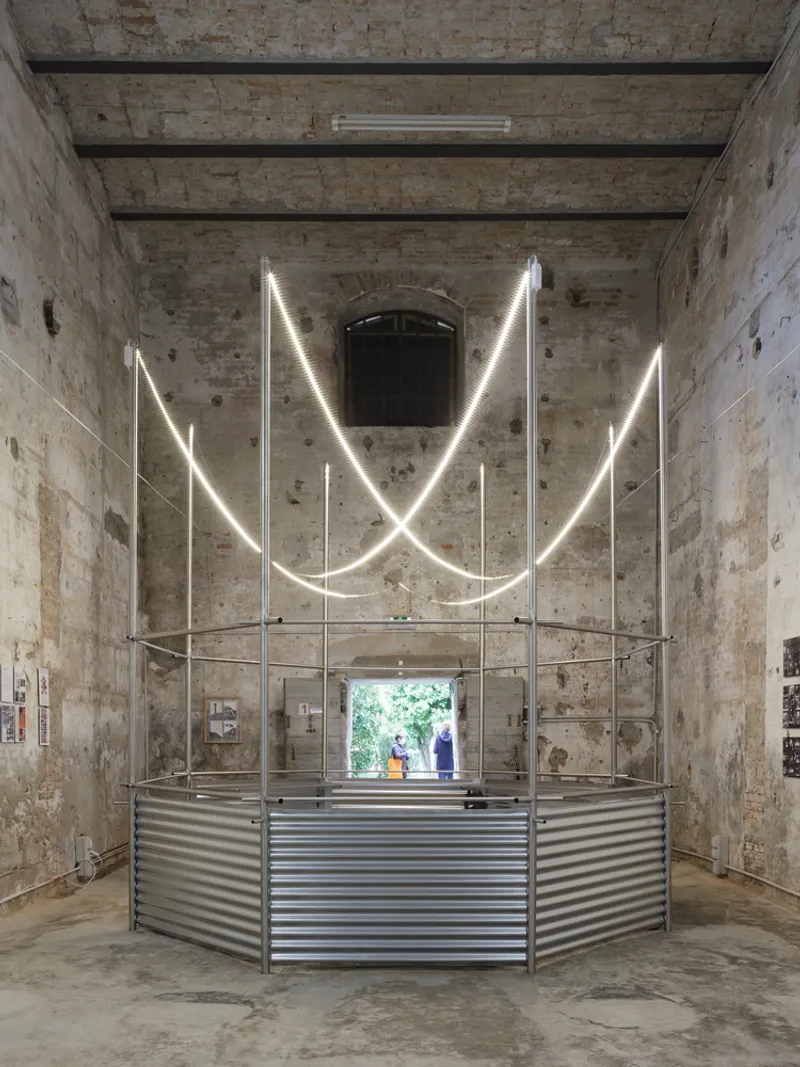
One of the exhibition's centerpieces is “Wheely”, a newly commissioned piece for this Venice installation, referencing Dallegret’s 1968 concept car Tubola. Suspended high within the space, Wheely metaphorically guides visitors through the show's conceptual pathways, linking past experimentation with present-day spatial inquiry.
Garage Dallegret aligns with the themes explored in the 18th International Architecture Exhibition – La Biennale di Venezia, particularly Lesley Lokko’s The Laboratory of the Future. Through Dallegret’s work, the exhibition posits imagination as a critical architectural tool—a method for envisioning futures that transcend the confines of current practice.



Popular Articles
Popular articles from the community


The Earth Pod: 3D Printed Homes for Resilient Refugee Communities
The Earth Pod reimagines refugee housing through 3D printed homes made from clay, combining resilience, self-sufficiency, and rapid shelter.

Play: Fragments of Their World
Familiar architecture becomes modular playground design, creating safe spaces where displaced children can learn, connect, imagine and play.

Hill & Cross Opera: Sculptural Opera House Architecture Shaped by Tallinn’s Landscape and Identity
Hill & Cross Opera reimagines opera house architecture in Tallinn through its sculptural hill, civic plaza, glass wave and a luminous cross.

Co-Life: Senior Housing Design That Reconnects Older Adults With the City
Co-Life reimagines senior housing design through healing gardens, shared streets, workshops, and a sustainable community across generations.

Similar Reads
You might also enjoy these articles


Hodi-Mandai Geram
Project Function: Preservation and revitalization of the Intangible heritage and socio-spatial identity of the Hodi by Housing, Cultural Memory Center, Sacred Grove, landscape, local tourism economy


Olio Towers: A Mid-Rise for Performers That Fuses Housing, Rehearsal, and Stage
Located blocks from Houston's Theater District, this modular tower stacks living units around a central performance atrium.

Oasis: Modular Green Housing Carved into Dhaka's Urban Fabric
A shortlisted Plugin Housing entry reclaims unauthorized settlements in Dhaka with stepped concrete volumes, green roofs, and ventilation-driven design.

Black Hole: A Floating Megastructure for the Post-Physical Era
Emiliano Mazzarotto envisions a spherical, self-scaling arena where e-sports, digital hotels, and holographic stadiums replace traditional public space.

Explore Cultural Architecture Competitions
Discover active competitions in this discipline



Challenge to reimagine the Iron Throne


Photograph architecture without architects


Illustrate the lost glory of Angkor Wat - Render Challenge

Bring back Drive In's
Comments (0)
Please login or sign up to add comments
No comments yet. Be the first to comment!