
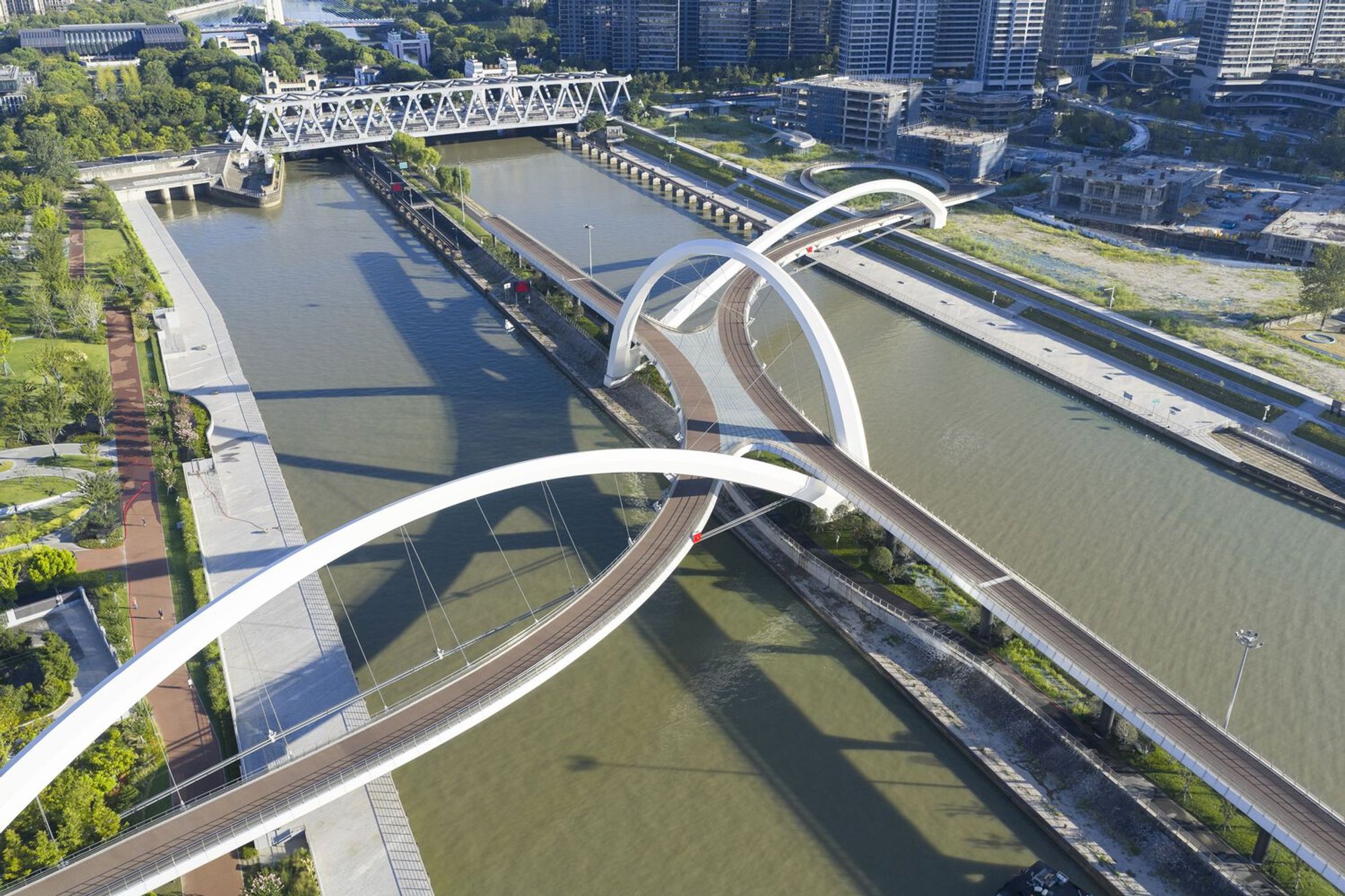
Grand Canal Gateway Bridge in Hangzhou by Zaha Hadid Architects
Sculptural pedestrian bridge in Hangzhou by Zaha Hadid Architects, weaving cultural heritage, sustainable engineering, and fluid forms to connect vibrant waterfront districts.

A Sculptural Footbridge Fusing Heritage, Sustainable Design & Future Mobility
A New Urban Gateway for Hangzhou
The Grand Canal Gateway Bridge in Hangzhou, designed by Zaha Hadid Architects (ZHA), marks a transformative moment for waterfront public realm design in China. Completed in 2025, this 390-metre pedestrian and cycling bridge serves as the architectural centerpiece of the emerging Seamless City masterplan, reconnecting Hangzhou to its historic waterways while shaping a future-ready urban district rooted in cultural heritage, sustainable mobility, and public life.
Positioned across the UNESCO-listed Grand Canal, one of the world’s oldest and longest artificial waterways, the bridge establishes a fluid link between the east and west banks, uniting new residential, commercial, and civic environments with expansive parkland and riverside promenades.PedestrianBridge
Cultural Context: Bridging Ancient Engineering and Modern Innovation
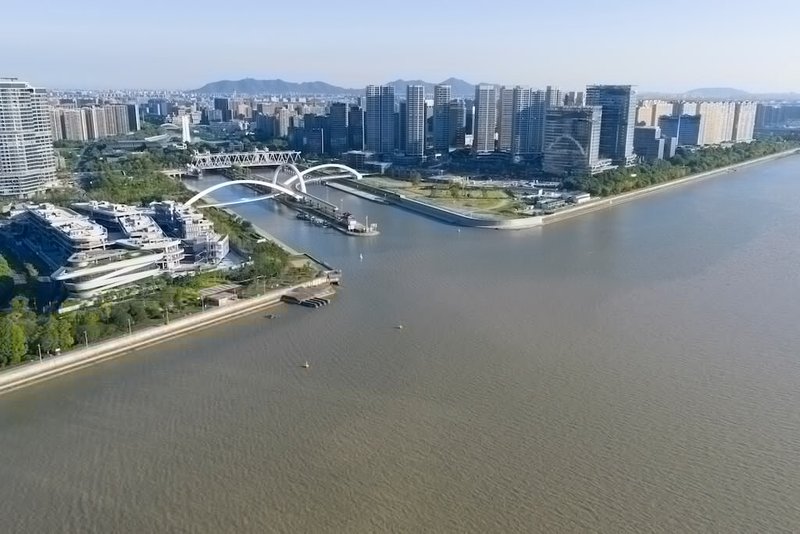
As the canal meets the dramatic tides of the Qiantang River, the bridge occupies a symbolic and geographical threshold. The Grand Canal’s origins trace back to the 5th century BCE, representing centuries of urban civilization and commerce. Today, this new gateway structure honors that legacy while introducing a contemporary engineering language uniquely inspired by Hangzhou’s local craft traditions.
Design Inspired by Silk Weaving
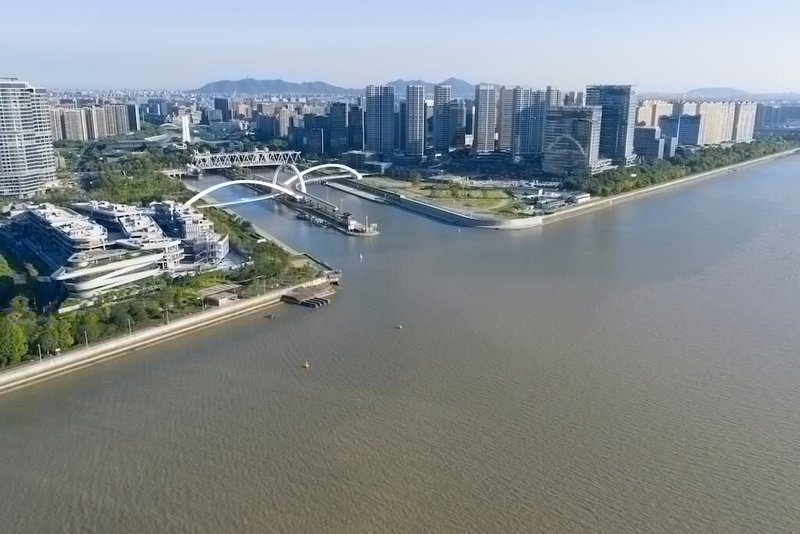
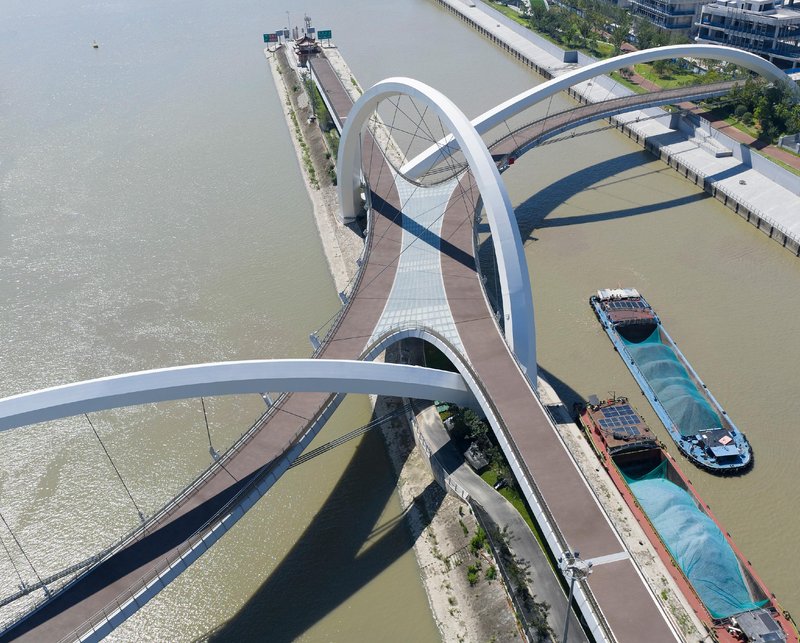
Referencing Hangzhou’s celebrated silk embroidery, the bridge adopts an organic and braided structural expression. Its flowing, intertwined arches mimic threadwork, forming a sculptural system that weaves together pathways and structural supports. The result is a dynamic, sinuous silhouette that feels both rooted in tradition and boldly futuristic.
Engineering and Form: Three-Arch Steel Structure
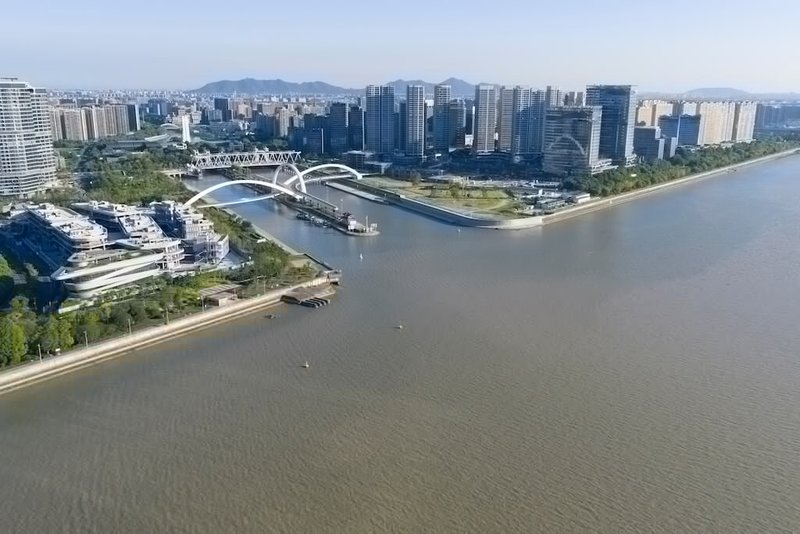
The bridge’s steel tied three-arch system is precisely calibrated to suit the site’s complex terrain and hydrological conditions. Its lightweight structural configuration mitigates lateral forces and prevents wind loads from transferring into the sensitive heritage zone. By employing steel’s high strength-to-weight performance, the bridge achieves an efficient form with reduced foundation impact and faster erection times compared to concrete alternatives.
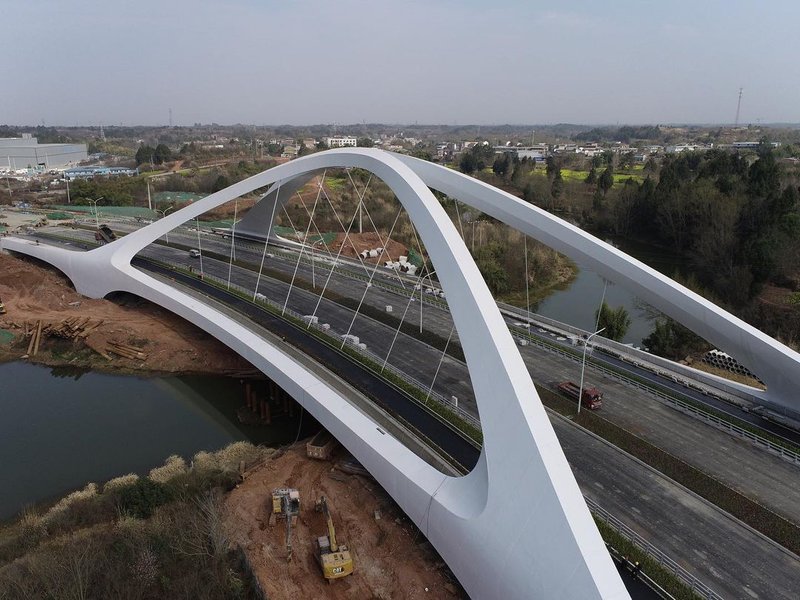
A sculpted concrete pier located at the canal island allows forces—including deck torsion—to balance naturally, reducing span lengths and enhancing stability while preserving a cohesive architectural expression.
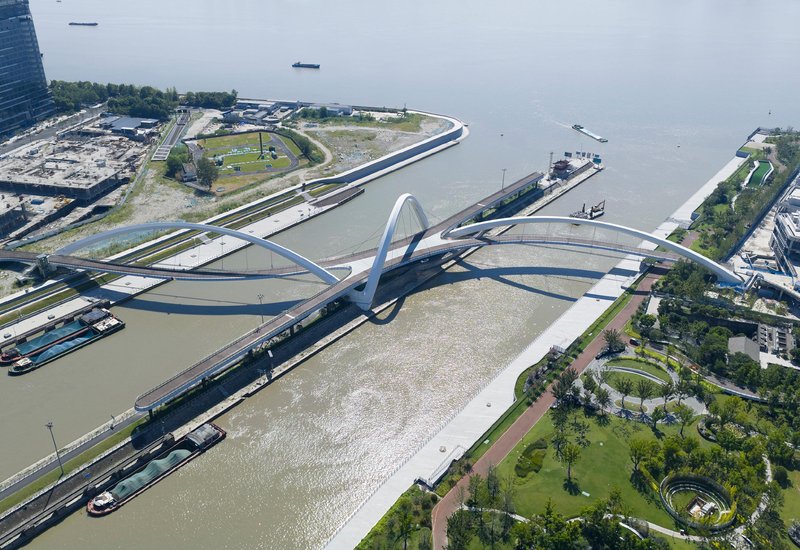
Sustainable Construction Strategy
Zaha Hadid Architects emphasized resource-efficient fabrication and environmental resilience, aligning with global best practices for sustainable public infrastructure.
Key Sustainable Features
- Advanced digital modeling to minimize steel usage
- Prefabricated modular construction to reduce waste and shorten build time
- Minimal disruption to river transport, critical given the canal’s traffic of 100,000 barges annually
- Locally sourced materials and regional manufacturing partnerships
- Renewable-powered LED lighting system charged via battery banks
Together, these strategies support circular construction principles, low-impact urban integration, and future-ready smart infrastructure standards.
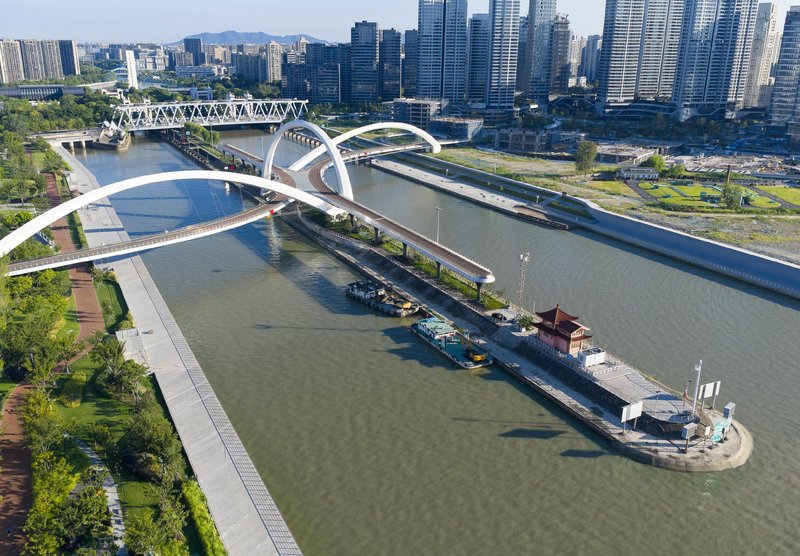
Public Realm Experience: A Stage for Nature & Culture
Designed as a civic spine and public viewing platform, the bridge offers immersive vantage points to observe the iconic Silver Dragon tidal bore—a natural spectacle where waves up to nine meters surge inland from Hangzhou Bay. Elevated terraces, plazas, and linear walkways invite residents and visitors to engage with nature, leisure, and movement along the riverfront.
By merging mobility, recreation, and ecological appreciation, the bridge becomes both an urban connector and a cultural destination.
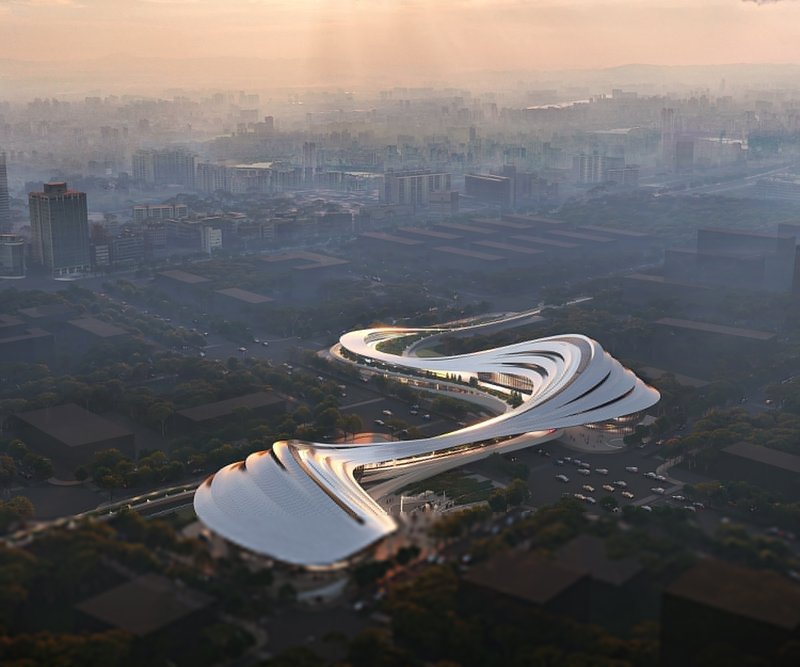
A Landmark at the Confluence of Past and Future
The Grand Canal Gateway Bridge stands as a testament to Zaha Hadid Architects’ vision: an expressive structure where heritage artistry, advanced engineering, and sustainable urban design converge. As Hangzhou evolves into a model for connected, livable waterfront cities, this bridge embodies a powerful architectural narrative—one that bridges time, culture, and community while shaping the identity of a 21st-century metropolis.
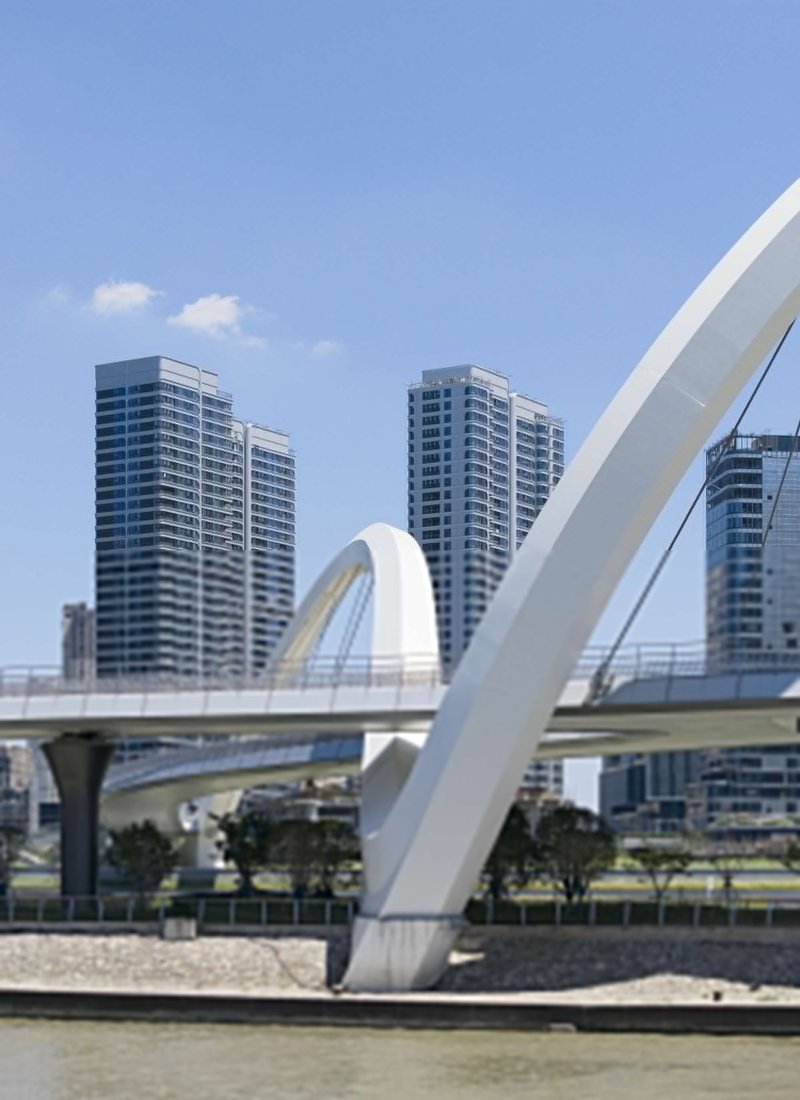
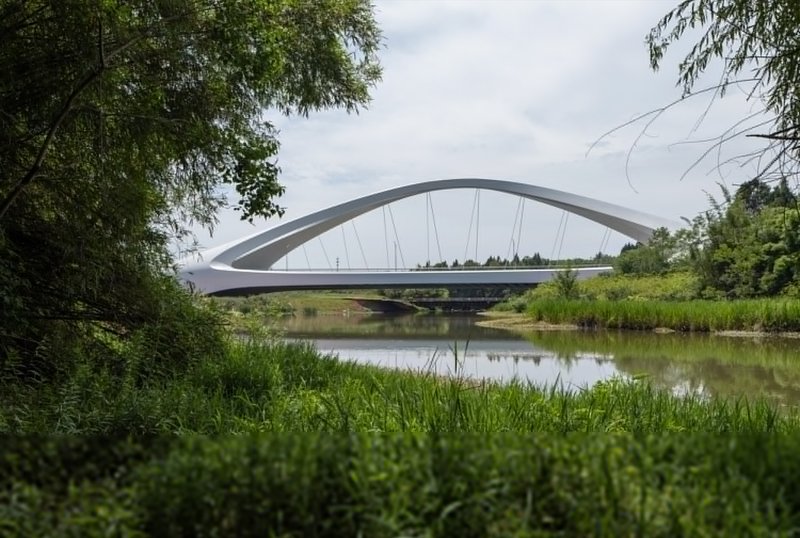
All photographs are works of Xue Liang




Popular Articles
Popular articles from the community

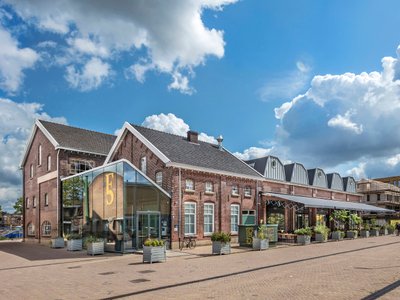
Fifth NRE Jazz Club – De Bever Architecten: Eindhoven’s Revitalized Cultural Hub
Historic gas factory transformed into Fifth NRE Jazz Club blending modern sustainability, jazz culture, dining, and heritage architecture seamlessly.

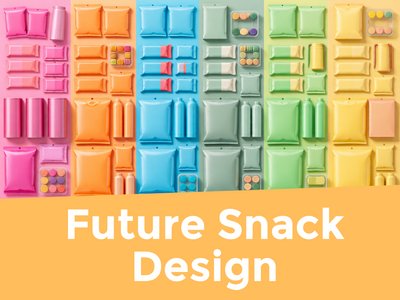
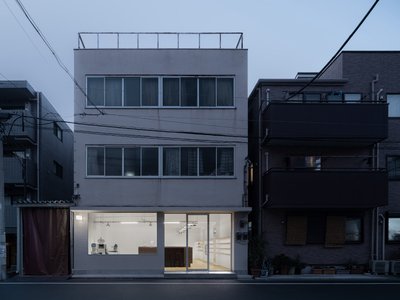
Atelier Macri Concept Store Interior Design by CASE-REAL
Atelier Macri store features a "ko" counter, walnut wood details, cork displays, blending retail, gallery, and seamless customer experiences.
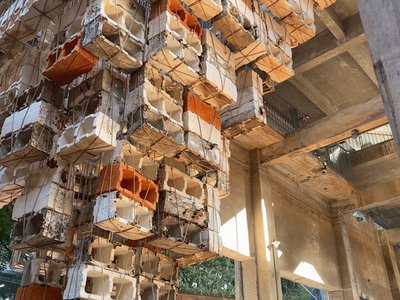
Inverted Architecture Installation by Studio Link-Arc: Exploring the Intersection of Architecture and Living Organisms
Inverted Architecture Installation by Studio Link-Arc blends mycelium, sustainability, inverted design, ecological cycles, and urban adaptive architecture in Shenzhen.


Similar Reads
You might also enjoy these articles


The Ken Roberts Memorial Delineation Competition (Krob)
As the most senior architectural drawing competition currently in operation anywhere in the world, it draws hundreds of entries each year, awarding the very best submissions in a series of medium-based categories.


Waterfront Redevelopment and Urban Revitalization in Mumbai: Forging a New Dawn for Darukhana
A transformative waterfront redevelopment project reimagining Darukhana’s shipbreaking heritage into an inclusive urban future.

OUT-OF-MAP: A Call for Postcards on Feminist Narratives of Public Space
Rhizoma Design and Research Lab invites artists, designers, architects, researchers, and students to reflect on how feminist perspectives can reshape public space. Selected works will be exhibited in Barcelona, October 2026. Submissions open until 15 April 2026.


Documentation Work on Buddhist Wooden Temple
Architectural syncretism and cultural hybridity: A comparative study of the Buddhist temples in Chattogram Hill tracks


Explore Architecture Competitions
Discover active competitions in this discipline




The International Standard for Design Portfolios


The Global Benchmark for Architecture Dissertation Awards


The Global Benchmark for Graduation Excellence


Challenge to reimagine the Iron Throne
Comments (0)
Please login or sign up to add comments
No comments yet. Be the first to comment!