
HD Hyundai Global R&D Center: A Vision for Smart, Sustainable Innovation
The HD Hyundai Global R&D Center merges cutting-edge architecture, sustainability, and innovation, fostering collaboration, creativity, and environmental efficiency.


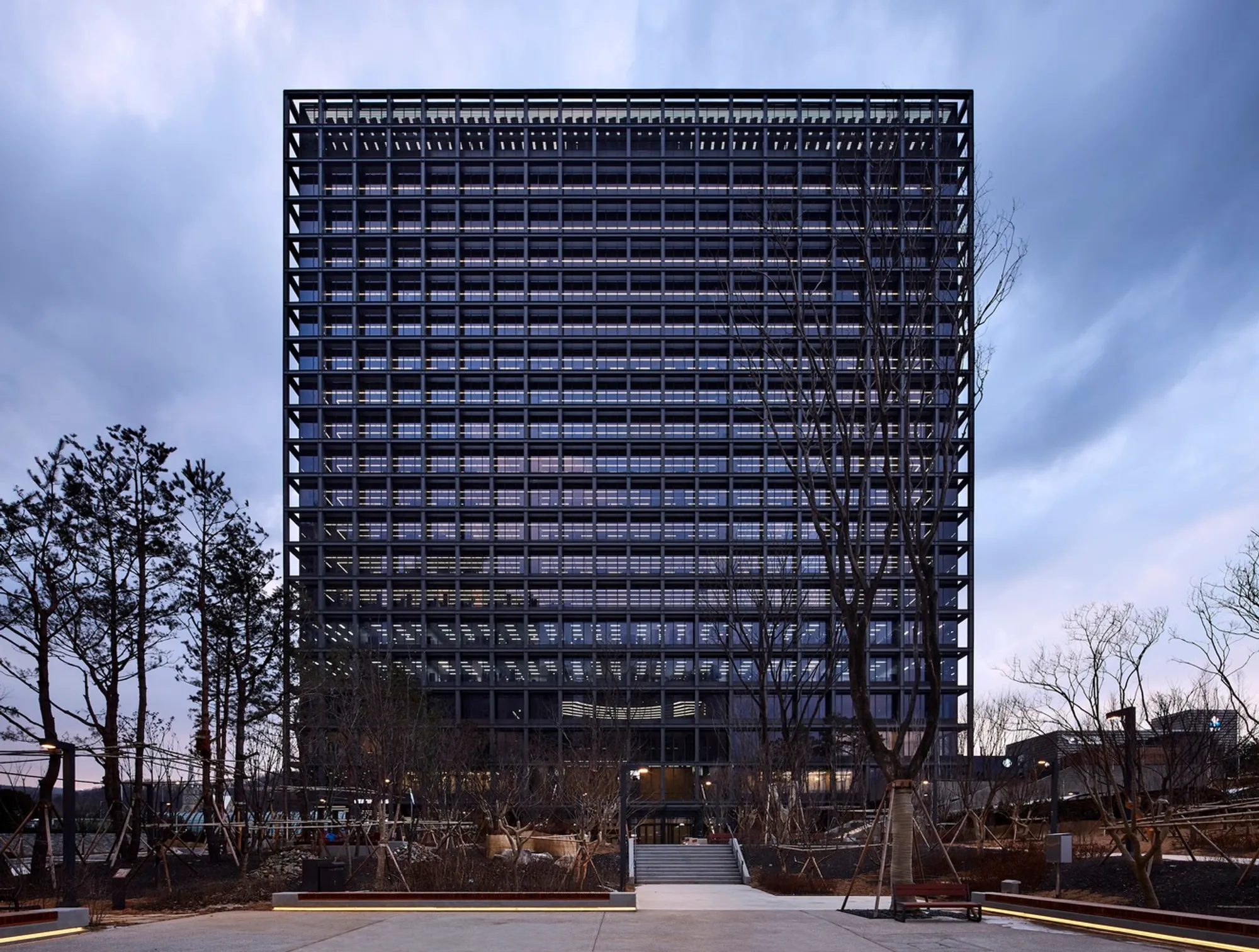
The HD Hyundai Global R&D Center, designed by Nikken Sekkei and Heerim Architects & Planners, stands as a monumental achievement in architectural innovation and sustainability. Located in Seongnam-si, just 30 km south of Seoul, South Korea, this 25,068 m² facility brings together 5,000 researchers from 17 companies under the HD Hyundai Group. With its completion in 2023, the center represents a forward-thinking approach to research and development (R&D), emphasizing creativity, collaboration, and environmental consciousness. The building’s design is based on three primary concepts: CUBE, VOID, and GRID, which aim to foster intellectual creativity and a strong sense of unity among the group.
CUBE: A Symbol of Strength and Efficiency
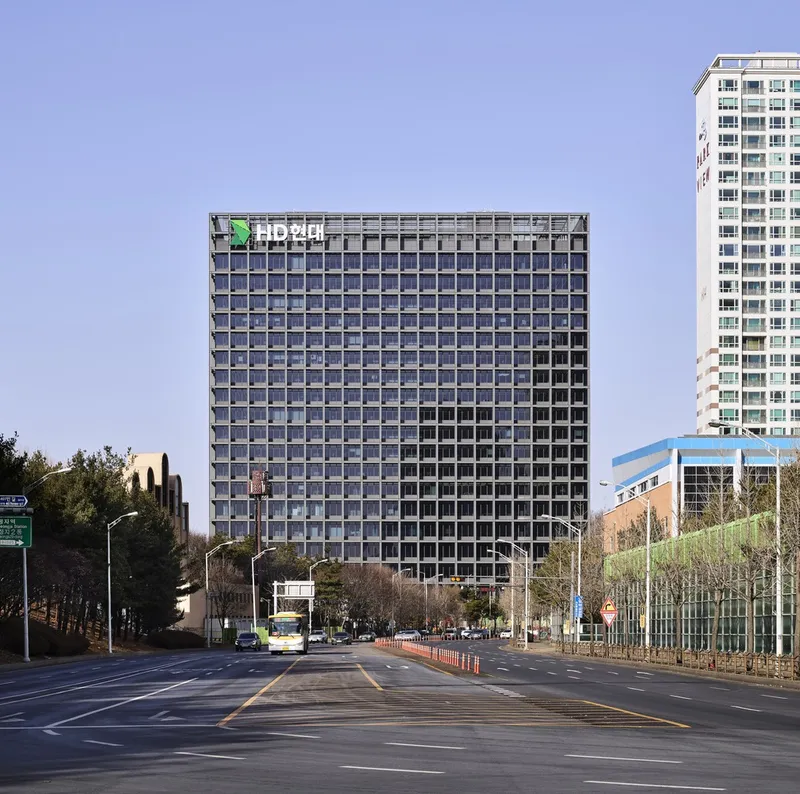
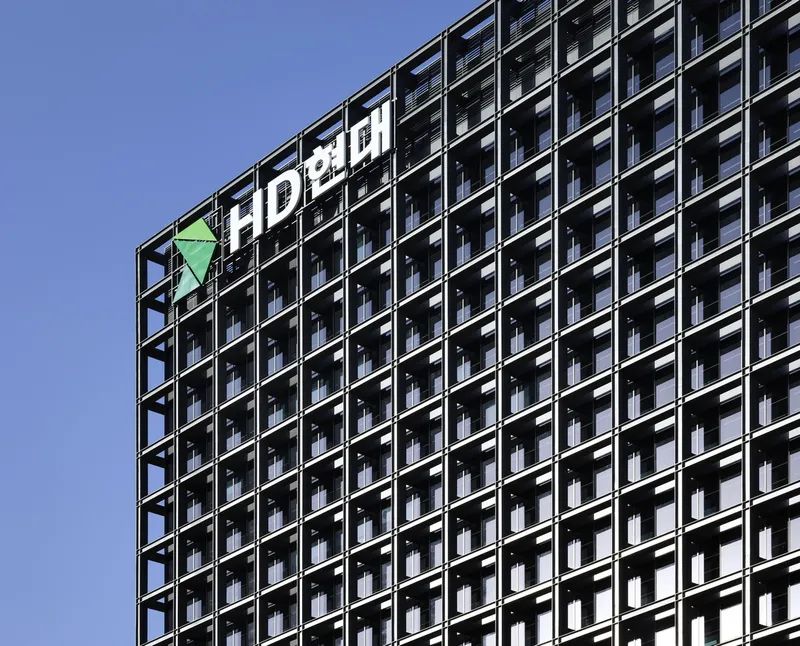
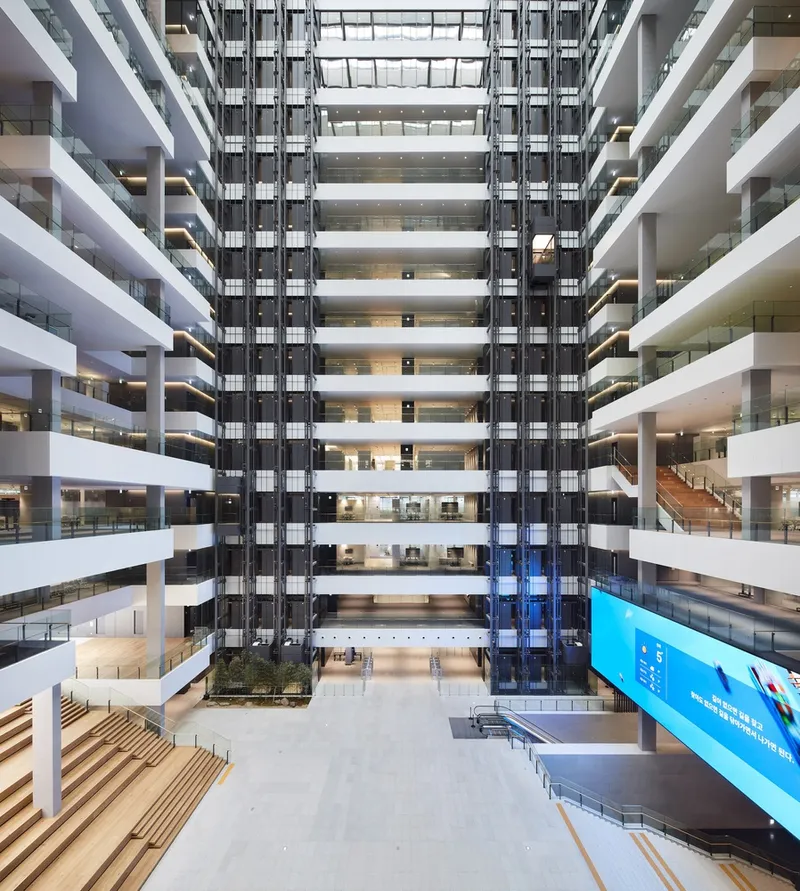
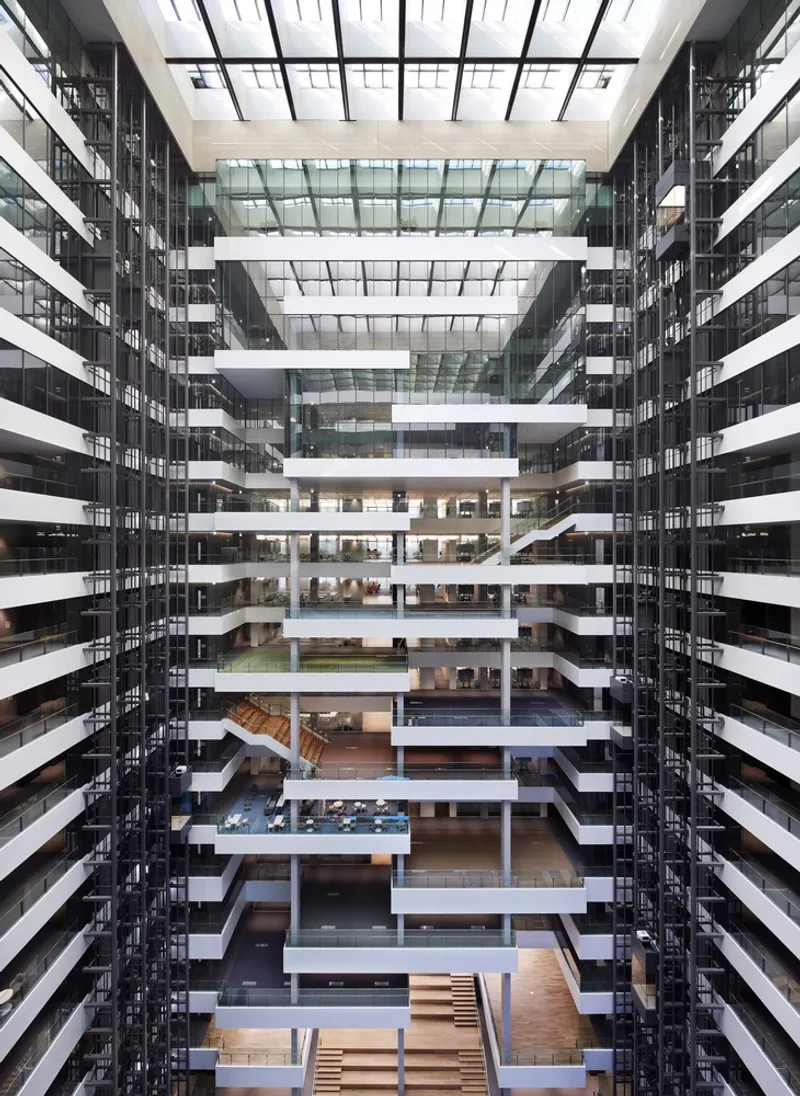
The centerpiece of the design is the SMART CUBE—a distinctive cube-shaped structure measuring 90 meters square, composed of 20 x 20 x 20 modules of 4.5 meters. This innovative design serves not only as an aesthetic feature but also provides several functional benefits. The steel outer frame reflects HD Hyundai’s history with steel, reinforcing the company’s identity while also promoting sustainability. The cubic shape minimizes surface area, reducing heat load during hot, humid summers and cold winters. Additionally, the use of a fire-resistant concrete-filled tube (CFT) structure enhances the building’s structural stability, ensuring safety while providing an energy-efficient solution.
VOID: A Hub for Communication and Innovation
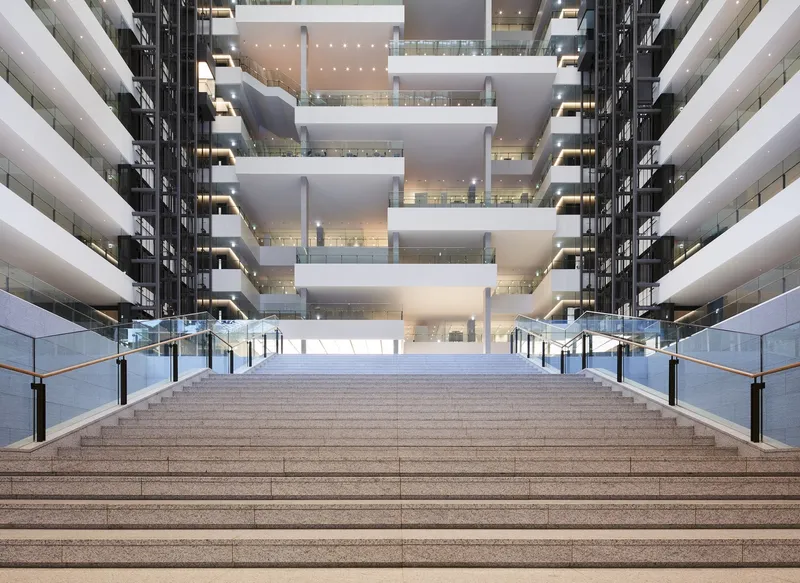
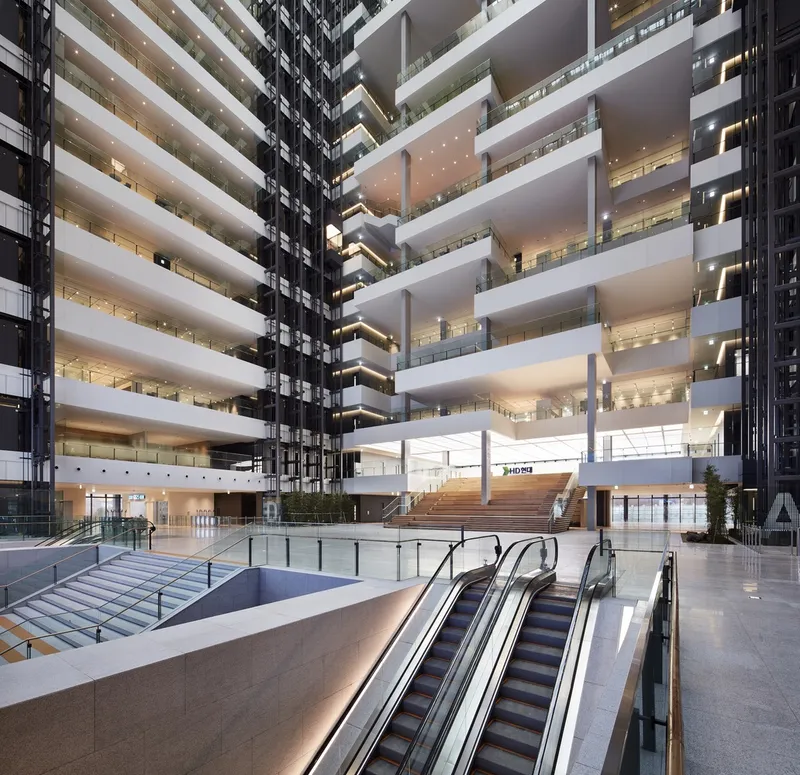
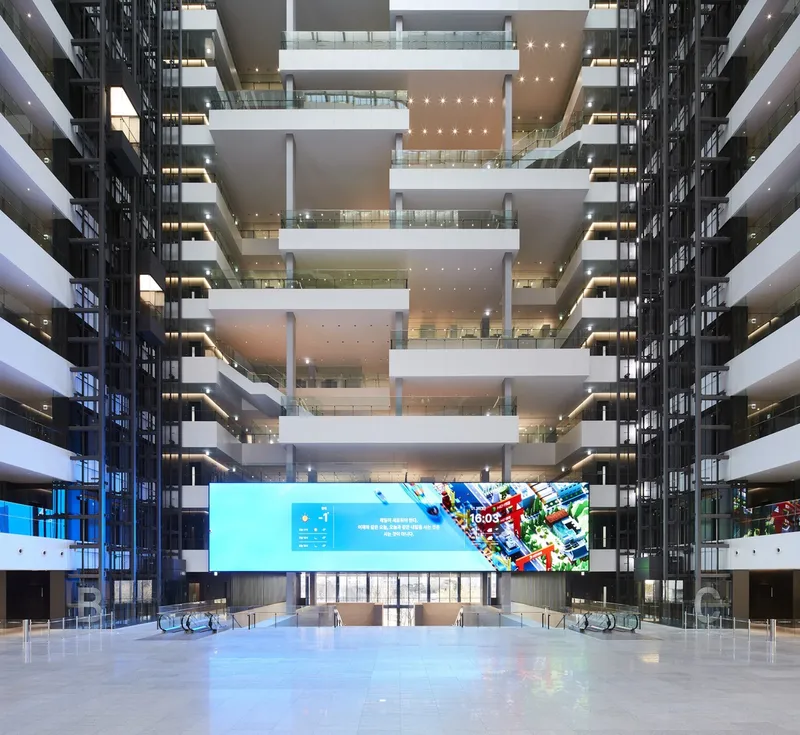
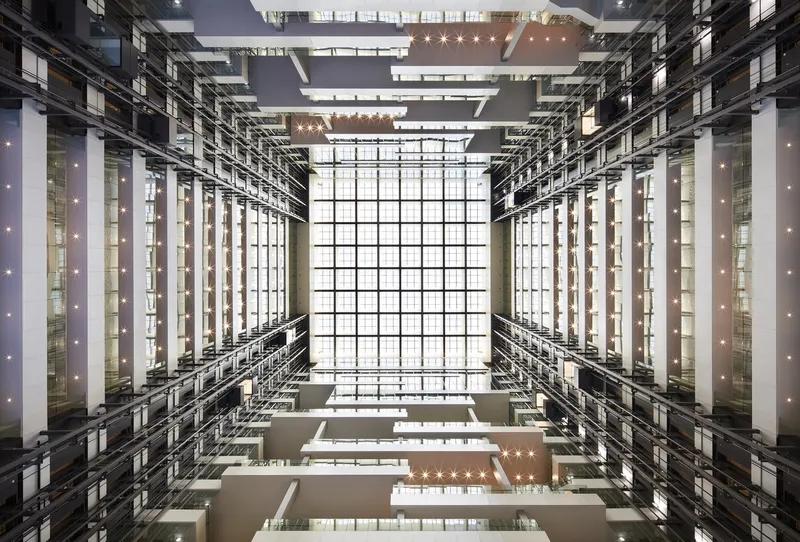
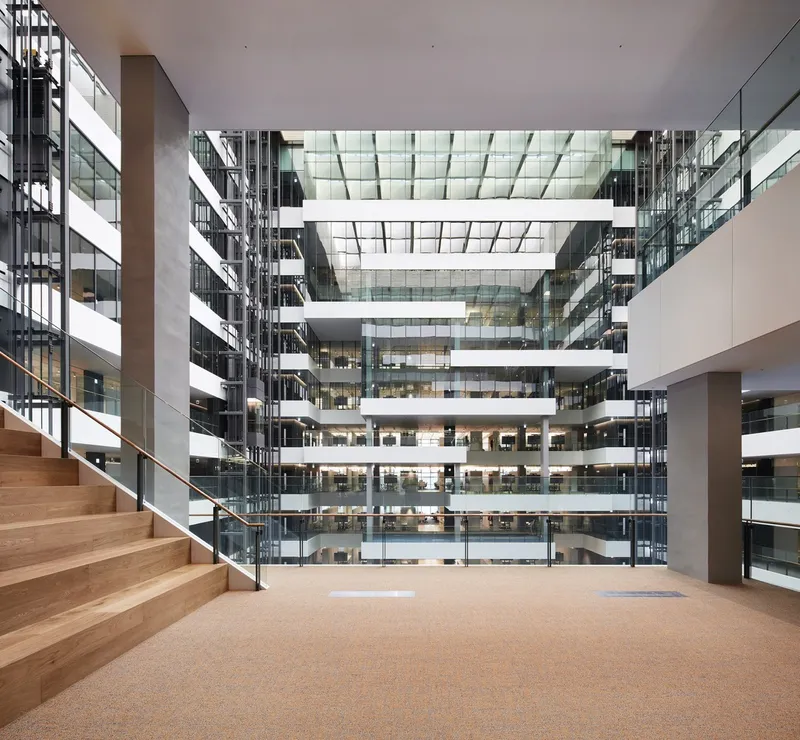
At the core of the building is the SMART VOID, a vast open space that connects all levels of the facility. This void space serves as the central hub for the 17 Hyundai Group companies, promoting cross-departmental communication and collaboration. The void is not only a visual feature but also helps to reduce energy consumption by utilizing natural lighting and ventilation. A continuous stepped communication deck, facing the void, promotes interaction between workers, fostering an environment where information flows freely across the space. The design of the void enables smooth traffic flow, allowing employees to interact with each other effortlessly, regardless of their departmental affiliation. By encouraging such incidental interactions, the design aims to spark creativity and drive innovation.
GRID: A Flexible and Sustainable Work Environment
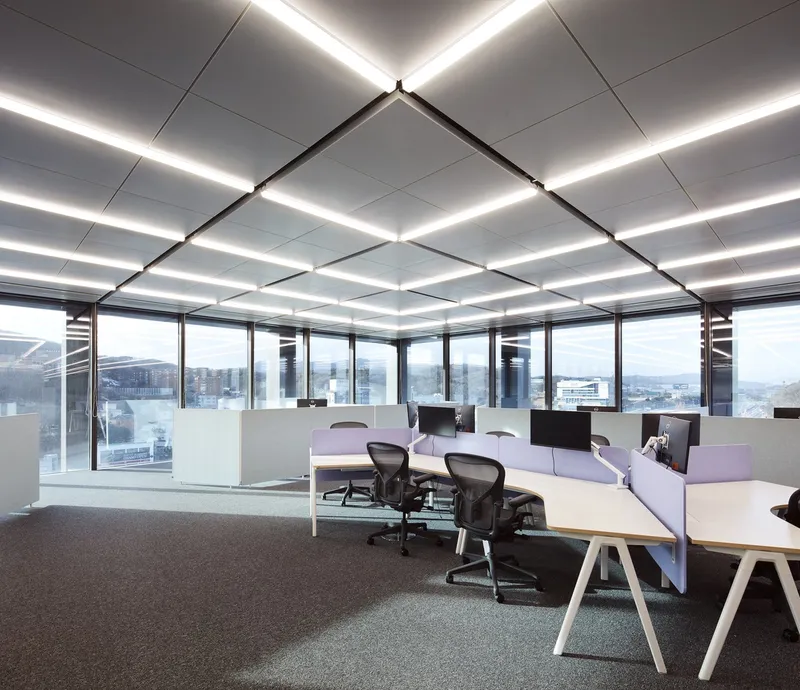
The SMART GRID design is a unique approach to creating efficient and adaptable office spaces. The building’s outer-frame grid, measuring 4.5 meters, eliminates the need for pillars, creating pillar-less office spaces that maximize the use of floor area. The GRID is also designed to improve environmental performance by providing solar radiation shielding and enhancing the building’s thermal performance. The ceiling system, designed with slits for lighting fixtures, is flexible and can easily accommodate partition changes, allowing the building to adapt to the evolving needs of the R&D teams. For added comfort, the ceiling incorporates radiant heating and cooling systems, along with chilled beam technology, ensuring a comfortable and draft-free environment. The advanced ventilation system is designed to circulate fresh air efficiently, drawing in outside air through the ceiling and returning it through the floor, creating a healthier and more comfortable workspace for all.
Sustainability: Decarbonization and Energy Efficiency
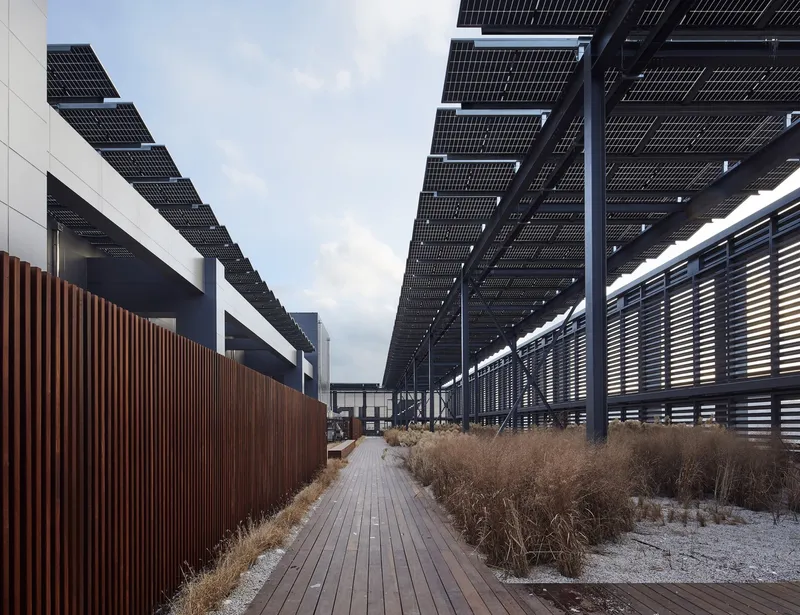
Sustainability is at the heart of the HD Hyundai Global R&D Center design. The building employs evidence-based engineering to reduce energy consumption and promote decarbonization. Key innovations include the installation of large-scale water thermal storage to reduce peak power consumption and on-site solar power generation to supplement energy needs. Additionally, the facility has adopted a DC power distribution system, developed by HD Hyundai, to ensure efficient energy use for office lighting and heating systems. The use of DC power eliminates AC-DC conversion losses, making it more energy-efficient and supporting future technologies like LED lighting, solar cells, and storage batteries.
Smart Building Technology for the Future
The HD Hyundai Global R&D Center is not just a physical space; it is an embodiment of the future of smart buildings. The integration of green technologies such as solar energy and water thermal storage reflects the company’s commitment to sustainability. Moreover, the building’s energy-efficient systems support wellness by maintaining a healthy indoor environment, which has become especially important in the post-COVID era. The design’s emphasis on natural lighting, ventilation, and thermal comfort enhances employee well-being and boosts productivity, making it an ideal environment for R&D work.
A Model for Future R&D Spaces
The HD Hyundai Global R&D Center represents the future of corporate innovation and research facilities. By merging cutting-edge architecture with sustainable design practices, the building sets a new standard for future R&D environments. The integration of flexible workspaces, green technologies, and smart systems makes it a model for companies striving to create collaborative, innovative, and eco-friendly workplaces. This project exemplifies how architecture can play a central role in shaping the future of work, research, and development.
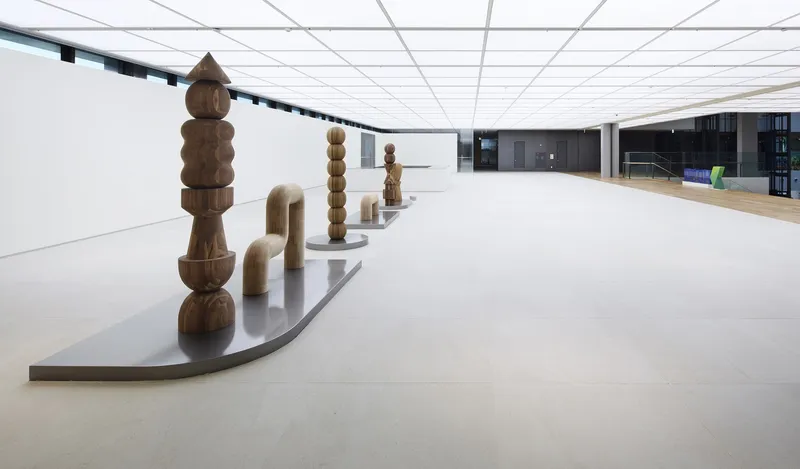
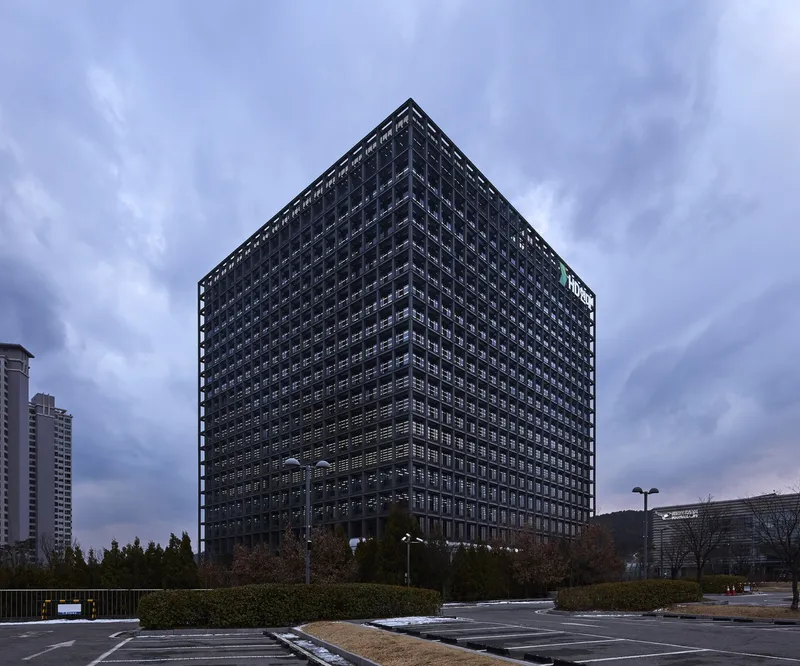
All the photographs are works of Park Wansoon, Kim YongKwan


Popular Articles
Popular articles from the community


Hill & Cross Opera: Sculptural Opera House Architecture Shaped by Tallinn’s Landscape and Identity
Hill & Cross Opera reimagines opera house architecture in Tallinn through its sculptural hill, civic plaza, glass wave and a luminous cross.

Co-Life: Senior Housing Design That Reconnects Older Adults With the City
Co-Life reimagines senior housing design through healing gardens, shared streets, workshops, and a sustainable community across generations.

Riyadh For All: Intergenerational Urban Design for Active Aging in Rabat
Riyadh For All reimagines urban design in Rabat with intergenerational co-living, adaptive courtyards, and Moroccan cultural exchange today.

Play: Fragments of Their World
Familiar architecture becomes modular playground design, creating safe spaces where displaced children can learn, connect, imagine and play.

Similar Reads
You might also enjoy these articles


Hodi-Mandai Geram
Project Function: Preservation and revitalization of the Intangible heritage and socio-spatial identity of the Hodi by Housing, Cultural Memory Center, Sacred Grove, landscape, local tourism economy


Olio Towers: A Mid-Rise for Performers That Fuses Housing, Rehearsal, and Stage
Located blocks from Houston's Theater District, this modular tower stacks living units around a central performance atrium.

Oasis: Modular Green Housing Carved into Dhaka's Urban Fabric
A shortlisted Plugin Housing entry reclaims unauthorized settlements in Dhaka with stepped concrete volumes, green roofs, and ventilation-driven design.

Black Hole: A Floating Megastructure for the Post-Physical Era
Emiliano Mazzarotto envisions a spherical, self-scaling arena where e-sports, digital hotels, and holographic stadiums replace traditional public space.

Explore Office Building Competitions
Discover active competitions in this discipline



Challenge to reimagine the Iron Throne


Photograph architecture without architects


Illustrate the lost glory of Angkor Wat - Render Challenge


Design challenge to reuse E-waste
Comments (0)
Please login or sign up to add comments
No comments yet. Be the first to comment!