

Heerweg Housing by WE-S architecten
Heerweg Housing blends duplexes and apartments around courtyards, merging rural typologies with modern communal living and sustainable landscape integration.


A Contemporary Interpretation of Village Living in Gent, Belgium
Architects: WE-S architecten
Project Overview
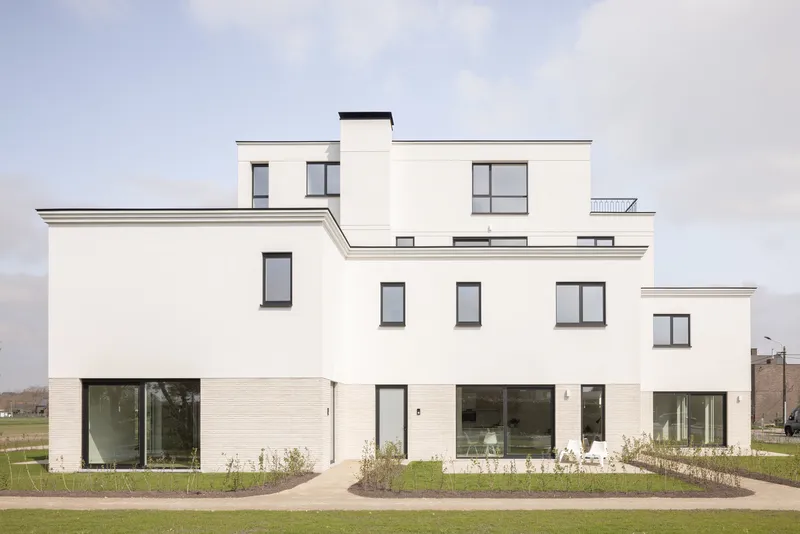
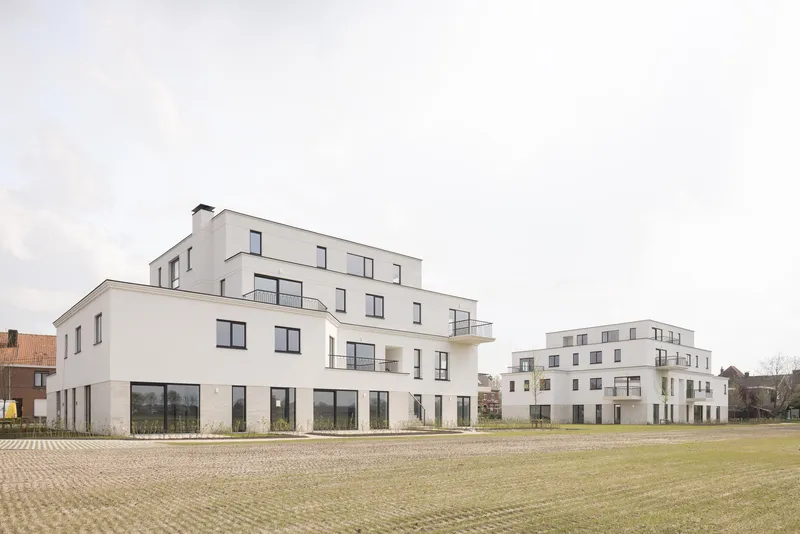
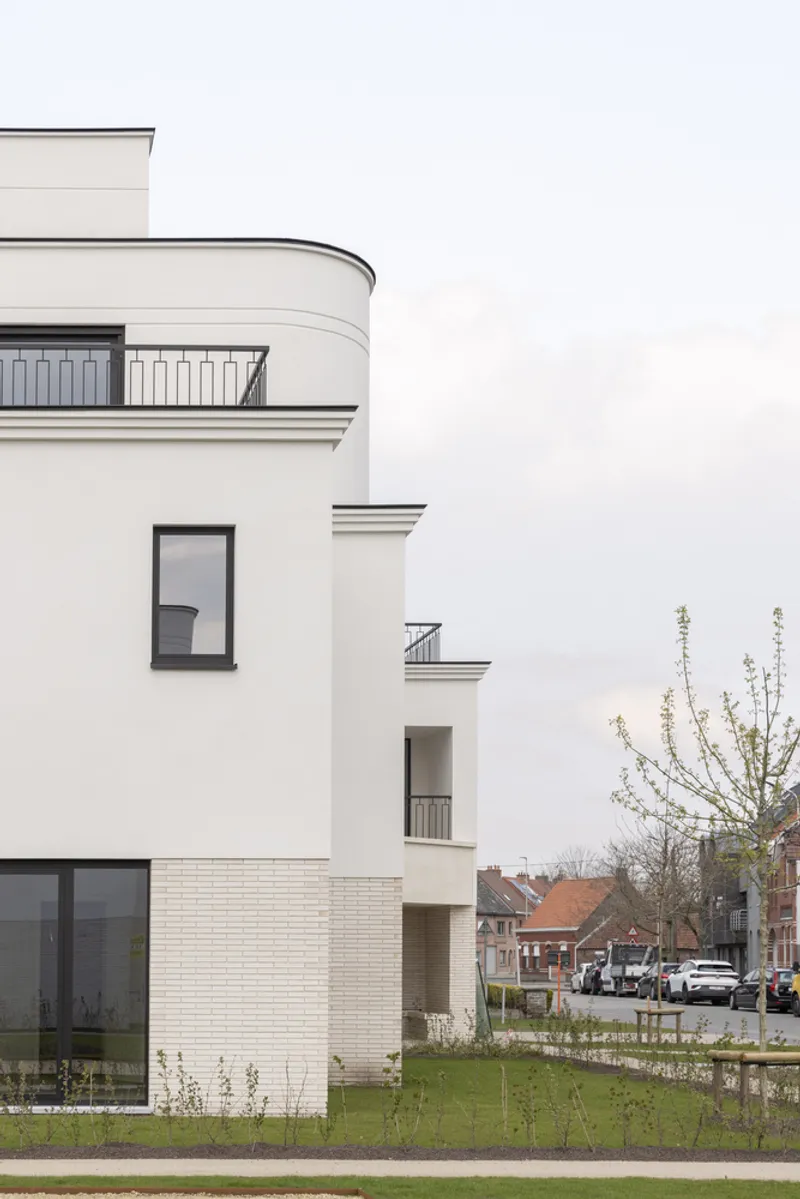
The Heerweg Housing project by WE-S architecten redefines suburban housing with a thoughtful balance between individual homes and collective living. Located in Gent, Belgium, this residential development comprises 28 housing units distributed across two compact building volumes positioned strategically at both edges of the site. With a total built area of 3,598 m², the project exemplifies how architectural design can bridge urban density and rural character.
Design Concept: From Village Typologies to Collective Courtyards
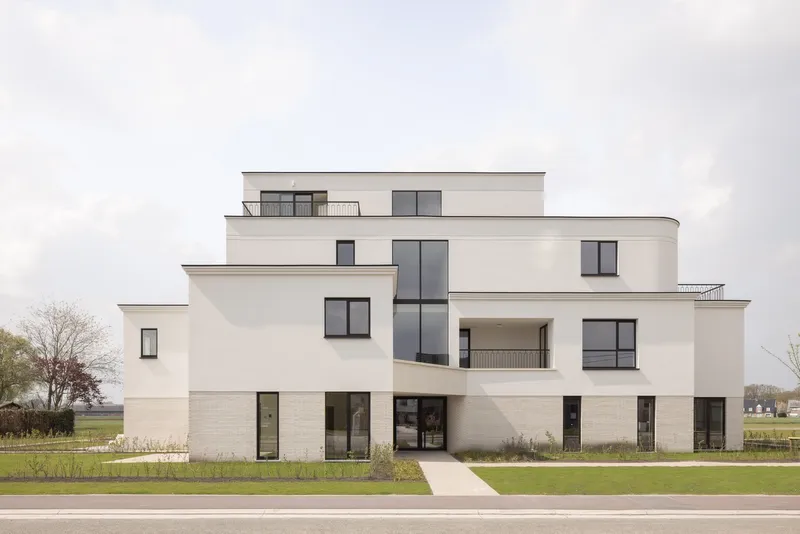
The design takes cues from the existing semi-open building fabric along the street, extending it into the new development. Each building block contains a mix of duplex houses and apartments, maintaining a low-rise, human-scaled atmosphere.
The project unfolds in multiple phases:
STEP 1: Street Alignment & Semi-Open Housing
The site continues the pattern of semi-open houses lining Heerweg Zuid, each accompanied by private front and back gardens.
STEP 2: Side-Oriented Dwellings
These homes are side-oriented, placing emphasis on the front garden as a key interface with the street and neighbors.
STEP 3: Courtyard Apartments
The rear open spaces are activated by placing apartments around a shared, covered courtyard, encouraging interaction and shared ownership of space.
STEP 4: Rotated Volumes & Individual Access
The architects rotated both volumes 90 degrees to provide ground-floor duplexes with individual street-facing entrances while apartments are accessed via a communal entrance hall.
STEP 5: Double-Height "Living Room"
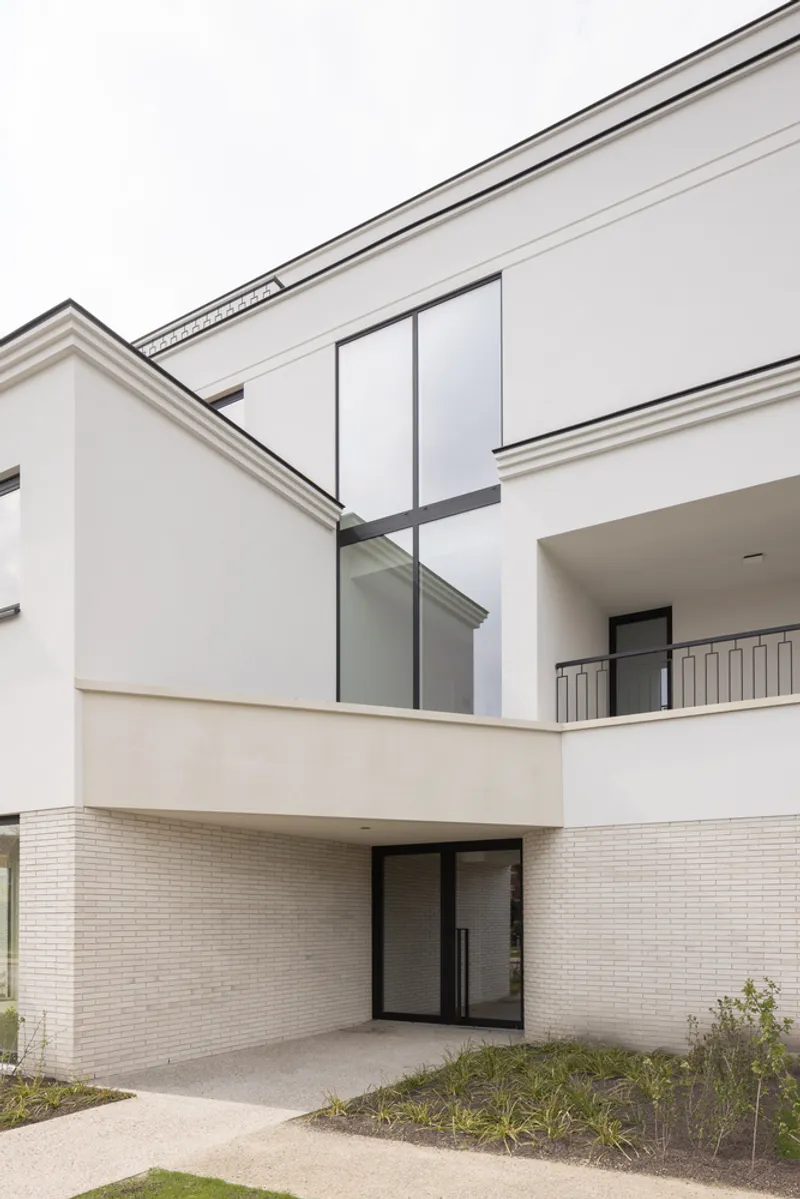
At the core of each building is a shared double-height living space, described as a communal “living room,” that brings natural daylight deep into the building and fosters neighborhood interaction.
STEP 6: Integration with Landscape
Organizing the homes in two compact masses allows for an expansive 30-meter-wide green zone at the site’s center. This space opens toward the adjacent forest, and is framed by a landscape grid inspired by the site's agricultural history—canals, meadows, hedgerows, and tree rows. Each private garden merges into the shared outdoor space, dissolving boundaries between individual and communal areas.


A Scaled-Up Villa Typology
Instead of creating repetitive, stacked apartment floors, WE-S architecten envisioned each volume as a scaled-up villa, where the architectural expression and living experience echo the charm of country homes. This reinterpretation of the multi-family housing typology allows for variety, spatial richness, and community cohesion within a relatively compact footprint.
The resulting design succeeds in blending density with openness, privacy with collectivity, and modern living with rural character—creating a model for future suburban development.

Sustainable & Material Strategy
The project's external wall insulation system (StoTherm) and plaster façade finishes by Sto ensure thermal efficiency, durability, and a cohesive material palette. The soft textures and neutral tones complement the landscape and foster a sense of calm continuity across the site
The Heerweg Housing project is a thoughtful exploration of contemporary residential design that respects traditional spatial patterns while introducing innovative communal solutions. By combining individual entryways, shared courtyards, landscape integration, and sustainable construction, WE-S architecten delivers a compelling blueprint for future-proof urban housing in a suburban context.


Popular Articles
Popular articles from the community


David Macias Steps a Doorless Stone and Plaster House Down a Tropical Colombian Hillside
In the humid hills of Colombia, Threshold House replaces the front door with an open void and terraces its 850 m² down the slope instead of fighting it.

Architekt Andreas Gruber Scatters 23 Dark Timber Chalets Across a South Tyrolean Forest Edge
In Molini di Tures, Amonti Chalets breaks a resort into a hamlet of gabled timber houses, with parking, storage and services pushed into the slope.

Jaramillo Van Sluys Arquitectura and Urbanismo Turn a Demolished Registry Lot in Quito into an Orchard Plaza
In Quito's Centro Histórico, a 2,800 m² plaza exposes the San Agustín convent wall and redraws its lost Augustinian orchard in volcanic stone.

Cube Design Draws an Ecological Corridor Between Two Shenzhen Hills with the Nankai Building
Beside Shenzhen's container docks, the Nankai Building pairs stacked balconies with a climbing green screen to connect two hillsides across its height.

Similar Reads
You might also enjoy these articles


Hodi-Mandai Geram
Project Function: Preservation and revitalization of the Intangible heritage and socio-spatial identity of the Hodi by Housing, Cultural Memory Center, Sacred Grove, landscape, local tourism economy


Olio Towers: A Mid-Rise for Performers That Fuses Housing, Rehearsal, and Stage
Located blocks from Houston's Theater District, this modular tower stacks living units around a central performance atrium.

Oasis: Modular Green Housing Carved into Dhaka's Urban Fabric
A shortlisted Plugin Housing entry reclaims unauthorized settlements in Dhaka with stepped concrete volumes, green roofs, and ventilation-driven design.

Black Hole: A Floating Megastructure for the Post-Physical Era
Emiliano Mazzarotto envisions a spherical, self-scaling arena where e-sports, digital hotels, and holographic stadiums replace traditional public space.

Explore Geurst & Schulze Architecten Competitions
Discover active competitions in this discipline

Challenge to design mud housing for contemporary communities

Challenge to reimagine the Iron Throne

Photograph architecture without architects

Illustrate the lost glory of Angkor Wat - Render Challenge
Comments (0)
Please login or sign up to add comments
No comments yet. Be the first to comment!