
Hemlock House by Alexander Jermyn Architecture: Alpine Living Reimagined
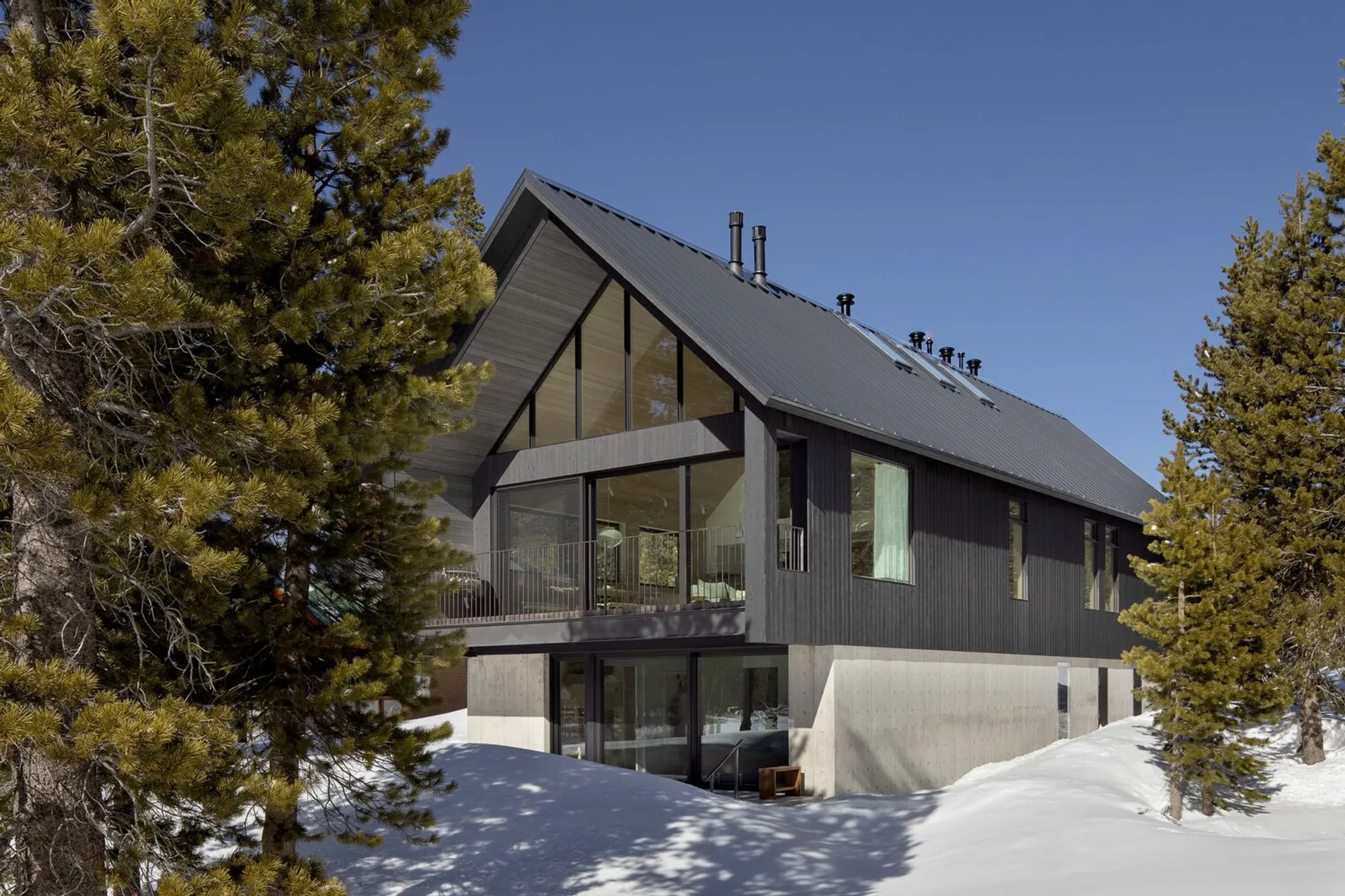
Hemlock House blends charred timber and concrete, offering resilient, light-filled alpine living with lake views and flexible family-focused interiors.


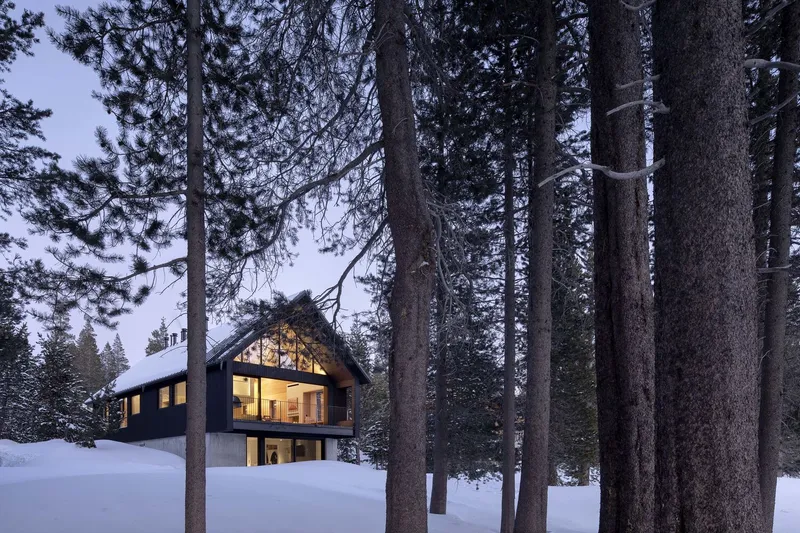
Perched on a gently sloping site at the edge of a serene lake in California’s Sierra Nevada mountains, Hemlock House redefines the traditional alpine residence through innovative materiality and climate-conscious design. Facing some of the harshest winters in the continental U.S., where snow often buries homes to the roofline, and constant summer wildfire threats, the design team meticulously tested material resilience across a winter season before final construction. This careful process ensured durability, safety, and aesthetic quality throughout the year.
Exterior Architecture: Resilient, Sculptural Forms
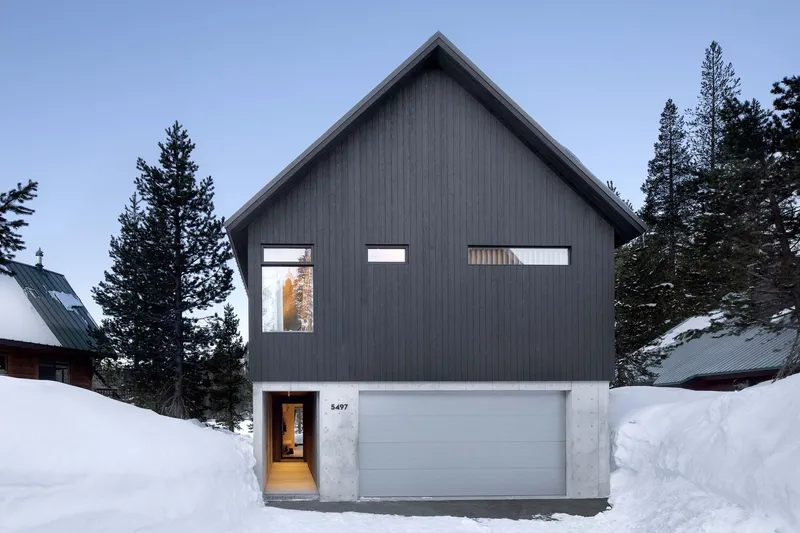
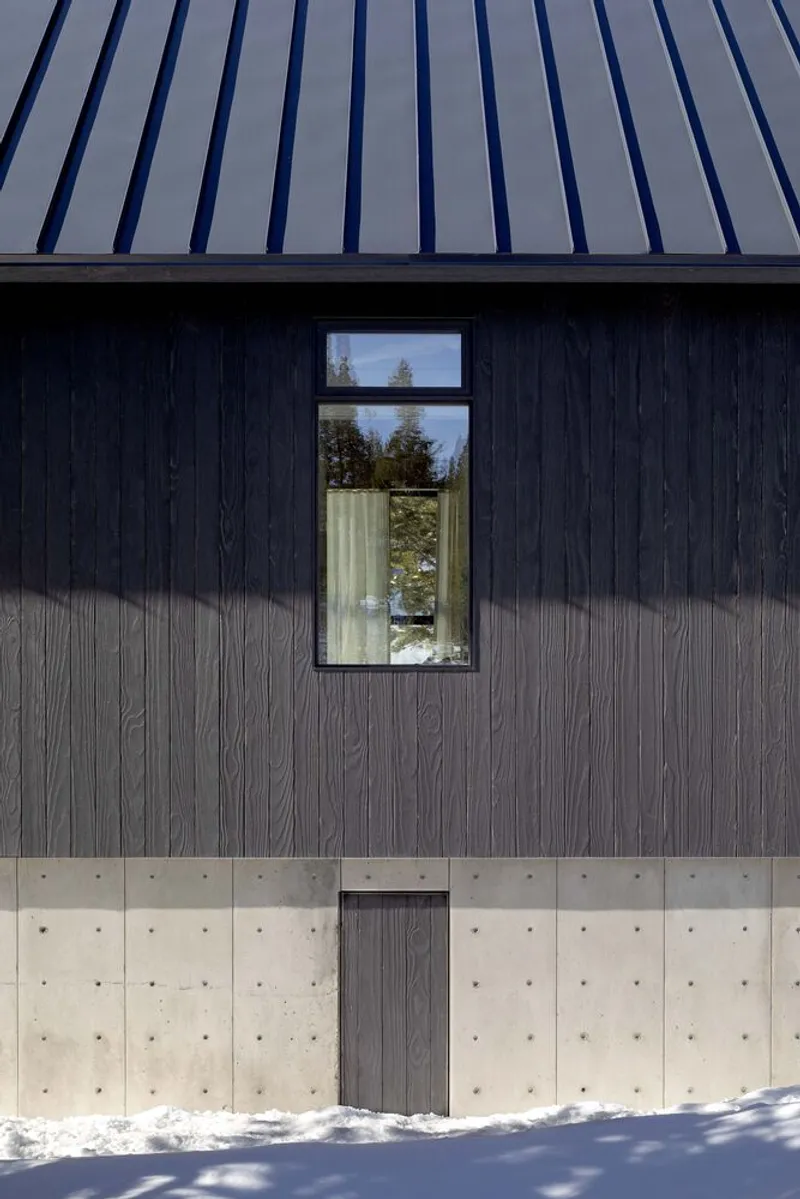
The house’s exterior is defined by a striking composition of charred wood walls (shou sugi ban) suspended over a protective concrete base. The concrete serves as a fortified shell, analogous to a ship’s hull, defending the home from heavy snow loads and extreme weather. Above, the charred upper volume floats visually, creating a dramatic contrast against the winter snow while harmonizing with the surrounding forest.
A porous lakeside façade with sliding glass doors connects the interior seamlessly with the natural landscape, maximizing views and inviting sunlight into the home. The combination of concrete and charred timber not only enhances durability but also conveys a bold, contemporary interpretation of the alpine house typology.

Interior Design: Light-Filled, Connected Spaces
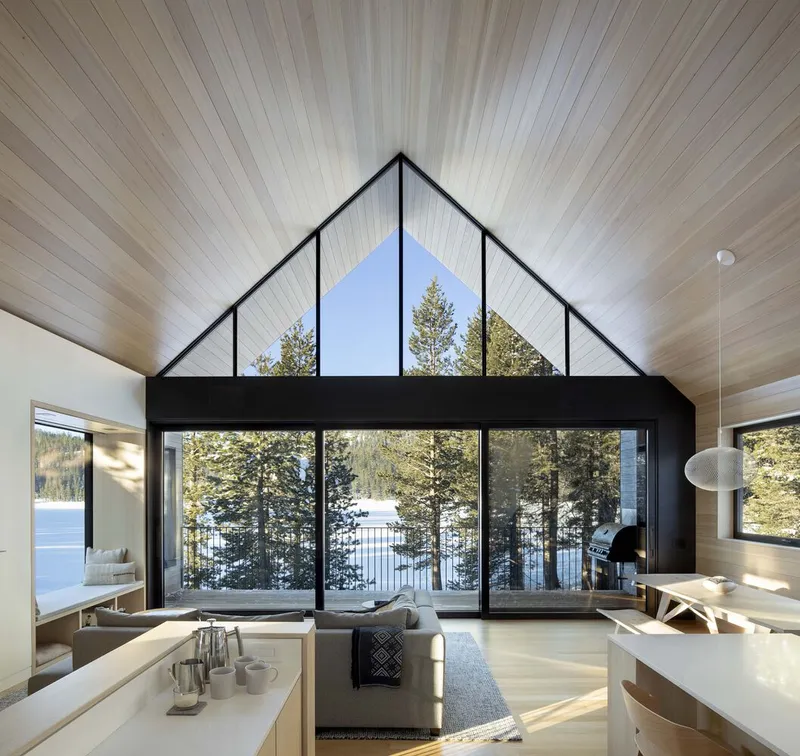
Inside, bleached hemlock and white-painted walls amplify natural light and create a serene, airy atmosphere. The main living and dining areas occupy the second floor, strategically oriented to capture panoramic lake views. Above the kitchen, a daylit mezzanine functions as an artist’s studio, offering creative inspiration from the surrounding landscape.
The ground floor accommodates practical needs with a garage, ski-tuning station, laundry, media room, and guest bedrooms. Thoughtful spatial planning balances community and privacy: built-in benches define intimate seating areas within larger communal spaces, while a bunk room comfortably sleeps 4–8 and features powered cubbies for remote work and study. Adjacent, a media room serves as a flexible overflow area for guests.

Collaborative Process and Pandemic-Era Construction
The bulk of construction occurred during the COVID-19 pandemic, creating a unique collaboration between the owner and architect. Traveling together for site visits, they developed a shared vision and close communication that shaped every aspect of the project, from material choices to interior layouts. This process resulted in a home that is both family-centric and architecturally sophisticated, blending resilience with refined aesthetics.
All Photographs are works of Jeremy Bitterman




Popular Articles
Popular articles from the community


Play: Fragments of Their World
Familiar architecture becomes modular playground design, creating safe spaces where displaced children can learn, connect, imagine and play.

The Earth Pod: 3D Printed Homes for Resilient Refugee Communities
The Earth Pod reimagines refugee housing through 3D printed homes made from clay, combining resilience, self-sufficiency, and rapid shelter.

Riyadh For All: Intergenerational Urban Design for Active Aging in Rabat
Riyadh For All reimagines urban design in Rabat with intergenerational co-living, adaptive courtyards, and Moroccan cultural exchange today.

Co-Life: Senior Housing Design That Reconnects Older Adults With the City
Co-Life reimagines senior housing design through healing gardens, shared streets, workshops, and a sustainable community across generations.


Similar Reads
You might also enjoy these articles


Hodi-Mandai Geram
Project Function: Preservation and revitalization of the Intangible heritage and socio-spatial identity of the Hodi by Housing, Cultural Memory Center, Sacred Grove, landscape, local tourism economy


Olio Towers: A Mid-Rise for Performers That Fuses Housing, Rehearsal, and Stage
Located blocks from Houston's Theater District, this modular tower stacks living units around a central performance atrium.

Oasis: Modular Green Housing Carved into Dhaka's Urban Fabric
A shortlisted Plugin Housing entry reclaims unauthorized settlements in Dhaka with stepped concrete volumes, green roofs, and ventilation-driven design.

Black Hole: A Floating Megastructure for the Post-Physical Era
Emiliano Mazzarotto envisions a spherical, self-scaling arena where e-sports, digital hotels, and holographic stadiums replace traditional public space.


Explore Architecture Competitions
Discover active competitions in this discipline



Challenge to reimagine the Iron Throne


Photograph architecture without architects


Illustrate the lost glory of Angkor Wat - Render Challenge


Design challenge to reuse E-waste
Comments (0)
Please login or sign up to add comments
No comments yet. Be the first to comment!