
HOME FOR THE ESCAPED
Transitional housing architecture that restores dignity, identity, and self-reliance for Rohingya refugees through community-built, humane living systems.


Forced displacement is not only the loss of a home, but also the loss of identity, security, and a sense of belonging. Home for the Escaped is a humanitarian architecture proposal that responds to the Rohingya refugee crisis by reimagining transitional housing architecture as a dignified, self-sustaining, and culturally rooted system. Designed as a humane alternative to temporary refugee camps, the project seeks to transform displacement into an opportunity for stability, empowerment, and long-term resilience.
This project "HOME FOR THE ESCAPED - Transitional Housing for the Rohingya refugees", developed by Denis Raj, was awarded Winner, UnIATA 2018, recognizing its sensitive integration of architecture, social systems, and refugee-led development.

Understanding the Rohingya Crisis
The Rohingya are one of the world’s most persecuted ethnic minorities, displaced primarily from Myanmar and forced to seek refuge across South and Southeast Asia. In India, despite hosting one of the largest refugee populations in the region, Rohingya refugees lack a formal legal framework for protection, resulting in insecure living conditions, inadequate housing, and limited access to basic services.
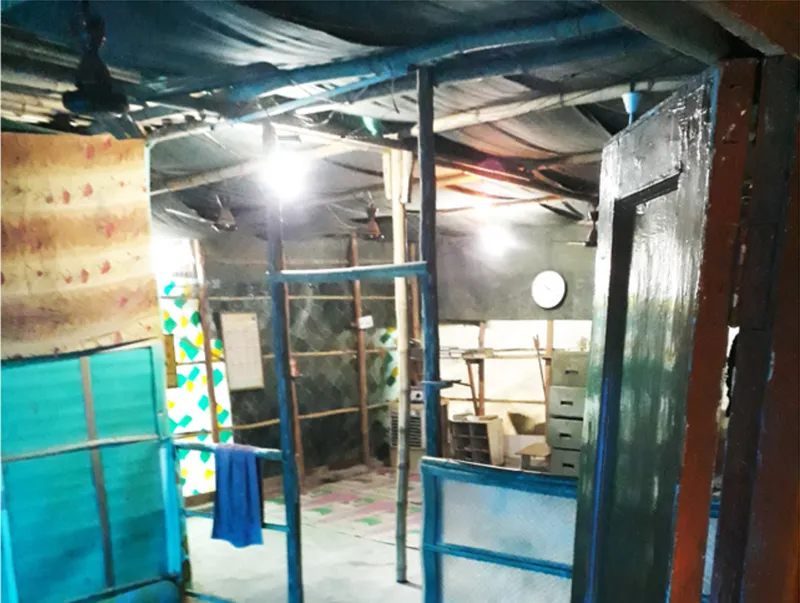
Existing refugee camps function largely as informal settlements: dense clusters of makeshift shelters built from scrap materials, with minimal access to sanitation, healthcare, education, or economic opportunity. These environments reinforce dependency and marginalization rather than recovery.
Need for Transitional Housing Architecture
Traditional refugee shelters are often designed as short-term solutions, yet in reality, many refugees remain displaced for decades. This gap between temporary intent and permanent reality creates unsafe and dehumanizing living conditions.
Transitional housing architecture addresses this challenge by proposing housing systems that:
- Adapt over time from temporary to permanent
- Restore dignity through spatial quality
- Enable refugees to actively build and maintain their homes
- Integrate cultural traditions and climate-responsive design
- Support economic self-reliance and community growth
Learning from Rohingya Vernacular Architecture
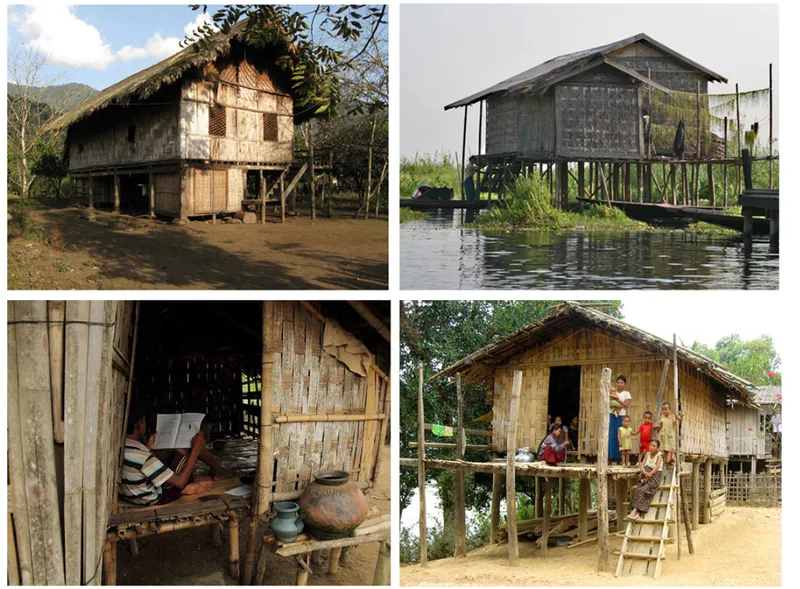
The design draws deeply from traditional Rohingya village settlements and building typologies. Historically, Rohingya homes are elevated structures made from bamboo, wood, and thatch: materials chosen for flood resilience, ventilation, and climatic comfort.
Key architectural insights include:
- Settlement patterns organized around water bodies and communal spaces
- Elevated plinths for protection from flooding
- Lightweight construction for easy repair and expansion
- Multi-functional interior spaces supporting daily life, prayer, cooking, and storage
By reinterpreting these principles, the project ensures cultural continuity while adapting to new urban and peri-urban contexts.
Site Context: Kanchan Kunj, Madanpur Khadar, New Delhi
The proposal is situated in Kanchan Kunj, one of the few officially recognized Rohingya refugee settlements in Delhi. The site is characterized by:
- Informal housing clusters built from temporary materials
- Limited access to clean water, sanitation, and electricity
- Proximity to urban infrastructure yet social and economic isolation
The site analysis informs a strategy that improves spatial organization, circulation, and access to shared amenities while respecting existing social networks.

The Proposal: A Transitional Community Model
Rather than viewing refugees as passive recipients of aid, the project proposes a refugee-built housing system, supported by government and humanitarian organizations.
Key Components of the System
- Material Support: Raw materials and tools are provided instead of finished shelters
- Skill Development: Refugees are trained in construction techniques
- Self-Build Process: Families construct their own homes, generating income and ownership
- Incremental Growth: Housing evolves from temporary units into permanent structures
This approach shifts refugees from dependency to participation, enabling skill-building, employment, and dignity.
Housing Typology and Construction Strategy
The housing units are modular and expandable, allowing families to adapt spaces based on size and needs. Construction prioritizes:
- Bamboo, wood, and low-cost local materials
- Simple joinery systems requiring minimal tools
- Elevated foundations for flood resilience
- Natural ventilation and daylight for thermal comfort
Each unit supports a gradual transition from emergency shelter to long-term housing, aligning architecture with lived realities.
Community Infrastructure and Shared Spaces
Beyond individual dwellings, the project emphasizes collective facilities essential for social cohesion:
- Community kitchens
- Schools and learning spaces
- Healthcare centers
- Religious and cultural buildings
- Shared courtyards and gathering areas
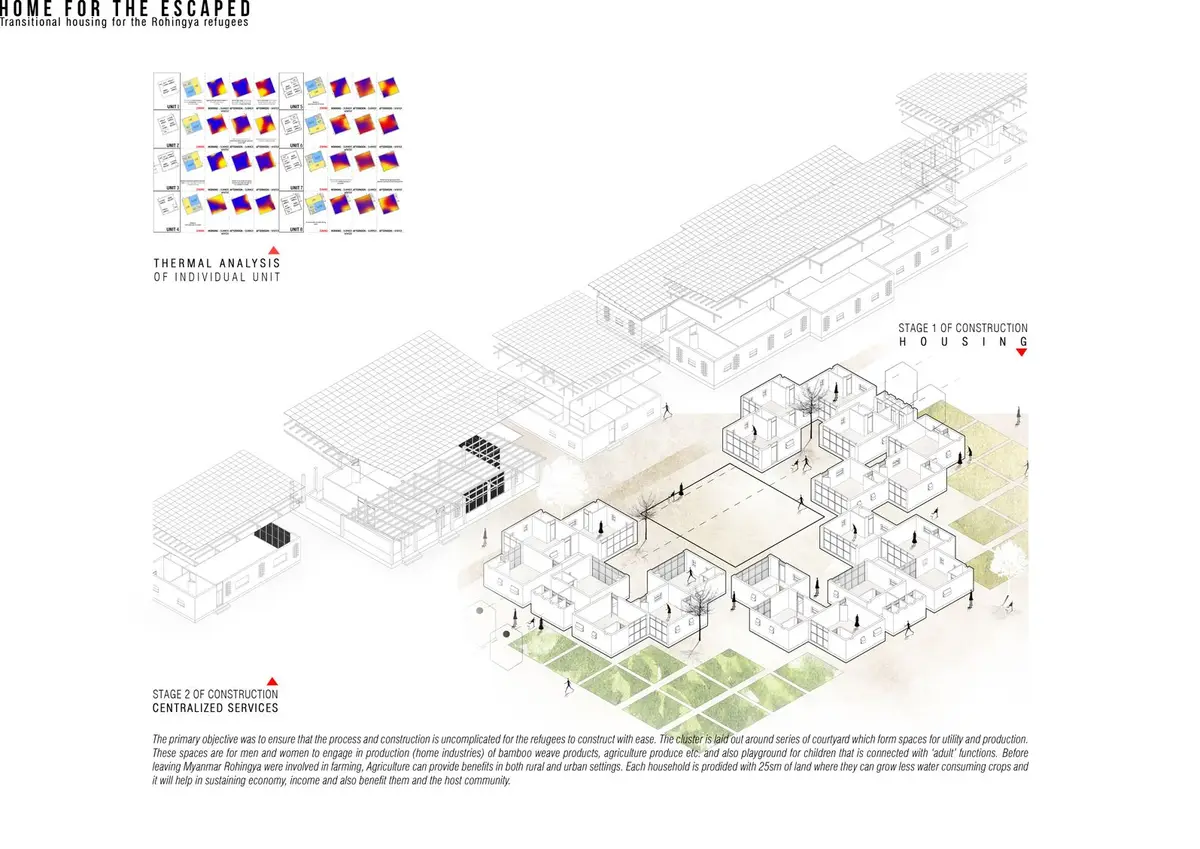
The settlement is developed in two stages:
- Stage One: Housing built by refugee families
- Stage Two: Centralized community services and shared infrastructure
This phased approach ensures immediate shelter while enabling long-term community development.
Economic and Social Impact
A defining feature of the proposal is its economic model. Instead of outsourcing construction, refugees are paid to build, creating income during displacement. Upon resettlement or relocation, families can sell their homes back to the system, allowing housing to be reused for other vulnerable populations.
This cycle positions refugees as contributors to the host country rather than a burden, reinforcing social integration and economic value.
Home for the Escaped redefines refugee shelter design through the lens of transitional housing architecture: one that is humane, adaptable, and deeply rooted in cultural and social realities. By empowering refugees as builders, preserving vernacular knowledge, and enabling long-term growth, the project offers a scalable and dignified model for displaced communities worldwide.
In a global context where displacement is increasingly prolonged, this project demonstrates how architecture can move beyond emergency response to create environments of healing, identity, and hope.
Project Name: Home for the Escaped, Transitional Housing for Rohingya Refugees
Architect: Denis Raj
Award: Winner, UnIATA 2018


Popular Articles
Popular articles from the community


Singing Woman: Contemporary Architecture Inspired by Estonia’s Voice and the Sea
Singing Woman turns Estonia’s song culture into flowing opera house architecture, blending public life, landscape, sea, and national memory.
Opera on the Sea: Driftwood Logic Shapes a Timber Opera House on Estonia's Coast
Trevor Orgill's opera house translates the entangled drift of floating timber into a civic building where wood, water, and music converge.
Faces of the Soviet Avant-Garde: Turning Moscow's Street Names into an Open-Air Museum
A network of sculptural installations across a Moscow residential district transforms forgotten architect names into spatial encounters with cultural memor

Cloaked Colonization: A Mobile Underwater Habitat That Moves Like a Fish
Micah Abaya's shortlisted EHC Pacific entry reimagines ocean settlement as a dispersed network of self-sustaining architectural organisms.

Similar Reads
You might also enjoy these articles

Maya Harvest: A Cacao Resort Village Rooted in Mayan Tradition and Local Craft
Situated within a Tabasco cacao plantation, this shortlisted resort proposal merges vernacular materials with hands-on cultural immersion.
Harmonia: A River-Shaped Community That Grows Over Decades in Boa Vista
Curved pathways and modular grid structures along the Branco River create a phased settlement designed to evolve from 2030 to 2050.
The Architecture of Bathing: A Mughal Hammam Reimagined Across the Yamuna
Charlotte May's honorable mention entry for The Black Taj reinterprets Agra's bathing rituals through red sandstone, water, and framed views of the Taj Mah
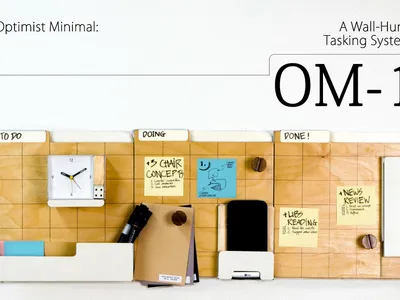
Om-1: A Wall-Hung System That Moves Your Workspace Off the Desk
Modular plywood boards, magnetic pegs, and utility elements migrate clutter from the horizontal surface to the vertical plane.

Explore Refugee Camp Competitions
Discover active competitions in this discipline

Challenge to reimagine the Iron Throne

Photograph architecture without architects

Illustrate the lost glory of Angkor Wat - Render Challenge

Design challenge to reuse E-waste
Comments (0)
Please login or sign up to add comments
No comments yet. Be the first to comment!