
Hotel Eterna by Arista Cero: A Contemporary Tribute to Mayan Cosmology in the Heart of Tulum
Hotel Eterna blends Mayan cosmology, tropical vegetation, and sustainable materials into a serene, volumetric boutique hotel experience in Tulum.

Location: La Veleta, Tulum, Quintana Roo, Mexico Architects: Arista Cero Lead Architects: Claudia Aguilar, André Borges, Mario Gonzalez Project Area: 1,400 m² Completion Year: 2022 Photography: © Tamara Uribe
Nestled in the lush tropical surroundings of La Veleta in Tulum, Hotel Eterna by Arista Cero reimagines boutique hospitality through a design deeply rooted in Mayan cosmology, material authenticity, and spatial hierarchy. Designed with a meditative interplay between earth and sky, the hotel’s architecture draws inspiration from ancient Mayan worldview—where physical and spiritual realms are intertwined.
Spatial Concept: Four Volumes, Infinite Experiences
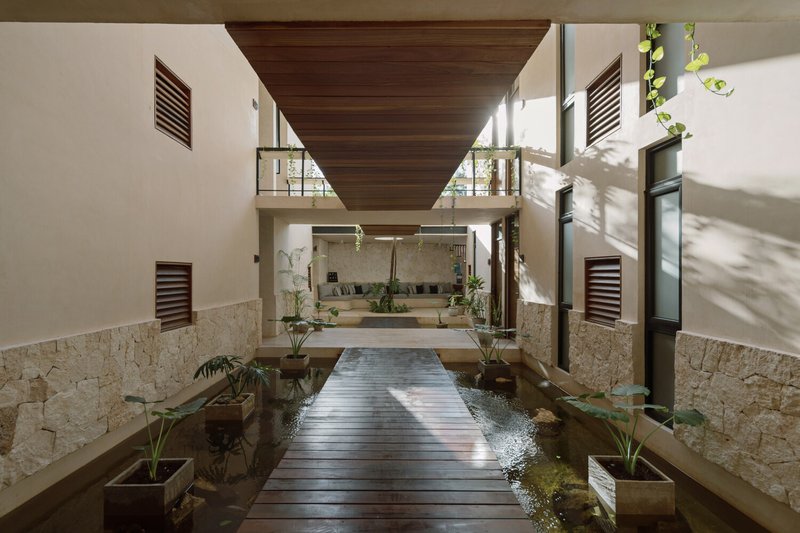
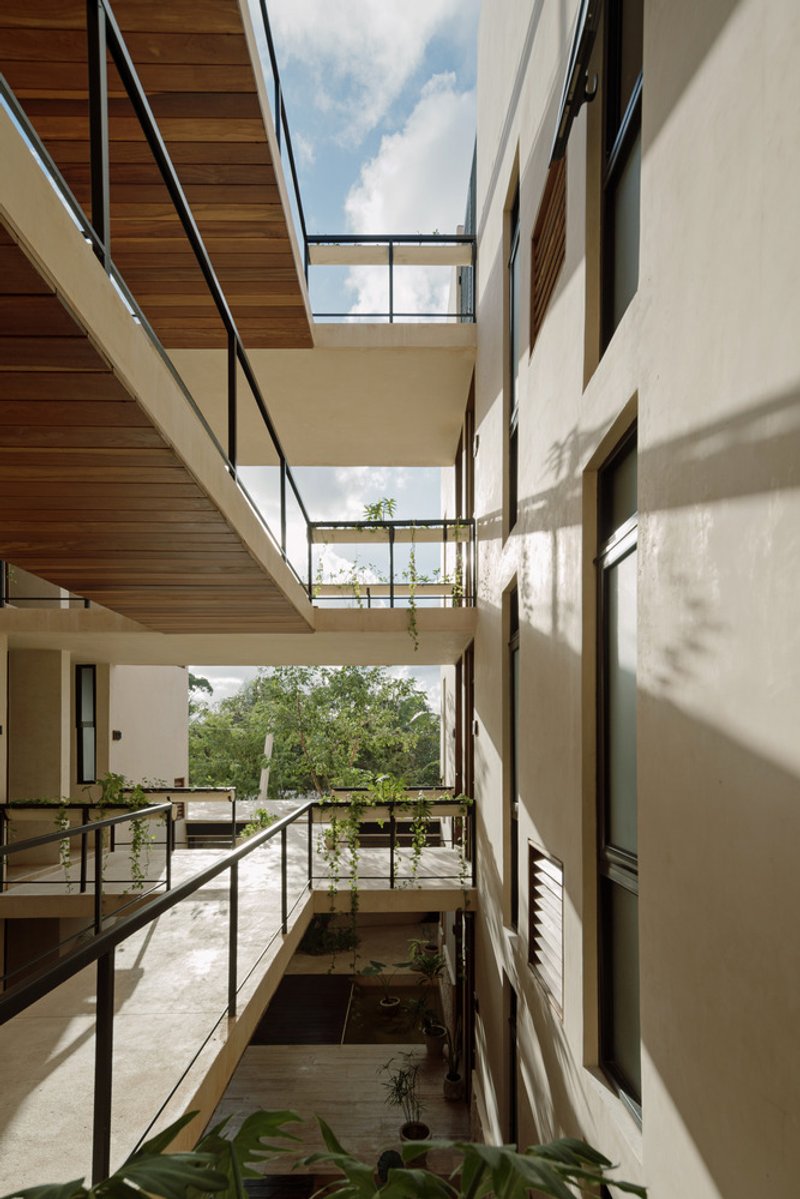
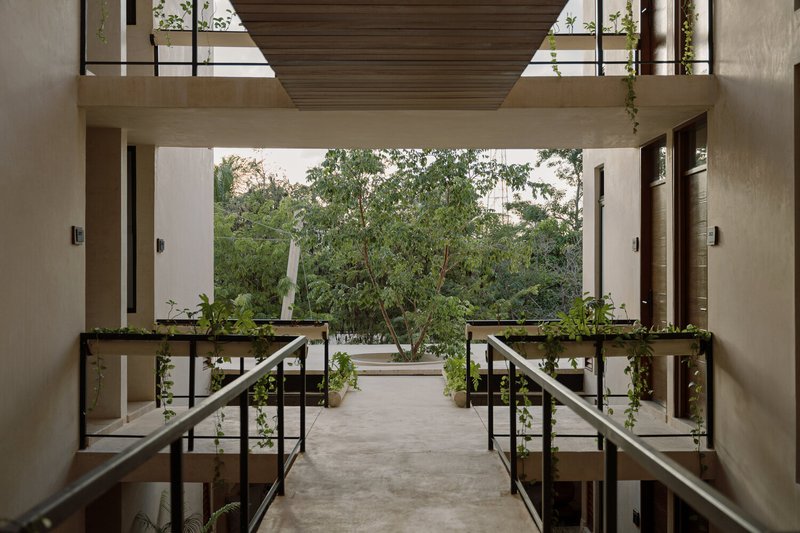
The architectural concept of Hotel Eterna is based on the intersection of one horizontal and three vertical volumes. These structures span the site widthwise, creating in-between voids that serve as transitional spaces—blurring boundaries between the public and private, the solid and porous, and the built and natural. This layout enables rich circulation paths and layered spatial narratives.
A Native Garden Reimagined
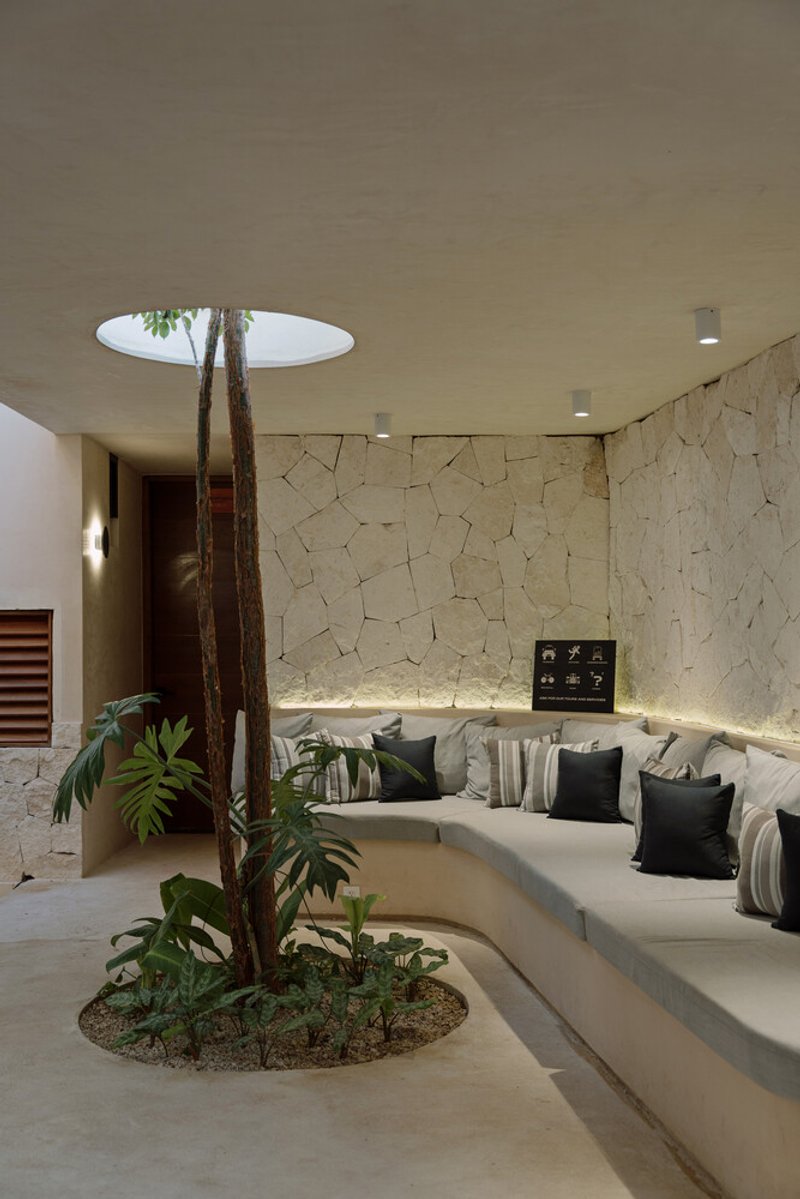
The site’s tropical vegetation—featuring endemic trees and low brush—was preserved and reintegrated throughout the project. Trees were carefully transplanted to form shaded courtyards and green buffers, enabling Hotel Eterna to blend harmoniously with Tulum’s ecological landscape. A prominent Jabín tree anchors the open-air entrance plaza, inviting guests into a serene journey of spatial exploration.
Circulation and Connection: A Vertical Symphony
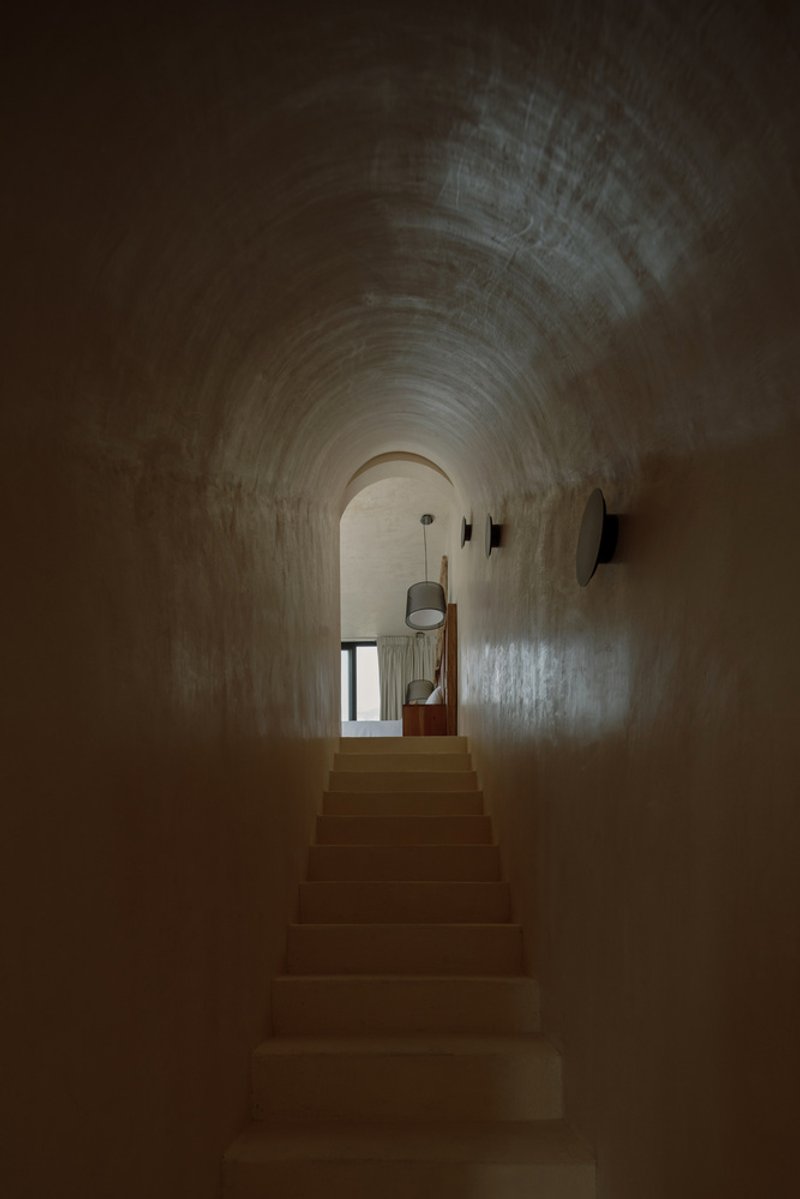
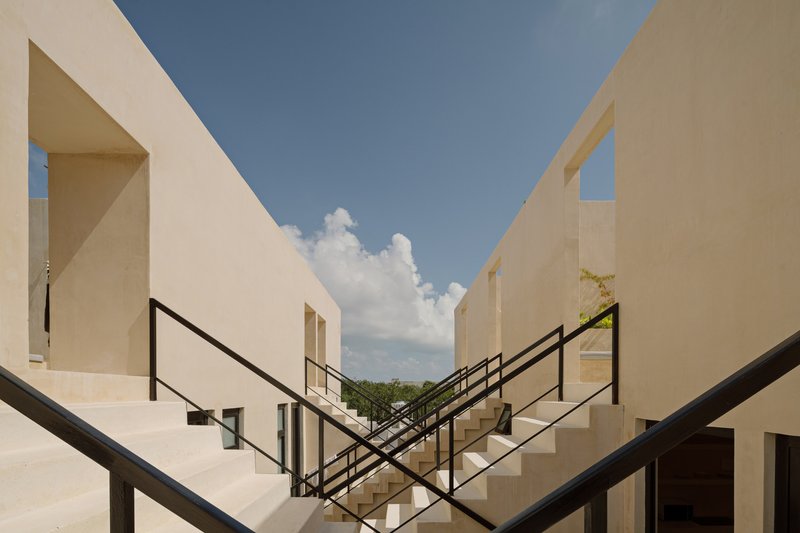
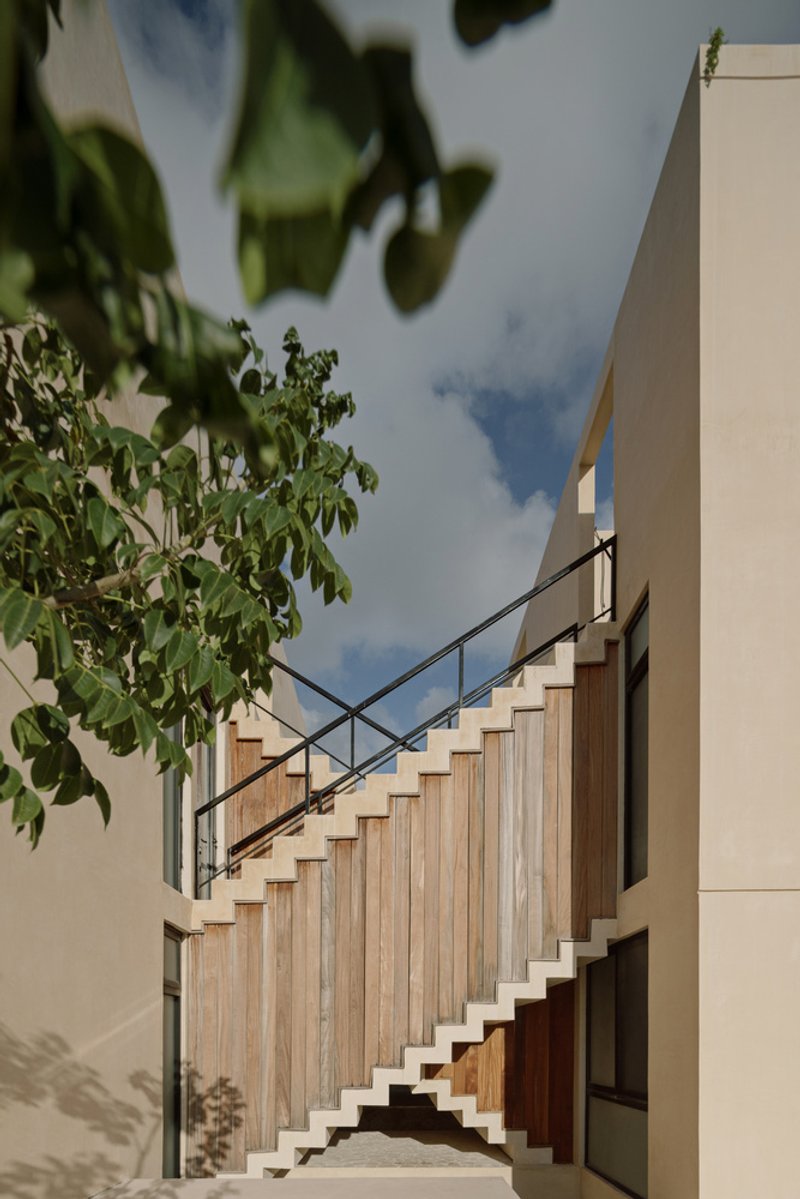
The access axis channels movement toward the horizontal base volume, which houses the main operational, public, and private functions. This horizontal body is interlaced with vertical circulation paths—including open-air staircases and vaulted connectors—that link all suites across four levels.
The project accommodates 25 suites arranged across five typologies:
- Ground Floor Suites (7): Offer direct access to private gardens and pools, ideal for grounded relaxation.
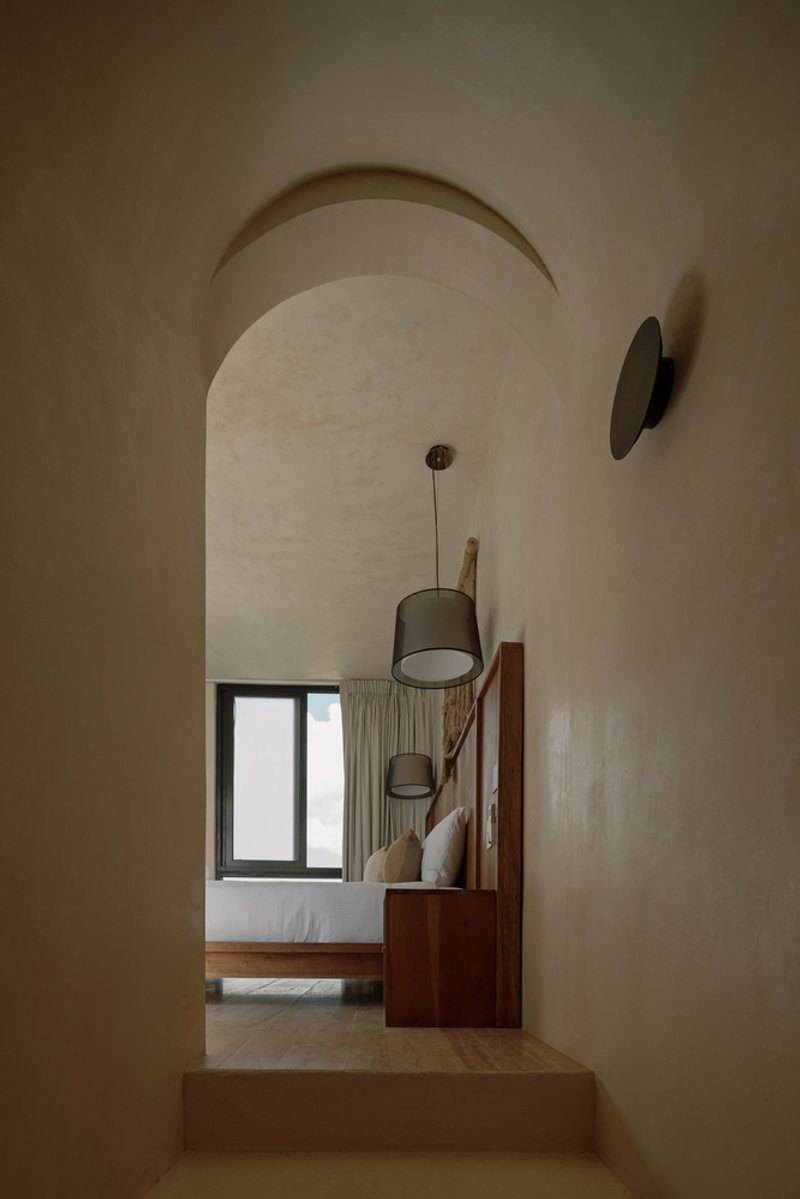
- First Level Suites (8): Feature private terraces and balconies overlooking the verdant jungle. Some are linked vertically to higher floors, allowing a sectional separation between social and private zones.
- Second Level Suites (8): Showcase dynamic volumetric overlaps, engaging with balconies and shared platforms.
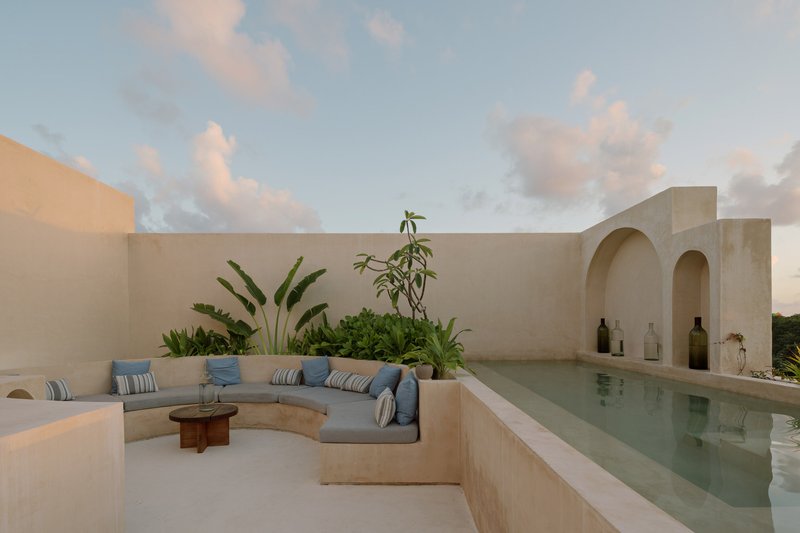
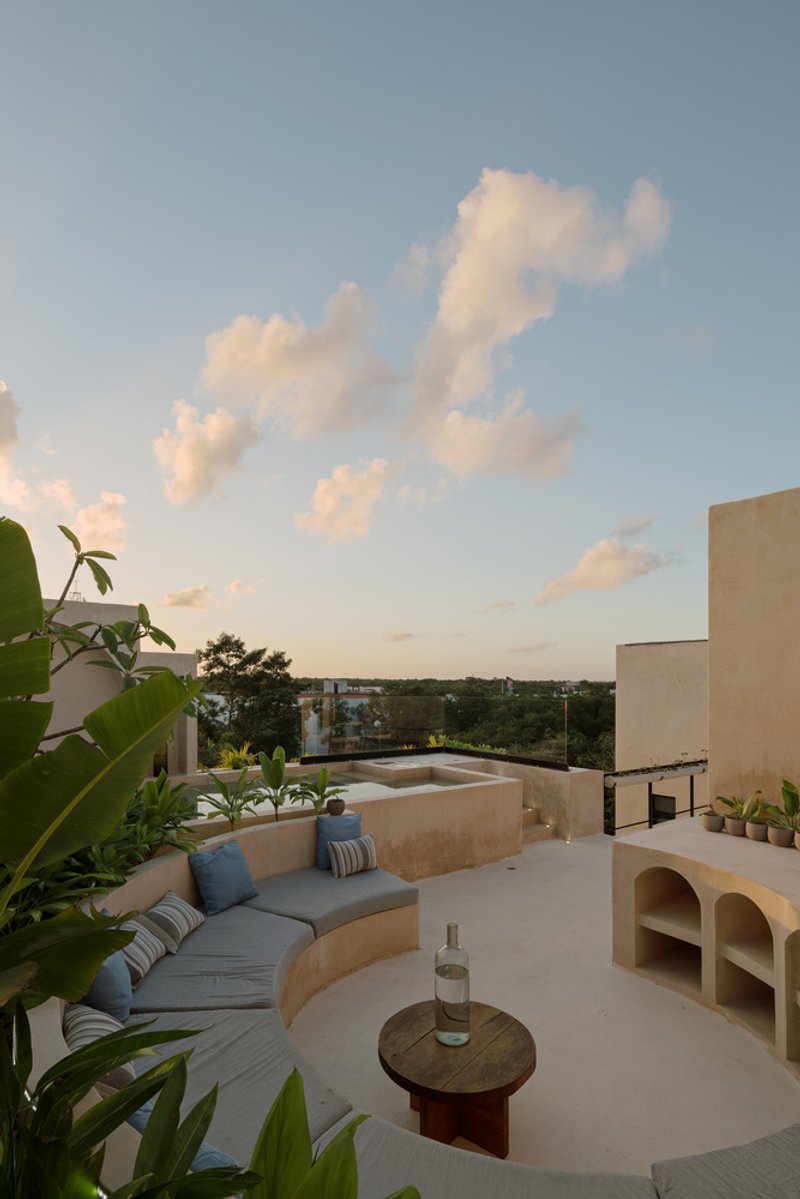
- Third Level Suites: Interconnected units with private terraces and pools; the level also features a communal rooftop pool and observatories with panoramic views of the Mayan forest and night sky.
Materials and Atmosphere: Lightness Meets Solidity
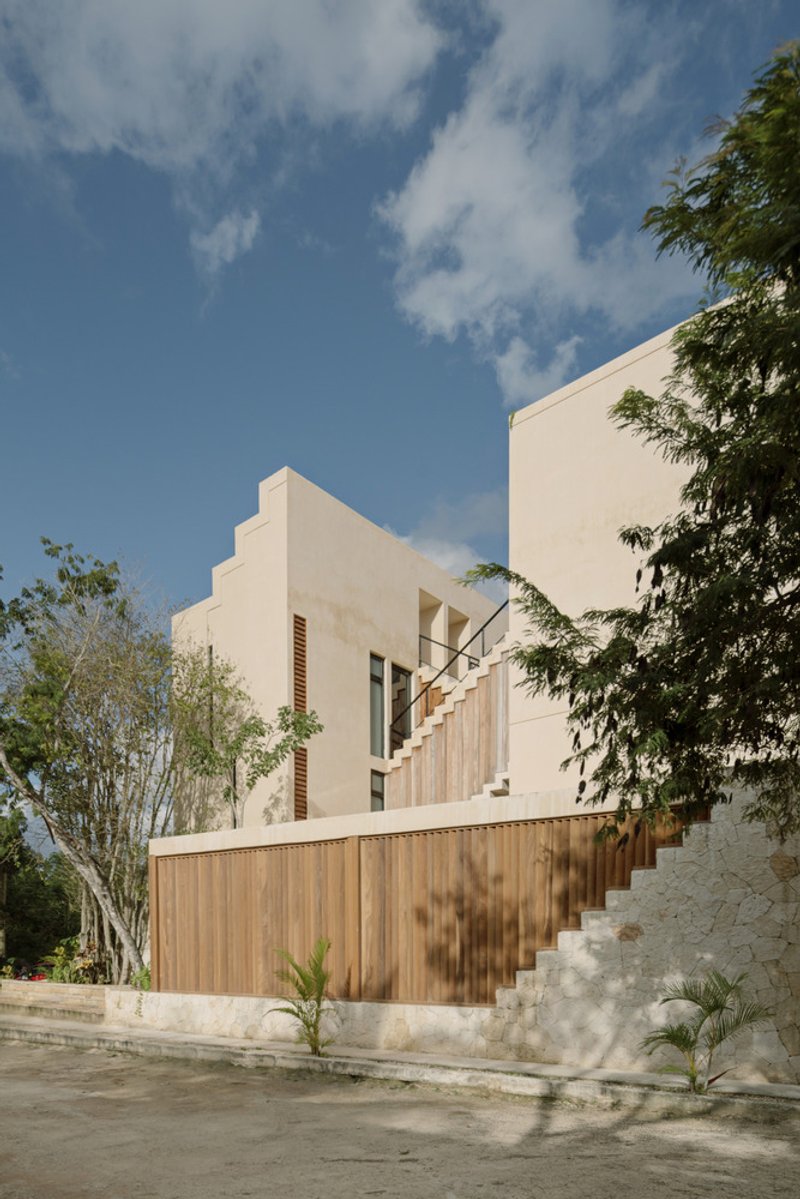
Locally sourced materials define the hotel’s aesthetic character and sensory atmosphere. The horizontal volume is clad in Mayan stone, anchoring the structure with a strong sense of groundedness, while the vertical volumes are coated in chukum plaster, a traditional Mayan lime-based finish that evokes lightness and ethereal texture.
Complementing the stone and plaster is warm native wood, used in staircases, railings, and façade elements. These materials create a tactile and cohesive dialogue with the surrounding environment, reinforcing the hotel’s regional identity and eco-conscious ethos.
Experiential Highlights
- Rooftop Observatory: Stargazing and immersion in the celestial, celebrating the Mayan reverence for the cosmos.
- Garden-to-Room Integration: Lush greenery extends into private terraces, creating a fluid indoor-outdoor experience.
- Crafted Material Palette: Honoring Yucatán’s artisanal heritage through chukum, stone masonry, and woodworking.
- Sustainable Landscaping: A minimal-impact strategy that prioritizes existing vegetation and site regeneration.
Hotel Eterna by Arista Cero isn’t merely a hospitality project—it’s a spatial narrative that connects guests to Mayan philosophy, nature, and the experiential richness of Tulum. Through its volumetric interplay, sustainable materials, and reverence for context, it offers a contemporary yet timeless retreat grounded in cultural memory and architectural excellence.




Popular Articles
Popular articles from the community

Free Architecture Competitions You Can Enter Right Now
No entry fees, real prizes. Here are the best free architecture competitions open for submissions in 2026.

Magic Box Office Barcelona Innovative Sustainable Workplace Design
Innovative sustainable office design featuring triangular form, ceramic façade, flexible interiors, natural light optimization, and creative workspace for modern work culture.
Alton Cliff House: A Harmonious Retreat by f2a Architecture in Lake Country, Canada
Alton Cliff House blends corten steel, prefabrication, and sustainable design, creating a luxurious, energy-efficient retreat perched on Canadian cliffs.

Filtering Space: A Gradual Spatial Experience
From urban intensity to spatial calm.


Similar Reads
You might also enjoy these articles
Filtering Space: A Gradual Spatial Experience
From urban intensity to spatial calm.


The Ken Roberts Memorial Delineation Competition (Krob)
As the most senior architectural drawing competition currently in operation anywhere in the world, it draws hundreds of entries each year, awarding the very best submissions in a series of medium-based categories.

Waterfront Redevelopment and Urban Revitalization in Mumbai: Forging a New Dawn for Darukhana
A transformative waterfront redevelopment project reimagining Darukhana’s shipbreaking heritage into an inclusive urban future.

OUT-OF-MAP: A Call for Postcards on Feminist Narratives of Public Space
Rhizoma Design and Research Lab invites artists, designers, architects, researchers, and students to reflect on how feminist perspectives can reshape public space. Selected works will be exhibited in Barcelona, October 2026. Submissions open until 15 April 2026.


Explore Architecture Competitions
Discover active competitions in this discipline




The International Standard for Design Portfolios


The Global Benchmark for Architecture Dissertation Awards


The Global Benchmark for Graduation Excellence


Challenge to reimagine the Iron Throne
Comments (0)
Please login or sign up to add comments
No comments yet. Be the first to comment!