
House Follia By Biazus Arquitetura, Porto Alegre, Brazil
A bold Brazilian residence defined by a floating concrete volume, raw materials, refined detailing, and sensory spatial experiences connected to landscape.

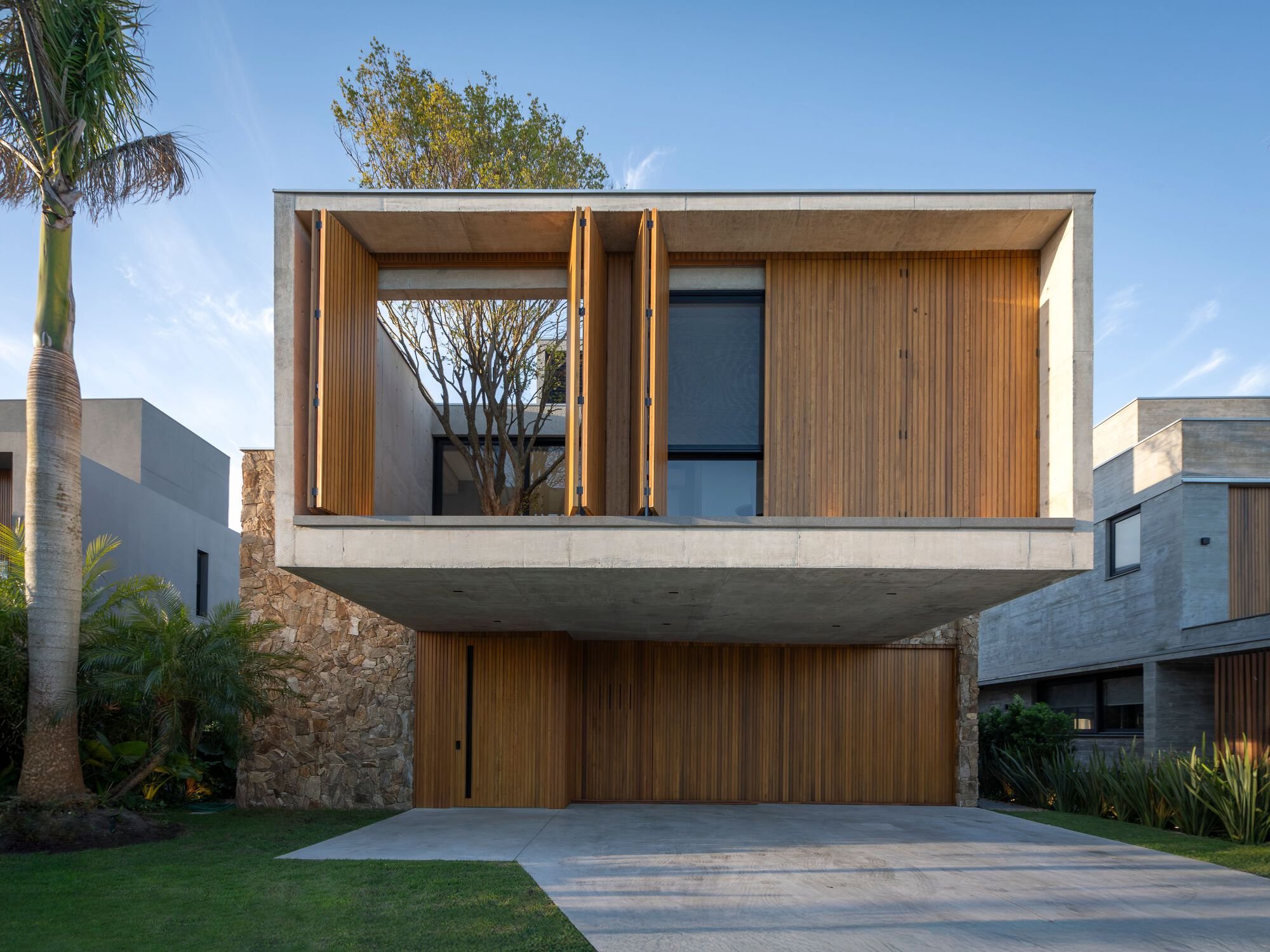
House Follia, designed by Biazus Arquitetura in Porto Alegre, Brazil, is an expressive example of contemporary residential architecture where structural rigor, material honesty, and sensory experience converge. Completed in 2024, the 420-square-meter residence explores the contrast between lightness and solidity, combining a robust ground-level base with a striking suspended concrete volume above. The project reflects an architectural approach rooted in simplicity, precision, and durability—designed to endure both physically and conceptually for decades.
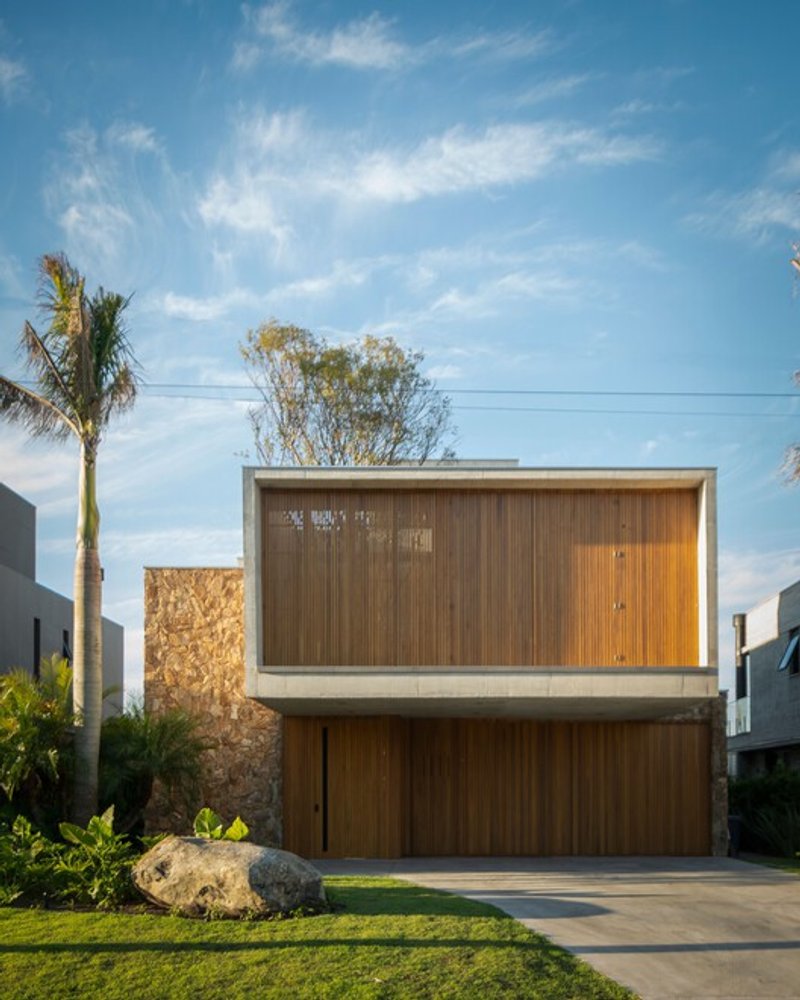
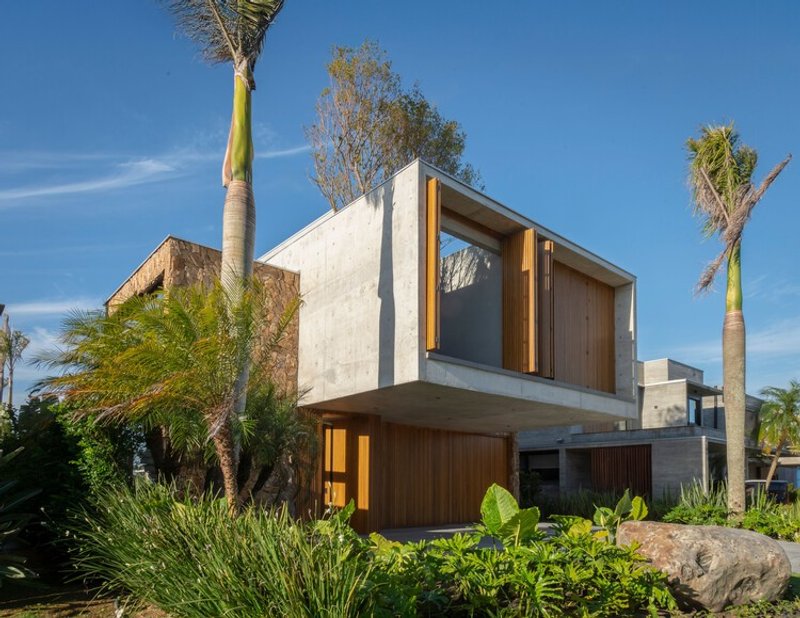
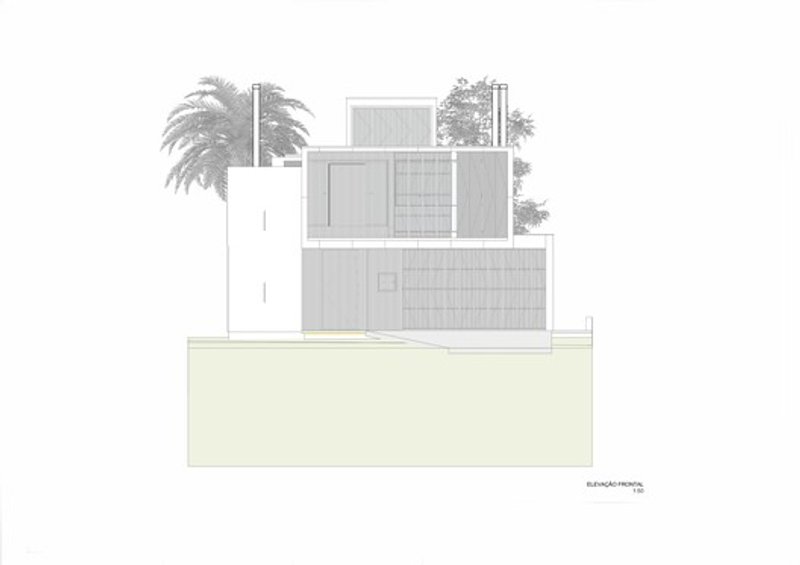
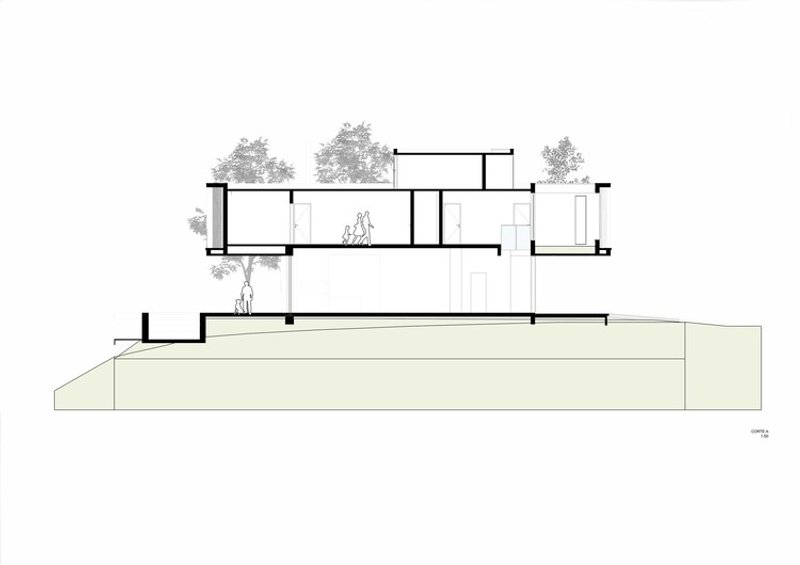
The house is defined by a clear formal strategy: a solid base anchors the building to the site, while a pure exposed-concrete box hovers above, extending dramatically toward the front and rear through generous cantilevers. This lightweight upper volume, despite its apparent mass, creates a sense of balance and tension that gives the residence its distinctive identity. Achieving this effect required meticulous structural engineering and total control over every phase of the construction process.
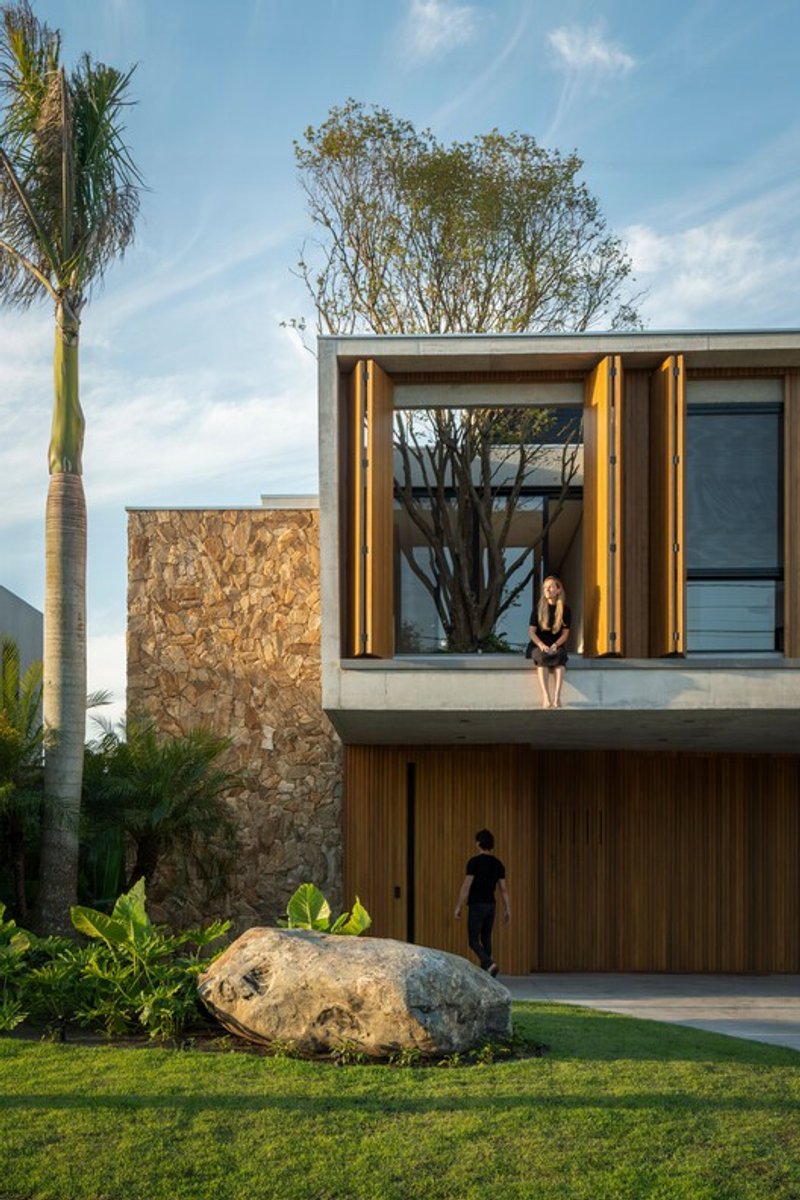
The execution of the upper floor presented significant technical challenges. The monolithic concrete box demanded precise coordination of concrete formulation, formwork assembly, structural modulation, and on-site execution. From pouring and curing to demolding, each step had to be flawlessly managed, as exposed concrete leaves no margin for error. Any imperfection would have required the entire process to be dismantled and restarted. The final result is a refined, seamless concrete volume that expresses both technical mastery and architectural clarity.
Rather than relying on an imposing façade, House Follia emphasizes the refinement of lived experience. The architecture is designed to engage the senses through light, shadow, texture, and material contrast. Pure, raw materials—exposed concrete, natural stone, and wood—create a strong connection to nature while challenging conventional perceptions of weight, comfort, and domesticity. Slender proportions and honest construction generate a subtle paradox: a home that feels simultaneously robust and delicate.
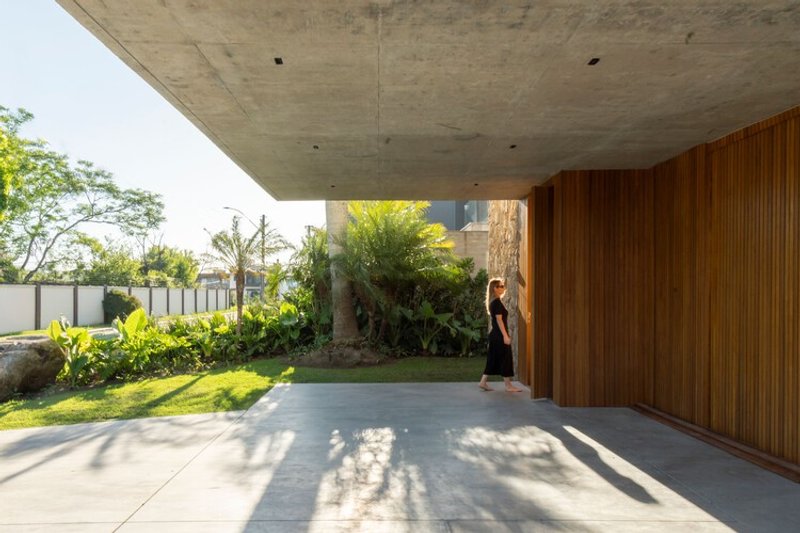
The interplay of form and light is central to the project. Carefully shaped volumes create dynamic shadows throughout the day, enriching interior and exterior spaces. Landscaping is fully integrated into the architectural composition, blurring the boundaries between inside and outside. A natural wood brise-soleil wraps portions of the façade, providing privacy, controlling direct sunlight, and allowing cross-ventilation and filtered daylight to permeate the interiors.
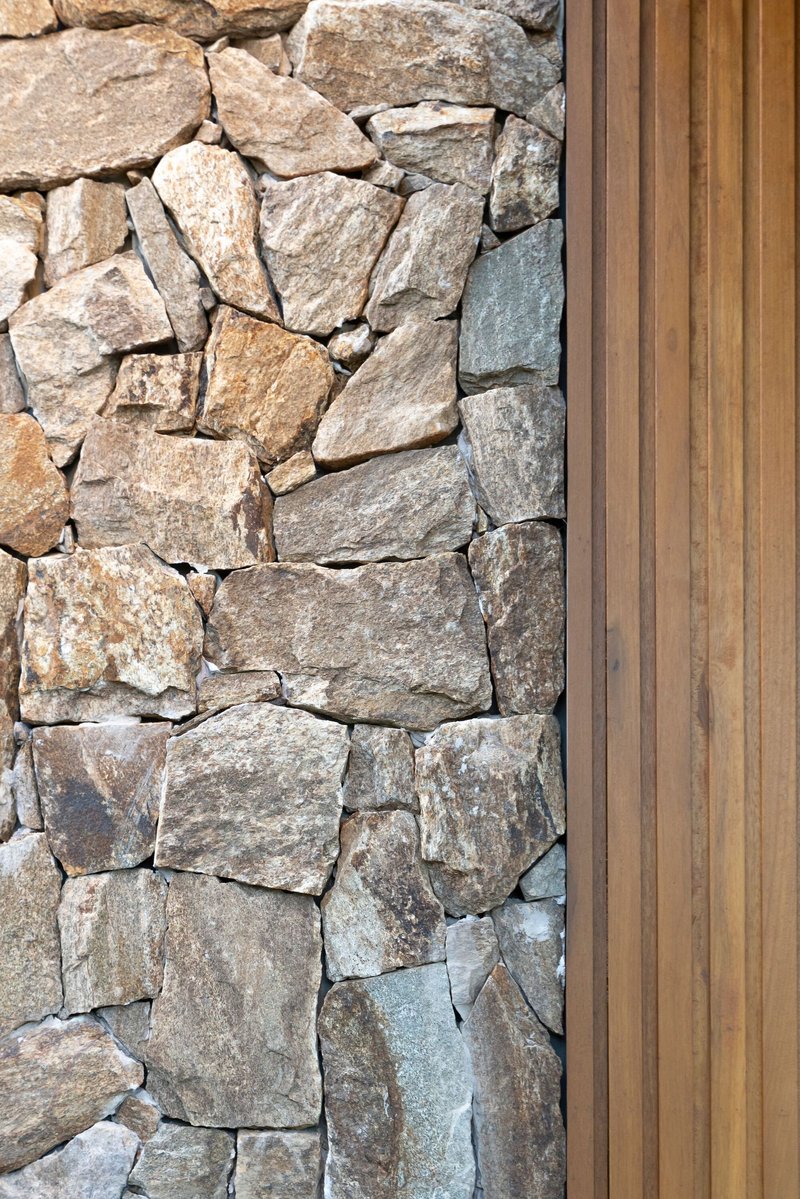
At ground level, the house rests on a more conventional structural system of masonry and reinforced concrete. This base is clad in natural cobblestone, reinforcing the project’s material concept and grounding the building within its context. The contrast between the textured stone base and the smooth exposed concrete above strengthens the perception of the upper volume as a floating element.
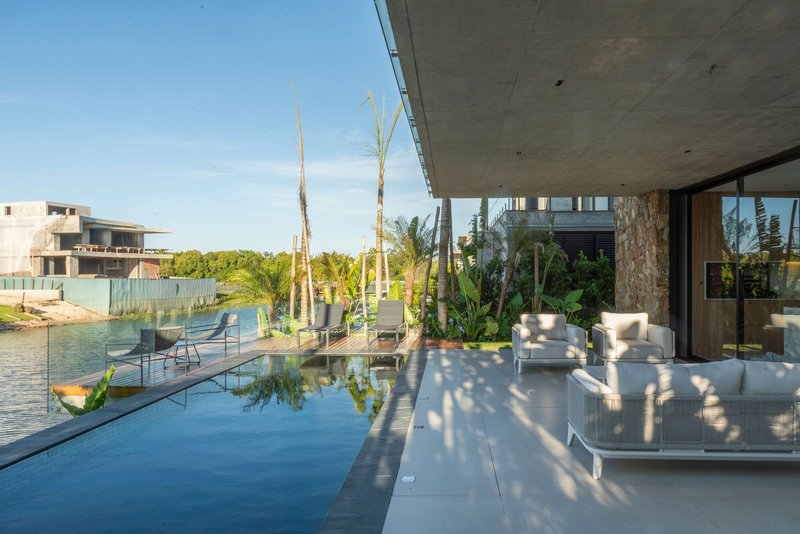
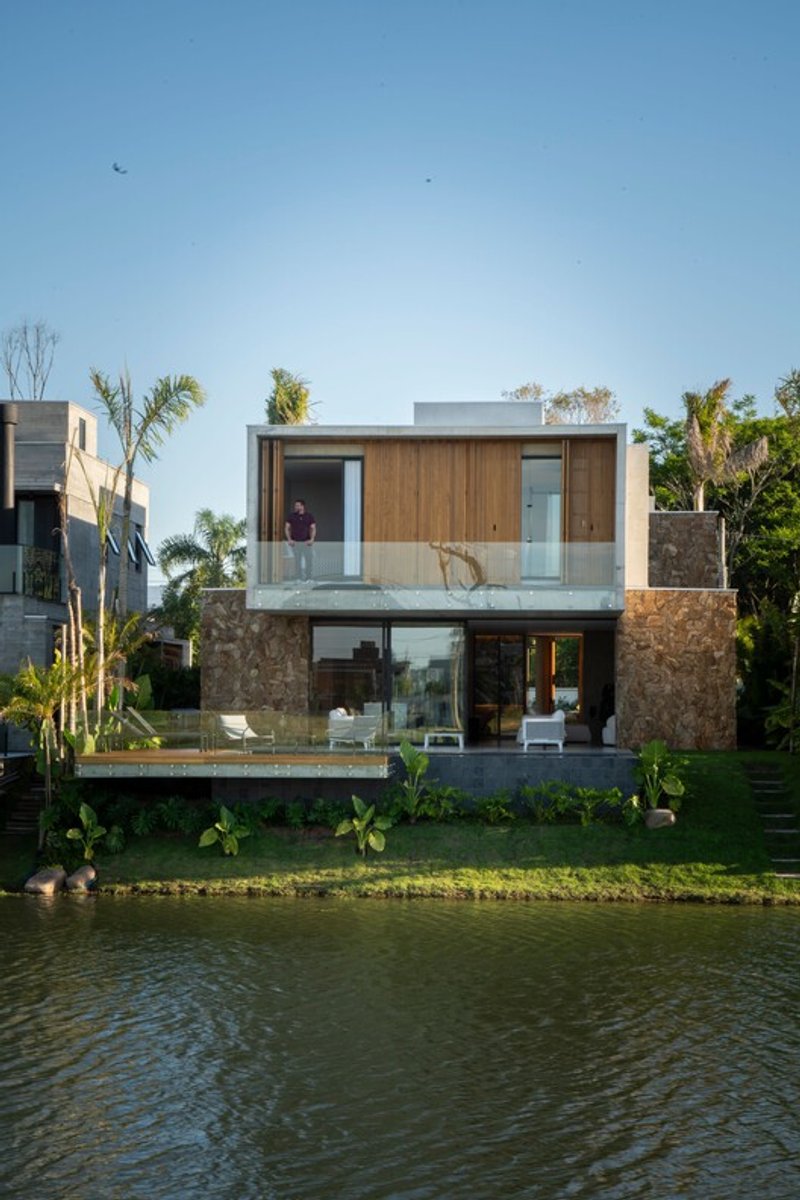
The rear of the house opens toward a canal, where views were carefully prioritized in the spatial layout. The pool, balcony, and upper-level master suite are oriented to fully capture this landscape, enhancing the sense of retreat and visual continuity with the outdoors. Large openings frame the water and greenery, bringing natural light deep into the interior.
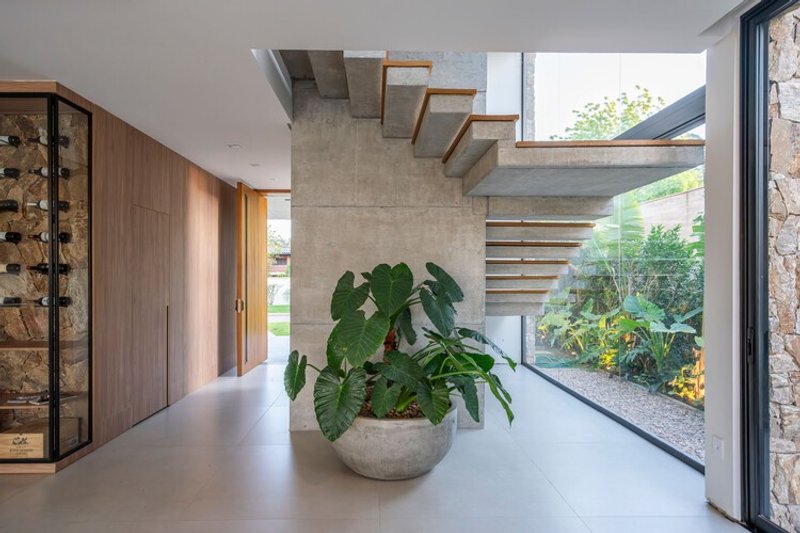
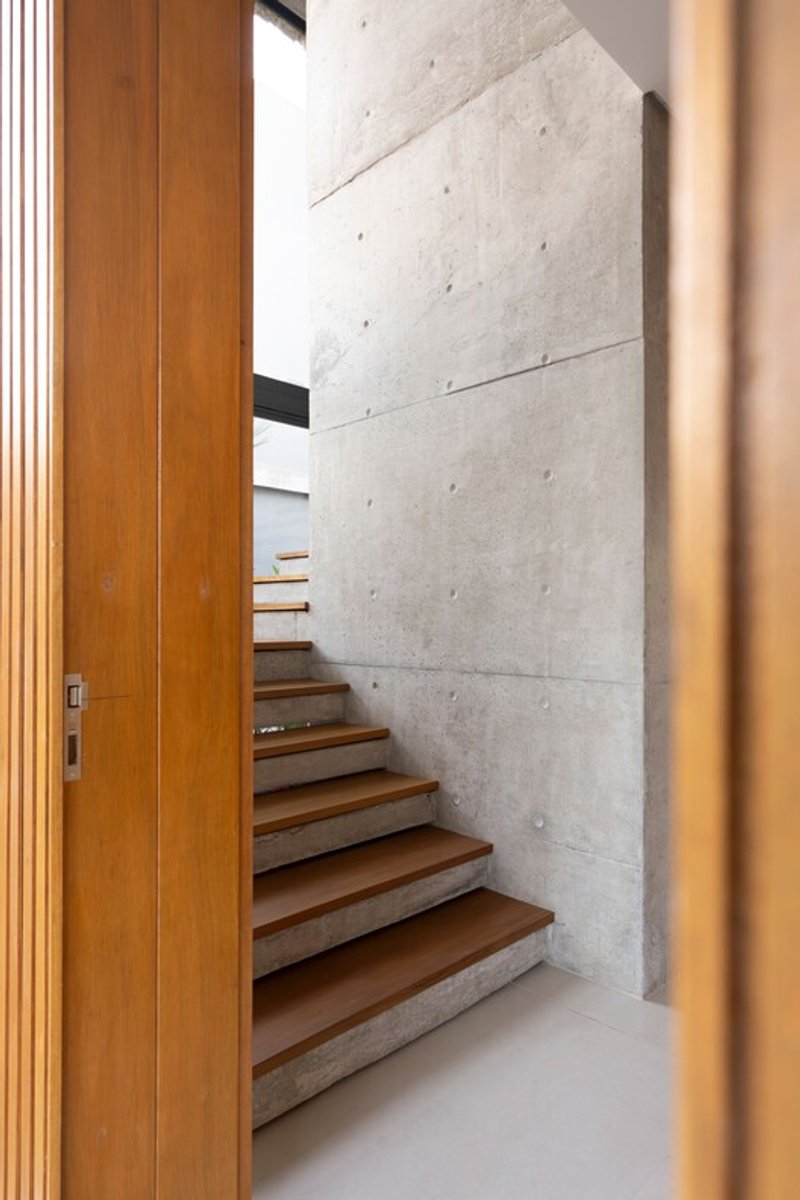
Inside, one of the most striking architectural elements is the sculptural staircase. Rising around the elevator shaft, the stair is conceived as a monolithic exposed-concrete structure, softened by natural wood cladding on the treads. This combination of raw concrete and warm wood is echoed in other interior features, including the fireplace, reinforcing material continuity throughout the house.
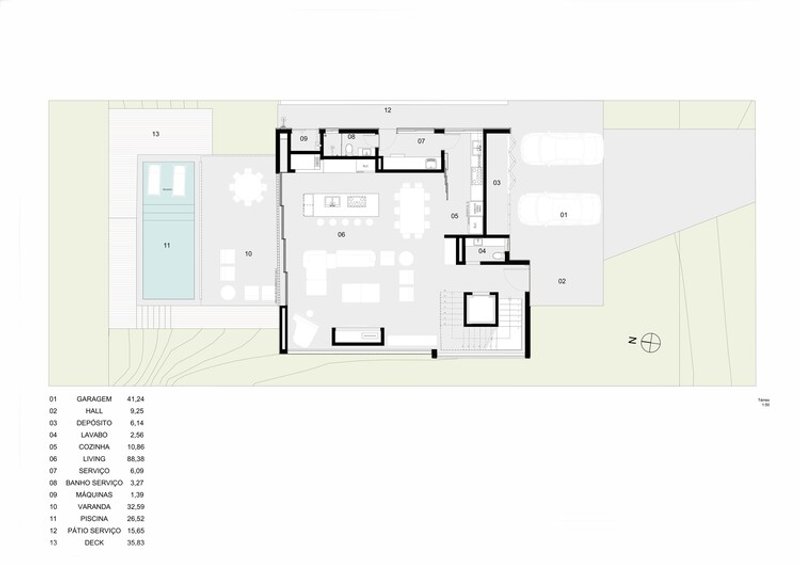
The floor plan is organized around clarity and integration. The entrance leads to a central circulation core containing the staircase, elevator, and powder room. From here, the space opens into a fully integrated living area with expansive views toward the lake. The open kitchen and dining area flow seamlessly into the living room and extend onto the rear balcony, creating a continuous social space ideal for hosting and daily living. A pantry, service area, and bathroom complete the functional program on the ground floor.
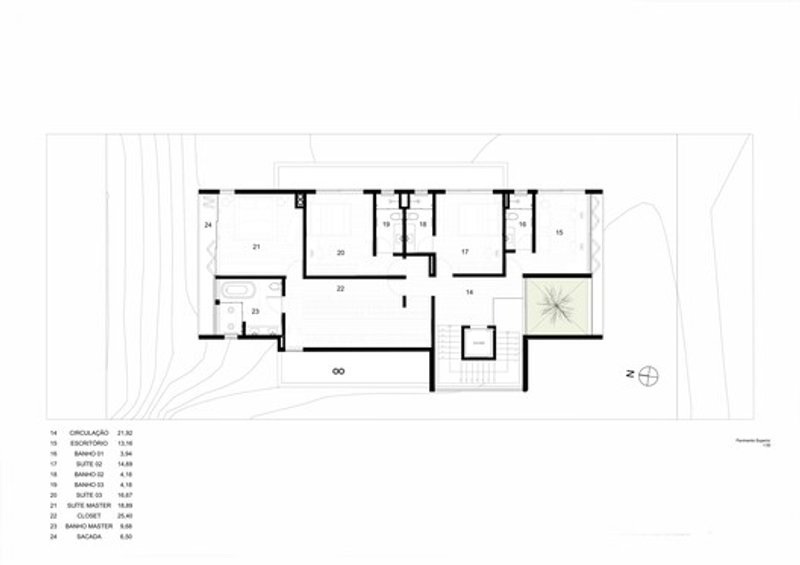
The upper level accommodates three suites, including a spacious master suite overlooking the canal, as well as a dedicated home office—responding to contemporary living and working patterns. Privacy and comfort are balanced with openness, ensuring each space benefits from natural light, ventilation, and views.
House Follia stands as a refined exploration of contemporary Brazilian residential architecture. Through its disciplined use of materials, structural boldness, and attention to sensory experience, the project demonstrates how simplicity, when executed with precision, can produce architecture of lasting impact and quiet sophistication.
All the photographs are works of Cristiano Bauce




Popular Articles
Popular articles from the community

Gads Hill Early Learning Center by JGMA: Adaptive Reuse Shaping Community-Focused Educational Architecture
Adaptive reuse transforms fragmented structure into vibrant early learning center with playful façade, natural light, and community-focused sustainable design.
Inverted Architecture Installation by Studio Link-Arc: Exploring the Intersection of Architecture and Living Organisms
Inverted Architecture Installation by Studio Link-Arc blends mycelium, sustainability, inverted design, ecological cycles, and urban adaptive architecture in Shenzhen.
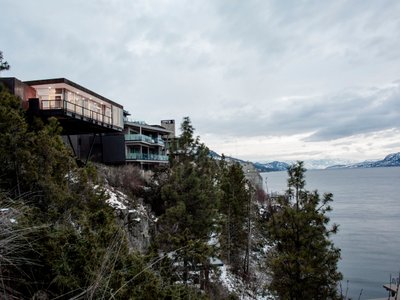
Alton Cliff House: A Harmonious Retreat by f2a Architecture in Lake Country, Canada
Alton Cliff House blends corten steel, prefabrication, and sustainable design, creating a luxurious, energy-efficient retreat perched on Canadian cliffs.
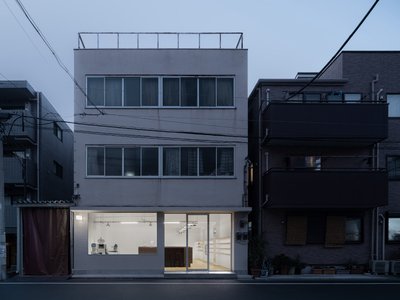
Atelier Macri Concept Store Interior Design by CASE-REAL
Atelier Macri store features a "ko" counter, walnut wood details, cork displays, blending retail, gallery, and seamless customer experiences.


Similar Reads
You might also enjoy these articles


The Ken Roberts Memorial Delineation Competition (Krob)
As the most senior architectural drawing competition currently in operation anywhere in the world, it draws hundreds of entries each year, awarding the very best submissions in a series of medium-based categories.


Waterfront Redevelopment and Urban Revitalization in Mumbai: Forging a New Dawn for Darukhana
A transformative waterfront redevelopment project reimagining Darukhana’s shipbreaking heritage into an inclusive urban future.

OUT-OF-MAP: A Call for Postcards on Feminist Narratives of Public Space
Rhizoma Design and Research Lab invites artists, designers, architects, researchers, and students to reflect on how feminist perspectives can reshape public space. Selected works will be exhibited in Barcelona, October 2026. Submissions open until 15 April 2026.


Documentation Work on Buddhist Wooden Temple
Architectural syncretism and cultural hybridity: A comparative study of the Buddhist temples in Chattogram Hill tracks


Explore Architecture Competitions
Discover active competitions in this discipline




The International Standard for Design Portfolios


The Global Benchmark for Architecture Dissertation Awards


The Global Benchmark for Graduation Excellence


Challenge to reimagine the Iron Throne
Comments (0)
Please login or sign up to add comments
No comments yet. Be the first to comment!