

House in Bocaina by Ana Altberg + Cesar Jordão: A Circular Retreat Embracing the Atlantic Forest
Circular forest home in Brazil by Ana Altberg and Cesar Jordão, blending sustainable materials, passive design, and immersive landscape integration.


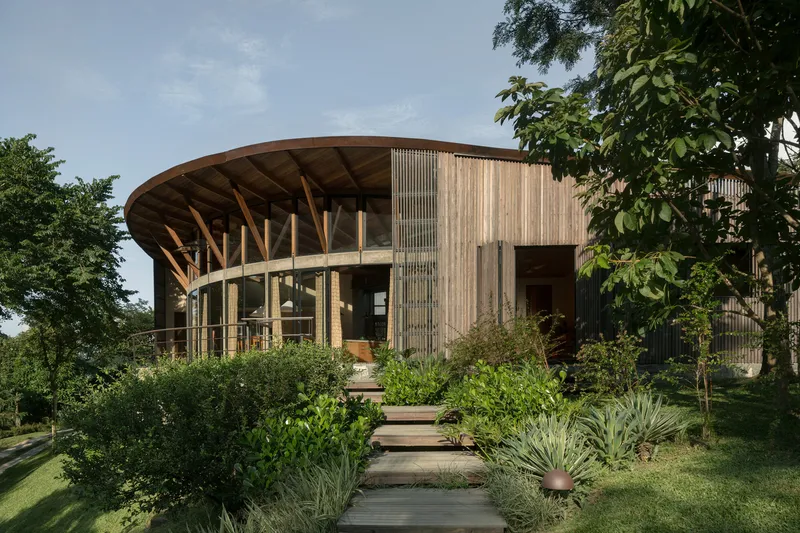
Nestled within the pristine Atlantic Forest of Serra da Bocaina, the House in Bocaina by architects Ana AltbergandCesar Jordão is a powerful architectural response to one of Brazil’s most ecologically rich landscapes. Completed in 2021 in Bananal, São Paulo, this 306-square-meter residence is designed not only as a home, but as a respectful gesture to its surrounding environment. With its circular layout, sustainable construction methods, and immersive material palette, the project explores the intersection of modern vernacular architecture and environmental stewardship.
Embracing the Landscape Through Circular Design
From the project’s inception, the architects were deeply inspired by the monumental presence of the Serra da Bocaina mountain range. The client’s initial request for a home that could “embrace the landscape” led to a rigorous design process—culminating in a unique semi-elliptical form that dissolves the boundaries between architecture and nature.
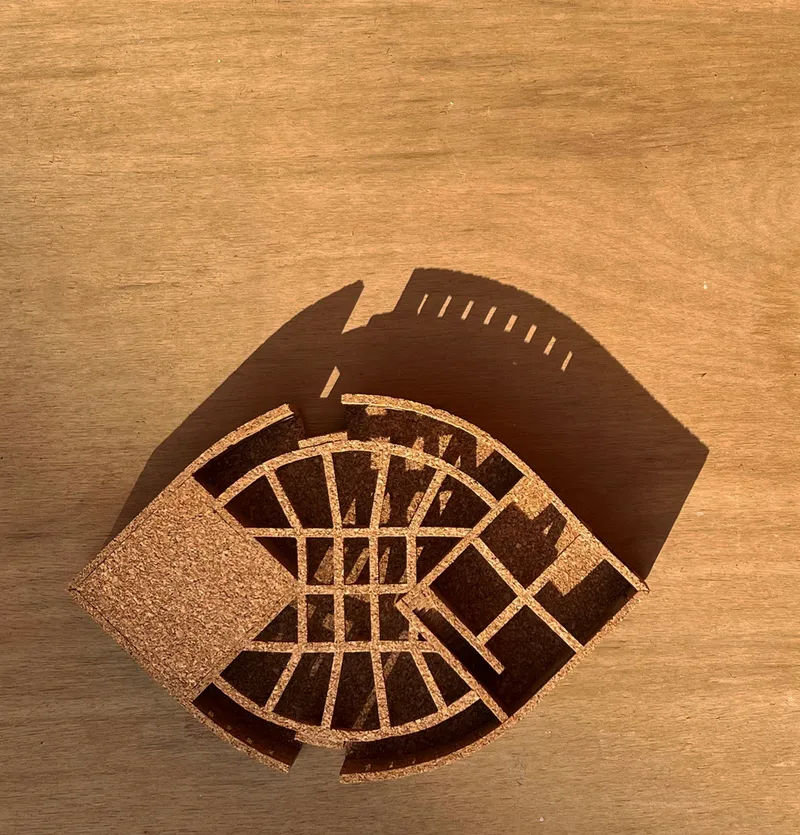
The result is a radial configuration articulated by two interlocking arcs, integrating the structure within the dense forest canopy. Two rotated and offset square volumes, connected by curved forms, house four private suites accessible from the outer verandas. At the heart of this circular plan lies the communal space—a transparent zone encompassing the kitchen, dining area, and living room, all oriented toward a dramatic central hearth constructed by local artisan Lew French using stones sourced from the region.

An Architecture of Contemplation and Climate Sensitivity
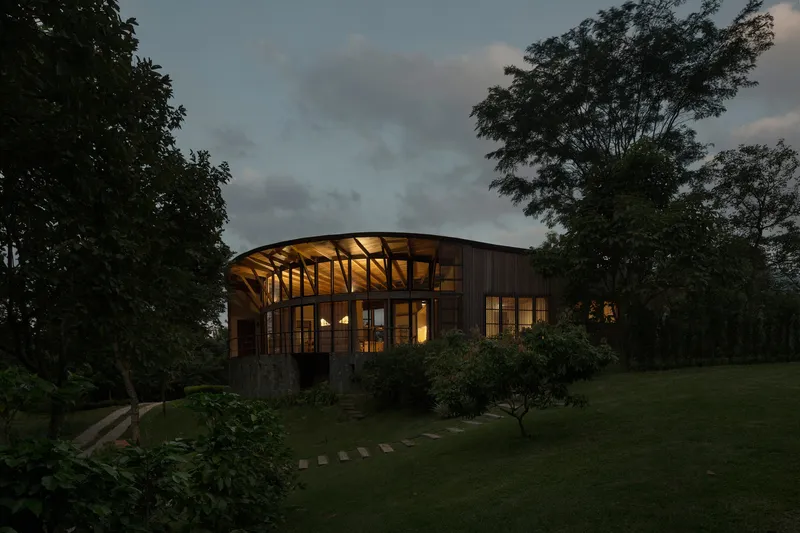
The spatial layout of the house balances openness with intimacy. The central hearth not only functions as the physical core of the residence but also anchors the experience of warmth and gathering. In contrast, the reverse-slope roof captures the surrounding mountain silhouettes, reflecting them inward and forging a visual dialogue between interior and landscape.
Lighting plays a crucial role in the house’s environmental narrative. During the day, the home opens outward, basking in natural light. At night, it turns inward, becoming a dimly lit refuge. Minimal artificial lighting gently guides movement, respecting the rhythms of the forest and minimizing disturbance to local wildlife.


Passive Strategies and Sustainable Infrastructure
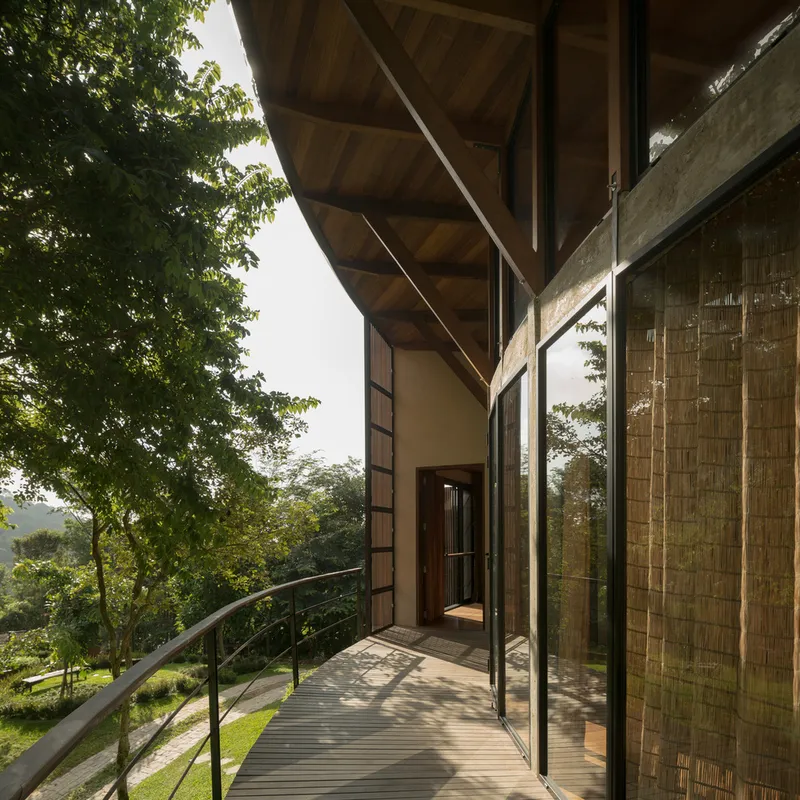
The house incorporates a variety of passive design strategies to enhance comfort while reducing environmental impact. Three east-west terraces serve as platforms for observing the surrounding mountains and starry skies. Their white stone floors reflect sunlight during the day and moonlight at night, contributing to natural illumination and cooling.
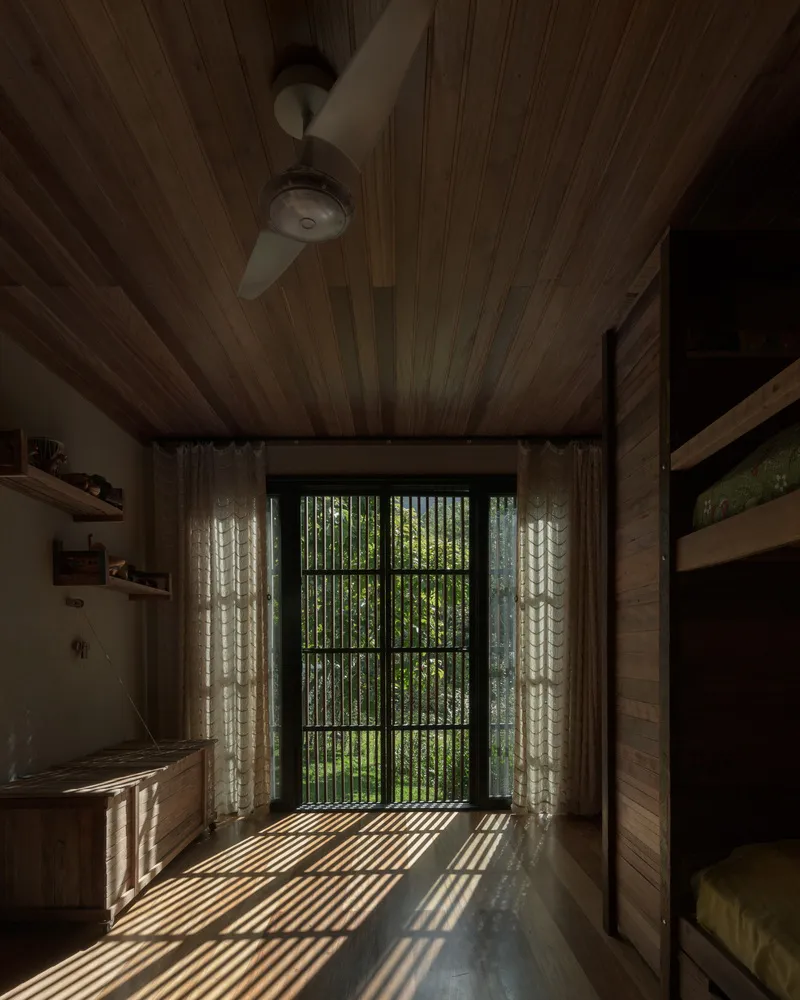
The central terrace includes a folded slab that channels indirect daylight into the home, creating an ever-changing play of shadows throughout the day. Rainwater is harvested through V-shaped mirrored gutters, collecting runoff from over 300 square meters of roof surface into a 45,000-liter underground cistern. These systems highlight the home’s resilience against climate change—particularly the region’s increasing episodes of drought and wildfire.

Ecological Building Materials and Local Craftsmanship
The structural system combines concrete, steel, and responsibly sourced wood. The suite blocks and base are constructed with reinforced concrete, while metal beams connect the volumes and support the upper terraces and roof. Great care was taken to select sustainable wood—especially in light of Brazil’s alarming rate of illegal deforestation. All structural wood, cladding, and joinery materials are either FSC-certified or sourced from forest management areas. The interior carpentry, crafted by local artisans including Marcenaria Quiari, Lumar Marcenaria, and Morito Ebine, utilizes reclaimed wood from demolitions.
The facade features Itaúba wood, known in Tupi language as a fusion of “stone” and “wood.” This hardwood slowly petrifies in the sun, developing a grey patina that enhances its weather resistance over time. Wooden brise-soleils and natural fiber curtains create layered thermal and visual filters, allowing the home to breathe and adapt with the seasons.

Integration with the Ecosystem
Built within one of the most biodiverse and ecologically significant regions of Brazil, House in Bocaina adopts regenerative principles. All waste is processed using permaculture systems—including evapotranspiration basins and banana circles—to ensure zero contamination of the soil. These ecological sanitation methods reflect the architects’ broader ambition to design for coexistence, not domination.
By merging modernist sensibilities with traditional knowledge and environmental ethics, House in Bocaina stands as a model for contemporary sustainable architecture in sensitive landscapes. It is a home that not only shelters life but honors the life surrounding it.

Project Details:
- Architects: Ana Altberg + Cesar Jordão
- Location: Bananal, São Paulo, Brazil
- Area: 306 m²
- Year: 2021
- Photography: Federico Cairoli
- Construction & Craftsmanship: Marcenaria Quiari, Lumar Marcenaria, Marcenaria Baraúna, Morito Ebine


Popular Articles
Popular articles from the community


Jaramillo Van Sluys Arquitectura and Urbanismo Turn a Demolished Registry Lot in Quito into an Orchard Plaza
In Quito's Centro Histórico, a 2,800 m² plaza exposes the San Agustín convent wall and redraws its lost Augustinian orchard in volcanic stone.

GROUP A Strips a 1969 Rotterdam Harbor Headquarters to Its Frame and Wraps It in Timber Louvers
In Rotterdam's M4H harbor district, Ferro Offices reuses a 1969 frame, adds one timber storey and reaches BREEAM-NL Outstanding.

David Ortega Stacks a Two-Story Mexico City Penthouse Around a Steel Stair and a Pergola-Shaded Roof Terrace
In Colonia Roma, a 300 m² penthouse uses oak joinery, a planted steel stair and a slatted roof pergola to make a new-build apartment feel like a house.

Architekt Andreas Gruber Scatters 23 Dark Timber Chalets Across a South Tyrolean Forest Edge
In Molini di Tures, Amonti Chalets breaks a resort into a hamlet of gabled timber houses, with parking, storage and services pushed into the slope.

Similar Reads
You might also enjoy these articles


Hodi-Mandai Geram
Project Function: Preservation and revitalization of the Intangible heritage and socio-spatial identity of the Hodi by Housing, Cultural Memory Center, Sacred Grove, landscape, local tourism economy


Olio Towers: A Mid-Rise for Performers That Fuses Housing, Rehearsal, and Stage
Located blocks from Houston's Theater District, this modular tower stacks living units around a central performance atrium.

Oasis: Modular Green Housing Carved into Dhaka's Urban Fabric
A shortlisted Plugin Housing entry reclaims unauthorized settlements in Dhaka with stepped concrete volumes, green roofs, and ventilation-driven design.

Black Hole: A Floating Megastructure for the Post-Physical Era
Emiliano Mazzarotto envisions a spherical, self-scaling arena where e-sports, digital hotels, and holographic stadiums replace traditional public space.

Explore Architecture Competitions
Discover active competitions in this discipline

Challenge to reimagine the Iron Throne

Photograph architecture without architects

Illustrate the lost glory of Angkor Wat - Render Challenge

Design challenge to reuse E-waste
Comments (0)
Please login or sign up to add comments
No comments yet. Be the first to comment!