

House Kuo by zuso studio
A light-driven townhouse in Tainan where a vertical void organizes space, movement, and atmosphere, transforming urban constraint into calm domestic continuity.


In the dense urban fabric of Tainan, Taiwan, where party walls tightly flank long, narrow townhouses, daylight becomes a rare and precious resource. House Kuo, designed by zuso studio and completed in 2025, transforms this constraint into its central architectural driver. Within a 337 m² residence, light is not treated as a secondary condition arriving only at openings, but as a structural principle: an element that organizes space, movement, and atmosphere from within.
Shaping Domestic Calm Through Light in a Narrow Urban Townhouse
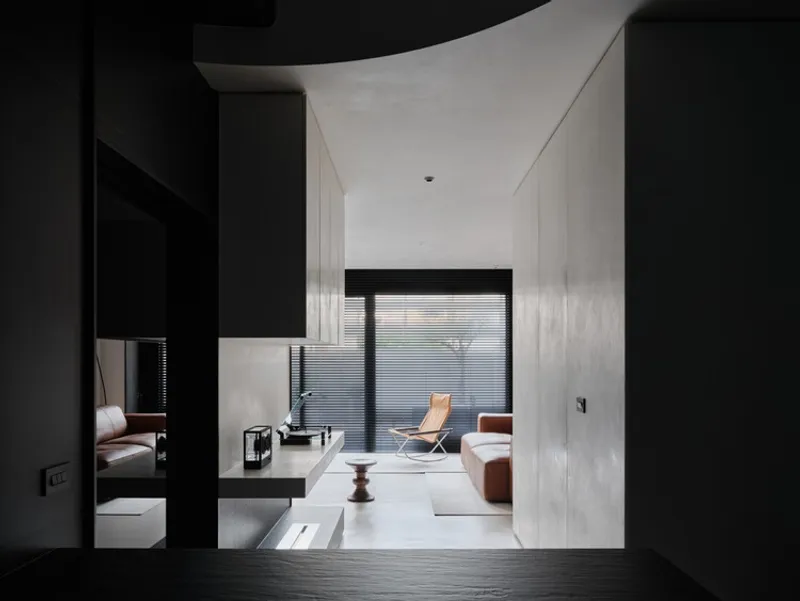
Rather than pursuing brightness alone, the project explores how light can travel, settle, and connect spaces vertically, creating a calm and continuous interior environment. The result is a home that feels grounded and personal, offering a sense of quiet refuge amid the intensity of the surrounding city.

Context: Living Between Party Walls
Like many urban houses in Taiwan, House Kuo occupies a long and narrow plot, bounded on both sides by neighboring buildings. With daylight entering only from the front and rear façades, such typologies often suffer from dark, compressed interiors, particularly in the center of the plan, where natural light rarely reaches.
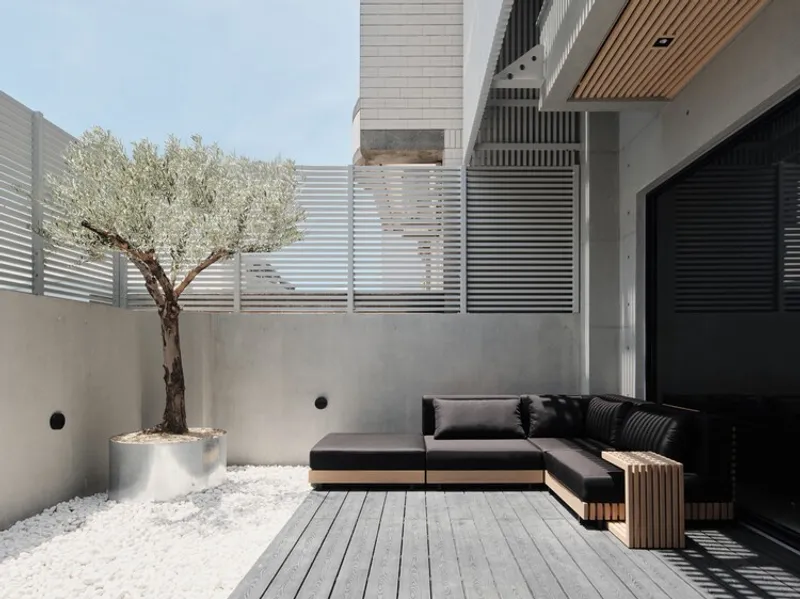
The client sought a home that would feel neither confined nor overstimulating, but calm, intimate, and settled, a place where daily life could slow down upon entering. This aspiration framed the architectural challenge: how to overcome spatial depth and limited openings without resorting to excessive artificial lighting or superficial brightness.
Light as Spatial Organizer
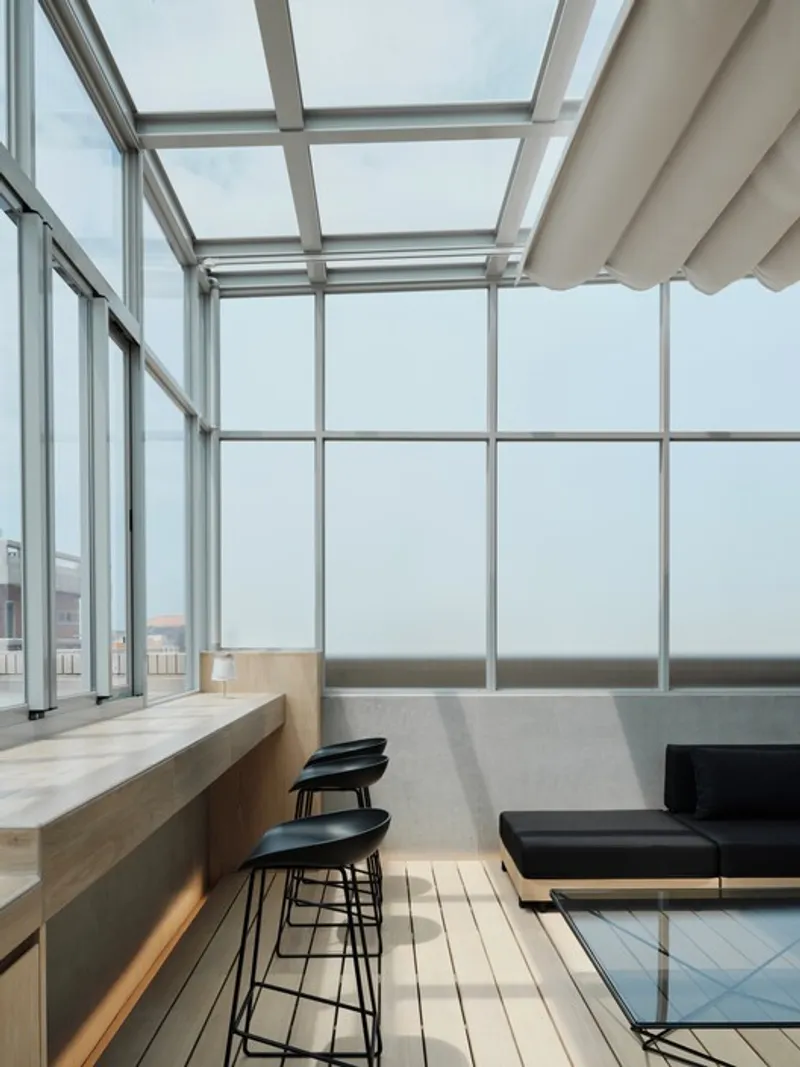
Instead of increasing the number or size of openings, zuso studio reframed the problem by asking how light might move through the house. The design shifts focus from illumination as a quantitative measure to light as a spatial and experiential force.
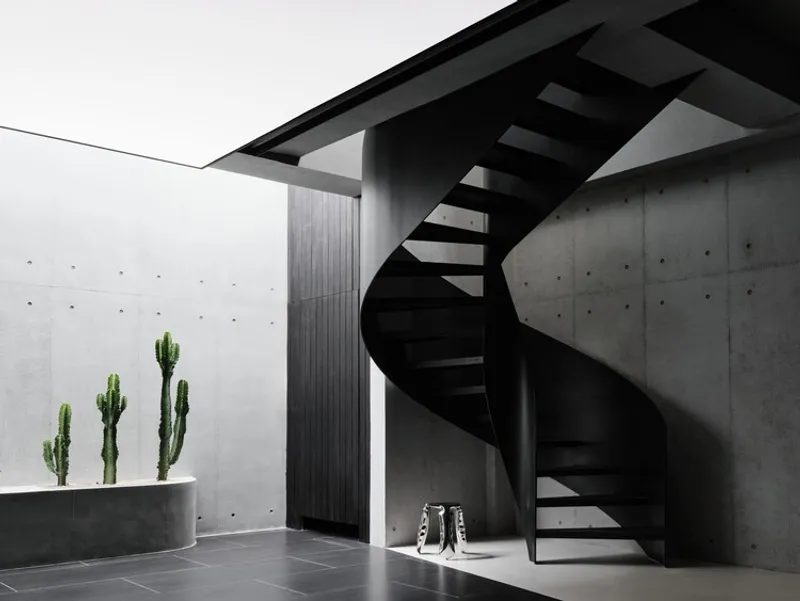
Daylight is guided inward and upward, allowing it to link rooms and floors into a single atmospheric continuum. This approach transforms light from a peripheral condition into the organizing logic of the home, shaping how spaces relate to one another and how inhabitants move through them.
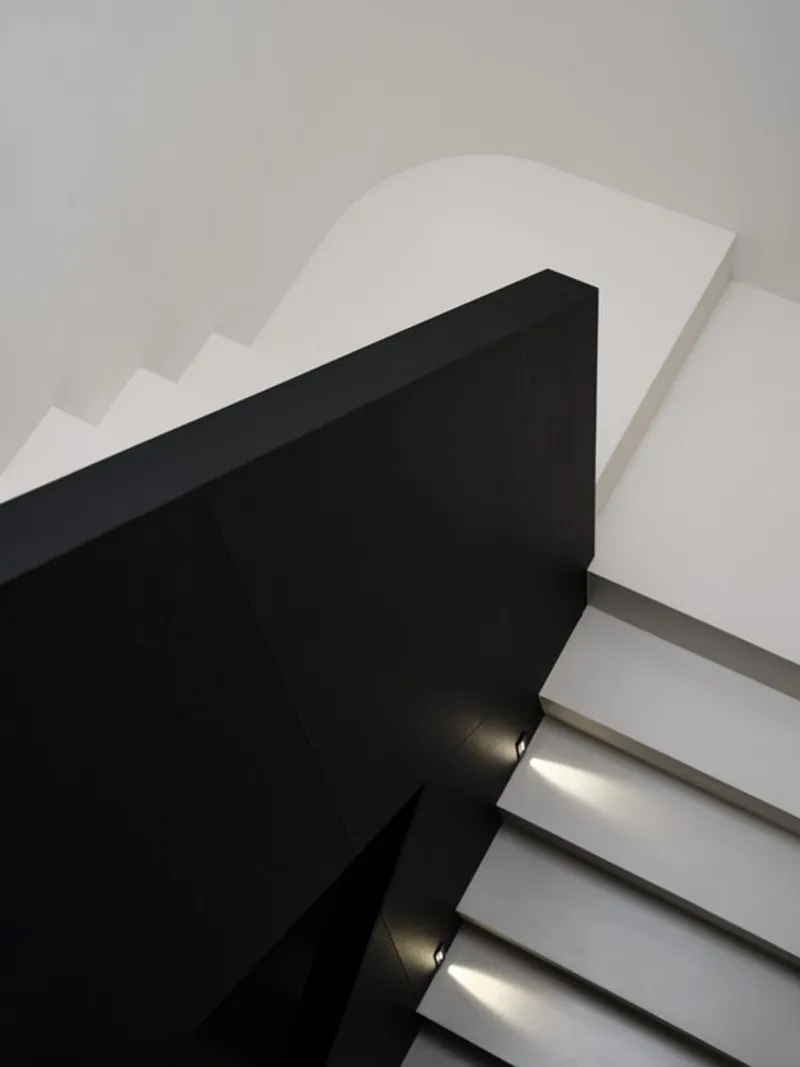
The Vertical Void: Core of Light and Movement
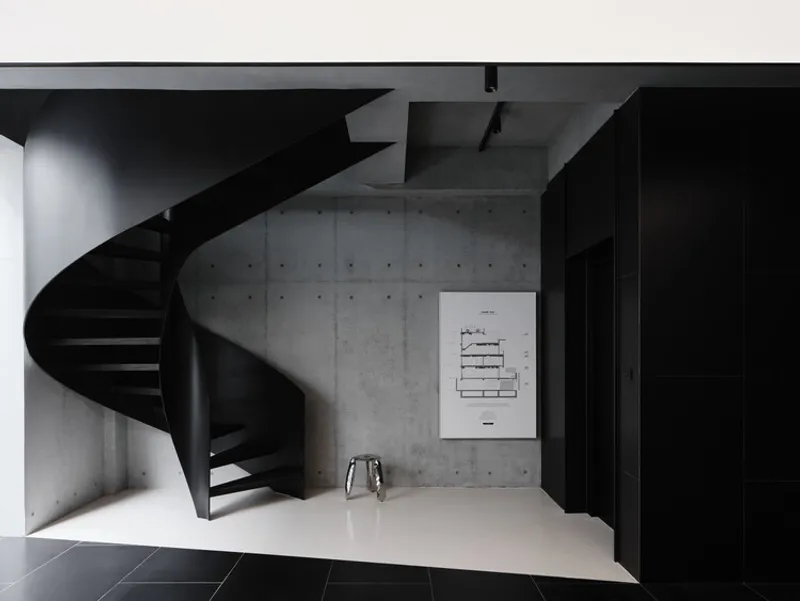
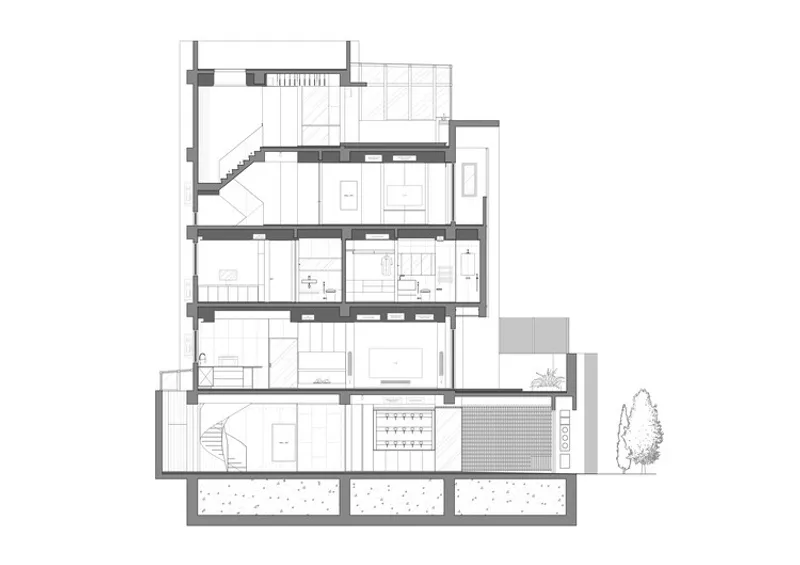
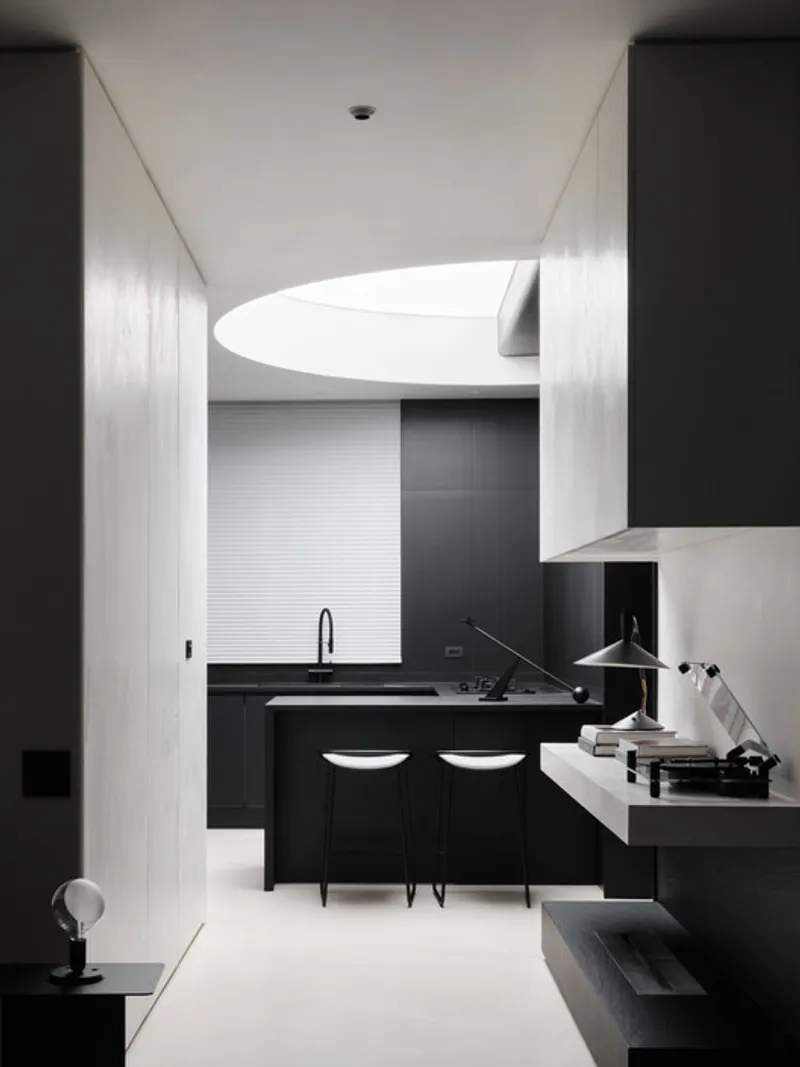
At the heart of House Kuo lies a vertical void combined with a stairwell, forming the architectural spine of the project. This central space acts simultaneously as a light well, circulation core, and orientation device.
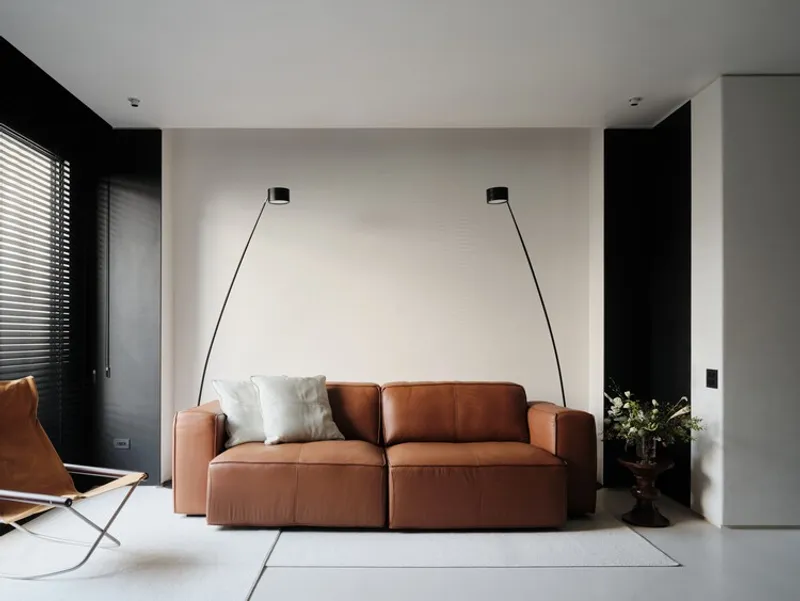
Light drawn from above penetrates deep into the house, guided by:
- Subtle changes in ceiling height
- Curved surfaces that soften transitions
- Carefully positioned openings that avoid abrupt contrasts
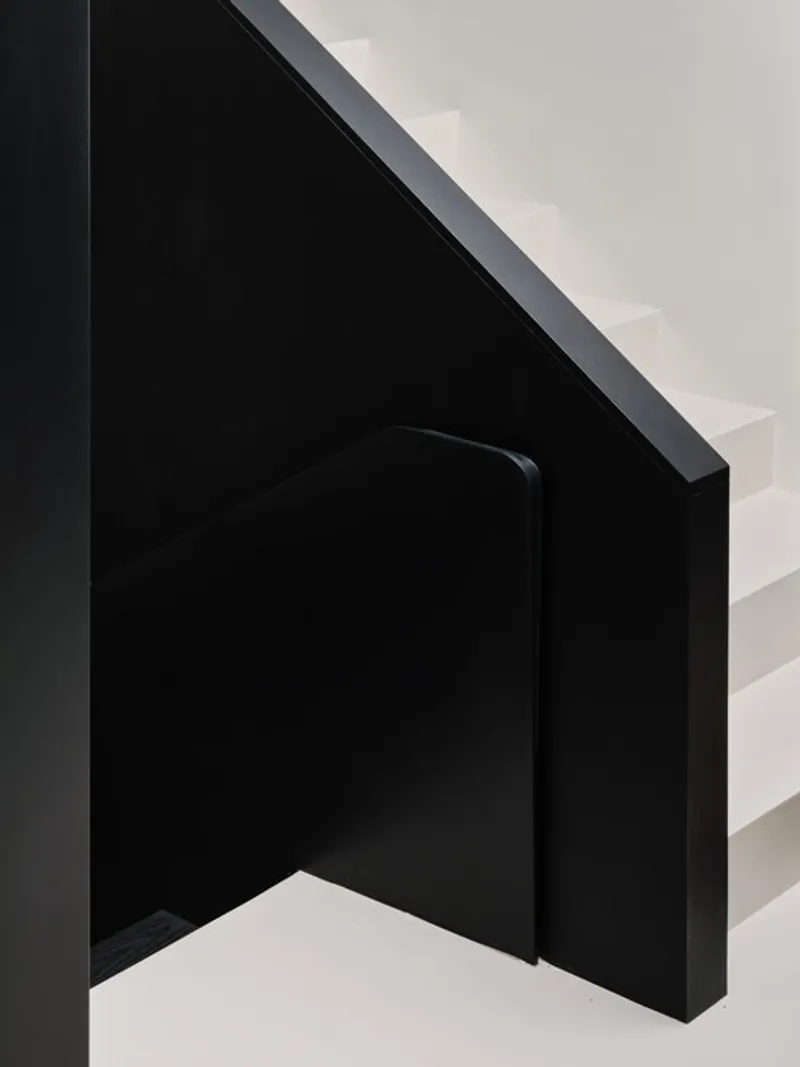

Rather than functioning as a purely utilitarian stair, the staircase becomes an experiential mediator, connecting floors while choreographing light and shadow. As residents move vertically through the house, their perception of space shifts gradually, reinforcing a sense of continuity rather than separation.

Spatial Continuity and Vertical Connection
The vertical void allows spaces to visually and atmospherically overlap. Rooms are not isolated compartments but parts of a larger spatial sequence, unified by shared light and visual connection.
Glass partitions are used strategically to preserve openness while maintaining functional separation. These transparent layers enable daylight to pass through rooms uninterrupted, ensuring that even areas far from the façades remain visually connected to the source of light.

The result is a home where depth no longer equates to darkness, and where spatial clarity emerges from continuity rather than openness alone.
Material Strategy: Supporting Light Through Texture and Tone
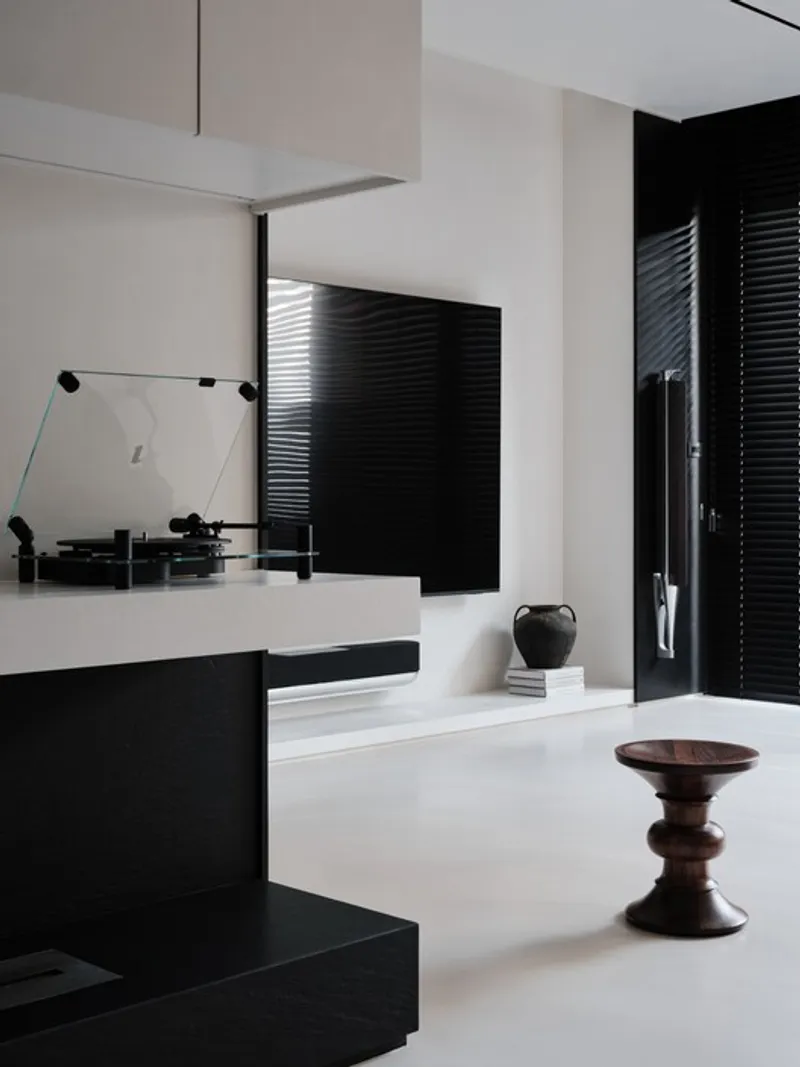
Material choices in House Kuo are carefully calibrated to reinforce the role of light while enhancing tactile comfort. Surfaces frequently touched by occupants: such as floors, handrails, and furniture elements, are selected for their warmth and texture, grounding the experience of the home in the body as much as in vision.


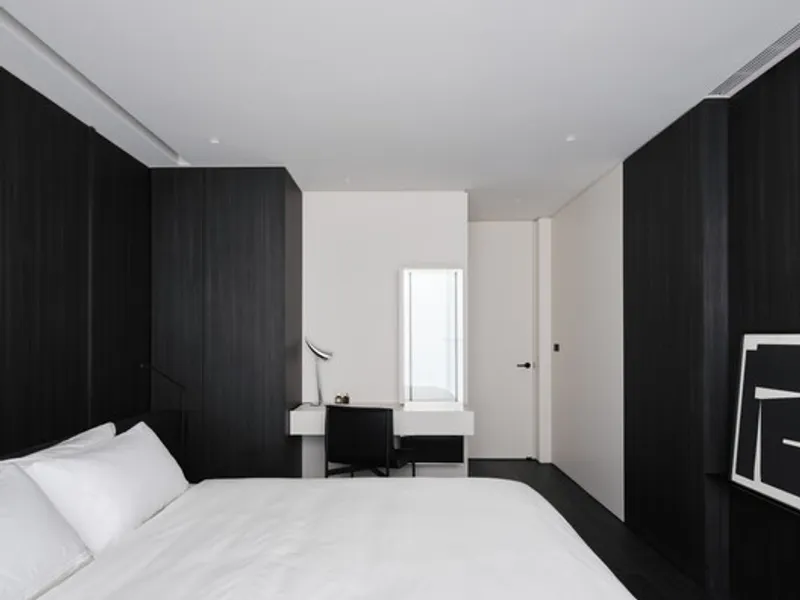
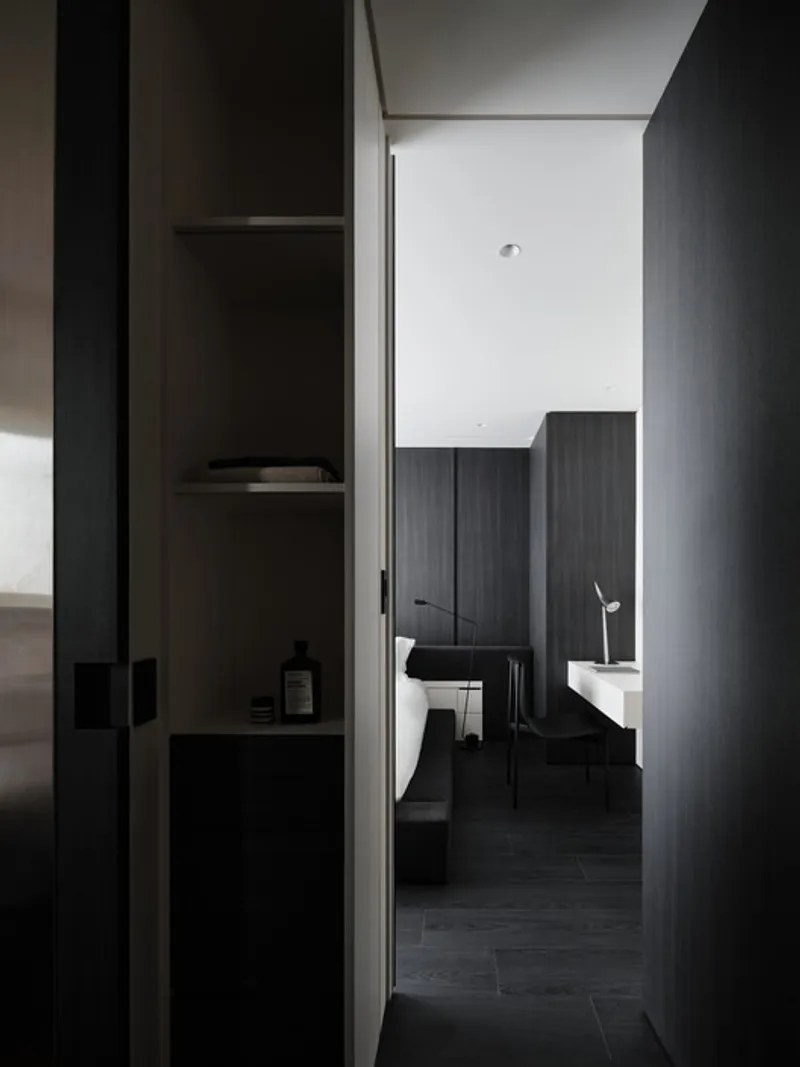
Glass surfaces maintain visual flow, while solid materials provide moments of pause and stability. Rather than relying on highly reflective finishes, the project introduces dark-toned surfaces toward the deeper parts of the plan.
These darker elements absorb and soften incoming light, preventing glare and eliminating harsh visual endpoints. Light is allowed to settle gently, creating an atmosphere that feels calm and balanced rather than overly luminous.

A Restrained Approach to Artificial Lighting
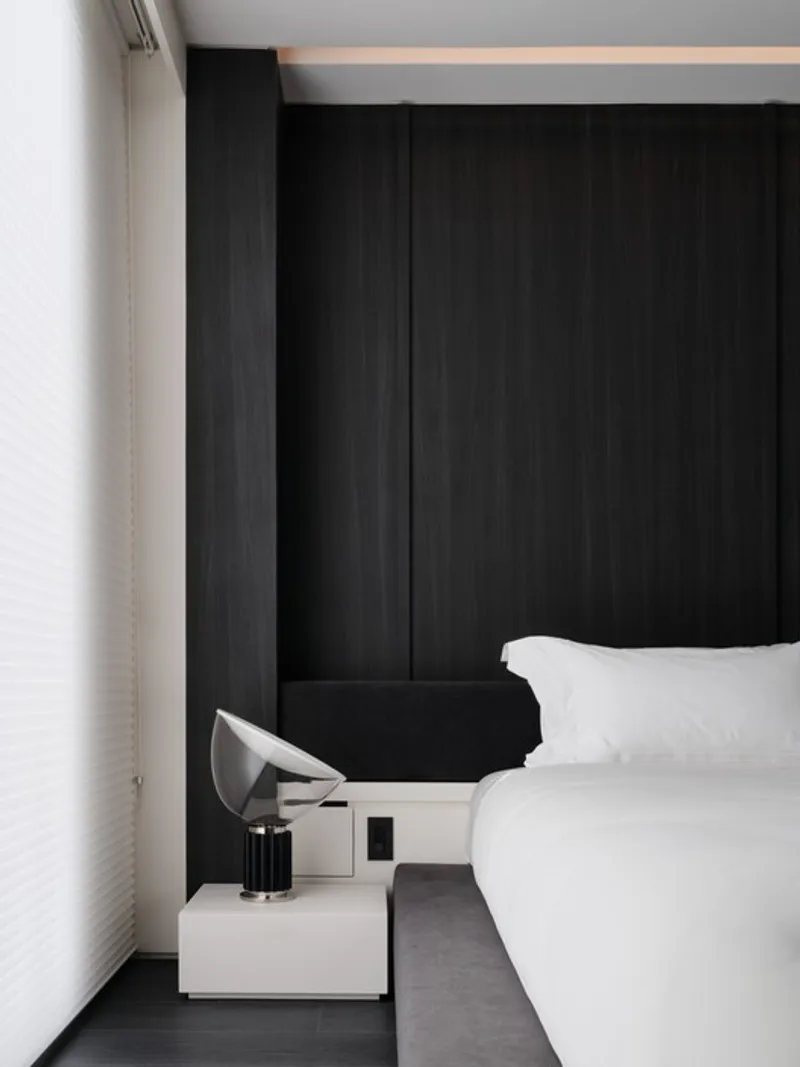
Artificial lighting is deliberately understated. Instead of competing with daylight, it supports it, ensuring that natural light remains the dominant presence during the day.
At night, artificial light is used selectively to maintain the same sense of spatial continuity established by daylight. This restraint reinforces the project’s core idea: light is not decoration, but structure.

Domestic Calm in a Dense Urban Setting
Despite its urban constraints, House Kuo avoids the feeling of enclosure common to narrow townhouses. The interior unfolds gradually, encouraging slower movement and attentive inhabitation.
Light becomes a companion throughout daily routines: marking time, guiding movement, and shaping mood. Spaces feel neither excessively open nor compressed; instead, they offer a sense of measured intimacy, well suited to domestic life.
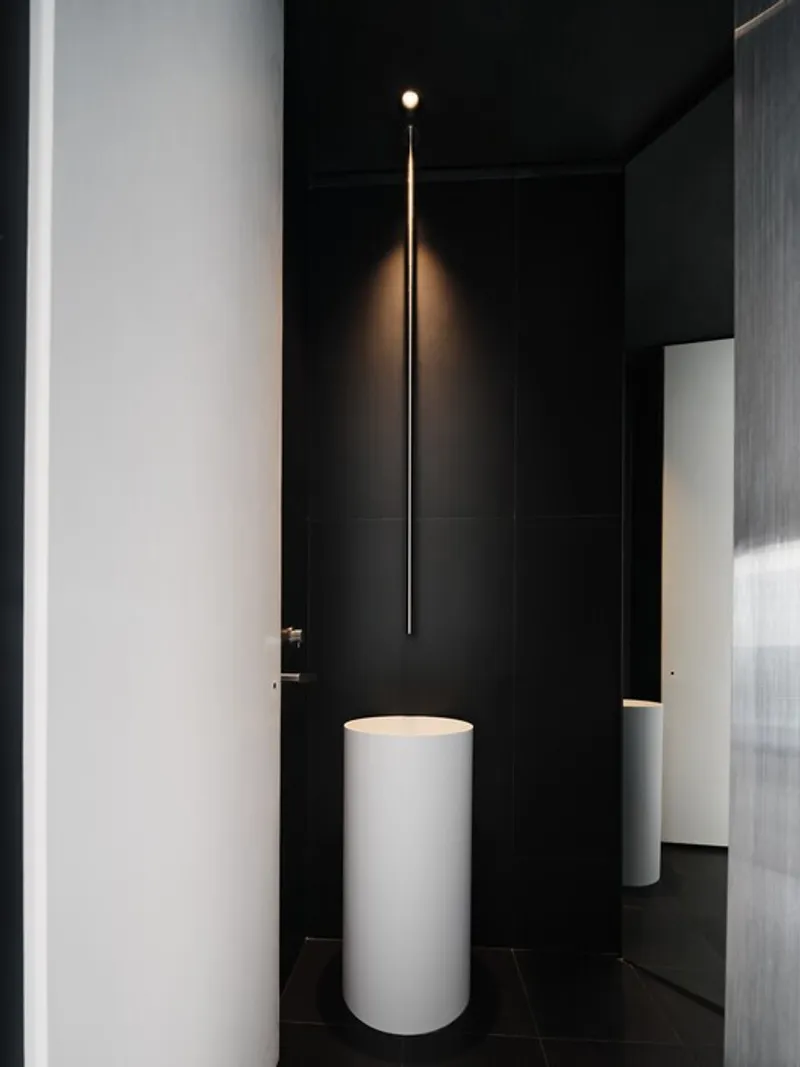
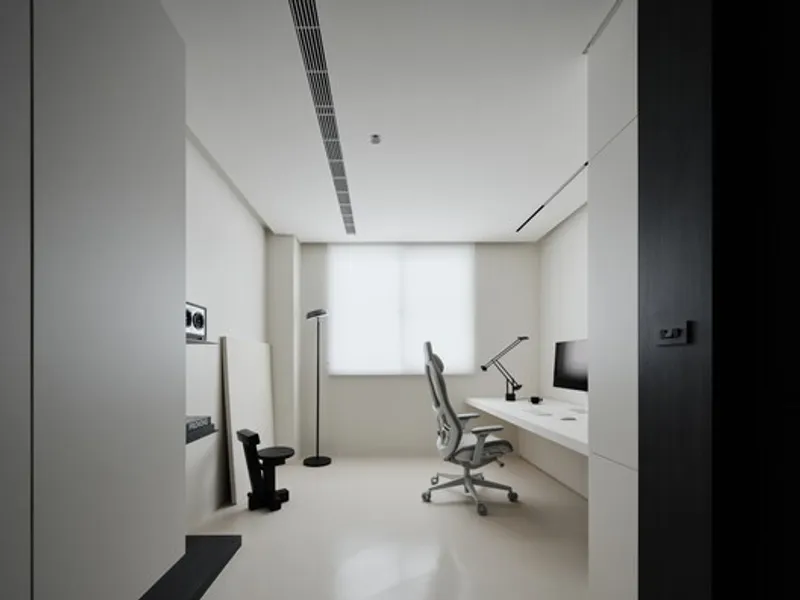
This calmness is not achieved through minimalism alone, but through careful orchestration of proportion, light, and material.
Architecture as Atmosphere
House Kuo demonstrates how architecture can operate beyond formal expression to shape emotional and sensory experience. The project does not seek visual drama or spectacle; its strength lies in quiet precision.

By treating light as an active architectural element: one that organizes circulation, defines relationships, and softens spatial boundaries, zuso studio transforms a constrained typology into a generous living environment.

A Contemporary Interpretation of Urban Living
In a city where density is unavoidable, House Kuo offers an alternative vision of urban domesticity. It shows how thoughtful architectural strategies can turn limitations into opportunities, creating homes that are deeply attuned to everyday life.
Rather than imposing form, the project allows light to lead: resulting in a house that feels continuous, calm, and enduring.
Light as Structure, Not Ornament
Ultimately, House Kuo is a study in architectural restraint. Light is not added after the fact, nor treated as a stylistic device. It is embedded at the core of the design, shaping how the house is experienced at every scale.
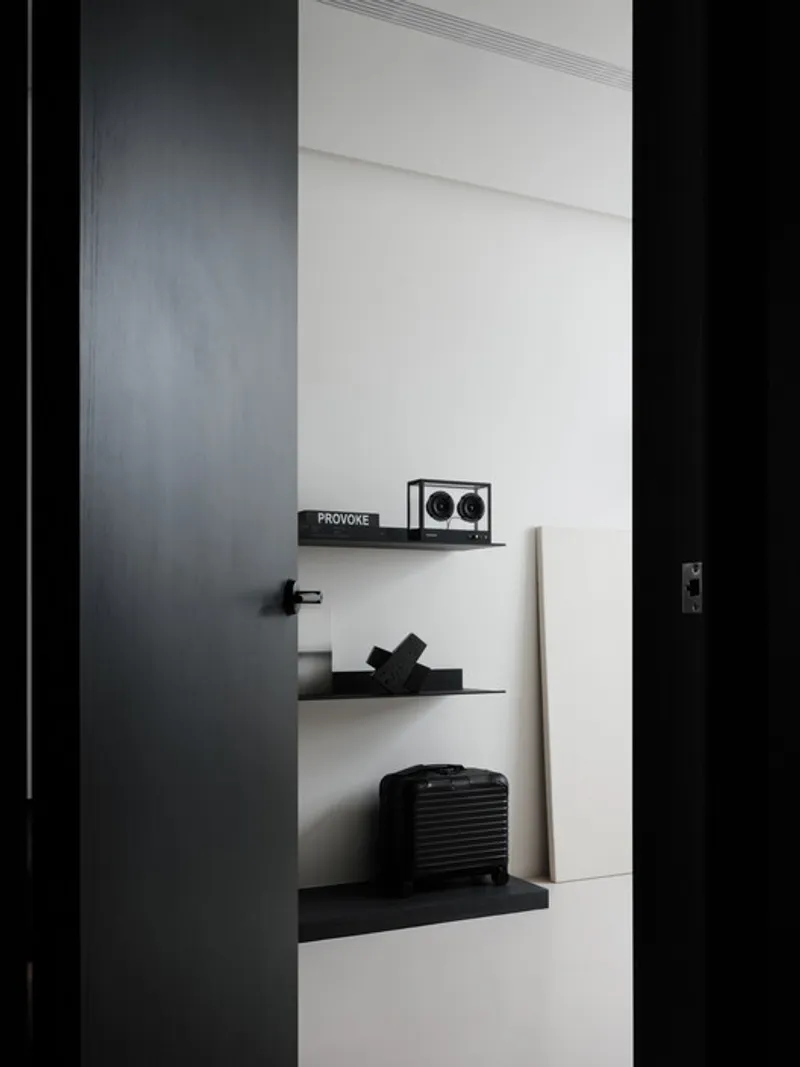
Through this approach, zuso studio demonstrates that even within the most constrained conditions, architecture can create spaces that feel expansive: not through size or brightness, but through clarity, continuity, and calm.

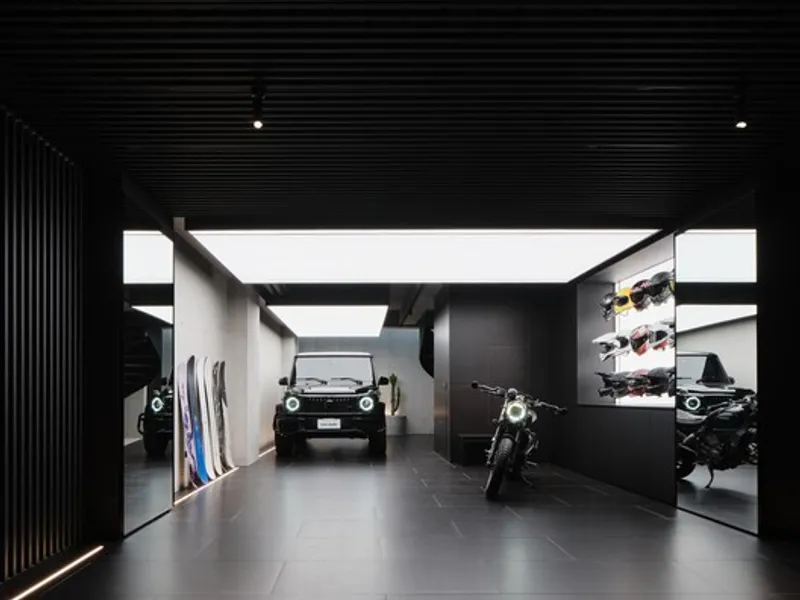
All the Photographs are works of Suiyu Studio


Popular Articles
Popular articles from the community


ETEH Reworks the Shared Spaces of São Domingos School in Brazil Around Timber, Color and Hanging Plants
At São Domingos School in Brazil, 436 m² of hall, refectory and library are recast with timber joinery, a yellow and blue code and trailing greenery.

Cube Design Draws an Ecological Corridor Between Two Shenzhen Hills with the Nankai Building
Beside Shenzhen's container docks, the Nankai Building pairs stacked balconies with a climbing green screen to connect two hillsides across its height.


Opera on the Sea: Driftwood Logic Shapes a Timber Opera House on Estonia's Coast
Trevor Orgill's opera house translates the entangled drift of floating timber into a civic building where wood, water, and music converge.

FCC Arquitectura Expands a Portuguese Granite House with a Board-Marked Concrete Wing
In Portugal, JV House pairs a cleaned-up whitewashed and granite dwelling with a timber-shuttered concrete extension, courtyards and a garden pool.

Similar Reads
You might also enjoy these articles


Hodi-Mandai Geram
Project Function: Preservation and revitalization of the Intangible heritage and socio-spatial identity of the Hodi by Housing, Cultural Memory Center, Sacred Grove, landscape, local tourism economy


Olio Towers: A Mid-Rise for Performers That Fuses Housing, Rehearsal, and Stage
Located blocks from Houston's Theater District, this modular tower stacks living units around a central performance atrium.

Oasis: Modular Green Housing Carved into Dhaka's Urban Fabric
A shortlisted Plugin Housing entry reclaims unauthorized settlements in Dhaka with stepped concrete volumes, green roofs, and ventilation-driven design.

Black Hole: A Floating Megastructure for the Post-Physical Era
Emiliano Mazzarotto envisions a spherical, self-scaling arena where e-sports, digital hotels, and holographic stadiums replace traditional public space.

Explore Urban Void Competitions
Discover active competitions in this discipline

Challenge to reimagine the Iron Throne

Photograph architecture without architects

Illustrate the lost glory of Angkor Wat - Render Challenge

Design challenge to reuse E-waste
Comments (0)
Please login or sign up to add comments
No comments yet. Be the first to comment!