
House Río by LABarq: A Lightweight V-Shaped Residence Immersed in Nature in Santiago de Querétaro
A V-shaped contemporary home in Querétaro merging light structure, central garden, and open rear facade for seamless indoor-outdoor living in nature.


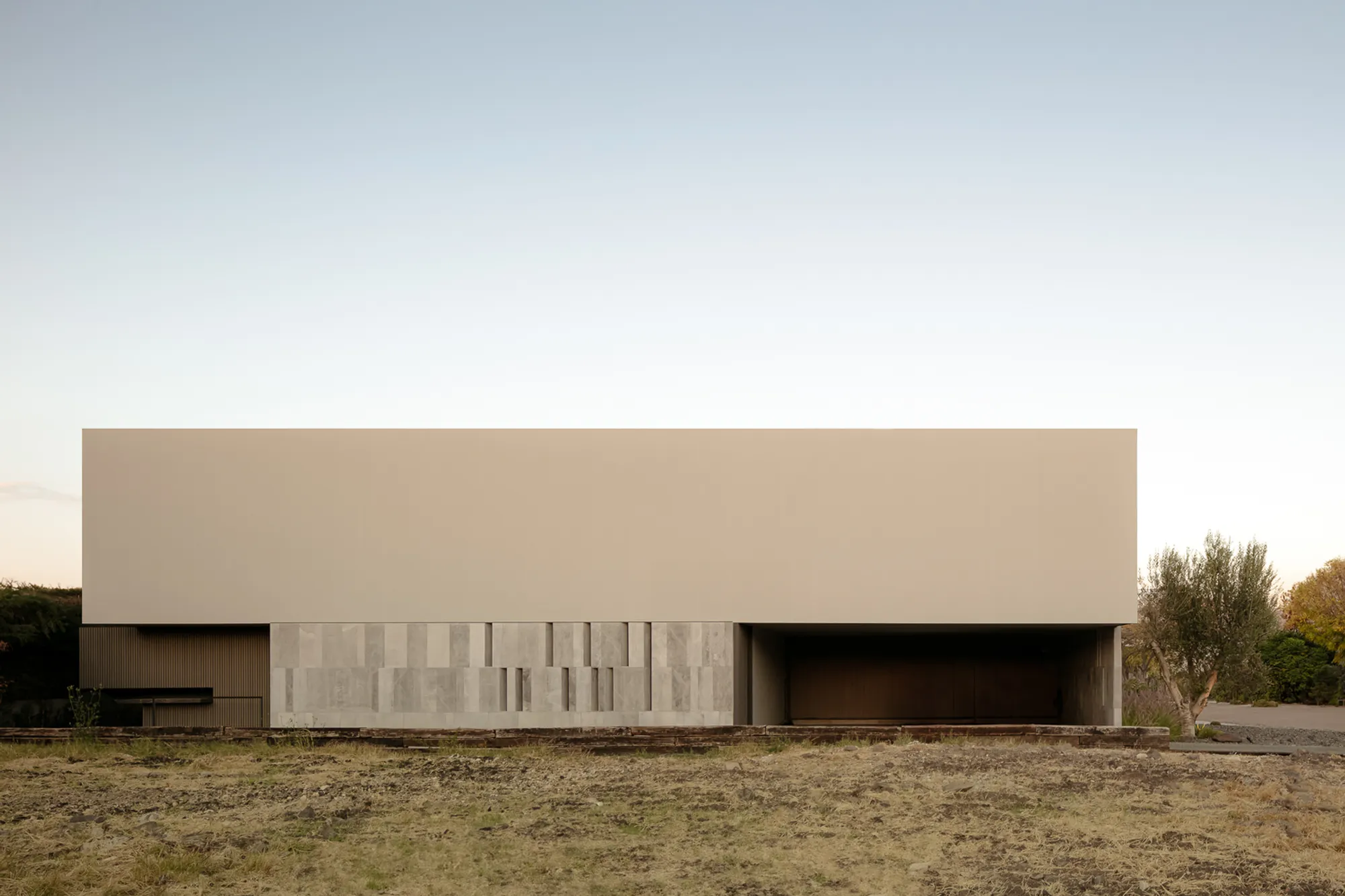
House Río, designed by LABarq, is a contemporary residential project in Santiago de Querétaro, Mexico, defined by its V-shaped architectural form, subtle integration with topography, and immersive connection to nature. With a built area of 559 m², the home is conceived as an elegant, lightweight structure that embraces its irregular site and frames the surrounding landscape.
Through thoughtful spatial planning, slender structural expression, and sustainable material selections, House Río blends regional identity with modern design, creating a transparent, tranquil, and nature-driven living environment.
A V-Shaped Form Crafted for the Land
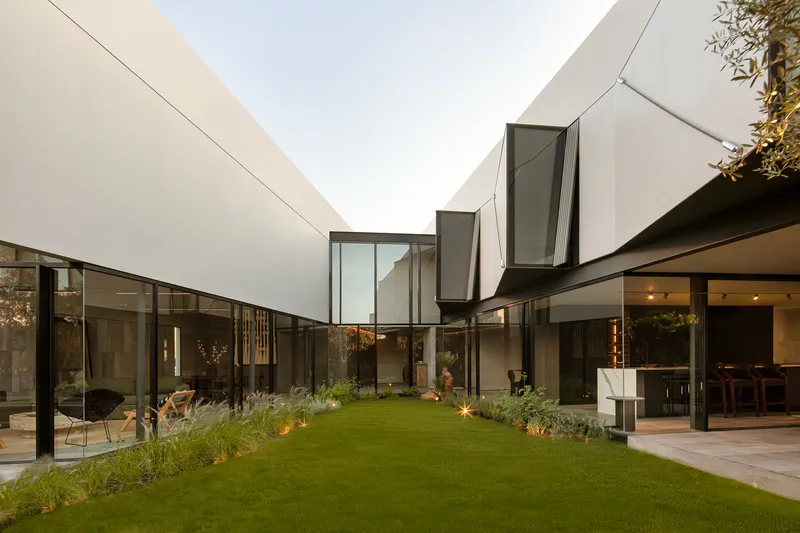
Responding to the trapezoidal geometry and sloped terrain of its site, the home adopts a precise V-shaped layout. This configuration not only resolves the land’s irregular boundaries but also generates a central inner garden that becomes the heart of the residence.
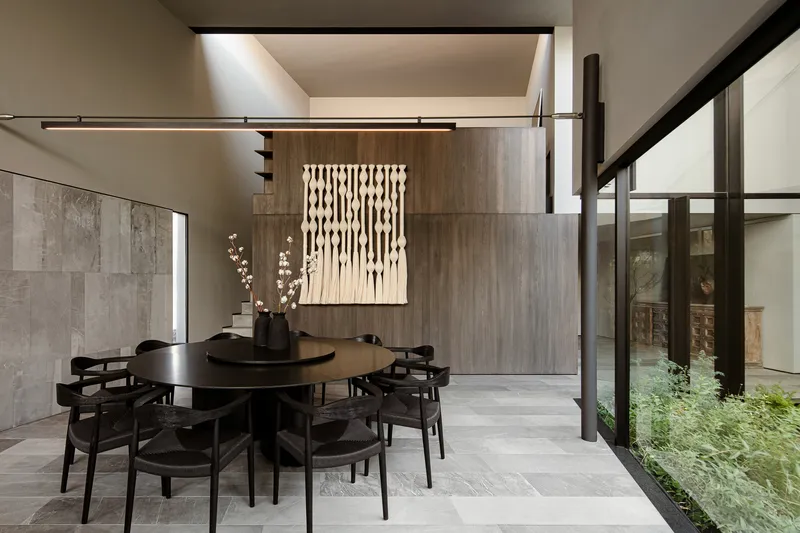
This green courtyard creates visual continuity, enhances ventilation, and establishes a seamless transition between interior living spaces and the surrounding trees. The architectural strategy aims to allow the house to “disappear” among the vegetation, emphasizing privacy at the front while completely opening onto expansive natural views at the rear.
Two Volumes for Function & Flow
The program unfolds across two main volumes, each tailored to lifestyle and function:
Social & Public Volume
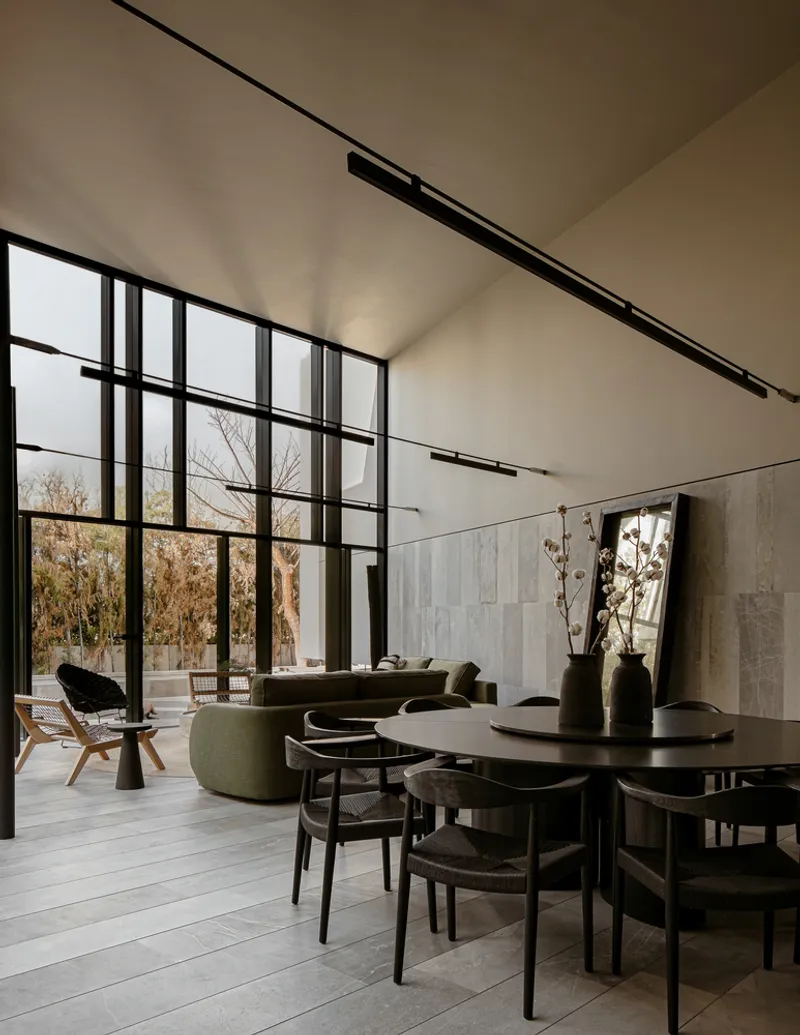
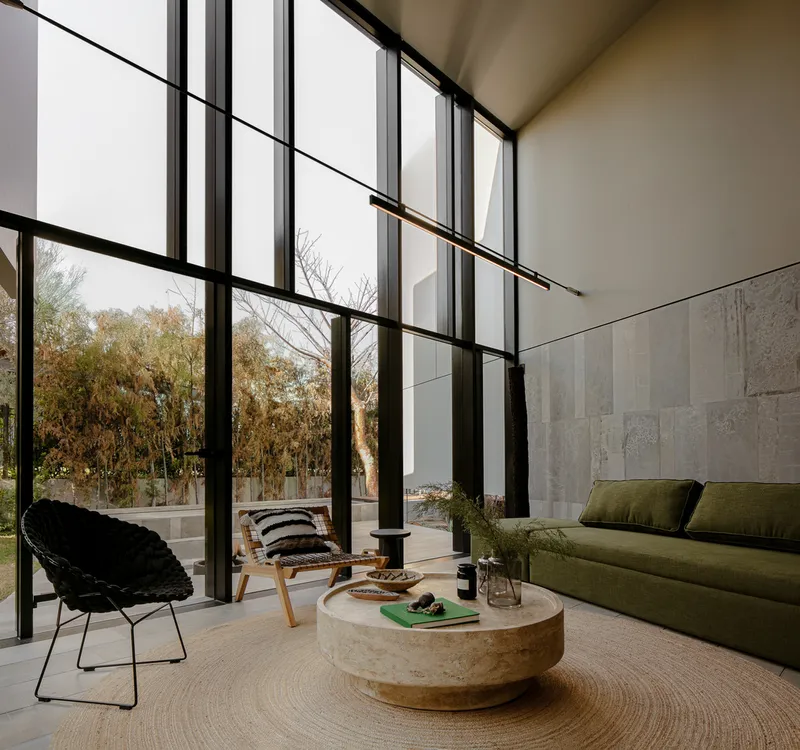
Positioned on the slope, this volume houses generous double-height living and dining spaces. A mezzanine contributes an elevated perspective, while an office with independent access supports flexible work-from-home living.
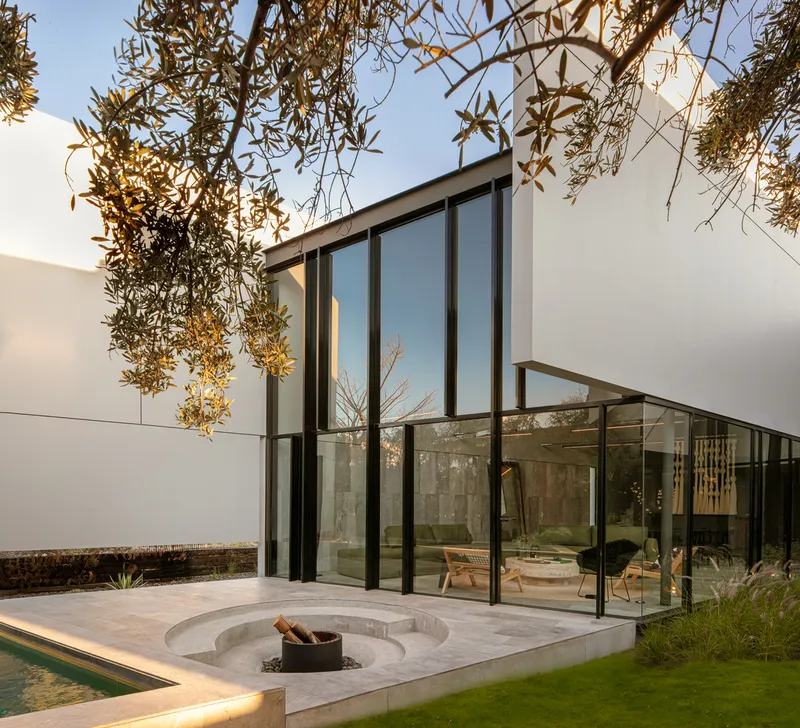
A pool and fire pit terrace extend this social core into the landscape, fostering indoor-outdoor living and uninterrupted visual flow.
Private & Service Volume
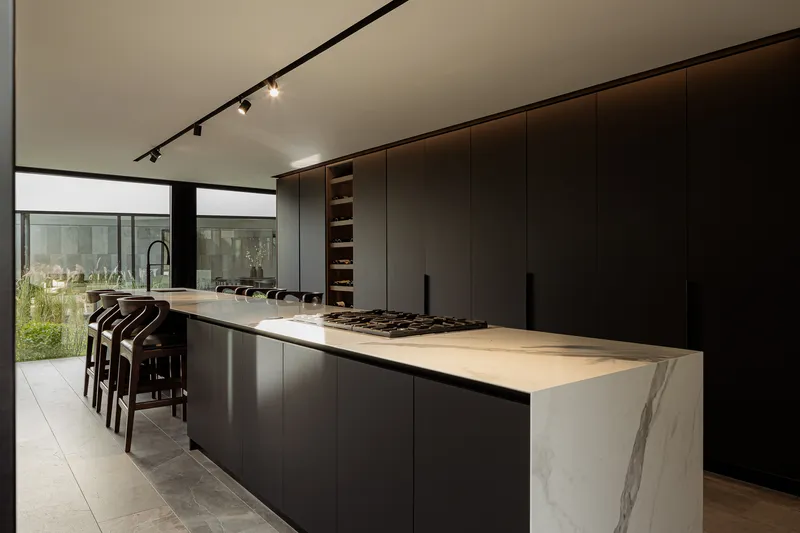
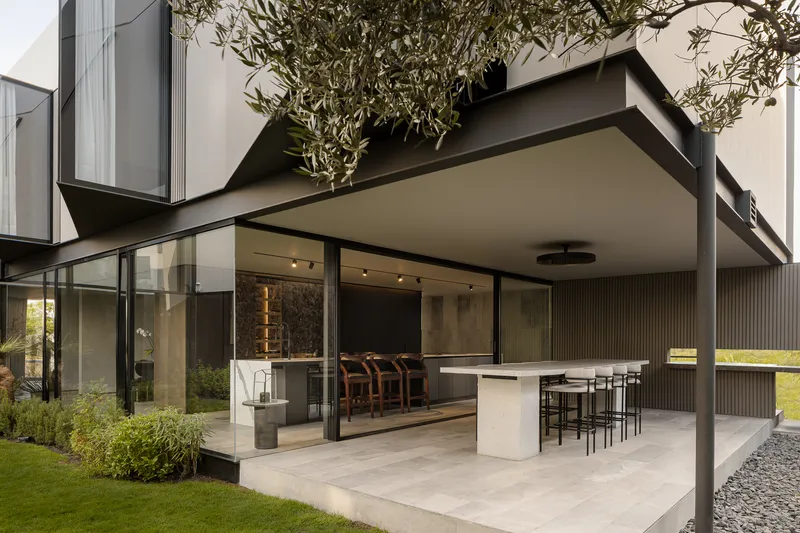
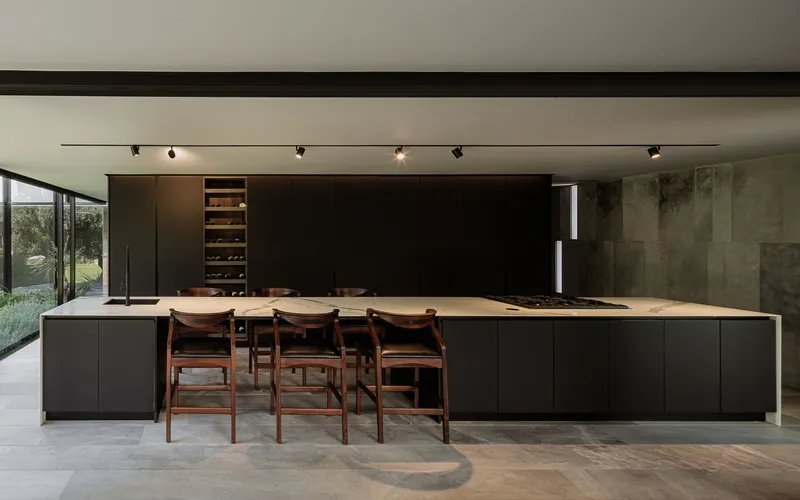
The second volume integrates essential service areas on the ground floor—kitchen, TV room, terraces, and circulation spaces—with storage rooms and service quarters below.
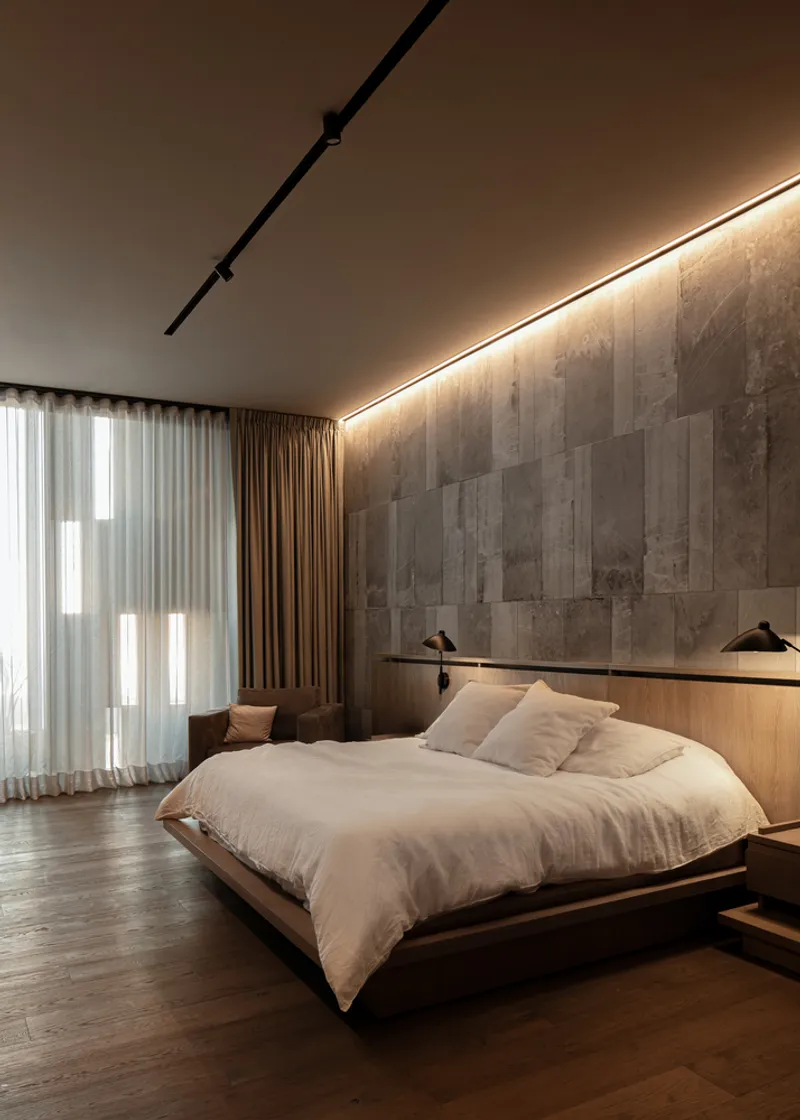
The upper level is reserved for private suites, including a master bedroom with walk-in closet and three additional bedrooms. Each room opens toward the northwest, balancing natural light, privacy, and carefully curated views of the surrounding forested environment.
Lightweight Structure & Transparency
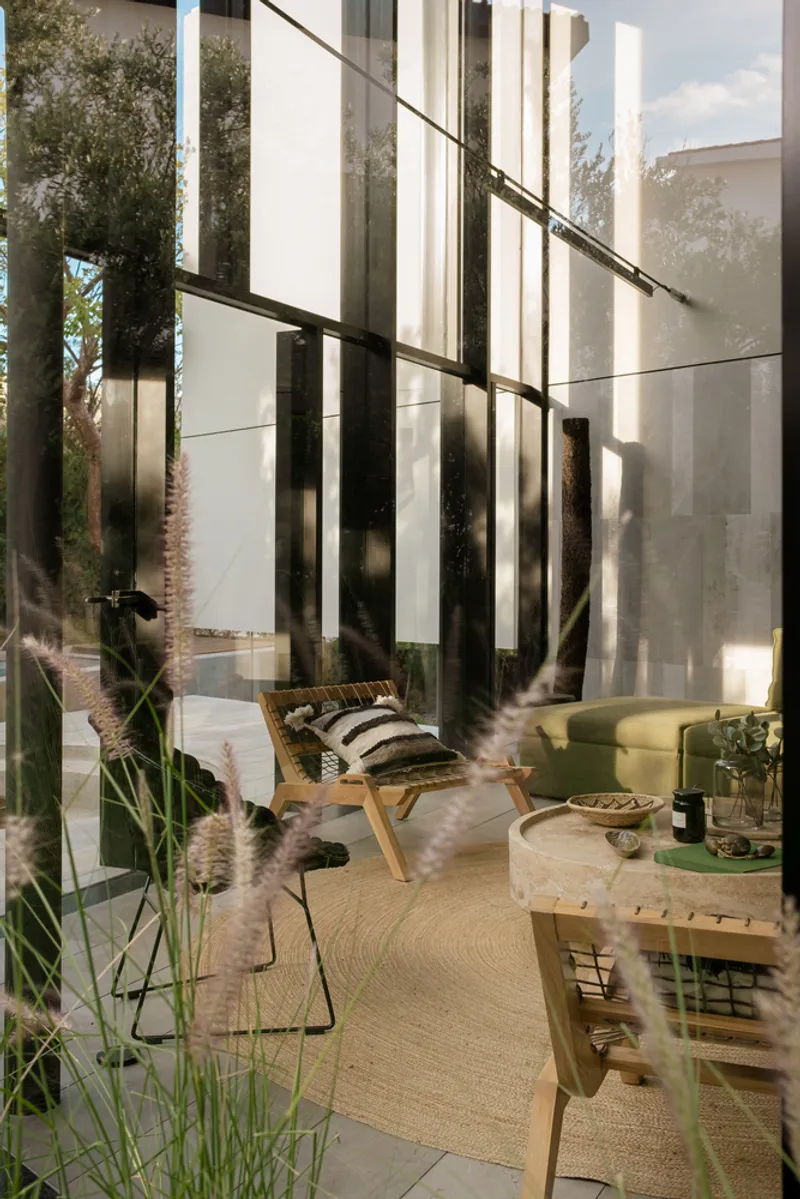
House Río expresses its structural logic through slender steel columns, metal plates, and tension rods, enabling large spans and airy interiors. The delicate system ensures the residence feels light, floating, and transparent, dissolving boundaries with nature.
Suspended walls and tensioning elements in the bedrooms further enhance shading, privacy, and connection to the outdoors, while emphasizing the building’s refined tectonic language.
Materiality Rooted in Context & Sustainability
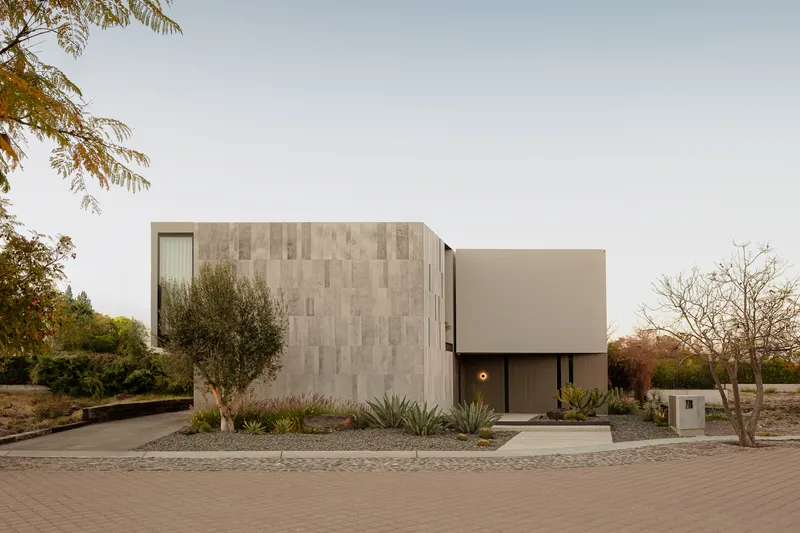
The material palette is grounded in the natural and cultural context of Querétaro. The architects employ:
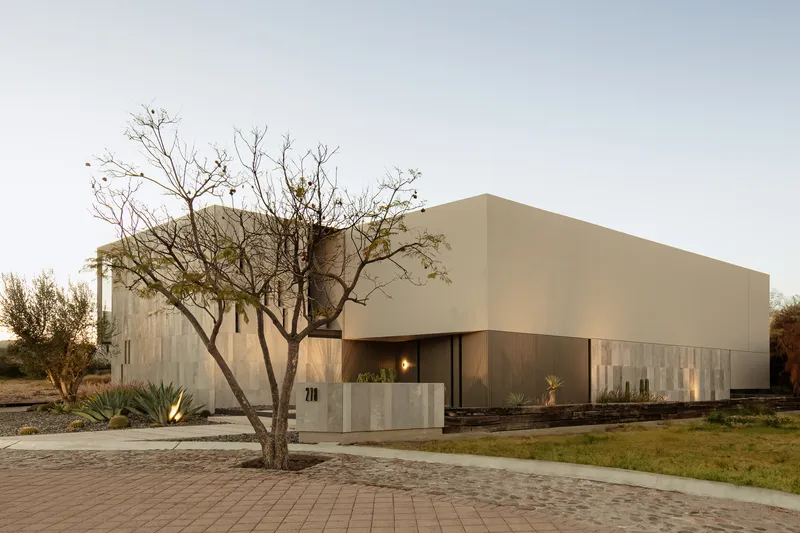
- Local Santo Tomás marble
- Walnut veneer
- Wood-look ribbed paneling
- Native low-water vegetation
- Dry gardens with controlled gravel beds
Instead of conventional lawns, the landscape prioritizes resilient, water-efficient planting, reinforcing the residence’s ecological sensitivity while reducing maintenance and environmental impact.
A Dialogue of Solidity & Openness
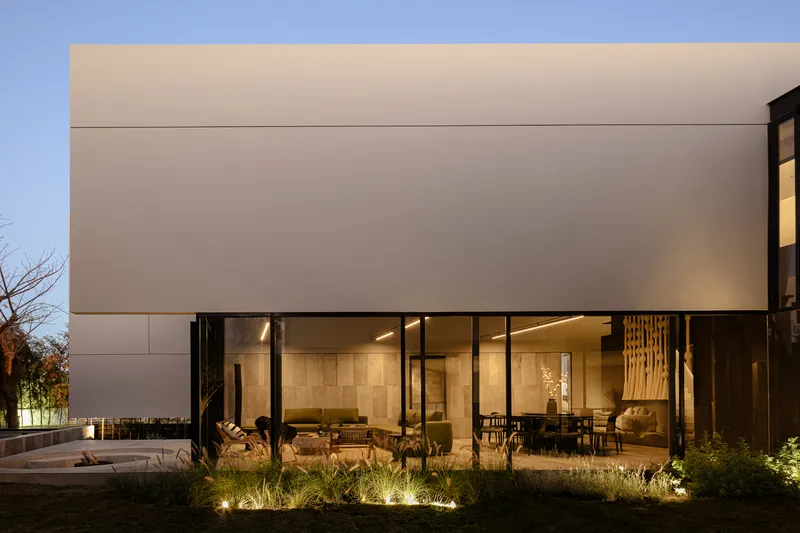
The façade strategy presents a quiet, closed, and protective face to the street, evolving into a fully glazed rear elevation with floor-to-ceiling windows. This design duality enhances privacy while allowing the home to open generously to nature, offering continuous natural light and immersive views.
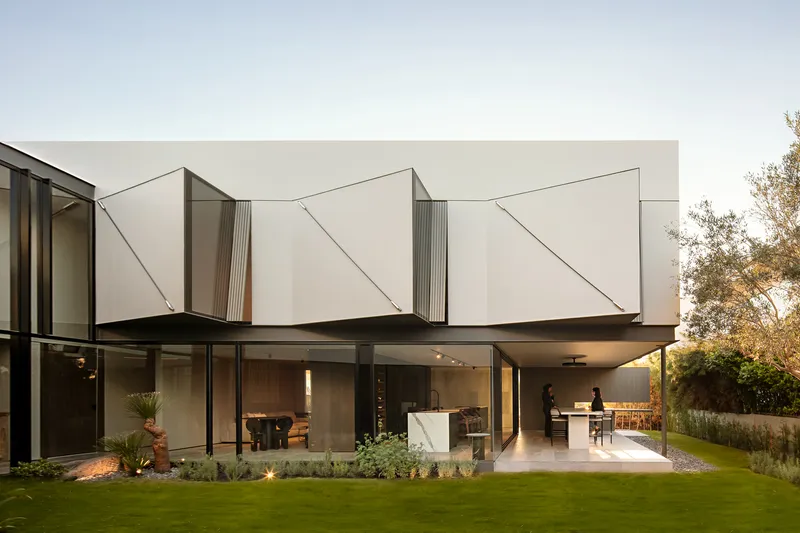
House Río: A Modern Mexican Residence Built Around Nature
More than a contemporary dwelling, House Río is an architectural retreat designed to merge with its environment. LABarq’s sensitive approach—balancing geometry, transparency, and sustainability—creates a timeless residence where landscape, architecture, and daily life coexist harmoniously.
All photographs are works of Ariadna Polo



Popular Articles
Popular articles from the community


Conexión: Biophilic Design Reimagines High-Rise Living in Hong Kong
Conexión reimagines high-rise living in Hong Kong through biophilic design, green facades, shared spaces, daylight, water and nature within.

Riyadh For All: Intergenerational Urban Design for Active Aging in Rabat
Riyadh For All reimagines urban design in Rabat with intergenerational co-living, adaptive courtyards, and Moroccan cultural exchange today.

The Ocean Hive: Sustainable Architecture for a Self-Sufficient Civilization at Sea
The Ocean Hive imagines sustainable architecture at sea, where modular habitats, algae, wave power and ocean waste sustain a growing colony.

Co-life: Sustainable Architecture for Age-Friendly Community Living
Co-life reimagines sustainable architecture for seniors through courtyards, rammed earth, shared gardens, and spaces designed for belonging.


Similar Reads
You might also enjoy these articles


Hodi-Mandai Geram
Project Function: Preservation and revitalization of the Intangible heritage and socio-spatial identity of the Hodi by Housing, Cultural Memory Center, Sacred Grove, landscape, local tourism economy


Olio Towers: A Mid-Rise for Performers That Fuses Housing, Rehearsal, and Stage
Located blocks from Houston's Theater District, this modular tower stacks living units around a central performance atrium.

Oasis: Modular Green Housing Carved into Dhaka's Urban Fabric
A shortlisted Plugin Housing entry reclaims unauthorized settlements in Dhaka with stepped concrete volumes, green roofs, and ventilation-driven design.

Black Hole: A Floating Megastructure for the Post-Physical Era
Emiliano Mazzarotto envisions a spherical, self-scaling arena where e-sports, digital hotels, and holographic stadiums replace traditional public space.


Explore Latin American Houses Competitions
Discover active competitions in this discipline



Challenge to reimagine the Iron Throne


Photograph architecture without architects


Illustrate the lost glory of Angkor Wat - Render Challenge


Design challenge to reuse E-waste
Comments (0)
Please login or sign up to add comments
No comments yet. Be the first to comment!