

House With a Crossed Earth Floor by Fukei Co.
Crisscrossed earthen floor house in Miyagi connects four gardens, shifting light, atrium bedrooms, and intimate hillside living with seasonal atmosphere.


House With a Crossed Earth Floor, designed by Fukei Co., is a compact yet spatially rich residence located on a gentle hillside in Miyagi, Japan. Completed in 2024, the 93 m² house reinterprets traditional Japanese architectural elements through a contemporary lens, using an earthen floor as the central spatial and environmental connector between house, garden, and landscape.

Site-Specific Residential Architecture in Japan
Set within a green hillside context, the project responds sensitively to its surroundings. Rather than treating the site as a backdrop, the architects developed a crisscrossed floor plan that actively shapes the relationship between interior spaces and the garden. This intersecting geometry divides the outdoor area into four distinct functional gardens, each offering a unique environmental and experiential quality.
These include:
- A bright, open garden with a field where children can freely run and play
- A quiet, secluded garden visible from the bathroom and bedrooms
- A façade garden that enhances the street-facing appearance of the house
- A parking garden, seamlessly integrated into the overall landscape strategy
Together, these gardens extend daily living outdoors while maintaining privacy and spatial clarity.


The Earthen Floor as a Spatial Connector
At the heart of the house lies a crossed earthen floor (doma) that runs through the entire first floor. This traditional Japanese element is reimagined as a contemporary circulation and living zone, softly connecting the cool air from the park-like trees behind the entrance with the warmer air of the garden.
The earthen floor acts as:
- A thermal and atmospheric buffer
- A circulation spine connecting interior and exterior
- A light-responsive space, transforming throughout the day
Natural light enters from multiple directions: four gardens and strategically placed skylights: causing subtle shifts in brightness, shadow, and color. This dynamic lighting condition enhances the tactile quality of the earthen surface and reinforces the house’s connection to time, weather, and seasonality.


Vertical Openness and Intimate Living
Above the earthen floor, an open atrium visually and spatially connects the ground floor with the attic bedrooms. This vertical void introduces daylight deep into the interior while fostering a sense of openness within the compact footprint.
The attic bedrooms overlook the atrium, maintaining visual continuity with the shared spaces below. A carefully positioned private window in the attic frames an exclusive view of the surrounding hill, offering residents a quiet retreat and a moment of contemplation away from the communal areas.


Contemporary Japanese House Design
Through its restrained material palette, thoughtful section design, and integration of landscape, the House With a Crossed Earth Floor exemplifies a modern Japanese residential architecture approach that values:
- Simplicity and spatial efficiency
- Environmental responsiveness
- Blurred boundaries between inside and outside
- Everyday interaction with nature
Rather than relying on size or visual complexity, the project achieves richness through light, air, texture, and spatial sequence, demonstrating how small houses can offer deeply layered living experiences.


Project Information
- Project Name: House With a Crossed Earth Floor
- Architects: Fukei Co.
- Lead Architects: Midori Oshima, Daisuke Komatsu
- Location: Miyagi, Japan
- Area: 93 m²
- Year: 2024
- Photographs: Daisuke Komatsu, Fukei

All photographs are works of Daisuke Komatsu, Fukei


Popular Articles
Popular articles from the community

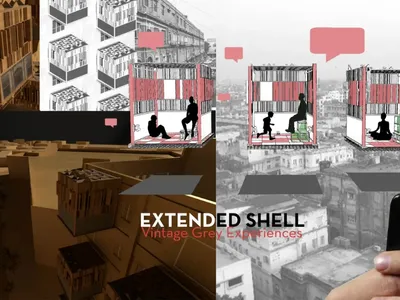
Extended Shell: Retrofitting Kolkata's Balconies as Living Urban Thresholds
A modular retrofit system recovers the social and environmental intelligence of Kolkata's historic verandas for contemporary Park Street residents.

Opera on the Sea: Driftwood Logic Shapes a Timber Opera House on Estonia's Coast
Trevor Orgill's opera house translates the entangled drift of floating timber into a civic building where wood, water, and music converge.
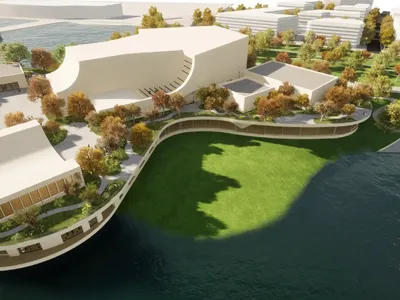
The Amber Palace Opera: A Geological Fiction Surfaces on Tallinn's Baltic Waterfront
Pierre Brillard reimagines a Baltic legend as a public landscape, opera house, and waterfront promenade rooted in Tallinn's coastal identity.
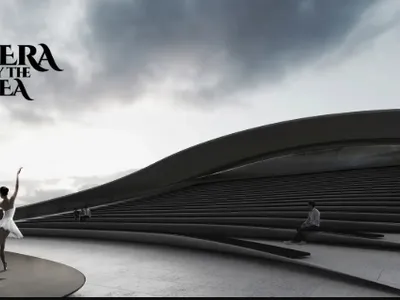
Opera by the Sea Estonia: Three Shells Dissolving Architecture into Tallinn's Coastline
A winning opera house proposal replaces monumental form with interconnected shells that blur the boundary between building, park and Baltic Sea.

Similar Reads
You might also enjoy these articles


Hodi-Mandai Geram
Project Function: Preservation and revitalization of the Intangible heritage and socio-spatial identity of the Hodi by Housing, Cultural Memory Center, Sacred Grove, landscape, local tourism economy


Olio Towers: A Mid-Rise for Performers That Fuses Housing, Rehearsal, and Stage
Located blocks from Houston's Theater District, this modular tower stacks living units around a central performance atrium.

Oasis: Modular Green Housing Carved into Dhaka's Urban Fabric
A shortlisted Plugin Housing entry reclaims unauthorized settlements in Dhaka with stepped concrete volumes, green roofs, and ventilation-driven design.

Black Hole: A Floating Megastructure for the Post-Physical Era
Emiliano Mazzarotto envisions a spherical, self-scaling arena where e-sports, digital hotels, and holographic stadiums replace traditional public space.

Explore Architecture Competitions
Discover active competitions in this discipline

Challenge to reimagine the Iron Throne

Photograph architecture without architects

Illustrate the lost glory of Angkor Wat - Render Challenge

Design challenge to reuse E-waste
Comments (0)
Please login or sign up to add comments
No comments yet. Be the first to comment!