

Integrating Traditional Culture in Modern Design: The Shirakawa-Koi Cultural Center
The article examines the Shirakawa-Koi Cultural Center, a model of integrating traditional Japanese design with modern architecture for cultural conservation.


The Shirakawa-Koi Cultural Center stands as a testament to the fusion of traditional Japanese cultural elements with contemporary architectural practices. This article delves into the essence of the Shirakawa-Koi project, a shortlisted entry in Cultural Conserve by Mohammed Alem and Yousef Ibrahim in the Cultural Conserve competition. It explores the integration of material tectonics and cultural respect within the architectural design, positioning itself as a model for 'Cultural Architecture Conservation.'
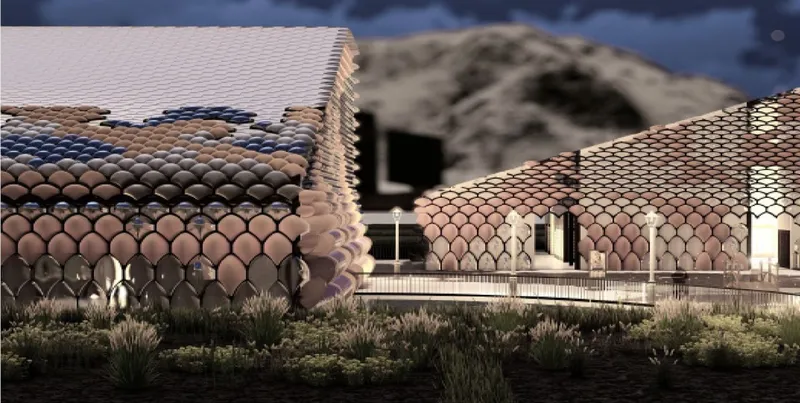
Understanding Material Tectonics in Japanese Culture
Japanese culture has always valued a harmonious relationship with nature, evident in its architectural craftsmanship. This ethos forms the basis of the Shirakawa-Koi Cultural Center's design, drawing inspiration from the natural grace and resilience of the Koi fish. In the context of SEO, "Cultural Architecture Conservation" emerges as a powerful keyword, capturing the project's core aim to conserve and elevate the traditional architecture of Japan in a modern setting.
Cultural Context and Architectural Reflection
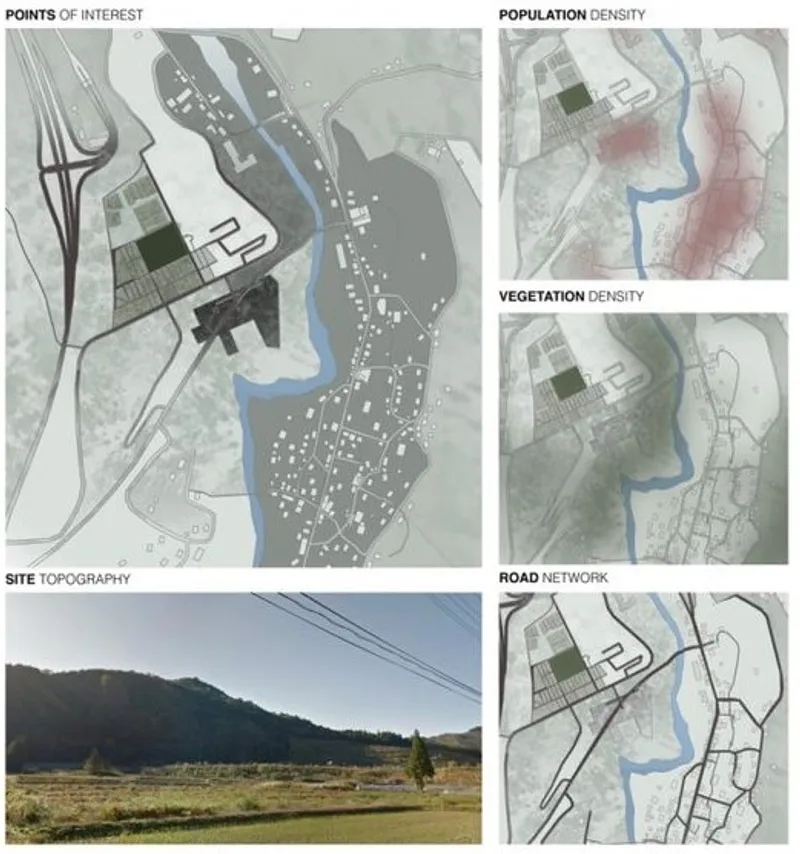
In the verdant setting of Shirakawa-Go, architecture serves as a vessel for cultural identity and history. The Shirakawa-Koi project, nestled in this heritage-rich village, reflects the community’s values and spiritual connection to their environment. By utilizing elements like tatami flooring, shoji/fusuma, and pitched roofs, the project weaves a narrative that respects the past while embracing the future.
Material Tectonics: Marrying Tradition with Innovation
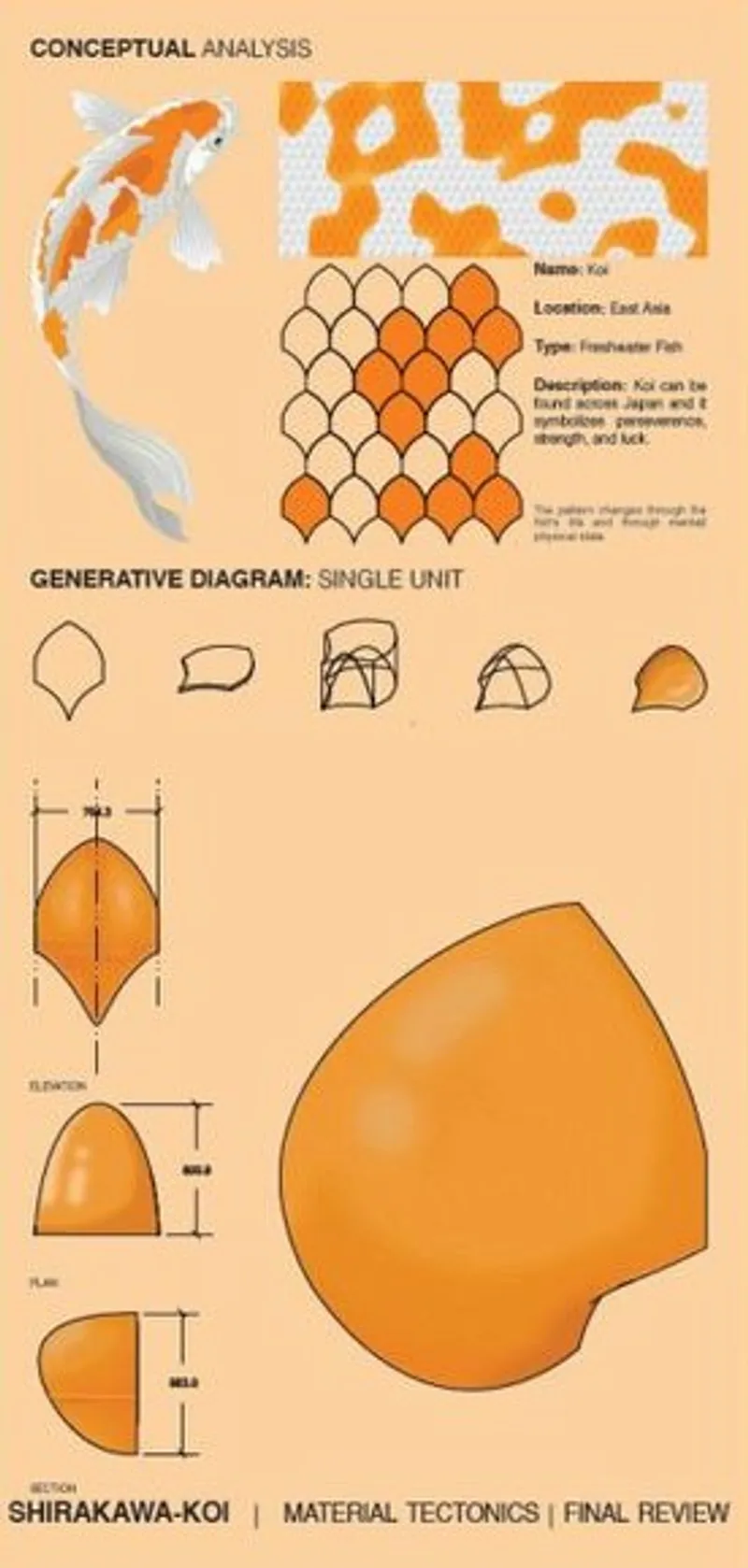
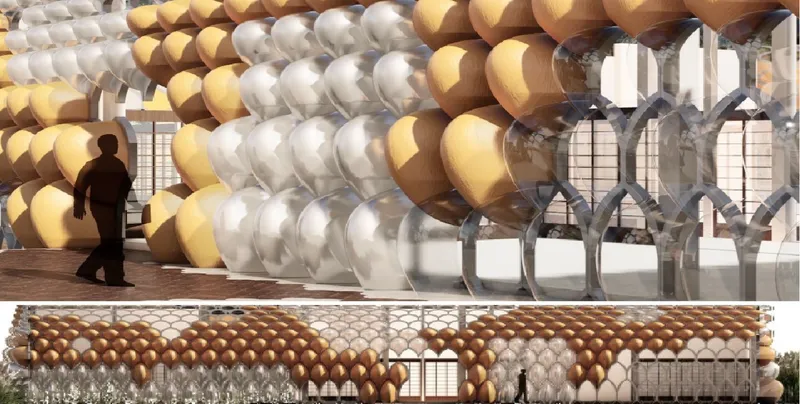
The Koi fish, a symbol of perseverance and good fortune in Japanese culture, is central to the project's concept. It influences the tectonic system of the Cultural Center, creating a dialogue between organic patterns and structural precision. This interplay is a direct nod to Kengo Kuma's GC Prostho Museum Research Center, establishing a lineage of innovation rooted in cultural respect.
The Role of Silkworms in Cultural Architecture
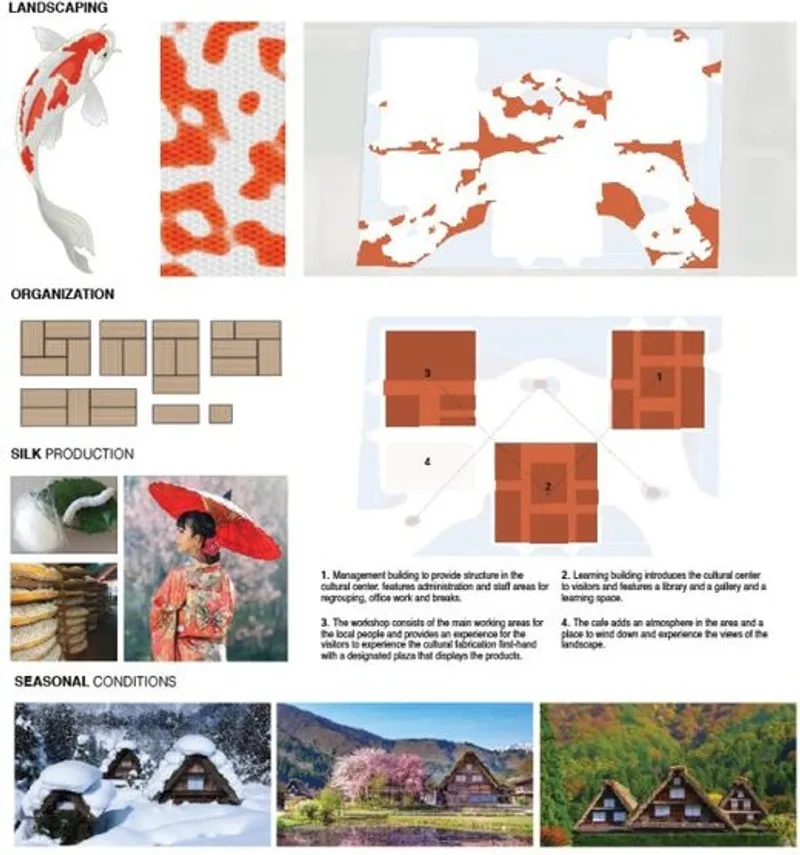
Silkworm farming, a practice integral to Shirakawa-Go's heritage, is incorporated into the design. By housing a silkworm farm within the workshop space, the project maintains a link to the village’s silk-producing traditions. This integration is not just a nod to history; it's an active participation in cultural preservation through architecture.
Spatial Design: A Mathematical and Modular Approach
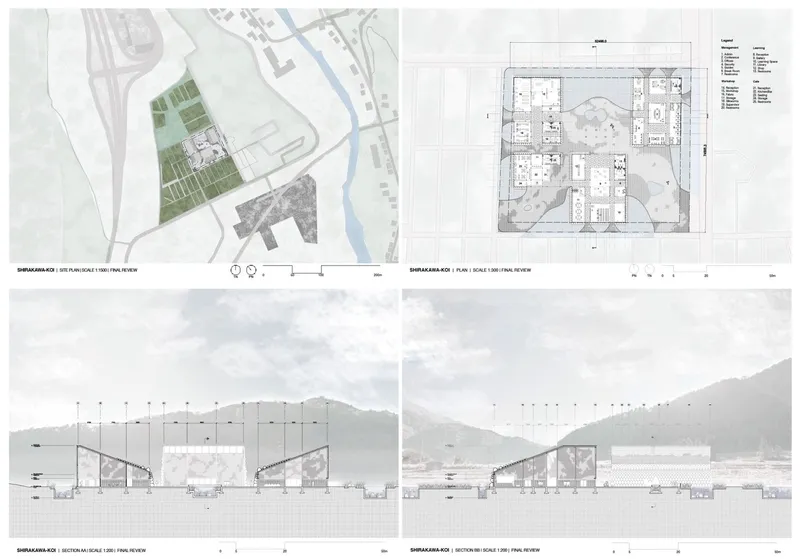
Japanese architecture is known for its modular approach, and the Shirakawa-Koi Cultural Center is no exception. With spatial arrangements and circulation paths based on tatami proportions, the design achieves a balance between functionality and cultural homage.
Seasonal Adaptation and Roof Design
The project draws inspiration from the Gasshou-style houses of Shirakawa-Go, particularly their pitched roofs designed to withstand heavy snow. Similarly, the Center's roofs are angled to echo this practical yet culturally significant architectural feature.
Bridging Cultures: A Hub for Locals and Tourists
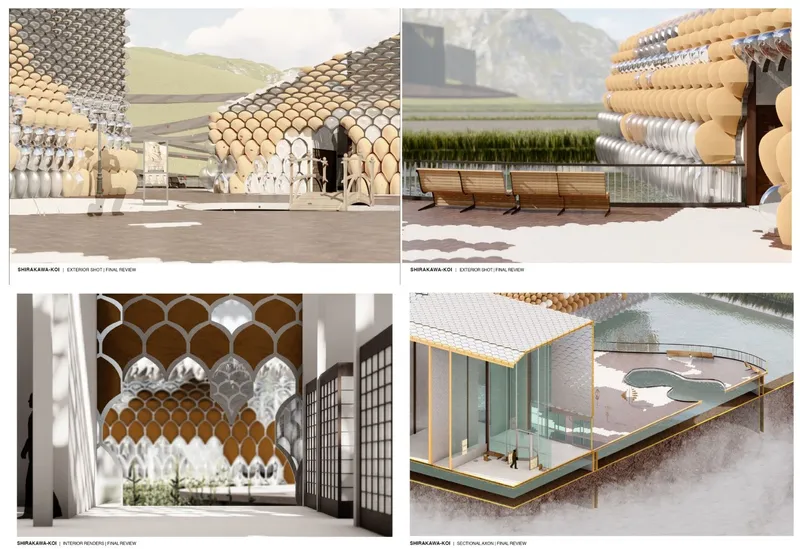
The Shirakawa-Koi Cultural Center aims to bridge cultural gaps by serving both the local community and visiting tourists. As a hub of learning, it offers a window into the region's traditions and way of life, while the adjacent café allows visitors to soak in the landscape's beauty.
Conservation Through Architecture: The Workshop Building
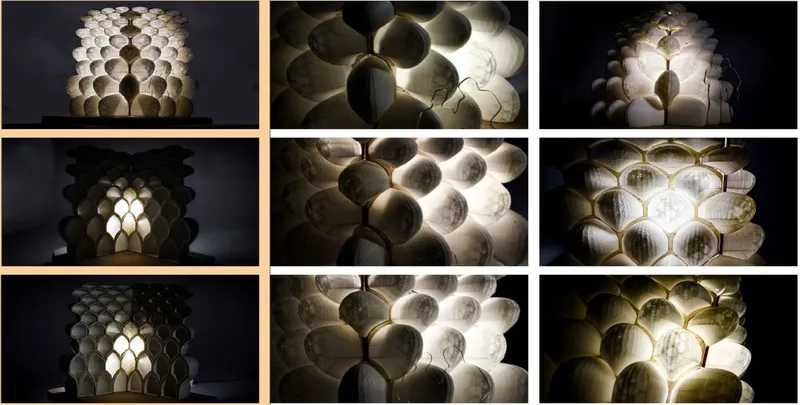
The Center features a workshop building that embodies the heart of conservation. It is here that local craftsmen can construct façade elements, create exhibition pieces, and ensure the structure's longevity. This space is a modern-day guild hall, perpetuating the craft of communal creation.
The Shirakawa-Koi Cultural Center is more than just a building; it is a beacon of cultural architecture conservation. It demonstrates how architecture can conserve cultural heritage, sustain community values, and embrace modernity without erasing history. This project stands as a pinnacle of 'Cultural Architecture Conservation,' a keyword that encapsulates its essence and ensures its discoverability for those invested in the future of architectural heritage.


Popular Articles
Popular articles from the community

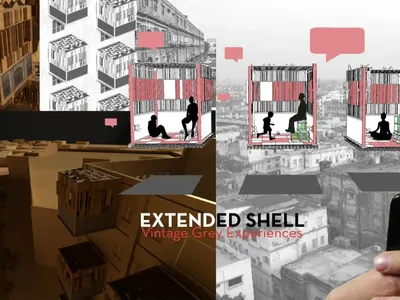
Extended Shell: Retrofitting Kolkata's Balconies as Living Urban Thresholds
A modular retrofit system recovers the social and environmental intelligence of Kolkata's historic verandas for contemporary Park Street residents.

Temporary Home for Dogs: A Reversed Zoo Rethinks Animal Shelter Architecture
In Bucharest, a sinuous corridor and freed landscape flip the logic of containment, designing a shelter that works to make itself unnecessary.

Tsunami Convergenics: Turning Catastrophic Ocean Forces into Underwater Housing Infrastructure
A speculative underwater settlement off the coast of Onagawa, Japan, treats tsunamis and typhoons as energy sources rather than threats.

Singing Woman: Contemporary Architecture Inspired by Estonia’s Voice and the Sea
Singing Woman turns Estonia’s song culture into flowing opera house architecture, blending public life, landscape, sea, and national memory.

Similar Reads
You might also enjoy these articles

Day and Night Park: A Time-Based Urban Newsstand in Beijing
A temporary urban newsstand in Beijing blending travel, light, and reading through poetic colors, compact form, and community-focused design.

Modernist Patio Renovation in El Masnou, Barcelona by Oliver Segura Arquitectura + Cebrià Arquitectura
Modernist patio renovation blending tradition and innovation with a movable pool, leveled floors, and Catalan materials in El Masnou.

Alto Residencial Coop: Cooperative Housing Development in Santiago de Compostela by Carbajo Barrios Arquitectos
A linear cooperative housing complex blending white volumes and perforated metal façades, enhancing community living, natural light, privacy, and urban integration.

Vil Genis School by BPA ARCHITECTURE – Massy, France
Vil Genis School in Massy, France, features sustainable design, south-facing classrooms, community integration, accessible spaces, and modern educational architecture.

Explore Cultural Architecture Competitions
Discover active competitions in this discipline

Challenge to reimagine the Iron Throne

Photograph architecture without architects

Illustrate the lost glory of Angkor Wat - Render Challenge

Bring back Drive In's
Comments (0)
Please login or sign up to add comments
No comments yet. Be the first to comment!