
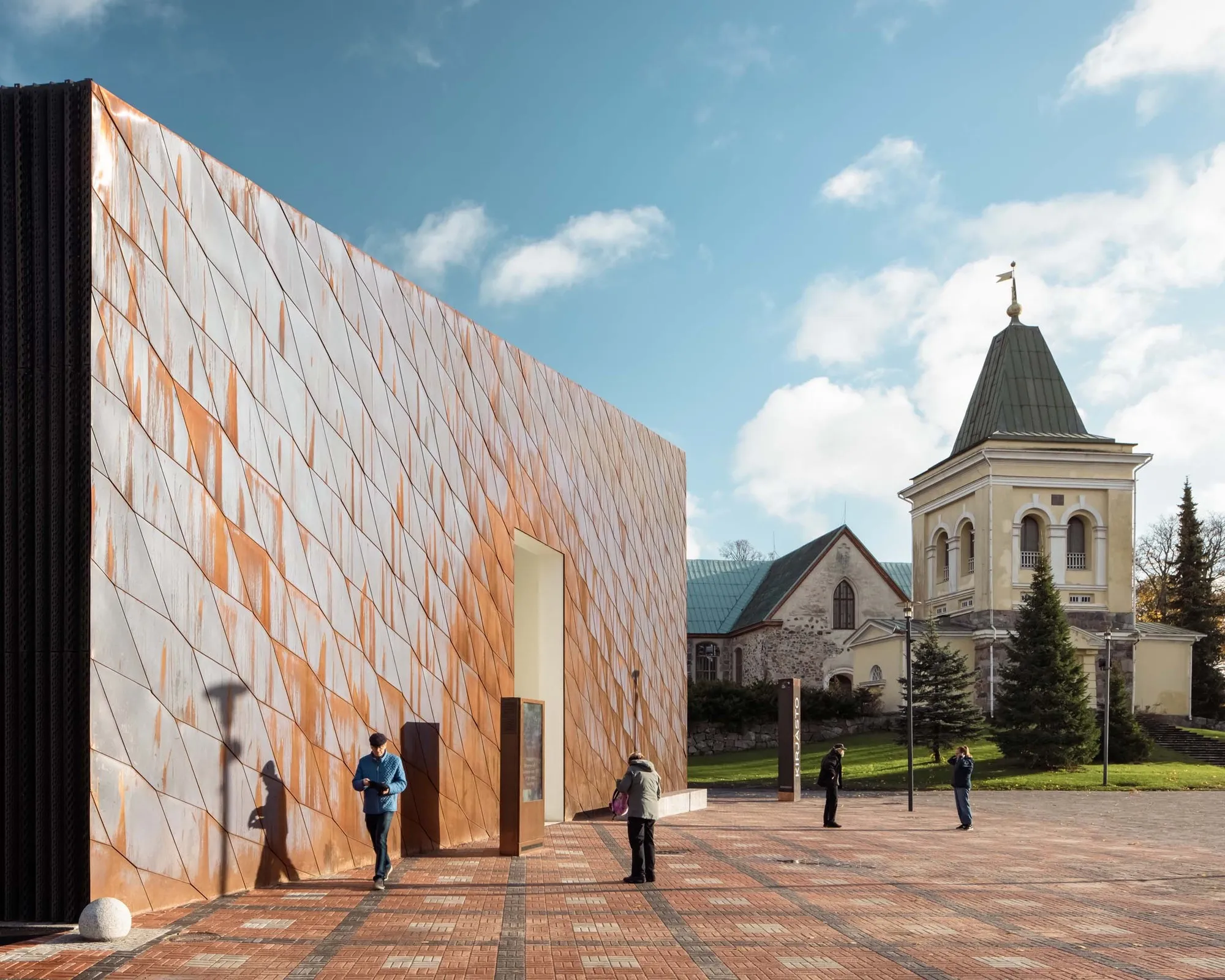
Kirkkonummi Library (Fyyri) by JKMM Architects
An adaptive reuse library in Kirkkonummi redefining civic space through landscape-inspired architecture, warm materials, and community-focused public interiors.


Located in the municipality of Kirkkonummi, west of Helsinki, Fyyri Library by JKMM Architects represents a thoughtful redefinition of the contemporary public library. Completed in 2020 with a total floor area of 4,700 m², the project transforms an existing 1980s concrete library into a vibrant civic centre that reflects evolving ideas of learning, social exchange, and shared public life in Finland.
A Contemporary Civic Living Room Rooted in Finnish Landscape, Craft, and Community
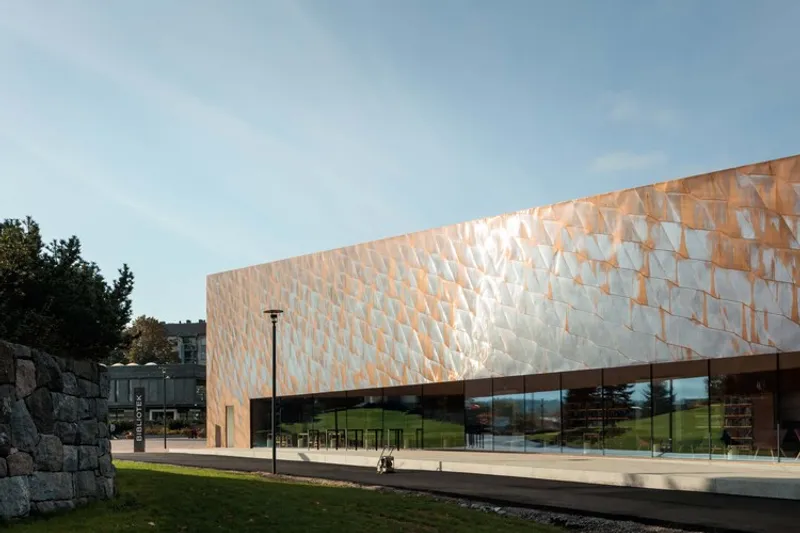
Rather than treating the library as a silent archive of books, JKMM approaches it as a public living room: a place where reading, conversation, creativity, and community coexist. Through adaptive reuse, material sensitivity, and spatial generosity, Fyyri embodies the Finnish belief that civic architecture should promote equality, well-being, and everyday dignity.
Anchoring the Civic Centre
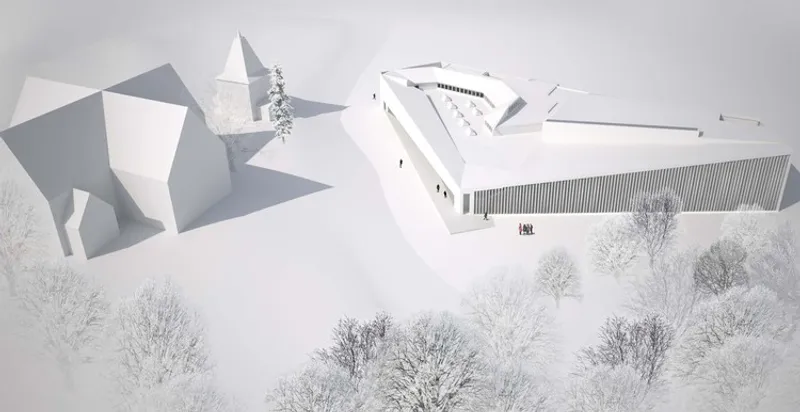
Kirkkonummi is a town of approximately 40,000 residents, historically organised around its medieval stone church. The library site sits directly opposite the church, adjacent to an open market square. Together, these elements form the symbolic and functional heart of the town.
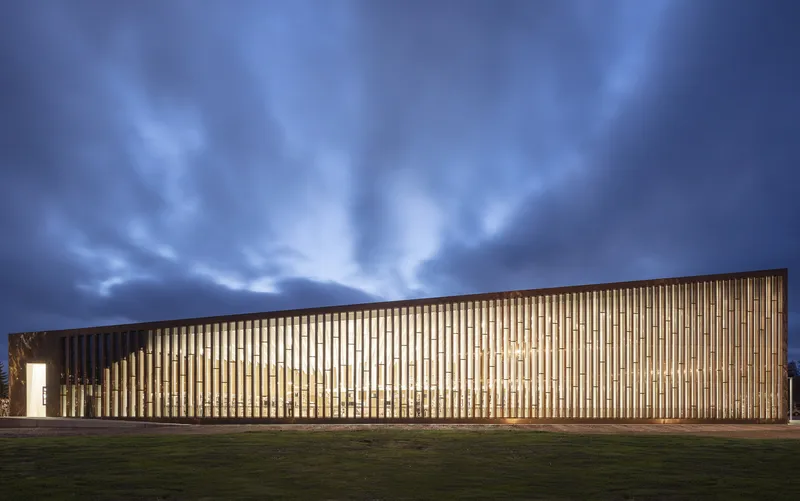
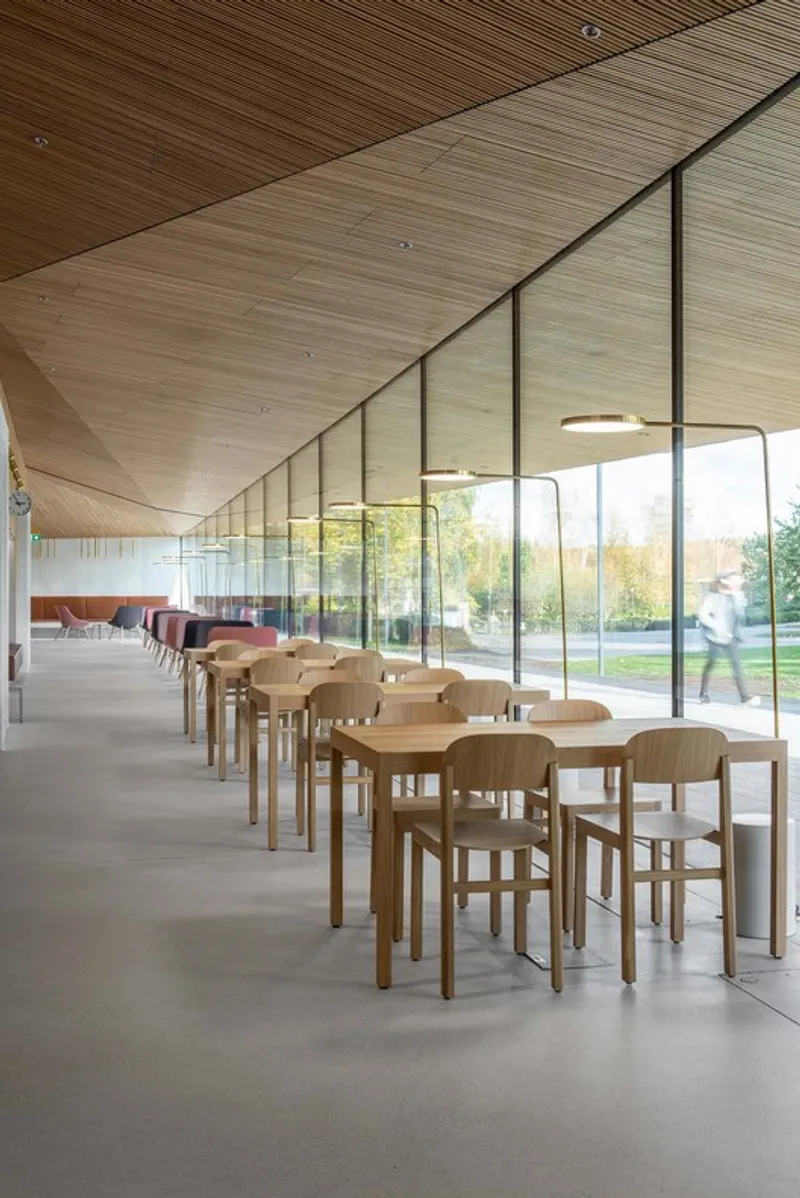
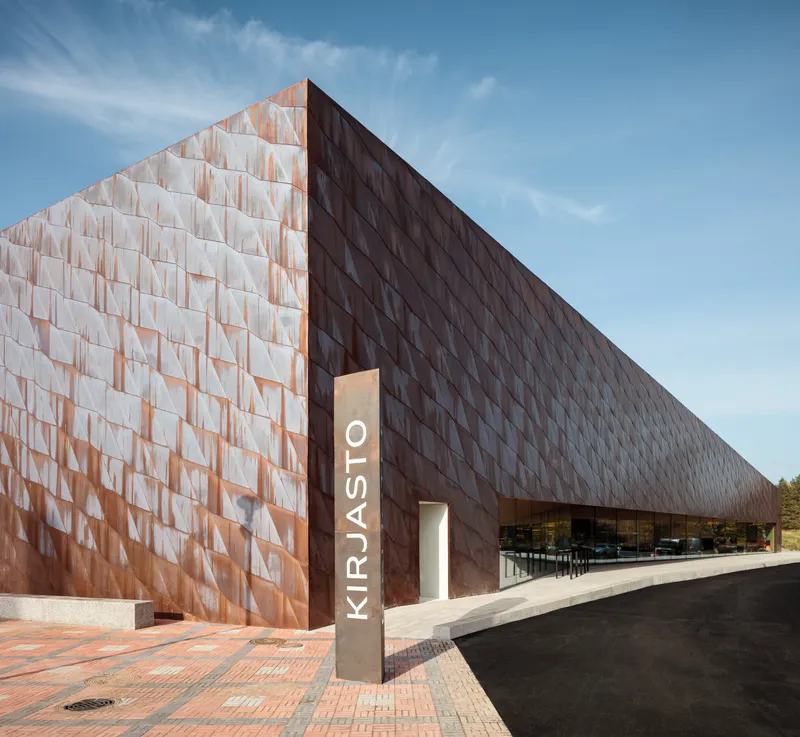
Recognising this context, JKMM emphasised the relationship between the library and its surroundings. A 50-metre-long sheltered terrace faces the churchyard, creating a gentle dialogue between secular knowledge and spiritual heritage. This terrace acts as an intermediate public space: neither fully inside nor outside: encouraging lingering, observation, and informal gathering throughout the year.
The library’s name, Fyyri, subtly references both local identity and a sense of warmth and familiarity, reinforcing its role as an inclusive civic anchor.
Adaptive Reuse as Cultural Continuity
Fyyri is an adaptive reuse project, built upon the concrete structure of the original 1980s library. Rather than demolishing the existing building, JKMM retained and expanded it, doubling its volume while preserving its structural logic.
This approach aligns with Finnish values of sustainability, continuity, and respect for existing resources. Working within the constraints of the original structure also introduced spatial irregularities: unexpected corners, layered sections, and intimate niches, that enrich the interior experience.
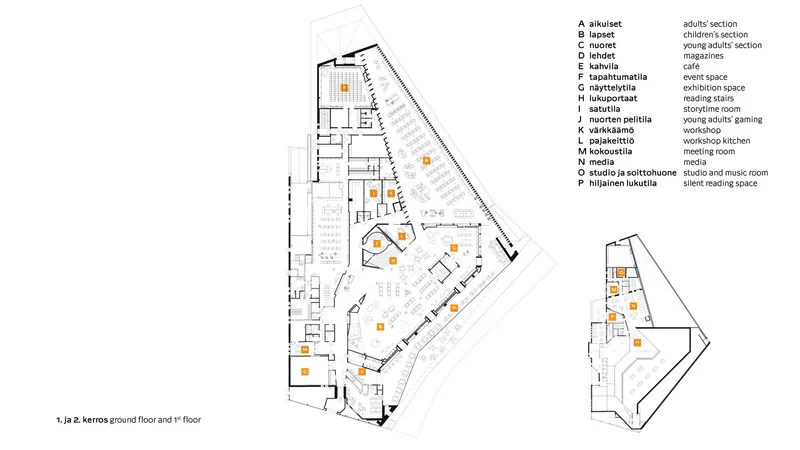
The transformation allowed the library to expand its programme significantly. Beyond traditional reading spaces, Fyyri now includes:
- Youth club facilities
- Rooms for toddler group activities
- Exhibition and performance spaces
- Event and workshop rooms
- A generous ground-floor café and reading lounge
In this way, the building becomes not just a repository of books, but a multigenerational social infrastructure.
Architecture Inspired by Landscape
The architectural language of Fyyri is deeply informed by the Finnish coastal landscape. This influence is evident both outside and inside the building.
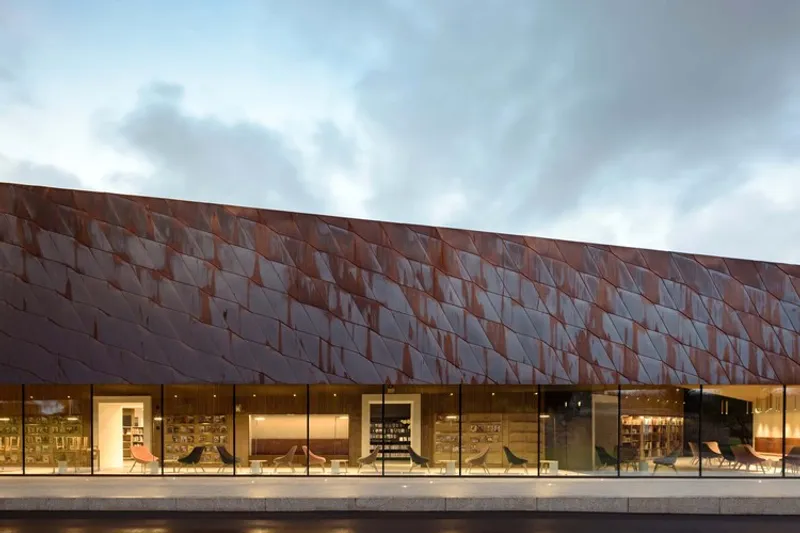
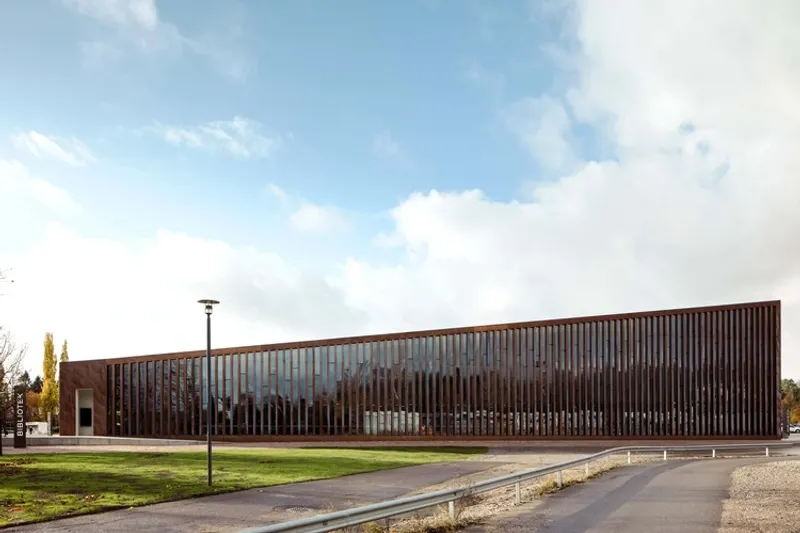
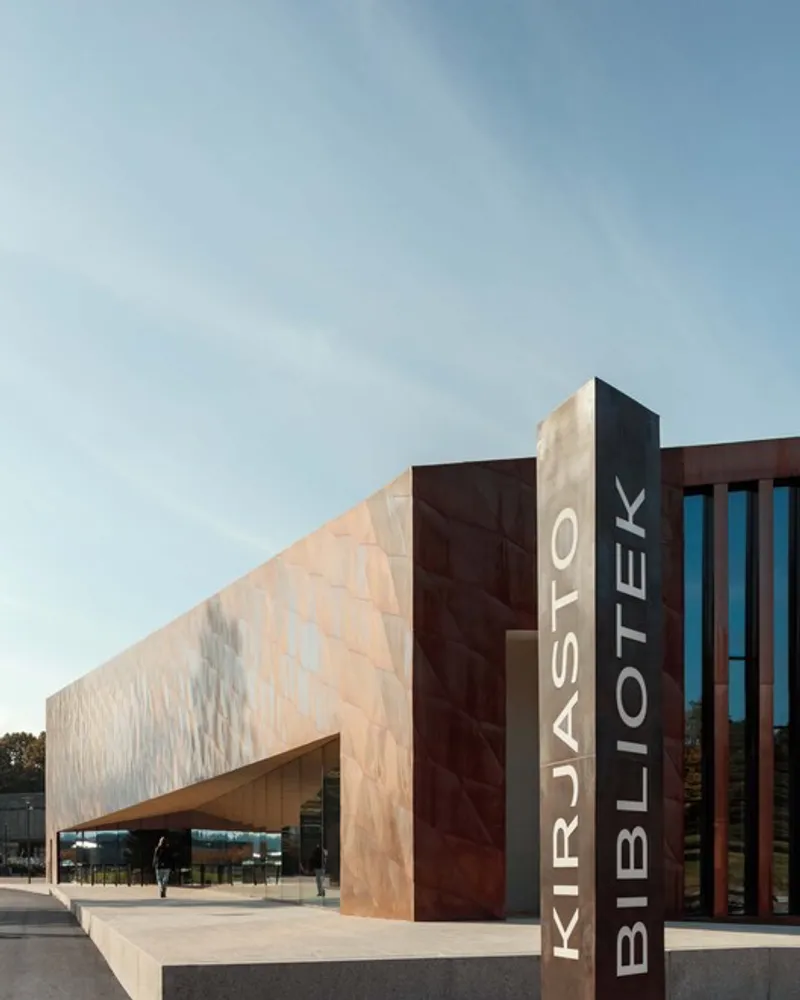
Externally, the library is clad in oxidized copper shingles (Nordic Brown), supplied by Aurubis. The copper references Kirkkonummi’s maritime heritage while allowing the façade to age gracefully over time, responding to light, weather, and seasonal change. Its muted tonality ensures harmony with the stone church and surrounding civic buildings.
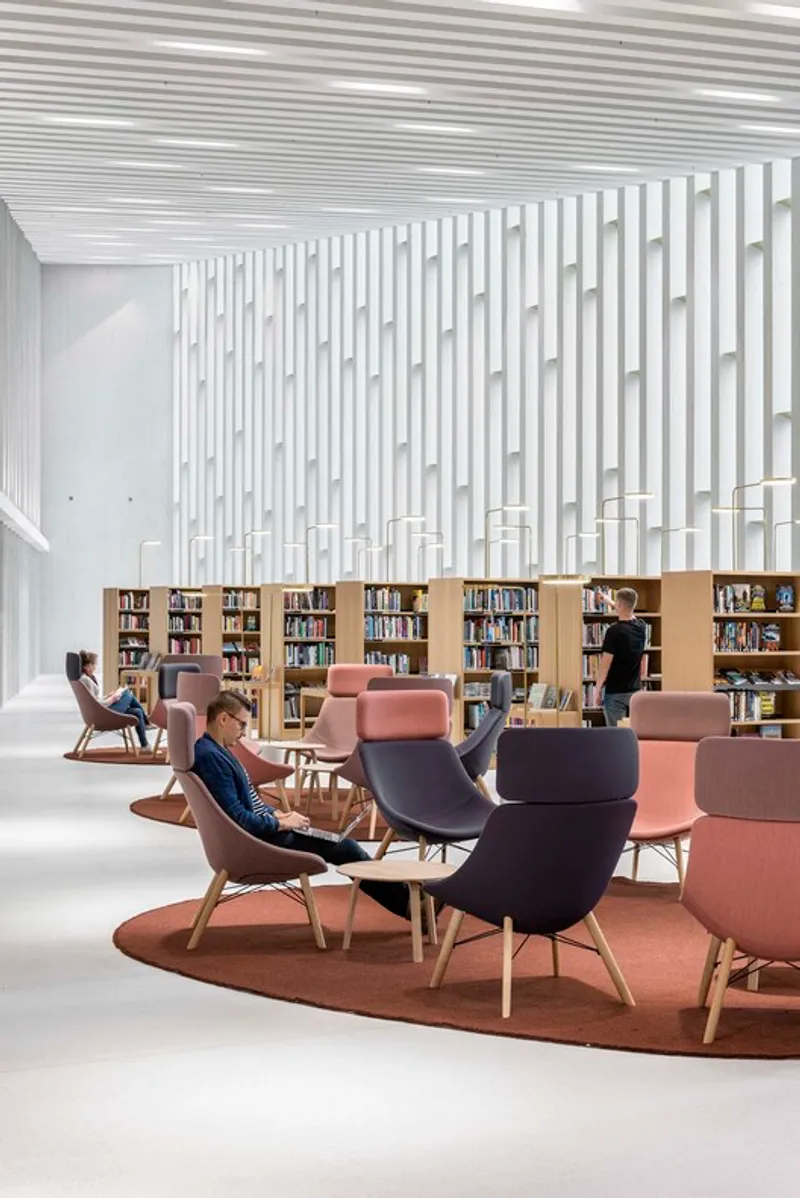
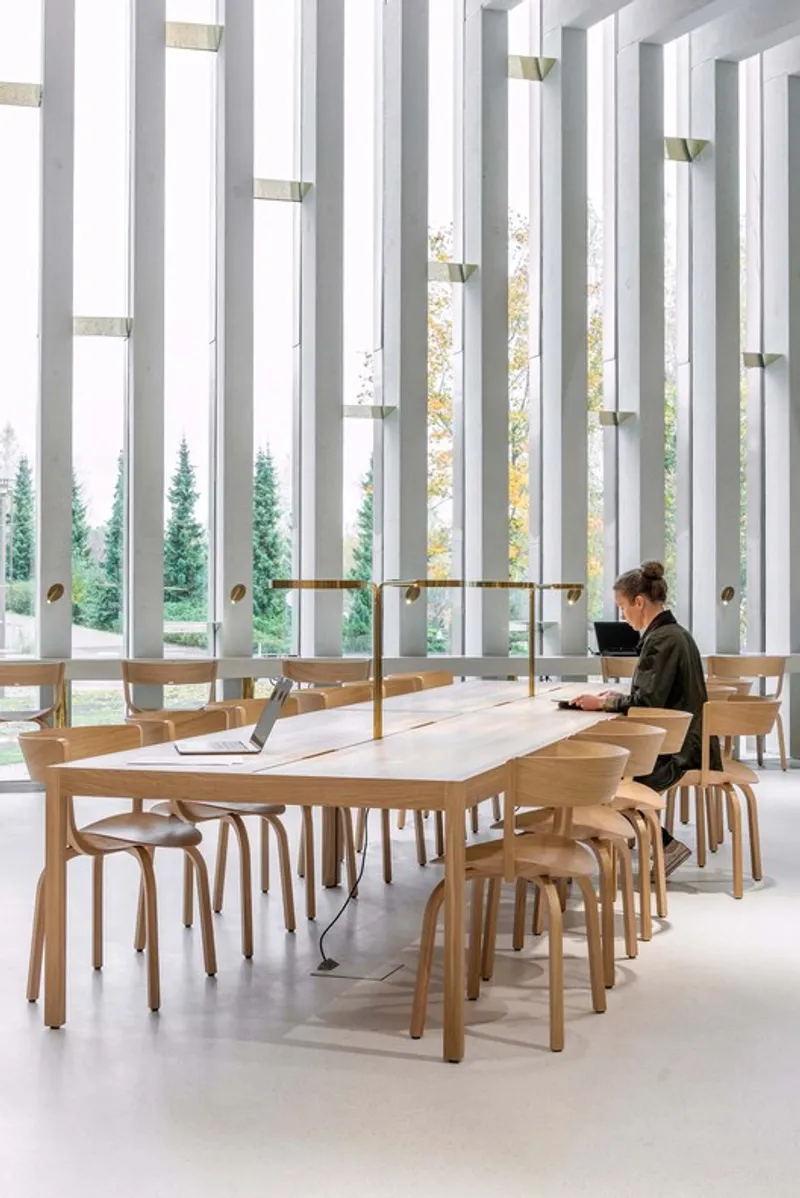
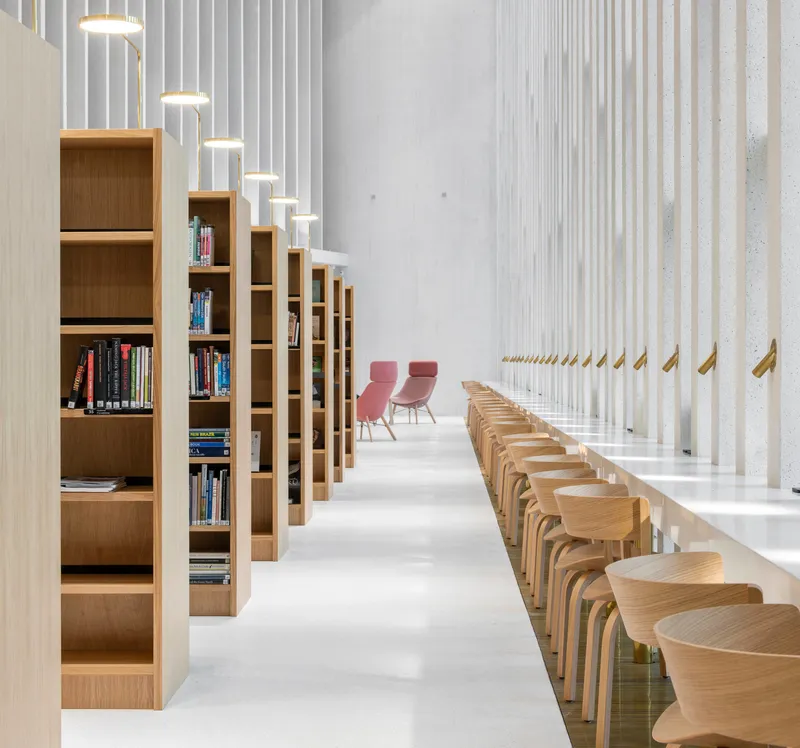
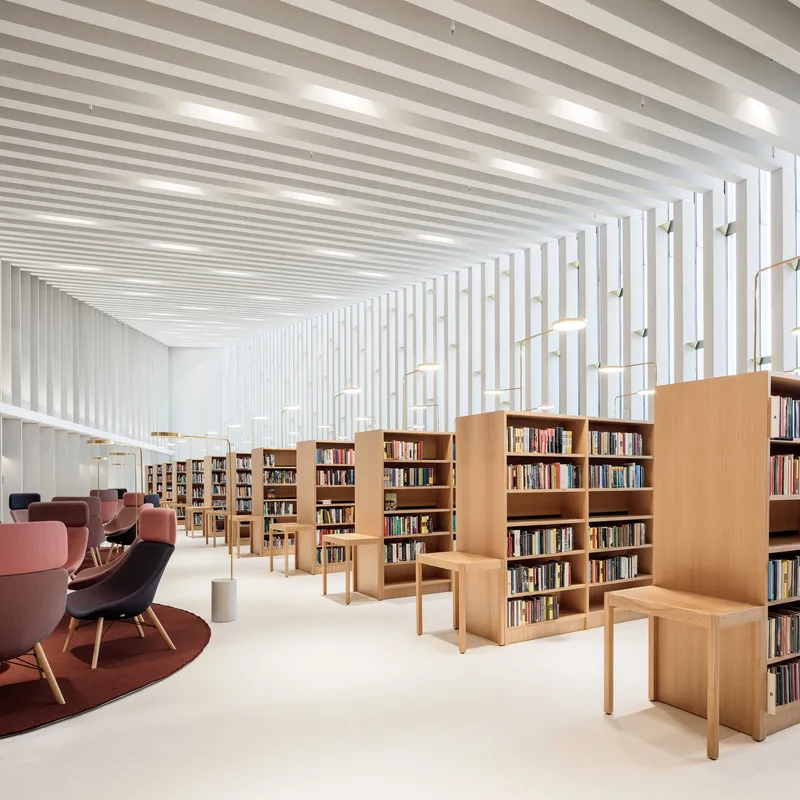
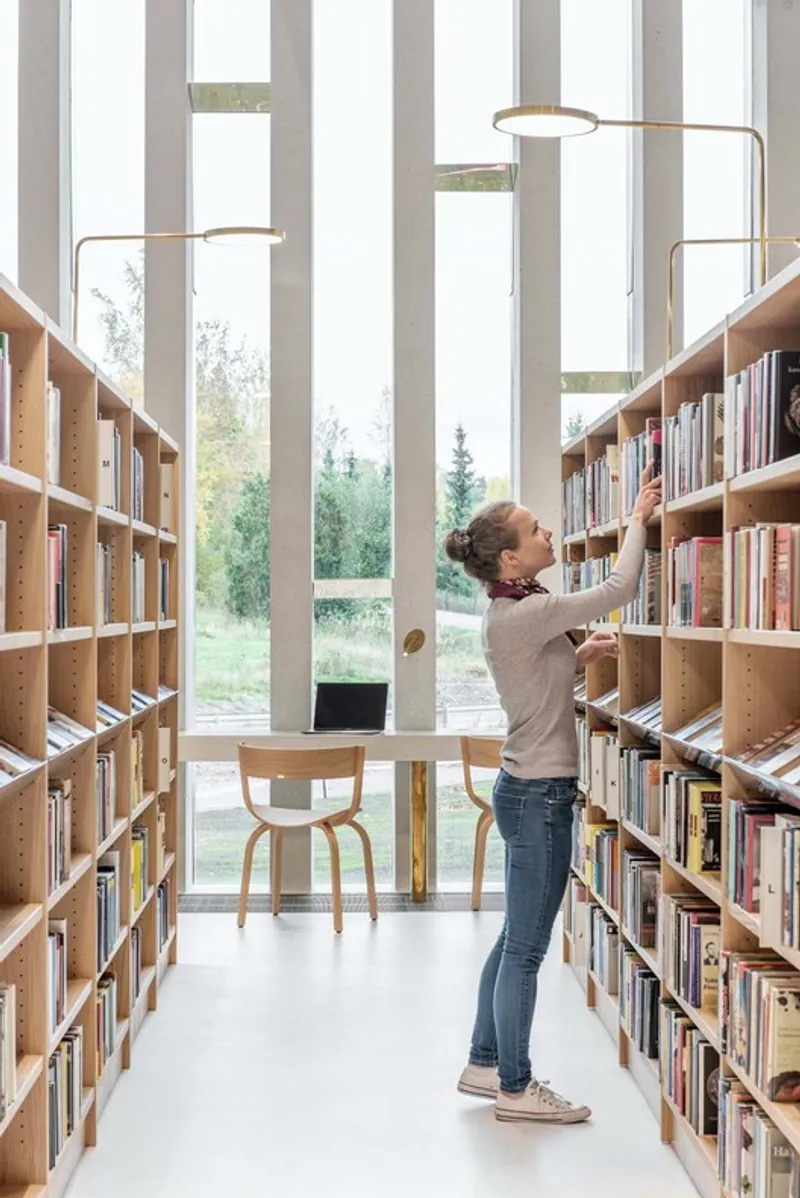
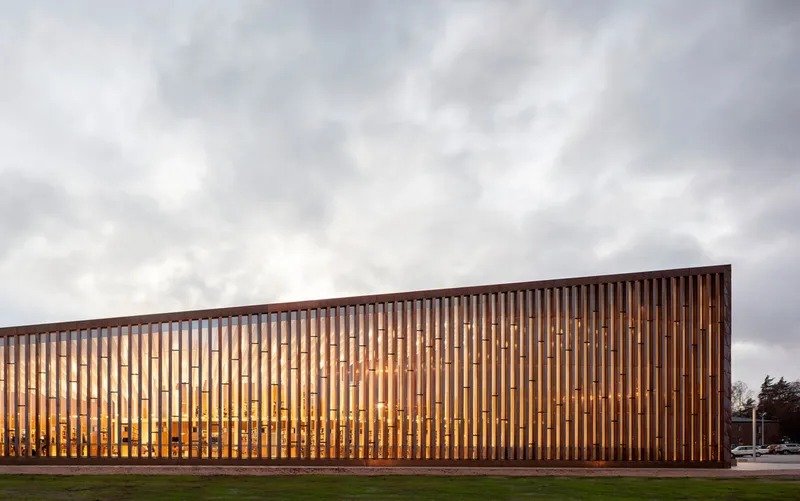
Inside, the spatial composition draws inspiration from nature. The main reading hall is defined by rhythmic fair-faced concrete columns and beams. Daylight filters through this structural grid, creating patterns reminiscent of sunlight passing through a forest canopy. The effect is calm, atmospheric, and subtly poetic, an abstraction of nature rather than a literal imitation.
Interior Design: Warmth, Dignity, and Tactility
JKMM’s interior design continues Finland’s Modernist library tradition, where books and learning are elevated through careful detailing and material honesty.
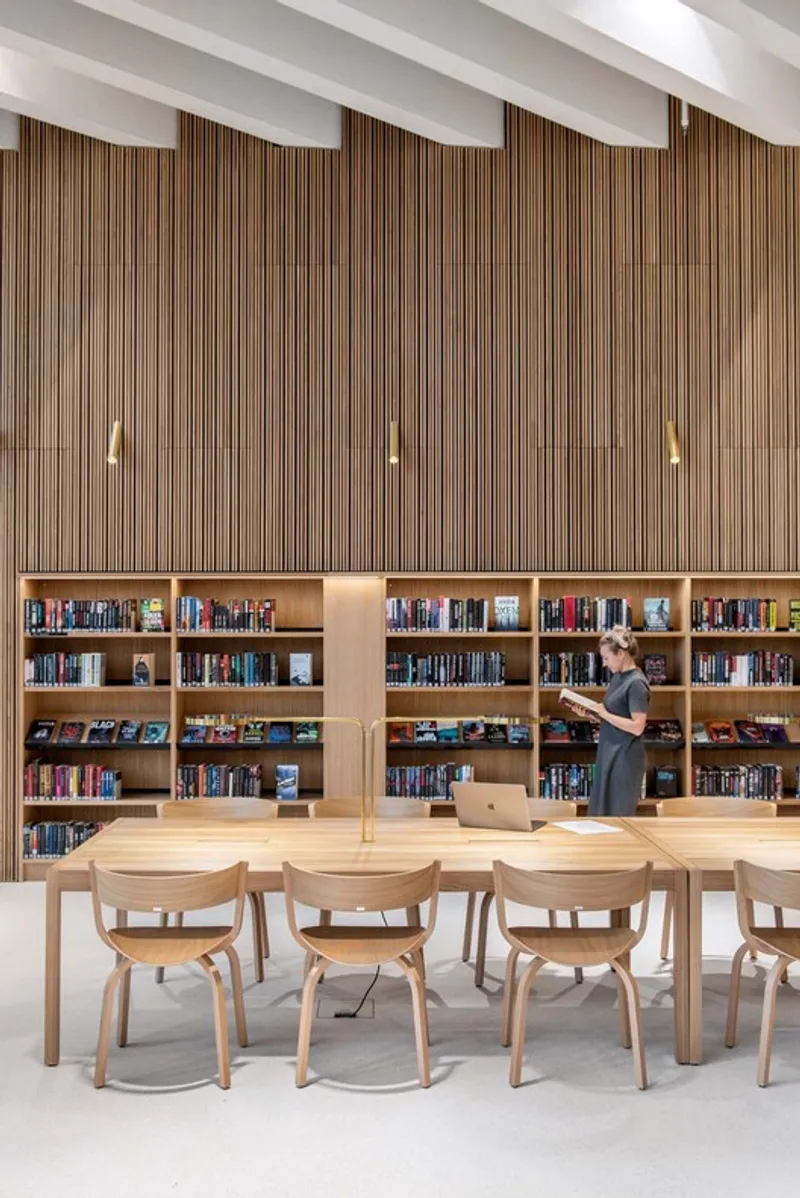
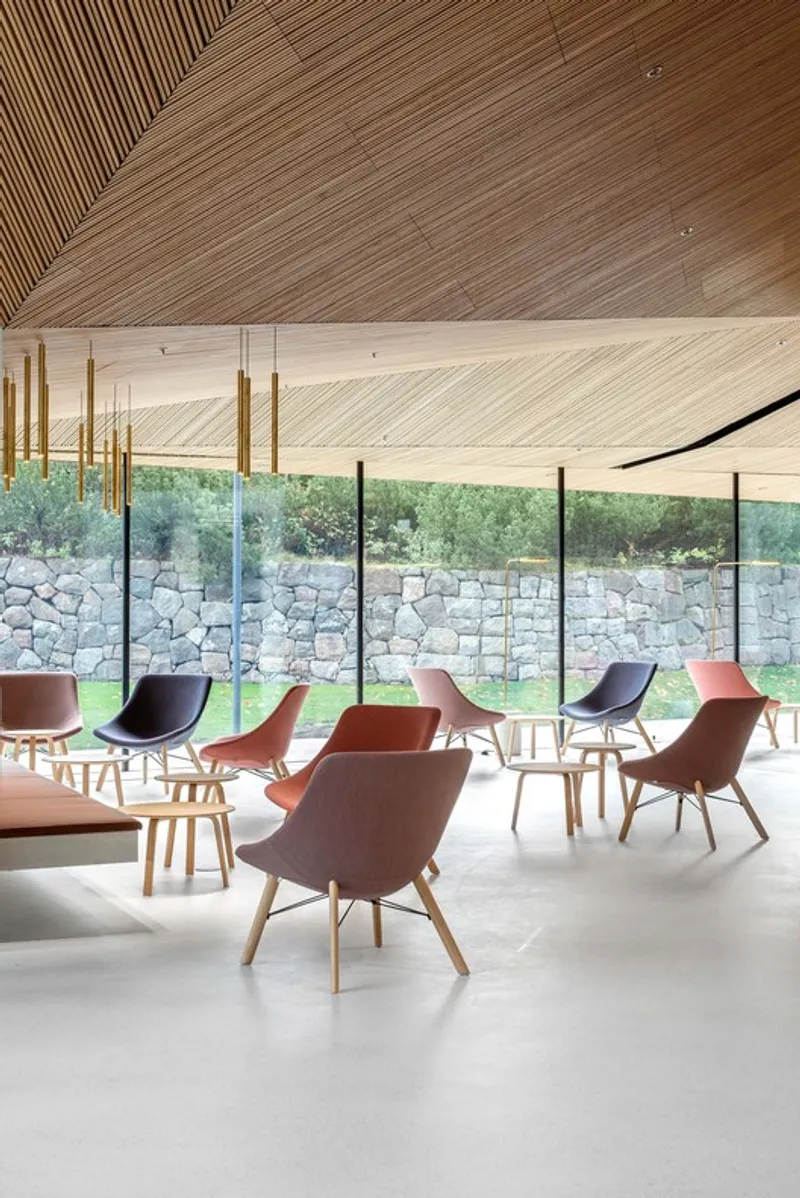
A key material choice is brass, used in bespoke lighting fixtures, handrails, and entrance details. Brass introduces warmth and a sense of dignity that contrasts with the raw concrete structure. While brass is now also valued for its antibacterial properties, JKMM selected it primarily for its tactile and visual richness.
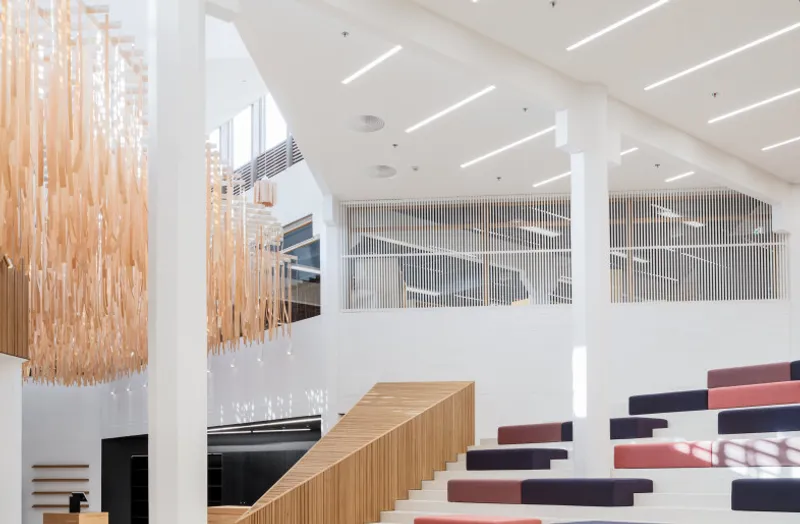
Furniture, lighting, and finishes are designed as an integrated architectural system rather than as decorative additions. Slatted timber walls and ceilings blur the boundary between architecture and interior design, reinforcing spatial continuity and acoustic comfort.
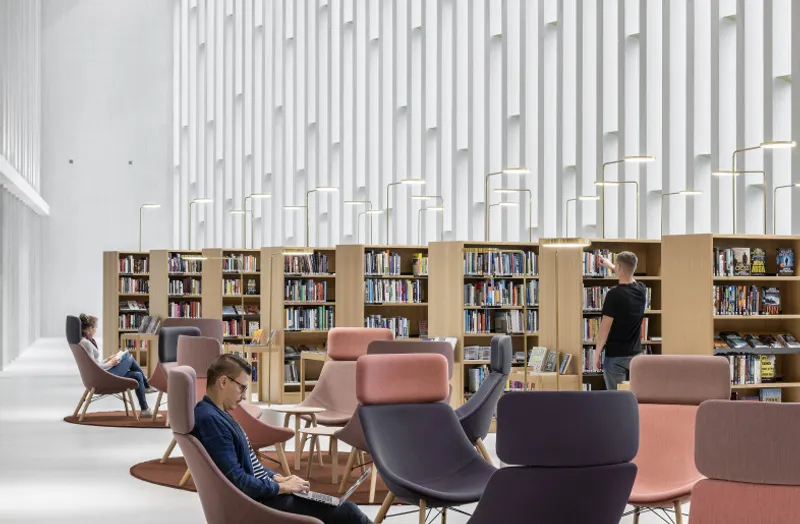
Textiles such as wool and felt, along with a subdued colour palette, reference local nature while softening the concrete environment. The result is an interior that feels both monumental and intimate, capable of hosting large public events while still offering quiet corners for reading and reflection.
Art, Atmosphere, and Everyday Poetry
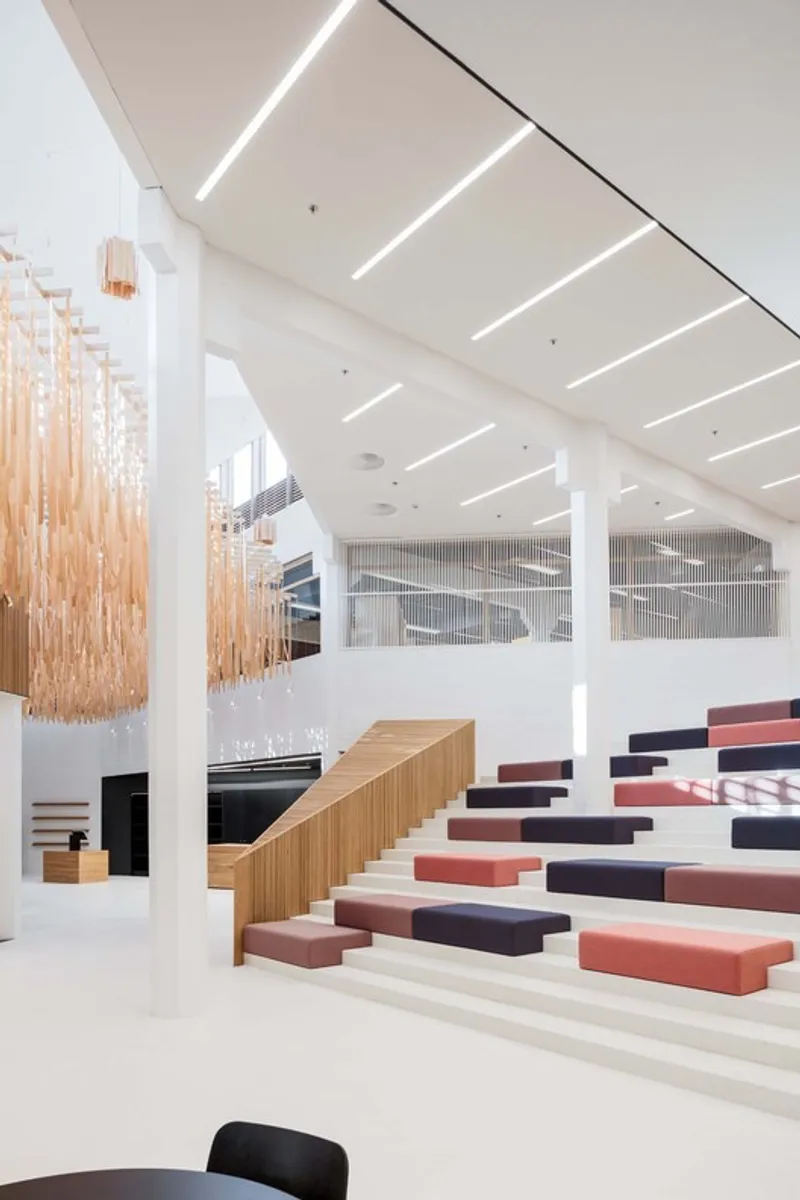
Art plays a subtle but meaningful role in Fyyri. Finnish artist Petri Vainio collaborated with JKMM to create an in-situ ceiling artwork in the main entrance lobby. The piece represents a bed of reeds, an abstract yet recognisable motif drawn from local landscapes.
This artwork reinforces the library’s connection to nature and enhances the sensory experience of arrival. Rather than dominating the space, it gently enriches it, aligning with the project’s ethos of restraint and quiet expression.
Throughout the building, carefully placed seating, window views, and lighting variations encourage different modes of use, from social interaction to solitary immersion.
Libraries as Public Living Rooms
Fyyri exemplifies a broader shift in Finnish library design. As Teemu Kurkela, founding partner at JKMM, notes, libraries today are no longer solely about books. They are places for:
- Sharing knowledge across media
- Learning through activities and events
- Socialising without commercial pressure
In Finland, this has led to libraries being described as “public living rooms”: spaces open to all, regardless of age, background, or economic status.
Fyyri’s non-commercial character is central to its civic role. It offers a setting where people can spend time without obligation to consume, reinforcing social cohesion and collective well-being as Kirkkonummi continues to grow.
A Library Designed for Belonging
According to JKMM interior architect Tiina Rytkonen, the goal was to create an interior that feels both welcoming and intimate, enabling every visitor to find their own place within the building. The reuse of the 1980s structure resulted in unexpected spatial moments: cozy hideaways, layered views, and child-friendly niches ideal for storytelling and exploration.
These qualities ensure that Fyyri is not only architecturally significant but emotionally resonant. It is a building that adapts to daily life, changing needs, and diverse users without losing its identity.
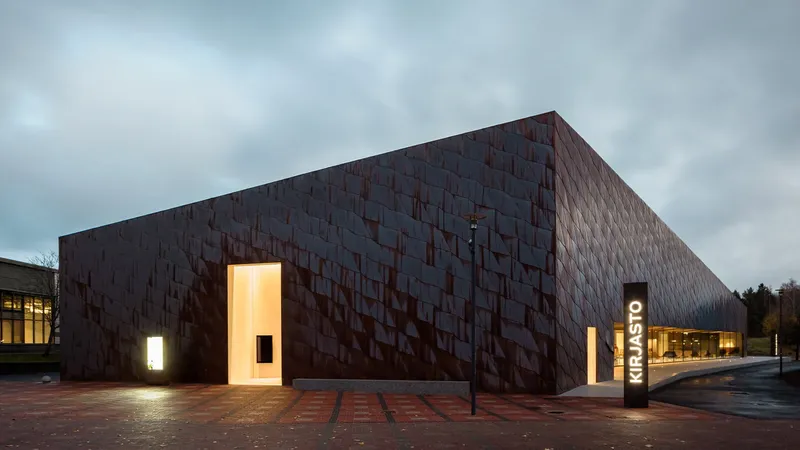
All the Photographs are works of Tuomas Uusheimo, Pauliina Salonen



Popular Articles
Popular articles from the community

EW PARK: Sustainable Architecture Reimagines the Future of Urban Parking
EW PARK reimagines city parking as a modular wooden tower combining automation, solar energy, electric mobility, and adaptable urban design.

The Musturak Paradise: Senior Living Architecture for a Connected Future in Temara, Morocco
The Musturak Paradise reimagines senior living architecture in Temara via private homes, social spaces, culture, community, and shared care.

Conexión: Biophilic Design Reimagines High-Rise Living in Hong Kong
Conexión reimagines high-rise living in Hong Kong through biophilic design, green facades, shared spaces, daylight, water and nature within.

The Ocean Hive: Sustainable Architecture for a Self-Sufficient Civilization at Sea
The Ocean Hive imagines sustainable architecture at sea, where modular habitats, algae, wave power and ocean waste sustain a growing colony.


Similar Reads
You might also enjoy these articles


Hodi-Mandai Geram
Project Function: Preservation and revitalization of the Intangible heritage and socio-spatial identity of the Hodi by Housing, Cultural Memory Center, Sacred Grove, landscape, local tourism economy


Olio Towers: A Mid-Rise for Performers That Fuses Housing, Rehearsal, and Stage
Located blocks from Houston's Theater District, this modular tower stacks living units around a central performance atrium.

Oasis: Modular Green Housing Carved into Dhaka's Urban Fabric
A shortlisted Plugin Housing entry reclaims unauthorized settlements in Dhaka with stepped concrete volumes, green roofs, and ventilation-driven design.

Black Hole: A Floating Megastructure for the Post-Physical Era
Emiliano Mazzarotto envisions a spherical, self-scaling arena where e-sports, digital hotels, and holographic stadiums replace traditional public space.

Explore Educational Building Competitions
Discover active competitions in this discipline



Challenge to design public laboratory


Challenge to reimagine the Iron Throne


Photograph architecture without architects


Illustrate the lost glory of Angkor Wat - Render Challenge
Comments (0)
Please login or sign up to add comments
No comments yet. Be the first to comment!