

KOODU: Weaving a Nest By NO Architects Designers and Social Artists | Kerala, India
KOODU by NO Architects is a compact, sustainable Kerala home blending innovative brick design, open-plan living, and human-centered affordable architecture.


KOODU, meaning “Nest,” is a thoughtfully designed budget home by NO Architects Designers and Social Artists, located in Eravipuram, Kerala, along India’s scenic Arabian Sea coast. Completed in 2024, this 71 m² house was created for a single mother and her two children on a 2-cent urban plot, with only half the area dedicated to the built structure, exemplifying efficient and meaningful use of minimal space.
This project is a pro bono initiative, funded under the Prime Minister’s Awas Yojana (PMAY) and supported by generous sponsors. The home demonstrates that affordable housing can be both functional and poetic, pushing the limits of design despite budgetary or spatial constraints. KOODU celebrates collective goodwill, innovative architecture, and human-centered design.


Innovative Design and Spatial Strategies
KOODU features an open-plan layout that integrates the living, dining, and kitchen areas, maximizing space while maintaining comfort and fluidity. The ground floor contains a bedroom with an attached bathroom, while the first floor houses two bedrooms sharing a bathroom. A winding staircase, carefully tucked into the compact site, connects the levels without disrupting the spatial harmony.
The design employs pastel tones and earthen materials, enhancing the warmth and intimacy of the home. Every element has been meticulously considered to make small-space living feel expansive and thoughtful.


Architectural Innovation
The house explores an asymmetrical groin vault, a rare architectural feature that challenges traditional forms and introduces structural elegance. Brick jaalis inspired by the legendary Laurie Baker guide natural light and ventilation, while paying homage to Kerala’s architectural heritage. This approach combines craftsmanship, affordability, and sustainability, demonstrating how design ingenuity can redefine small-scale residential architecture.


Contextual and Environmental Integration
KOODU is deeply rooted in its tropical Kerala context. The architecture seamlessly merges interior and exterior spaces, ensuring a connection to the surrounding landscape and climate. The home benefits from cross ventilation, abundant natural light, and visual openness, providing a healthy and nurturing environment despite the compact footprint.
The design emphasizes that limited resources can inspire creativity, turning constraints into opportunities for innovative solutions. Every aspect, from layout to material selection, reinforces a philosophy that good design should be accessible to all, regardless of budget.


Materials and Craft
Materials were chosen for sustainability, durability, and local relevance. Earthen textures, locally sourced bricks, wood finishes, and pastel colors create a warm, tactile environment that celebrates both craftsmanship and affordability. By working with materials in their simplest, most honest form, the project reduces construction complexity and cost while maintaining elegance and functionality.


Social and Human-Centered Approach
KOODU is more than a house, it’s a safe, nurturing nest for its inhabitants and a testament to human-centric architecture. The project demonstrates that even the smallest homes can be innovative, meaningful, and contextually responsive, offering a blueprint for affordable, dignified housing in dense urban settings.


All the photographs are works of Harikrishnan Sasidharan


Popular Articles
Popular articles from the community


David Macias Steps a Doorless Stone and Plaster House Down a Tropical Colombian Hillside
In the humid hills of Colombia, Threshold House replaces the front door with an open void and terraces its 850 m² down the slope instead of fighting it.

longwave studio Reorganizes a 112 m² Tainan Apartment Around the Daily Routines of a Family and Two Cats
In Tainan, Taiwan, birch plywood, rust-red furniture and a freestanding plaster wall link arrival, storage, work and family life in one apartment.

Jaramillo Van Sluys Arquitectura and Urbanismo Turn a Demolished Registry Lot in Quito into an Orchard Plaza
In Quito's Centro Histórico, a 2,800 m² plaza exposes the San Agustín convent wall and redraws its lost Augustinian orchard in volcanic stone.

Cube Design Draws an Ecological Corridor Between Two Shenzhen Hills with the Nankai Building
Beside Shenzhen's container docks, the Nankai Building pairs stacked balconies with a climbing green screen to connect two hillsides across its height.

Similar Reads
You might also enjoy these articles

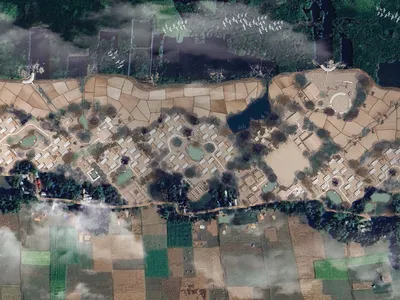
Hodi-Mandai Geram
Project Function: Preservation and revitalization of the Intangible heritage and socio-spatial identity of the Hodi by Housing, Cultural Memory Center, Sacred Grove, landscape, local tourism economy

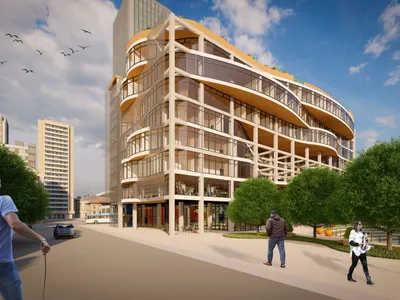
Olio Towers: A Mid-Rise for Performers That Fuses Housing, Rehearsal, and Stage
Located blocks from Houston's Theater District, this modular tower stacks living units around a central performance atrium.
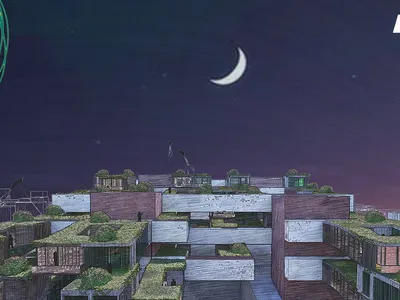
Oasis: Modular Green Housing Carved into Dhaka's Urban Fabric
A shortlisted Plugin Housing entry reclaims unauthorized settlements in Dhaka with stepped concrete volumes, green roofs, and ventilation-driven design.

Black Hole: A Floating Megastructure for the Post-Physical Era
Emiliano Mazzarotto envisions a spherical, self-scaling arena where e-sports, digital hotels, and holographic stadiums replace traditional public space.

Explore Housing Competitions
Discover active competitions in this discipline

Challenge to reimagine the Iron Throne

Photograph architecture without architects

Illustrate the lost glory of Angkor Wat - Render Challenge

Design challenge to reuse E-waste
Comments (0)
Please login or sign up to add comments
No comments yet. Be the first to comment!