
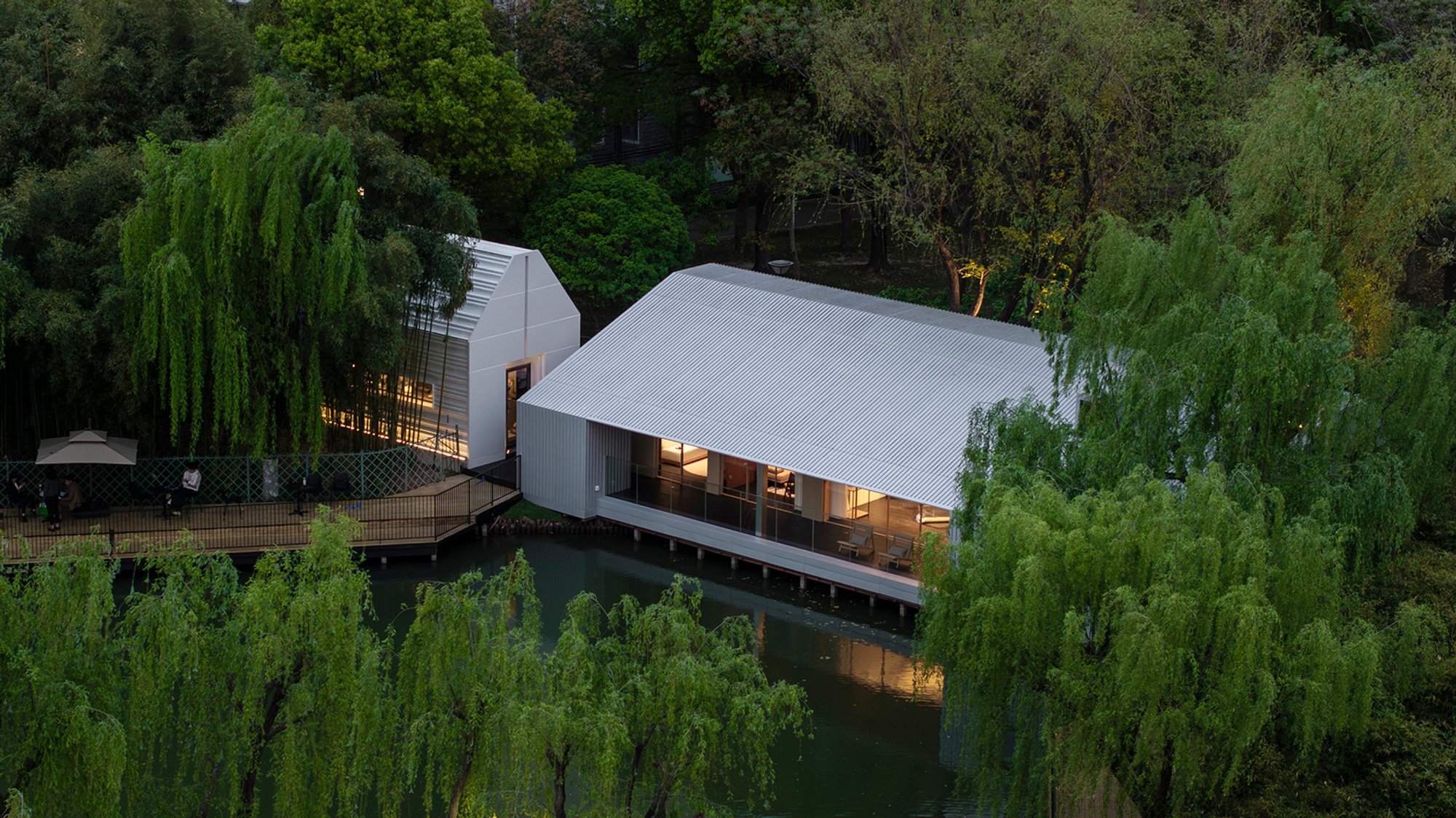
Lake House Wutopia Lab: Fast-Build Zero-Carbon Pavilion on Shanghai’s Waterfront
Wutopia Lab’s Lake House in Shanghai transforms preserved structures with fast-build skins and recycled materials into a zero-carbon experiential pavilion.

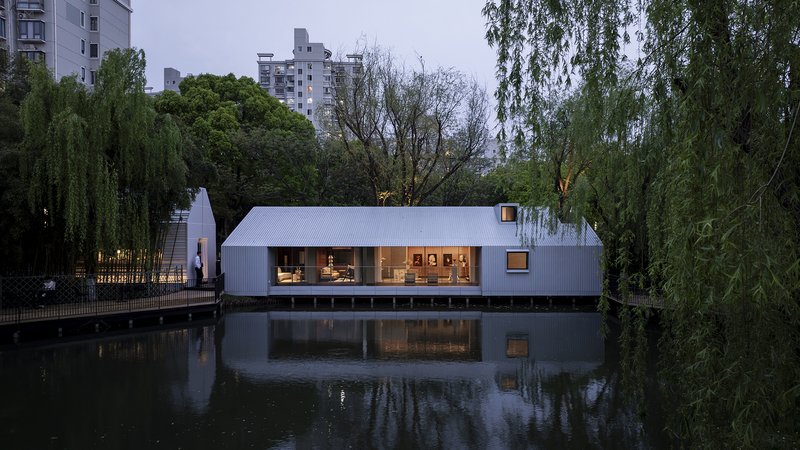
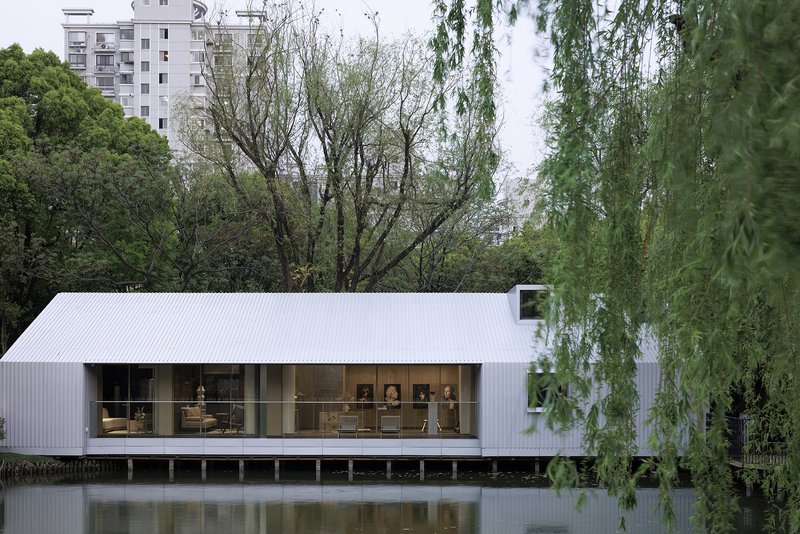
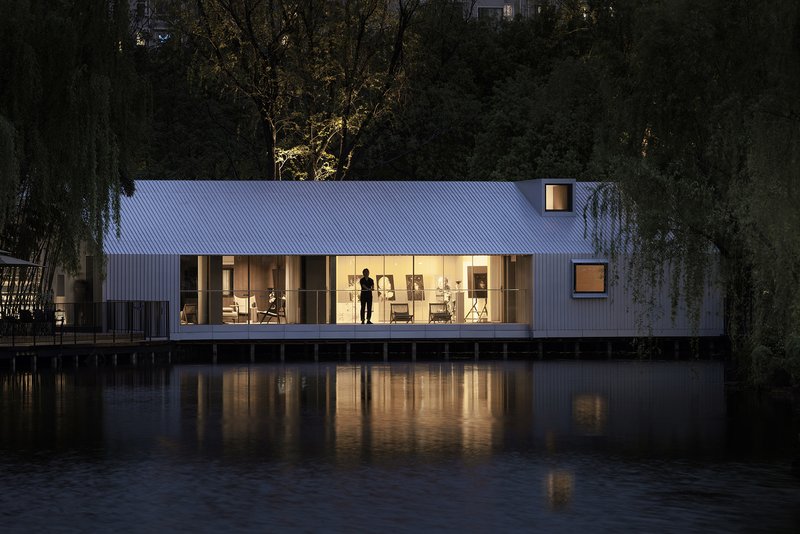
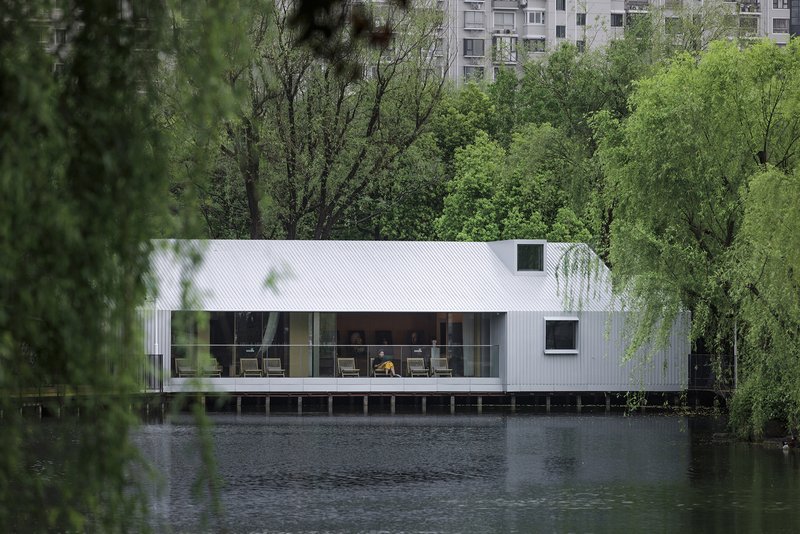
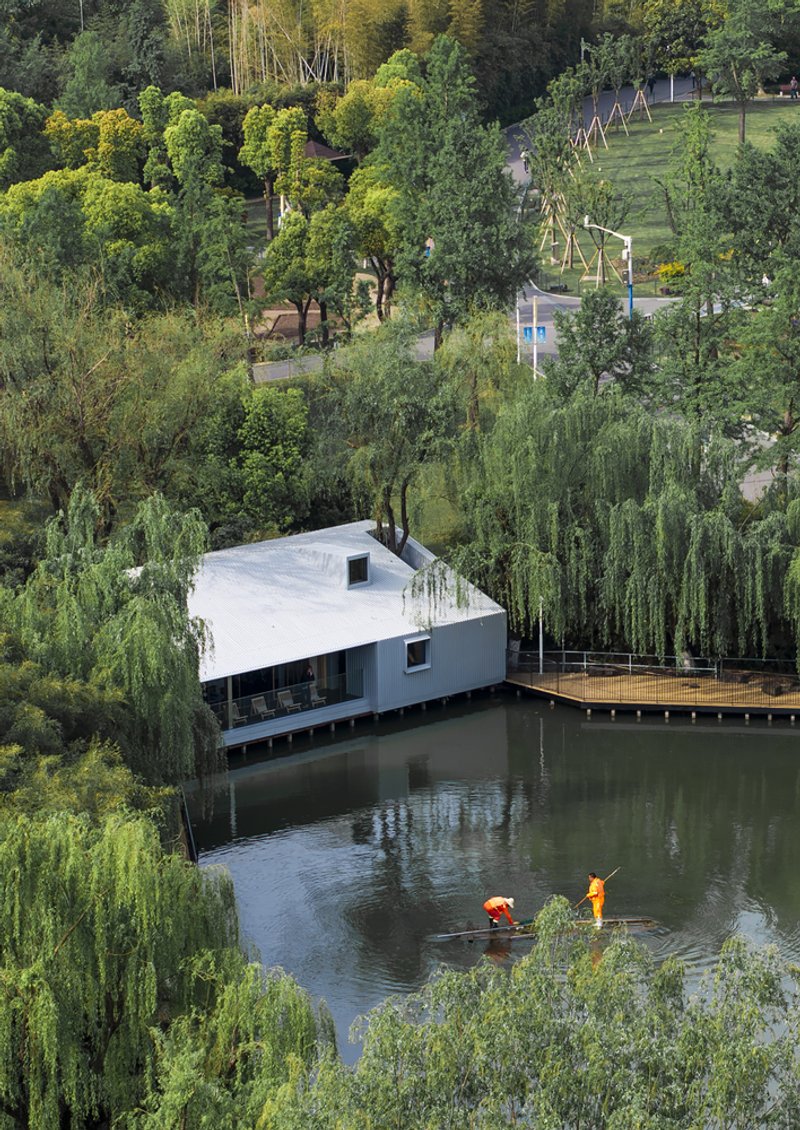
The Lake House by Wutopia Lab is a 190 square meter life-experience pavilion in Shanghai that compresses full-scope design, fabrication, and installation into an astonishing fifty-day window while advancing a material, ecological, and cultural thesis centered on cherishing resources. Conceived as a rapid-build public intervention that unites architecture, interiors, landscape, exhibition, and soft furnishing, the project turns a former water base into an immersive linear journey along the bay, dissolving boundaries between inside, outside, artifact, and environment.
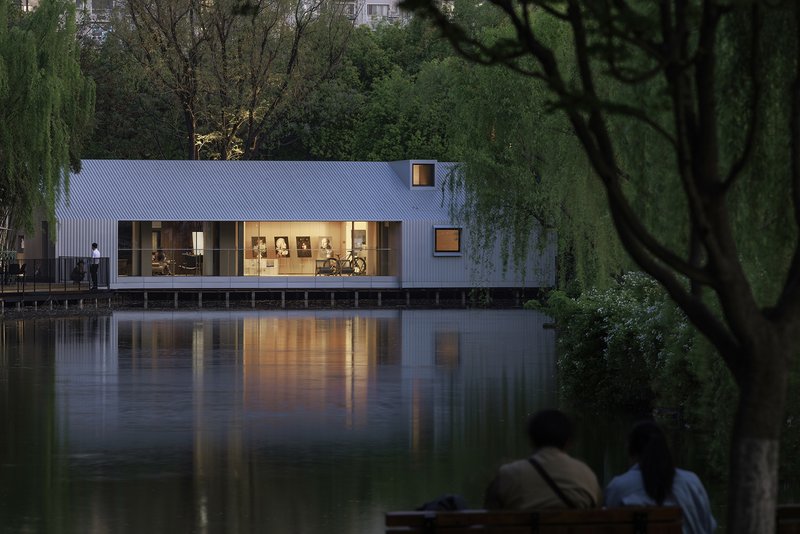
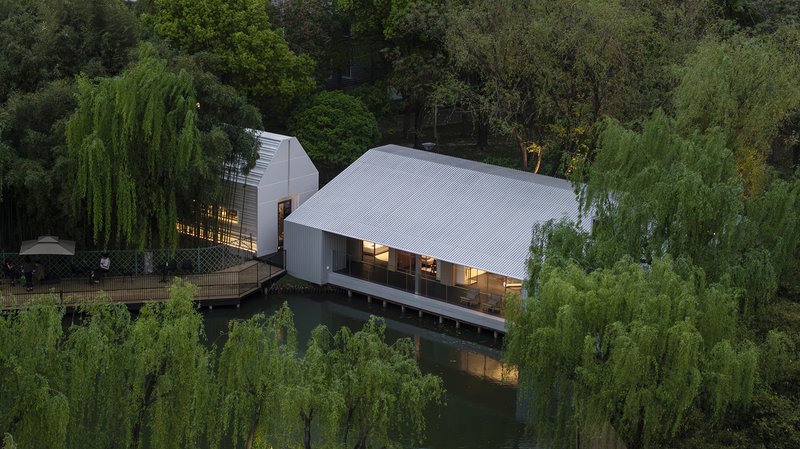
Project Brief and Site Selection
On February 28, chief architect Yu Ting surveyed three candidate sites within the park and selected the derelict waterfront service base as the location most capable of transformation without ecological disturbance. The park authority imposed a strict preservation mandate: two existing building structures had to remain, and surrounding vegetation—including two trees pressed directly against existing façades—could not be disturbed by even a millimeter. The client added a reuse requirement: ceramic curtain wall panels, stock material previously specified for residential developments, should be integrated into the new pavilion. These layered constraints set the tone for a design process defined by speed, restraint, and adaptive reuse.
Preservation Constraints and the House‑Within‑a‑House Strategy
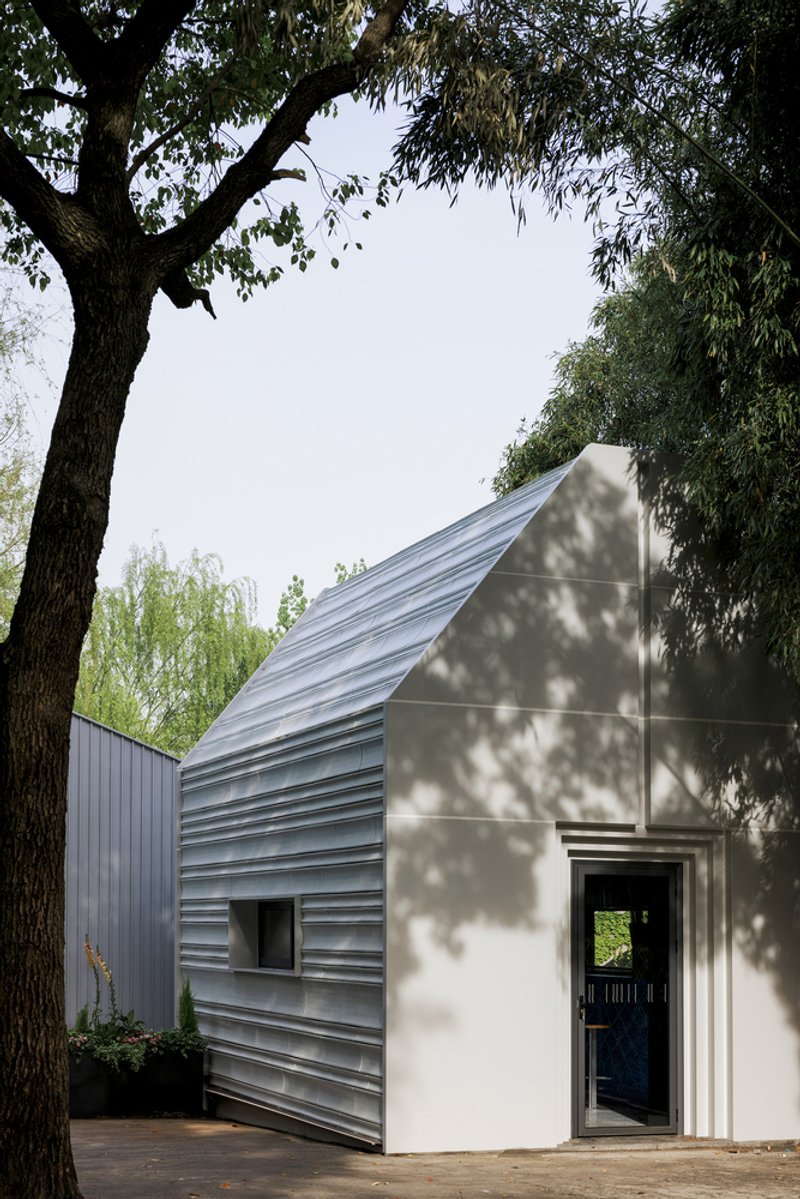
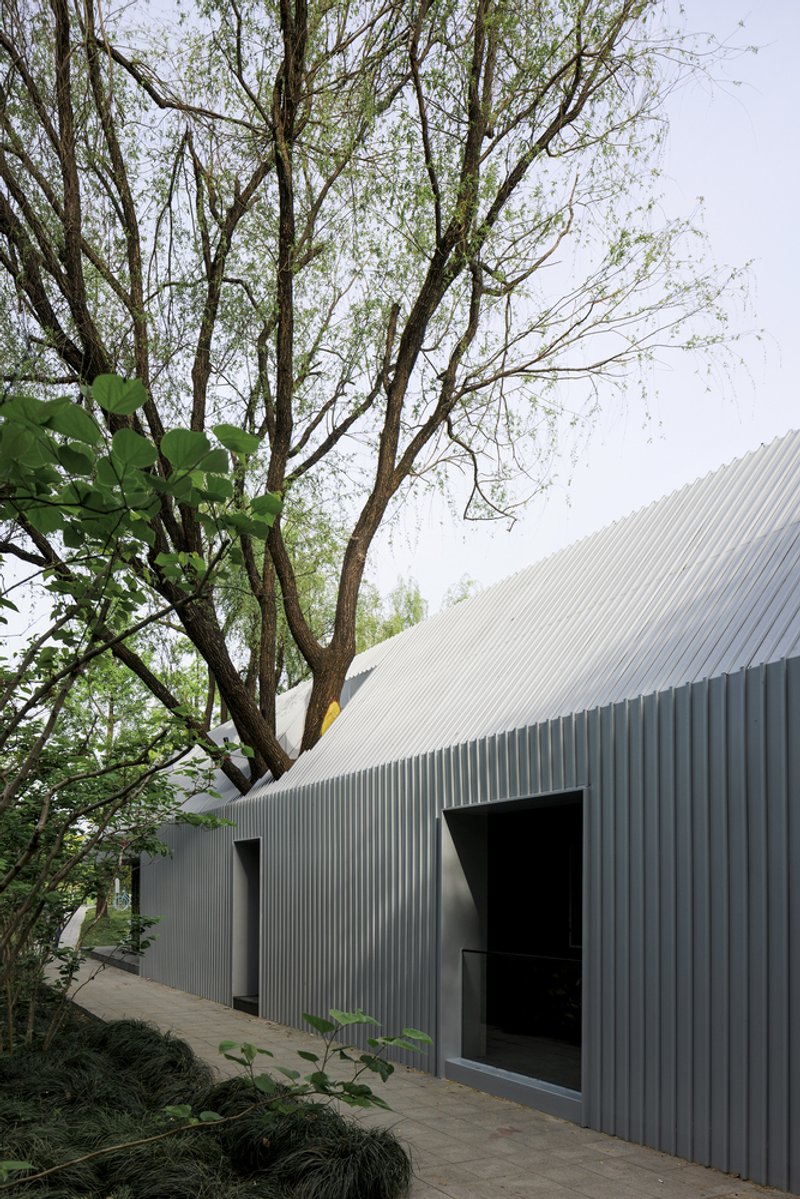
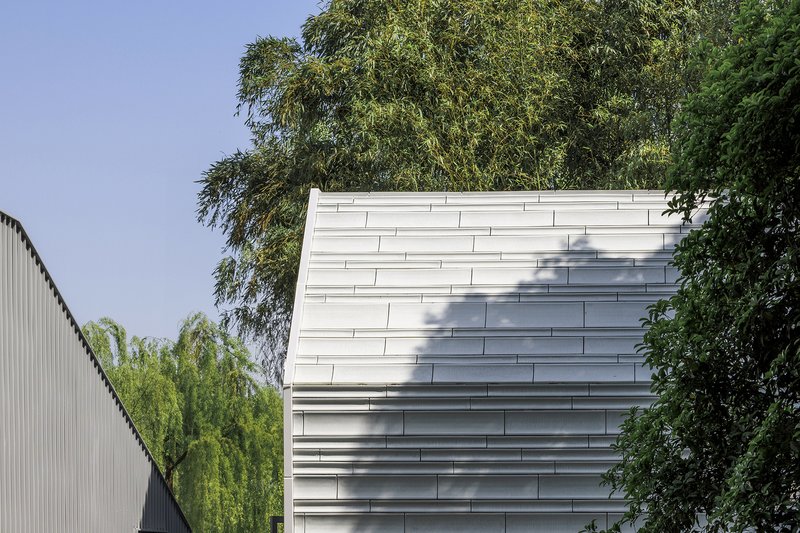
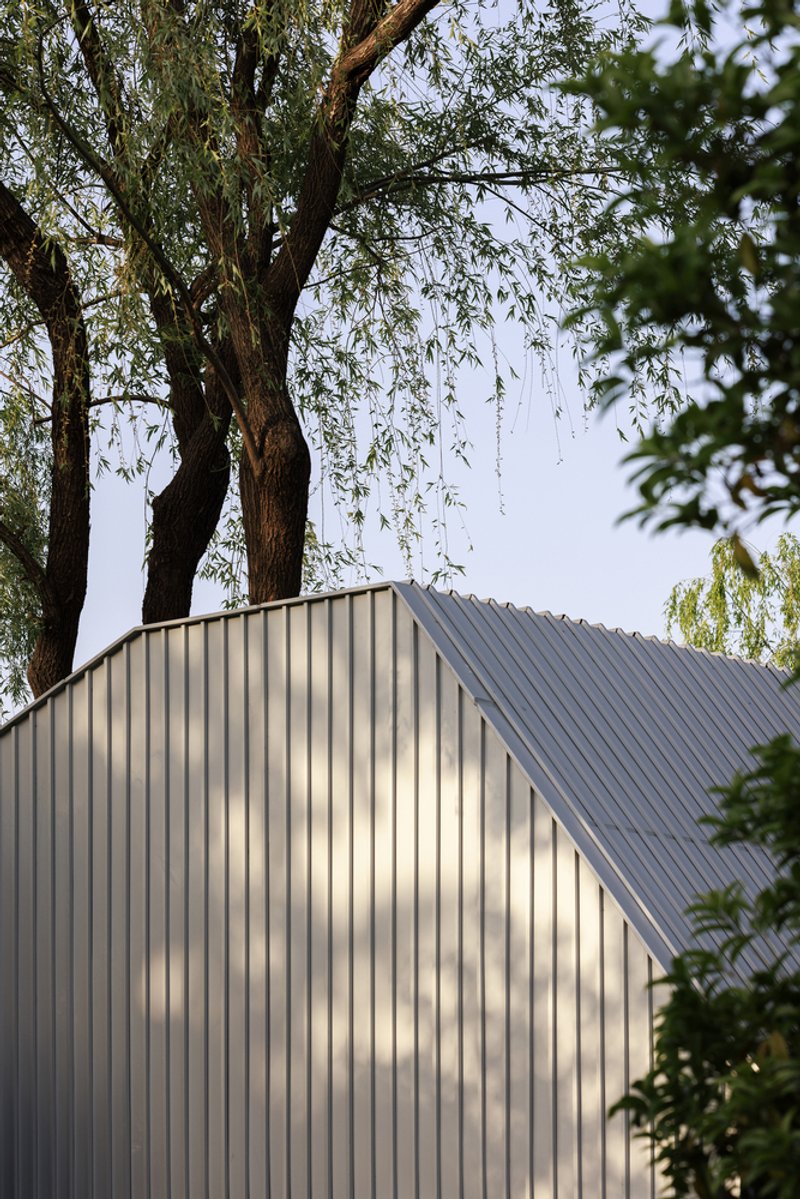
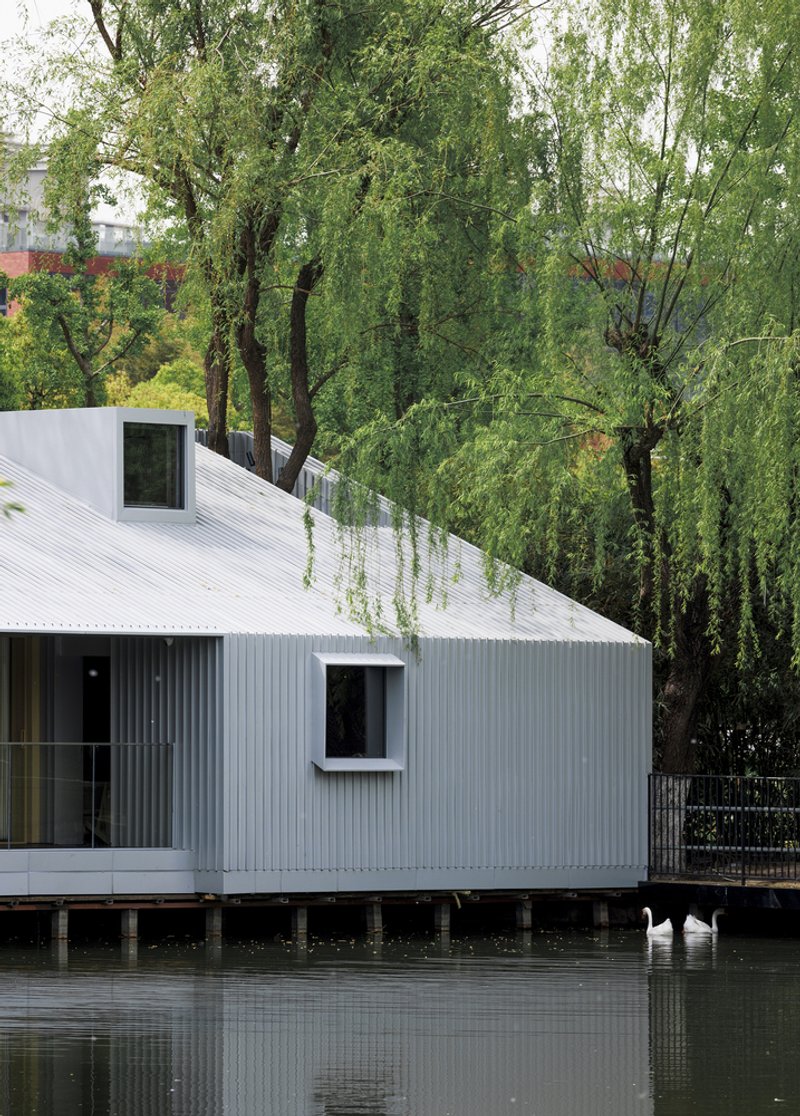
Responding overnight, Yu deployed his signature house‑within‑a‑house approach. Rather than demolish or overclad the existing buildings indiscriminately, each was wrapped in a new skin with differentiated performance. A metal shell establishes the primary climate boundary—weather protection, ventilation control, and envelope continuity—while an outer ceramic skin operates as a visual and tactile field referencing the client’s material inventory. Existing insulation and waterproofing were retained, conserving embodied energy and shortening the construction path. The twin-skin logic preserved structure, honored the no-disturbance landscape rule, and unlocked expressive contrast between industrial precision and pearlescent ceramic tactility.
Fast‑Build Methodology and Compressed Timeline
Approval of the concept came by March 5. A coordination meeting on March 12 locked in Wutopia Lab’s fast‑build protocol: standard materials only, no custom molds; prefabrication prioritized over wet trades; and a fully integrated design package aligning architecture, structure, interiors, lighting, signage, curation, and furnishings from the outset. By collapsing decision silos early, the team reduced downstream conflict and schedule drift. Documentation flowed in rapid sequence: signage system by March 20, full construction drawings by March 21, main structure complete April 14, soft furnishings and exhibit install April 16, and public opening on April 18. The Lake House stands as a procedural prototype for accelerated civic architecture that does not surrender conceptual depth.
Integrated Structural Envelope Innovation
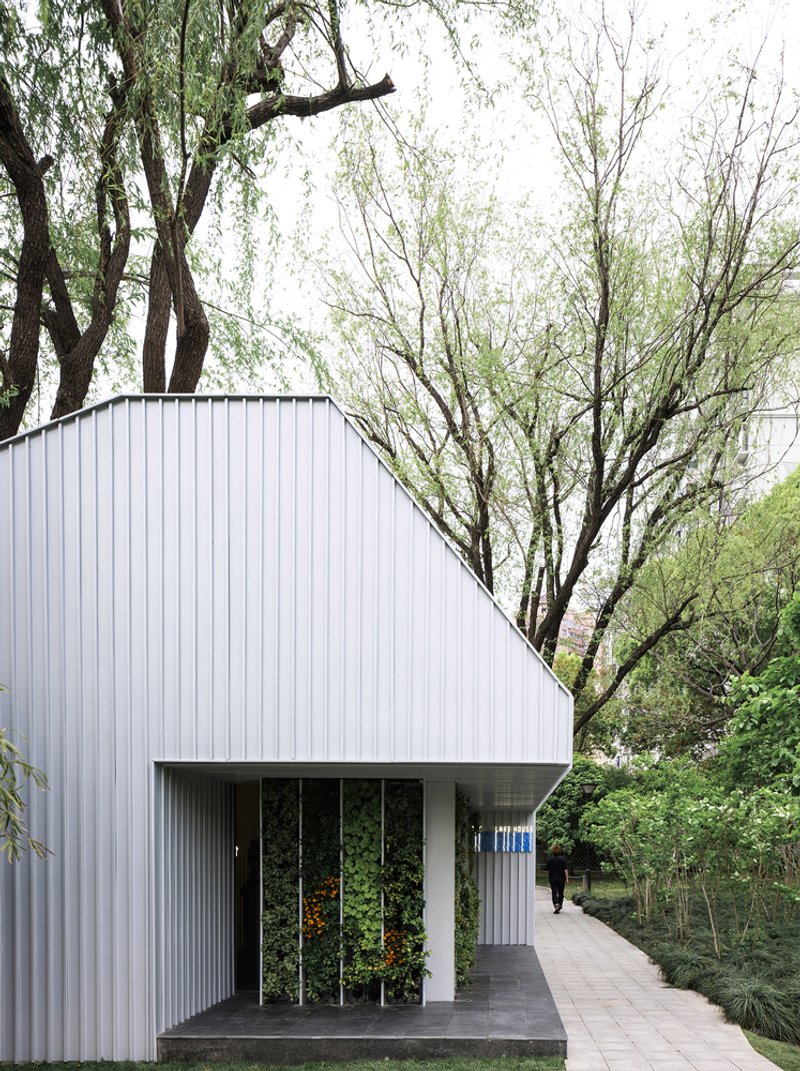
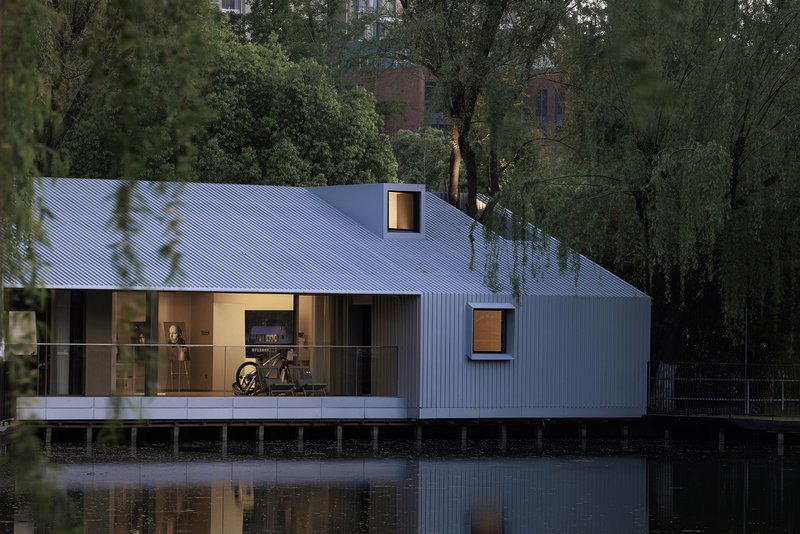
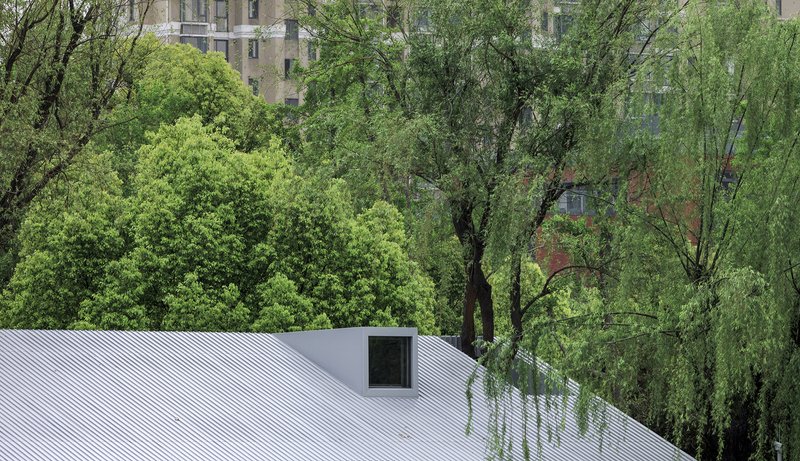
On March 13, structural refinements downsized primary members to 150 × 150 millimeter steel profiles that could be fully coordinated with the façade package. Structure and enclosure became a single operable kit: steel frames, aluminum plates (upgraded from aluminum‑magnesium‑manganese for improved waterproofing), decorative aluminum trims set at disciplined 100 millimeter intervals, vertical greenery racks, sliding glass partitions, light steel stud infill, and re‑used ceramic panels all nested into one system. Cantilevered foundations stabilized waterfront edges and a low southwest corner while enabling rapid platform assembly over uneven ground. The result is a legible tectonic grammar in which rhythm, material economy, and erection speed reinforce one another.
Material Ecology and Zero‑Carbon Narrative
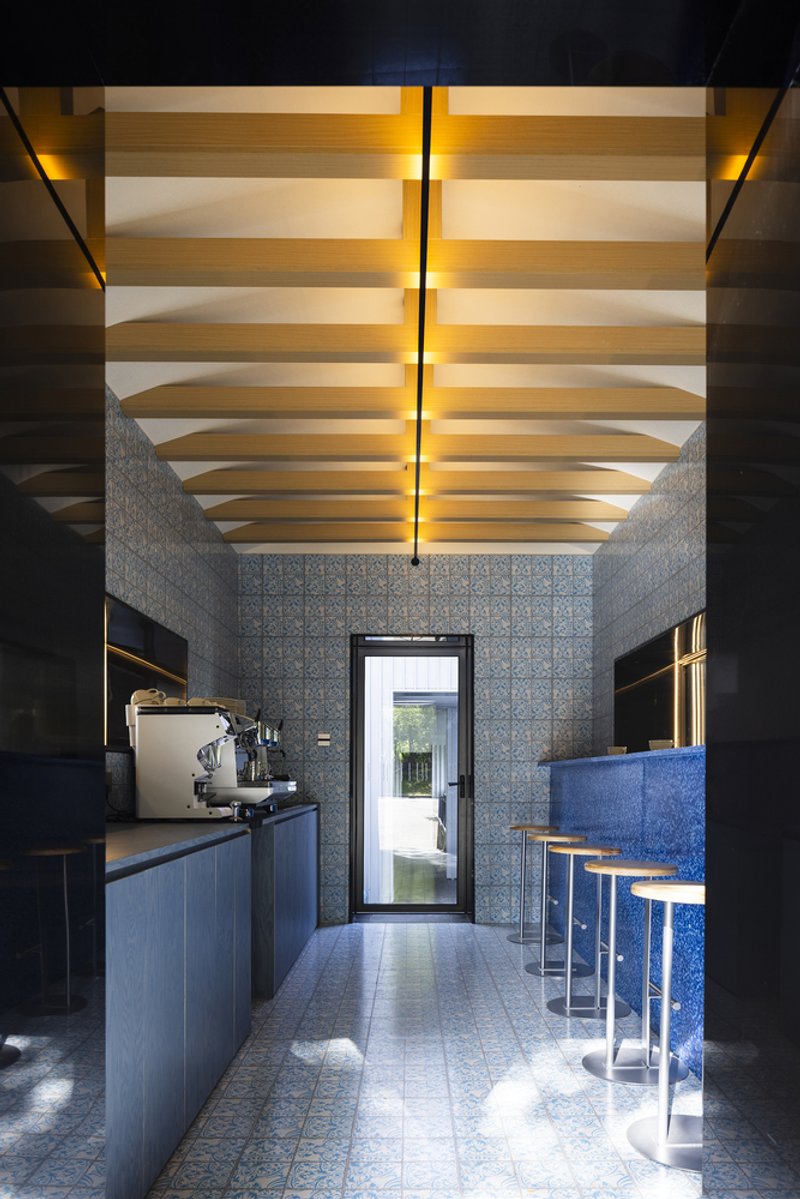
Beyond the pragmatic reuse of ceramic curtain units, The Lake House layers reclaimed or low‑impact materials—recycled tiles, marine plastic plaster, marine plastic sheet panels, mushroom leather—and choreographs light as an immaterial complement. These elements generate what the design team calls an undercurrent: an ethical and atmospheric substratum aimed at zero‑carbon aspiration rather than decorative display. Surfaces shimmer, shift, and register touch; matter reads as recovered rather than extracted; finish becomes message. The pavilion argues, quietly but firmly, that sustainable practice can be sensorial, poetic, and public-facing.
Spatial Sequence as Linear Journey
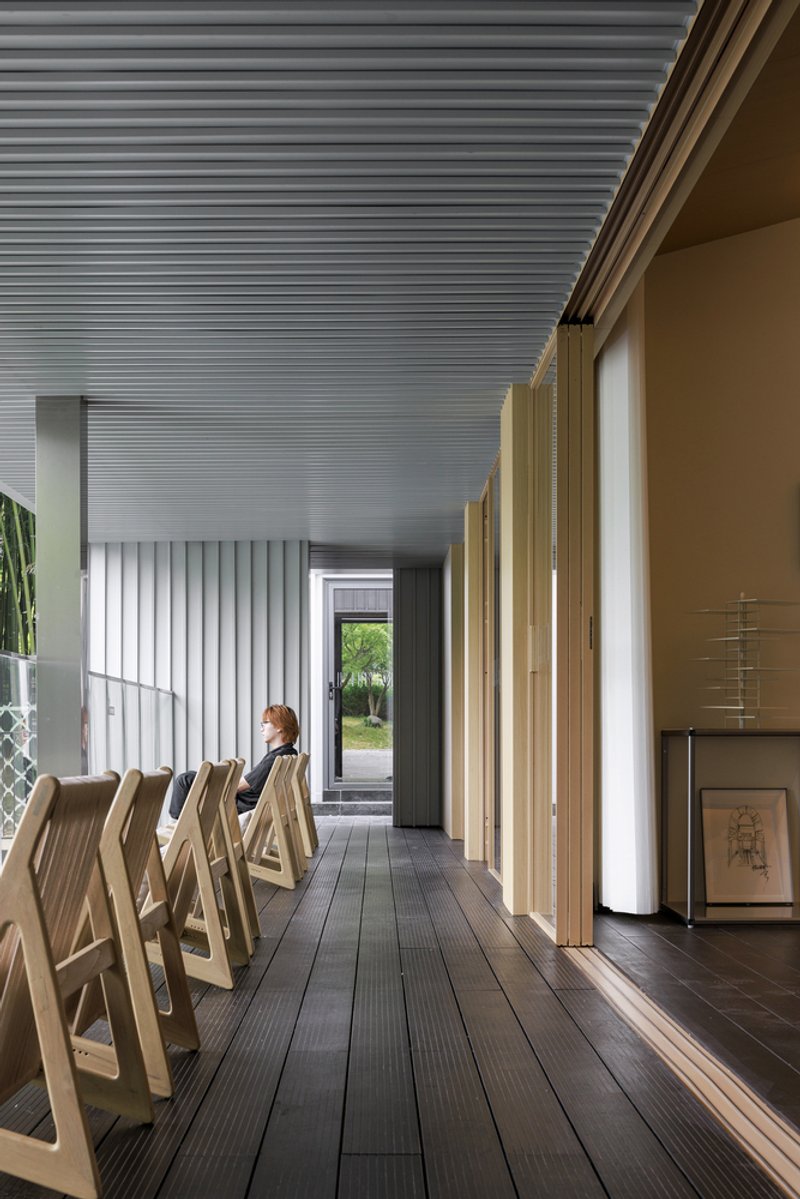
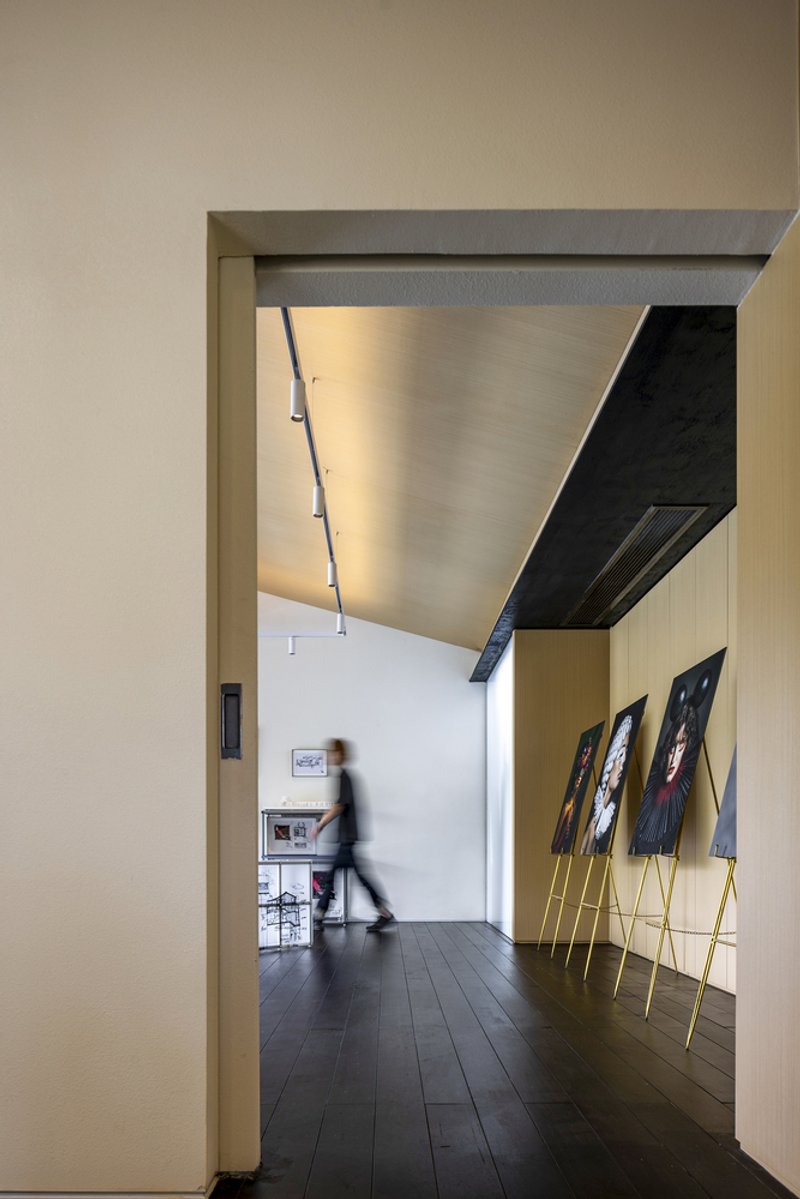
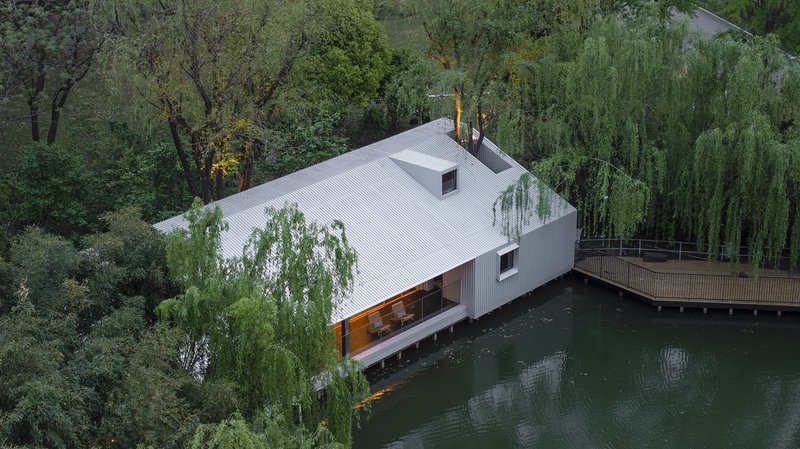
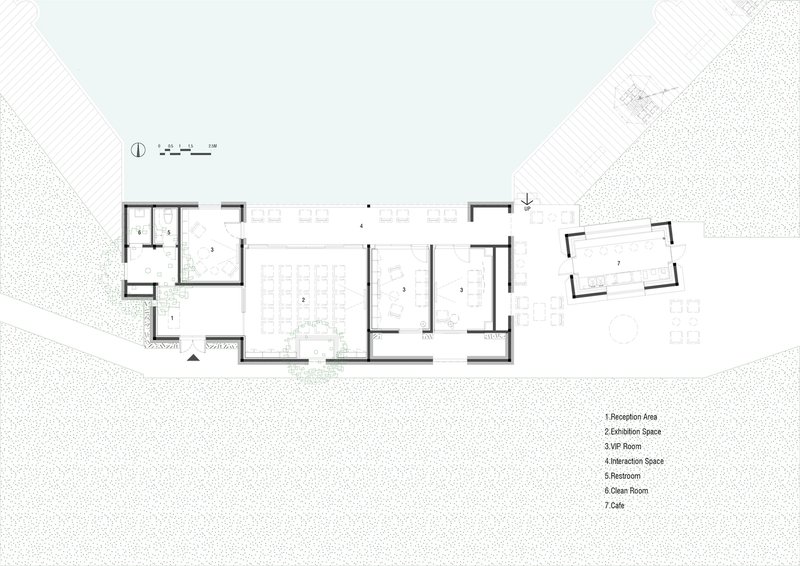
Horizontal striations of light and shadow organize a procession that stitches preserved trees, vertical planting, lobby threshold, open exhibition hall, three themed VIP rooms, a willow‑lined colonnade, terrace, boardwalk, and café frontage into a continuous inhabitable line along the water. Visitors do not encounter discrete program boxes so much as gradients: enclosure opens to canopy, canopy thins to frame, frame slips to exterior deck, deck resolves into the landscape edge. Orientation is gently destabilized—not to disorient, but to invite delight in shifting alignments of water, foliage, sky, and ceramic sheen.
Light, Aperture, and Controlled Surprise
A skylight inserted above one interior node—retained even after a lookout stair was disallowed—casts a soft vertical wash that recalls old Shanghai tiger windows and sets up a dialogue with an adjacent tree void as positive and negative space. Sliding glass partitions recalibrate transparency across hours and events. Decorative aluminum trims catch grazing light to produce a moiré‑like cadence over the ceramic field. The project embraces what Yu describes as controlled surprise: moments not over‑scripted yet framed within a disciplined plan, allowing improvisation without chaos.
Program Layers: Pavilion, Gallery, Café, Retreat
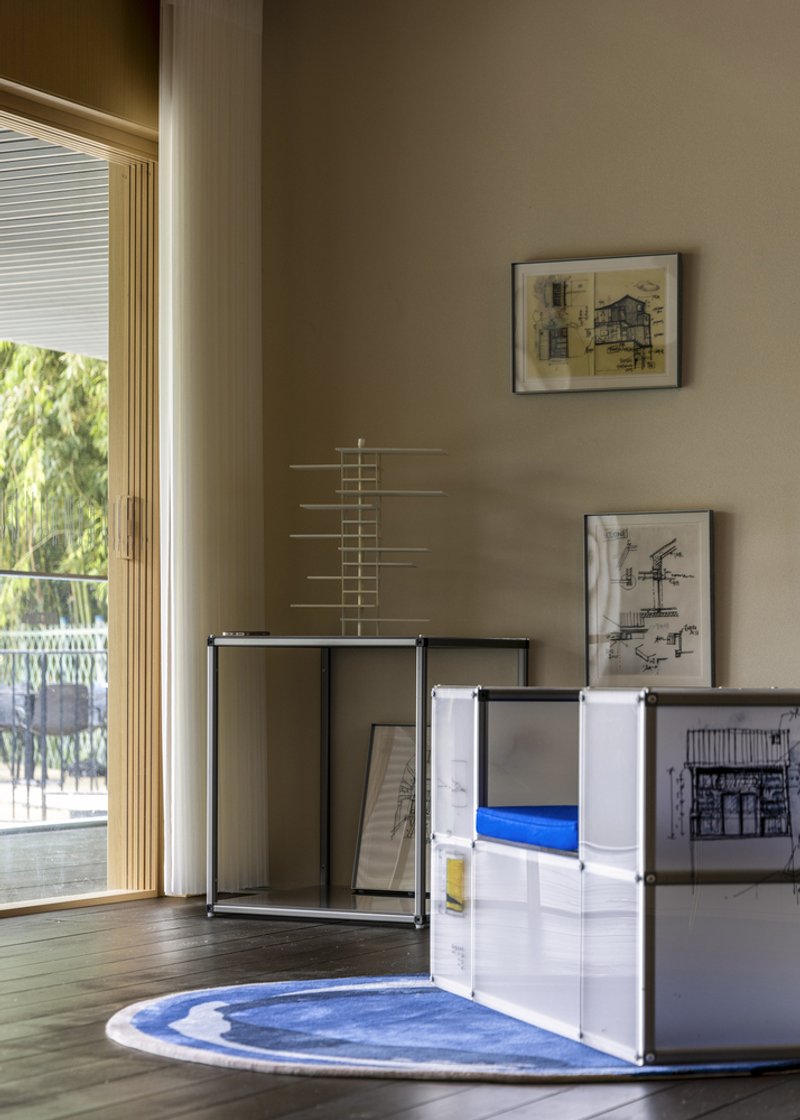
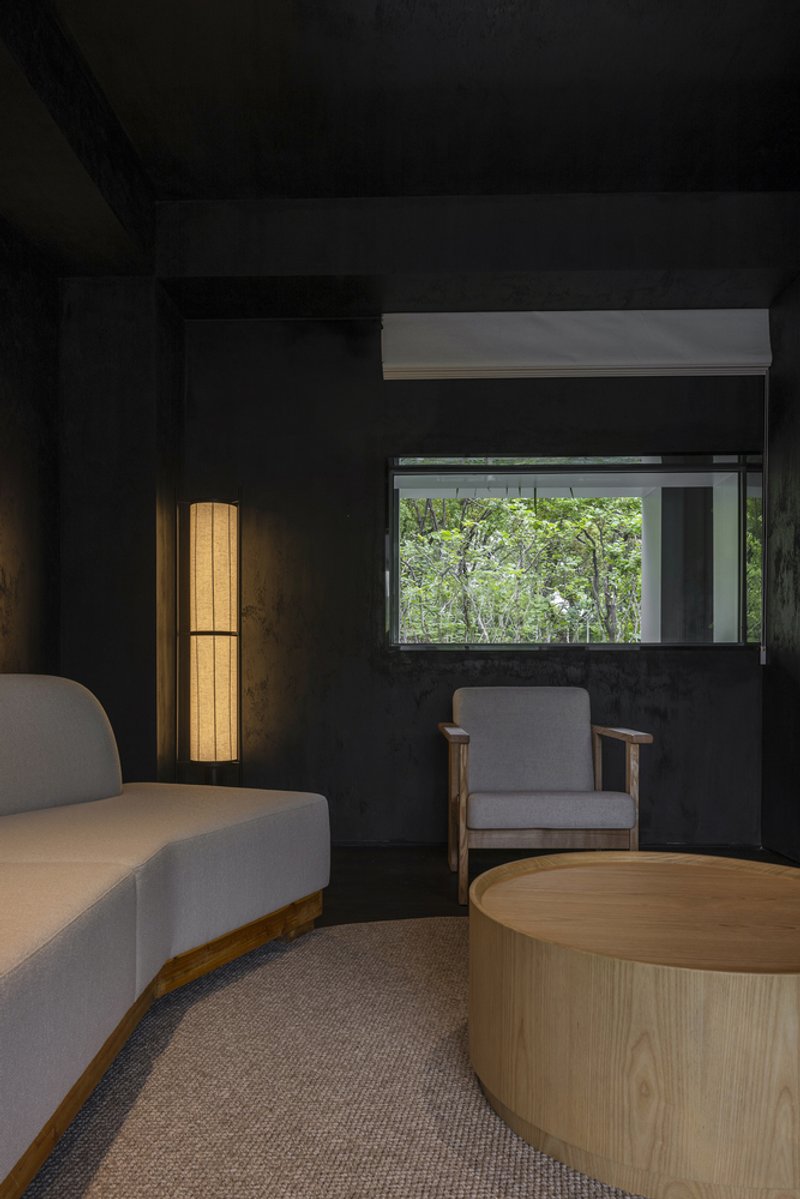
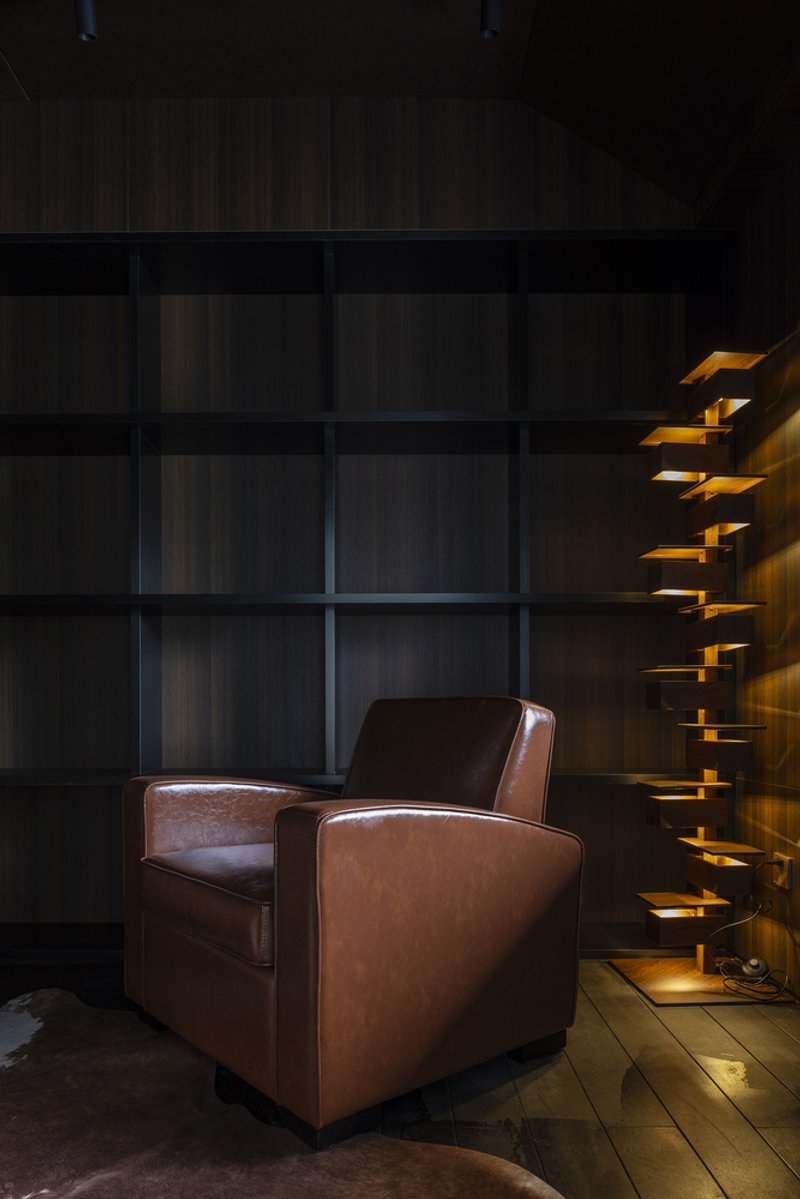
Although commissioned as a pavilion, The Lake House operates as multi‑use public infrastructure. Exhibition displays, furnished VIP rooms for small gatherings, shaded outdoor walks, and café activation create overlapping time‑of‑day and audience profiles—morning walkers, workshop groups, weekend families, evening receptions. By giving equal design weight to architecture, interiors, landscape, and curation, the project avoids the common fate of pavilions as photo objects and instead sustains repeat local use.
Landscape Preservation and Edge Mediation
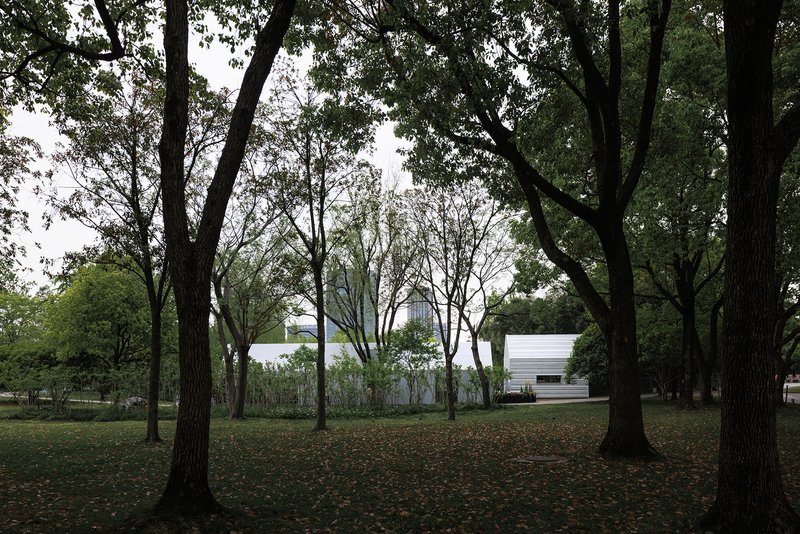
Strict rules against disturbing existing greenery demanded surgical site tactics. Building skins flexed around two trees that press against the façades, transforming constraint into a narrative of coexistence. Vertical greenery systems tether envelope to ecology without invasive planting beds. Cantilevered foundations float edges over root zones and sensitive waterfront soils, keeping ground plane disturbance minimal while extending occupiable boardwalk surfaces to the lake.
Fabrication Discipline and Field Assembly
Pre‑decided material modules simplified procurement; dry connections minimized weather risk; coordinated trade sequencing compressed overlaps. Envelope packages arrived ready for rapid stacking and fastening to the light steel frame. Interior systems—lighting, signage, furniture—were dimensioned to the structural grid, reducing cut rates and fit‑out improvisation on site. The high‑definition schedule record—proposal February 28, approval March 5, coordination March 12, drawings March 21, open April 18—illustrates how front‑loaded integration pays dividends downstream.
Cultural Resonance and Public Reception
Material tactility and reflectivity encourage intimate engagement. During opening, an elderly passerby reached out to stroke the pearlescent ceramic surface, paused, smiled, and moved on—a small exchange that the design team cites as confirmation that public architecture succeeds when it invites touch, memory, and personal reading. The Lake House positions sustainable rhetoric not as signage but as felt experience, aligning environmental messaging with embodied delight.
Lessons for Rapid Sustainable Pavilions
Begin with what exists and wrap rather than replace. Standardize early to shorten cycles. Fuse structure and skin into a unified kit. Use constraint—preserved trees, stock materials, immovable schedules—as a generator of form. Layer ethical material stories beneath luminous, welcoming surfaces so sustainability is sensed before it is explained. Treat even the smallest pavilion as cultural infrastructure with programs that earn repeat use.
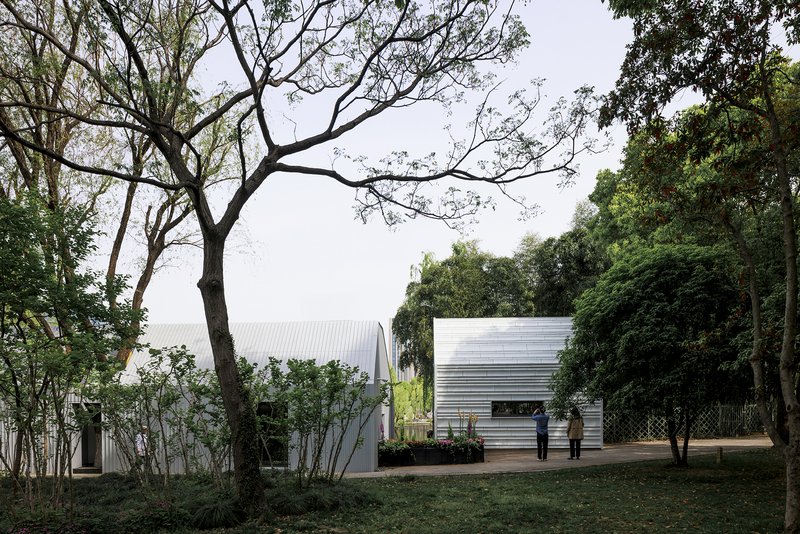
The Lake House Wutopia Lab project demonstrates that speed need not flatten imagination and sustainability need not dull sensory richness. Through a house‑within‑a‑house envelope, disciplined fast‑build logistics, recycled and bio‑based materials, and a choreographed lakeside journey of light, foliage, and reflective ceramic skin, the pavilion becomes a public lesson in how to cherish resources, time, and place. What began as a constrained retrofit on a tight deadline now stands as a replicable model for rapid, zero‑carbon‑oriented, community‑minded architecture in China and beyond.
All the photographs are works of Guowei Liu




Popular Articles
Popular articles from the community

Atelier Macri Concept Store Interior Design by CASE-REAL
Atelier Macri store features a "ko" counter, walnut wood details, cork displays, blending retail, gallery, and seamless customer experiences.

Solar Steam: A Climate-Responsive Architecture That Redefines the Monument
A climate-responsive memorial architecture that transforms heat, decay, and time into a living system reflecting humanity’s ecological impact.
Alton Cliff House: A Harmonious Retreat by f2a Architecture in Lake Country, Canada
Alton Cliff House blends corten steel, prefabrication, and sustainable design, creating a luxurious, energy-efficient retreat perched on Canadian cliffs.
Gads Hill Early Learning Center by JGMA: Adaptive Reuse Shaping Community-Focused Educational Architecture
Adaptive reuse transforms fragmented structure into vibrant early learning center with playful façade, natural light, and community-focused sustainable design.

Similar Reads
You might also enjoy these articles

Free Architecture Competitions You Can Enter Right Now
No entry fees, real prizes. Here are the best free architecture competitions open for submissions in 2026.

Top 15 Architecture Competitions to Enter in 2026
From student-friendly idea competitions to prestigious international awards, here are the best architecture competitions open for entries in 2026. Updated regularly.

DIY & Engineering in Computational Design : Enter the BeeGraphy Design Awards
Showcase Your Creativity with Computational Design and Open Source Projects
Innovative Design Solutions: Award-Winning Projects from Recent Architecture Competitions
Exploring award-winning architectural projects shaping the future of design, sustainability, and community.


Explore Architecture Competitions
Discover active competitions in this discipline




The International Standard for Design Portfolios


The Global Benchmark for Architecture Dissertation Awards


The Global Benchmark for Graduation Excellence


Challenge to reimagine the Iron Throne
Comments (0)
Please login or sign up to add comments
No comments yet. Be the first to comment!