
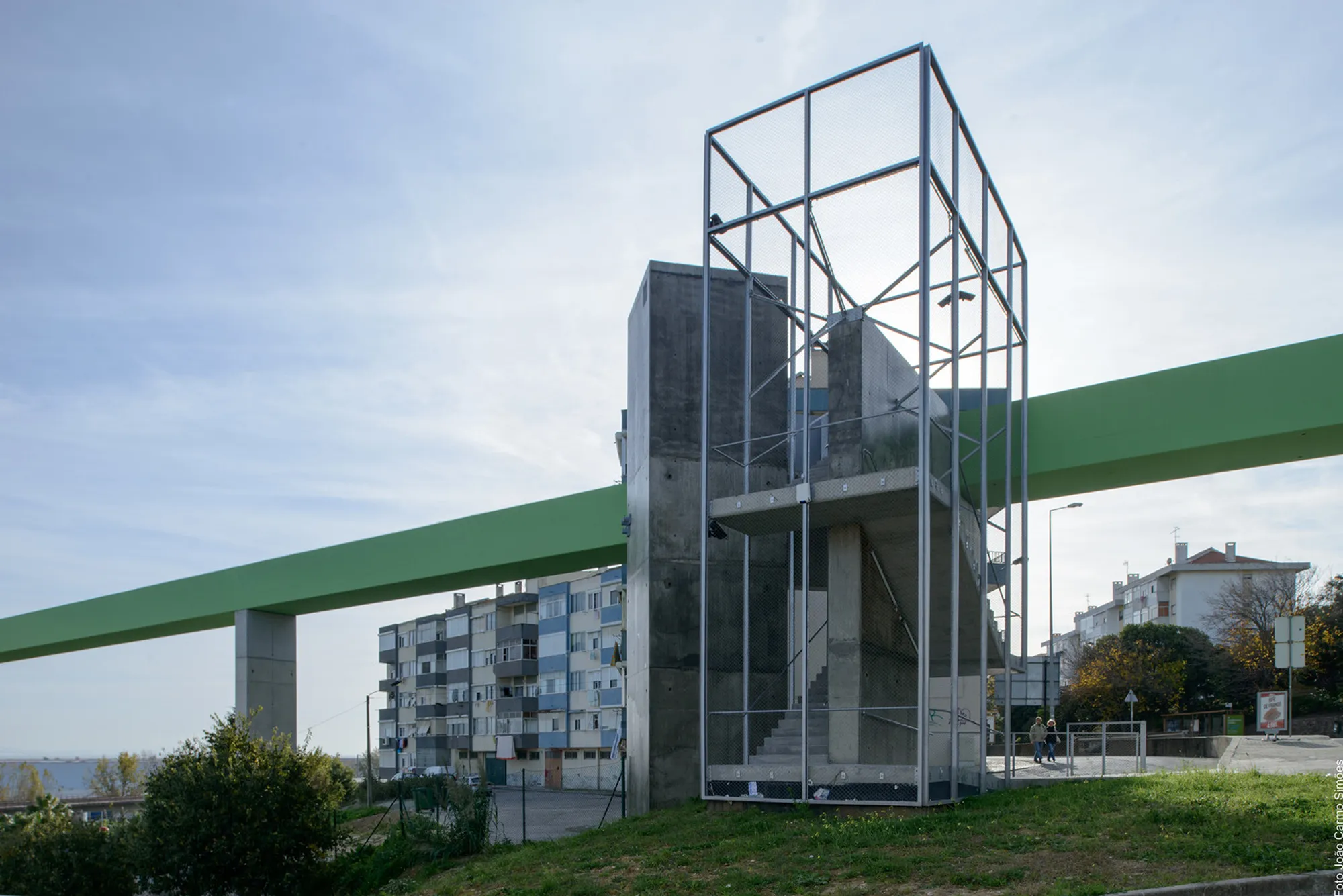
Linear Connection Overpass in Forte da Casa
A minimalist concrete overpass by MXT Studio connects Forte da Casa’s urban core to the Tagus Estuary, enhancing urban continuity.


Connecting Urban Fragments Across Infrastructure in Vila Franca de Xira, Portugal
MXT Studio’s pedestrian bridge in Vila Franca de Xira, Portugal, spans the Tagus Estuary Linear Park, enhancing urban connectivity. Crafted in concrete, the overpass blends functional infrastructure with elegant design, providing safe, accessible passage for pedestrians while respecting the surrounding landscape. Photography by © JCS highlights its minimalist, structural clarity.
Reconnecting a Fragmented Urban Landscape
Located on the northern edge of Lisbon, the Pedestrian Overpass at Forte da Casa by MXT Studio redefines the relationship between infrastructure and urban life. The site—wedged between the Tagus River and the hills of Vila Franca de Xira—is one of the most infrastructure-dense corridors in Portugal. Within a narrow 1,500-meter strip coexist the A1 motorway, the N10 national road, the Northern railway line, and the Alviela aqueduct.
Amid this linear maze of infrastructure, MXT Studio’s bridge provides a much-needed connection between Forte da Casa’s urban center and the Tagus Estuary Linear Park, part of an ambitious redevelopment initiative extending 7.5 kilometers along the riverfront.
A Bridge as Urban Continuity
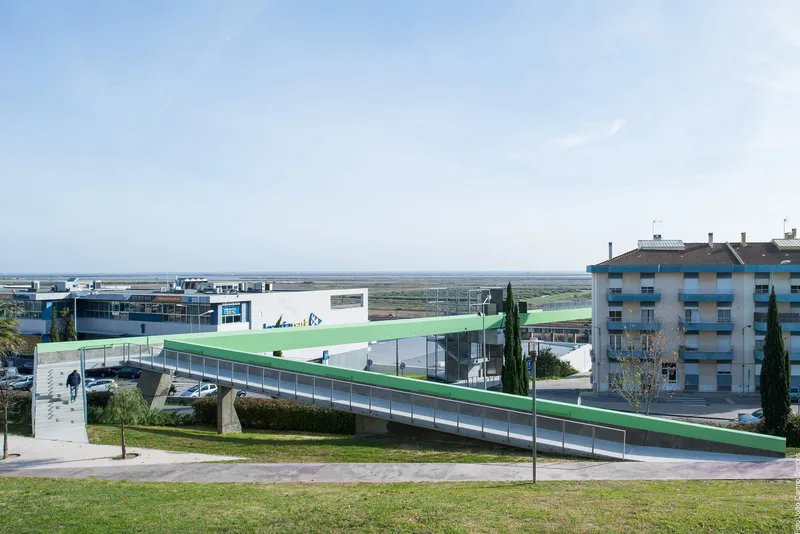
While modest in scale at 220 meters, the pedestrian overpass plays a pivotal role in repairing the city’s fractured urban fabric. Acting as both a physical and visual link, the bridge connects residential areas west of the N10 road to commercial spaces and the natural landscape of the Tagus Estuary to the east.
The design strategically integrates three key access points:
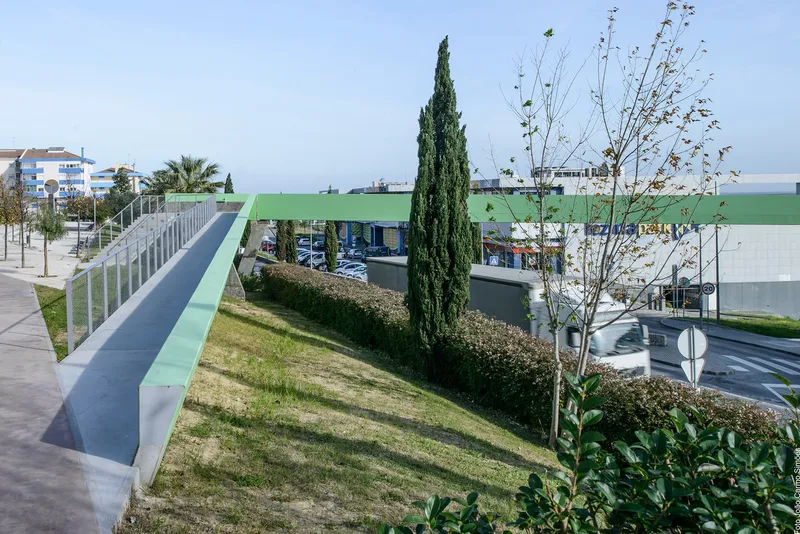
- West Access: A combination of stair and ramp set within a small public park, navigating existing utilities such as the Alviela aqueduct and brine pipelines.
- Intermediate Access: Positioned for direct pedestrian flow toward the commercial and warehouse areas east of the N10.
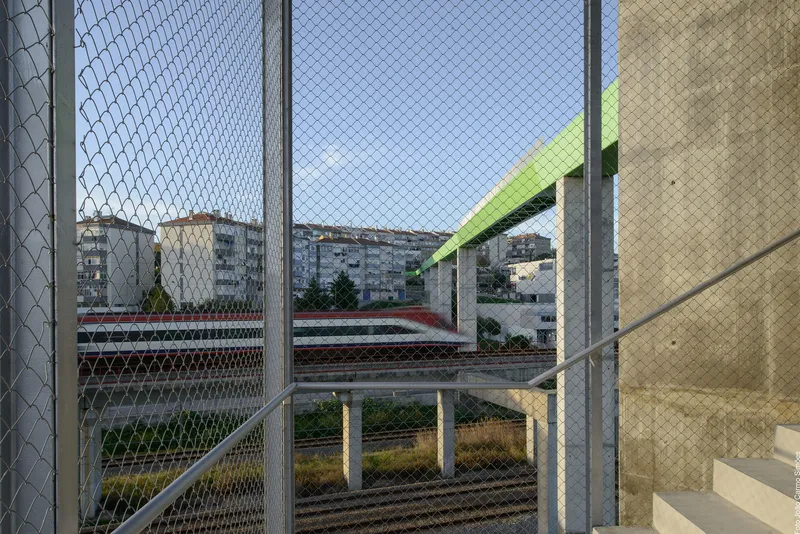
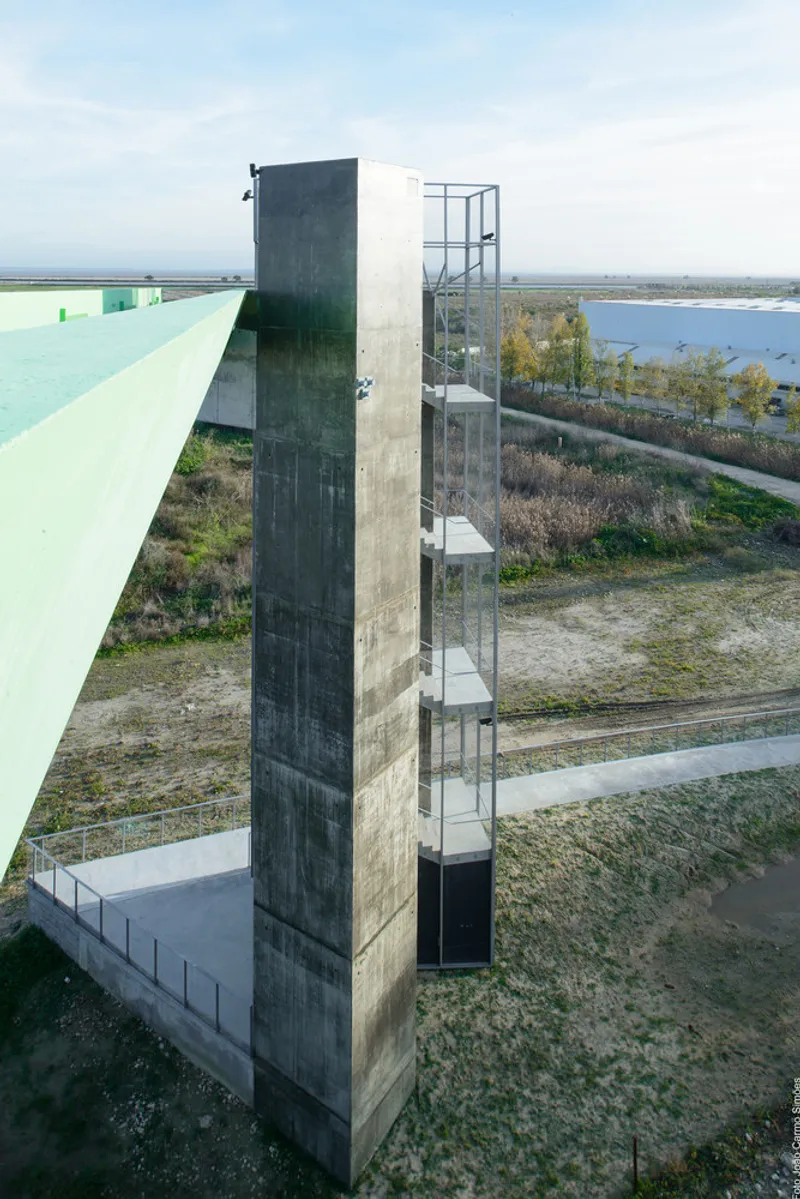
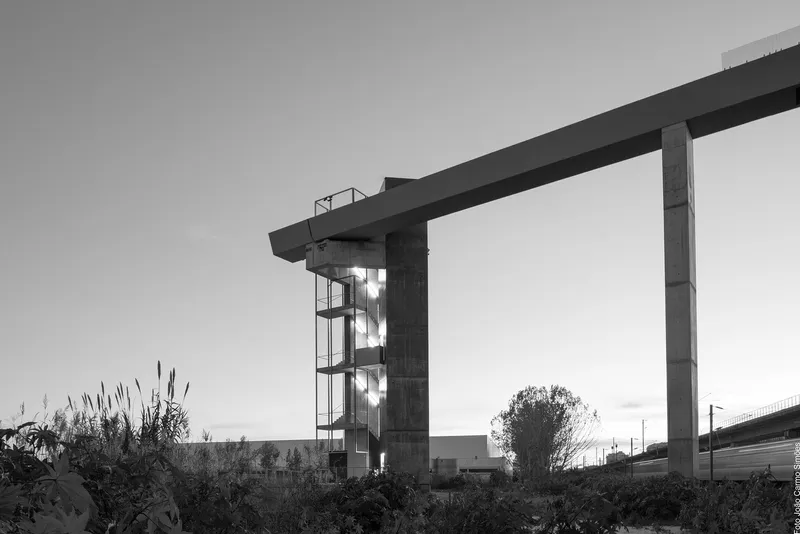
- East Access: Rising high above the Northern railway line, this segment overcomes the added complexity of an existing railway flyover—requiring an unusually elevated crossing height.
Design Concept: A Line in the Air
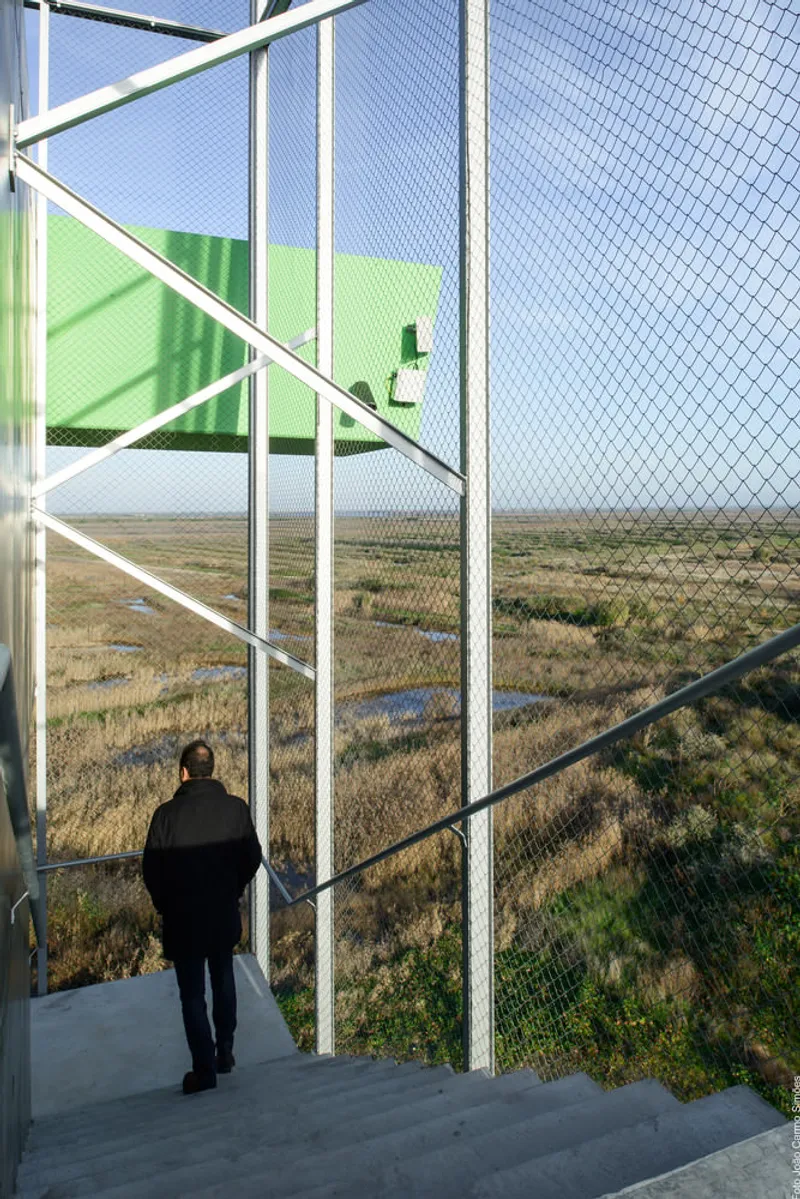
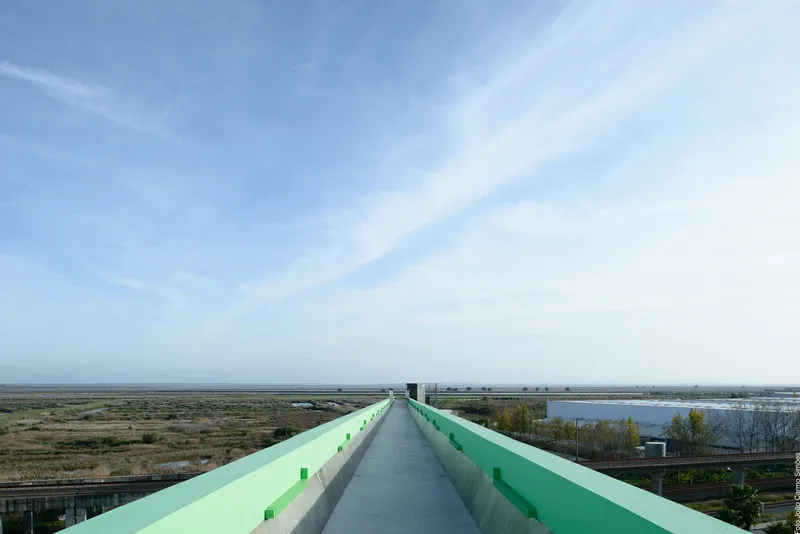
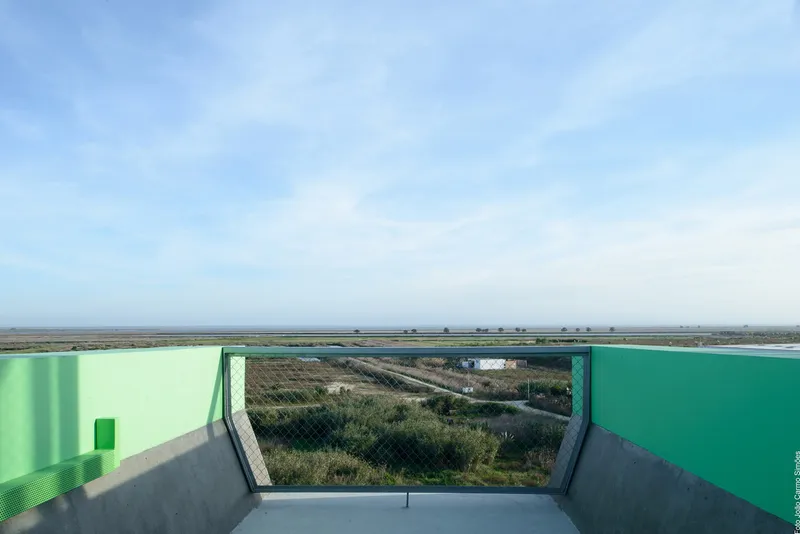
MXT Studio’s conceptual approach was guided by a desire for clarity within a disjointed landscape. The bridge was conceived as “a line in the air”—a minimal, continuous gesture that contrasts the dense and fragmented infrastructure below. This elevated pathway not only restores connectivity but also becomes a viewpoint over the marshlands and the Tagus Estuary, offering pedestrians a renewed relationship with the surrounding territory.
Balancing numerous site constraints, the design achieved:
- Minimum clearance above road and rail lines
- Compliance with safety distances from power systems
- Adaptation to underground networks
- Efficient span lengths and structural economy
- A clear, legible architectural expression amid complexity
Technical Design and Material Expression
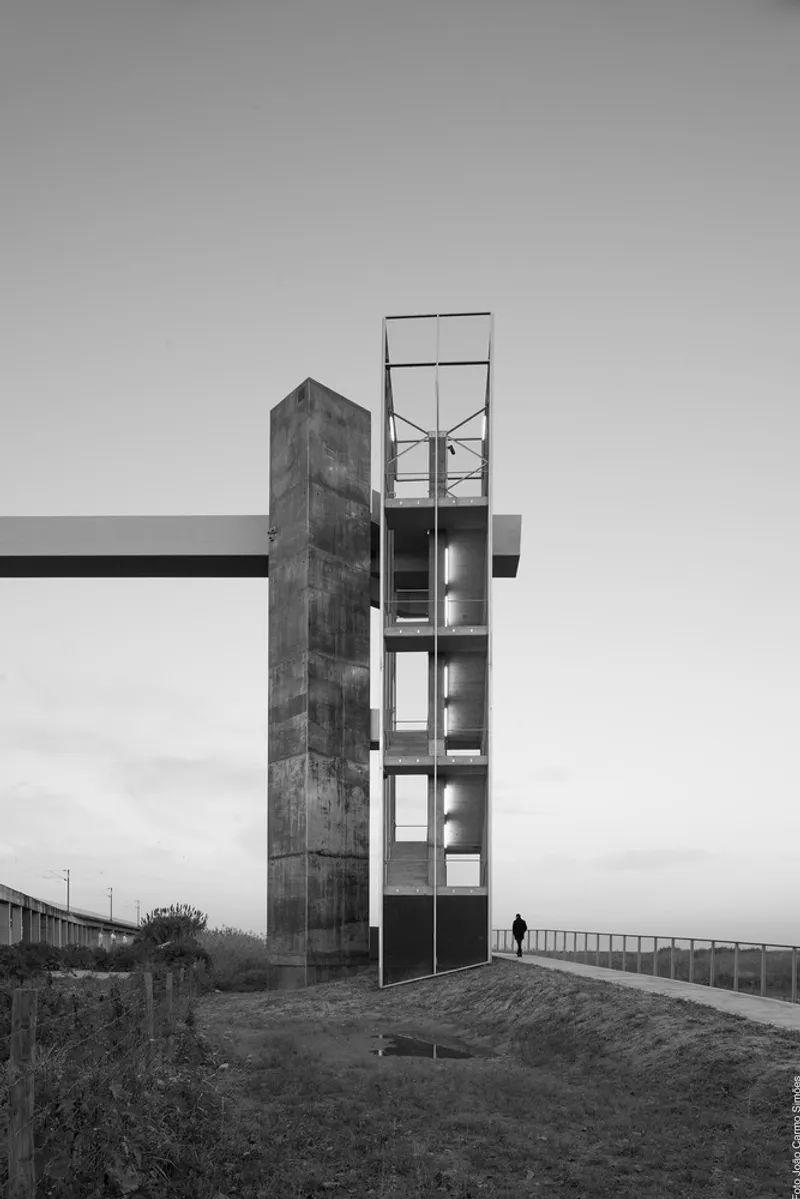
The overpass is primarily composed of precast reinforced concrete, forming a sturdy U-shaped section 3.5 meters wide. This section integrates both the structural beams and guardrails, optimizing material use and ensuring visual consistency along the bridge’s entire length.
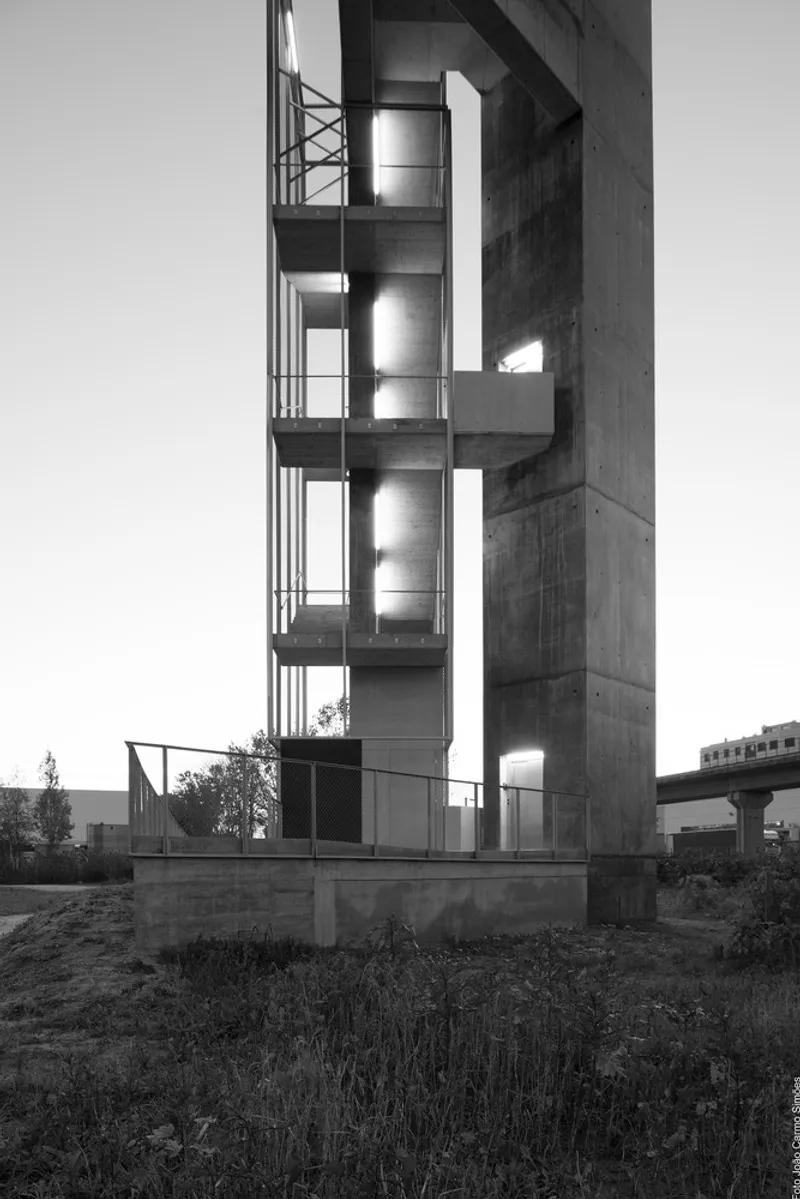
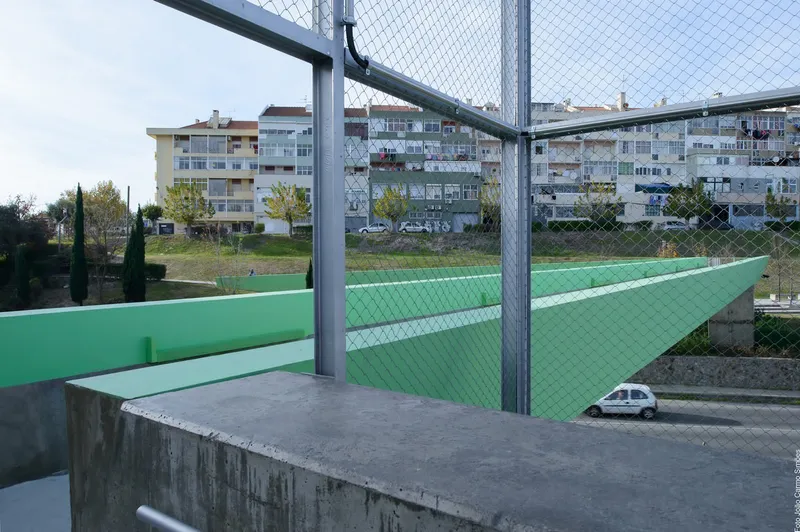
To mitigate vertigo and wind exposure due to its elevated height, the bridge employs opaque guardrails of significant height. Over the railway, where the span increases, steel structures complement the concrete framework for added strength and flexibility.
Lighting is seamlessly integrated within the handrails through a continuous steel tube system, maintaining the bridge’s minimalist aesthetic while ensuring night-time visibility.
Finishes and Material Palette
The material honesty of the bridge underscores its pragmatic beauty. The finishes include:
- Exterior: Painted green steel and concrete surfaces along the main deck and western ramp, harmonizing with the surrounding landscape.
- Structure: Exposed concrete across all vertical supports, staircases, and elevator shafts, protected with anti-graffiti treatment for longevity.
- Decking: Durable gray screed flooring with water-repellent and hardening surface treatments for pedestrian comfort.
- Interior Faces: A mix of exposed concrete and prefabricated slabs, maintaining a cohesive and tactile finish throughout.
An Infrastructure of Connection
Beyond its technical precision, the Pedestrian Overpass at Forte da Casa serves as a statement of urban continuity. It transforms a landscape dominated by infrastructure into a place of movement, encounter, and perspective.
All photographs are works of JCS


Popular Articles
Popular articles from the community


Co-Life: Senior Housing Design That Reconnects Older Adults With the City
Co-Life reimagines senior housing design through healing gardens, shared streets, workshops, and a sustainable community across generations.

Co-life: Sustainable Architecture for Age-Friendly Community Living
Co-life reimagines sustainable architecture for seniors through courtyards, rammed earth, shared gardens, and spaces designed for belonging.

Conexión: Biophilic Design Reimagines High-Rise Living in Hong Kong
Conexión reimagines high-rise living in Hong Kong through biophilic design, green facades, shared spaces, daylight, water and nature within.

The Musturak Paradise: Senior Living Architecture for a Connected Future in Temara, Morocco
The Musturak Paradise reimagines senior living architecture in Temara via private homes, social spaces, culture, community, and shared care.


Similar Reads
You might also enjoy these articles


Hodi-Mandai Geram
Project Function: Preservation and revitalization of the Intangible heritage and socio-spatial identity of the Hodi by Housing, Cultural Memory Center, Sacred Grove, landscape, local tourism economy


Olio Towers: A Mid-Rise for Performers That Fuses Housing, Rehearsal, and Stage
Located blocks from Houston's Theater District, this modular tower stacks living units around a central performance atrium.

Oasis: Modular Green Housing Carved into Dhaka's Urban Fabric
A shortlisted Plugin Housing entry reclaims unauthorized settlements in Dhaka with stepped concrete volumes, green roofs, and ventilation-driven design.

Black Hole: A Floating Megastructure for the Post-Physical Era
Emiliano Mazzarotto envisions a spherical, self-scaling arena where e-sports, digital hotels, and holographic stadiums replace traditional public space.
Explore Foot Bridge Competitions
Discover active competitions in this discipline



Challenge to reimagine the Iron Throne


Photograph architecture without architects


Illustrate the lost glory of Angkor Wat - Render Challenge


Design challenge to reuse E-waste
Comments (0)
Please login or sign up to add comments
No comments yet. Be the first to comment!