
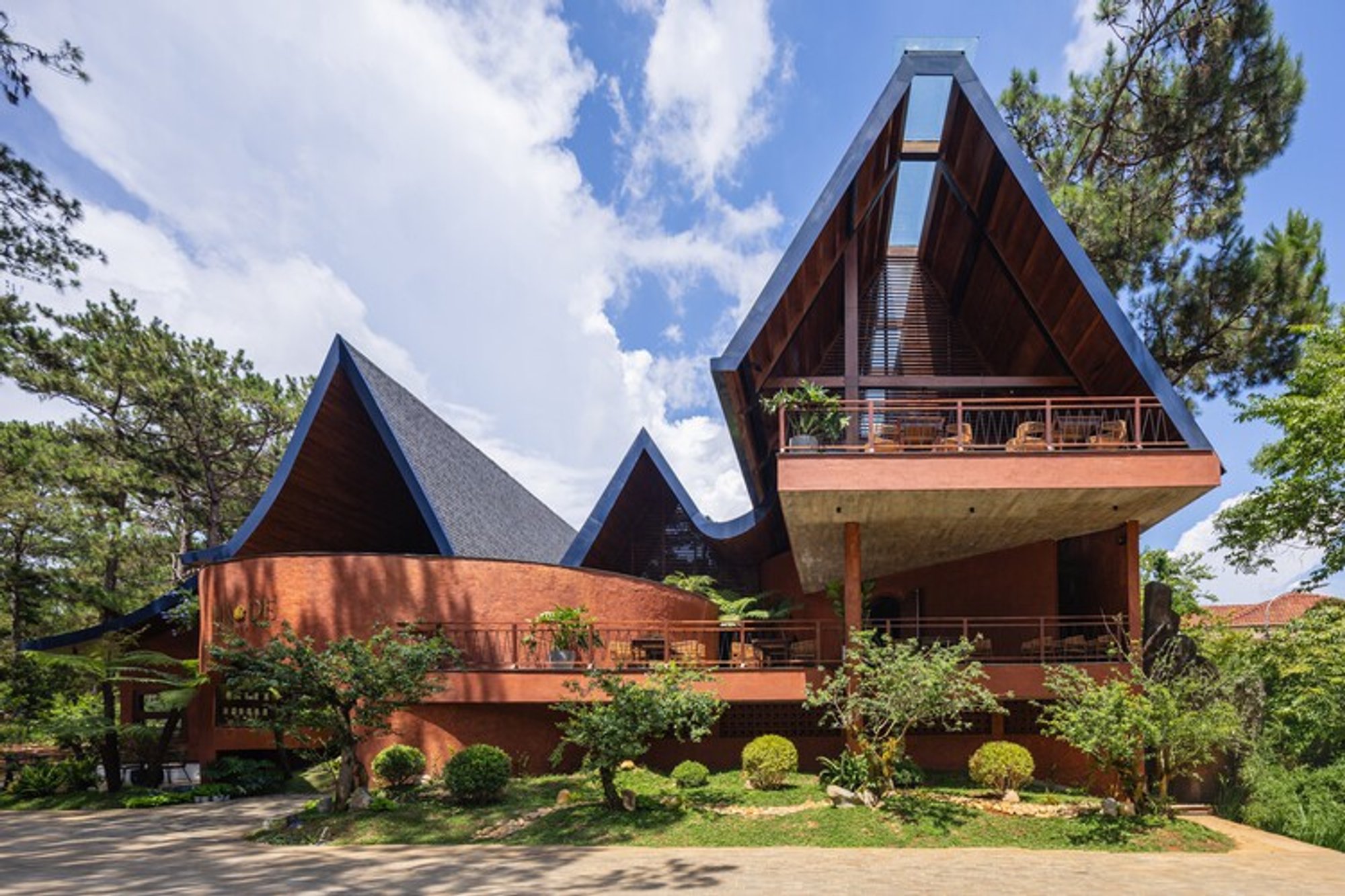
MA.DE Bistro by AN NAM Architecture: A Cultural, Architectural, and Sensory Landmark in Măng Đen
MA.DE Bistro blends Central Highlands culture with modern architecture, featuring a three-peaked roof, earthy materials, and immersive spaces opening to pine forests.

MA.DE Bistro, designed by AN NAM Architecture, is a 1,000 m² cultural–culinary complex located in the serene highlands of Măng Đen, Vietnam. More than just a restaurant, the project functions as a vibrant architectural landmark where regional identity, Central Highlands culture, and contemporary design merge seamlessly. The investor envisioned a space that honors local heritage while offering an elevated hospitality experience—an ambition that shaped every design decision from form to materiality.
A Setting Immersed in Nature
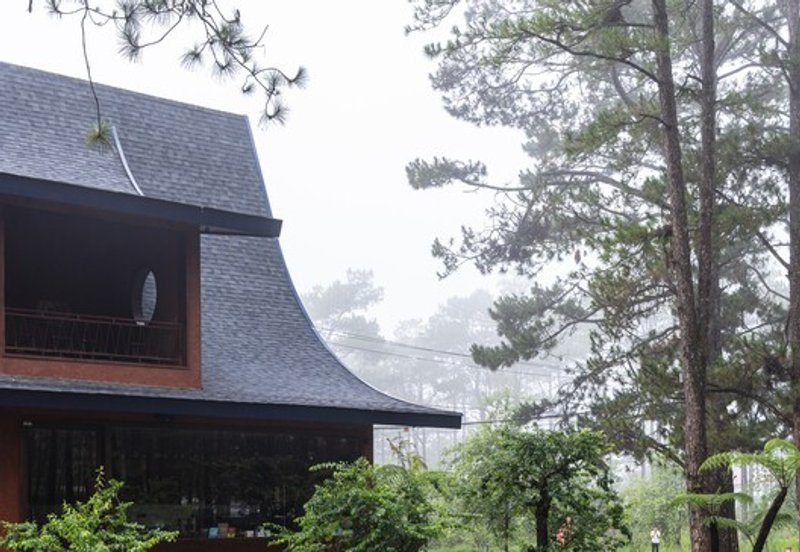
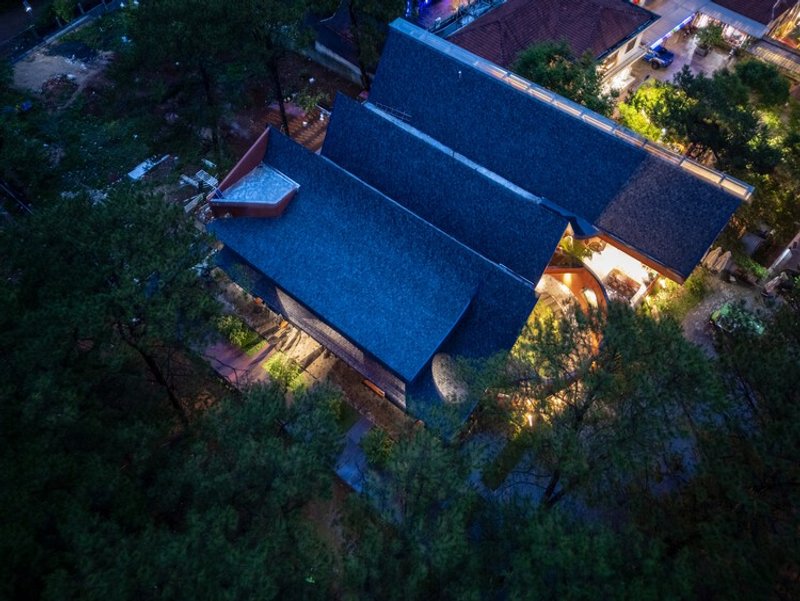
Nestled on a site enveloped by untouched pine forests on three sides, MA.DE Bistro enjoys a landscape defined by mist, rain, and the cool climate of the highlands. This serene environment forms the backdrop for a design that embraces slowness, stillness, and the quiet rhythm of nature. The forest becomes both a visual canvas and a climatic contributor, enhancing the atmosphere of the bistro.
Architecture Inspired by the Rông House
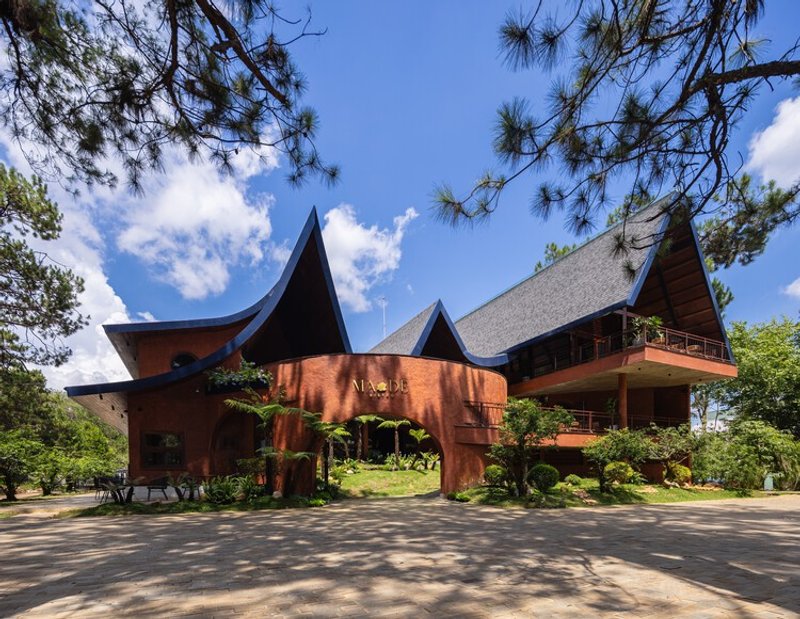
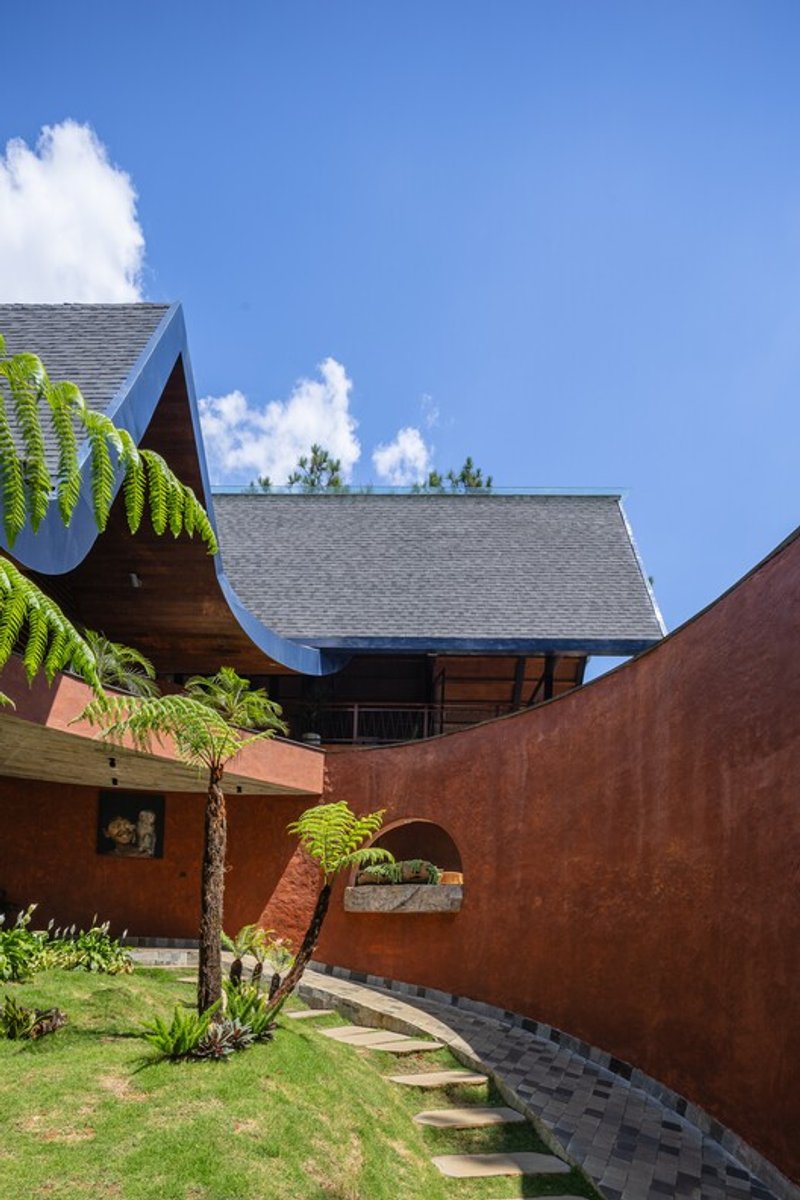
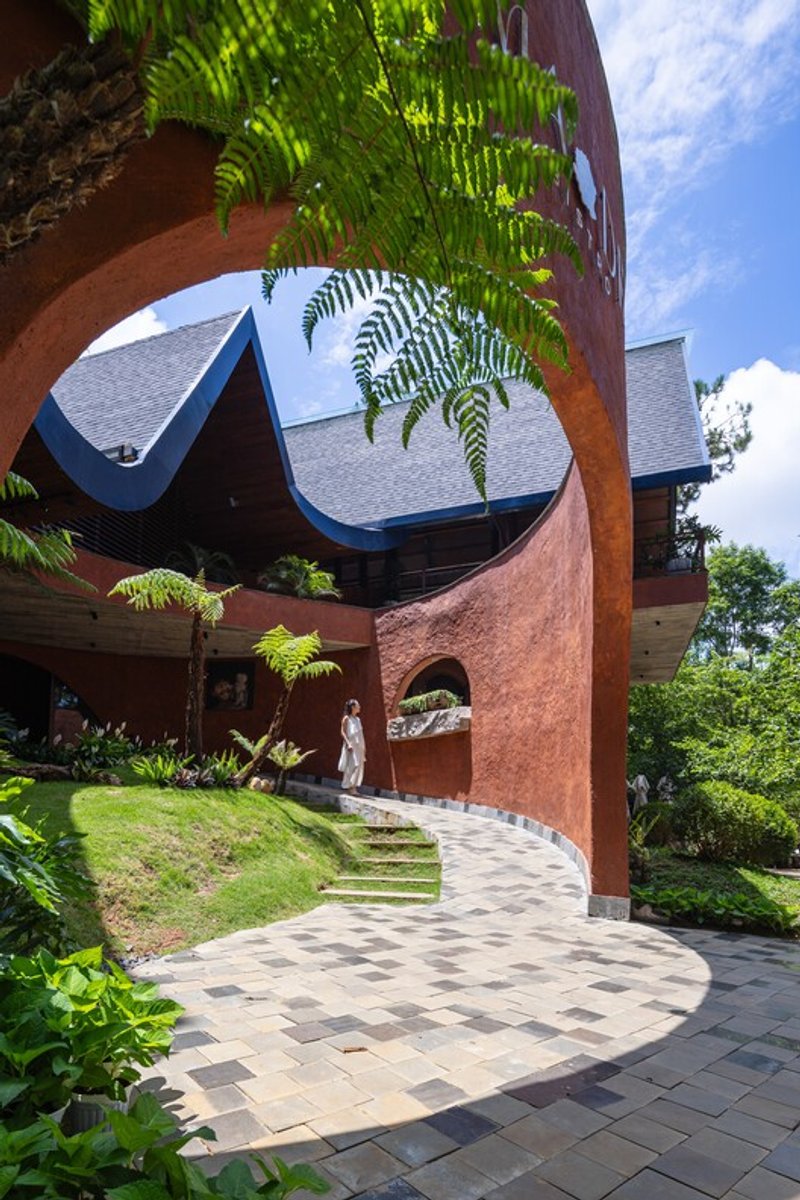
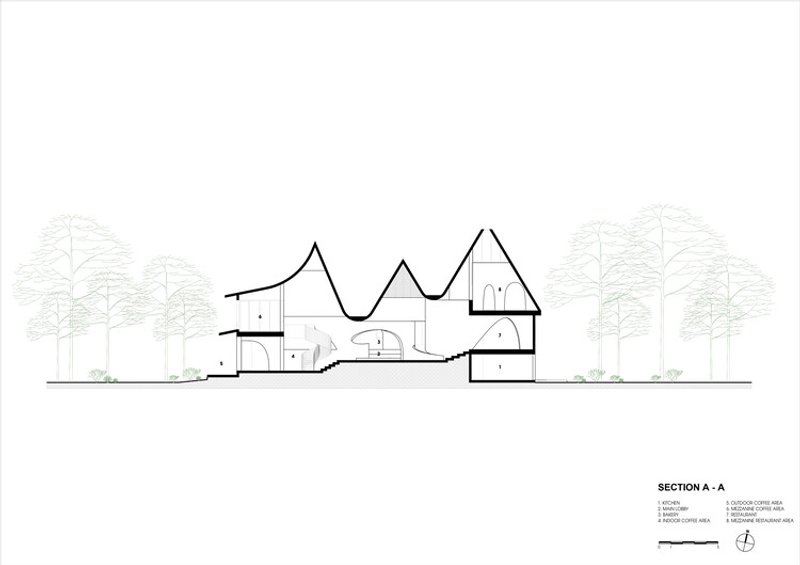
The design takes inspiration from the Rông house, an iconic communal structure native to Vietnam’s Central Highlands. Instead of a direct architectural replica, the building features a roof that splits into three interconnected peaks, each at varied heights. This creates a dynamic silhouette reminiscent of rolling mountain ranges while offering a contemporary reinterpretation of indigenous form.
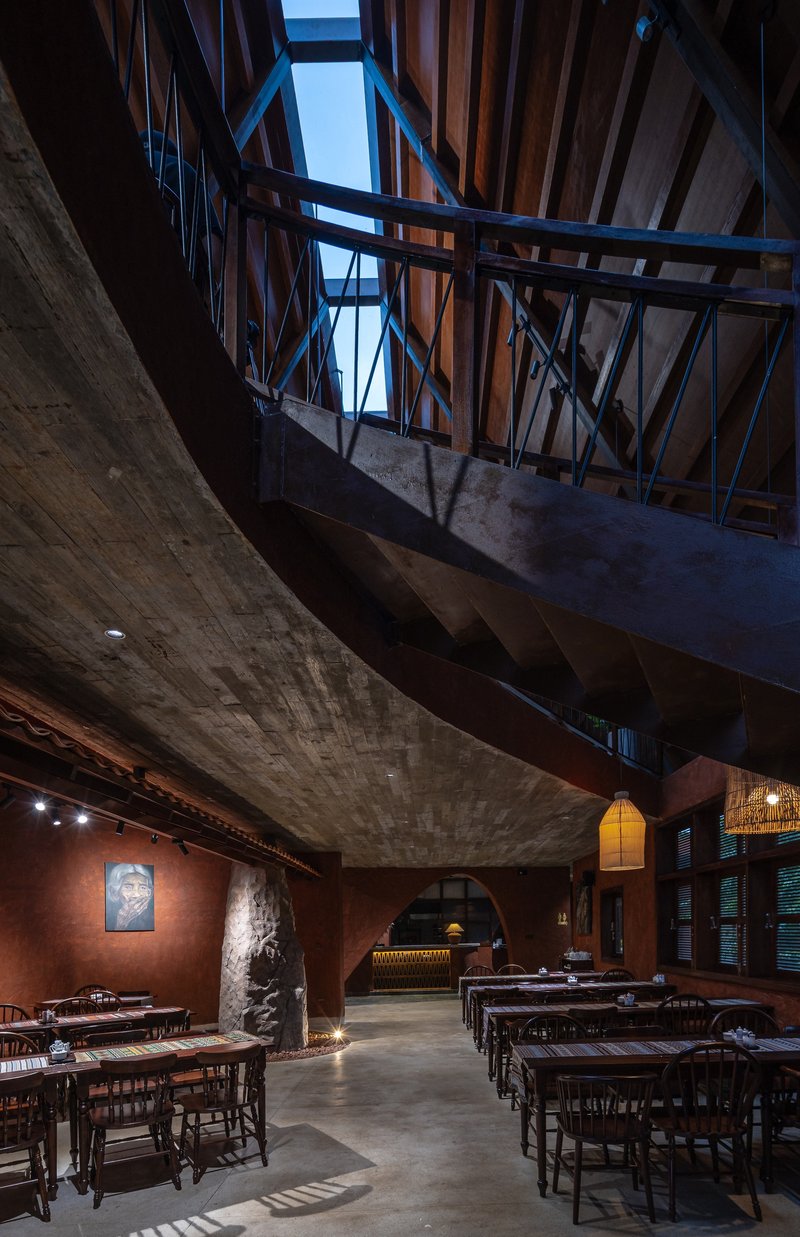
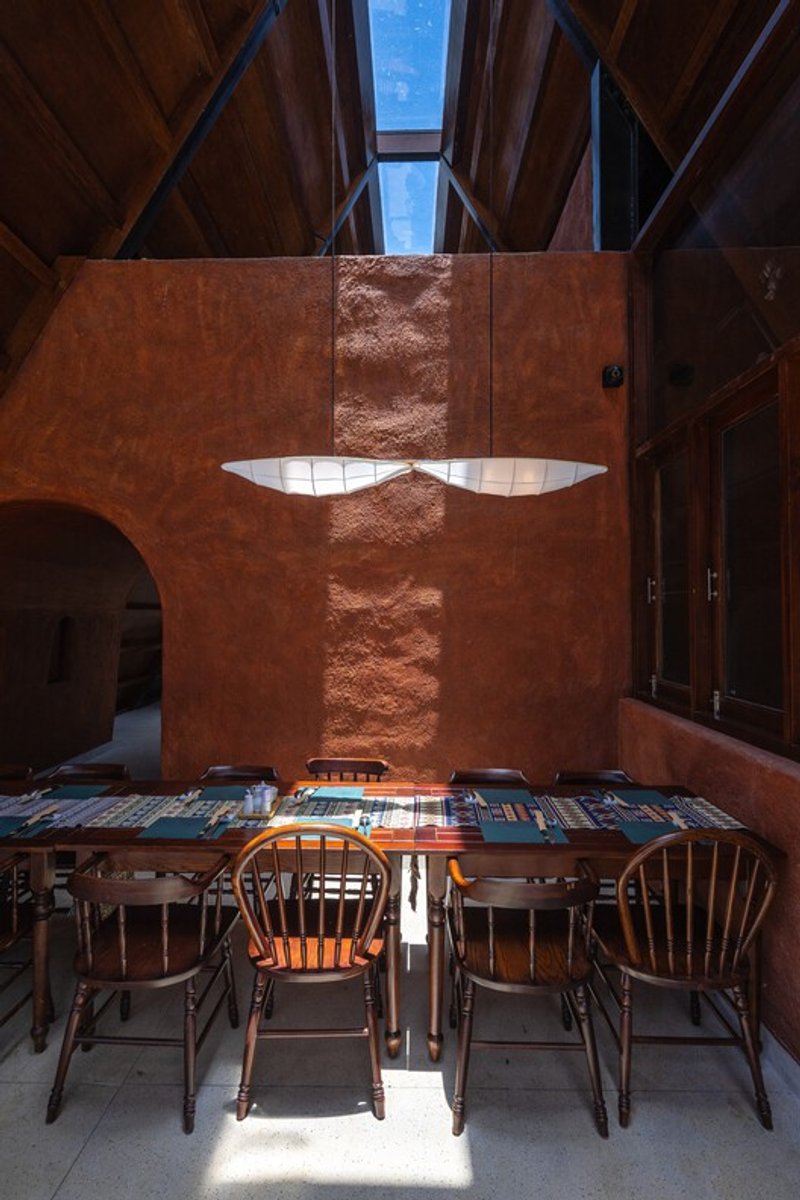
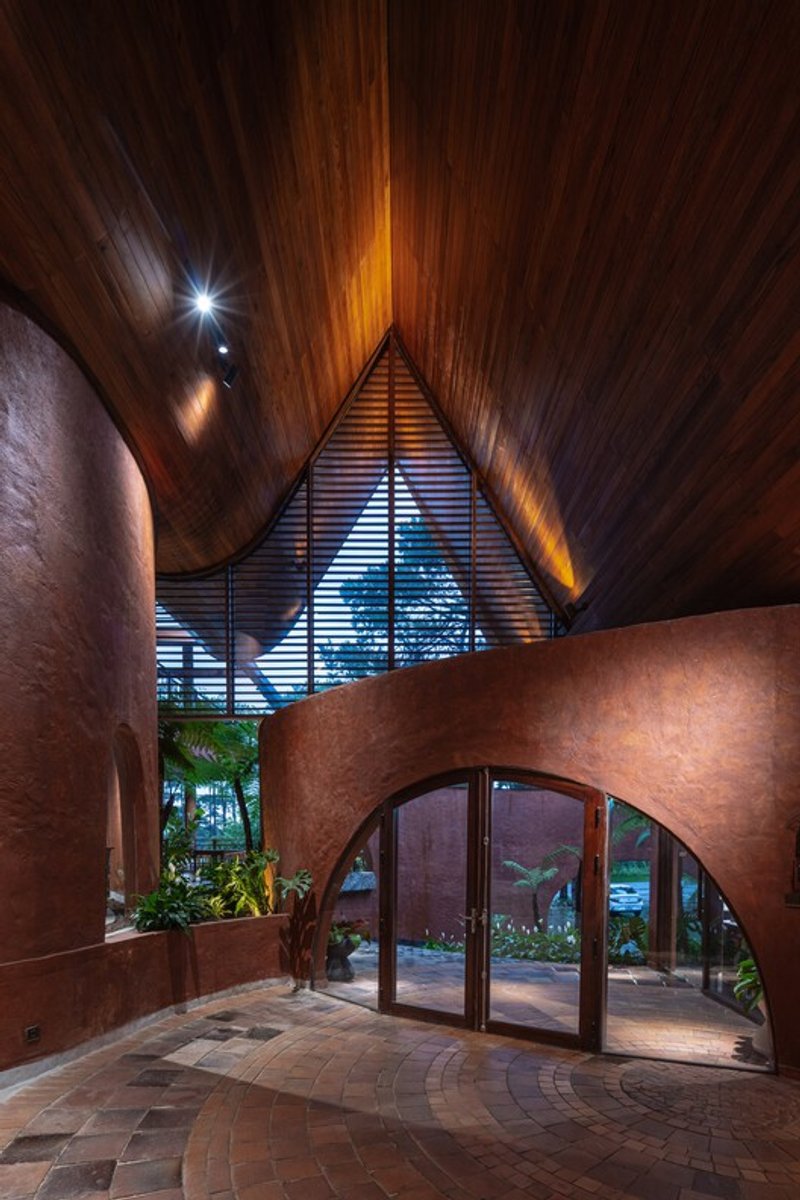
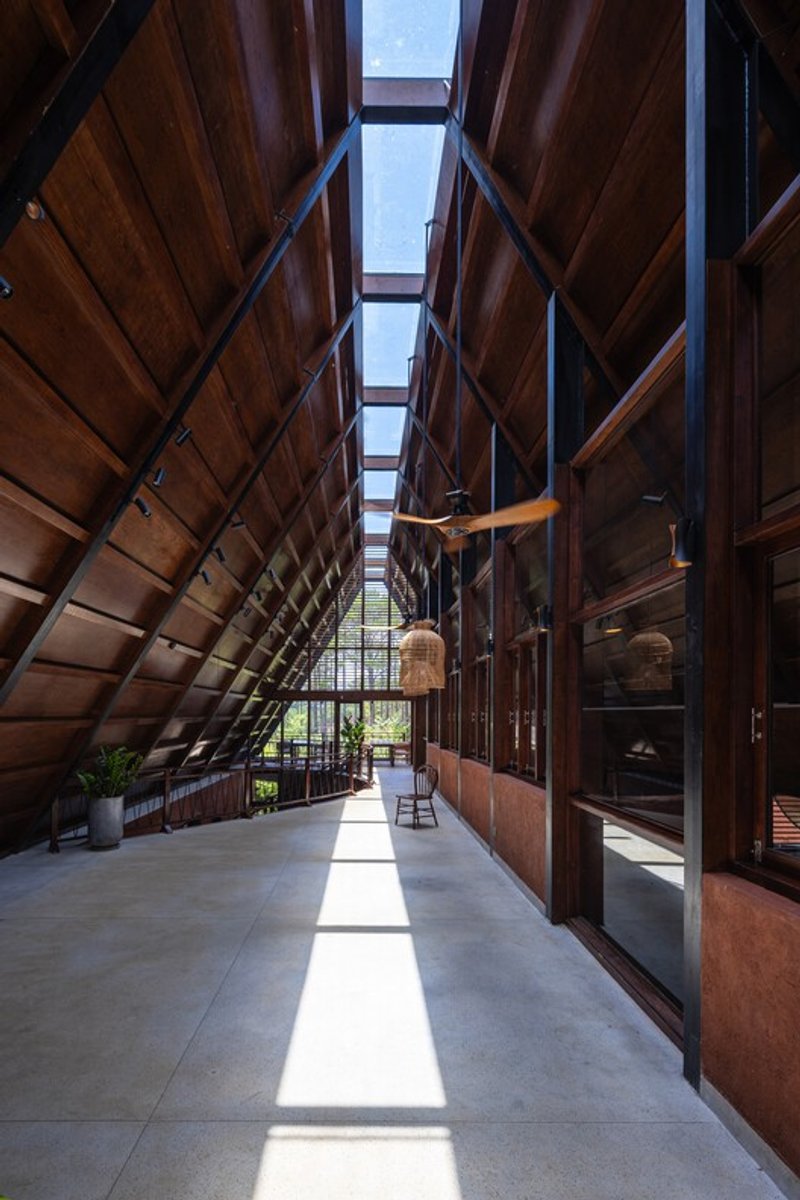
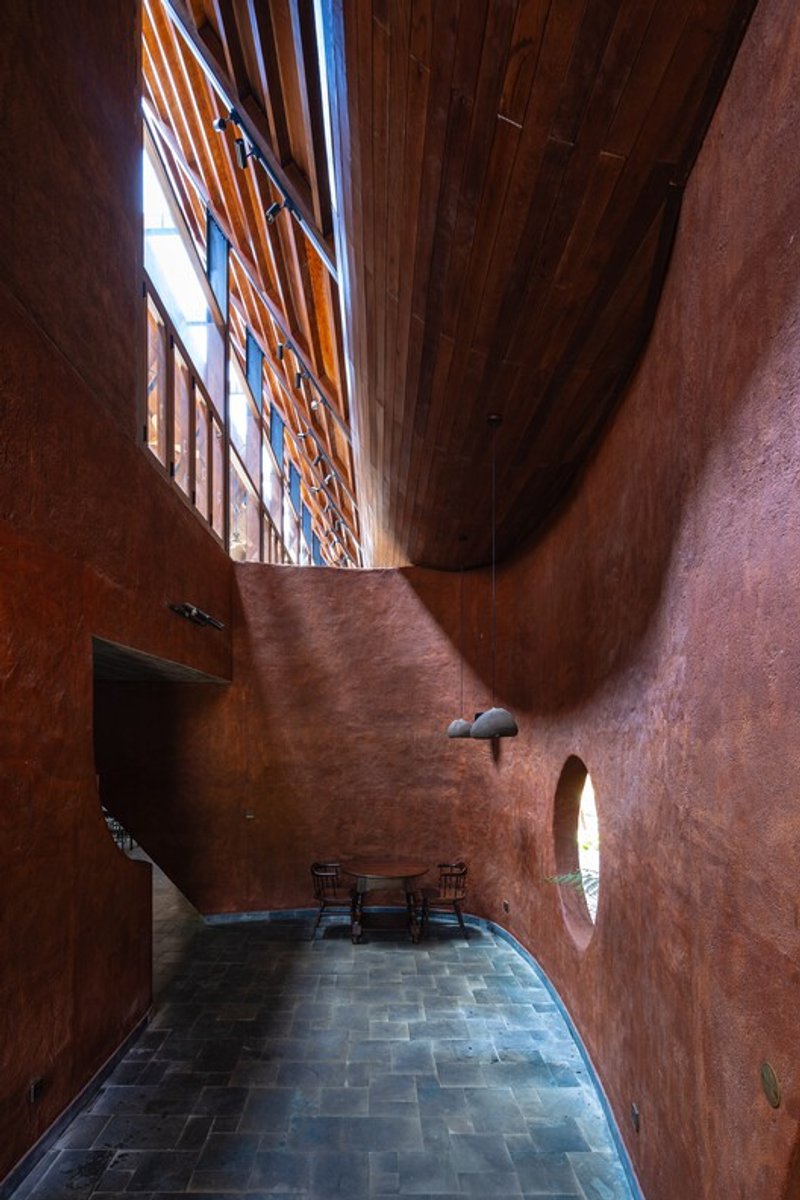
This expansive canopy acts as the project’s unifying architectural gesture. Underneath it, walls are arranged freely and fluidly, detached from the roof to allow daylight, wind, and shadow to flow naturally through the interiors. These intentional gaps encourage cross-ventilation and create a poetic play of light throughout the day.
A Journey Through Space: Light, Shadow, and Levels
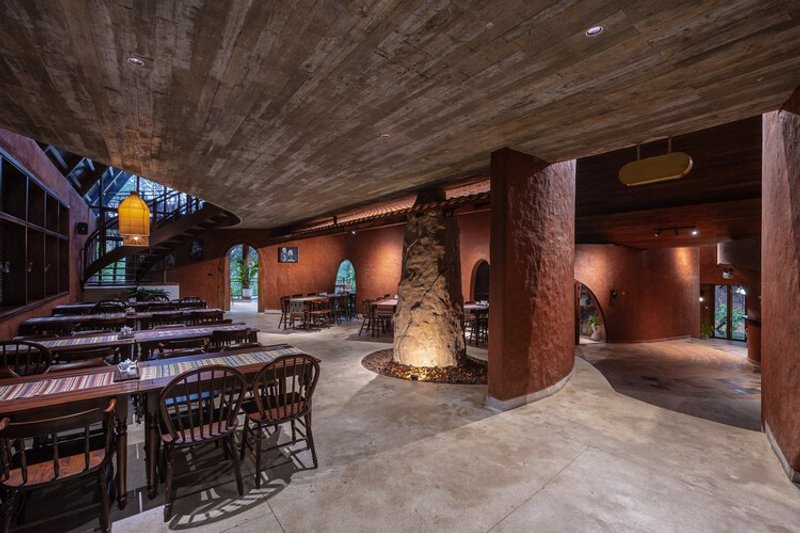
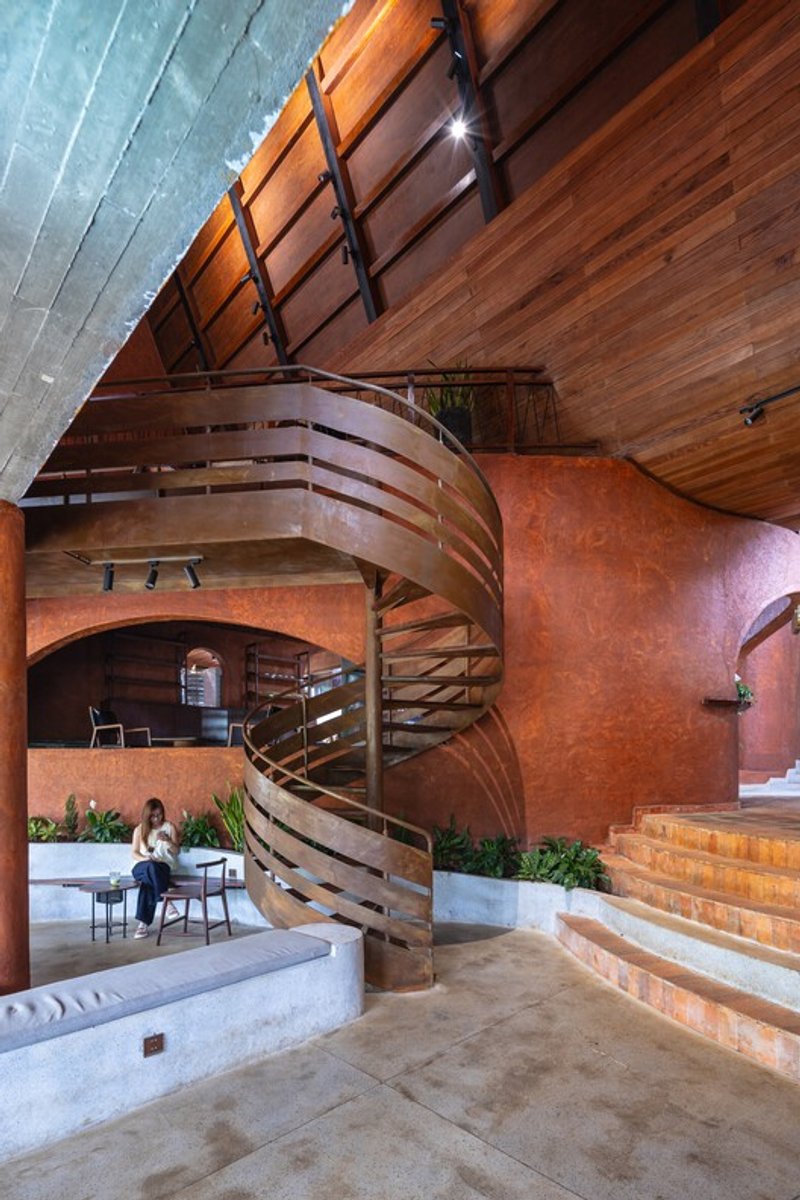
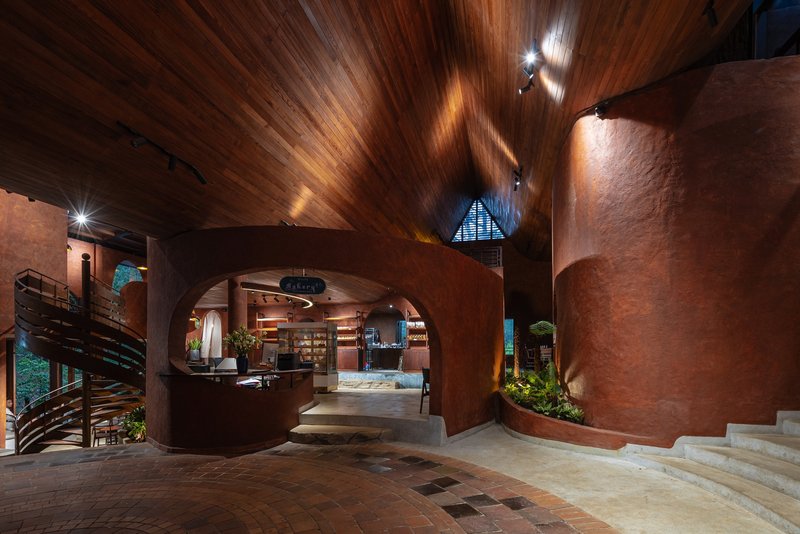
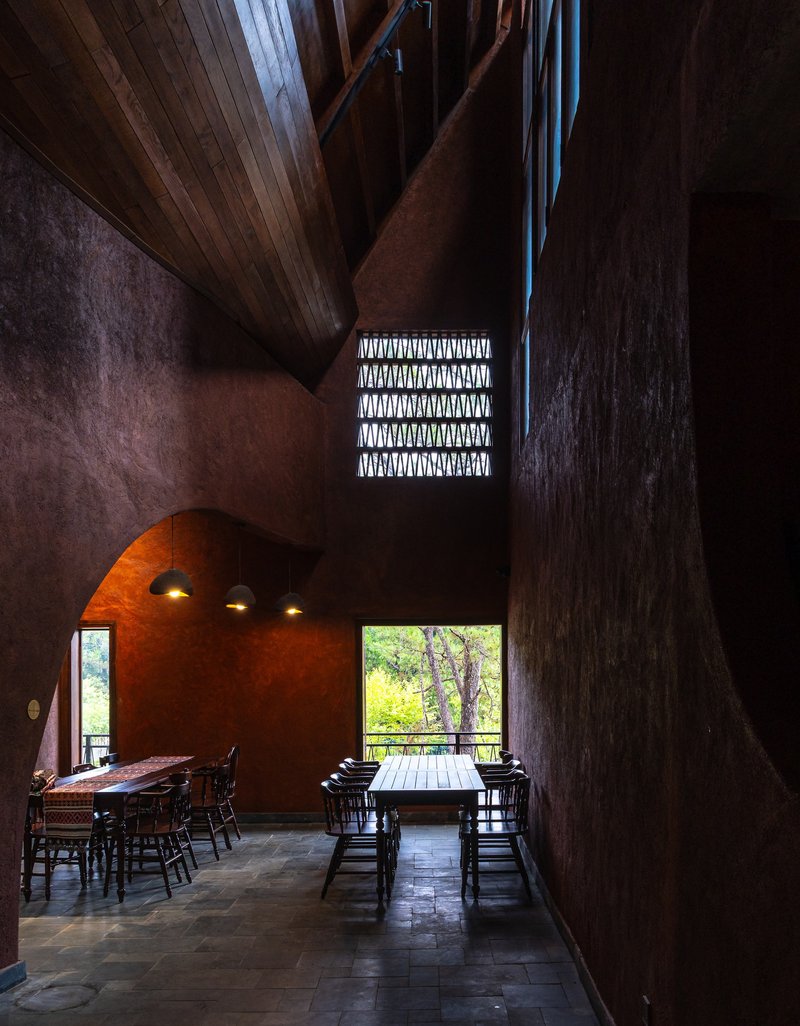
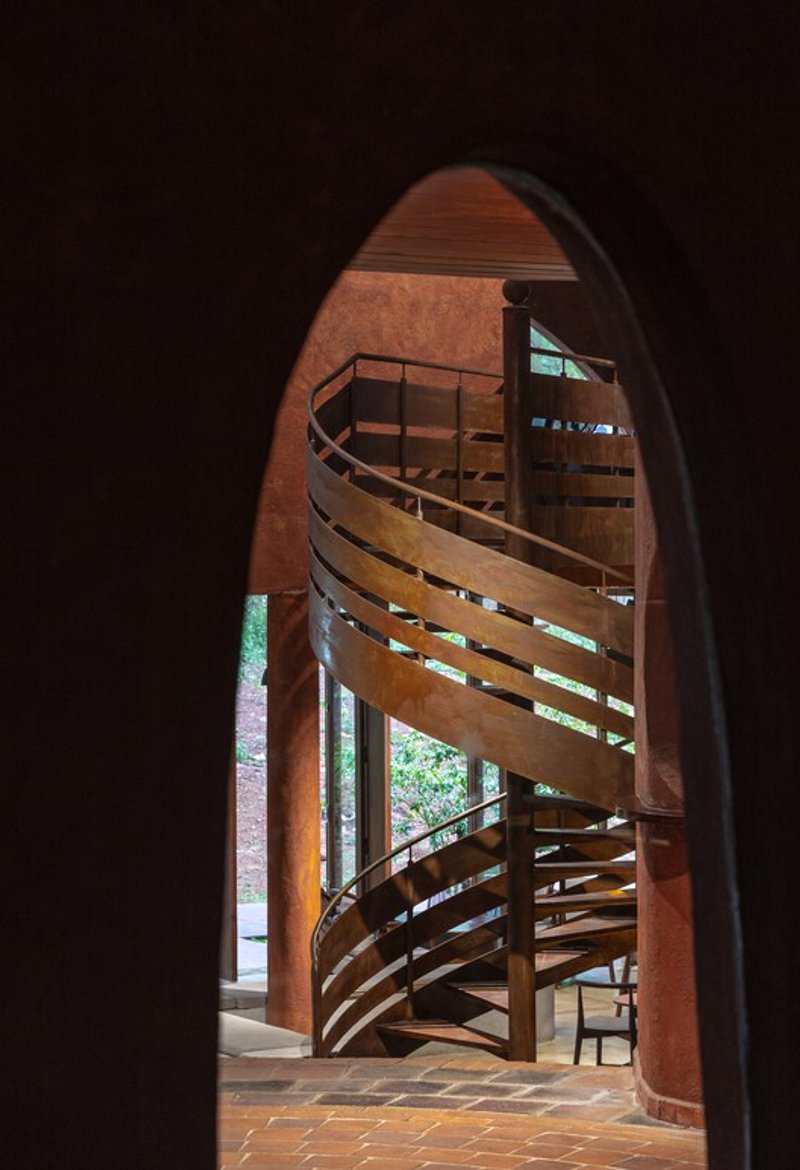
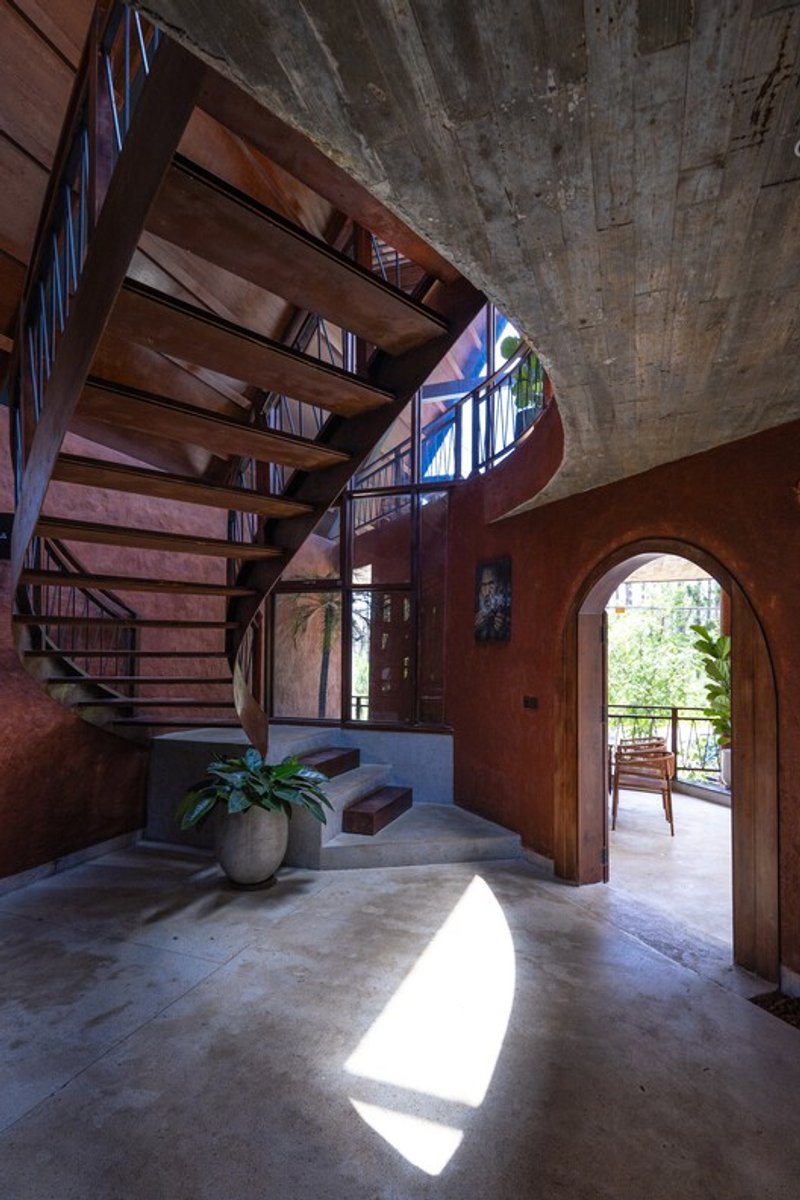
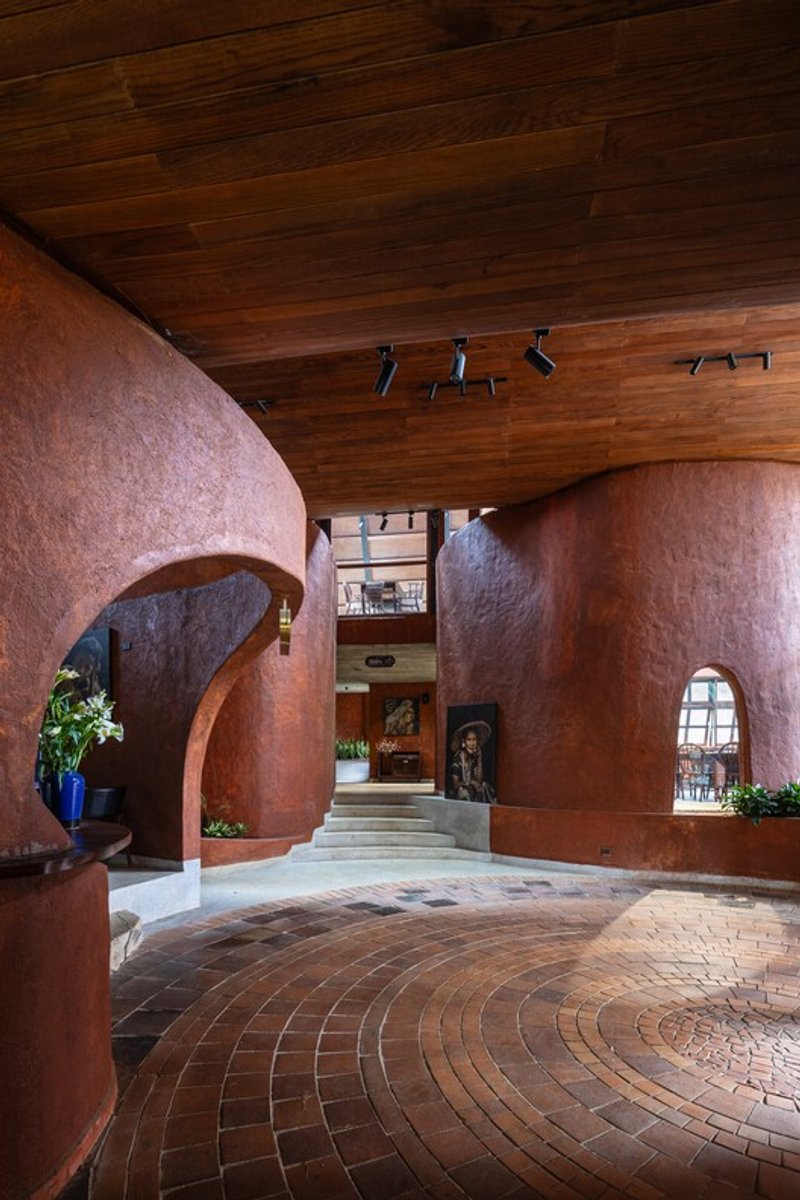
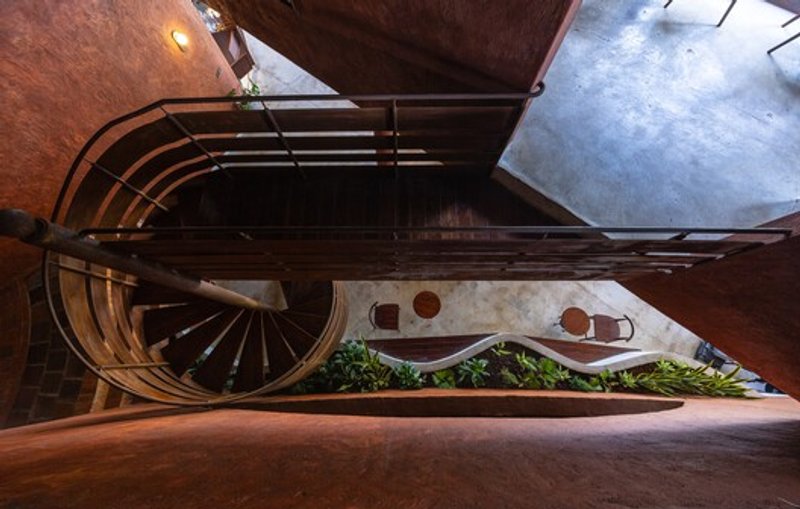
Visitors enter through an open-air circular courtyard, which acts as a soft, transitional threshold between outside and inside. From there, the interior unfolds in layers, gently cascading toward the pine forest with subtle changes in floor level. These spatial shifts nurture intimacy, interaction, and discovery.
Instead of exposing nature all at once, the project reveals it gradually—curated views frame pine trees, passing clouds, and shifting sunlight. This choreography of openness and enclosure transforms every movement into an architectural experience.
Material Palette Rooted in Place
MA.DE Bistro’s materiality strengthens its connection to the land:
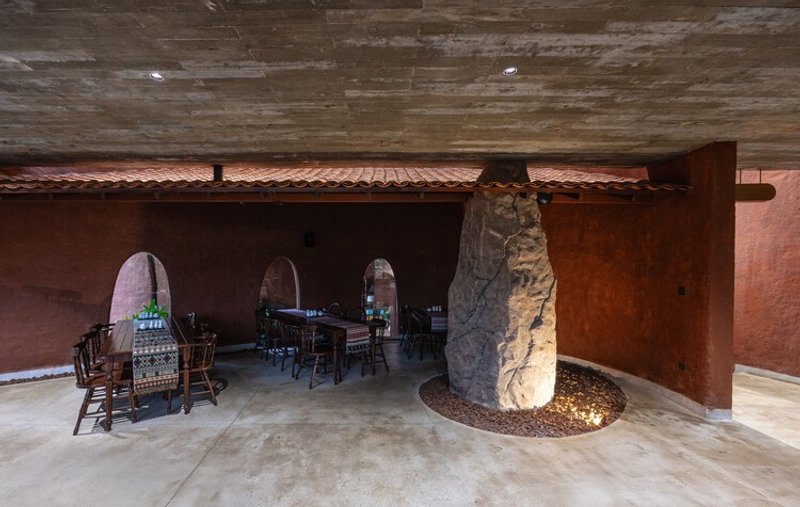
- Plastered masonry walls in a deep red tone echo the region’s basalt soil.
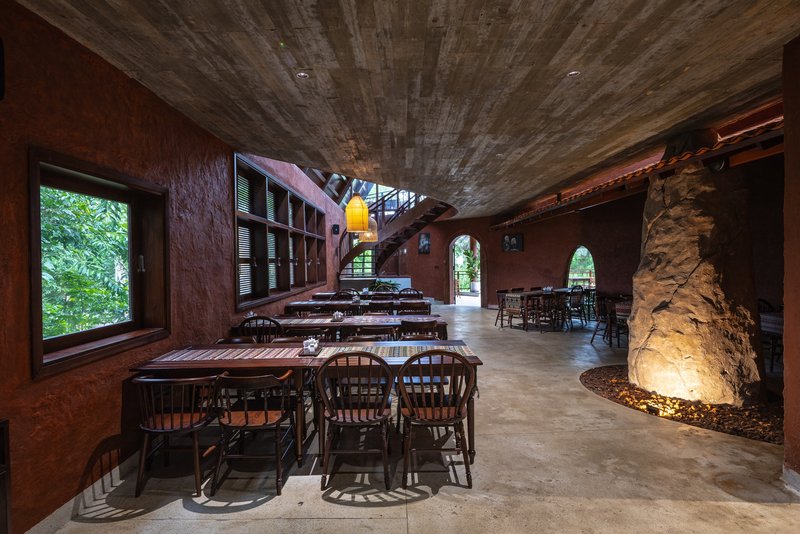
- Concrete ceilings retain the textures of pinewood formwork.
- Terracotta tiles radiate from the central hall, reinforcing the warmth and authenticity of local craftsmanship.
- Terrazzo pathways create a smooth circulation network.
- Irregular natural stone marks secondary spaces with tactile richness.
These materials, earthy and expressive, engage the senses beyond sight—inviting touch, warmth, and familiarity.
Sophisticated Roof and Structure
The roof structure utilizes a primary steel frame clad with warm timber on the underside and finished externally with lightweight bitumen shingles suitable for the region’s climate. Most steel elements were prefabricated off-site, ensuring precision and reducing construction time.
This structural strategy allows the building to achieve its dramatic roof form while maintaining efficiency and stability.
A Cultural Destination in the Highlands
MA.DE Bistro successfully embodies its mission: to blend cultural identity, architectural innovation, and sensory experience. Through thoughtful spatial planning, context-sensitive materials, and a poetic understanding of local heritage, AN NAM Architecture creates a bistro that is not merely visited—but felt.
It stands as a testament to how contemporary architecture can honor tradition while shaping new cultural expressions in Vietnam’s Central Highlands.
All the photographs are works of Trieu Chien




Popular Articles
Popular articles from the community


The Ken Roberts Memorial Delineation Competition (Krob)
As the most senior architectural drawing competition currently in operation anywhere in the world, it draws hundreds of entries each year, awarding the very best submissions in a series of medium-based categories.

Atelier Macri Concept Store Interior Design by CASE-REAL
Atelier Macri store features a "ko" counter, walnut wood details, cork displays, blending retail, gallery, and seamless customer experiences.


Split House: A Compact Urban Home Blending Privacy, Light, and Flexible Living in Japan
Compact Japanese home featuring DOMA space, flexible café potential, passive lighting, privacy zoning, and sustainable urban living design.


Similar Reads
You might also enjoy these articles
The Ken Roberts Memorial Delineation Competition (Krob)
As the most senior architectural drawing competition currently in operation anywhere in the world, it draws hundreds of entries each year, awarding the very best submissions in a series of medium-based categories.

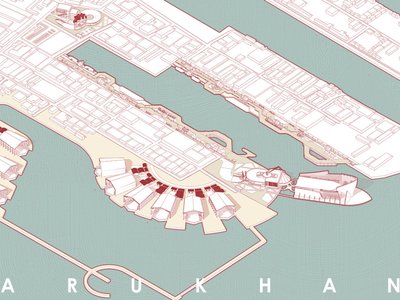
Waterfront Redevelopment and Urban Revitalization in Mumbai: Forging a New Dawn for Darukhana
A transformative waterfront redevelopment project reimagining Darukhana’s shipbreaking heritage into an inclusive urban future.

OUT-OF-MAP: A Call for Postcards on Feminist Narratives of Public Space
Rhizoma Design and Research Lab invites artists, designers, architects, researchers, and students to reflect on how feminist perspectives can reshape public space. Selected works will be exhibited in Barcelona, October 2026. Submissions open until 15 April 2026.


Documentation Work on Buddhist Wooden Temple
Architectural syncretism and cultural hybridity: A comparative study of the Buddhist temples in Chattogram Hill tracks

Explore Architecture Competitions
Discover active competitions in this discipline




The International Standard for Design Portfolios


The Global Benchmark for Architecture Dissertation Awards


The Global Benchmark for Graduation Excellence


Challenge to reimagine the Iron Throne
Comments (0)
Please login or sign up to add comments
No comments yet. Be the first to comment!