
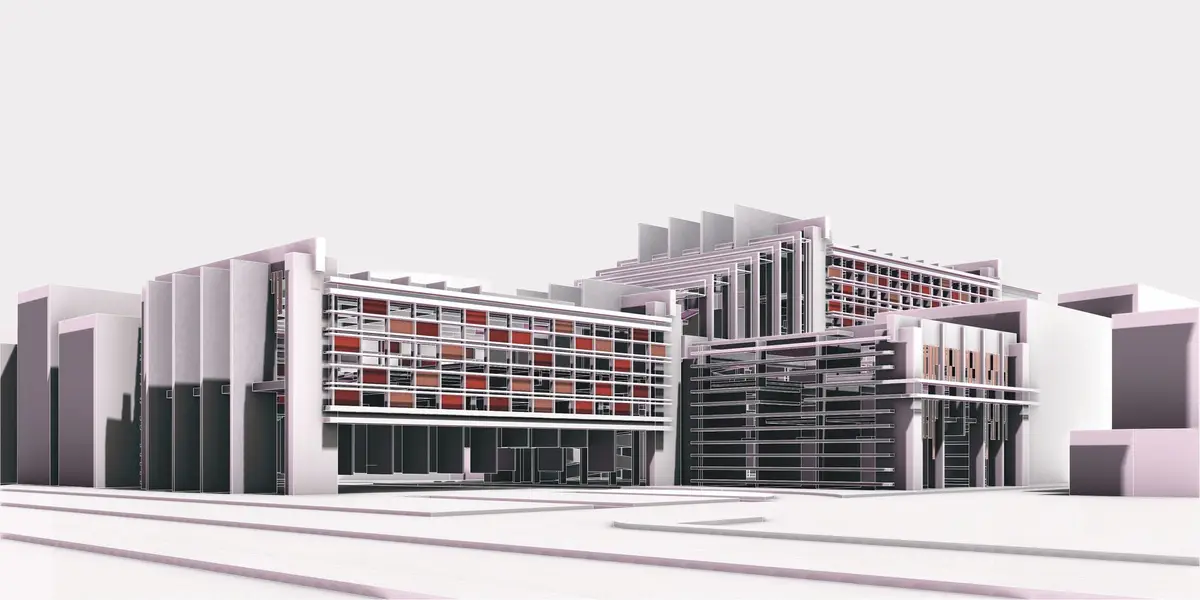
Market & Food Hall: A Megastructure Redefining Urban Marketplaces
Elevating Commerce and Community through a Sculptural Plane-Based Design


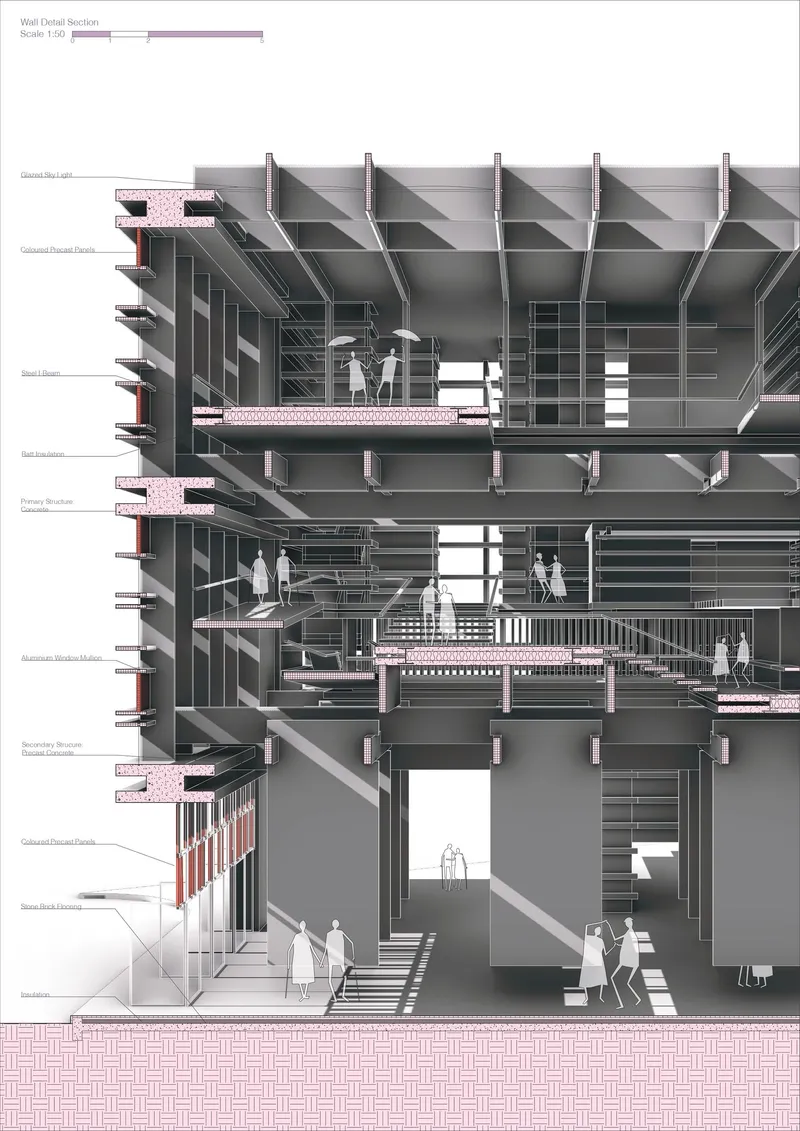
The Market & Food Hall, a shortlisted entry in the Sustainable & Regenerative Design Awards, presents an innovative and striking vision for urban marketplaces. This project reimagines the traditional market typology by lifting the program off the ground and creating a dynamic, multi-level experience within a megastructure composed of interlocking planes.
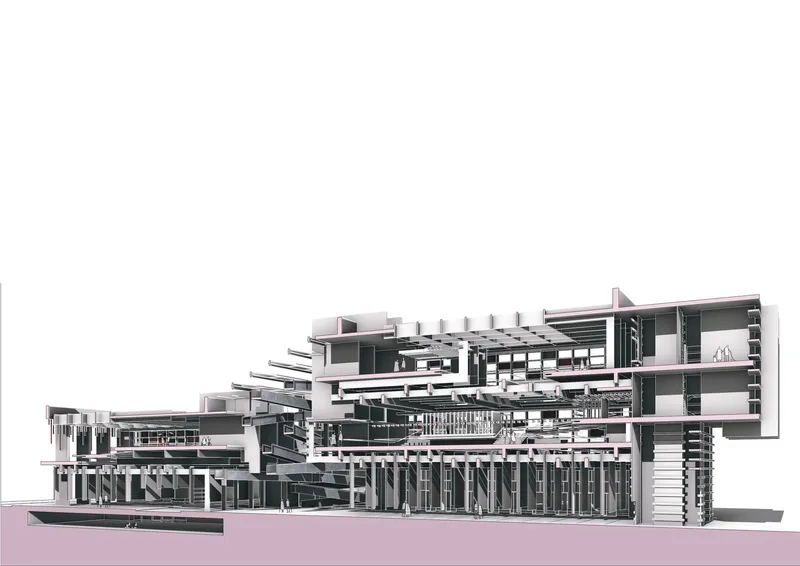
The Power of Planes
The core concept of the Market & Food Hall revolves around the repetition and manipulation of a single architectural element: the plane. These planes, strategically arranged and interconnected, perform multiple functions:
Structural Framework: The planes create an interlocking structural system that supports the elevated market spaces.
Aesthetic Expression: The repetition of planes creates a visually arresting and dynamic facade, adding a unique identity to the marketplace.
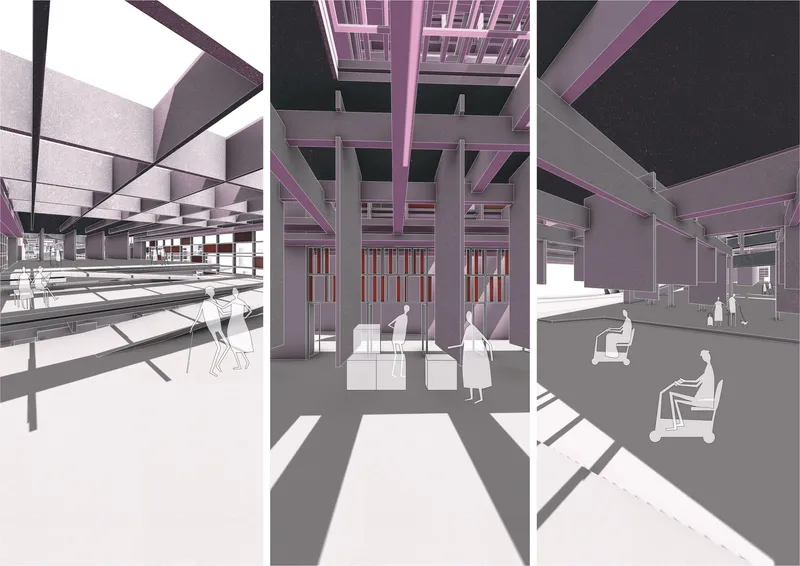
Light Modification: The planes act as light modifiers, filtering and directing natural light into the interior spaces, creating a play of light and shadow.
Framing Views: Carefully positioned planes frame specific views both within the market and towards the surrounding urban context.
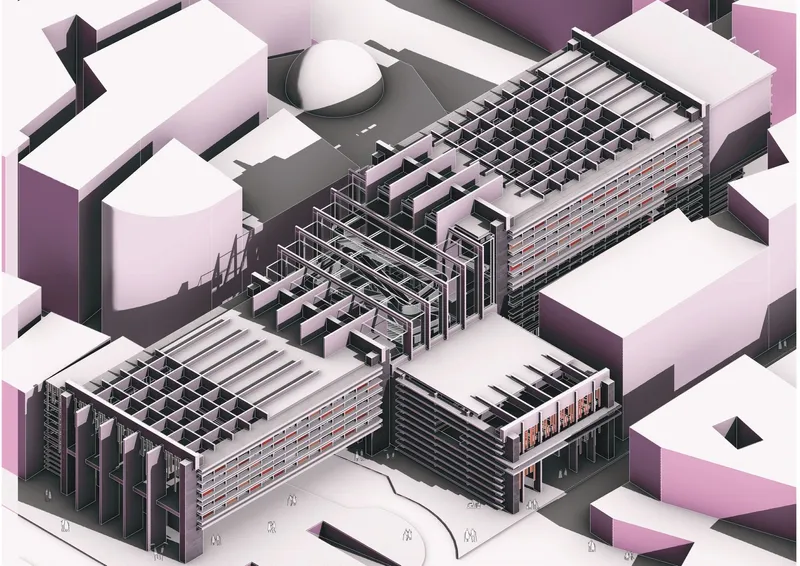
Sculptural Circulation: A Central Ramp:
In contrast to the rectilinear nature of the plane-based structure, the primary circulation within the Market & Food Hall takes the form of a sculptured ramp. This central ramp winds its way through the different levels of the market, creating a dynamic and engaging journey for visitors:
Accessibility: The ramp provides universal accessibility, allowing people of all abilities to navigate the multi-level marketplace.
Visual Focus: The ramp serves as a visual focal point, drawing the eye upwards and highlighting the interconnectedness of the different market levels.
Interactive Experience: The ramp encourages exploration and interaction, as visitors meander through the various stalls and spaces.
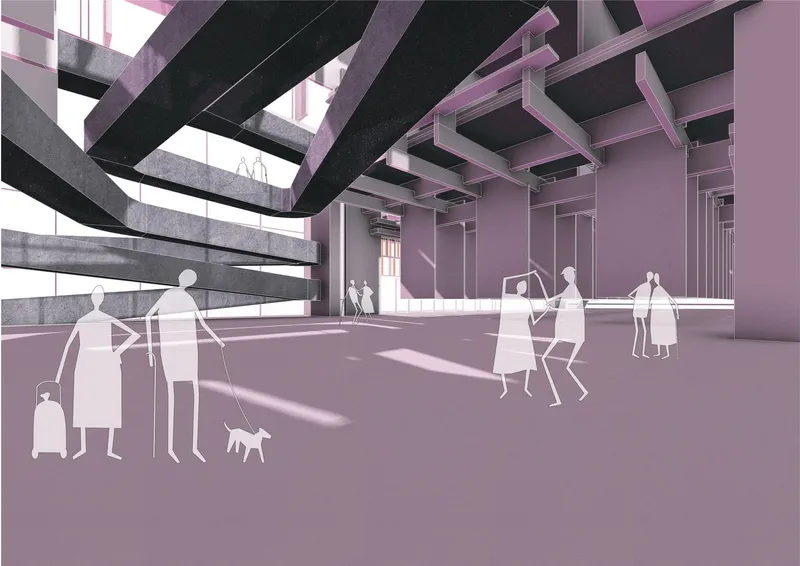
Spatial Organization and Functionality:
The interplay of planes and the central ramp creates a diverse range of spatial experiences within the Market & Food Hall:
Open Market Areas: Large, open areas accommodate a variety of market stalls, promoting flexibility and adaptability.
Intimate Pockets: Smaller, more intimate pockets are created between the planes, offering spaces for specialized vendors or seating areas.
Visual Connections: The transparency of the plane structure allows for visual connections between different levels, fostering a sense of community and activity.
Natural Light and Ventilation: The gaps and openings between the planes allow for natural light and ventilation to permeate the market, creating a comfortable and sustainable environment.
Sustainability and Regeneration:
The Market & Food Hall embraces principles of sustainability and urban regeneration:
Adaptive Reuse: The project can be adapted to existing urban sites, revitalizing underutilized areas and promoting density..
Reduced Footprint: Elevating the market program minimizes the building's footprint, freeing up valuable ground-level space for public use..
Energy Efficiency: The use of natural light and ventilation reduces reliance on artificial lighting and mechanical systems.
Community Hub: The Market & Food Hall serves as a vibrant community hub, promoting social interaction and economic activity.


Popular Articles
Popular articles from the community


Aquadapt: An Underwater Habitat That Rewrites Its Rooms by the Hour
Curved modules ring the seabed while one shell shifts from breakfast room to cinema, farm and football pitch as residents' needs change.


LT2A and OPEN Architectes Thread a Brick and Glass High School Through a Wooded Belgian Campus
In Braine-l'Alleud, a 3,000 m² wing for Collège Cardinal Mercier pairs pale brick with a glazed colonnade, deferring to a small chapel and a dense wood.

Cube Design Draws an Ecological Corridor Between Two Shenzhen Hills with the Nankai Building
Beside Shenzhen's container docks, the Nankai Building pairs stacked balconies with a climbing green screen to connect two hillsides across its height.

FCC Arquitectura Expands a Portuguese Granite House with a Board-Marked Concrete Wing
In Portugal, JV House pairs a cleaned-up whitewashed and granite dwelling with a timber-shuttered concrete extension, courtyards and a garden pool.

Similar Reads
You might also enjoy these articles

Vereda Arquitetos Renovates a 40-Square-Meter Apartment Inside Niemeyer's Copan Building
A compact unit in São Paulo's most iconic residential tower gets a material overhaul that pairs exposed concrete with bold blue Formica.

Shakur's House: Exposed Brick as an Interior Organiser in a 168 m² Mashhad Residence
Brick moves indoors in this Mashhad residence, where masonry walls, glass partitions and teal planes sequence a compact home without closing it off.

Day and Night Park: A Time-Based Urban Newsstand in Beijing
A temporary urban newsstand in Beijing blending travel, light, and reading through poetic colors, compact form, and community-focused design.

Modernist Patio Renovation in El Masnou, Barcelona by Oliver Segura Arquitectura + Cebrià Arquitectura
Modernist patio renovation blending tradition and innovation with a movable pool, leveled floors, and Catalan materials in El Masnou.


Comments (0)
Please login or sign up to add comments
No comments yet. Be the first to comment!