

Millennium World School Hassan – A Sustainable and Child-Centric Learning Environment
Millennium World School Hassan by Roadhouse Architects blends sustainable design with interactive learning spaces, fostering creativity, community, and environmental responsibility.


Innovative School Design by Roadhouse Architects
Millennium World School Hassan, designed by Roadhouse Architects, redefines contemporary educational architecture by fostering an environment that encourages curiosity, creativity, and holistic learning. Situated on the outskirts of Hassan, Karnataka, this state-of-the-art institution integrates sustainable architecture with child-friendly spaces, promoting both academic excellence and experiential learning.

Architectural Concept & Spatial Planning
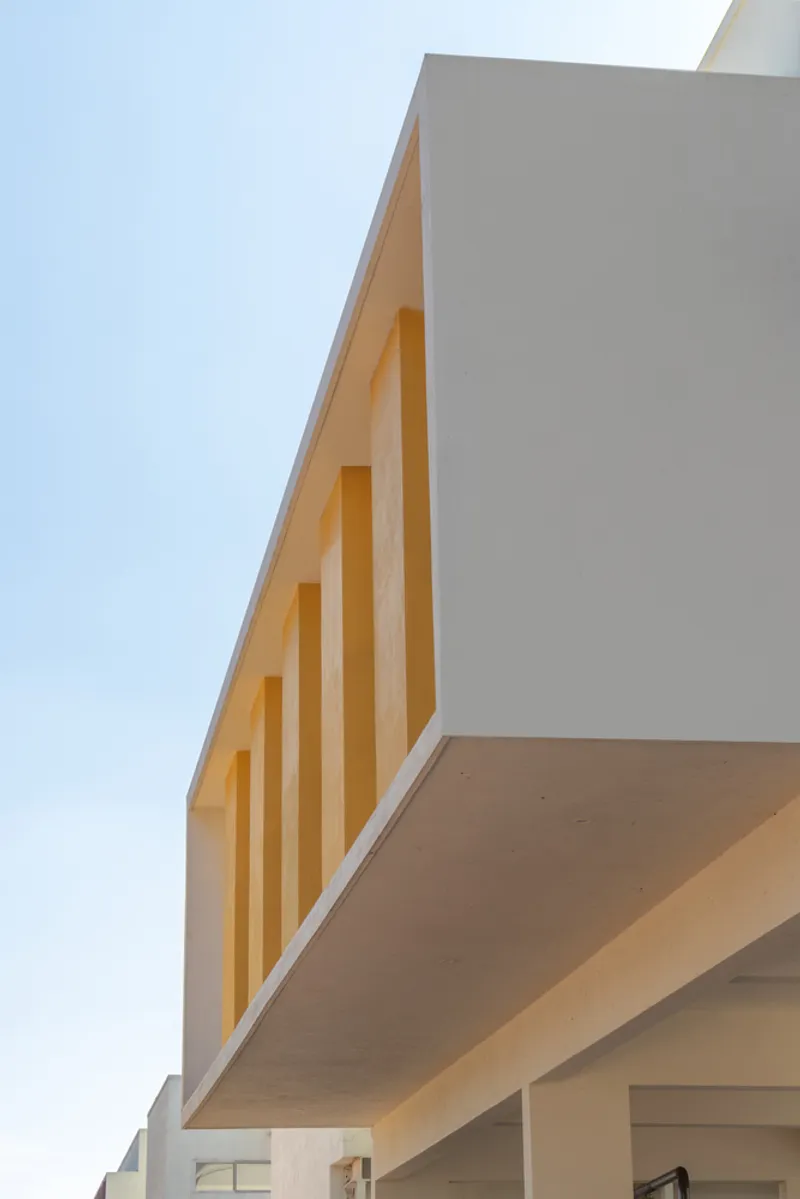
The design of Millennium World School Hassan moves away from traditional rigid classroom layouts and endless corridors. Instead, it embraces open, interactive spaces that enhance collaborative learning and student engagement. The campus, spanning 125,000 ft², is thoughtfully organized into three distinct zones, segregated by age groups and functional requirements, ensuring a seamless flow of activities across different levels.

Site & Contextual Design
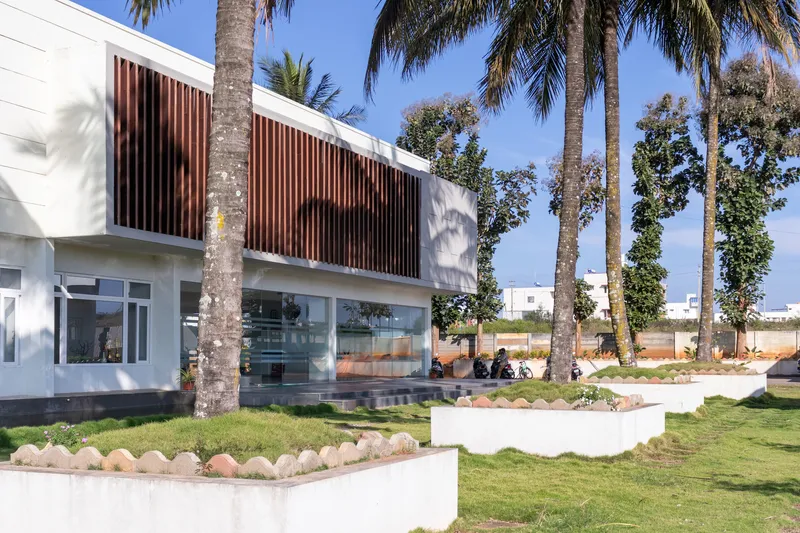
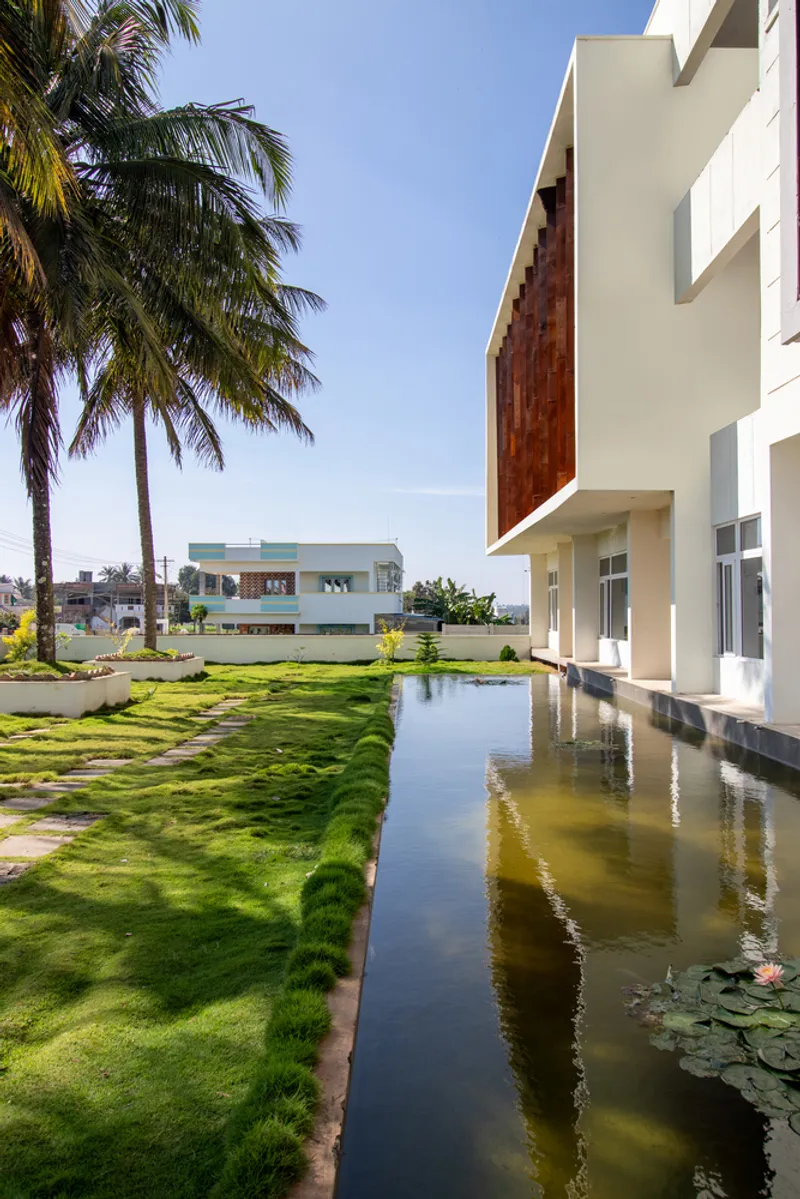
Nestled amidst lush agricultural fields, with breathtaking views of a lake and rolling hills, the school is positioned along the north-south axis to optimize natural ventilation and daylighting. The south-facing entrance welcomes visitors with a landscape featuring towering coconut trees, a koi pond, and shaded seating areas, creating a tranquil waiting zone for parents and students.
Courtyards & Multi-Functional Learning Spaces
At the heart of the design are two triple-height courtyards, which act as focal points for interaction and engagement:
- Play Court: Surrounded by kindergarten classrooms, this space doubles as an outdoor learning hub, fostering early childhood development through play and exploration.
- Central Courtyard: This stepped seating area serves as a dynamic multipurpose zone, hosting morning assemblies, cultural events, outdoor classes, and recreational activities. A continuous ribbon window along the staircases frames picturesque views of the surrounding landscape, blurring the boundaries between indoor and outdoor learning environments.
Sustainability & Climate-Responsive Features
Given Hassan’s tropical savanna climate, the school incorporates passive cooling strategies and eco-friendly materials to enhance comfort and energy efficiency:
- Building Orientation & Massing: The taller western wing houses activity rooms and laboratories, while the lower eastern block accommodates classrooms and courtyards, ensuring mutual shading and natural cooling.
- Deep-Set Windows & Cut-Outs: These architectural elements optimize cross-ventilation, reduce glare, and allow diffused daylight to permeate learning spaces.
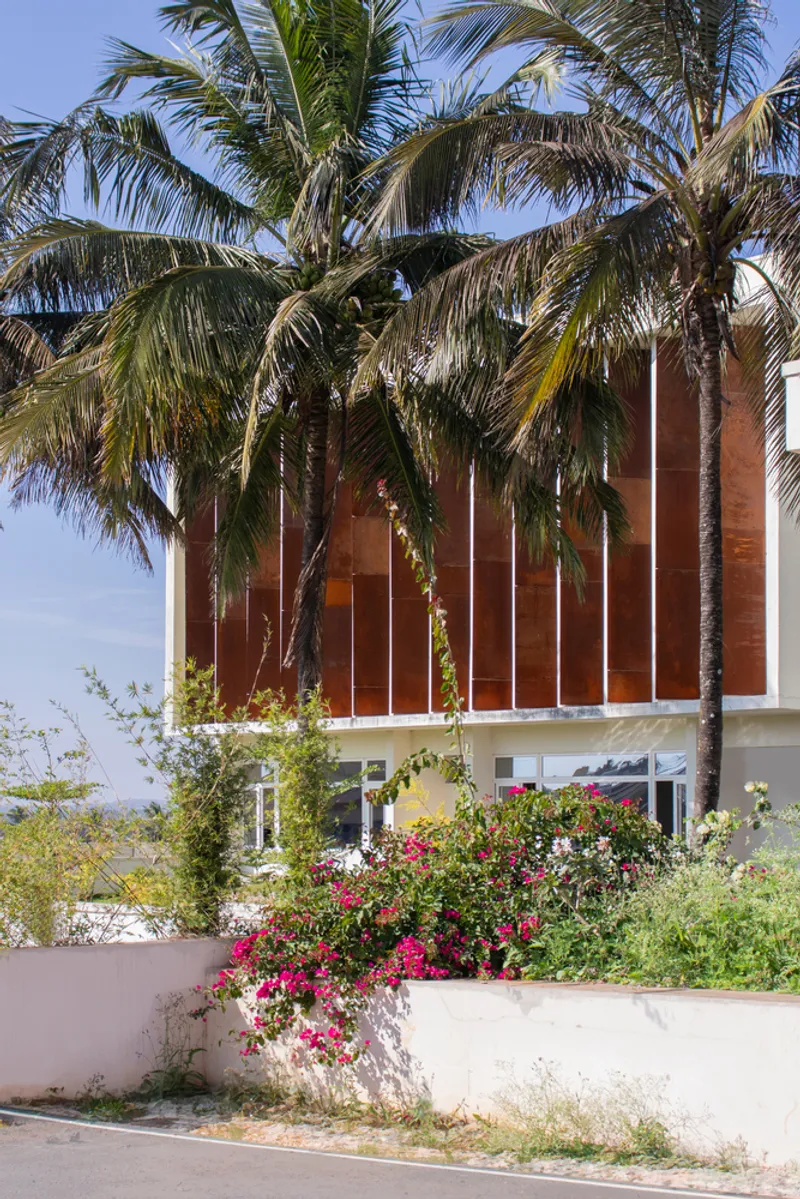
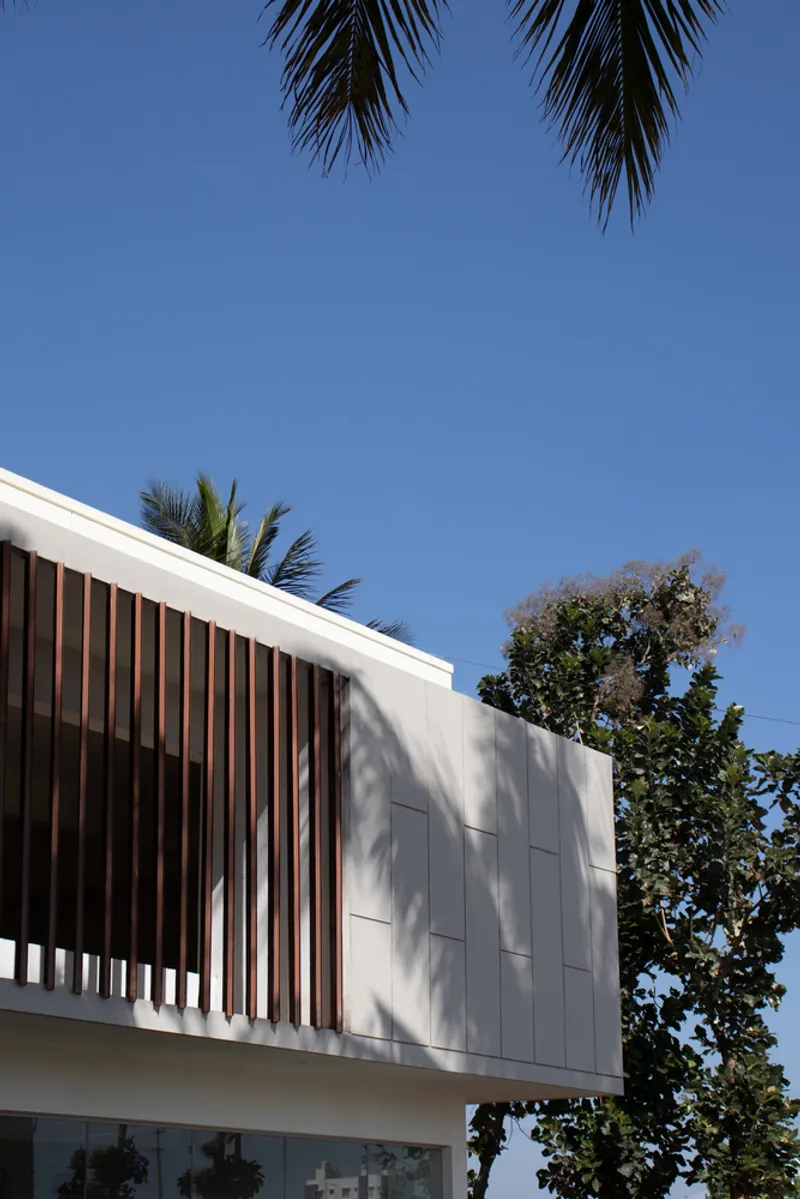
- Corten Steel Fins: The angled southern façade features weathering steel fins that naturally develop a rust-like patina over time, serving as both a shading device and an evolving aesthetic feature.
- Green Corridors & Planters: Integrated planter boxes along corridors soften the built environment, creating pockets of greenery where students can nurture their own plants, fostering a sense of environmental responsibility.

Human-Centric & Experiential Learning Spaces
The classrooms, primarily positioned on the northern façade, overlook the playground, ensuring access to natural light and ventilation. Innovative storage solutions—such as alternating built-in shelves between windows—double as playful learning niches. The emphasis on outdoor classrooms, interactive spaces, and cultural hubs reflects the ethos of a child-centric, engaging, and adaptive learning environment.
Materials & Finishes
The project features sustainable and locally sourced materials, including:
- Havells lighting systems for energy-efficient illumination
- Jaquar sanitary fittings ensuring water conservation
- Meghalite fixtures for optimized functionality and durability


A Model for Future Schools
Millennium World School Hassan is more than just an academic institution; it is a model for sustainable and future-forward educational design. By integrating nature, architecture, and pedagogy, Roadhouse Architects have crafted a space that nurtures creativity, curiosity, and community engagement—an inspiring precedent for schools across India and beyond.
All Photographs are works of Ranjan Prabhakar




Popular Articles
Popular articles from the community


The Musturak Paradise: Senior Living Architecture for a Connected Future in Temara, Morocco
The Musturak Paradise reimagines senior living architecture in Temara via private homes, social spaces, culture, community, and shared care.

Riyadh For All: Intergenerational Urban Design for Active Aging in Rabat
Riyadh For All reimagines urban design in Rabat with intergenerational co-living, adaptive courtyards, and Moroccan cultural exchange today.

Co-life: Sustainable Architecture for Age-Friendly Community Living
Co-life reimagines sustainable architecture for seniors through courtyards, rammed earth, shared gardens, and spaces designed for belonging.

The Earth Pod: 3D Printed Homes for Resilient Refugee Communities
The Earth Pod reimagines refugee housing through 3D printed homes made from clay, combining resilience, self-sufficiency, and rapid shelter.


Similar Reads
You might also enjoy these articles


Hodi-Mandai Geram
Project Function: Preservation and revitalization of the Intangible heritage and socio-spatial identity of the Hodi by Housing, Cultural Memory Center, Sacred Grove, landscape, local tourism economy


Olio Towers: A Mid-Rise for Performers That Fuses Housing, Rehearsal, and Stage
Located blocks from Houston's Theater District, this modular tower stacks living units around a central performance atrium.

Oasis: Modular Green Housing Carved into Dhaka's Urban Fabric
A shortlisted Plugin Housing entry reclaims unauthorized settlements in Dhaka with stepped concrete volumes, green roofs, and ventilation-driven design.

Black Hole: A Floating Megastructure for the Post-Physical Era
Emiliano Mazzarotto envisions a spherical, self-scaling arena where e-sports, digital hotels, and holographic stadiums replace traditional public space.

Explore BMS College Of Architecture Competitions
Discover active competitions in this discipline



Challenge to design public laboratory


Challenge to reimagine the Iron Throne


Photograph architecture without architects


Illustrate the lost glory of Angkor Wat - Render Challenge
Comments (0)
Please login or sign up to add comments
No comments yet. Be the first to comment!