

Modern Cabin Design in the Forest: Refugio Calfuco by Tomás de Iruarrizaga
Refugio Calfuco in Chile blends modern cabin design in the forest with traditional craftsmanship, elevated living, and deep environmental sensitivity.


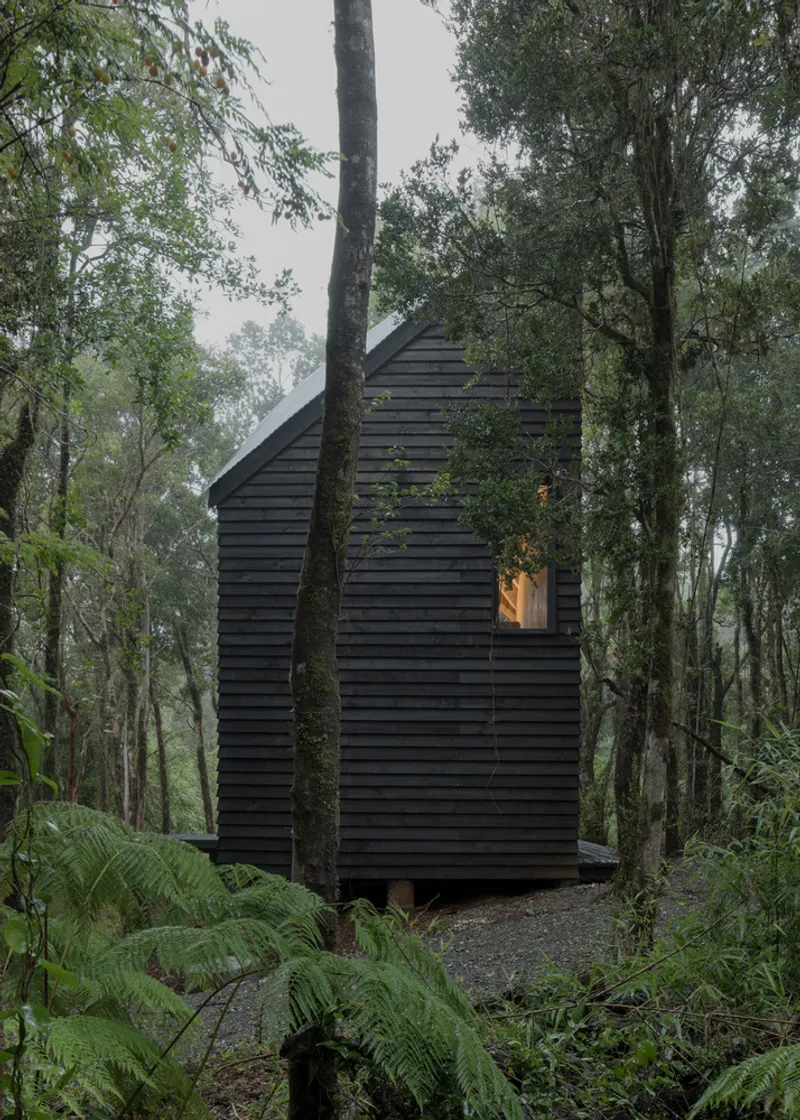
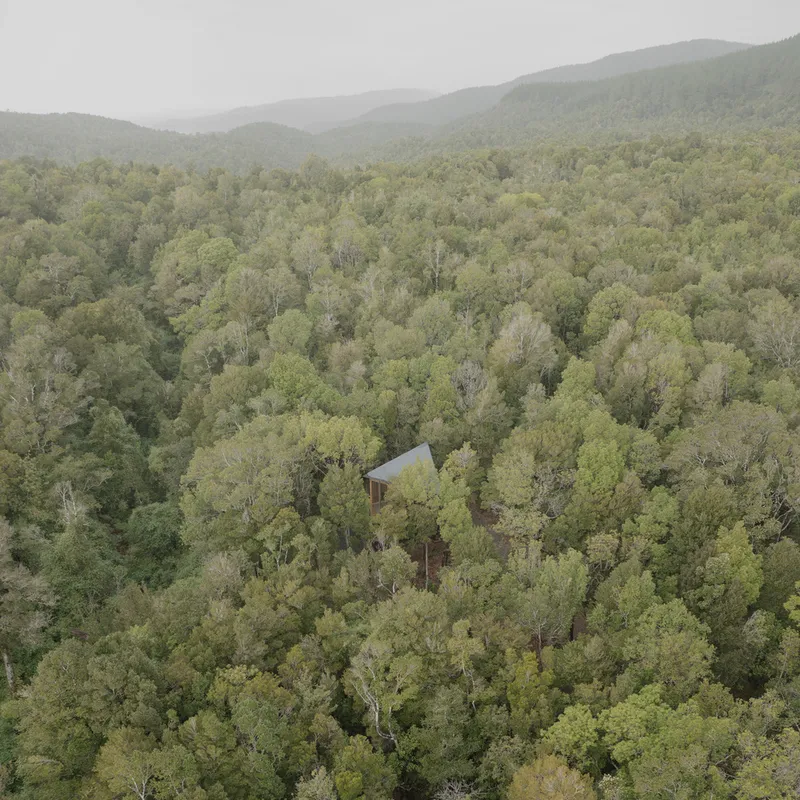
Perched in the lush Valdivian rainforest near Valdivia, Chile, Refugio Calfuco is a striking example of modern cabin design in the forest. Designed by architect Tomás de Iruarrizaga in 2022, this 50 m² retreat reinterprets the traditional cabin concept into a vertical, compact, and nature-integrated living space. Elevated above the forest floor, the cabin seeks northern light while minimizing its footprint, blending innovation with deep respect for the surrounding environment.

A Vertical Approach to Cabin Architecture
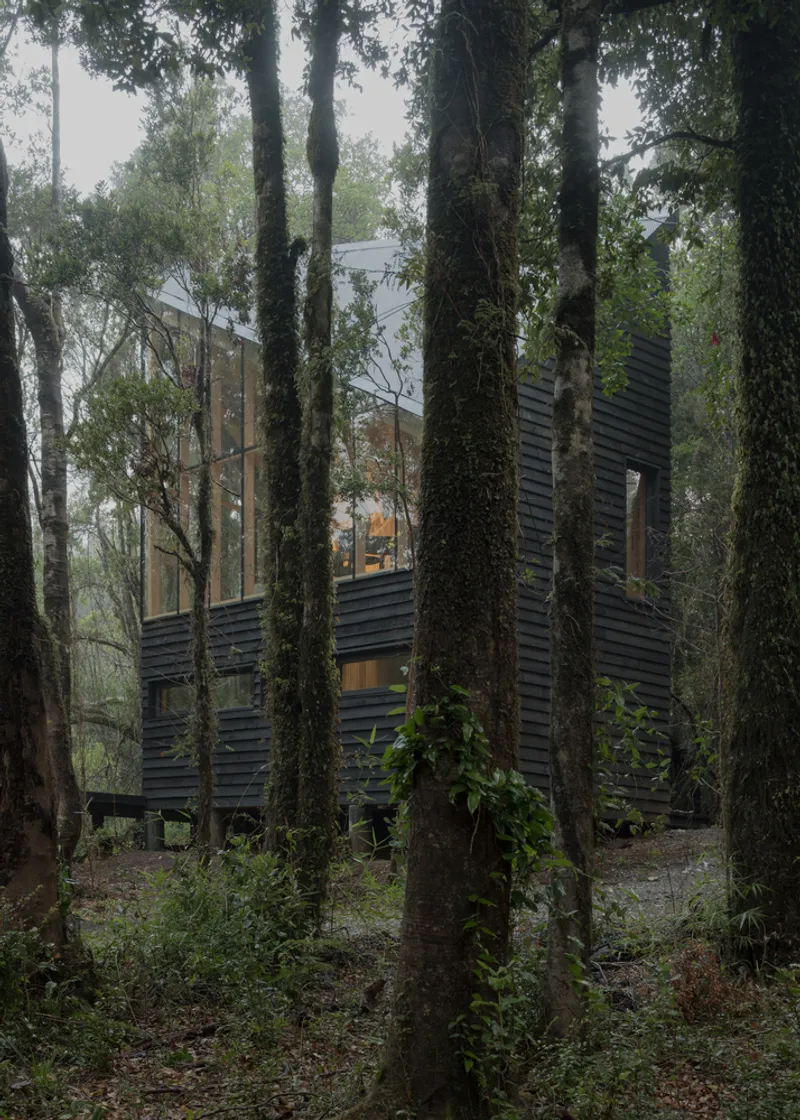
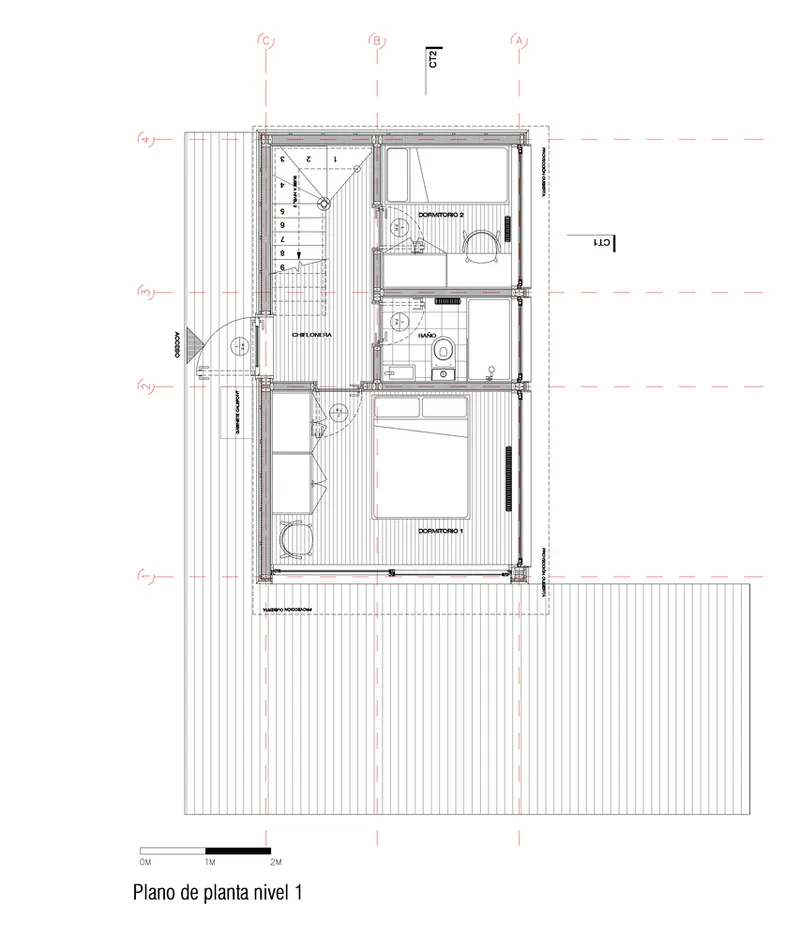
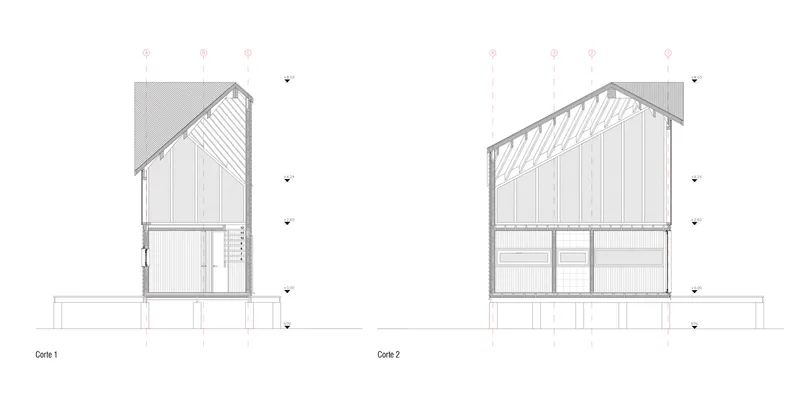
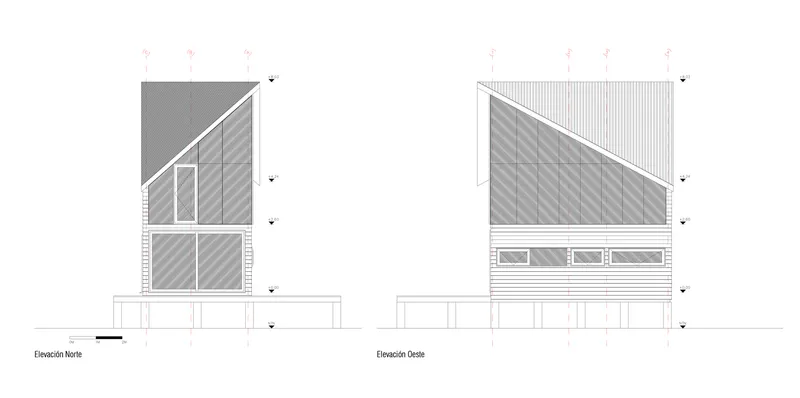
Instead of sprawling across the landscape, Refugio Calfuco adopts a slender tower form that rises ten meters above ground level to meet the treetops. The footprint is a simple four-by-seven-meter rectangle, strategically positioned between existing trees. This elevated design not only reduces environmental impact but also immerses inhabitants in the forest canopy, creating an intimate connection with nature.

Functional and Minimal Interior Layout
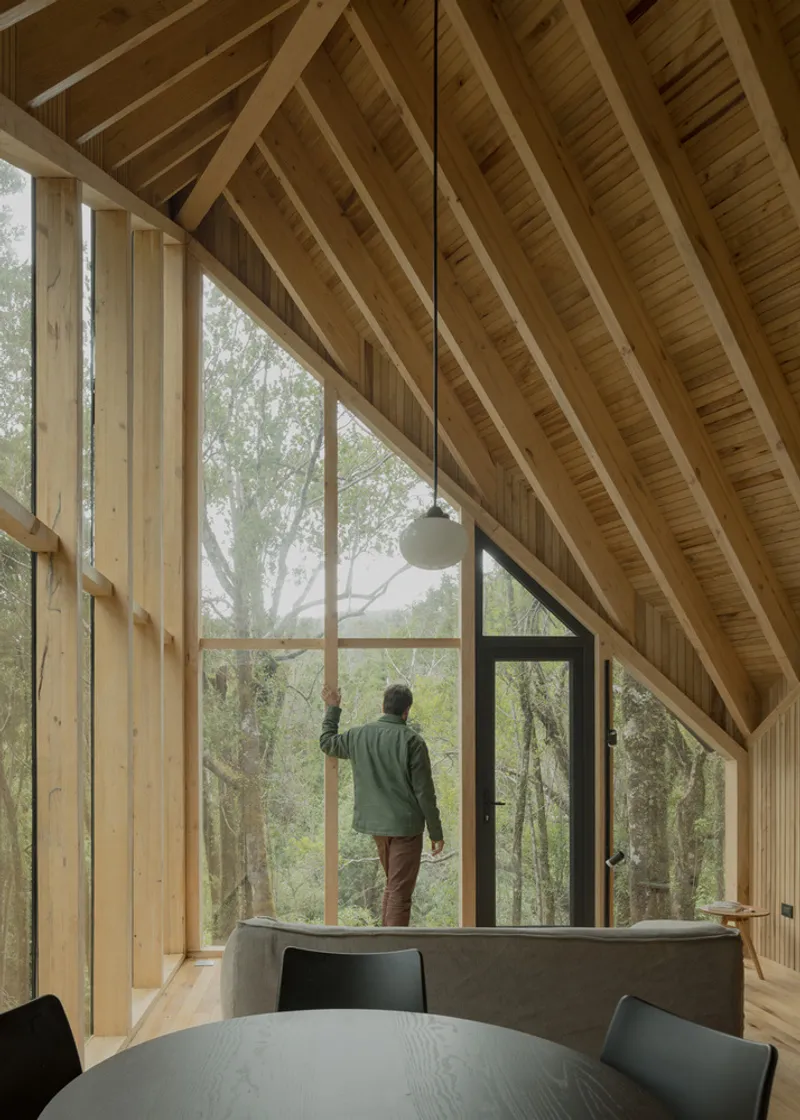
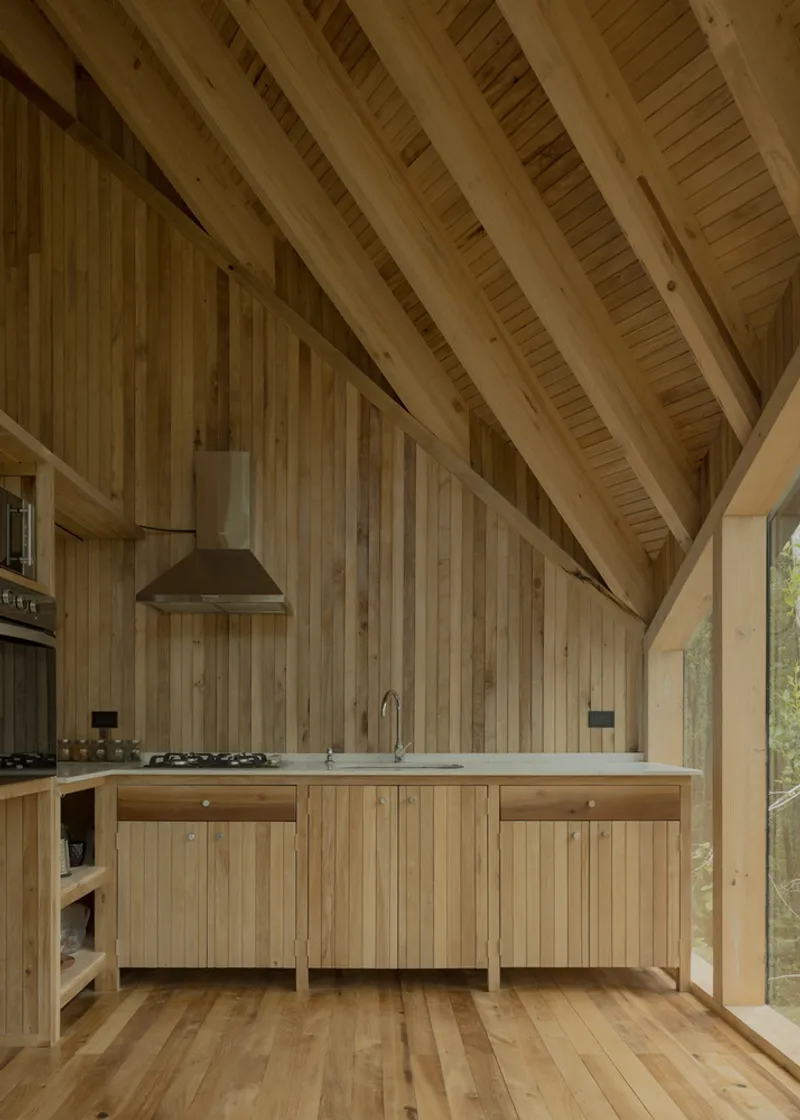
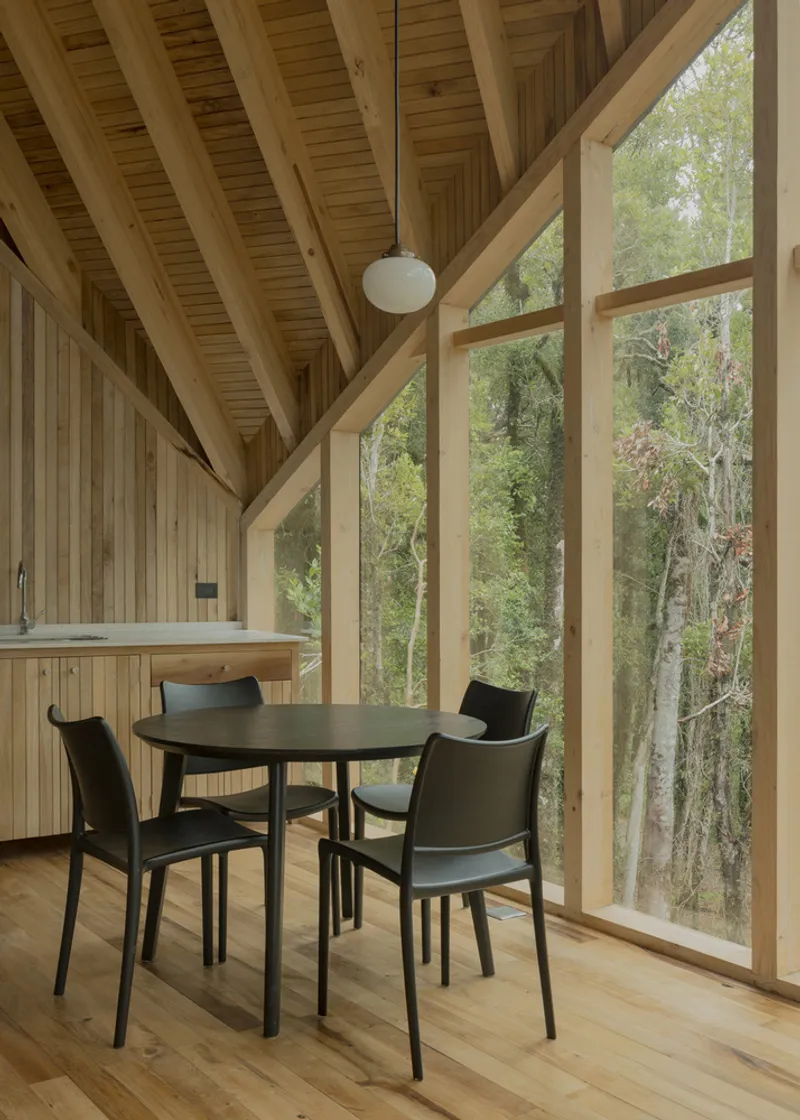
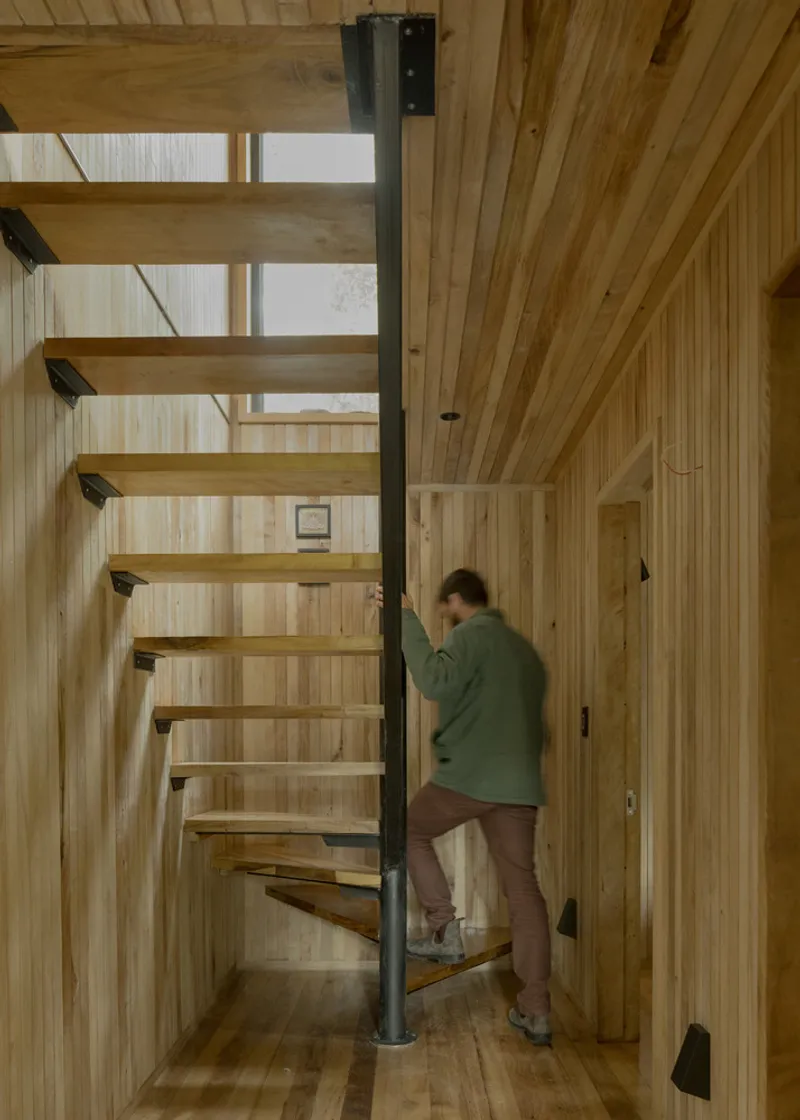
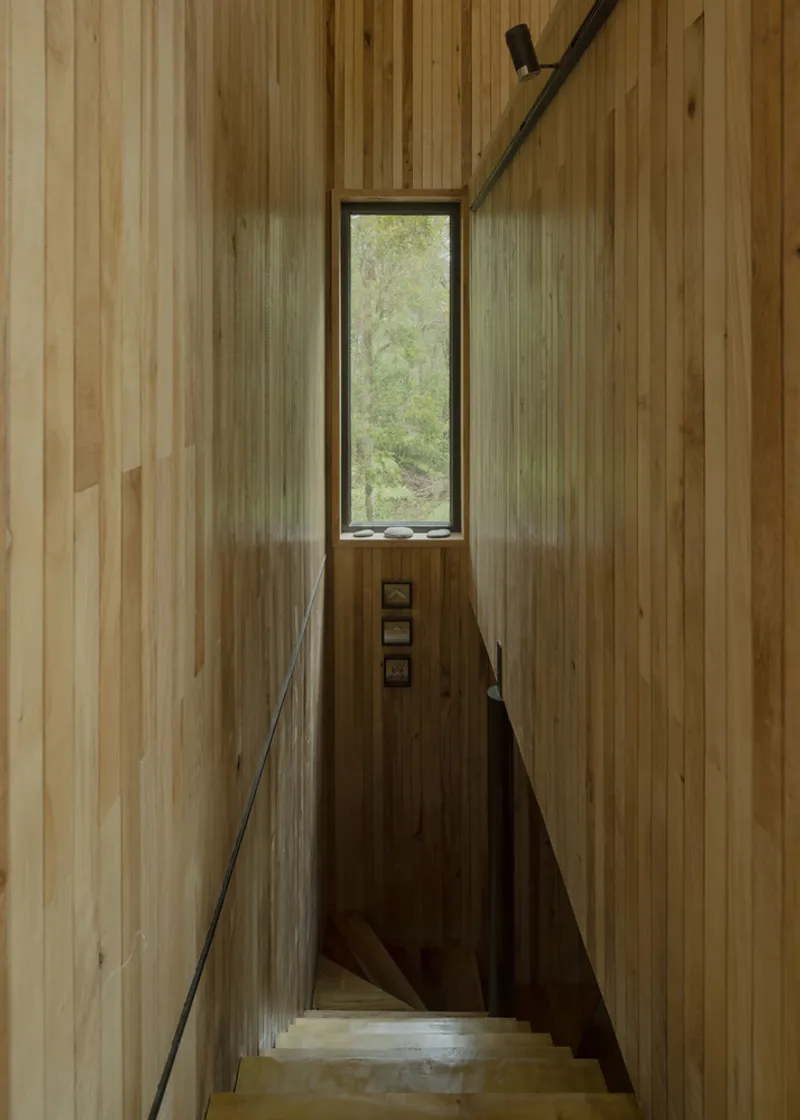
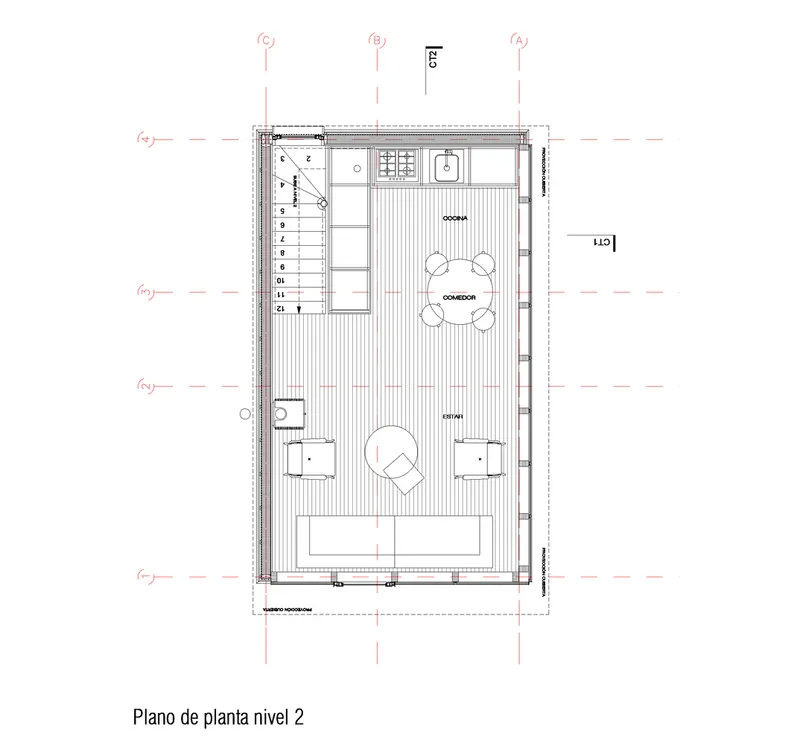
The cabin’s two floors are designed for maximum efficiency. The first floor contains a compact entryway that doubles as a corridor, connecting two bedrooms, a single bathroom, and the staircase. The second floor opens into a spacious living area and kitchen, designed to capture panoramic forest views. Varying ceiling heights respond both to functional needs and to the grandeur of the surrounding landscape.


Warm, Tactile Interiors Inspired by Nautical Craftsmanship
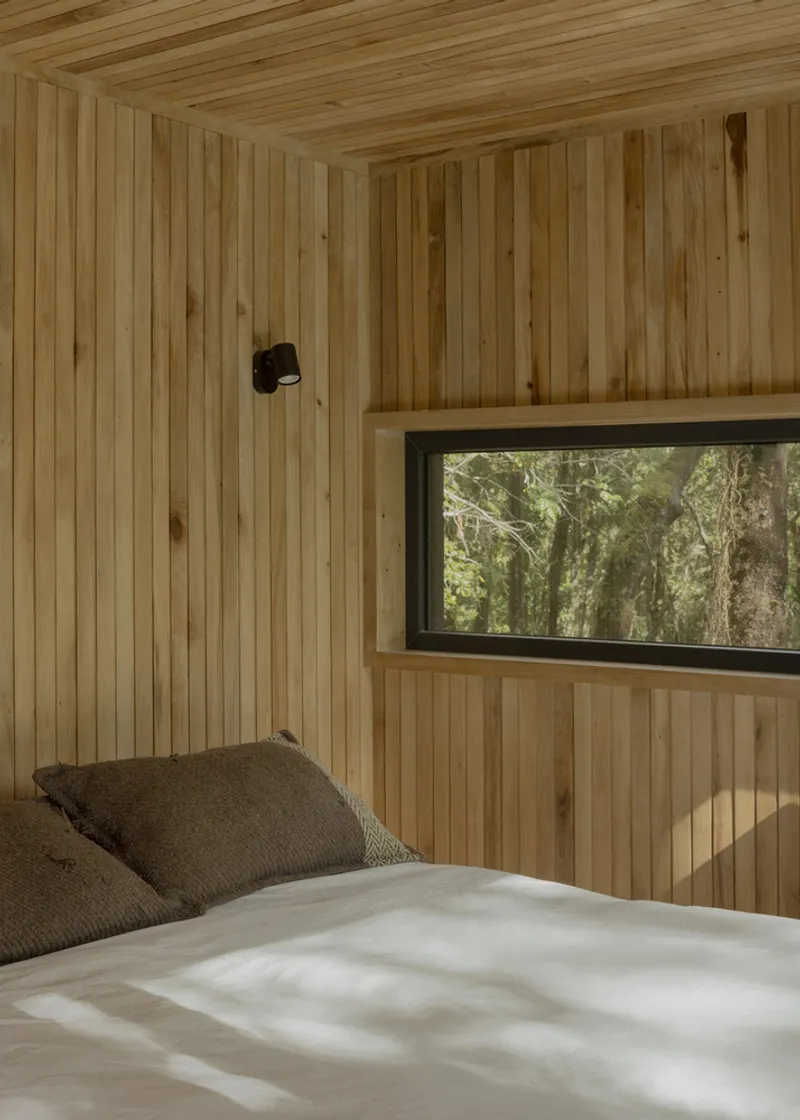
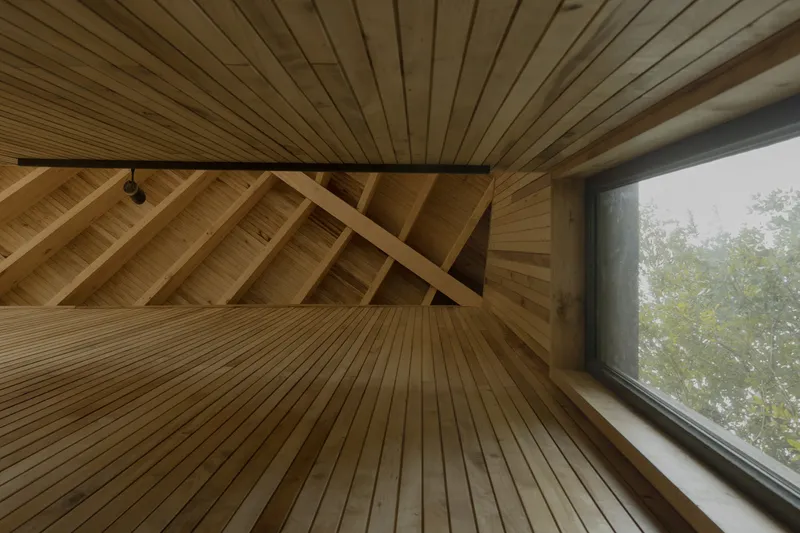
Refugio Calfuco’s interior is crafted entirely from laurel wood, enveloping the space in warmth and a tactile, organic quality. Much like the interior of a boat, the design integrates built-in furniture and exposes the structure’s ribs and keels. This approach creates a seamless environment where architecture and furnishing are intertwined.
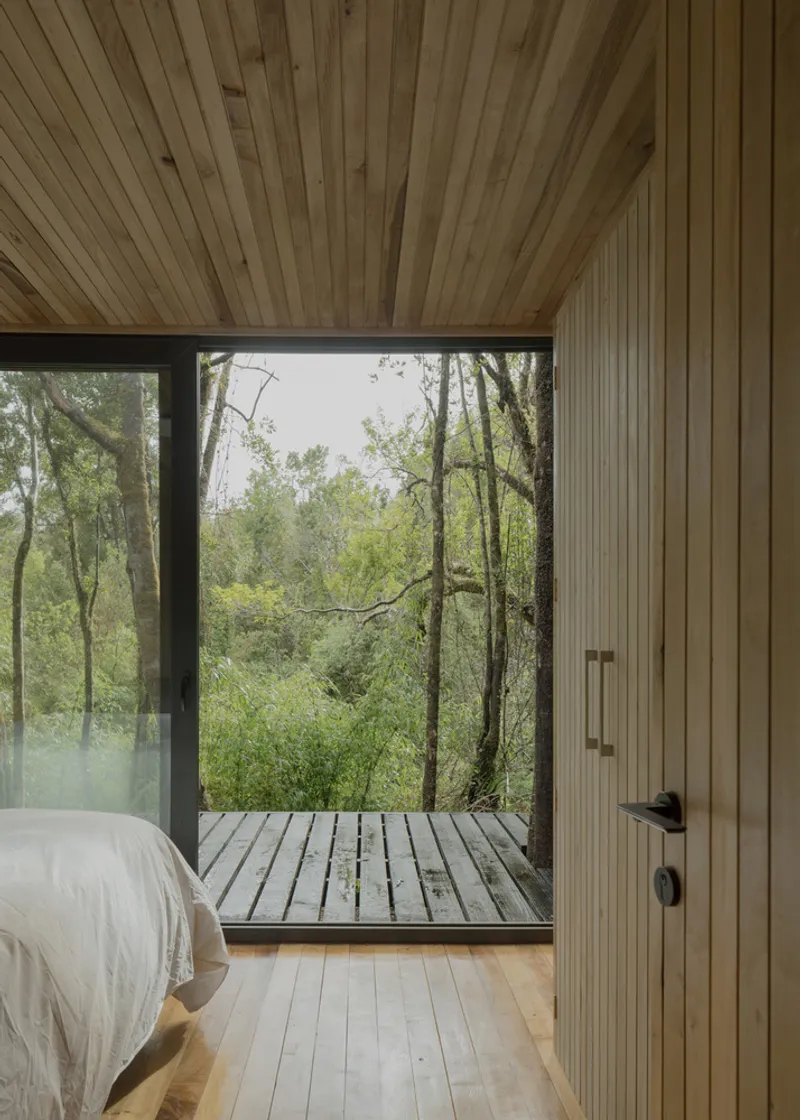
Distinctive Exterior Form and Structure
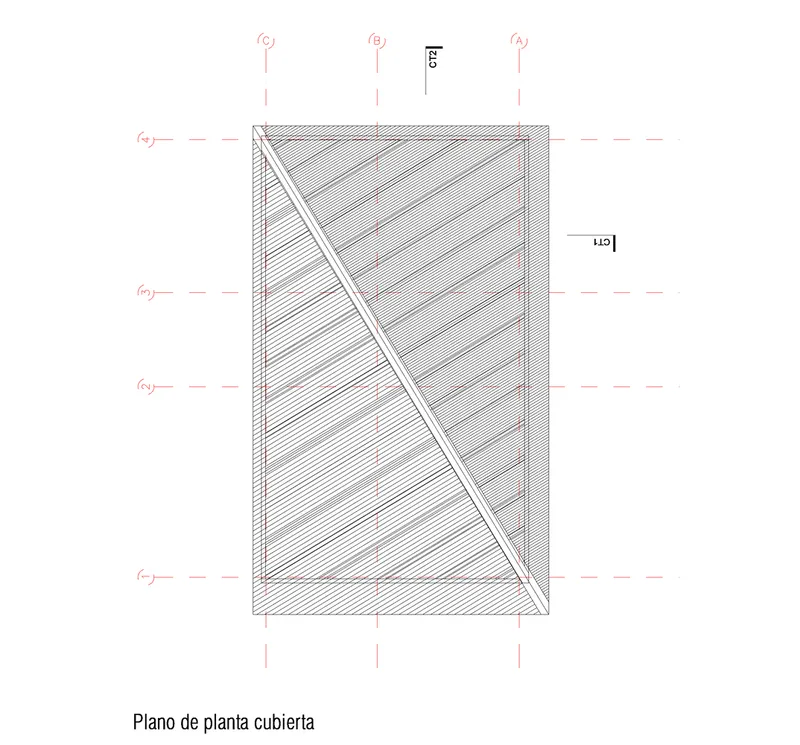
Externally, the cabin presents itself as a sharply defined prism with acute angles, contrasting dramatically with the soft, organic forms of the rainforest. Its gabled roof is uniquely designed with a diagonal ridge beam, resembling a fishbone. The entire structure was built using traditional carpentry techniques, assembled on site without the use of advanced technology, demonstrating precision craftsmanship and a deep respect for artisanal methods.


Minimal Impact, Maximum Experience
The architectural strategy of Refugio Calfuco reflects a balance between minimal environmental disturbance and maximum sensory experience. By elevating the structure, preserving the surrounding trees, and working with natural materials, the design fosters a sense of refuge and harmony while maintaining a bold architectural identity.
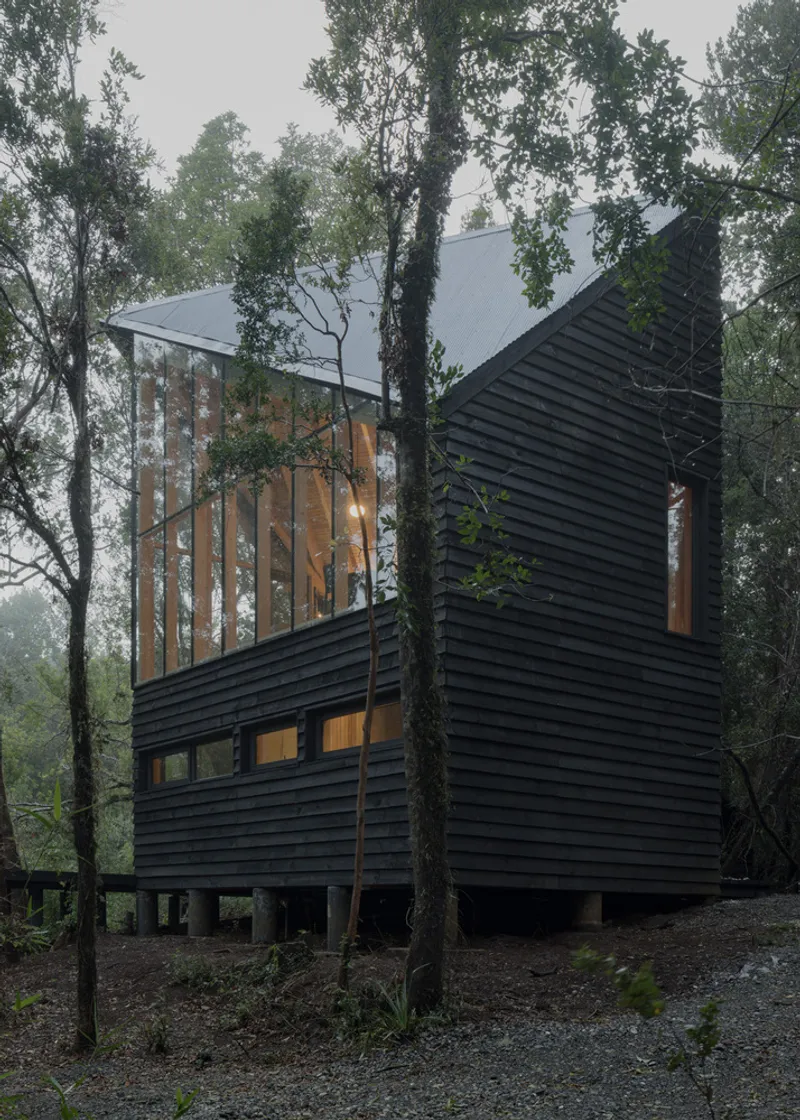
Refugio Calfuco stands as a refined example of modern cabin design in the forest—where compact vertical living, artisanal construction, and immersive natural experiences come together. Tomás de Iruarrizaga’s work showcases how contemporary architectural language can respectfully adapt to and celebrate pristine landscapes without overpowering them.



All photographs are works of Federico Cairoli


Popular Articles
Popular articles from the community


graciastudio Turns a Viewless Tijuana Lot Inward Around a Courtyard of Concrete, Timber and Trees
In Tijuana, Jorge Gracia's GA2 House stacks a timber-clad private floor over exposed concrete and replaces a missing view with a planted interior patio.

FCC Arquitectura Expands a Portuguese Granite House with a Board-Marked Concrete Wing
In Portugal, JV House pairs a cleaned-up whitewashed and granite dwelling with a timber-shuttered concrete extension, courtyards and a garden pool.


Aquadapt: An Underwater Habitat That Rewrites Its Rooms by the Hour
Curved modules ring the seabed while one shell shifts from breakfast room to cinema, farm and football pitch as residents' needs change.

Singing Woman: An Opera House That Performs Before the Curtain Rises
Ovidiu Cristian Pavel's conceptual opera house translates Estonia's choral identity into a sculpted waterfront landmark facing the Baltic Sea.

Similar Reads
You might also enjoy these articles

Cube Design Draws an Ecological Corridor Between Two Shenzhen Hills with the Nankai Building
Beside Shenzhen's container docks, the Nankai Building pairs stacked balconies with a climbing green screen to connect two hillsides across its height.

Praksis A and Studio Sted Bend a Red Timber Cabin Across the Granite of Norway's Southern Coast
On the southern Norwegian coast, a 105 m² cabin follows the rock on slender posts, pairing red cladding outside with pine, brick and plywood within.

David Ortega Stacks a Two-Story Mexico City Penthouse Around a Steel Stair and a Pergola-Shaded Roof Terrace
In Colonia Roma, a 300 m² penthouse uses oak joinery, a planted steel stair and a slatted roof pergola to make a new-build apartment feel like a house.

PARALELA and LB2 Thread a Public Walkway Through the Base of a Las Condes Residential Tower
In Las Condes, Santiago, the Hamlet Building gives its fenceless ground floor to a 70-metre wooded passage linking two streets and the metro.

Explore Architecture Competitions
Discover active competitions in this discipline

Challenge to reimagine the Iron Throne

Photograph architecture without architects

Illustrate the lost glory of Angkor Wat - Render Challenge

Design challenge to reuse E-waste
Comments (0)
Please login or sign up to add comments
No comments yet. Be the first to comment!