

Modern Cabin Design in the Forest: Refugio Calfuco by Tomás de Iruarrizaga
Refugio Calfuco in Chile blends modern cabin design in the forest with traditional craftsmanship, elevated living, and deep environmental sensitivity.


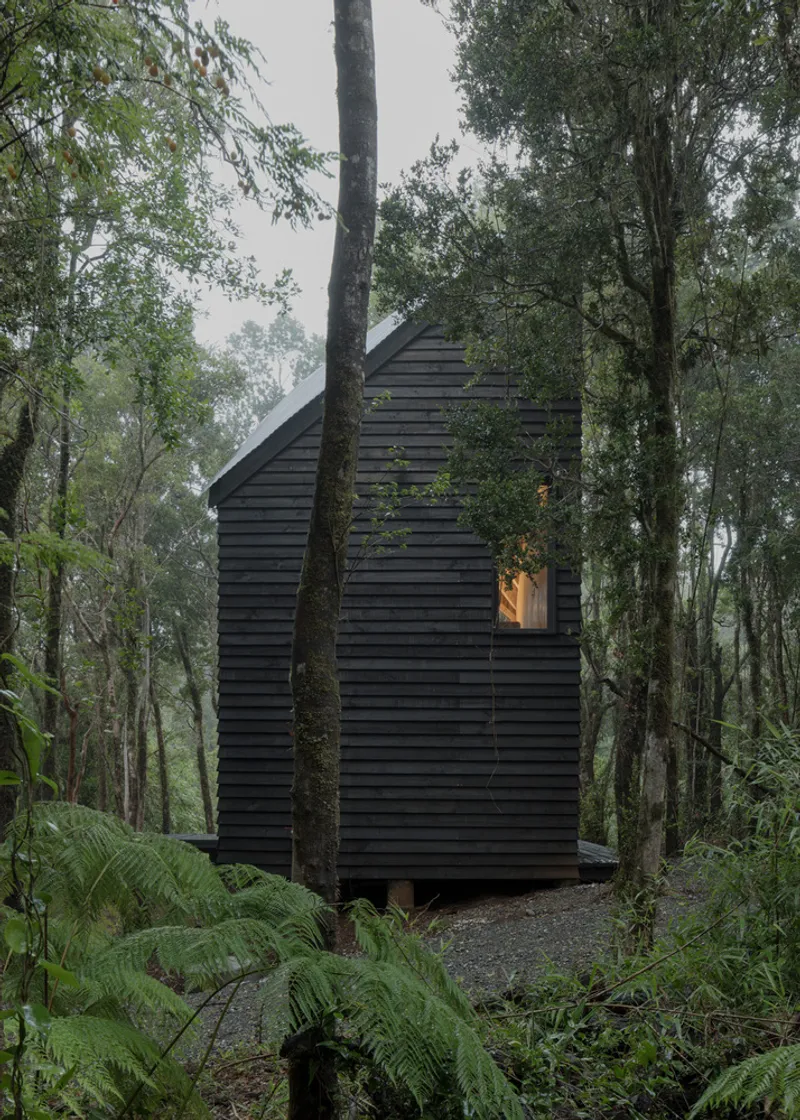
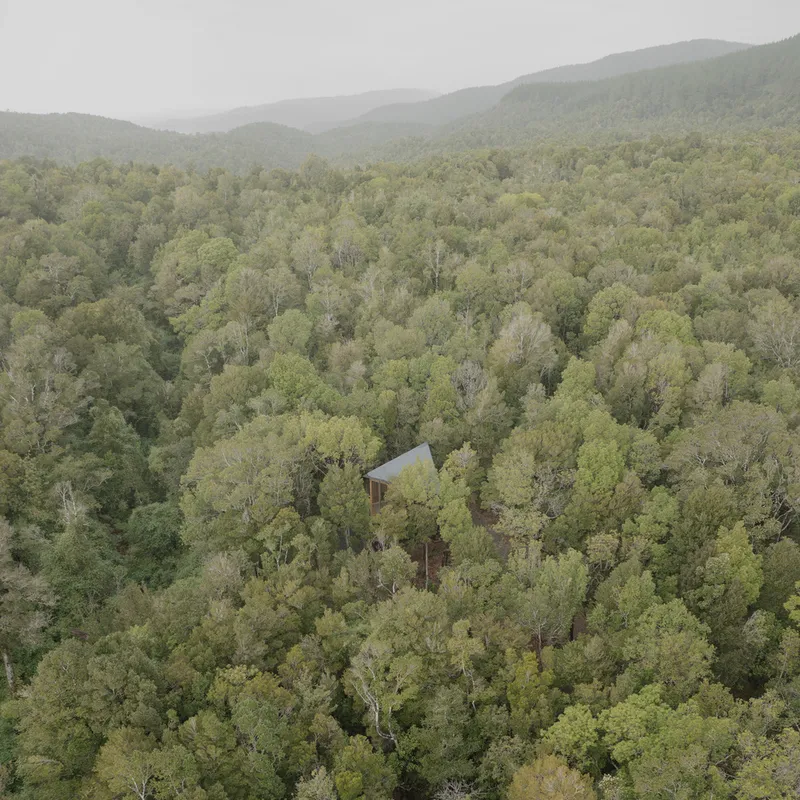
Perched in the lush Valdivian rainforest near Valdivia, Chile, Refugio Calfuco is a striking example of modern cabin design in the forest. Designed by architect Tomás de Iruarrizaga in 2022, this 50 m² retreat reinterprets the traditional cabin concept into a vertical, compact, and nature-integrated living space. Elevated above the forest floor, the cabin seeks northern light while minimizing its footprint, blending innovation with deep respect for the surrounding environment.

A Vertical Approach to Cabin Architecture
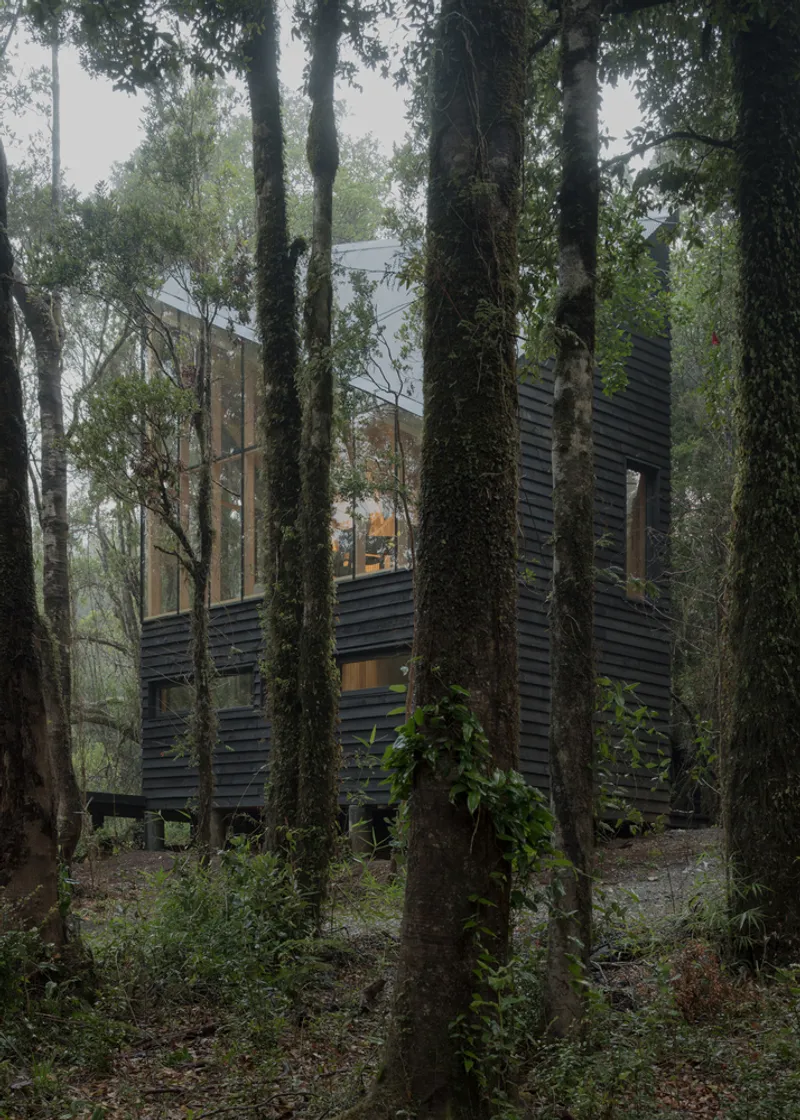
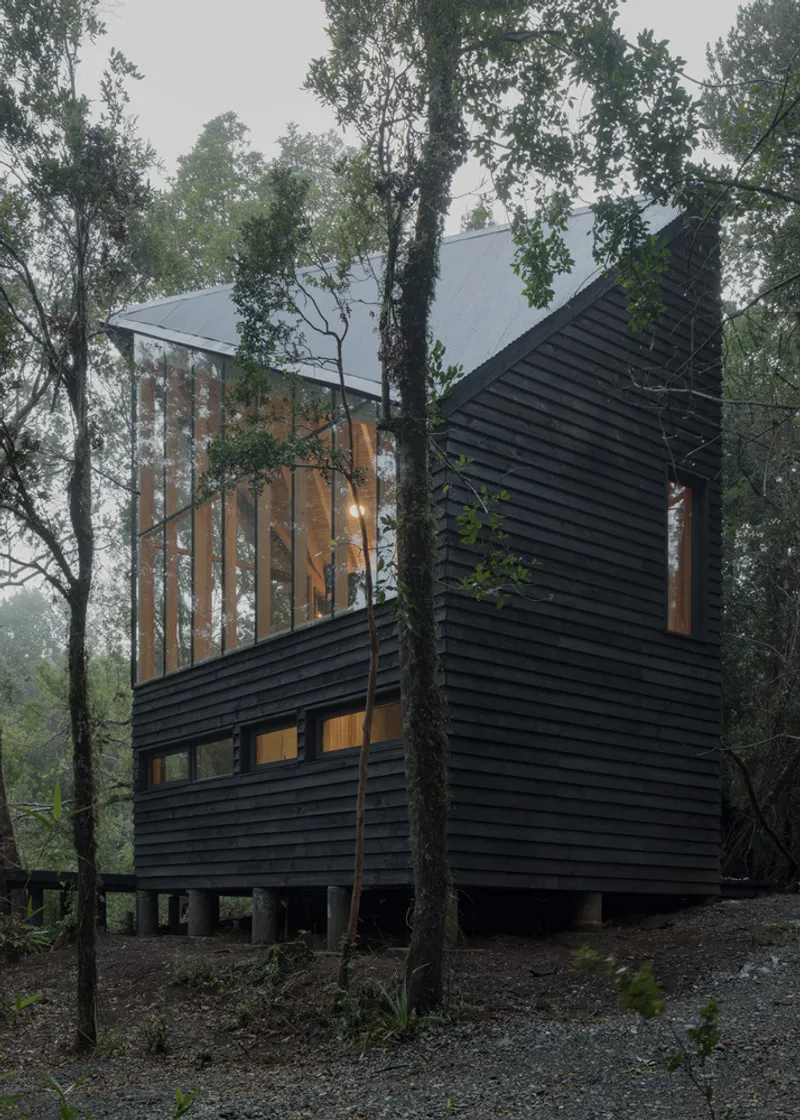
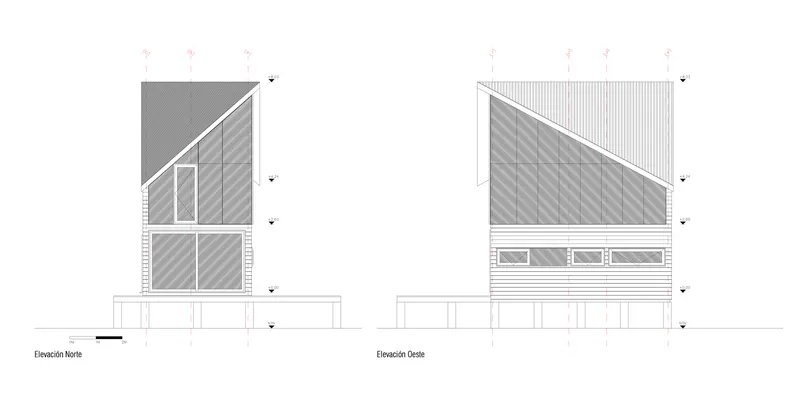
Instead of sprawling across the landscape, Refugio Calfuco adopts a slender tower form that rises ten meters above ground level to meet the treetops. The footprint is a simple four-by-seven-meter rectangle, strategically positioned between existing trees. This elevated design not only reduces environmental impact but also immerses inhabitants in the forest canopy, creating an intimate connection with nature.

Functional and Minimal Interior Layout
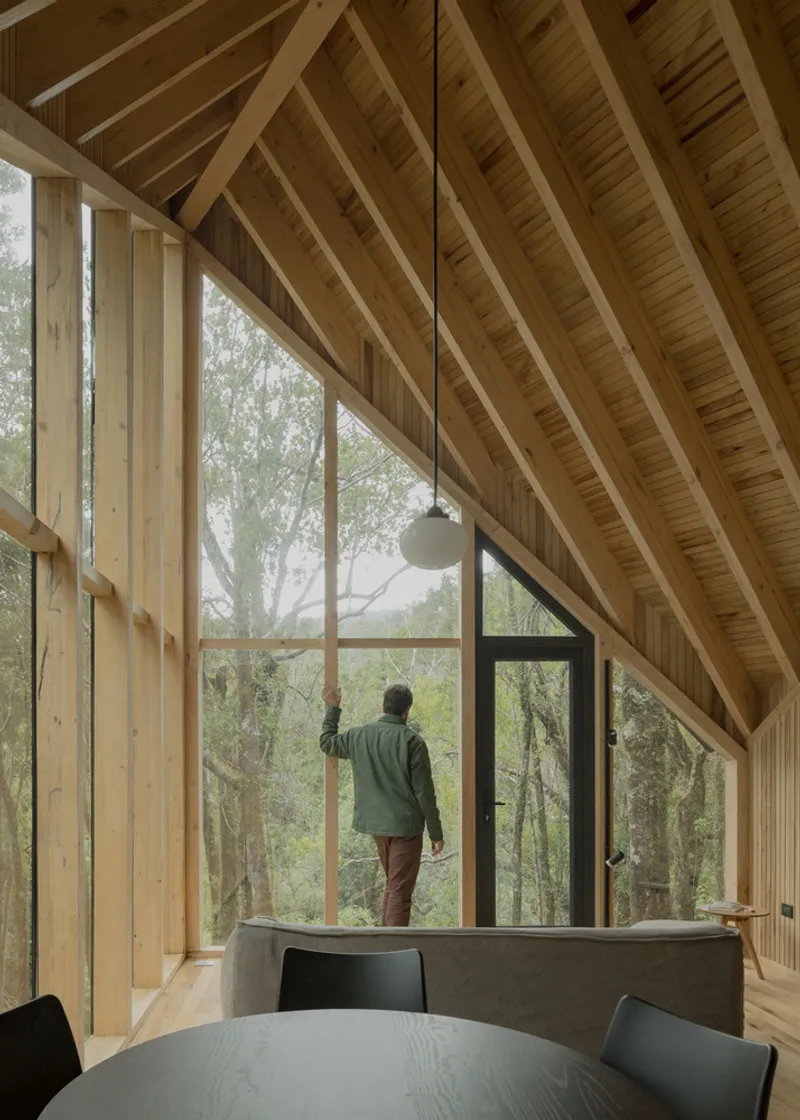
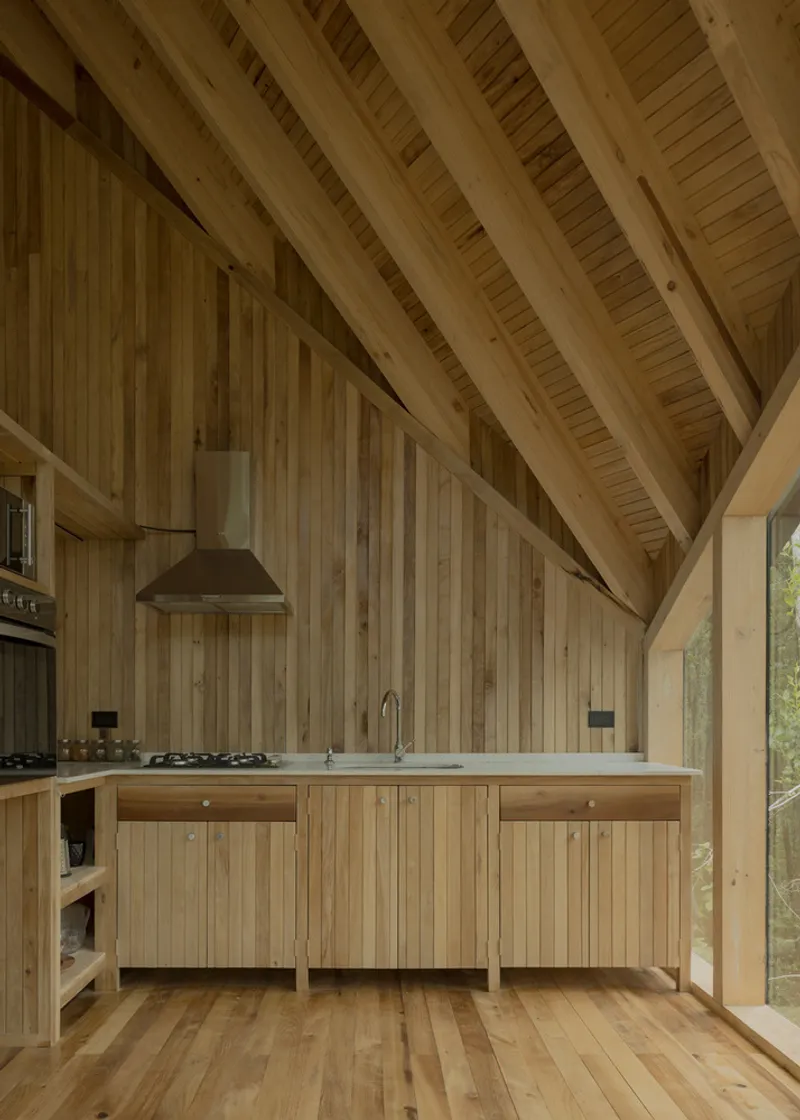
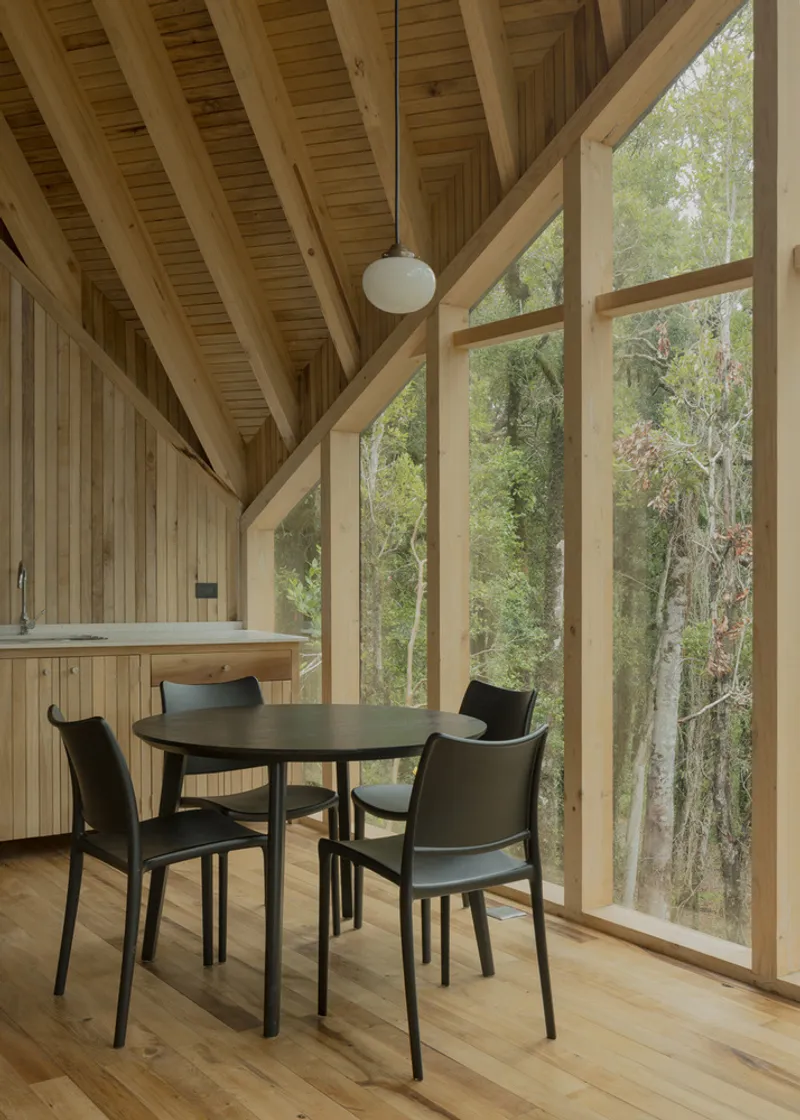
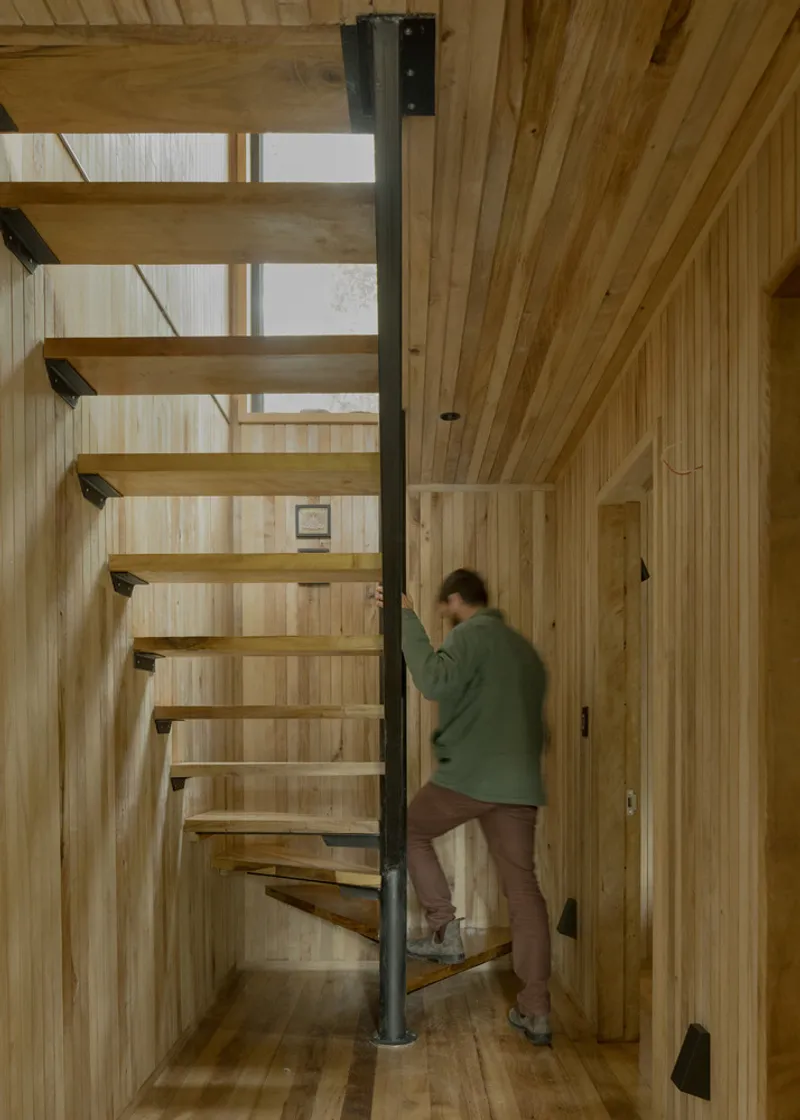
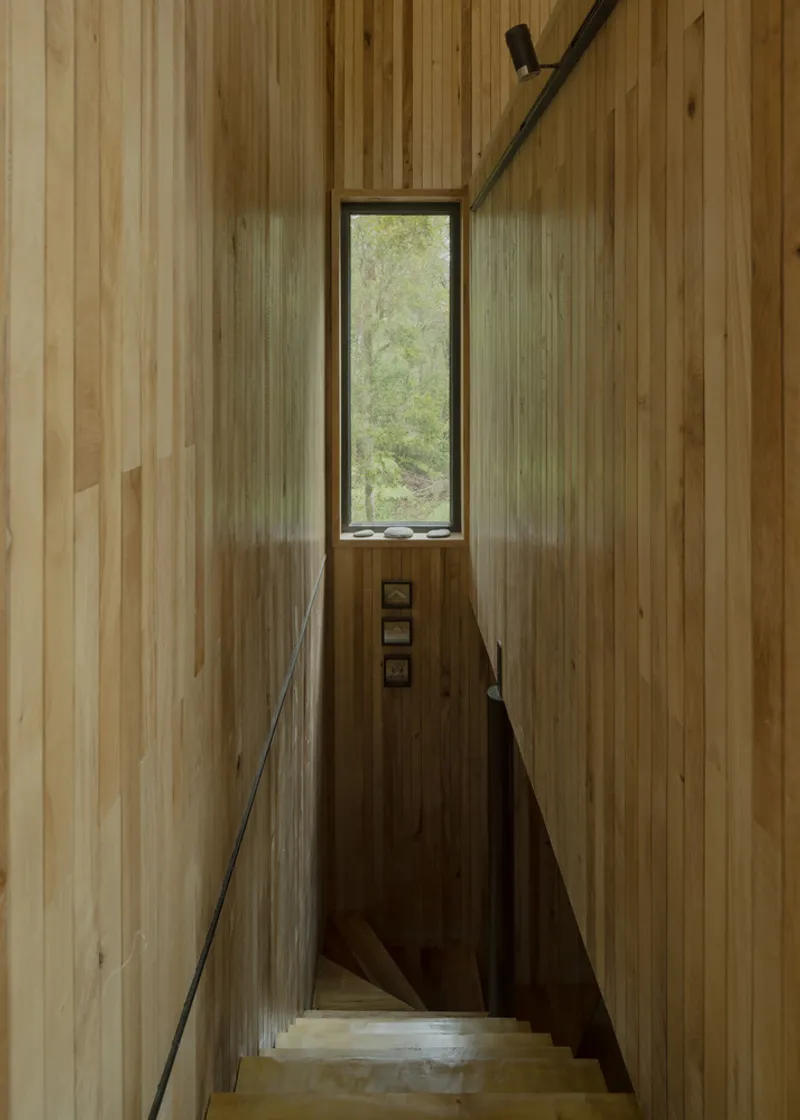
The cabin’s two floors are designed for maximum efficiency. The first floor contains a compact entryway that doubles as a corridor, connecting two bedrooms, a single bathroom, and the staircase. The second floor opens into a spacious living area and kitchen, designed to capture panoramic forest views. Varying ceiling heights respond both to functional needs and to the grandeur of the surrounding landscape.


Warm, Tactile Interiors Inspired by Nautical Craftsmanship
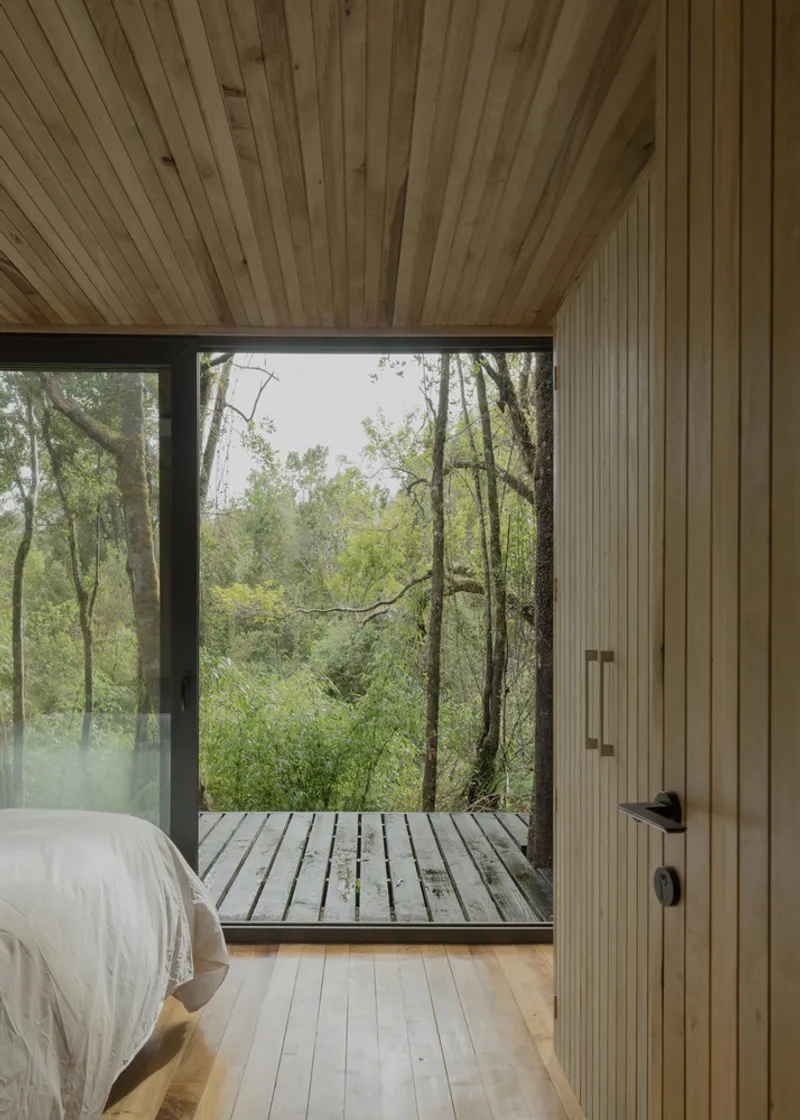
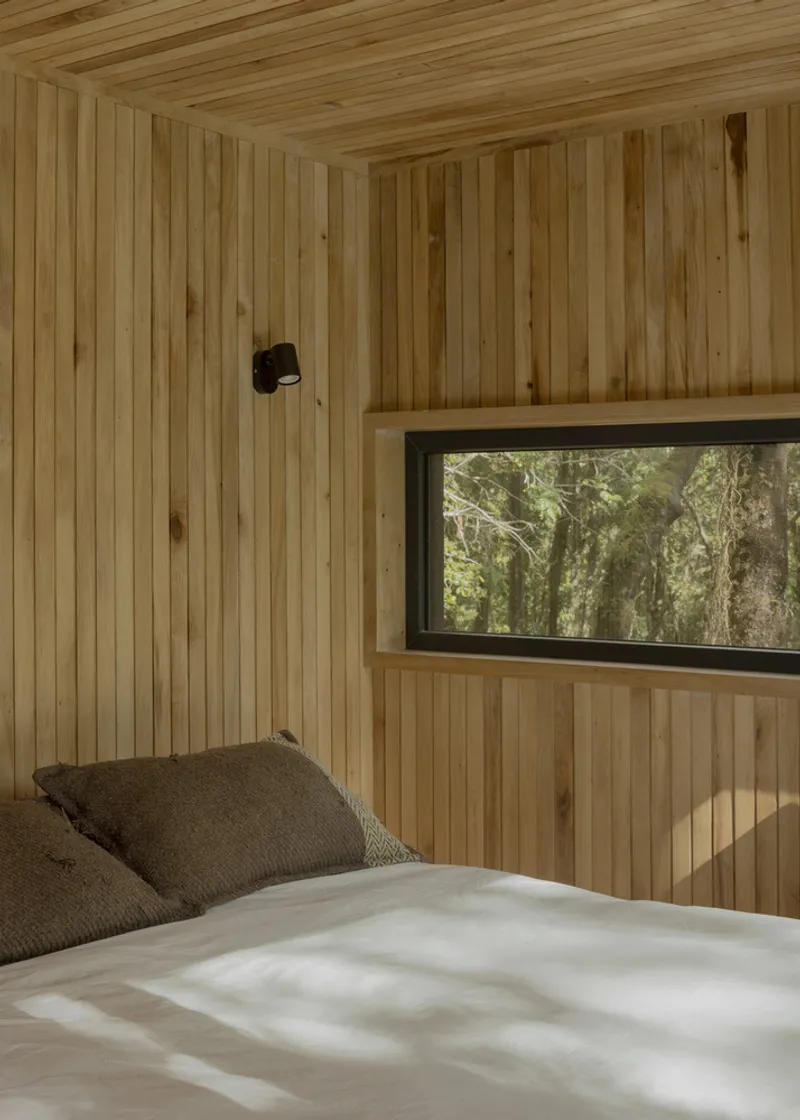
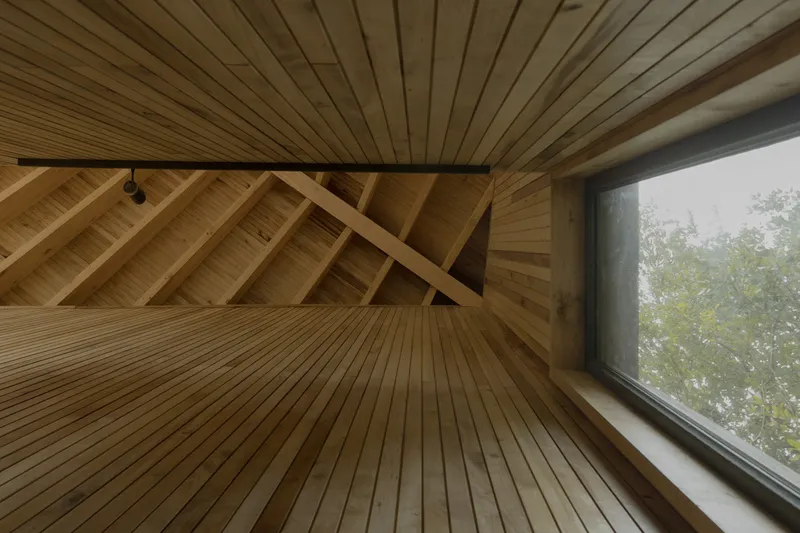
Refugio Calfuco’s interior is crafted entirely from laurel wood, enveloping the space in warmth and a tactile, organic quality. Much like the interior of a boat, the design integrates built-in furniture and exposes the structure’s ribs and keels. This approach creates a seamless environment where architecture and furnishing are intertwined.
Distinctive Exterior Form and Structure
Externally, the cabin presents itself as a sharply defined prism with acute angles, contrasting dramatically with the soft, organic forms of the rainforest. Its gabled roof is uniquely designed with a diagonal ridge beam, resembling a fishbone. The entire structure was built using traditional carpentry techniques, assembled on site without the use of advanced technology, demonstrating precision craftsmanship and a deep respect for artisanal methods.


Minimal Impact, Maximum Experience
The architectural strategy of Refugio Calfuco reflects a balance between minimal environmental disturbance and maximum sensory experience. By elevating the structure, preserving the surrounding trees, and working with natural materials, the design fosters a sense of refuge and harmony while maintaining a bold architectural identity.
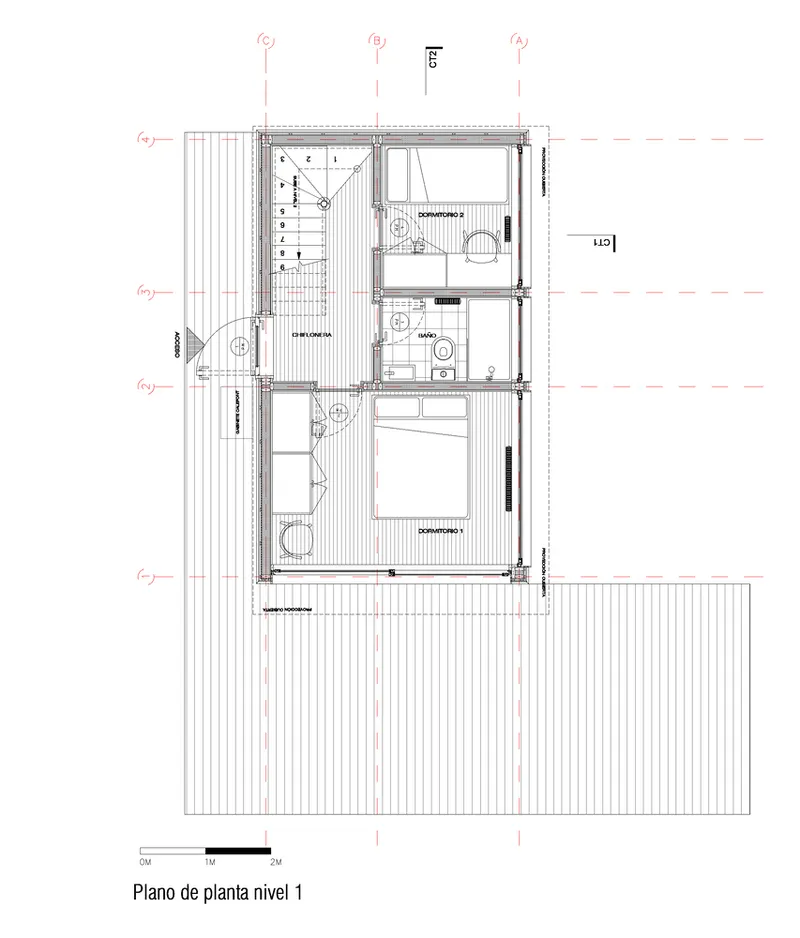
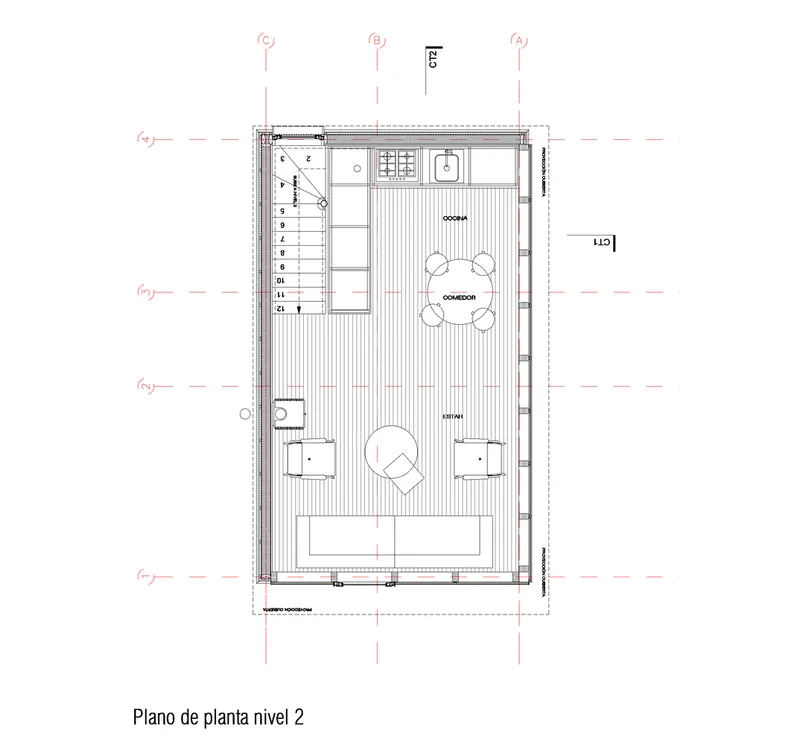
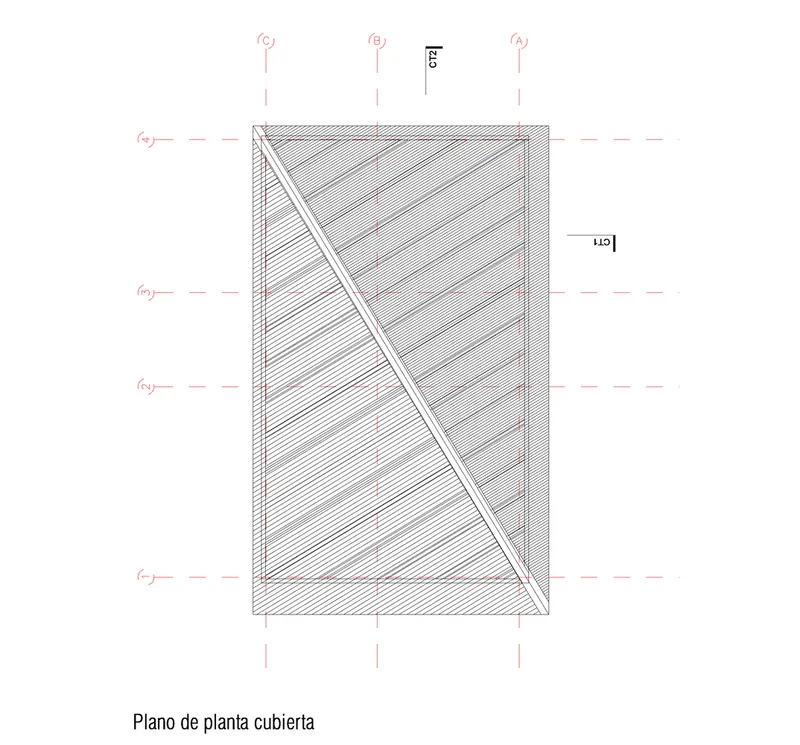
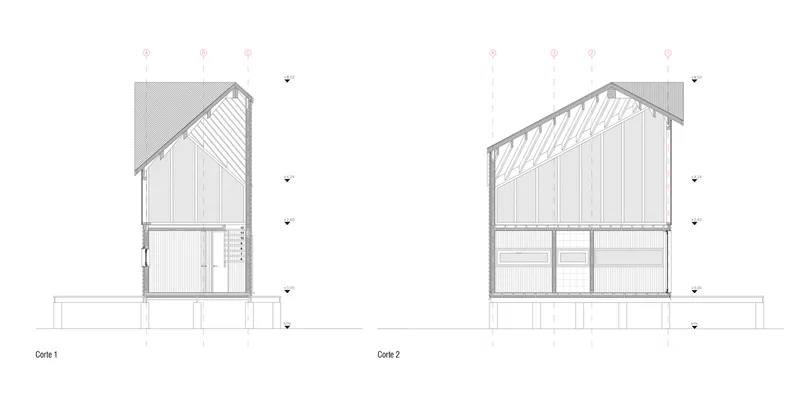
Refugio Calfuco stands as a refined example of modern cabin design in the forest—where compact vertical living, artisanal construction, and immersive natural experiences come together. Tomás de Iruarrizaga’s work showcases how contemporary architectural language can respectfully adapt to and celebrate pristine landscapes without overpowering them.



All photographs are works of Federico Cairoli


Popular Articles
Popular articles from the community


LT2A and OPEN Architectes Thread a Brick and Glass High School Through a Wooded Belgian Campus
In Braine-l'Alleud, a 3,000 m² wing for Collège Cardinal Mercier pairs pale brick with a glazed colonnade, deferring to a small chapel and a dense wood.

David Macias Steps a Doorless Stone and Plaster House Down a Tropical Colombian Hillside
In the humid hills of Colombia, Threshold House replaces the front door with an open void and terraces its 850 m² down the slope instead of fighting it.

GROUP A Strips a 1969 Rotterdam Harbor Headquarters to Its Frame and Wraps It in Timber Louvers
In Rotterdam's M4H harbor district, Ferro Offices reuses a 1969 frame, adds one timber storey and reaches BREEAM-NL Outstanding.

Juan García Correa, John González and Claudia Rueda Sink a Circular Amphitheater into a Manizales Engineering Building
On the La Nubia campus in Manizales, Colombia, the S1 Building folds labs and offices into a hillside of ramped lawns that double as a campus route.

Similar Reads
You might also enjoy these articles

Gil Mello Arquitetura Tilts a Single Roof Toward the Waterfalls on a Plateau Above Aiuruoca, Brazil
In Aiuruoca, Minas Gerais, a 200 m² house of local labor and reclaimed poles pairs a low valley veranda with a tall mountain one.

U.GA Architects Wraps an Oval Rooftop Pool in Curved Board-Formed Concrete on Busan's Jeollidan-gil
In Busan's Jeonpo-dong, a 454 m² mixed-use block stacks a neighborhood facility, guest rooms and an oval rooftop pool inside spiraling concrete walls.

Felipe Hess Arquitetos Turns a Blind Stone Wall to the Street and Opens a Brazilian House onto a Courtyard and Canal
A canal-front house in Brazil hides behind painted stone and planting, then opens to an olive-tree courtyard, a reed-ceilinged porch and a curving pool.
David Macias Steps a Doorless Stone and Plaster House Down a Tropical Colombian Hillside
In the humid hills of Colombia, Threshold House replaces the front door with an open void and terraces its 850 m² down the slope instead of fighting it.

Explore Architecture Competitions
Discover active competitions in this discipline

Challenge to reimagine the Iron Throne

Photograph architecture without architects

Illustrate the lost glory of Angkor Wat - Render Challenge

Design challenge to reuse E-waste
Comments (0)
Please login or sign up to add comments
No comments yet. Be the first to comment!