

MOOI ARCHIVE Restaurant by TRIOSTUDIO: Adaptive Reuse and Nature-Integrated Dining in Nanjing
Adaptive reuse restaurant blends industrial heritage, mirrored structures, natural elements, and dynamic lighting to create immersive, nature-connected dining experience.


Located in Nanjing, China, MOOI ARCHIVE Restaurant by TRIOSTUDIO transforms a former industrial site into a contemporary dining destination rooted in history and innovation. Situated within the Jiangsu Intelligent Manufacturing New City Park, the project reimagines the old Nanjing Second Machine Tool Factory, preserving its industrial identity while introducing a fresh architectural narrative.
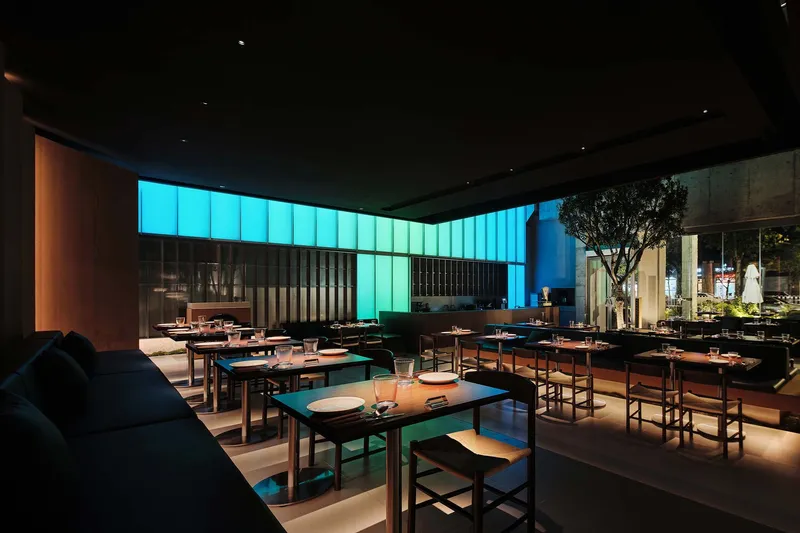

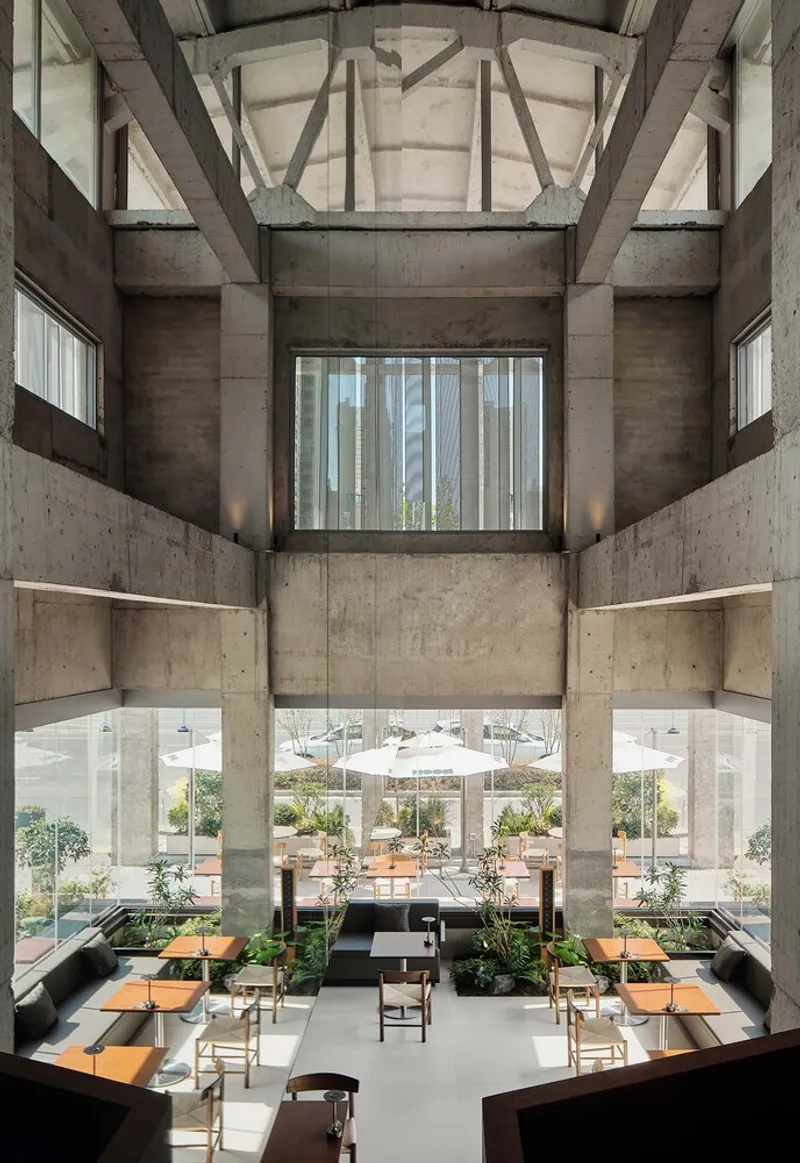
The concept of “MOOI,” meaning beautiful in Dutch, reflects the project’s ambition to create a harmonious and immersive spatial experience. By embracing adaptive reuse architecture, the design carefully retains the original factory framework, allowing the building’s past to coexist with a modern restaurant environment.
Spatial Innovation Through “Disappearance” and Structural Design
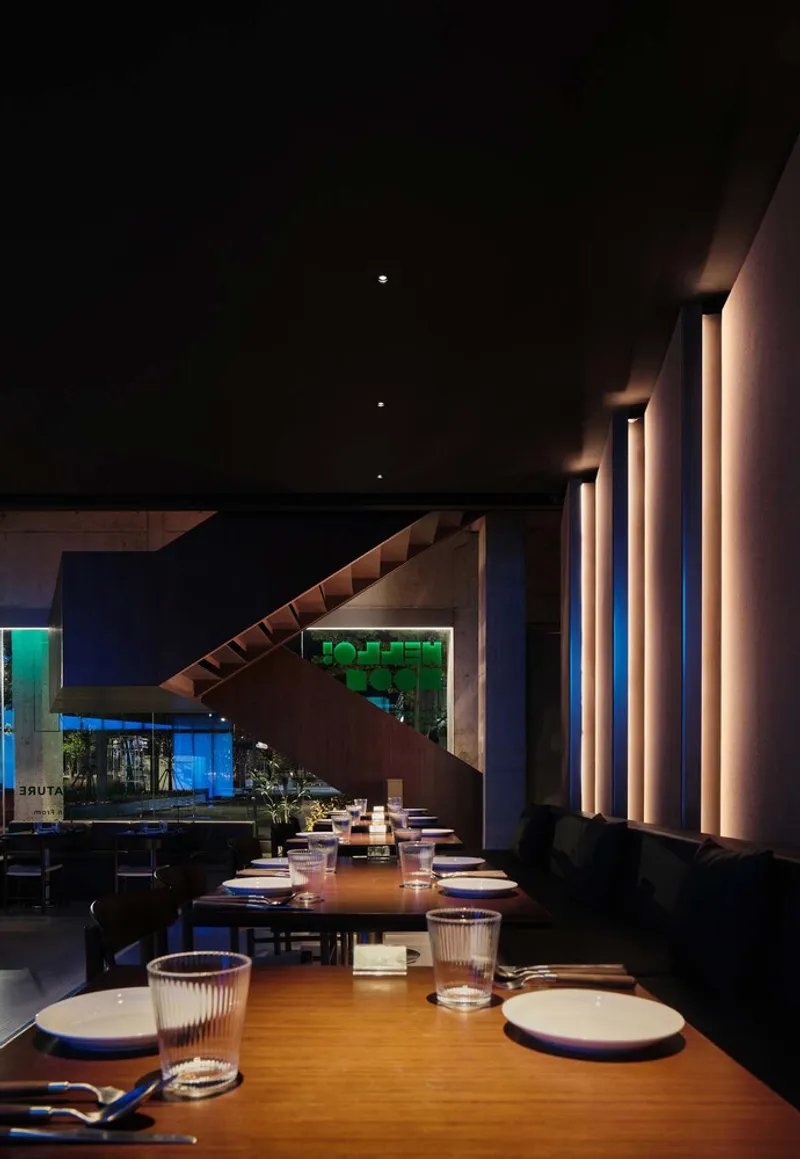
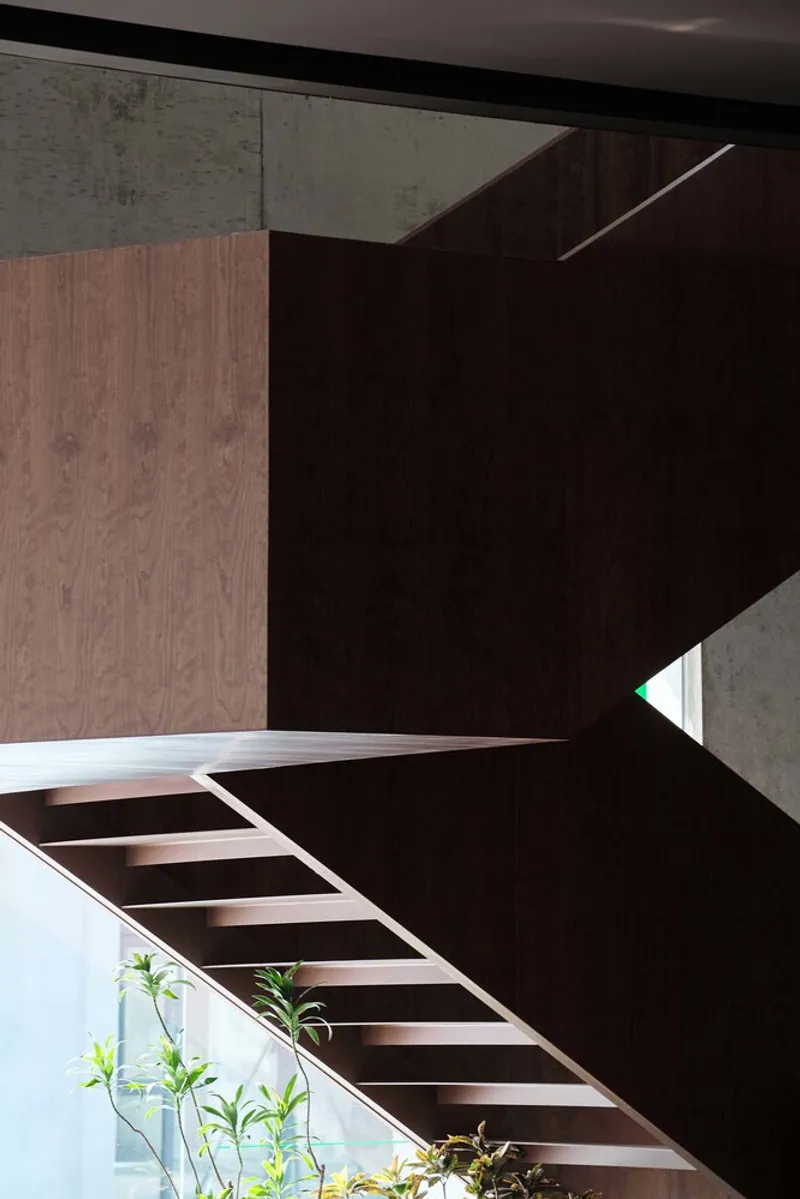
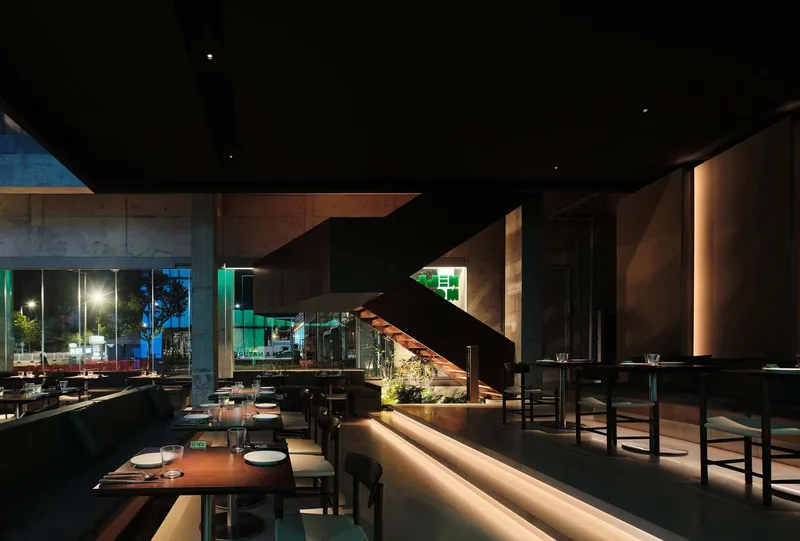
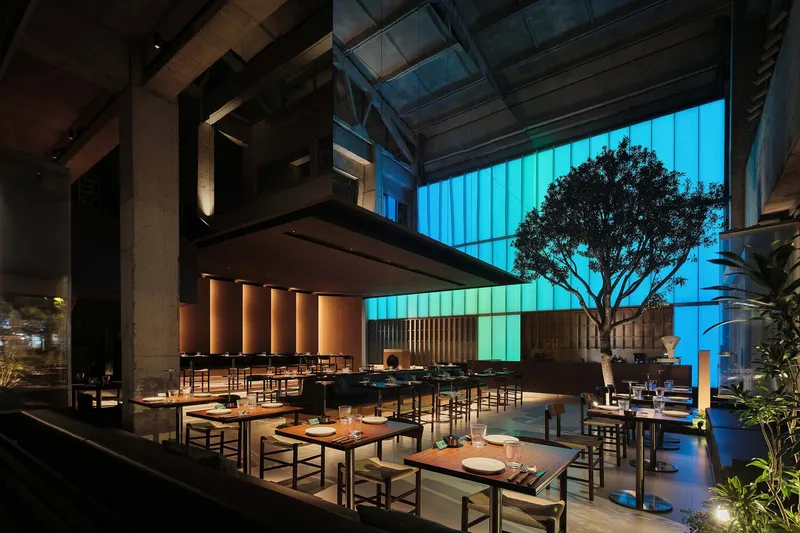
A defining feature of MOOI ARCHIVE Restaurant is its conceptual approach of “disappearance” and “blending in.” TRIOSTUDIO reinterprets the heavy industrial structure by introducing a lightweight steel framework that subtly reorganizes the interior. This innovative intervention includes an 8-meter suspended structure that elevates the back-of-house kitchen to the second floor.
This floating volume not only separates functional zones efficiently but also visually dissolves traditional architectural boundaries. Mirror-clad surfaces wrap the suspended block, creating reflections that make the upper level appear like a floating glass box, enhancing the illusion of spatial continuity and openness.
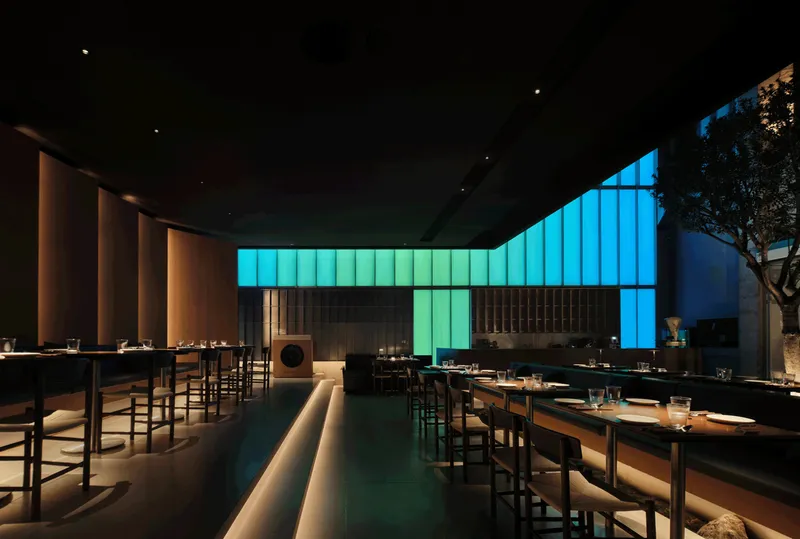
The original 11-meter-high ceiling of the factory provides an expansive vertical volume, enabling the architects to maintain openness while embedding new spatial layers. The integration of old and new structures results in a seamless architectural dialogue, where boundaries between elements gradually fade.
Interior Design: Blurring Indoor and Outdoor Experiences
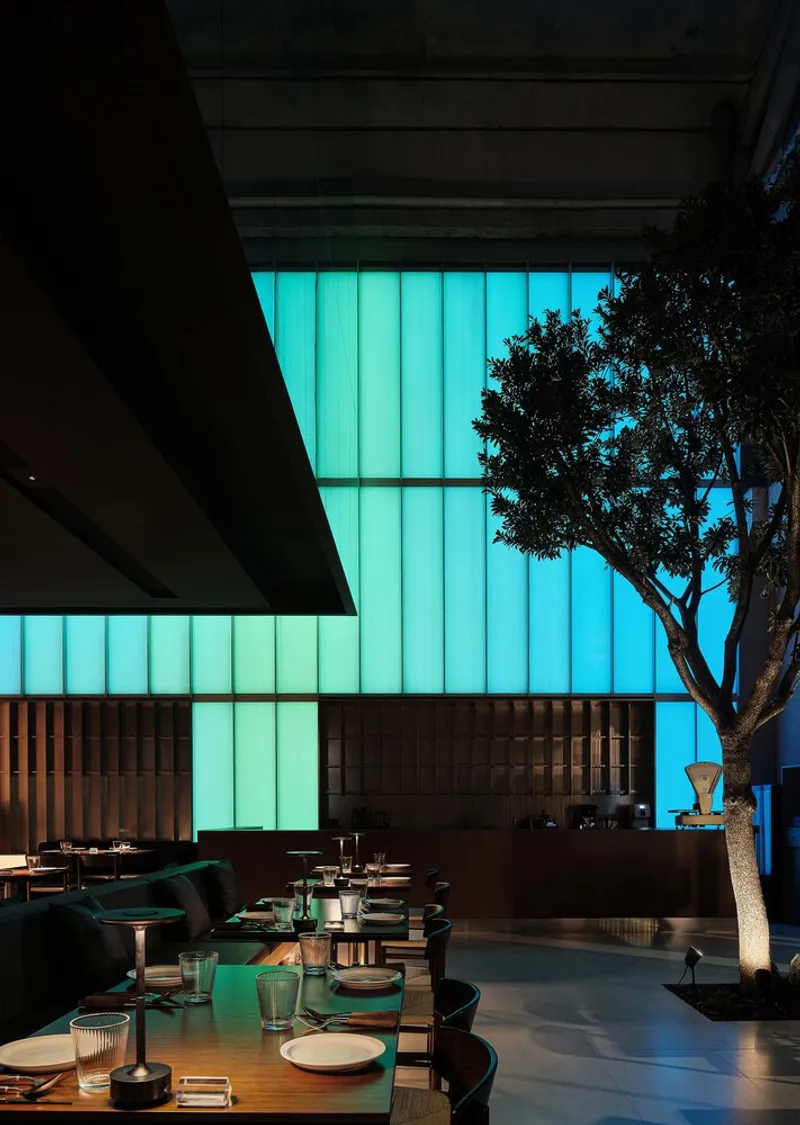
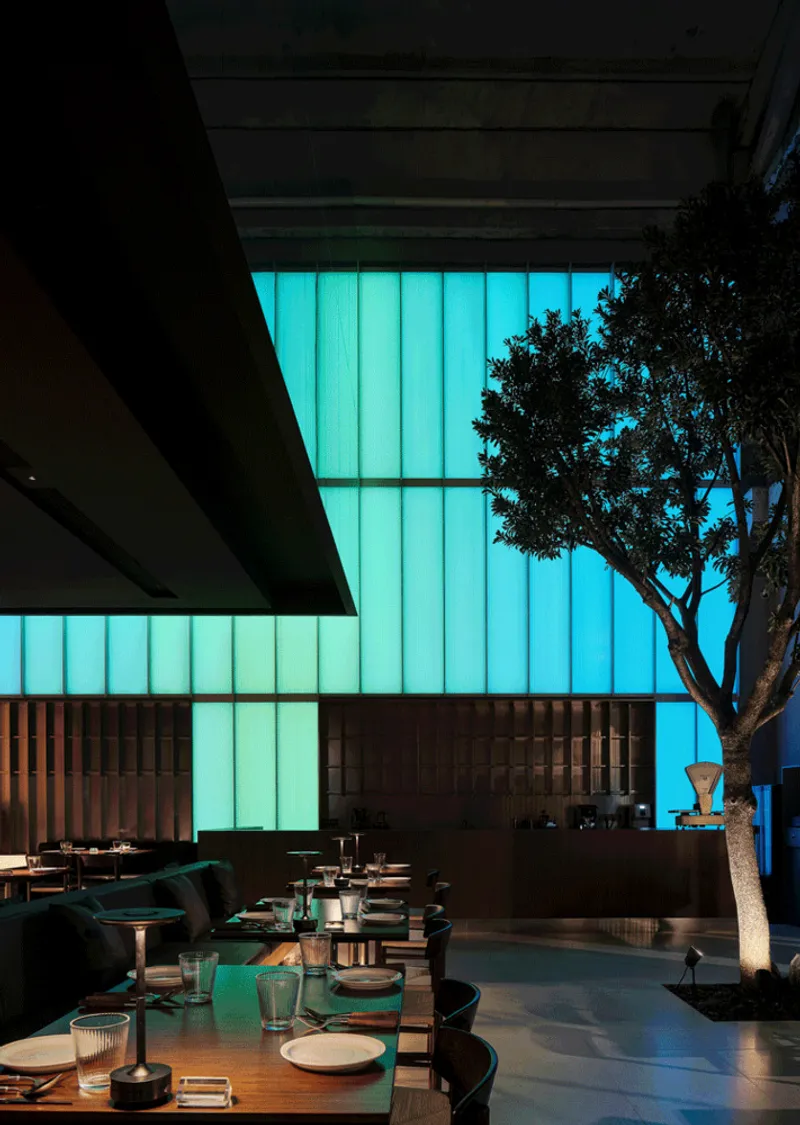
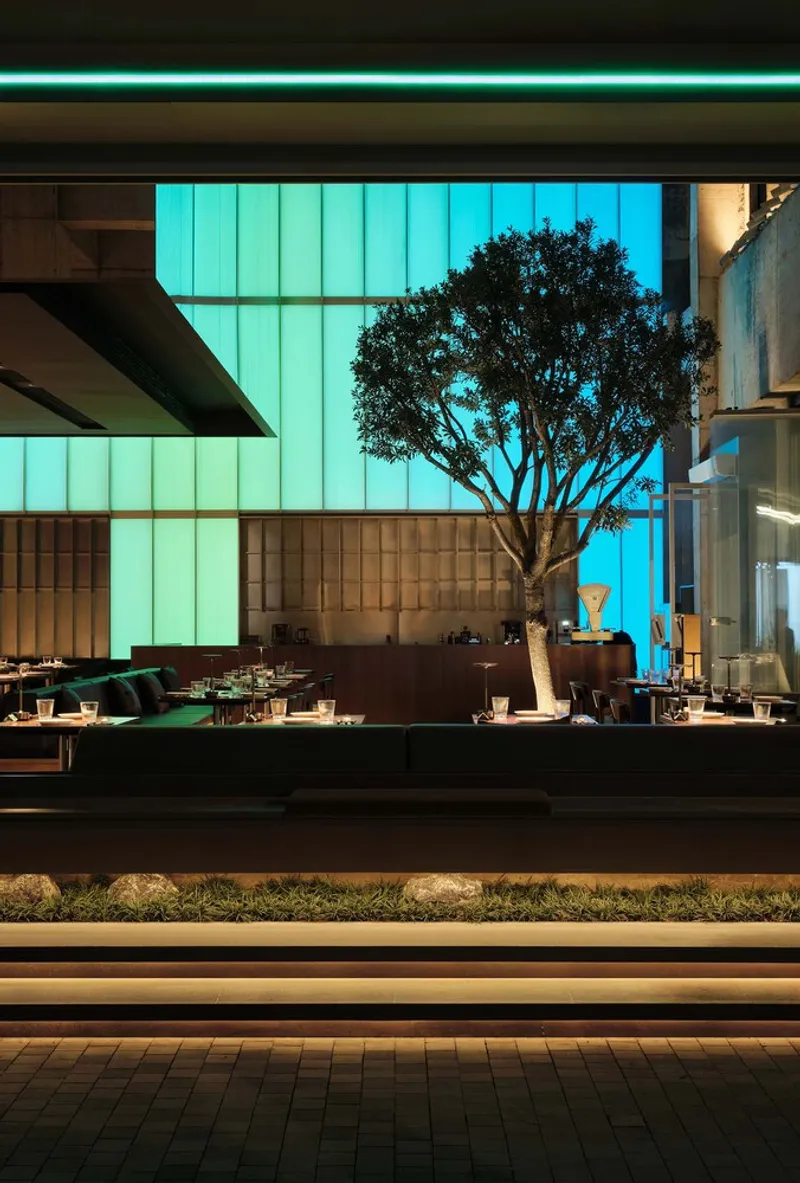
The interior design of MOOI ARCHIVE Restaurant emphasizes a strong connection with nature, redefining the dining experience. A striking 5-meter plum tree is planted at the center of the dining space, acting as a symbolic and physical bridge between indoor and outdoor environments.
This integration of greenery softens the industrial aesthetic and introduces a sense of tranquility. The presence of natural elements dissolves spatial limits, allowing the restaurant to feel like an extension of a park. The concept of “dining in the park” becomes a reality, offering visitors a unique sensory experience within an urban context.
Dynamic Lighting Design Inspired by Natural Rhythms
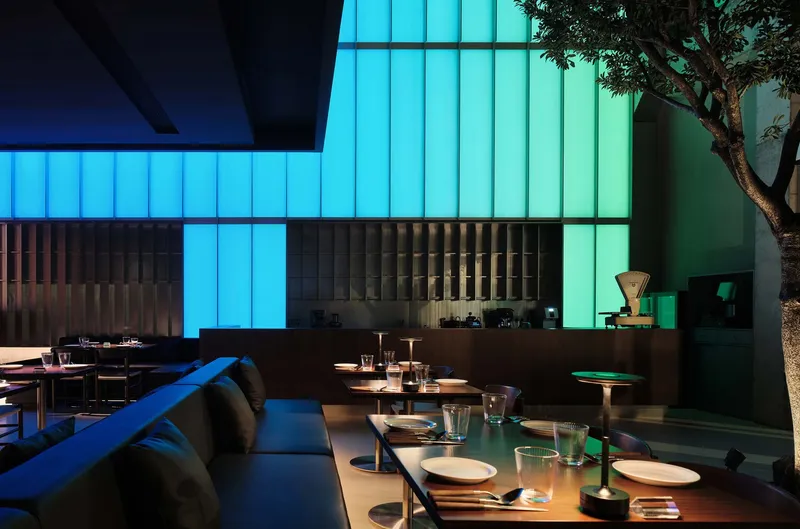
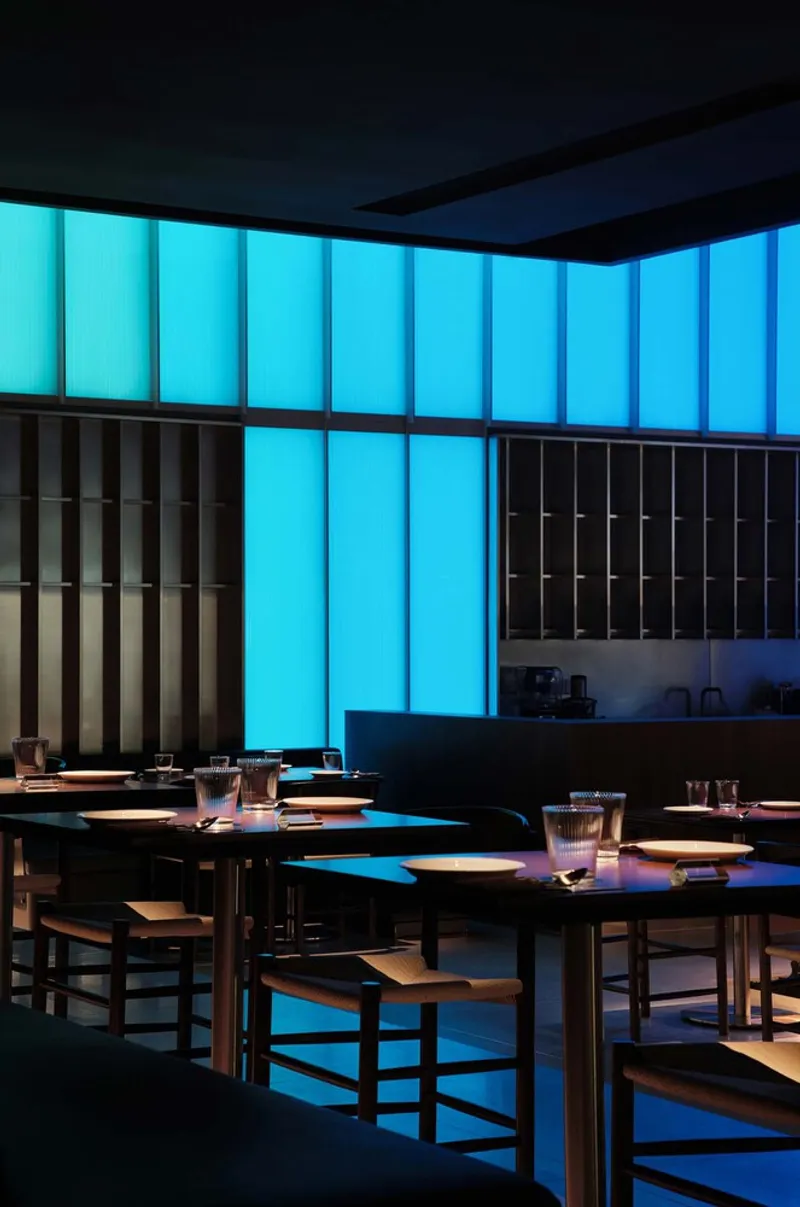
Lighting plays a crucial role in shaping the ambiance of the restaurant. TRIOSTUDIO employs an intelligent lighting system that mimics the natural progression of daylight. Sensors capture changes in external light conditions from sunrise to sunset, triggering six different lighting scenarios throughout the day.
This dynamic lighting design enhances the spatial atmosphere, creating a rhythm that aligns with nature. The interplay between light and mirrored surfaces further amplifies the illusion of fluid boundaries, producing a dreamlike environment that evolves over time.
Transparent Facade and Community-Oriented Design
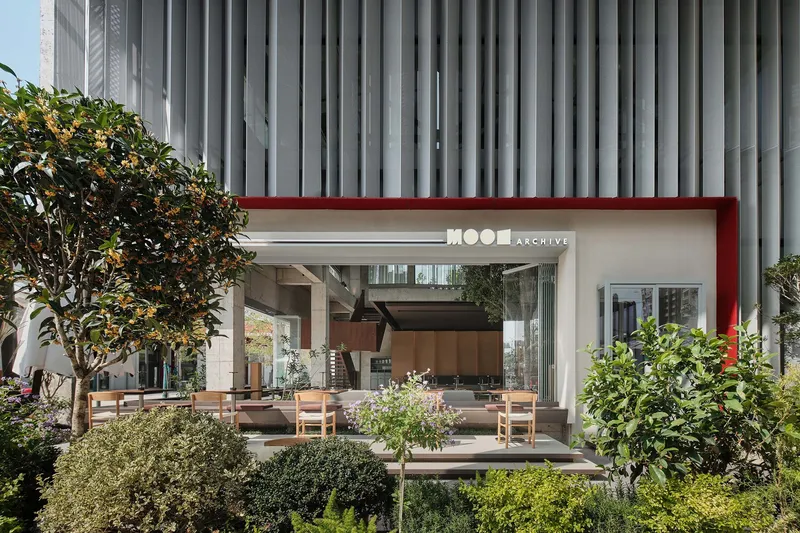
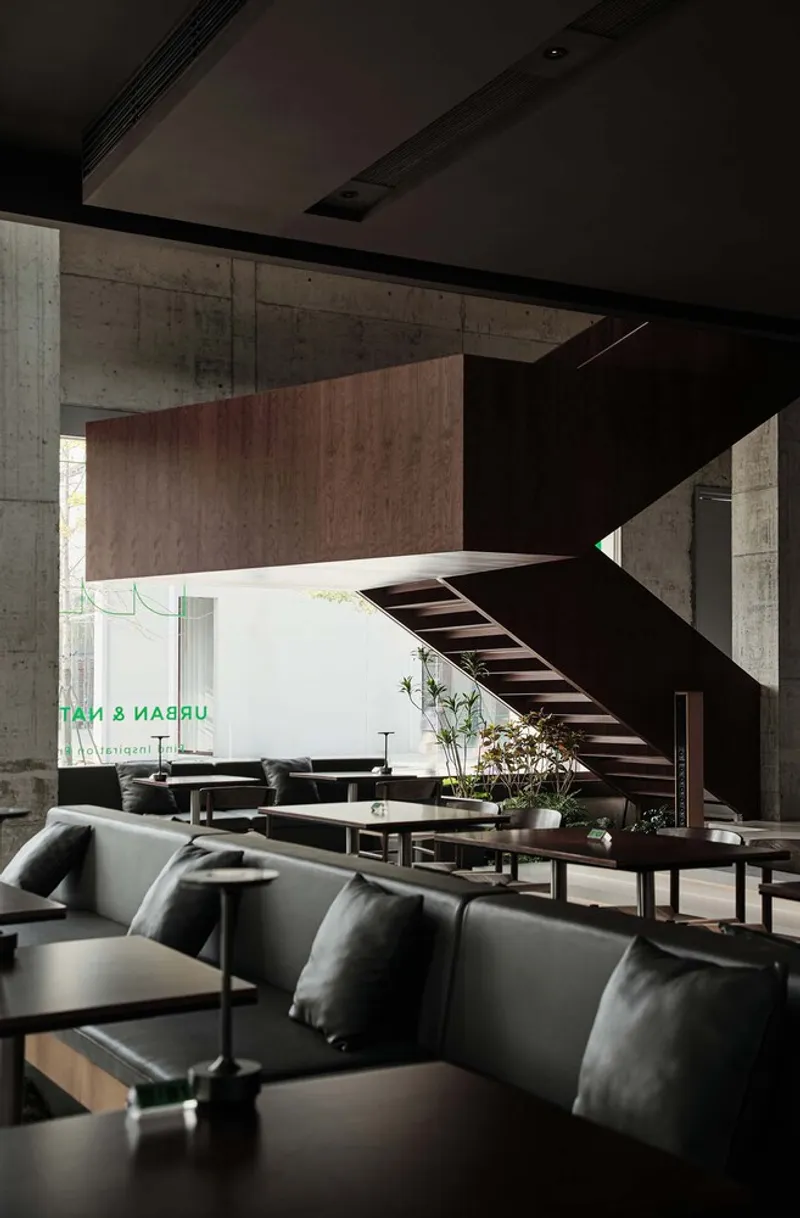
The restaurant’s street-facing facade features frameless folding glass windows, forming an open and flexible boundary between the interior and the surrounding urban environment. This L-shaped semi-enclosed design allows the space to adapt to different seasons and social activities.
By opening up to the street, MOOI ARCHIVE fosters a strong connection with the local community. The design encourages interaction, where passersby, families, and children can naturally engage with the space, much like a public park. This approach transforms the restaurant into more than just a dining venue, it becomes a social hub that reconnects people with their surroundings.
A New Urban Experience Rooted in Memory and Nature
MOOI ARCHIVE Restaurant stands as a compelling example of adaptive reuse, industrial renovation, and nature-integrated design. By preserving the memory of the site while introducing innovative spatial strategies, TRIOSTUDIO creates a unique architectural experience that bridges past and present.
The project redefines how restaurants can function as immersive environments, blending architecture, landscape, and community. In doing so, it offers a refreshing alternative to conventional dining spaces, inspiring visitors to reconnect with nature and rediscover the beauty of everyday life.
All photographs are works of
Ingallery


Popular Articles
Popular articles from the community


FCC Arquitectura Expands a Portuguese Granite House with a Board-Marked Concrete Wing
In Portugal, JV House pairs a cleaned-up whitewashed and granite dwelling with a timber-shuttered concrete extension, courtyards and a garden pool.


Opera on the Sea: Driftwood Logic Shapes a Timber Opera House on Estonia's Coast
Trevor Orgill's opera house translates the entangled drift of floating timber into a civic building where wood, water, and music converge.

Singing Woman: An Opera House That Performs Before the Curtain Rises
Ovidiu Cristian Pavel's conceptual opera house translates Estonia's choral identity into a sculpted waterfront landmark facing the Baltic Sea.

Manzana Morphosis: Stretching Barcelona's Grid into a Living Landscape for 2050
A radical reworking of the Eixample manzana turns density into a tool for generous public space, vertical ecology, and environmental performance.

Similar Reads
You might also enjoy these articles

Cube Design Draws an Ecological Corridor Between Two Shenzhen Hills with the Nankai Building
Beside Shenzhen's container docks, the Nankai Building pairs stacked balconies with a climbing green screen to connect two hillsides across its height.

Praksis A and Studio Sted Bend a Red Timber Cabin Across the Granite of Norway's Southern Coast
On the southern Norwegian coast, a 105 m² cabin follows the rock on slender posts, pairing red cladding outside with pine, brick and plywood within.

David Ortega Stacks a Two-Story Mexico City Penthouse Around a Steel Stair and a Pergola-Shaded Roof Terrace
In Colonia Roma, a 300 m² penthouse uses oak joinery, a planted steel stair and a slatted roof pergola to make a new-build apartment feel like a house.

PARALELA and LB2 Thread a Public Walkway Through the Base of a Las Condes Residential Tower
In Las Condes, Santiago, the Hamlet Building gives its fenceless ground floor to a 70-metre wooded passage linking two streets and the metro.

Explore Architecture Competitions
Discover active competitions in this discipline

Challenge to reimagine the Iron Throne

Photograph architecture without architects

Illustrate the lost glory of Angkor Wat - Render Challenge

Design challenge to reuse E-waste
Comments (0)
Please login or sign up to add comments
No comments yet. Be the first to comment!