
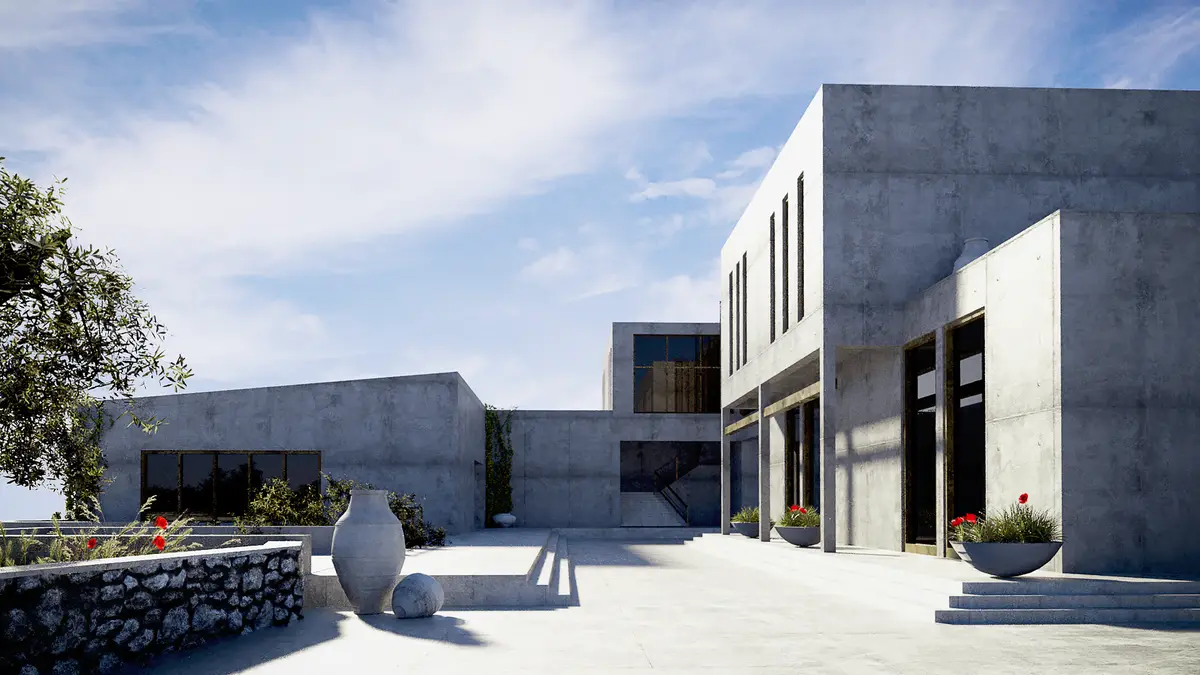
Multifunctional Cultural Center Kassios Dias, Corfu
A contemporary cultural architecture rooted in the Mediterranean landscape of Corfu.


The Multifunctional Cultural Center Kassios Dias is conceived as a landmark of cultural center architecture on the island of Corfu, Greece. Set within a dramatic coastal and hilly landscape, the project responds to both natural topography and social context, aiming to create a harmonious environment for residents while attracting visitors from across the island and beyond. Designed by Yiannis Vlachos, the proposal positions architecture as a medium that brings people together through art, performance, and shared public experiences.
Rather than functioning as a single-purpose building, the cultural center is envisioned as a multifunctional civic complex. It supports performances, concerts, exhibitions, conferences, and festivals, establishing itself as a year-round cultural destination. This approach aligns with contemporary trends in cultural center architecture, where adaptability and inclusiveness are essential to long-term relevance.
Site Integration and Mediterranean Context
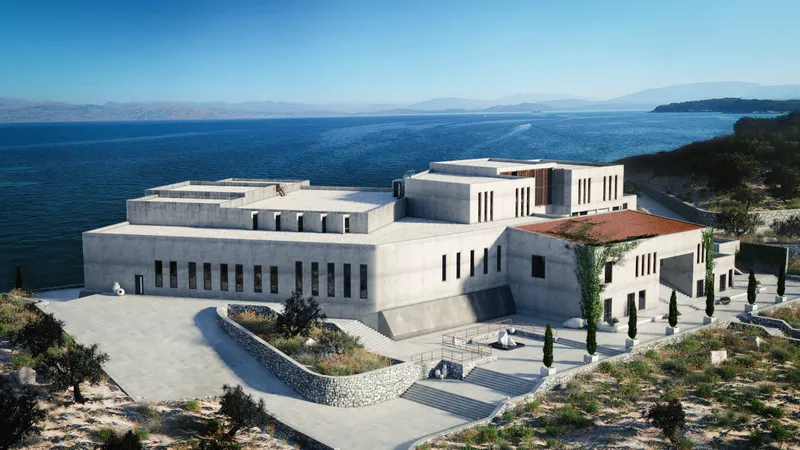
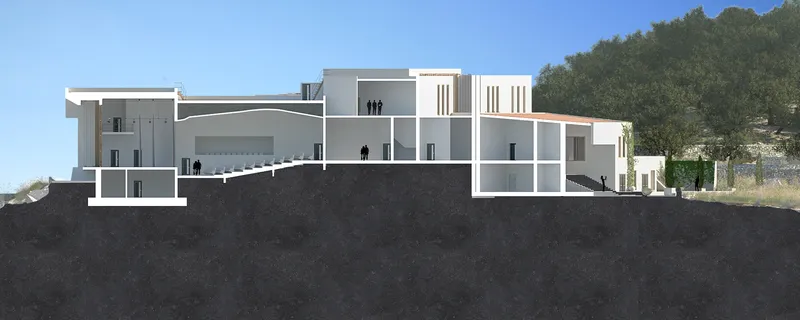
The project is carefully embedded into the sloping terrain of Corfu, using terraced volumes that follow the natural contours of the site. This strategy minimizes visual impact while strengthening the connection between architecture and landscape. Views toward the sea play a central role, with building masses oriented to frame the horizon and reinforce a sense of openness.
Local vegetation, stone retaining walls, and gradual level changes create a seamless transition between built and natural environments. The architectural language draws inspiration from Mediterranean building traditions, reinterpreted through a contemporary lens. Solid volumes, recessed openings, and shaded outdoor spaces respond directly to the island’s climate, making the complex both functional and environmentally sensitive.
Spatial Organization and Programmatic Clarity
At the heart of the Multifunctional Cultural Center Kassios Dias lies a clear and legible spatial structure. Public functions are organized to encourage fluid movement and intuitive orientation. Large gathering spaces such as the conference hall and performance areas are complemented by smaller, more intimate zones including media libraries, exhibition spaces, and meeting rooms.
Circulation paths act as social connectors, linking interior and exterior spaces through courtyards, terraces, and shaded walkways. This layered spatial experience allows the building to host multiple events simultaneously without conflict, reinforcing the project’s multifunctional character. Such flexibility is a defining feature of successful cultural center architecture, ensuring adaptability to diverse cultural programs.
Architecture as a Social Anchor
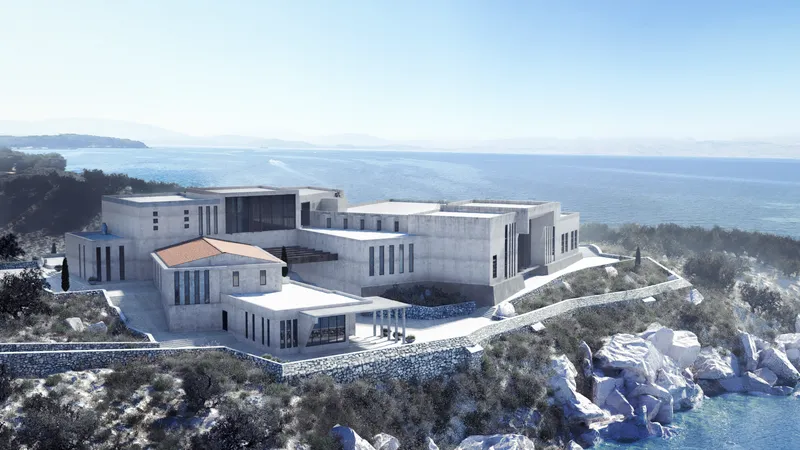
Beyond its physical presence, the cultural center is designed to operate as a social anchor for the community. It offers a platform for local artists, performers, and cultural organizations, while also accommodating international events and festivals. By merging everyday use with special occasions, the building remains active throughout the year.
The architecture encourages informal interaction as much as formal gatherings. Outdoor plazas, transitional spaces, and terraces become extensions of the cultural program, allowing events to spill into the landscape. This integration of social life and built form reflects a contemporary understanding of cultural center architecture as an inclusive and participatory environment.
Materiality and Architectural Expression
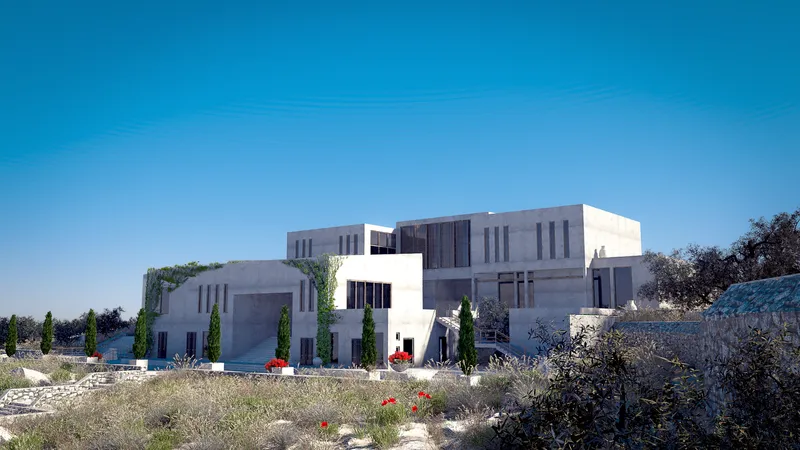
Material choices emphasize durability, simplicity, and contextual relevance. Neutral-toned surfaces echo the rocky terrain of Corfu, while carefully proportioned openings modulate light and shadow across façades. The balance between solid and void enhances thermal performance and visual rhythm, reinforcing the building’s sculptural quality.
The architectural expression avoids excessive ornamentation, instead relying on massing, proportion, and spatial sequencing to create identity. This restrained approach allows the cultural activities themselves to take center stage, aligning form with function in a clear and purposeful manner.
A Contemporary Vision for Cultural Center Architecture
The Multifunctional Cultural Center Kassios Dias demonstrates how thoughtful cultural center architecture can strengthen community ties, celebrate local identity, and adapt to contemporary cultural needs. By blending landscape, program, and architectural clarity, the project by Yiannis Vlachos offers a sustainable and socially responsive model for cultural infrastructure in Mediterranean contexts.
As a point of attraction for both inhabitants and visitors, the center stands as a testament to architecture’s ability to shape cultural life: transforming a site into a shared space for creativity, dialogue, and collective experience.


Popular Articles
Popular articles from the community

Cloaked Colonization: A Mobile Underwater Habitat That Moves Like a Fish
Micah Abaya's shortlisted EHC Pacific entry reimagines ocean settlement as a dispersed network of self-sustaining architectural organisms.
Tsunami Convergenics: Turning Catastrophic Ocean Forces into Underwater Housing Infrastructure
A speculative underwater settlement off the coast of Onagawa, Japan, treats tsunamis and typhoons as energy sources rather than threats.

Opera by the Sea Estonia: Three Shells Dissolving Architecture into Tallinn's Coastline
A winning opera house proposal replaces monumental form with interconnected shells that blur the boundary between building, park and Baltic Sea.

Opera on the Sea: Driftwood Logic Shapes a Timber Opera House on Estonia's Coast
Trevor Orgill's opera house translates the entangled drift of floating timber into a civic building where wood, water, and music converge.

Similar Reads
You might also enjoy these articles

Maya Harvest: A Cacao Resort Village Rooted in Mayan Tradition and Local Craft
Situated within a Tabasco cacao plantation, this shortlisted resort proposal merges vernacular materials with hands-on cultural immersion.
Harmonia: A River-Shaped Community That Grows Over Decades in Boa Vista
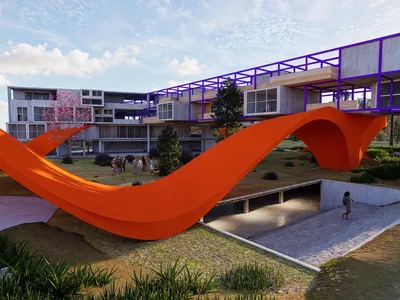
Curved pathways and modular grid structures along the Branco River create a phased settlement designed to evolve from 2030 to 2050.
The Architecture of Bathing: A Mughal Hammam Reimagined Across the Yamuna
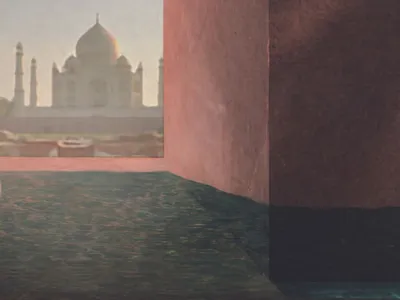
Charlotte May's honorable mention entry for The Black Taj reinterprets Agra's bathing rituals through red sandstone, water, and framed views of the Taj Mah
Om-1: A Wall-Hung System That Moves Your Workspace Off the Desk
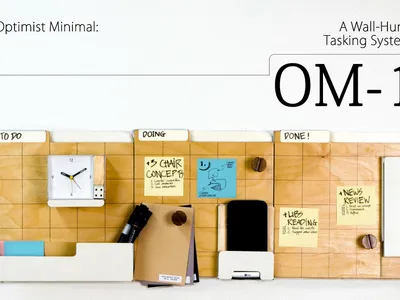
Modular plywood boards, magnetic pegs, and utility elements migrate clutter from the horizontal surface to the vertical plane.


Comments (0)
Please login or sign up to add comments
No comments yet. Be the first to comment!