
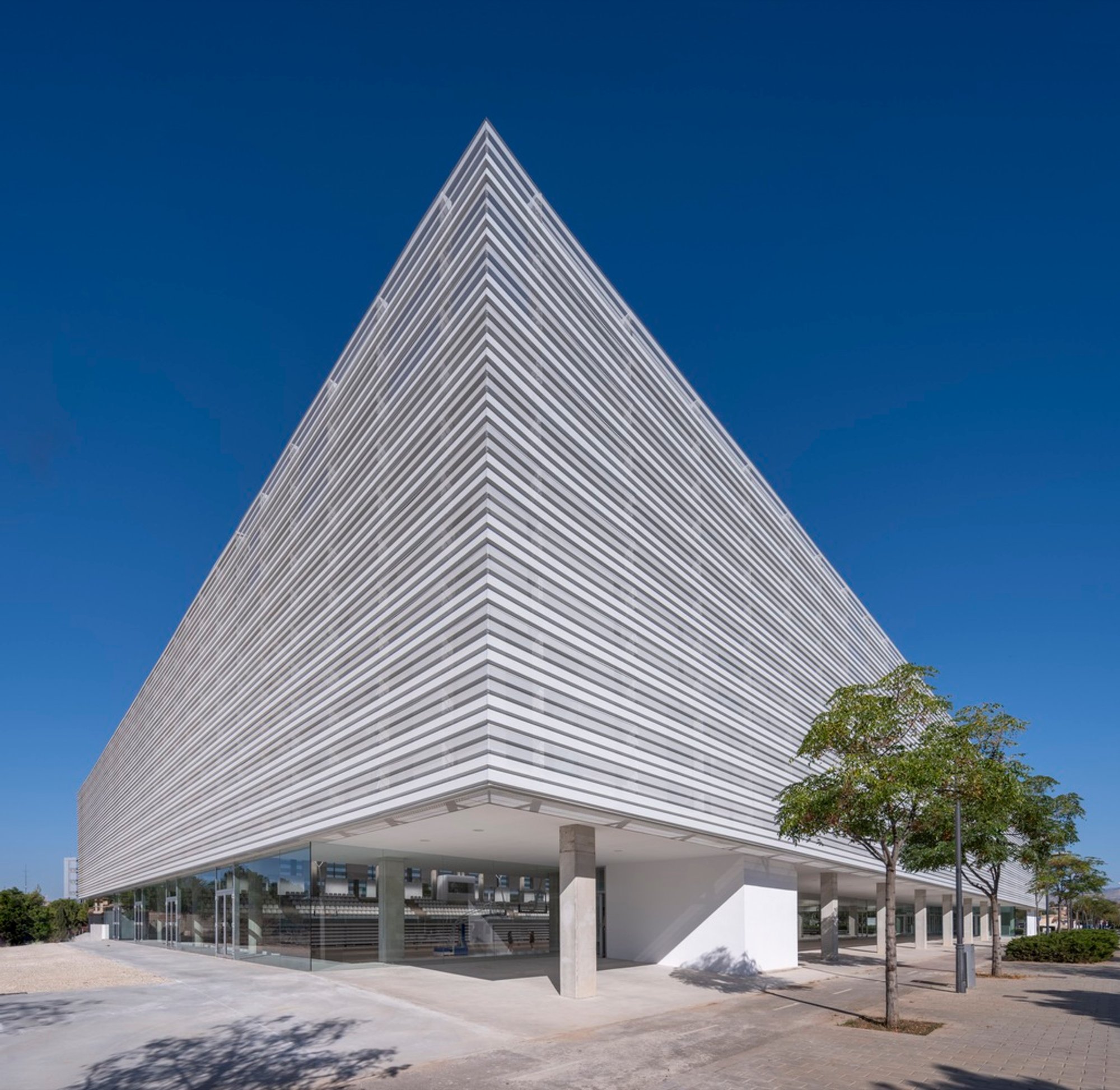
Municipal Sports Pavilion of San Vicente del Raspeig by MCEA Arquitectura and NAOS 04 Arquitectos
A versatile, light-filled sports pavilion with dynamic façades, flexible multi-sport spaces, natural ventilation, and sustainable design promoting community wellness and active living.

A Dynamic, Light-Filled Sports Pavilion Designed for Community Wellness
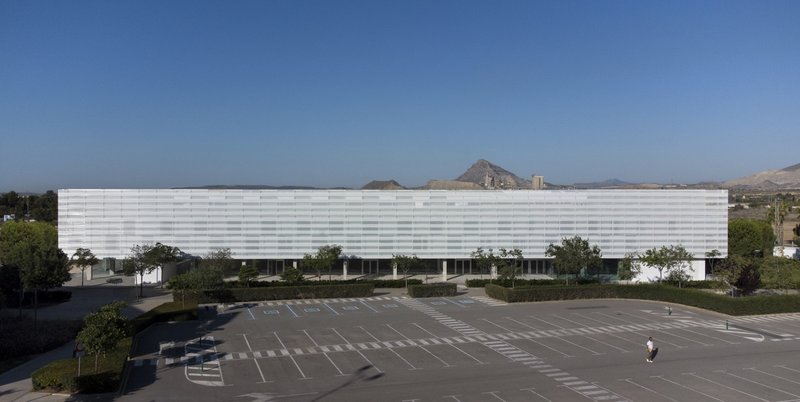
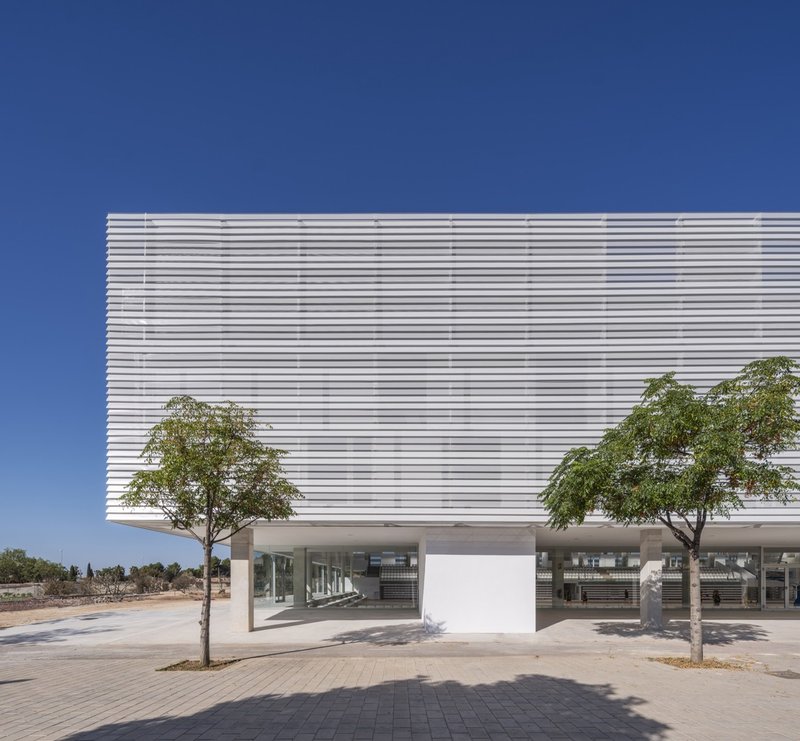
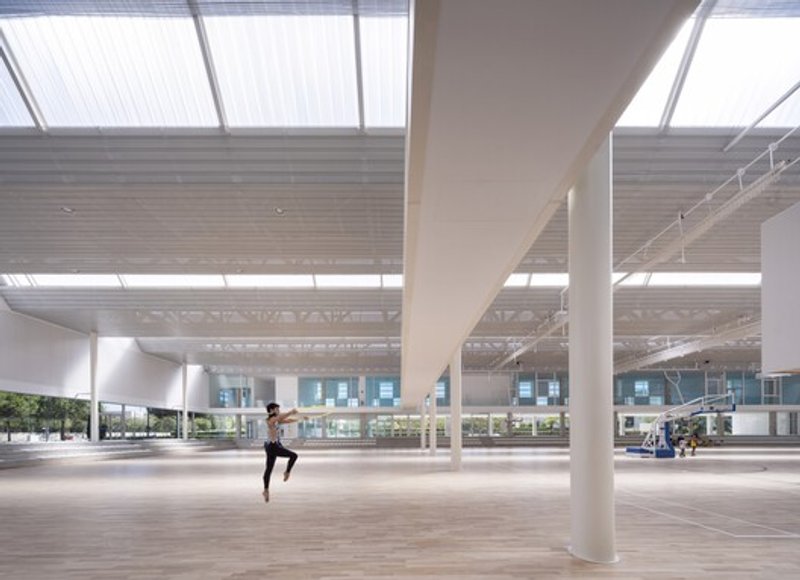
The Municipal Sports Pavilion of San Vicente del Raspeig in Spain redefines contemporary recreational architecture through versatility, visual openness, and high energy performance. Designed by MCEA Arquitectura and NAOS 04 Arquitectos, this 6,648 m² civic facility promotes community engagement by exposing sports activity to the exterior, turning the building into a living showcase of movement, health, and collective energy.
The architects envisioned a large, flexible container capable of hosting a wide variety of sports and high-capacity events. A strong emphasis on transparency and natural illumination ensures that interior programs remain visually connected with the surrounding public realm, reinforcing the municipality’s goal of encouraging active lifestyles through spatial openness and architectural clarity.
A Versatile Interior Organized for Multiple Sporting Modalities
To maximize functional adaptability, the program is divided into two principal zones:
1. Central Multi-Sport Hall
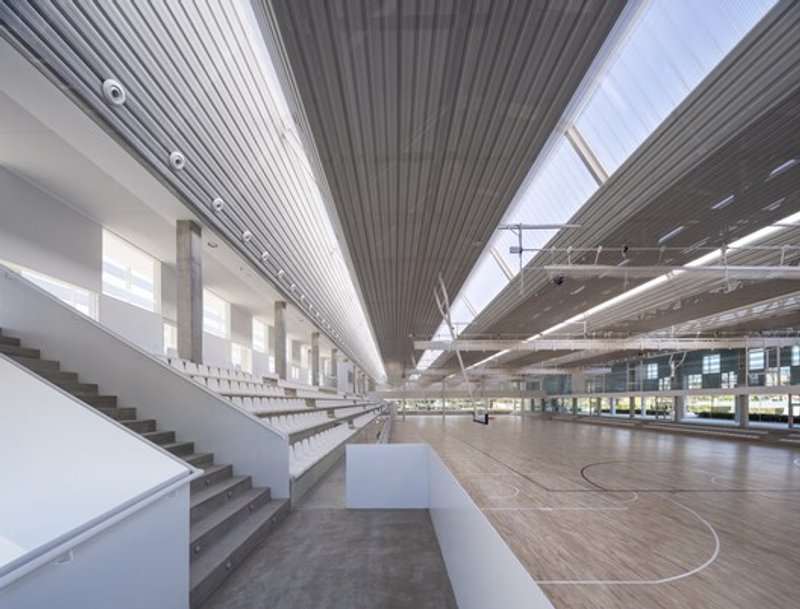
The core of the pavilion is a spacious volume equivalent to four indoor basketball courts, dedicated to team sports and large-format activities. Five north-oriented skylights introduce soft, even daylight from above, reducing glare and eliminating direct solar gain. The warm tones of the wooden sports flooring create a comfortable atmosphere that enhances athletic performance and visual comfort.
2. Specialized Rooms and Gyms
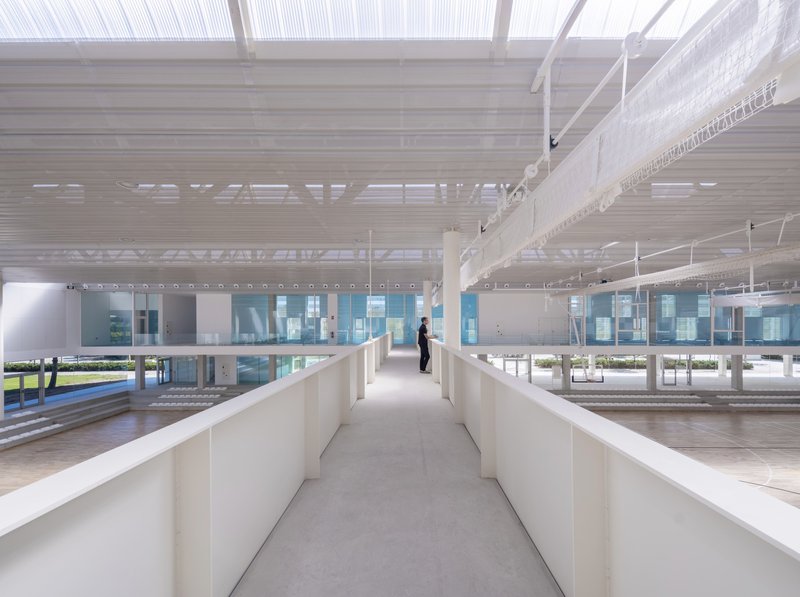
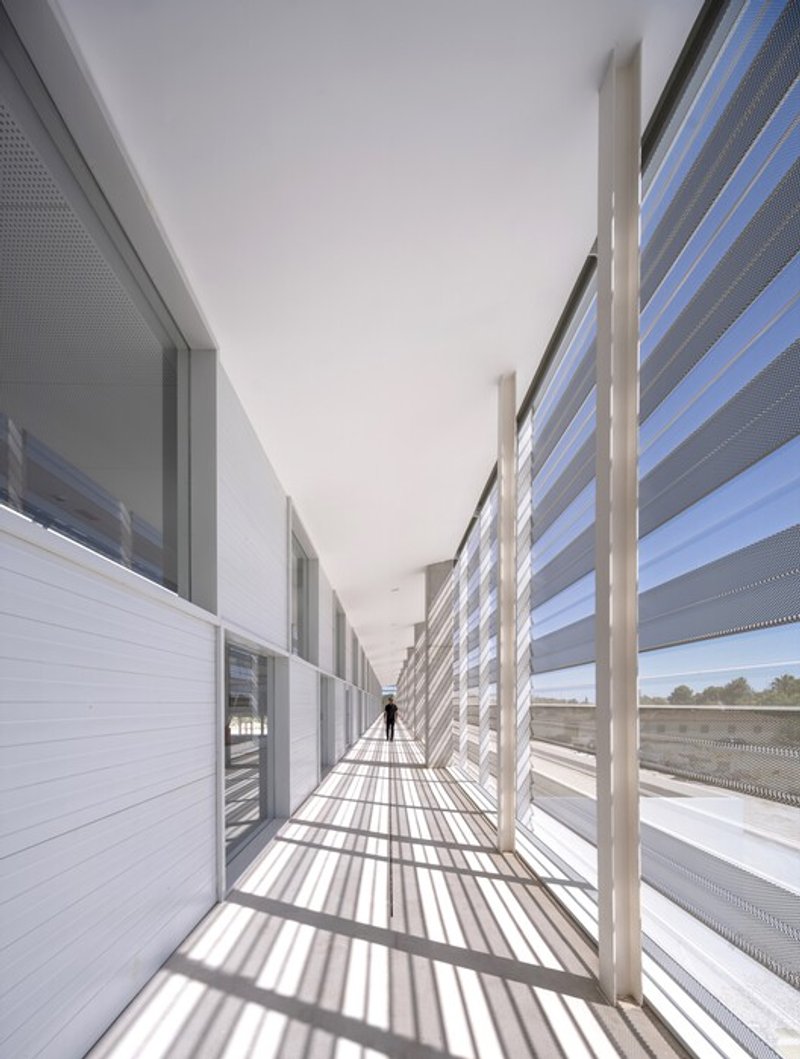
The second program cluster integrates multiple rooms for directed activities, training spaces, and gym facilities. These spaces receive filtered illumination through a dual façade system, balancing privacy, comfort, and energy efficiency. Their cool-toned flooring subtly contrasts with the warmth of the central hall, creating a sensorially diverse interior landscape tailored to different sports experiences.
Independent Operation Through Smart Spatial Organization
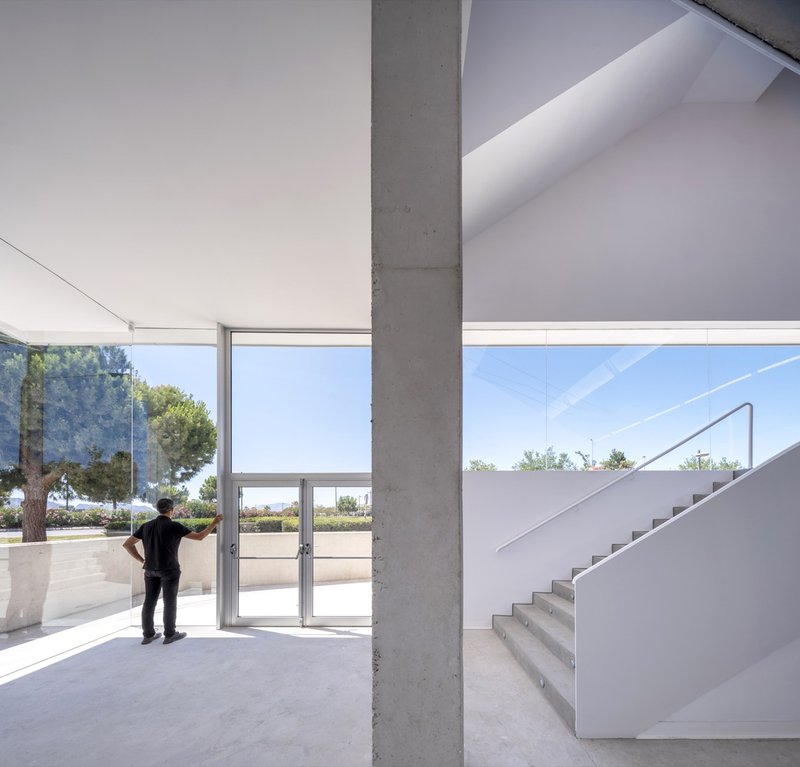
The layout enables independent functioning of the main uses—the main pavilion, the gym, and the cafeteria. This operational autonomy offers both economic and managerial flexibility, making the building highly efficient for daily activities, tournaments, and community events. Circulation paths are intuitive and clearly defined, ensuring fluid movement for spectators, athletes, and staff.
A Façade That Changes With Light, Color, and Time
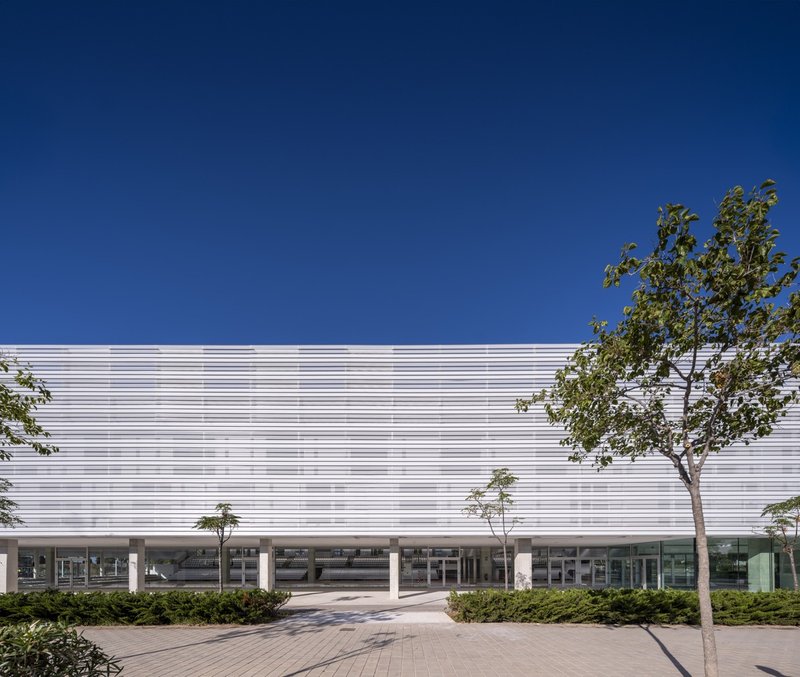
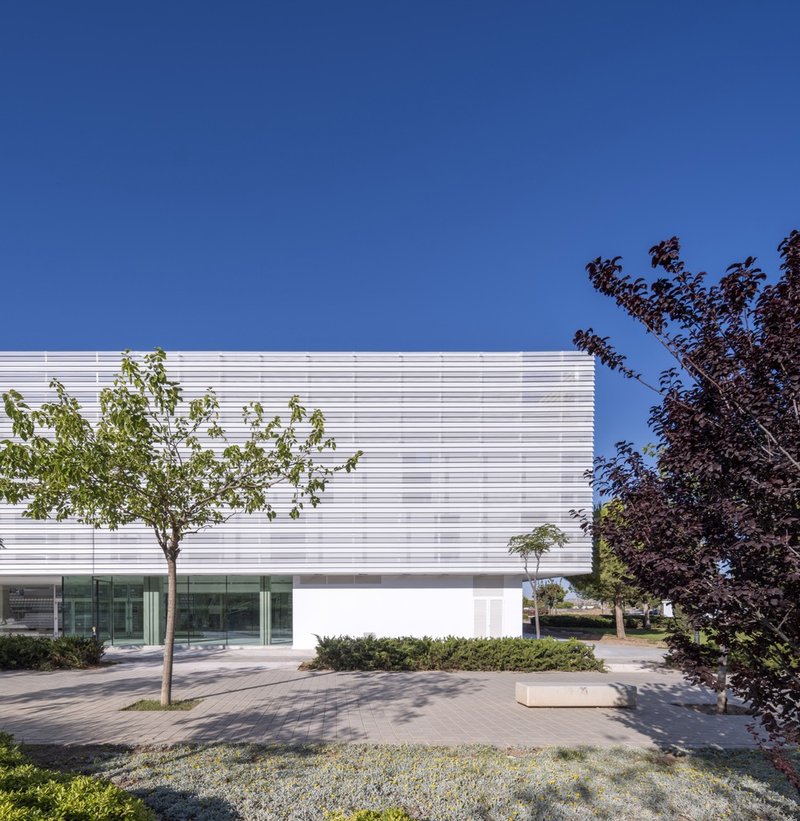
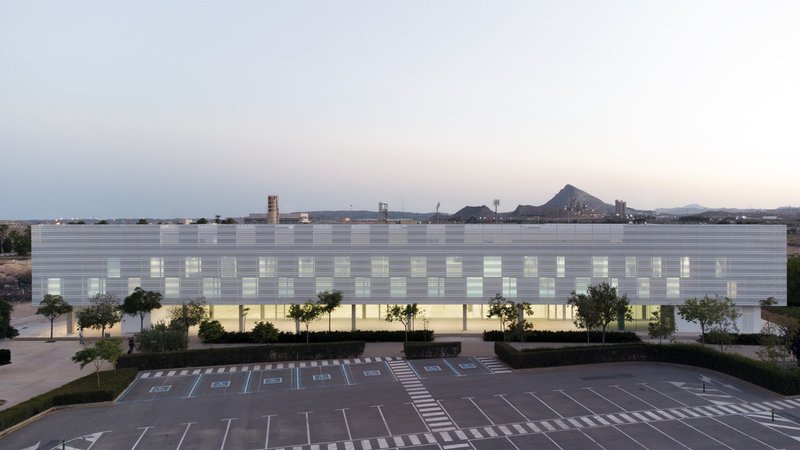
The pavilion’s façade is conceived as a dynamic, ever-changing skin. Two geometric layers—horizontal exterior striping and interior checkerboard panels—interact with each other depending on lighting conditions. During the day, the exterior appears crisp white, with subtle shifts created by varying shadows and sun angles. At night, internal lighting transforms the surface into a composition of soft blues, produced by reflections bouncing off the interior floors.
This constant chromatic variation turns the building into an urban landmark that evolves throughout the day, reinforcing its identity as an active public hub.
Advanced Daylighting, Ventilation, and Energy Efficiency
The building is engineered as a high-performance environmental system, relying heavily on passive strategies to reduce operational energy demand:
- Maximized natural daylighting reduces artificial lighting use across all interior spaces.
- Motorized natural ventilation enables cross-ventilation through façade openings and roof vents.
- Night cooling dissipates heat accumulated during the day, improving indoor comfort without mechanical load.
- Aerothermal energy efficiently generates domestic hot water.
- A photovoltaic installation supplies on-site renewable electricity.
Together, these measures position the pavilion as a near-zero energy building, illustrating the municipality’s commitment to sustainable public infrastructure.
The Municipal Sports Pavilion of San Vicente del Raspeig stands as a forward-thinking example of flexible sports architecture, combining environmental performance, luminous interior design, and community-oriented planning. Through thoughtful materiality, innovative façade composition, and intelligent program distribution, the pavilion becomes more than a recreational building—it becomes a catalyst for active living and a vibrant architectural presence within the city.
All photographs are works of David Frutos




Popular Articles
Popular articles from the community

Inverted Architecture Installation by Studio Link-Arc: Exploring the Intersection of Architecture and Living Organisms
Inverted Architecture Installation by Studio Link-Arc blends mycelium, sustainability, inverted design, ecological cycles, and urban adaptive architecture in Shenzhen.

Free Architecture Competitions You Can Enter Right Now
No entry fees, real prizes. Here are the best free architecture competitions open for submissions in 2026.
Alton Cliff House: A Harmonious Retreat by f2a Architecture in Lake Country, Canada
Alton Cliff House blends corten steel, prefabrication, and sustainable design, creating a luxurious, energy-efficient retreat perched on Canadian cliffs.



Similar Reads
You might also enjoy these articles


The Ken Roberts Memorial Delineation Competition (Krob)
As the most senior architectural drawing competition currently in operation anywhere in the world, it draws hundreds of entries each year, awarding the very best submissions in a series of medium-based categories.

Waterfront Redevelopment and Urban Revitalization in Mumbai: Forging a New Dawn for Darukhana
A transformative waterfront redevelopment project reimagining Darukhana’s shipbreaking heritage into an inclusive urban future.

OUT-OF-MAP: A Call for Postcards on Feminist Narratives of Public Space
Rhizoma Design and Research Lab invites artists, designers, architects, researchers, and students to reflect on how feminist perspectives can reshape public space. Selected works will be exhibited in Barcelona, October 2026. Submissions open until 15 April 2026.


Documentation Work on Buddhist Wooden Temple
Architectural syncretism and cultural hybridity: A comparative study of the Buddhist temples in Chattogram Hill tracks

Explore Architecture Competitions
Discover active competitions in this discipline




The International Standard for Design Portfolios


The Global Benchmark for Architecture Dissertation Awards


The Global Benchmark for Graduation Excellence


Challenge to reimagine the Iron Throne
Comments (0)
Please login or sign up to add comments
No comments yet. Be the first to comment!