

Music Box House by Multiplicity: A Light-Filled Residential Retreat Shaped by Memory, Community, and Craft in Melbourne
A light-filled Melbourne home balancing intimacy and volume, thoughtfully crafted to celebrate memory, community, and lived-in collections within a constrained urban site.


Located in Melbourne, Australia, Music Box House is a highly personalized residential project designed by Multiplicity, completed in 2021. With a total floor area of 345 square meters, the house is shaped as much by emotional narrative as by urban constraints, transforming a complex triangular site into a warm, generous home that engages both its occupants and the surrounding neighborhood.
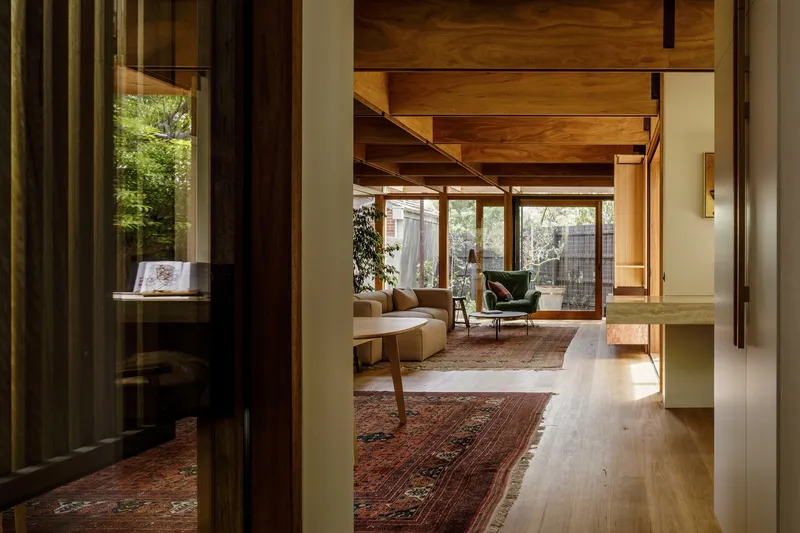
From the outset, the project was grounded in an intimate client dialogue. One of the homeowners, an artist in his late seventies, remarked that he had never previously lived in a house designed specifically for him, for them, as a home. This simple statement became the emotional anchor of the project, reinforcing the responsibility and privilege entrusted to the architects. The design process embraced the urgency of time, celebrating the opportunity to create a home rich in experience, memory, and everyday ritual.
A House Designed for the Community as Much as the Client
The triangular site is bounded on two sides by pedestrian pathways, placing the house in constant visual and social dialogue with its neighborhood. Rather than retreating inward, Music Box House was conceived as a building that could be embraced by its surroundings. The architects approached the project with a clear ambition: to gift the community a beautiful, welcoming building while preserving the privacy and comfort of its residents.
The brief was extensive, including a basement, lift, car stacker, and a separate studio, all within a site constrained by height limits and flood-level requirements. The northern boundary opens onto a public park populated by mature eucalyptus trees and native birdlife, further influencing the home’s orientation, material palette, and spatial sequencing.
Reconciling Contrasting Lifestyles Through Spatial Design
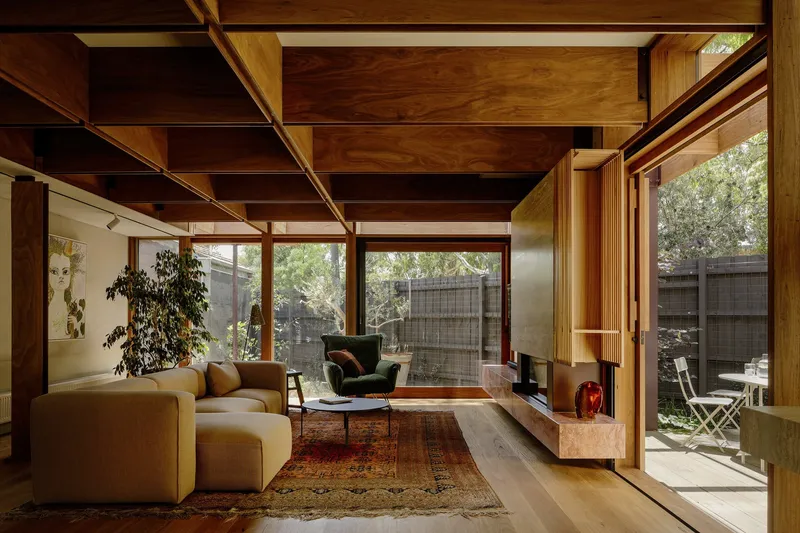
One of the defining challenges of the project was reconciling the clients’ contrasting spatial preferences. One occupant favored generous volumes and openness, while the other gravitated toward intimate, enclosed spaces. One embraced minimalism; the other was a devoted collector of books, art, records, heirlooms, and objects marked by age, patina, and history.
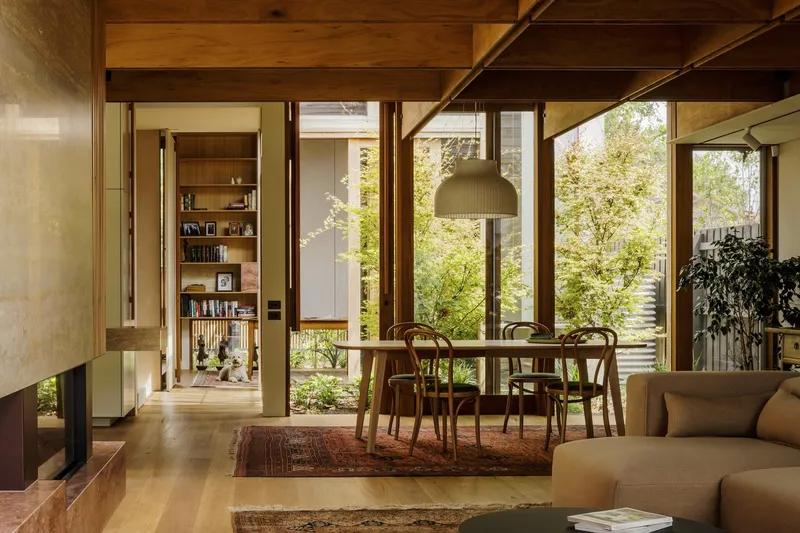
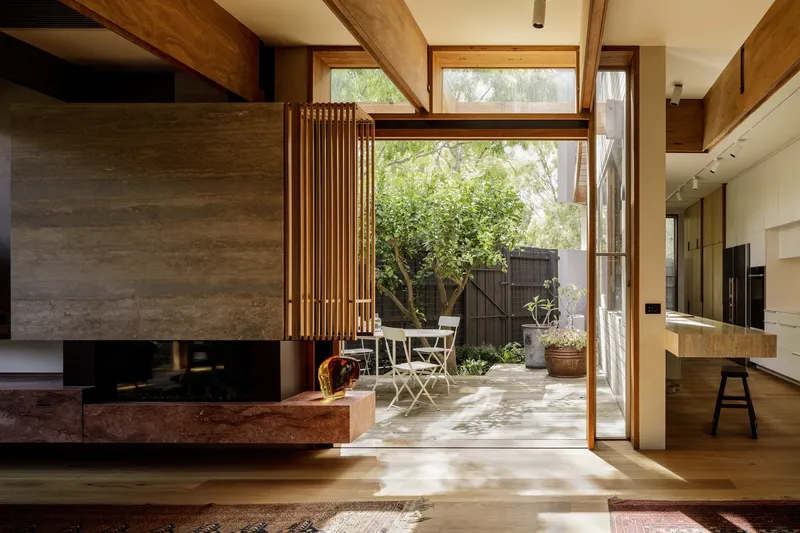
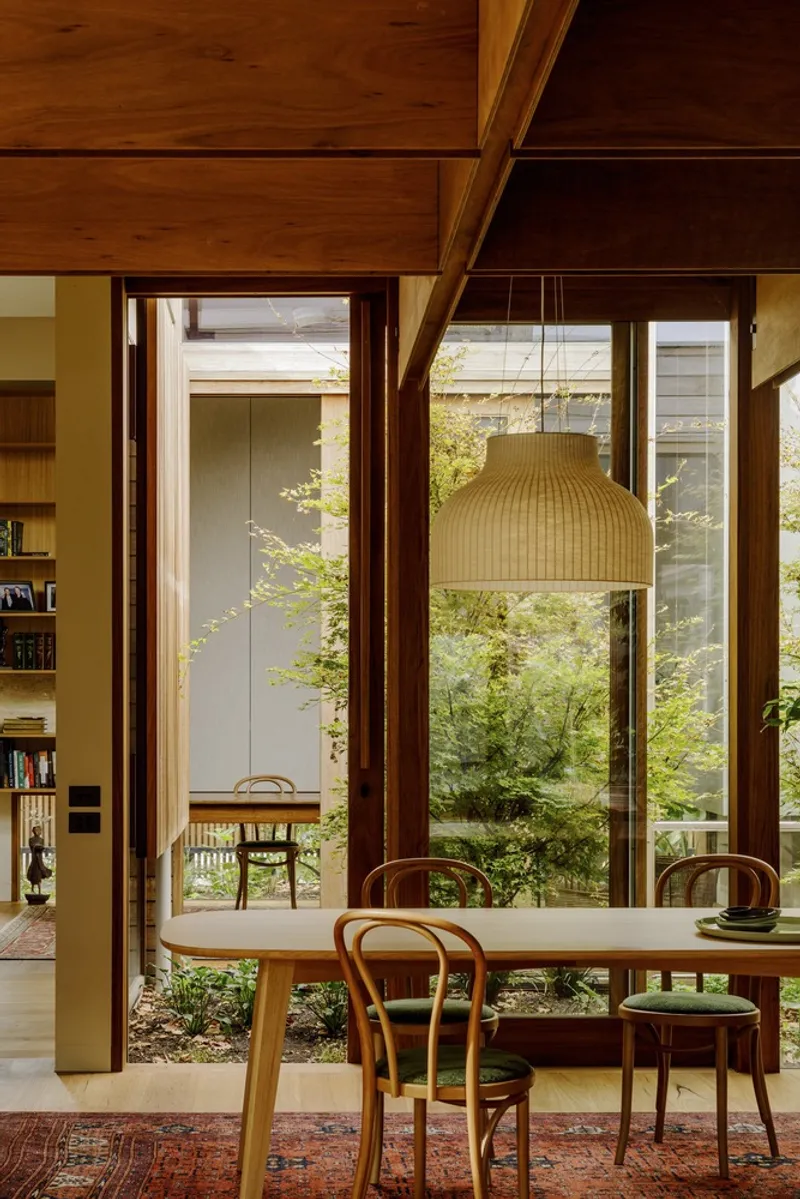
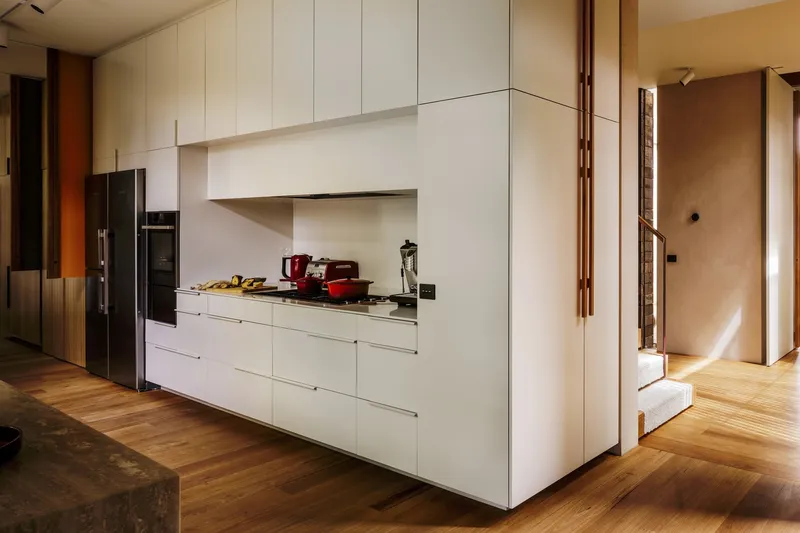
Multiplicity responded with a layered architectural strategy that balances light and shadow, openness and enclosure, display and retreat. Carefully positioned windows, shelving, and built-in storage allow collections to be celebrated without overwhelming the interiors. Natural light floods the house, while subtle transitions between inside and outside maintain privacy from passersby.
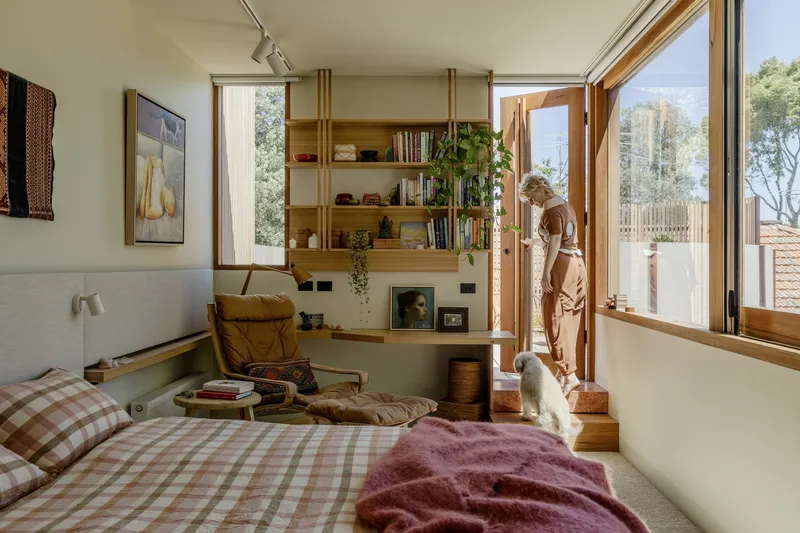
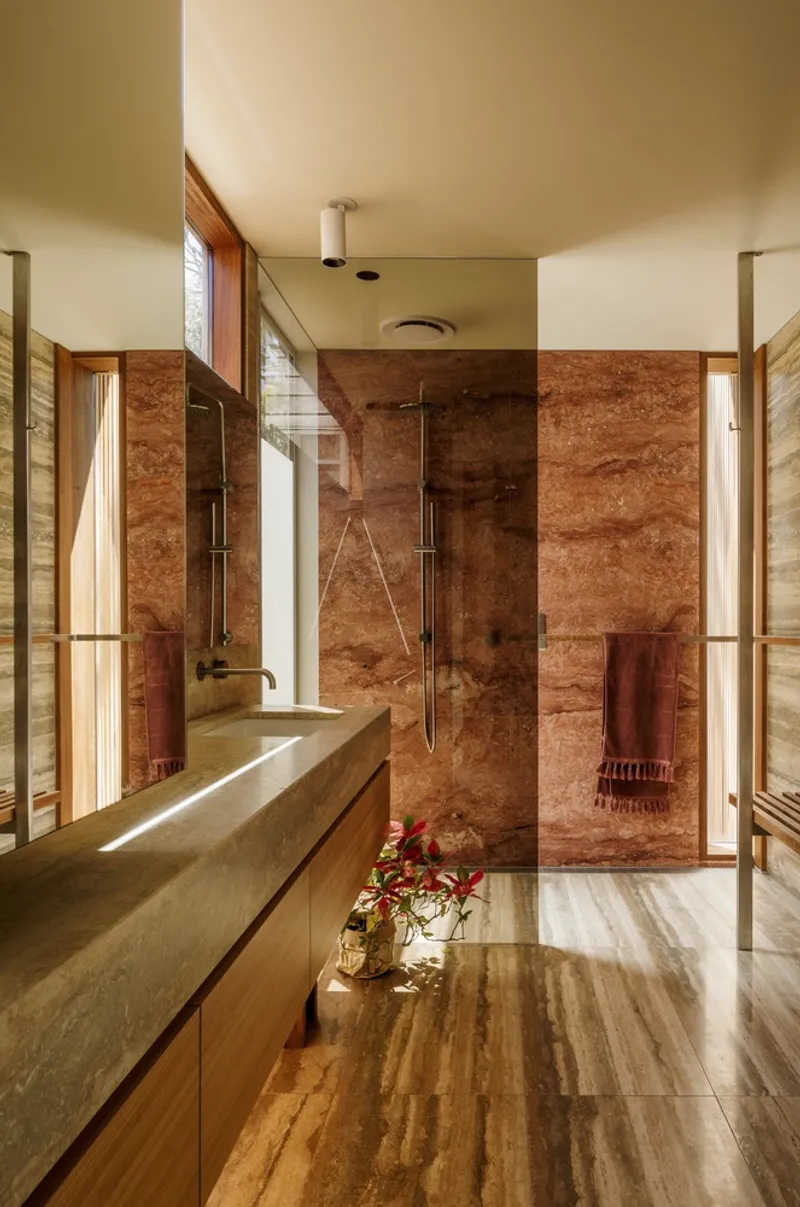
Materiality Rooted in Place and Memory
Material choices play a critical role in connecting the house to its context. The external material palette quietly echoes the colors and textures of the adjacent parkland, allowing the building to sit comfortably within its landscape. This language continues internally, reinforcing a sense of continuity between architecture, interior design, and nature.
The architects worked closely with consultants, engineers, and builders from the earliest stages, ensuring that detail, craftsmanship, and material integrity were maintained despite the tight urban conditions. Landscape design was integrated from the beginning, with views carefully choreographed between rooms and across emerging garden spaces.
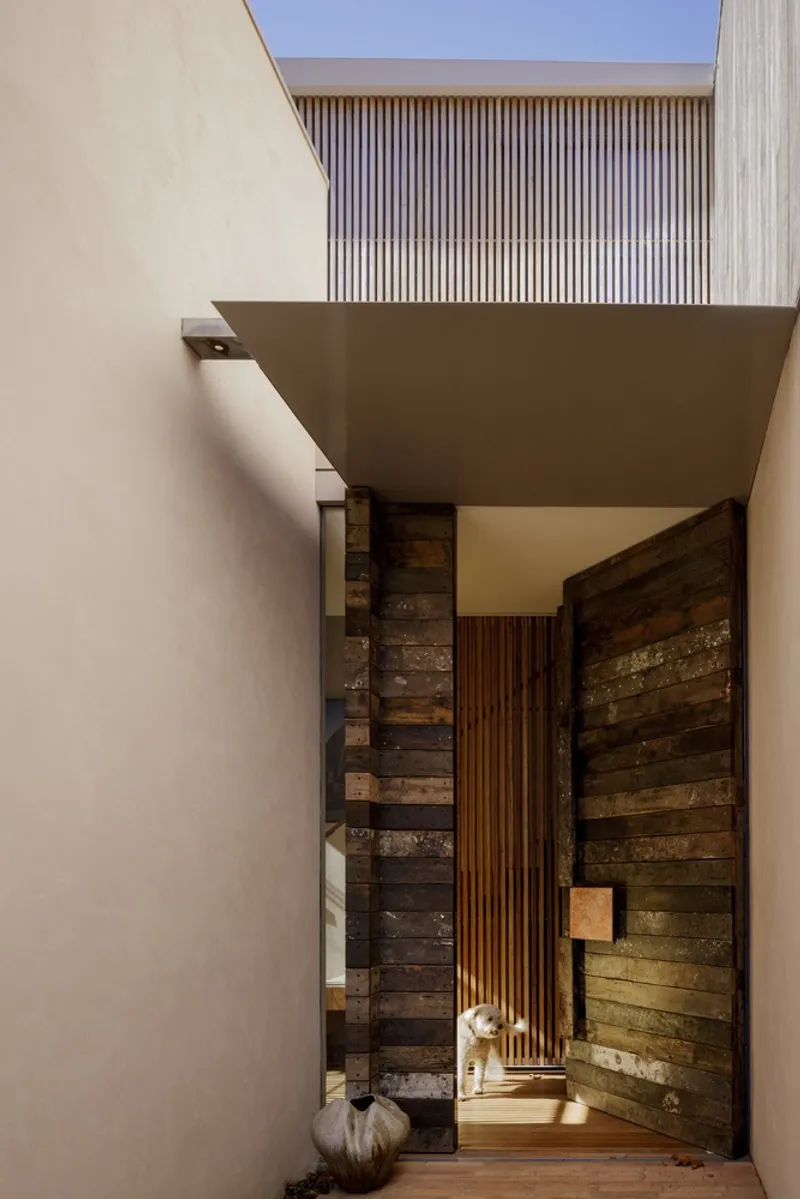
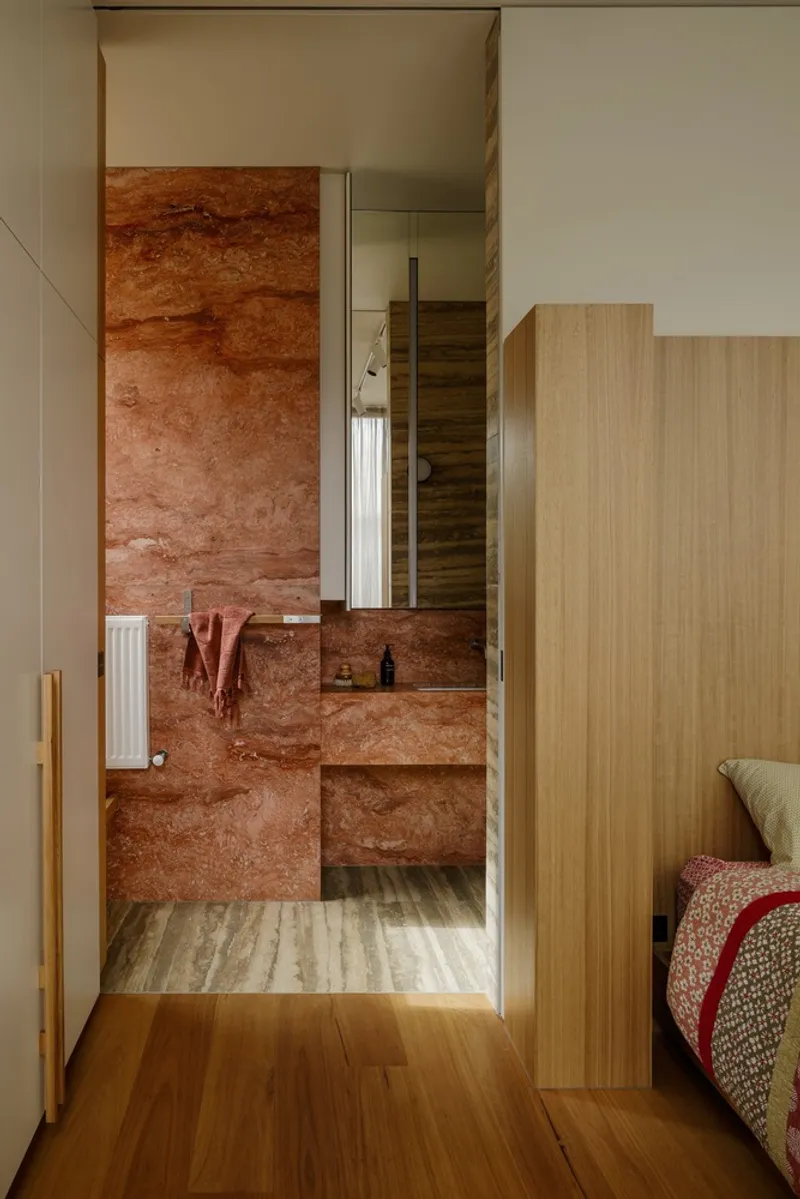
Playing with Height: Intimacy and Volume in One Gesture
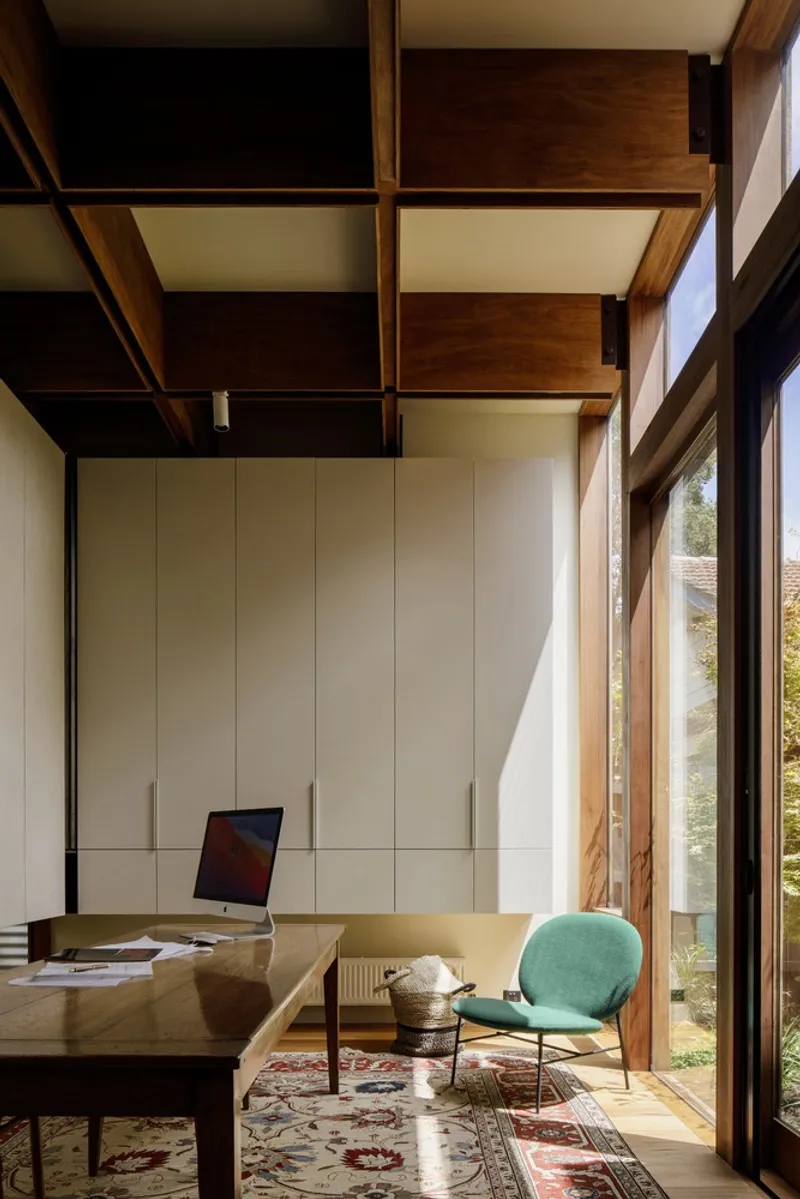
A defining architectural feature of Music Box House is its nuanced use of ceiling height. Coffered ceilings in the primary living spaces subtly mediate the clients’ differing preferences. From certain vantage points, the lower coffers create a sense of warmth and intimacy; as one moves through the space, the full height of the ceiling gradually reveals itself. This spatial choreography resolves the “tall versus small” debate with elegance and restraint.
A Home for a Life Well Lived
Ultimately, Music Box House is less about architectural spectacle and more about accommodation, generosity, and lived experience. It is a home designed to hold a lifetime of objects, relationships, memories, and daily rituals: while remaining open, light-filled, and deeply connected to its community and landscape.
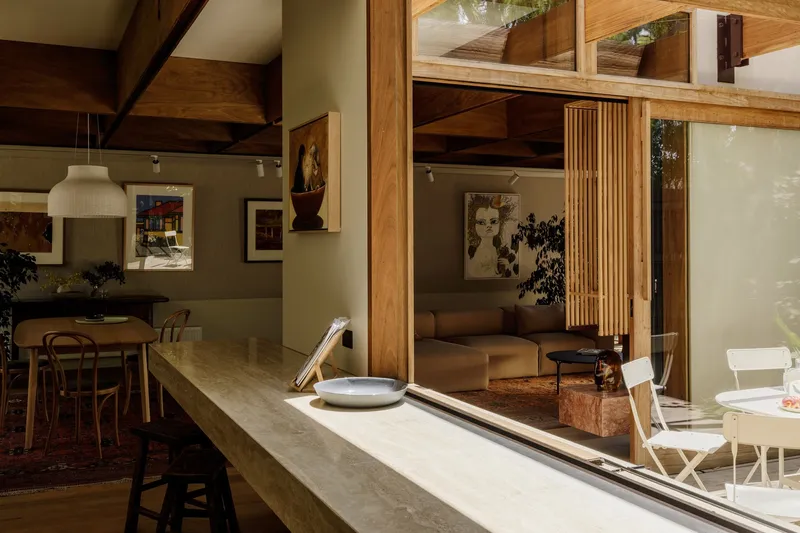
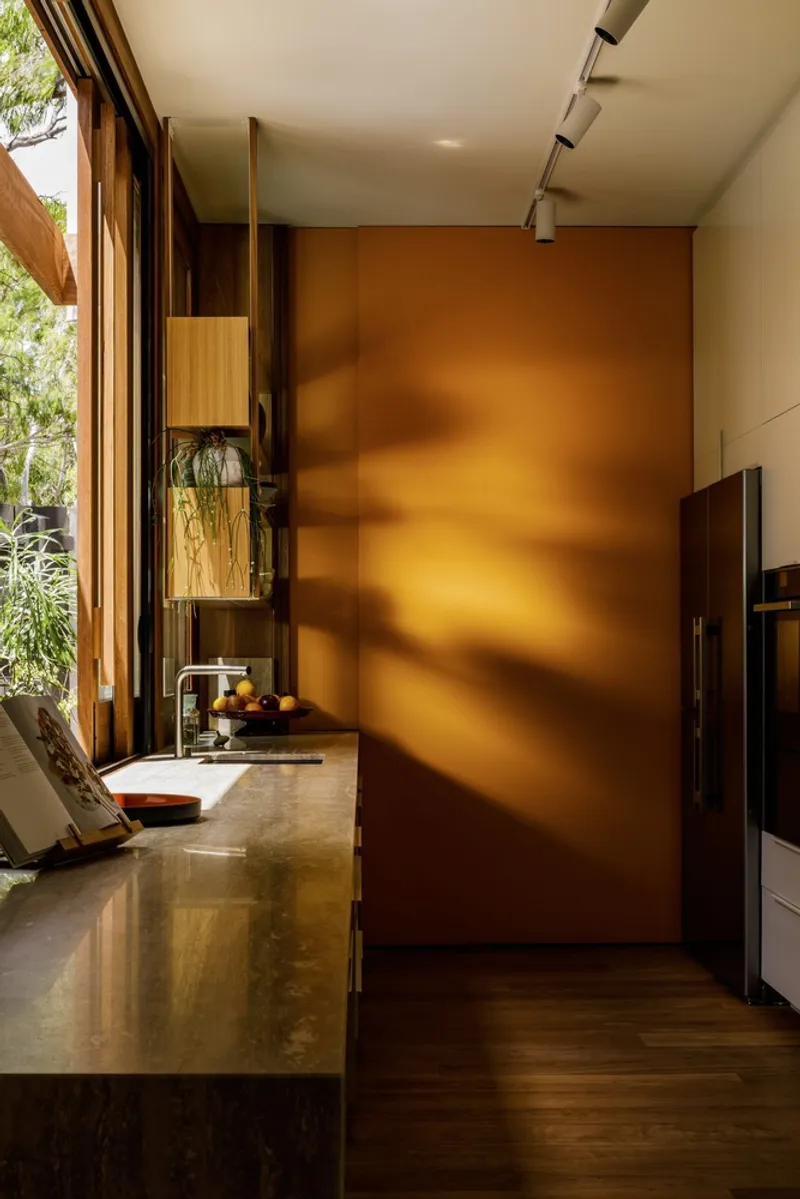
All photographs are works of Trevor Mein




Popular Articles
Popular articles from the community


Conexión: Biophilic Design Reimagines High-Rise Living in Hong Kong
Conexión reimagines high-rise living in Hong Kong through biophilic design, green facades, shared spaces, daylight, water and nature within.

The Earth Pod: 3D Printed Homes for Resilient Refugee Communities
The Earth Pod reimagines refugee housing through 3D printed homes made from clay, combining resilience, self-sufficiency, and rapid shelter.

Riyadh For All: Intergenerational Urban Design for Active Aging in Rabat
Riyadh For All reimagines urban design in Rabat with intergenerational co-living, adaptive courtyards, and Moroccan cultural exchange today.

Hill & Cross Opera: Sculptural Opera House Architecture Shaped by Tallinn’s Landscape and Identity
Hill & Cross Opera reimagines opera house architecture in Tallinn through its sculptural hill, civic plaza, glass wave and a luminous cross.


Similar Reads
You might also enjoy these articles


Hodi-Mandai Geram
Project Function: Preservation and revitalization of the Intangible heritage and socio-spatial identity of the Hodi by Housing, Cultural Memory Center, Sacred Grove, landscape, local tourism economy


Olio Towers: A Mid-Rise for Performers That Fuses Housing, Rehearsal, and Stage
Located blocks from Houston's Theater District, this modular tower stacks living units around a central performance atrium.

Oasis: Modular Green Housing Carved into Dhaka's Urban Fabric
A shortlisted Plugin Housing entry reclaims unauthorized settlements in Dhaka with stepped concrete volumes, green roofs, and ventilation-driven design.

Black Hole: A Floating Megastructure for the Post-Physical Era
Emiliano Mazzarotto envisions a spherical, self-scaling arena where e-sports, digital hotels, and holographic stadiums replace traditional public space.


Explore Housing Competitions
Discover active competitions in this discipline



Challenge to reimagine the Iron Throne


Photograph architecture without architects


Illustrate the lost glory of Angkor Wat - Render Challenge


Design challenge to reuse E-waste
Comments (0)
Please login or sign up to add comments
No comments yet. Be the first to comment!