
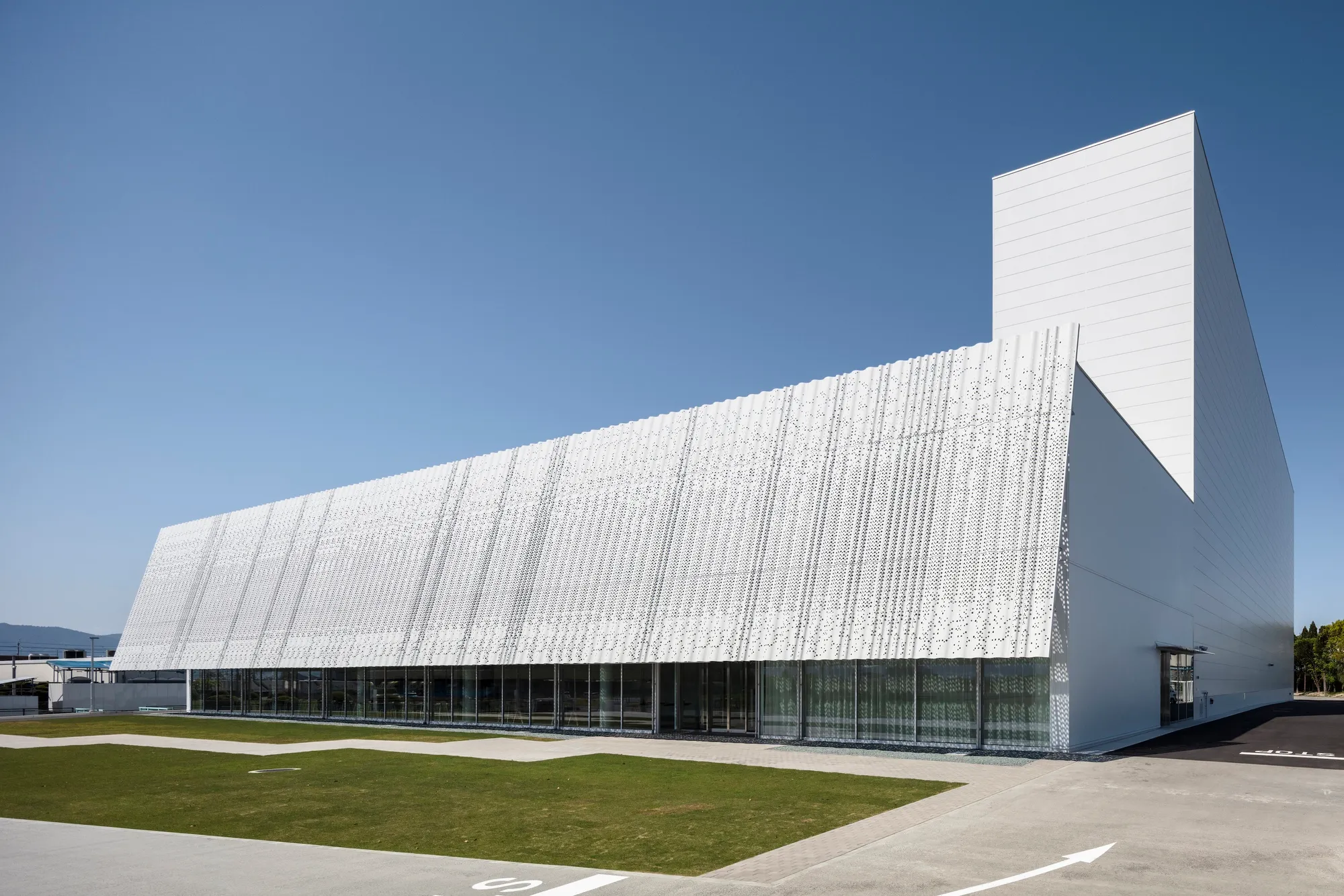
Nakano Seiyaku Kusatsu Factory By TAISEI DESIGN Planners Architects & Engineers | Kusatsu, Japan
Nakano Seiyaku Kusatsu Factory blends beauty, smart manufacturing, and sustainability, creating a people-centered industrial environment harmonized with water, nature, and community.


The Nakano Seiyaku Kusatsu Factory, designed by TAISEI DESIGN Planners Architects & Engineers, represents a new benchmark in industrial architecture, where beauty, sustainability, and smart manufacturing converge. Completed in 2024 in Kusatsu, Shiga Prefecture, the 8,525 m² facility produces hair cosmetics and quasi-pharmaceutical products while redefining what a contemporary, environmentally responsible factory can be.
Rooted in Nakano Seiyaku’s founding philosophy of “Shaping Beauty Together,” the project draws conceptual inspiration from beauty itself and water, the essential source of life and vitality. Rather than presenting itself as a closed, purely industrial facility, the factory is designed to harmonize with the water-rich landscape of the Lake Biwa region and establish a positive relationship with the local community.
Beauty × Smartness: Integrated and Efficient Manufacturing
At the core of the project is a highly efficient, future-ready production system. Functions that were previously distributed across multiple factories have been consolidated into a single, streamlined facility. Through automation and intelligent spatial planning, employee workload is reduced while productivity and quality are enhanced.
A clear separation of people and logistics flows enables the entire production process: manufacturing, filling, packaging, and shipping, to operate seamlessly on one continuous floor. Clean-room environments for mixing and filling meet the strict requirements of ISO 22716 (Good Manufacturing Practices for Cosmetics), ensuring exceptional standards of product safety and quality.
To support high-mix, variable-volume production, the factory employs a Manufacturing Execution System (MES) that integrates IT-driven process control with accumulated production know-how. This digital backbone allows for precision, flexibility, and consistency in an evolving cosmetics market.
Beauty × Sustainability: Architecture in Dialogue with Nature
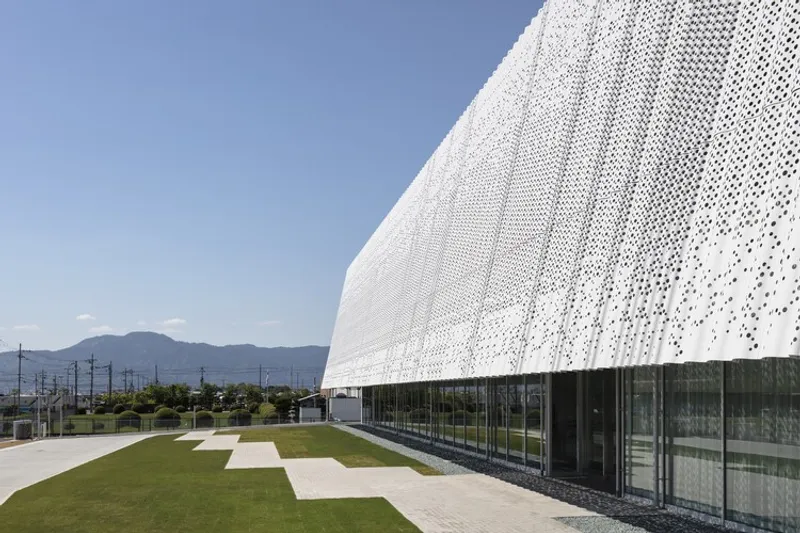
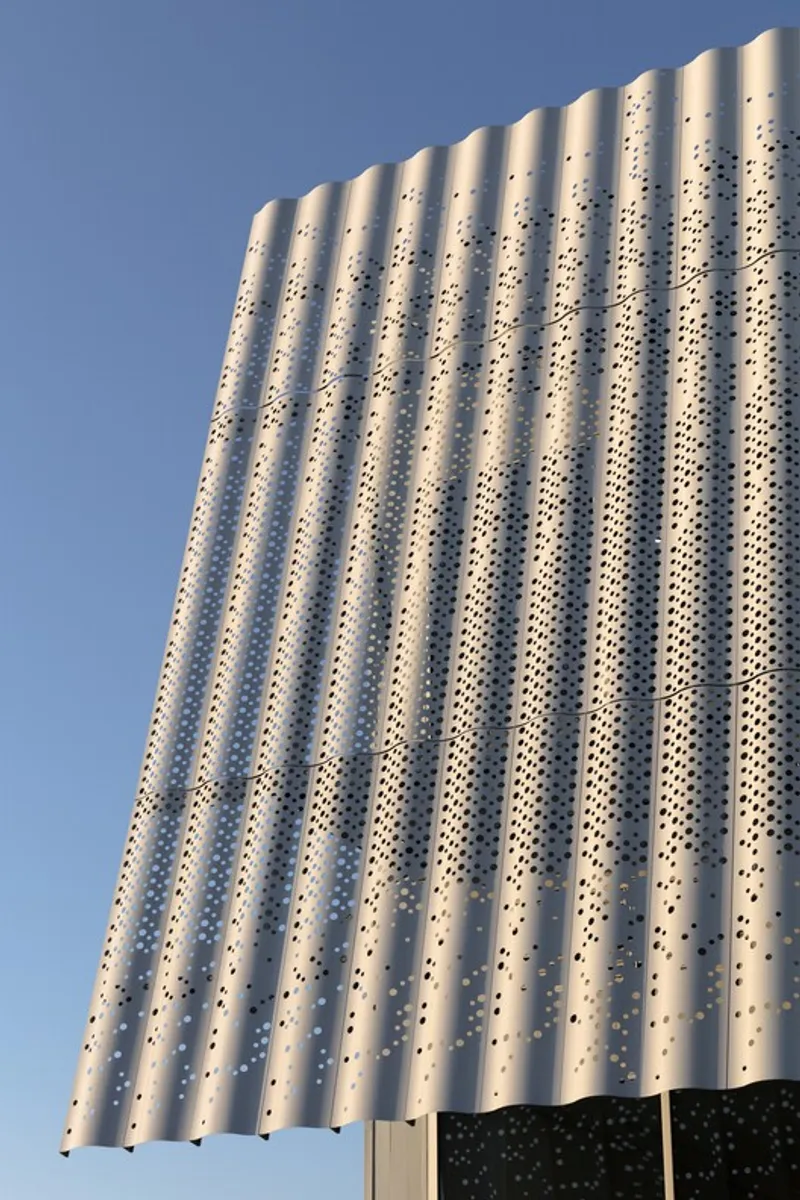
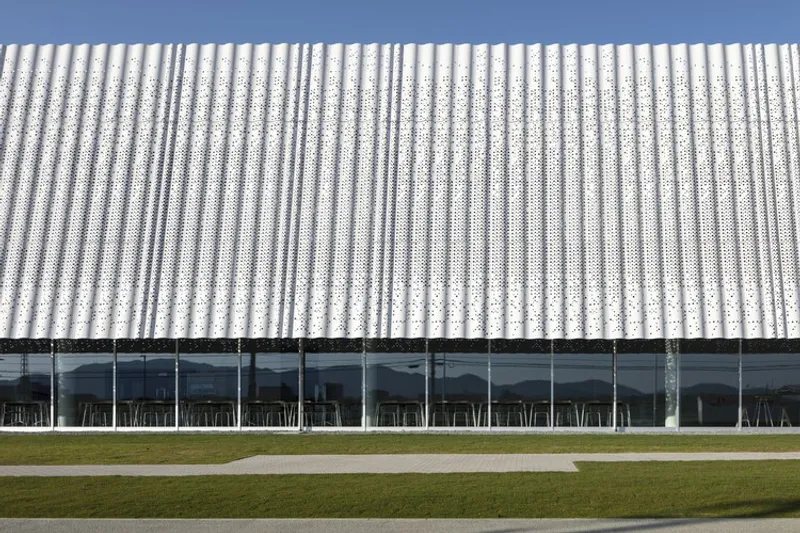
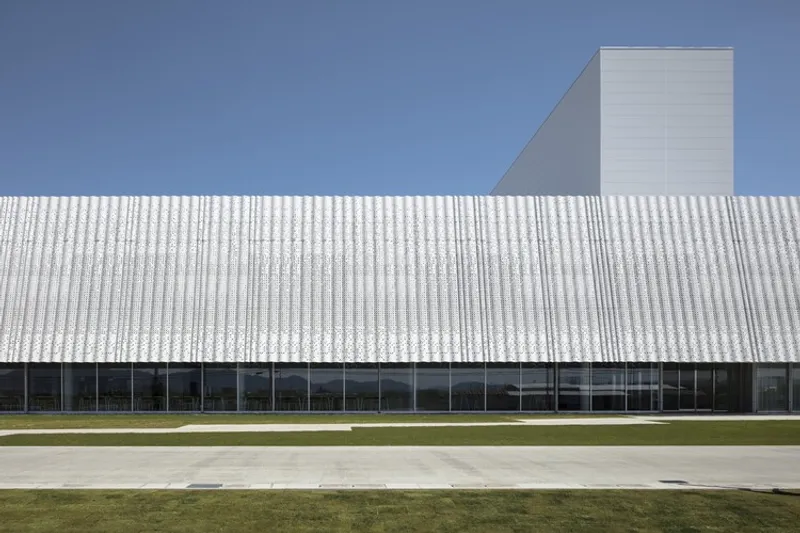
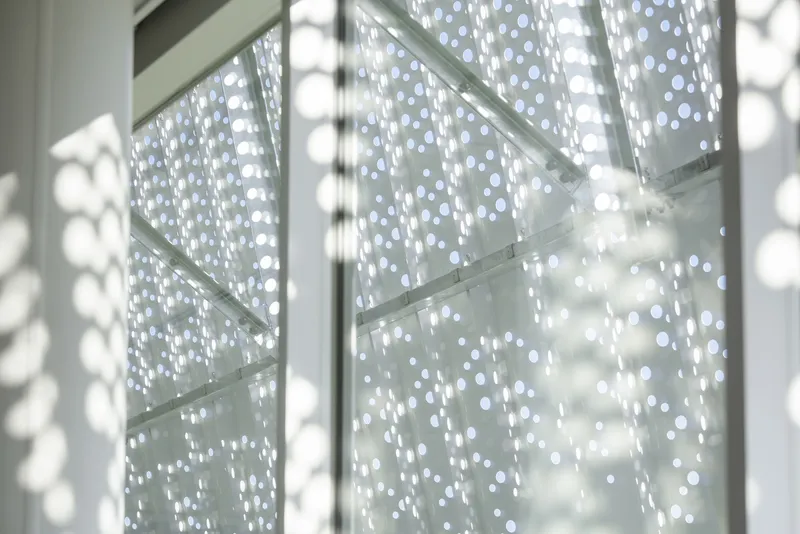
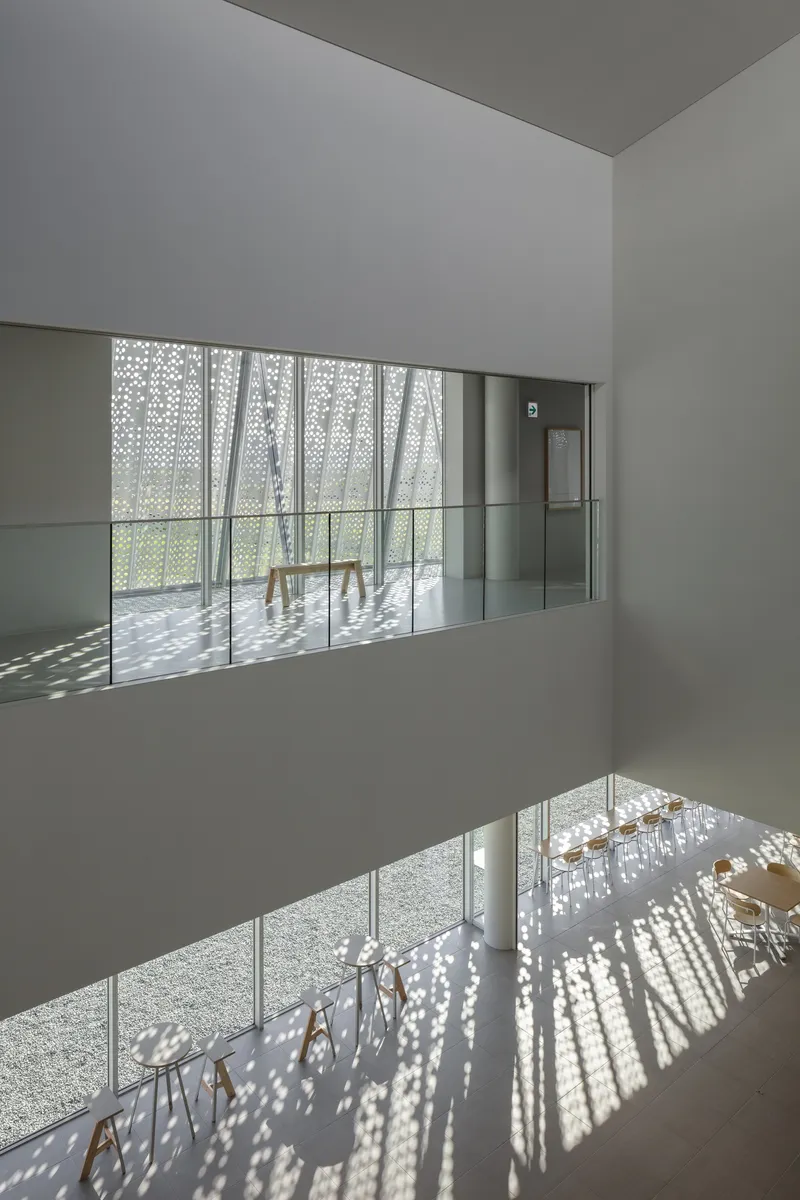
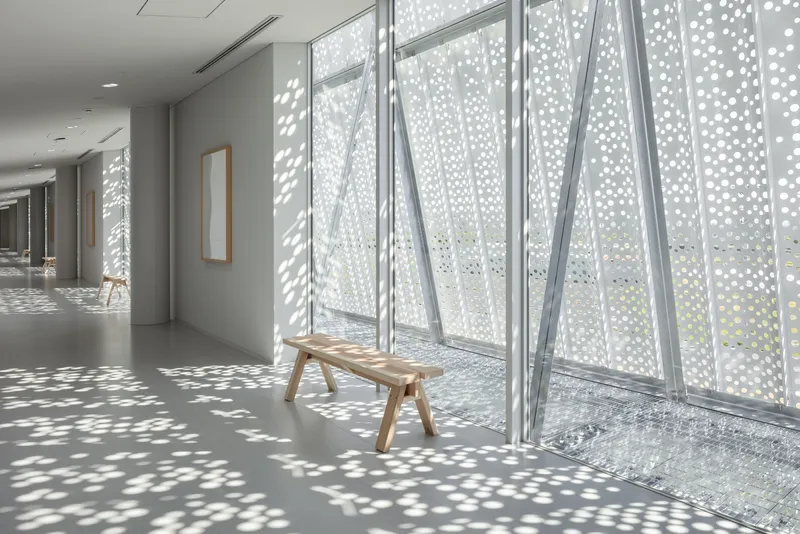
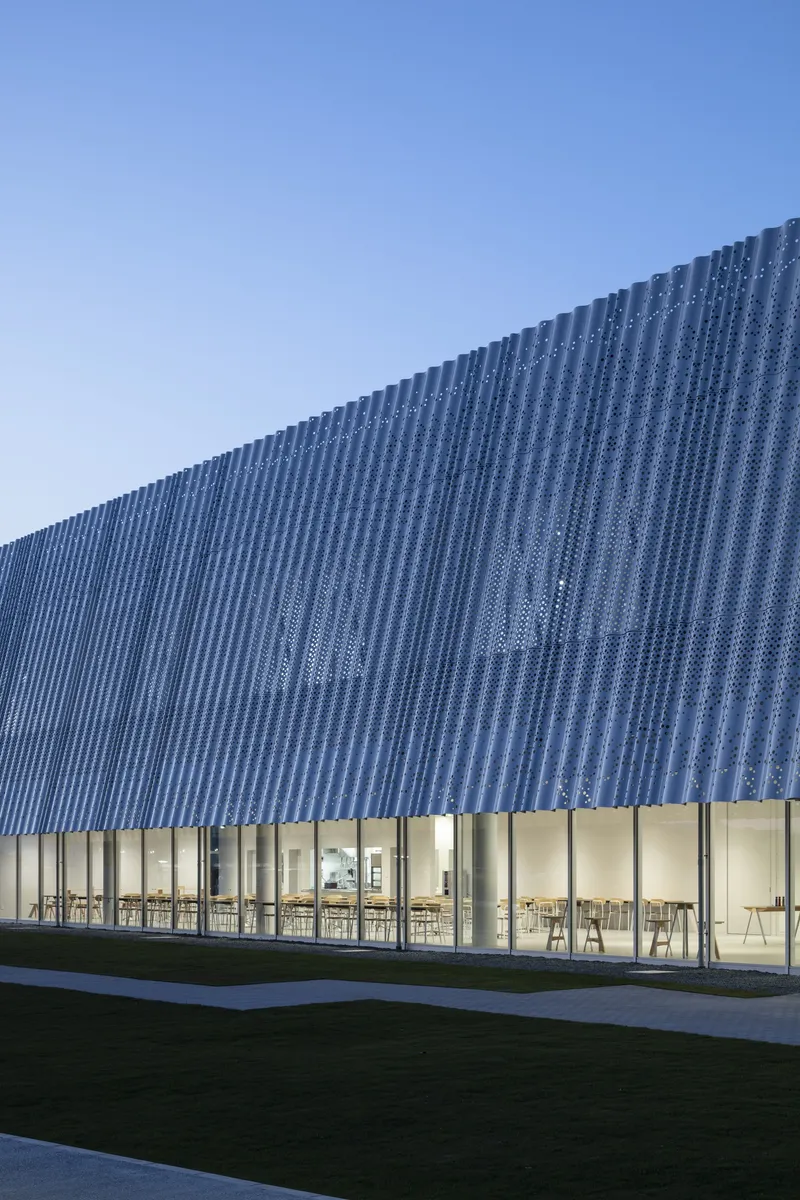
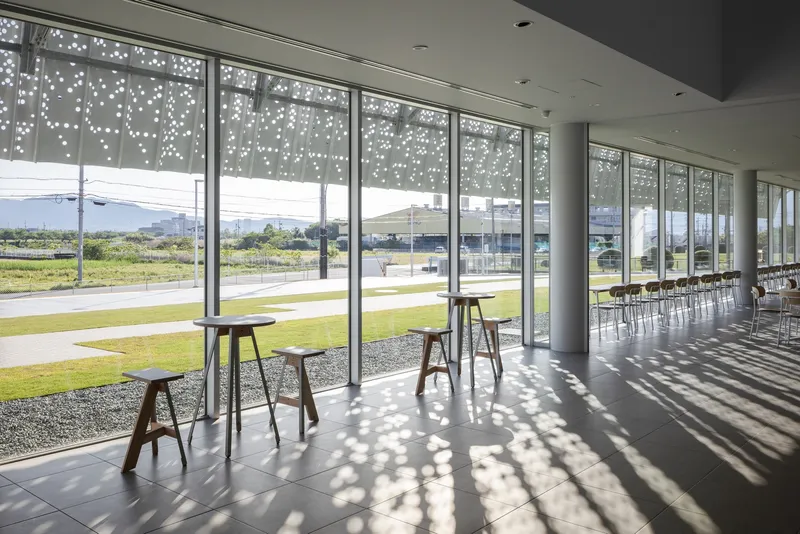
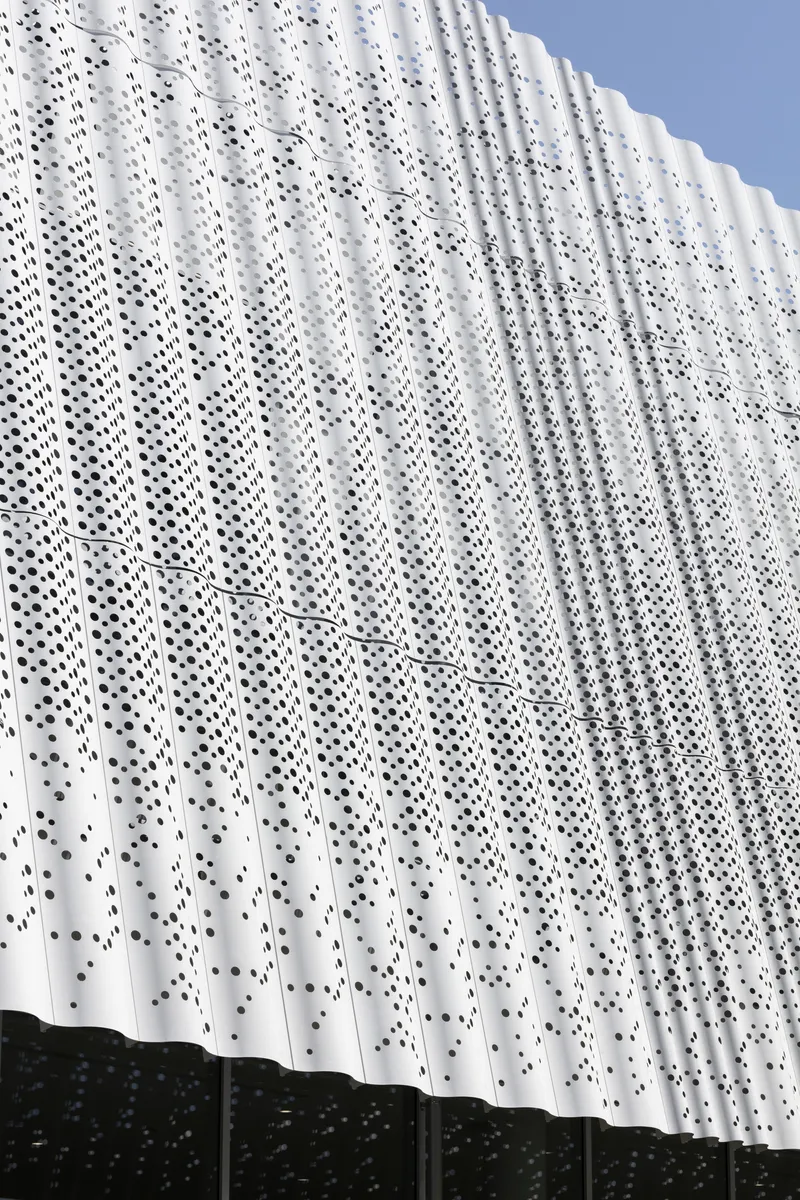
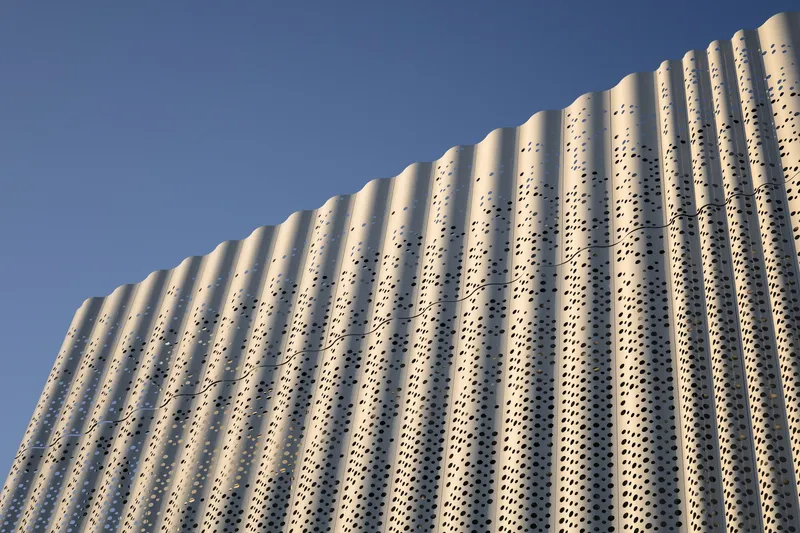
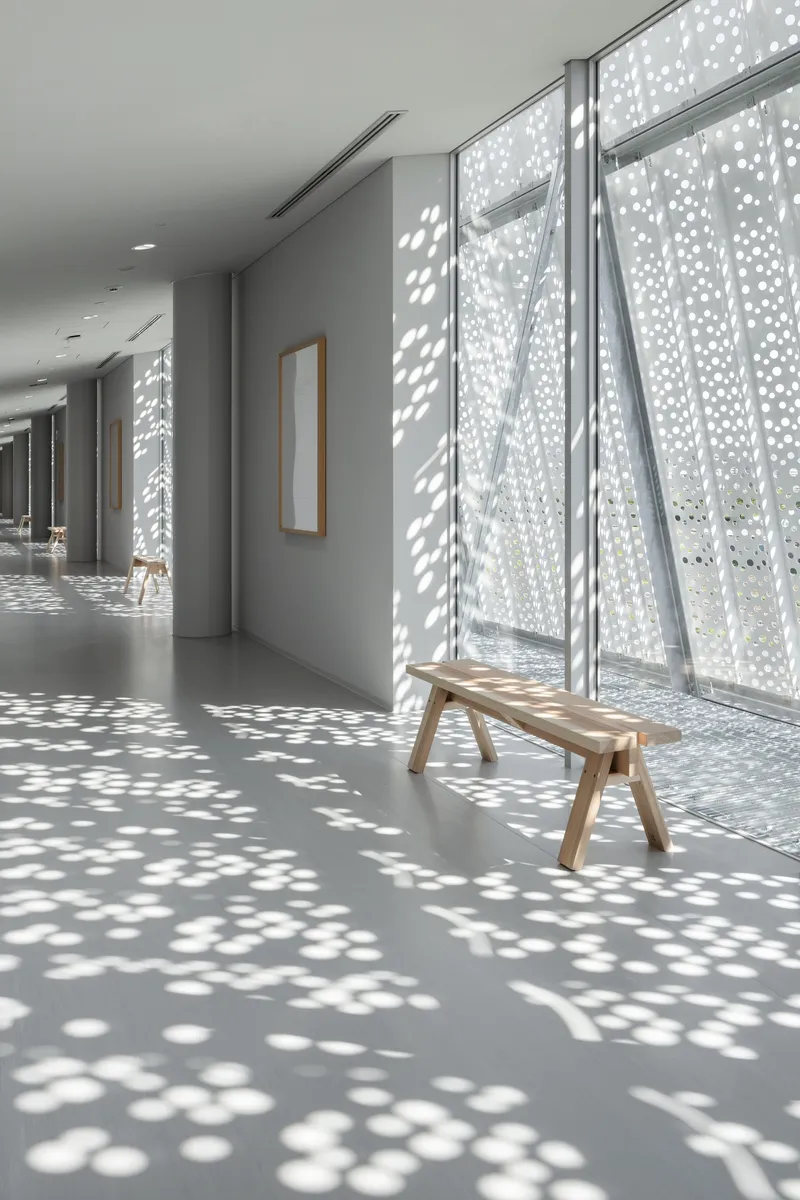
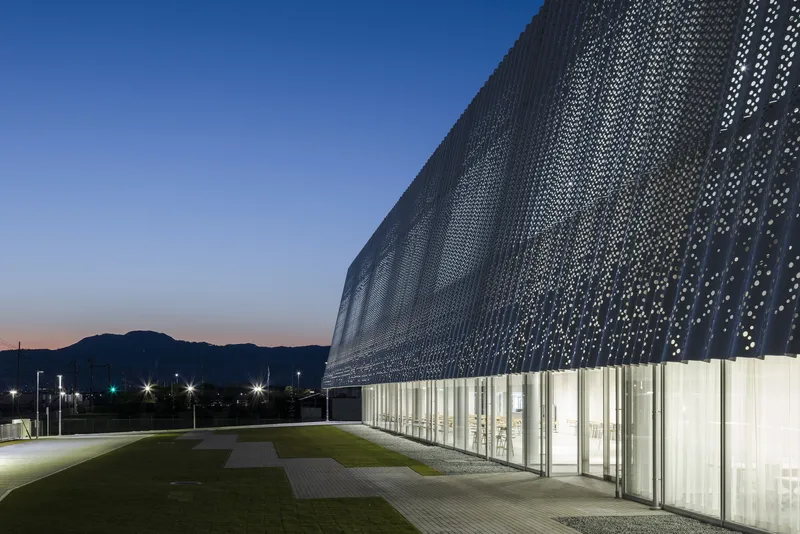
A defining feature of the factory is the YOSHIZU SKIN, an environmental façade element inspired by traditional reed screens (yoshizu) used for centuries in the Lake Biwa region. This permeable, flexible screen allows air to pass through while shielding interiors from intense sunlight, creating a soft, sun-dappled intermediate zone between inside and outside.
Positioned at an angle as if gently leaning against the building, the YOSHIZU SKIN evokes the movement of reeds and the shimmering surface of water, reducing solar heat gain and lowering thermal loads naturally. This passive design strategy reinforces the project’s commitment to environmental harmony and climatic responsiveness.
Water sustainability is further enhanced through an on-site ecosystem that reuses treated wastewater for equipment washing, significantly reducing overall water consumption. Advanced wastewater treatment technologies prevent contamination, reduce discharge volumes, and improve energy efficiency, critical for sustainable industrial operations.
Additional strategies include:
- Introduction of energy-efficient equipment
- Use of locally sourced materials, such as Shigaraki tiles
- Preservation of existing trees on site
Through these integrated efforts, the project achieved CASBEE Rank S certification, marking the first time this distinction has been awarded within the hair cosmetics industry.
Beauty × Wellness: A Factory Designed for People
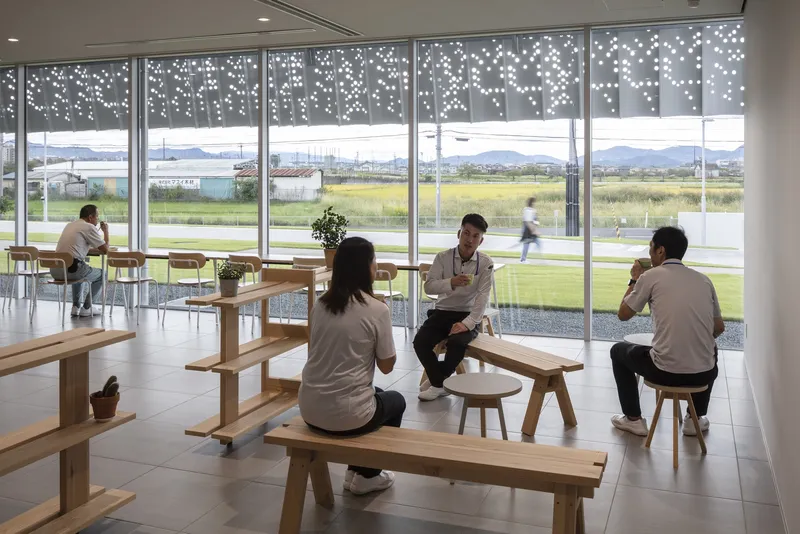
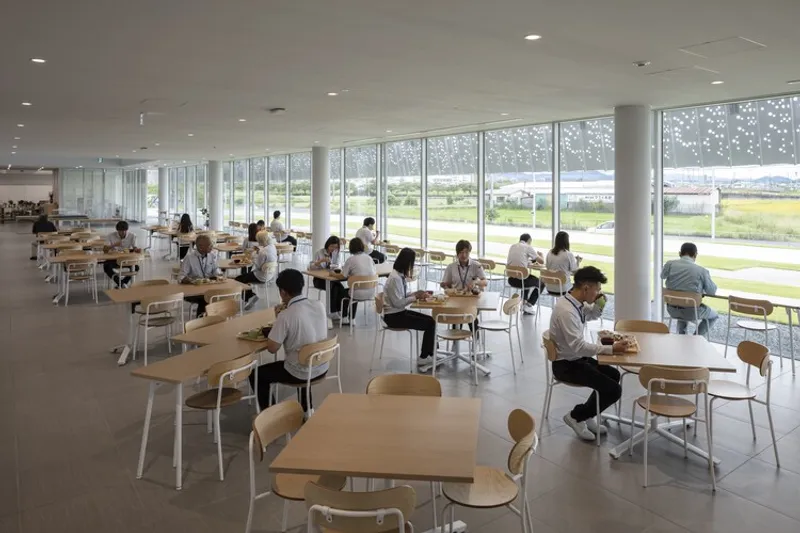
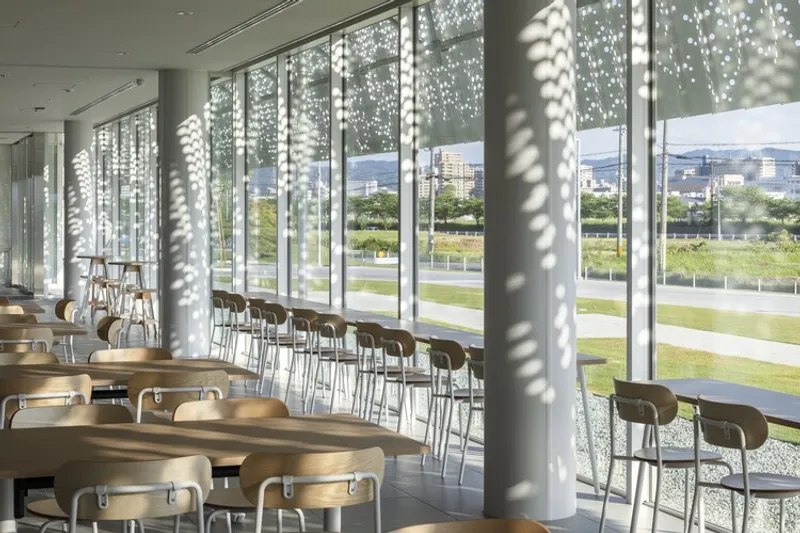
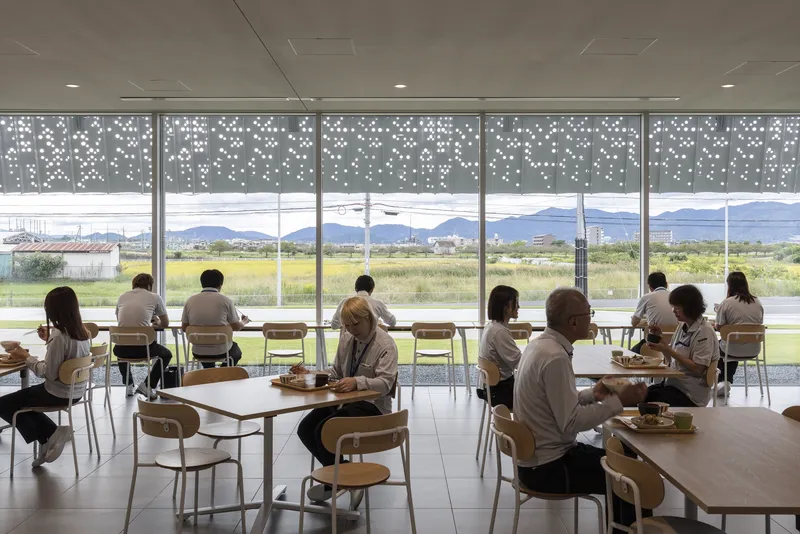
Beyond performance and sustainability, the Kusatsu Factory places strong emphasis on employee wellness and pride. The Reception Lounge, which welcomes visitors with product displays, is seamlessly connected to a refreshment dining area and cafeteria, forming a shared social heart for the building.
Interior spaces are carefully curated to support different moods and activities. Seating options range from sunlit counter seats overlooking the rural landscape to flexible benches that can be rearranged by users. This variety encourages relaxation, informal interaction, and mental refreshment throughout the workday.
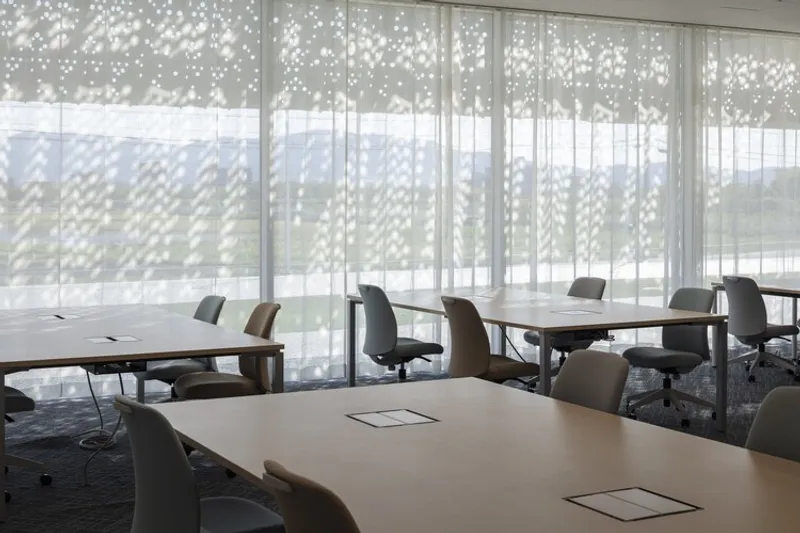
The workplace concept of Open Communication Working (OCW) underpins the office design, fostering interaction across generations and departments. By encouraging communication and collaboration, the architecture directly supports productivity and workplace satisfaction. In this environment, the smiles and well-being of employees are considered an essential expression of beauty.
A New Model for Sustainable Industrial Architecture
The Nakano Seiyaku Kusatsu Factory demonstrates how industrial facilities can transcend conventional factory design, becoming places that express corporate values, respect nature, and support human well-being. Through a synthesis of smart manufacturing systems, regional environmental design, and people-centered spaces, the project sets a compelling precedent for the future of sustainable factory architecture in Japan and beyond.
All the photographs are works of Norihito Yamauchi




Popular Articles
Popular articles from the community


Riyadh For All: Intergenerational Urban Design for Active Aging in Rabat
Riyadh For All reimagines urban design in Rabat with intergenerational co-living, adaptive courtyards, and Moroccan cultural exchange today.

The Ocean Hive: Sustainable Architecture for a Self-Sufficient Civilization at Sea
The Ocean Hive imagines sustainable architecture at sea, where modular habitats, algae, wave power and ocean waste sustain a growing colony.

The Earth Pod: 3D Printed Homes for Resilient Refugee Communities
The Earth Pod reimagines refugee housing through 3D printed homes made from clay, combining resilience, self-sufficiency, and rapid shelter.

Conexión: Biophilic Design Reimagines High-Rise Living in Hong Kong
Conexión reimagines high-rise living in Hong Kong through biophilic design, green facades, shared spaces, daylight, water and nature within.


Similar Reads
You might also enjoy these articles


Hodi-Mandai Geram
Project Function: Preservation and revitalization of the Intangible heritage and socio-spatial identity of the Hodi by Housing, Cultural Memory Center, Sacred Grove, landscape, local tourism economy


Olio Towers: A Mid-Rise for Performers That Fuses Housing, Rehearsal, and Stage
Located blocks from Houston's Theater District, this modular tower stacks living units around a central performance atrium.

Oasis: Modular Green Housing Carved into Dhaka's Urban Fabric
A shortlisted Plugin Housing entry reclaims unauthorized settlements in Dhaka with stepped concrete volumes, green roofs, and ventilation-driven design.

Black Hole: A Floating Megastructure for the Post-Physical Era
Emiliano Mazzarotto envisions a spherical, self-scaling arena where e-sports, digital hotels, and holographic stadiums replace traditional public space.


Explore Industrial Building Competitions
Discover active competitions in this discipline



Challenge to reimagine the Iron Throne


Photograph architecture without architects


Illustrate the lost glory of Angkor Wat - Render Challenge


Design challenge to reuse E-waste
Comments (0)
Please login or sign up to add comments
No comments yet. Be the first to comment!