

Nueva School Science and Environmental Center by Leddy Maytum Stacy Architects
Net-zero educational building integrating labs, canopy walk, and restored oak landscape, teaching sustainability, environmental stewardship, and biophilic learning through architecture.


The Nueva School Science and Environmental Center by Leddy Maytum Stacy Architects is a landmark example of sustainable educational architecture, seamlessly integrating environmental stewardship, pedagogy, and landscape restoration within the coastal hills of Hillsborough, California. Designed as the final phase of the Nueva Hillside Learning Complex, the project reinforces the school’s long-standing mission to cultivate environmental citizenship, social awareness, and lifelong learning through architecture that actively teaches.
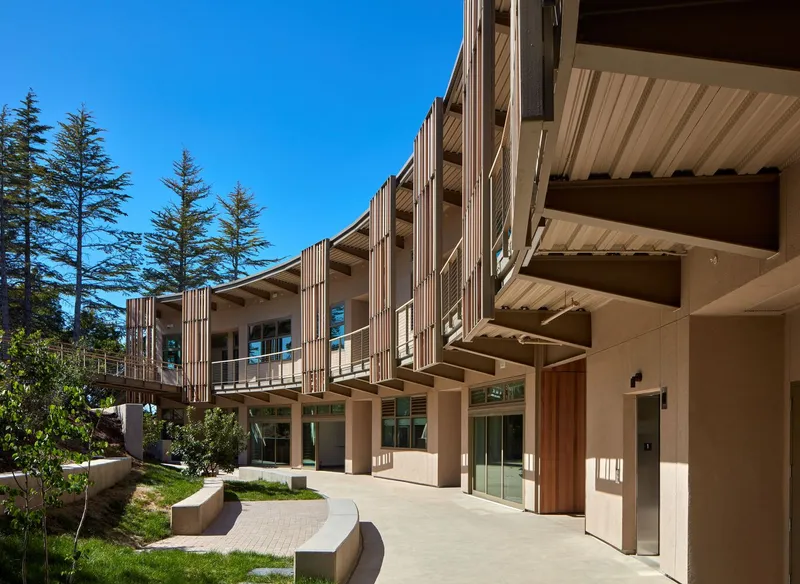
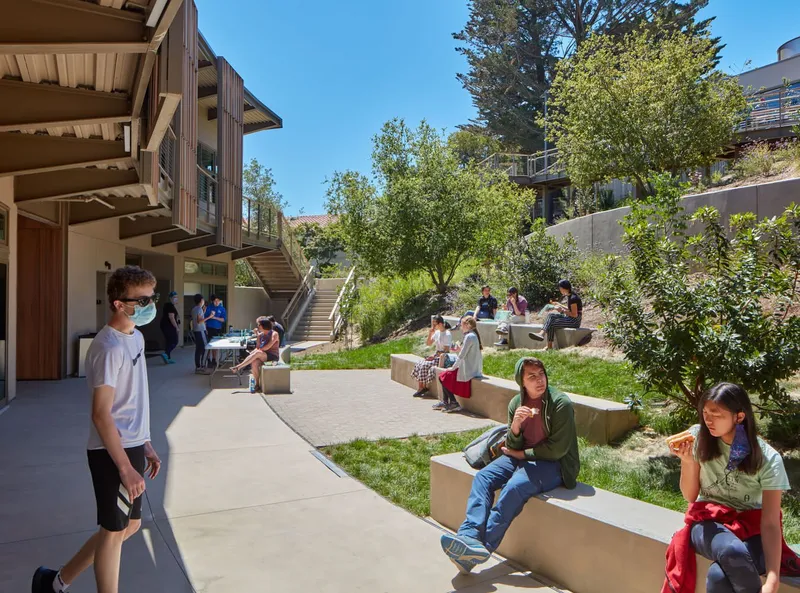
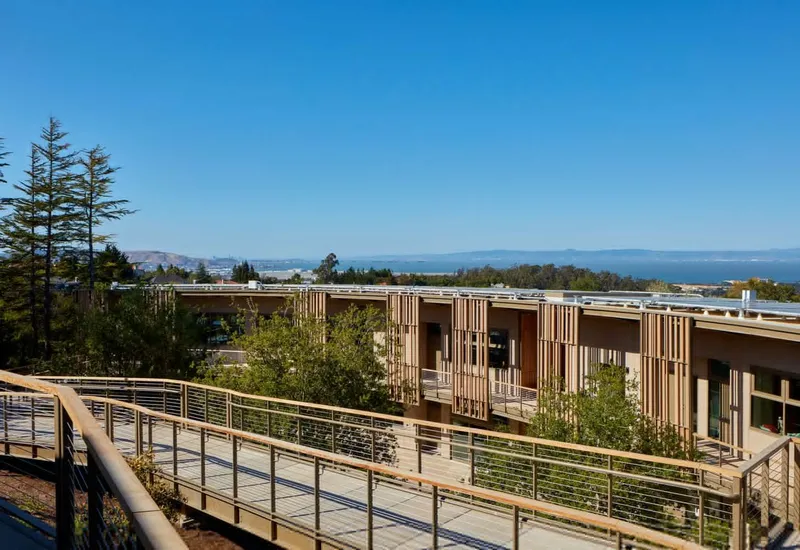
Founded in 1967, The Nueva School serves more than 500 students from pre-kindergarten through eighth grade on a 33-acre campus defined by native oak woodland, steep topography, and expansive views toward San Francisco Bay. The Science and Environmental Center occupies a previously disturbed site at the threshold between the built campus and protected open space, positioning the building as both a physical and symbolic gateway to environmental exploration.
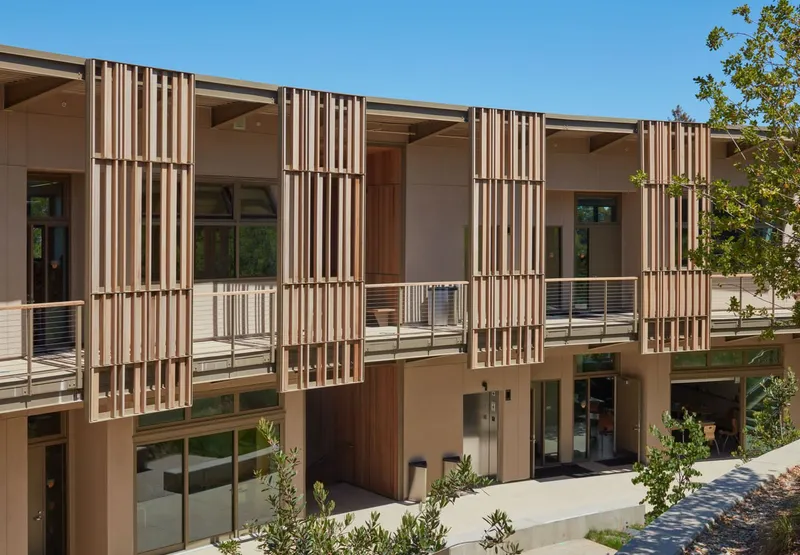
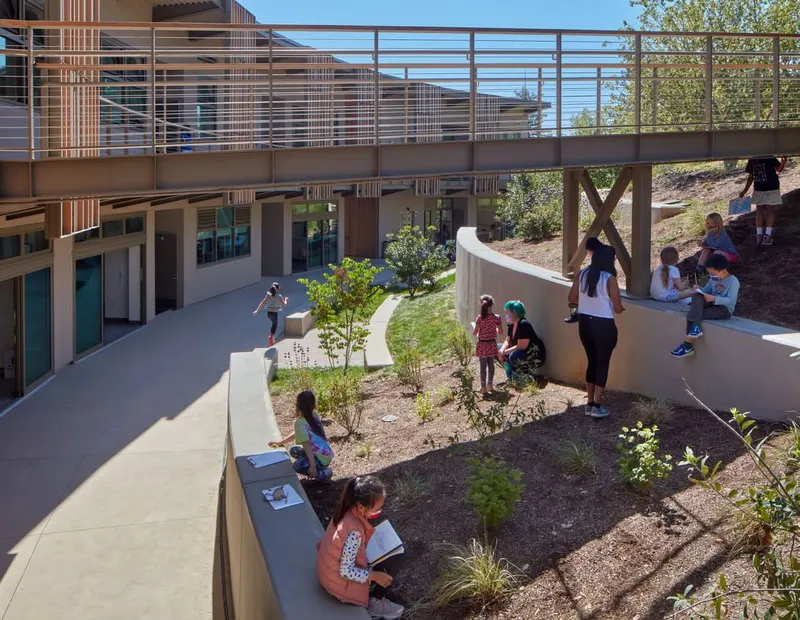
Conceived as an “ecology of learning,” the 11,600-square-foot, all-electric building houses eight flexible science classrooms and support spaces that bring together students across age groups to study the interconnected systems of the natural world. Indoor and outdoor learning environments are closely linked, transforming the building itself into a living laboratory where sustainability, climate awareness, and environmental responsibility are embedded into daily educational experiences.
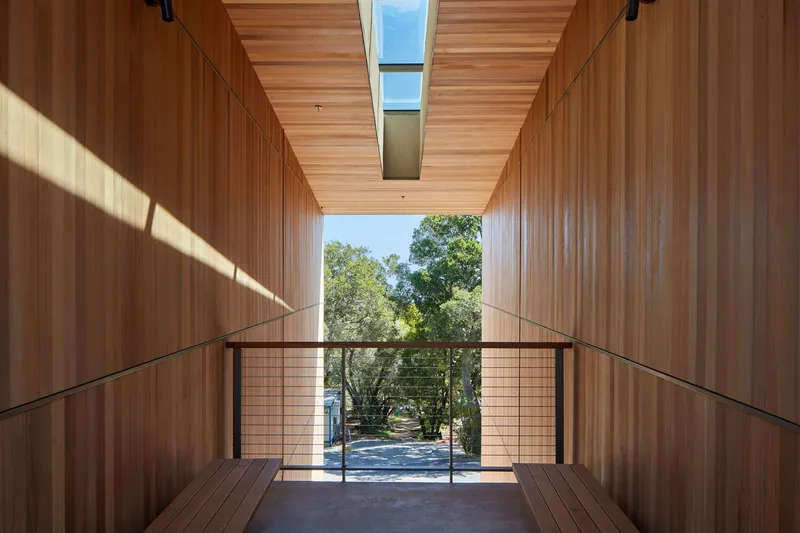
Architecturally, the Science and Environmental Center is designed to teach. Its narrow floor plate maximizes daylight, natural ventilation, and views, demonstrating how passive environmental strategies can significantly reduce energy demand. The building is designed to achieve net-zero operational energy and carbon, producing on-site all the energy it consumes annually through a 70-kilowatt rooftop photovoltaic array. Combined with a high-performance building envelope and efficient all-electric systems, the project achieves an exceptionally low Energy Use Intensity (EUI) of 23, representing a 71 percent reduction from baseline standards.
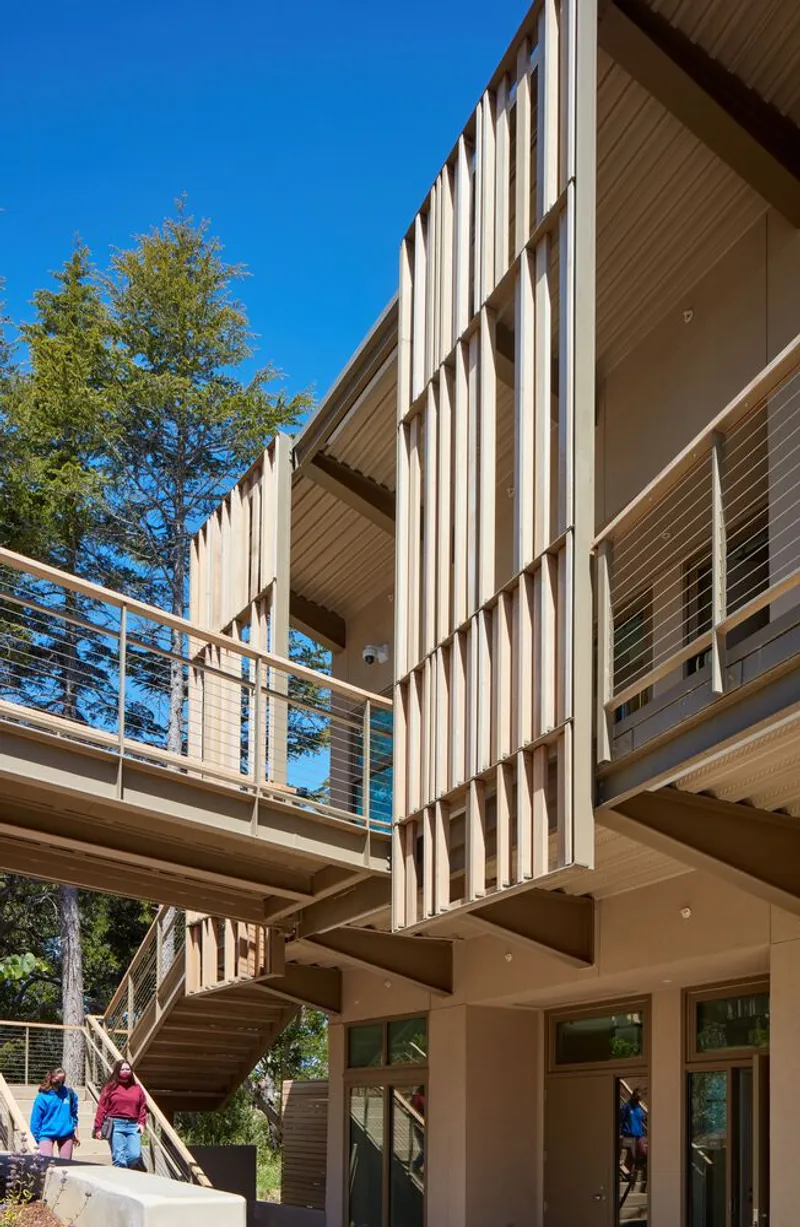
Water conservation is a defining feature of the project, responding directly to California’s increasingly severe drought conditions. Rainwater harvested from the roof is stored in a 10,000-gallon underground cistern and reused for toilet flushing, contributing to an 89 percent reduction in potable water use compared to baseline buildings. Native, drought-tolerant landscaping and drip irrigation further reduce water consumption while restoring habitat and supporting biodiversity across the site.
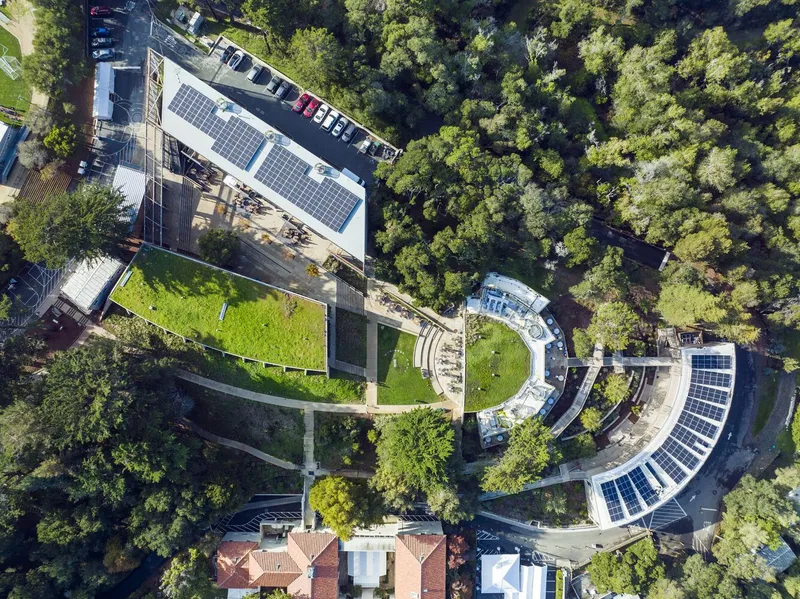
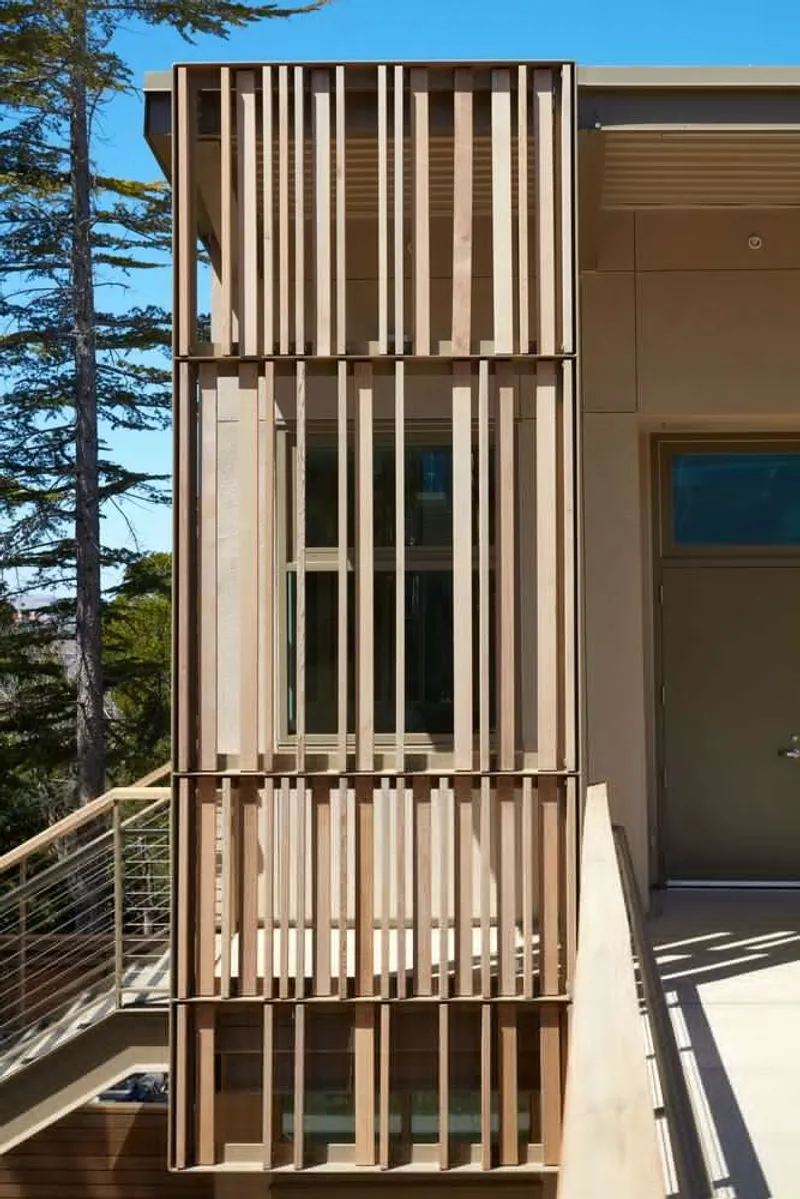
One of the project’s most distinctive elements is the Canopy Walk, a universally accessible elevated pathway that connects the existing Student Center to the new Science and Environmental Center. Hovering lightly above the forest floor, the Canopy Walk allows all students, regardless of physical ability, to experience the seasonal rhythms of the restored oak woodland. This immersive journey through the landscape reinforces biophilic connections and frames nature as an essential component of learning rather than a backdrop.
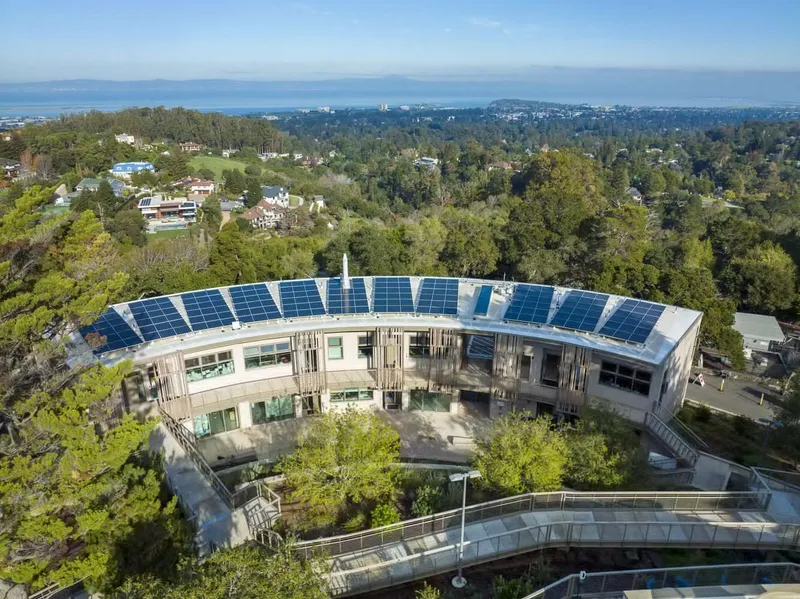
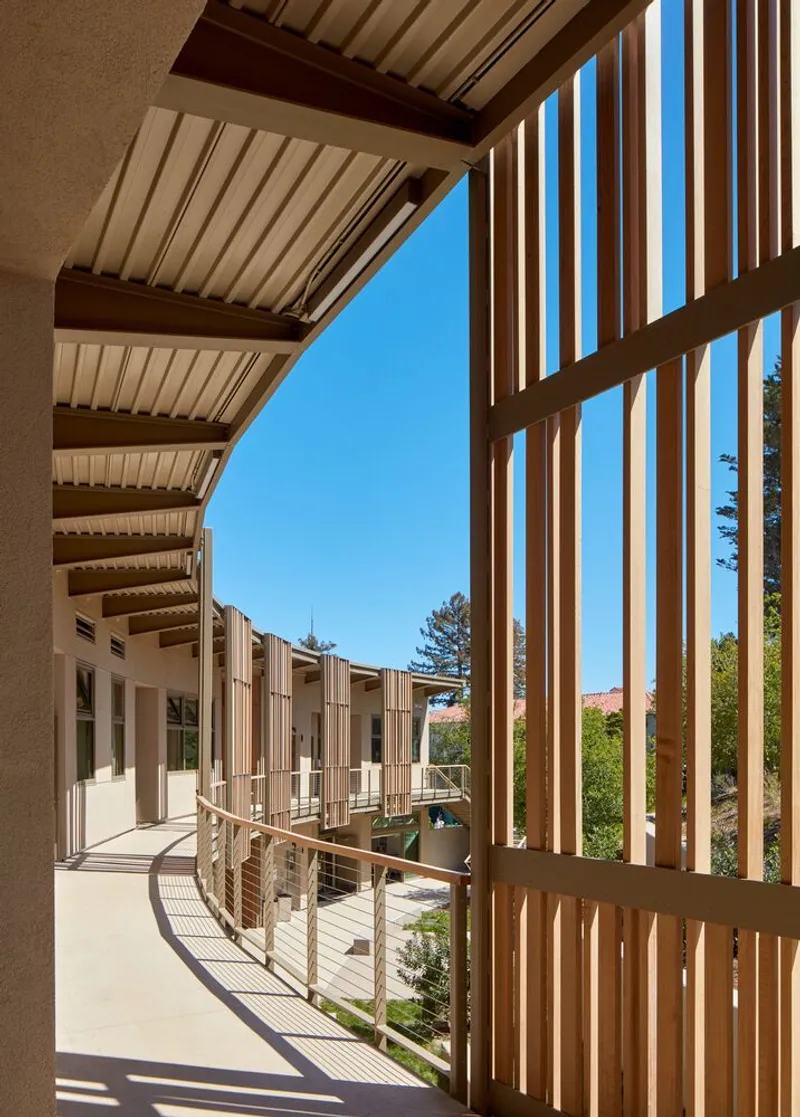
The building’s form follows the natural contours of the hillside, minimizing excavation and preserving existing drainage patterns. Materials and colors are drawn from the surrounding landscape, strengthening the building’s visual and ecological integration with its context. Restored native habitat surrounding the project exceeds 400 percent of the building footprint, underscoring the school’s commitment to regeneration rather than mere mitigation.
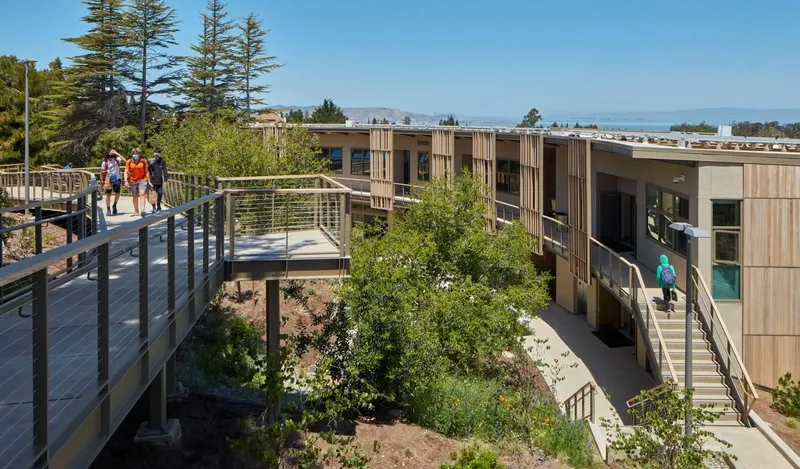
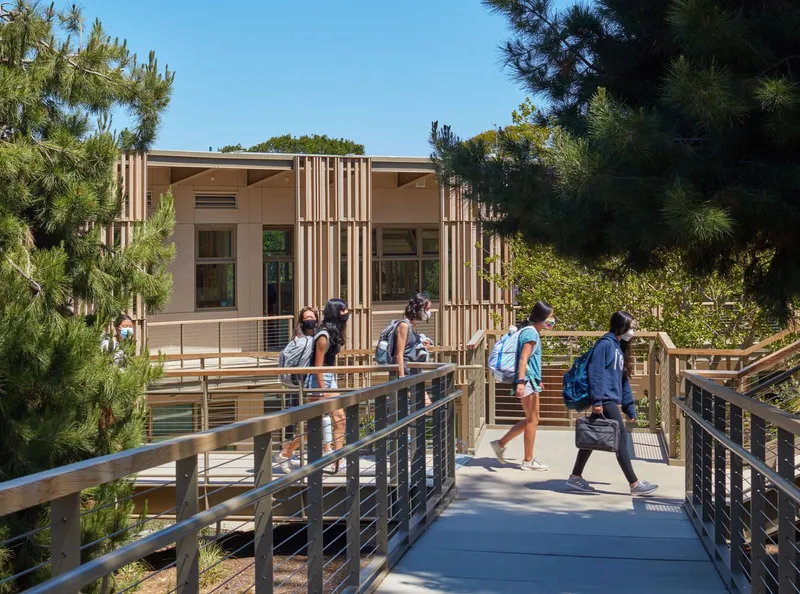
Equity and accessibility were central to the design process. As a private school with a public purpose, The Nueva School uses the Science and Environmental Center as a regional educational model, hosting conferences, summer programs, and community events focused on sustainable education and ecological design thinking. Extensive stakeholder engagement, including students, faculty, parents, alumni, neighbors, and local authorities, ensured that the project addressed both educational goals and community values. The result was a unanimously approved project that enhances access to open space while preserving sensitive ecosystems.
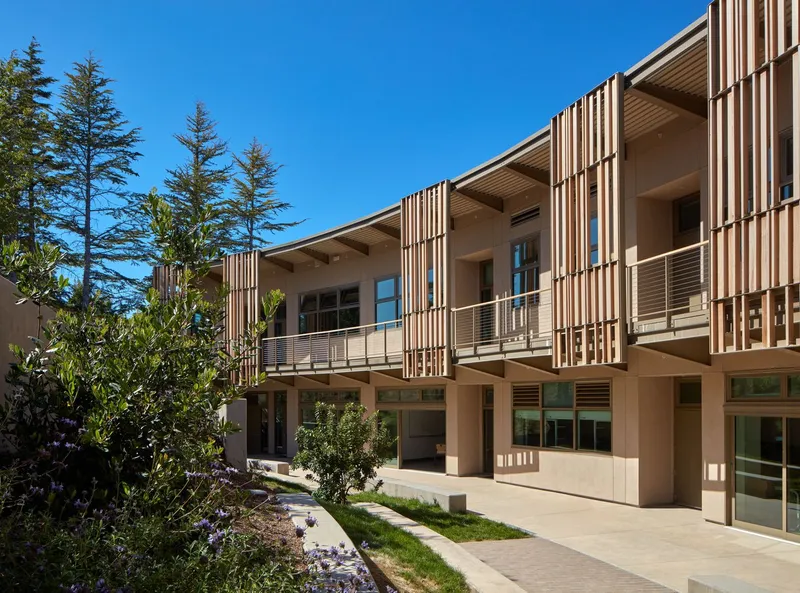
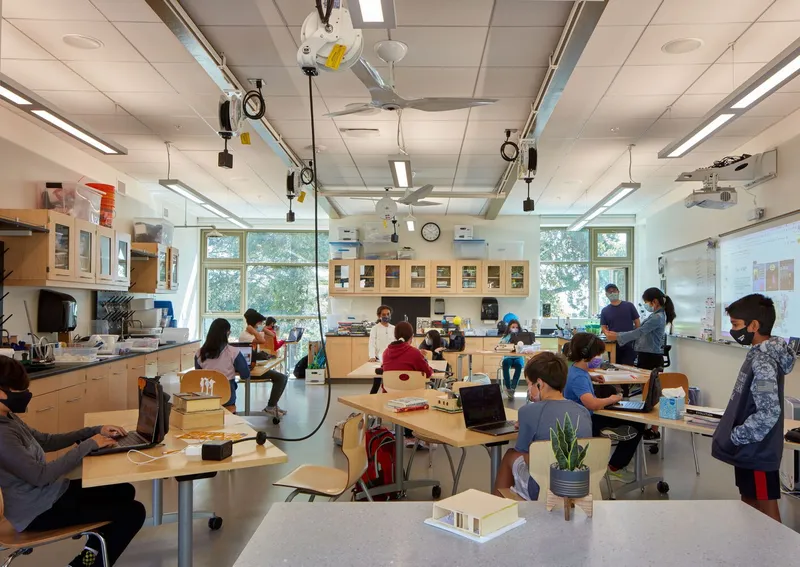
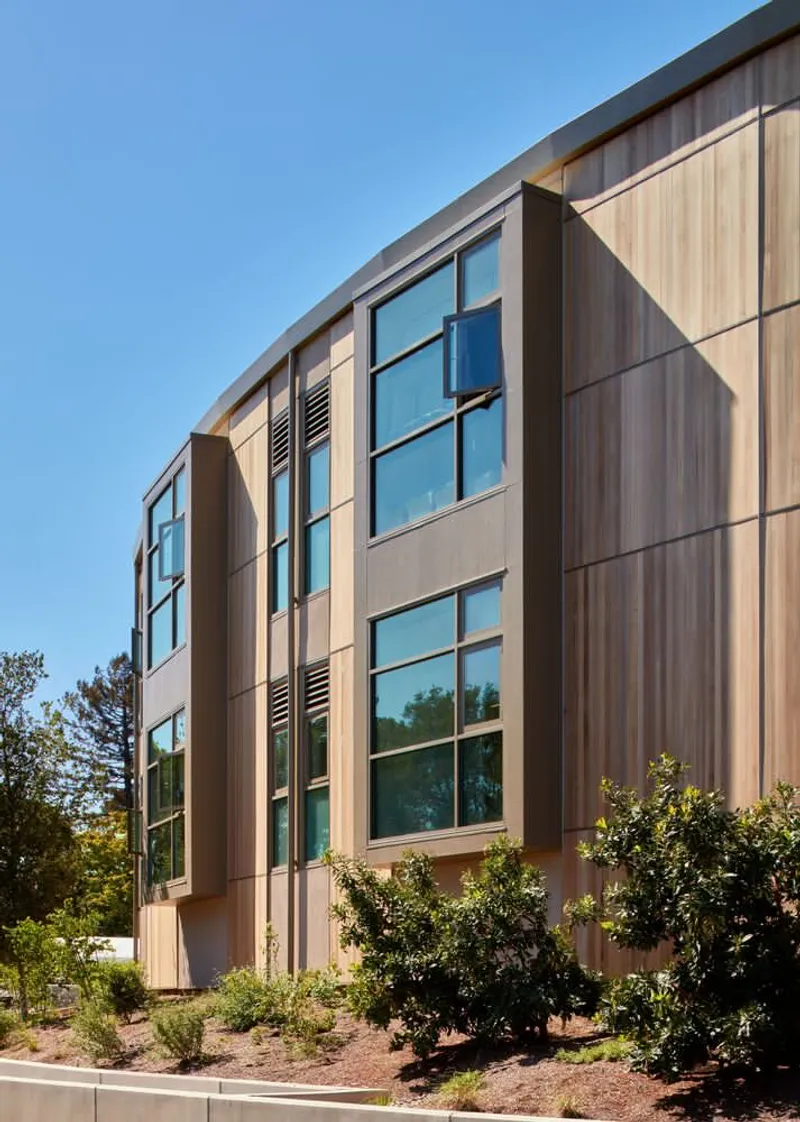
Interior environments prioritize health, comfort, and adaptability. All regularly occupied spaces have access to operable windows, daylight, and views to nature. Low-VOC materials, FSC-certified wood, and 100 percent fresh-air ventilation promote indoor air quality, while acoustic treatments support focused learning. The building’s open-air circulation and reliance on natural ventilation allowed it to adapt effectively to pandemic-era health requirements, reinforcing the resilience of its design strategies.
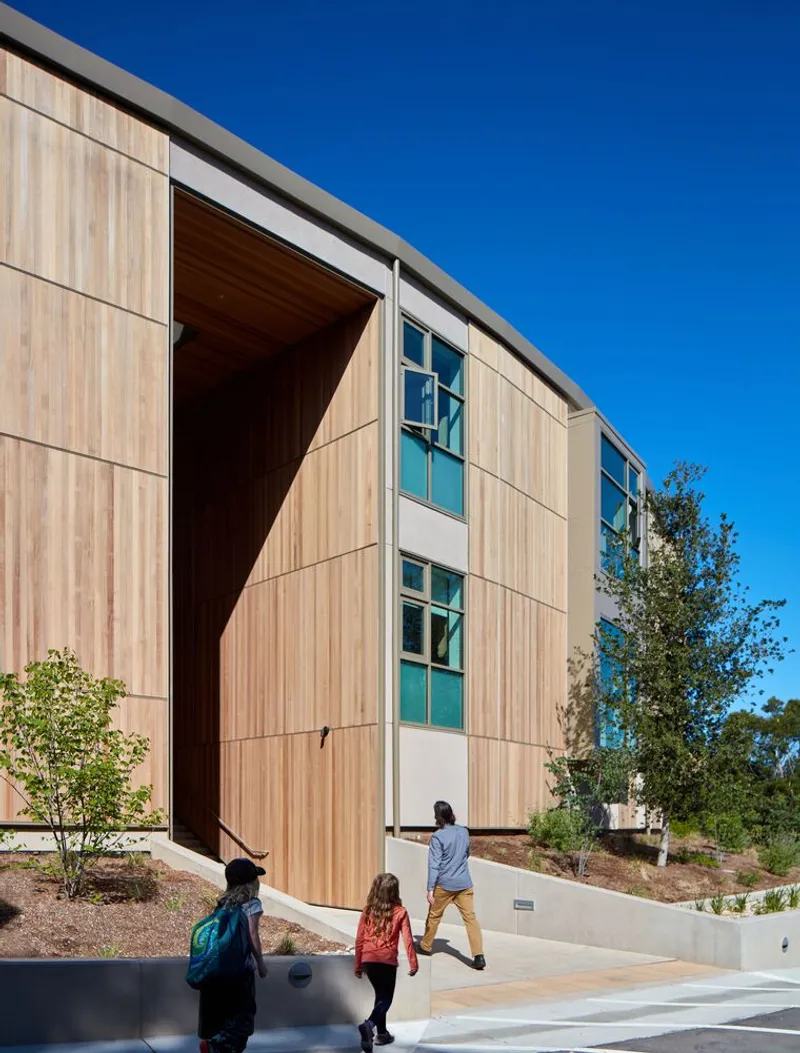
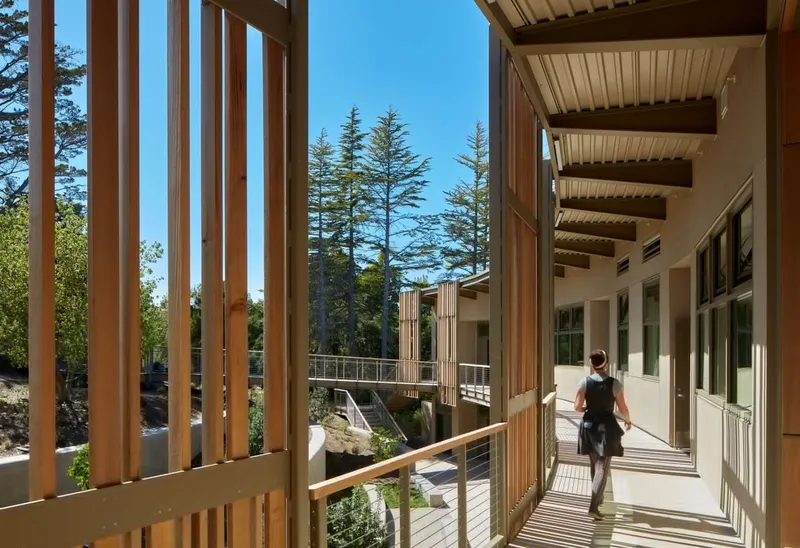
Designed for long-term change, the Science and Environmental Center offers flexibility to accommodate evolving curricula, future technologies, and even alternative uses over time. The building is resilient to climate-related challenges, incorporating wildfire-resistant construction, enhanced seismic performance, and systems that can adapt to rising temperatures and changing air quality conditions.
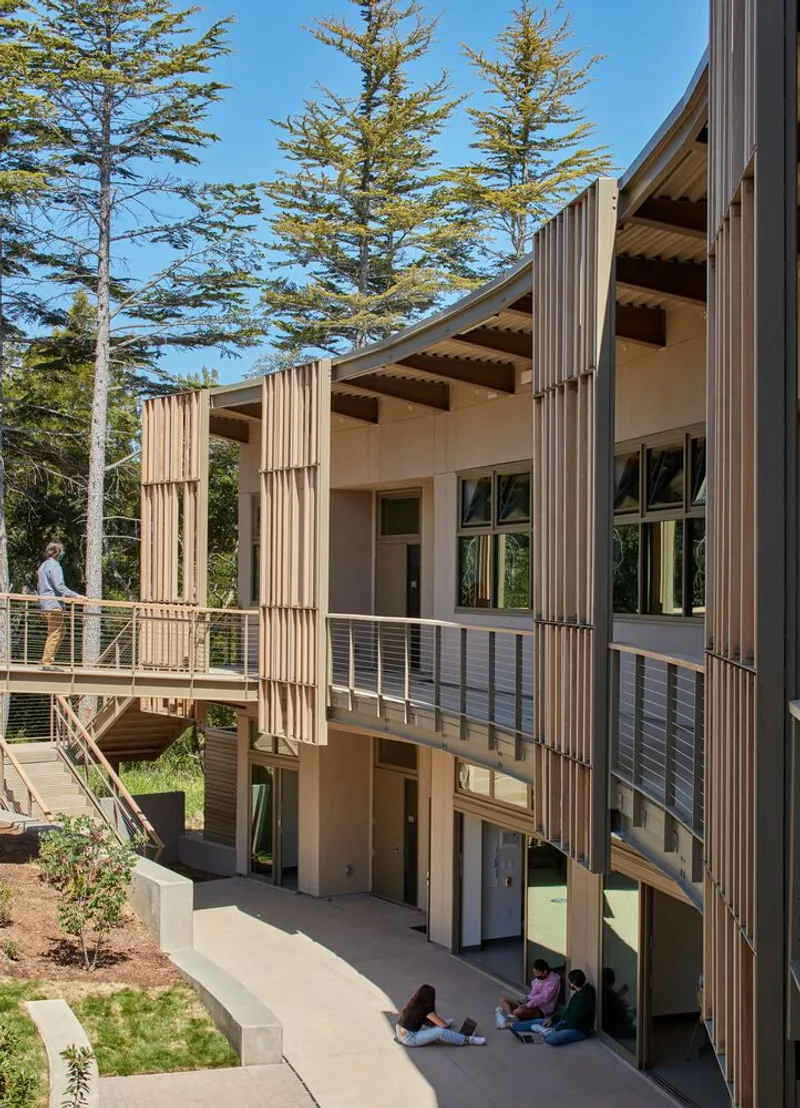
All photographs are works of Richard Barnes, Bruce Damonte




Popular Articles
Popular articles from the community


Conexión: Biophilic Design Reimagines High-Rise Living in Hong Kong
Conexión reimagines high-rise living in Hong Kong through biophilic design, green facades, shared spaces, daylight, water and nature within.

The Earth Pod: 3D Printed Homes for Resilient Refugee Communities
The Earth Pod reimagines refugee housing through 3D printed homes made from clay, combining resilience, self-sufficiency, and rapid shelter.

Co-life: Sustainable Architecture for Age-Friendly Community Living
Co-life reimagines sustainable architecture for seniors through courtyards, rammed earth, shared gardens, and spaces designed for belonging.

Play: Fragments of Their World
Familiar architecture becomes modular playground design, creating safe spaces where displaced children can learn, connect, imagine and play.


Similar Reads
You might also enjoy these articles


Hodi-Mandai Geram
Project Function: Preservation and revitalization of the Intangible heritage and socio-spatial identity of the Hodi by Housing, Cultural Memory Center, Sacred Grove, landscape, local tourism economy


Olio Towers: A Mid-Rise for Performers That Fuses Housing, Rehearsal, and Stage
Located blocks from Houston's Theater District, this modular tower stacks living units around a central performance atrium.

Oasis: Modular Green Housing Carved into Dhaka's Urban Fabric
A shortlisted Plugin Housing entry reclaims unauthorized settlements in Dhaka with stepped concrete volumes, green roofs, and ventilation-driven design.

Black Hole: A Floating Megastructure for the Post-Physical Era
Emiliano Mazzarotto envisions a spherical, self-scaling arena where e-sports, digital hotels, and holographic stadiums replace traditional public space.


Explore Educational Building Competitions
Discover active competitions in this discipline



Challenge to design public laboratory


Challenge to reimagine the Iron Throne


Photograph architecture without architects


Illustrate the lost glory of Angkor Wat - Render Challenge
Comments (0)
Please login or sign up to add comments
No comments yet. Be the first to comment!