

Open Chapel: A Roofless Sandstone Ring in Germany
Christoph Hesse Architects built an open-air sandstone chapel on a German hilltop: an oval ring of pier-walls with niches framing the landscape.


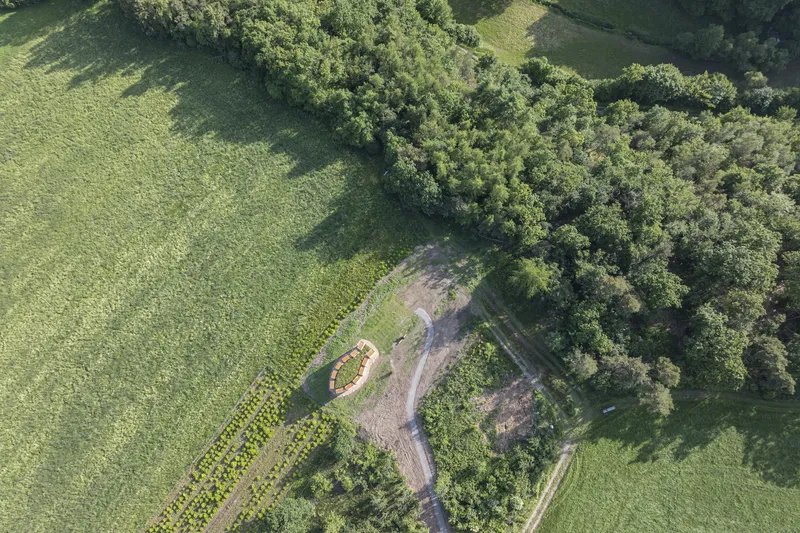
On a hilltop above a small German village, a ring of sandstone columns rises from a wildflower meadow. Open Chapel, designed by Christoph Hesse Architects, is an open-air chapel built from local sandstone, organised as an oval of pier-walls with deep niches that frame views to the surrounding landscape. The chapel has no roof in the conventional sense and no enclosed walls. It is a place to gather, to look out, and to mark the change of seasons against the sky.
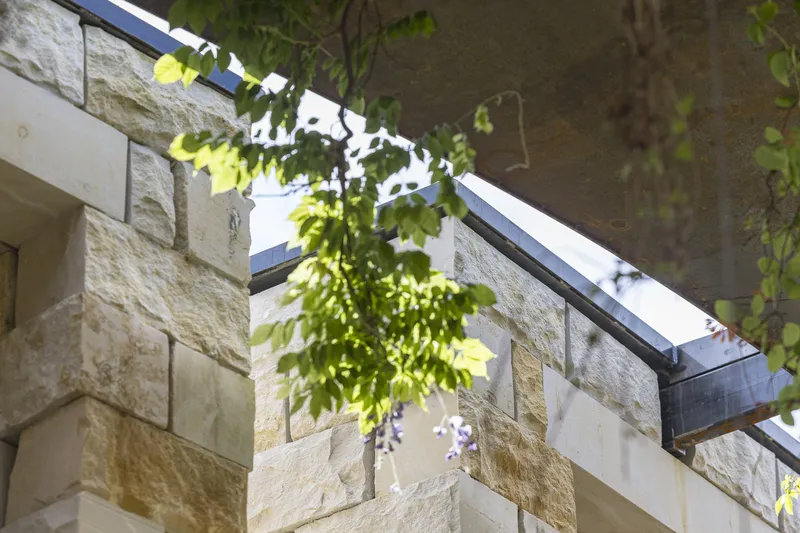
The project is community-driven. The chapel was built with the participation of local volunteers, masons, and craftsmen, using sandstone quarried from the region. The form is simple: an oval ring of stone columns, each with a niche cut into the inside face, connected by a thin steel ring beam at the top. From the village below, the chapel is visible as a small ring on the horizon. From the inside, it is a room open to sky, framed by stone.
The Site: Hilltop and Village
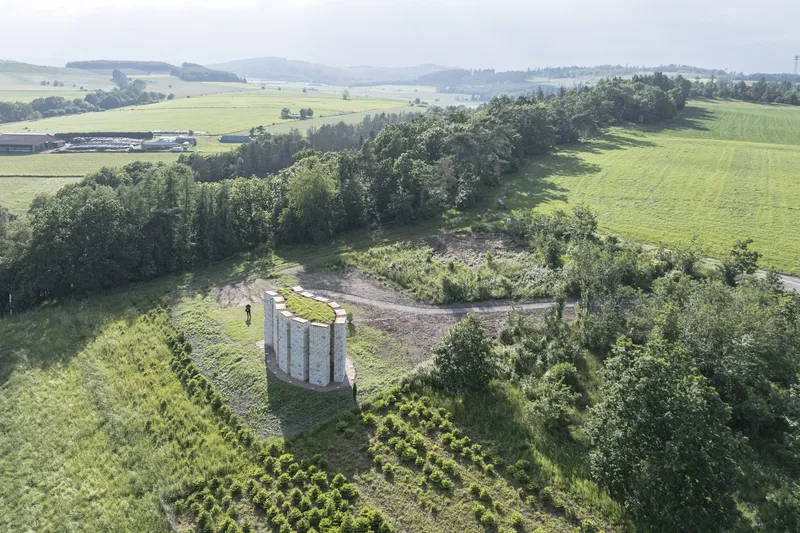
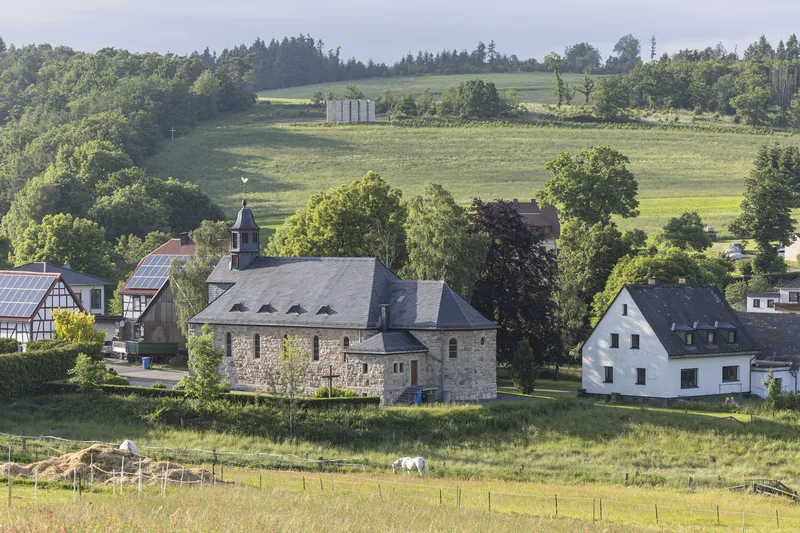
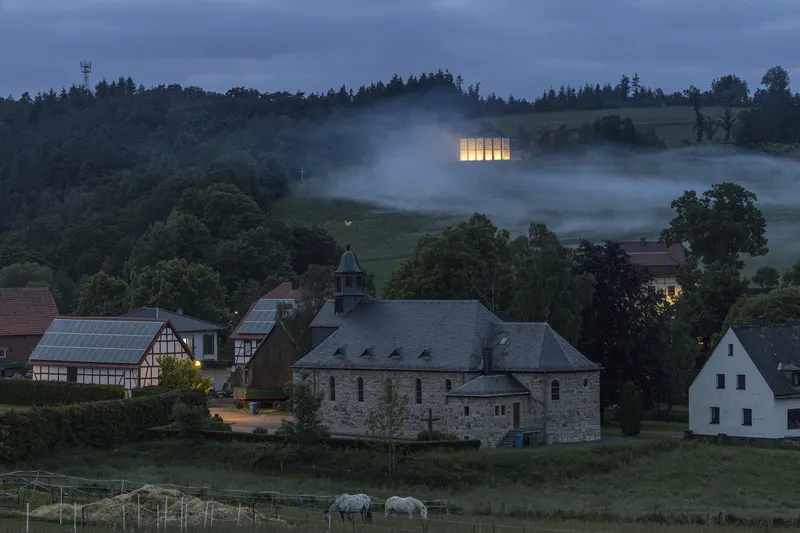
The chapel sits on a clearing at the edge of a forest, above the existing village church. The site was chosen for its visibility from the valley below and its panoramic view across the rolling farmland. From the village, the chapel reads as a small geometric form against the sky. From the chapel, the village, the existing church, and the surrounding farmland are visible through the niches between the stone columns.
The Sandstone Columns
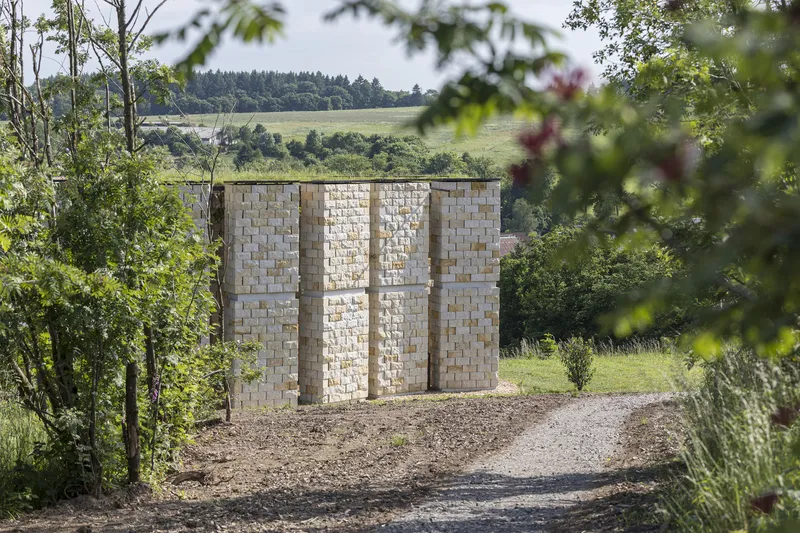
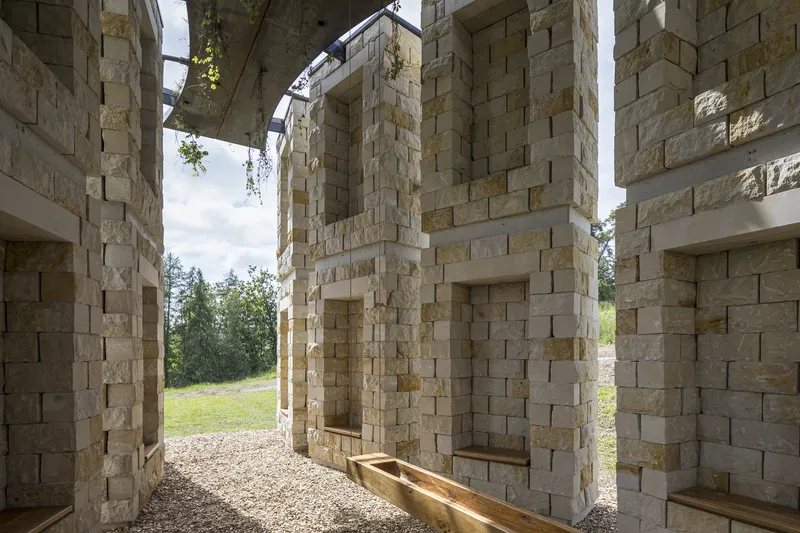
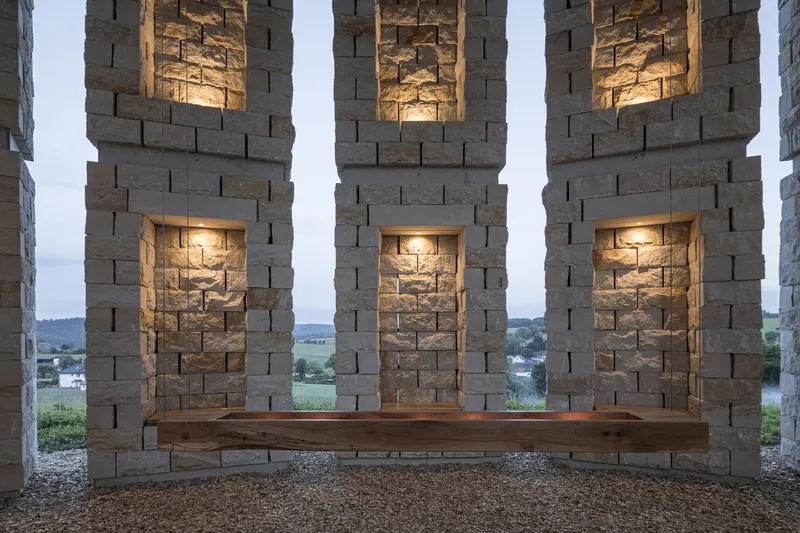
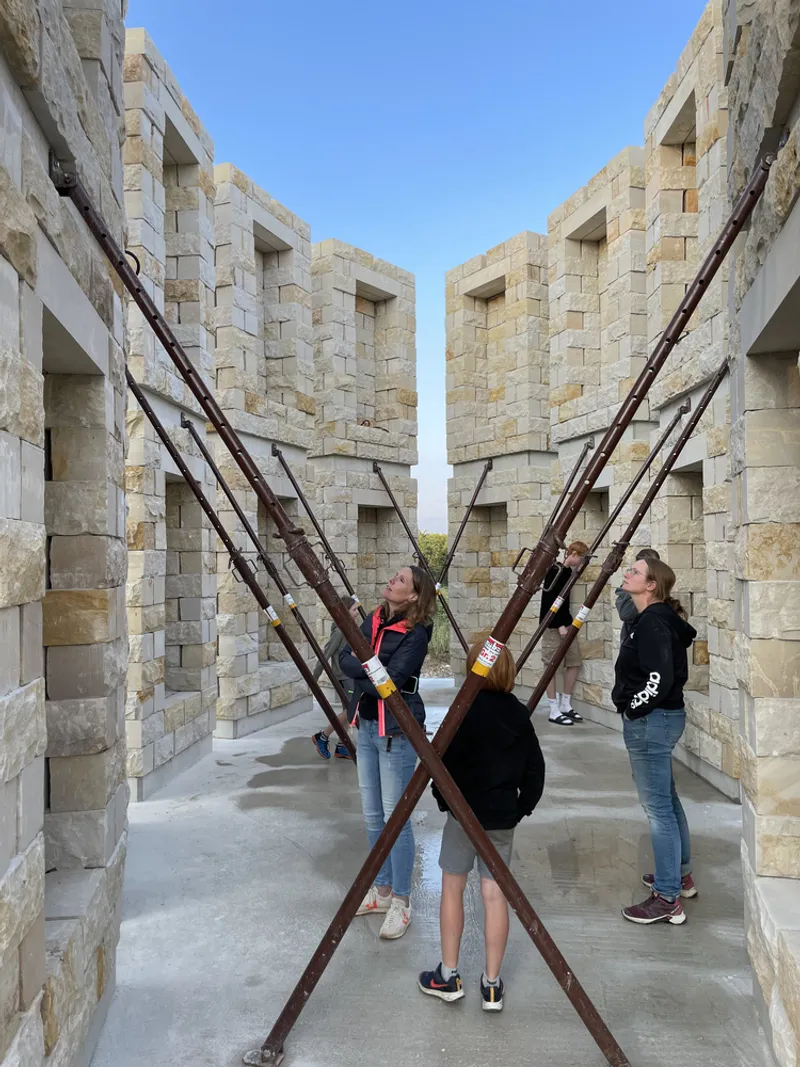
The chapel is built from local golden-cream sandstone, hand-cut and stacked in regular courses to form vertical pier-walls. Each pier has a deep niche carved into the inside face, framed by smooth-faced ashlar around the rough-faced rubble of the back wall. The contrast between rough and smooth, irregular and precise, is the project's material signature. From outside, the chapel reads as a stack of stone blocks. From inside, the niches frame views to the landscape and provide ledges for candles and offerings.
Inside the Chapel
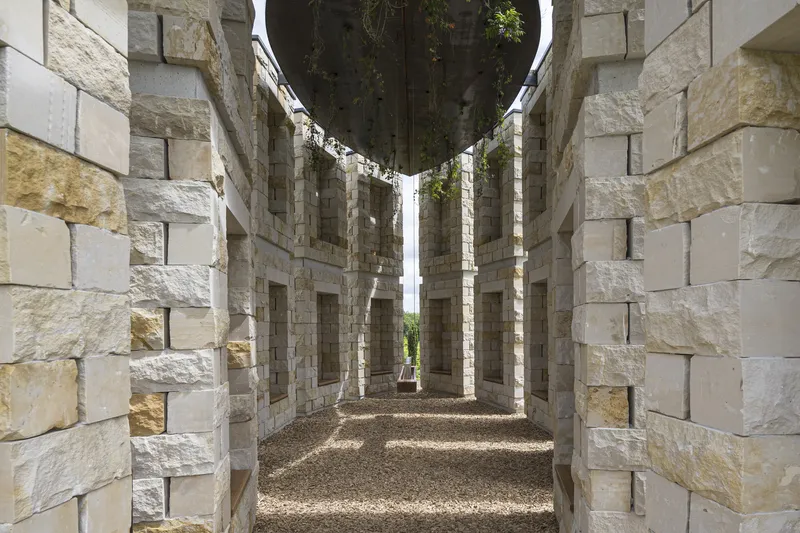

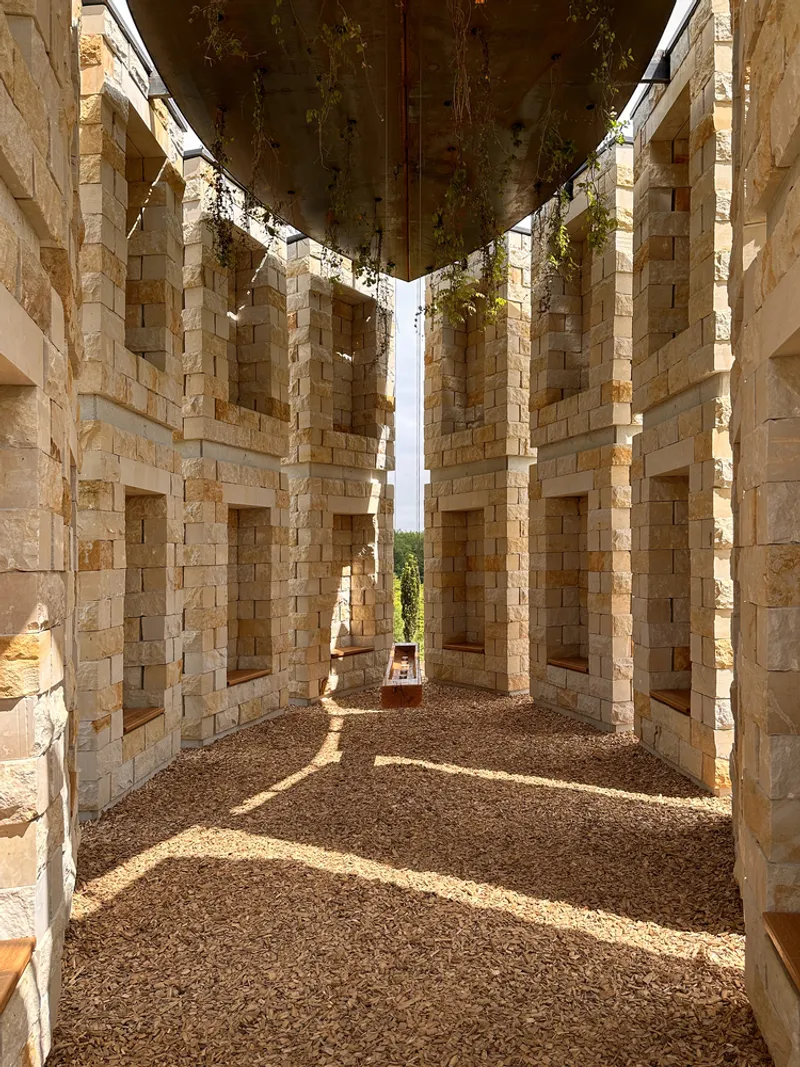
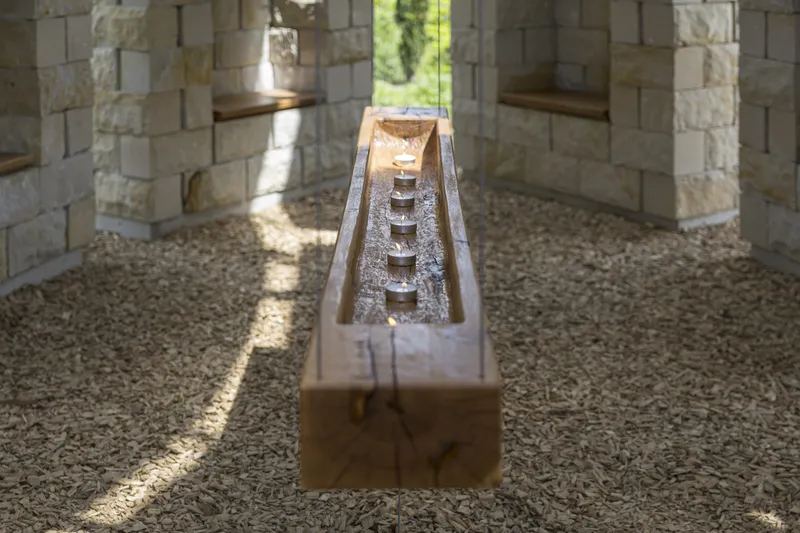
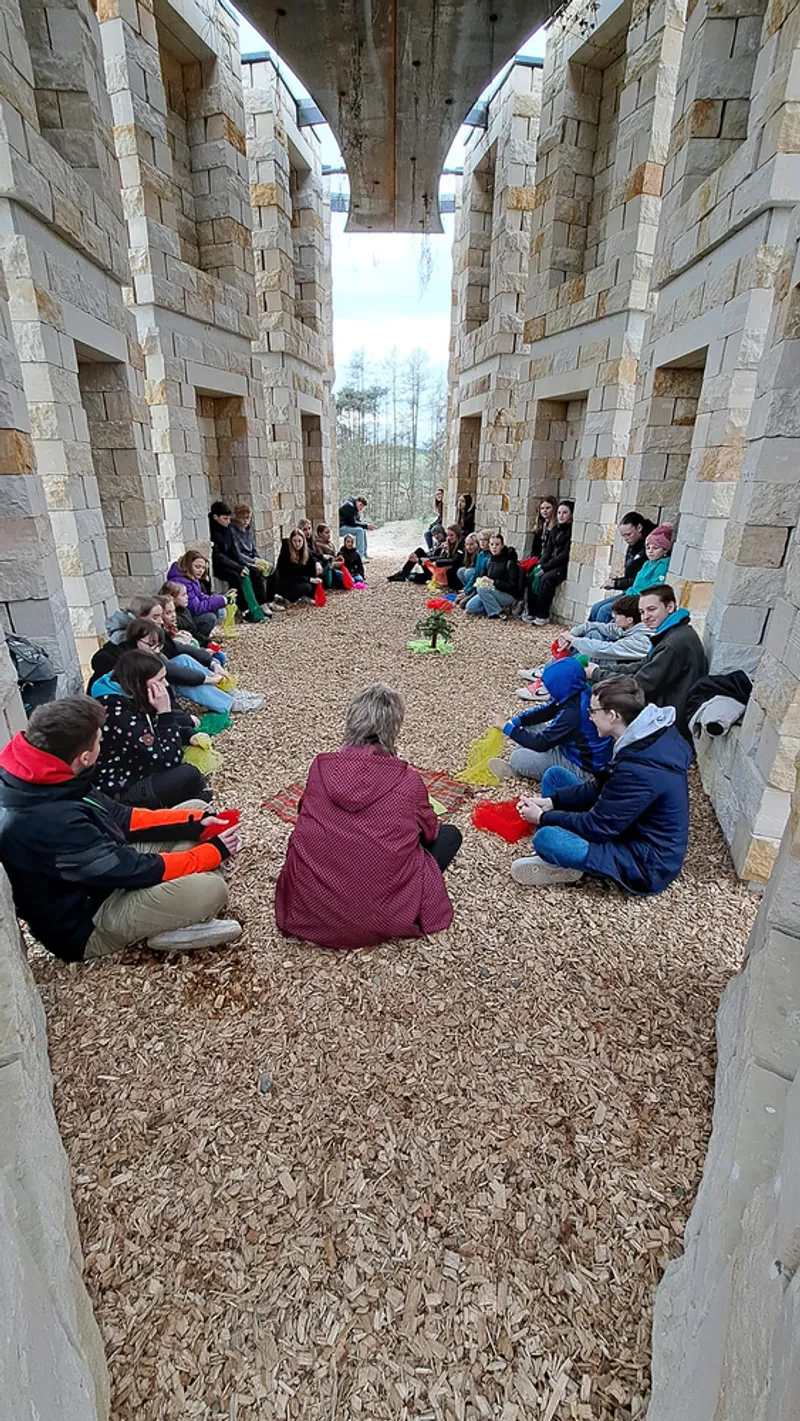
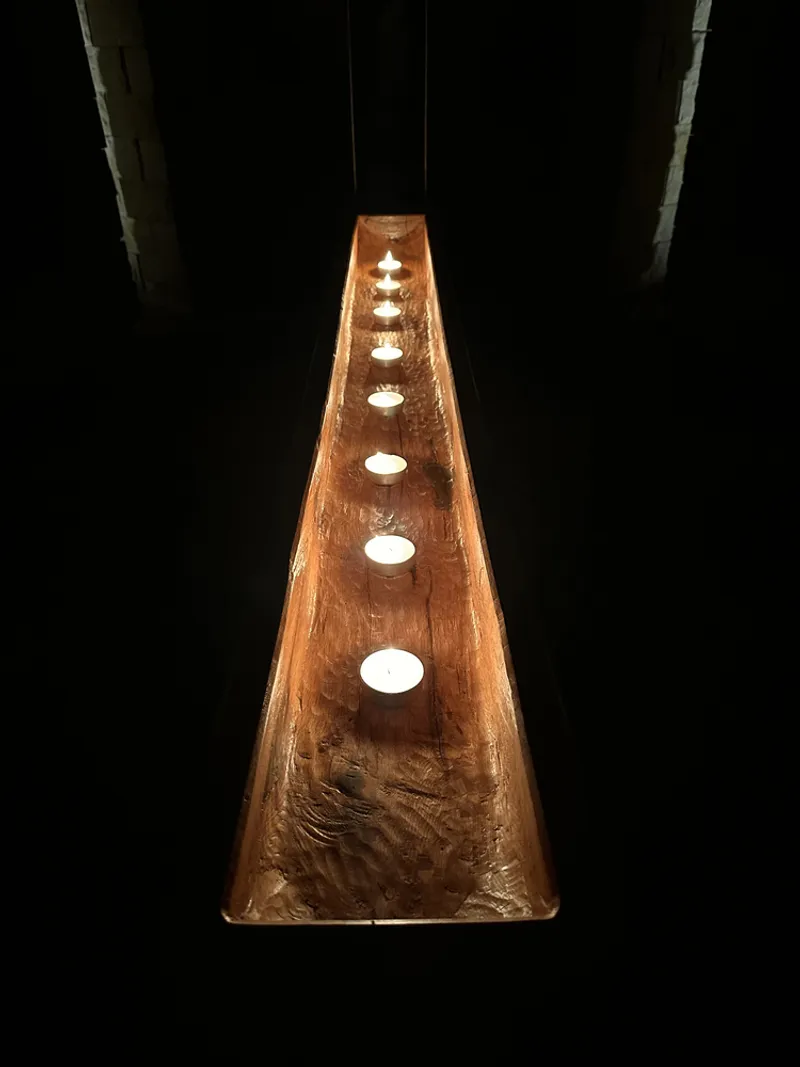
Inside, the space is an oval room open to the sky. Gravel covers the floor. A long timber trough running through the centre holds rows of votive tealight candles. The stone columns rise around you in two rows, with niches at varying heights. Looking up, the sky is framed by the steel ring beam connecting the tops of the columns. Looking out, the niches frame slices of forest, farmland, and village. The chapel is simultaneously enclosed and open, sheltered and exposed. The atmosphere depends on the weather, the time of day, and the season.
Light and Niches


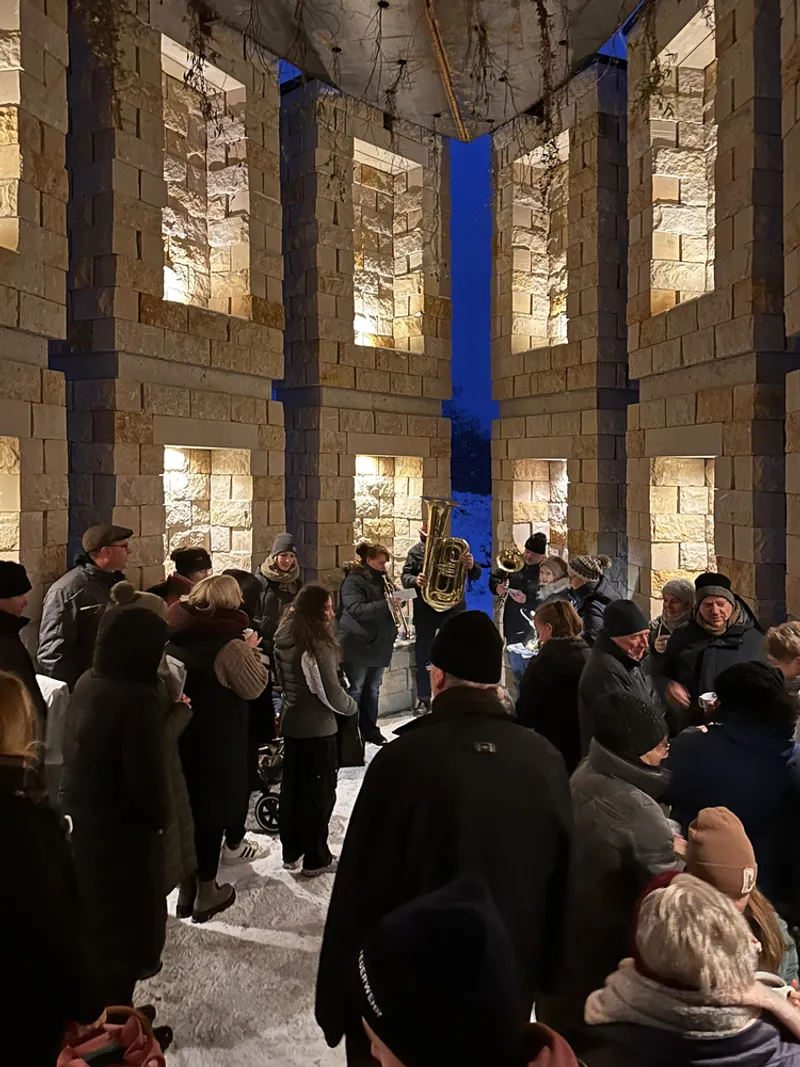
The niches are the project's most expressive interior detail. At dusk, they are lit from within by small concealed lamps, turning each pier into a glowing column. The warm light catches the rough sandstone and casts soft shadows across the gravel floor. The timber candle trough adds a flickering ground-level layer. The combination of architectural light (the niches) and ritual light (the candles) gives the chapel its intimate quality at night without the need for any roof or enclosure.
Night and Mist
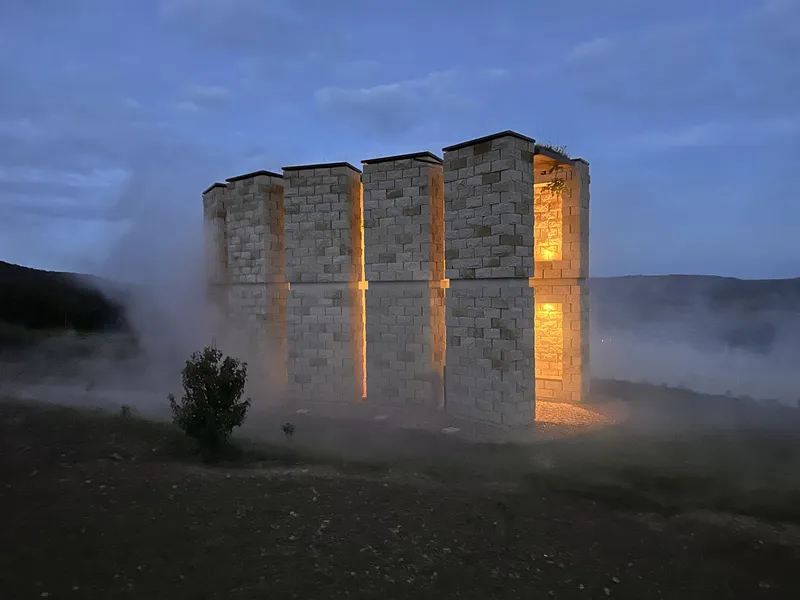
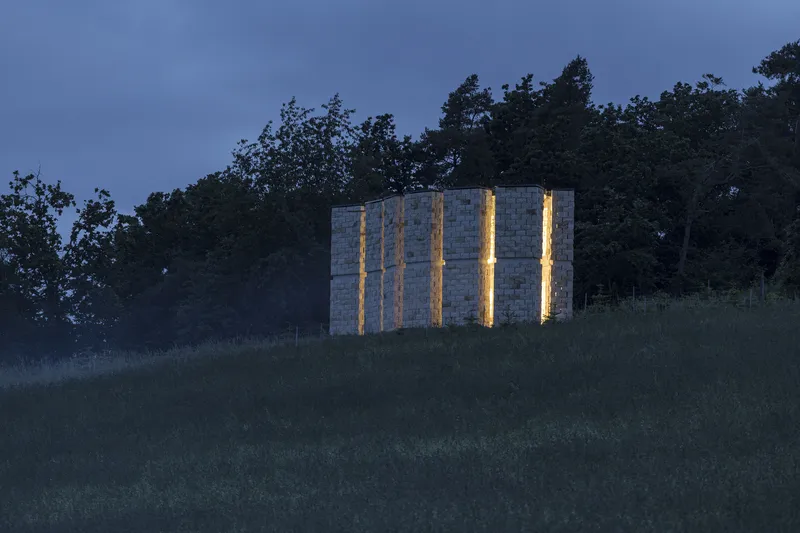
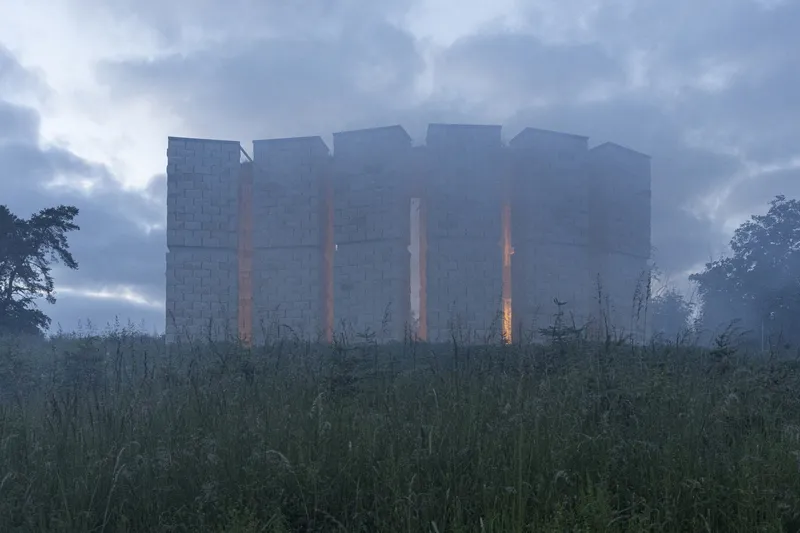

The night photographs are the project's most atmospheric. The chapel becomes a glowing stone lantern in the meadow, visible from the village below. In mist, the columns dissolve and the chapel becomes a shape made of light. Under a full moon, the columns are silhouetted against the stars. These conditions are not accidents. The chapel was designed to perform under all of them.
Use: Worship, Ceremony, and Gathering
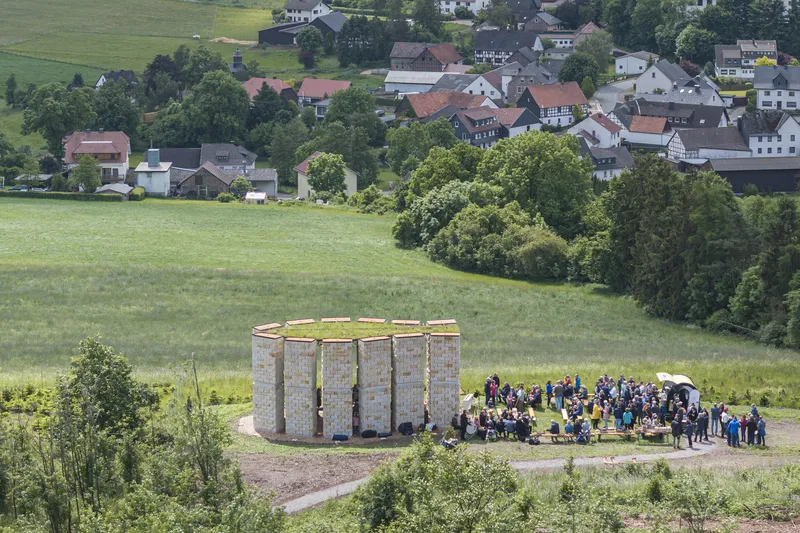
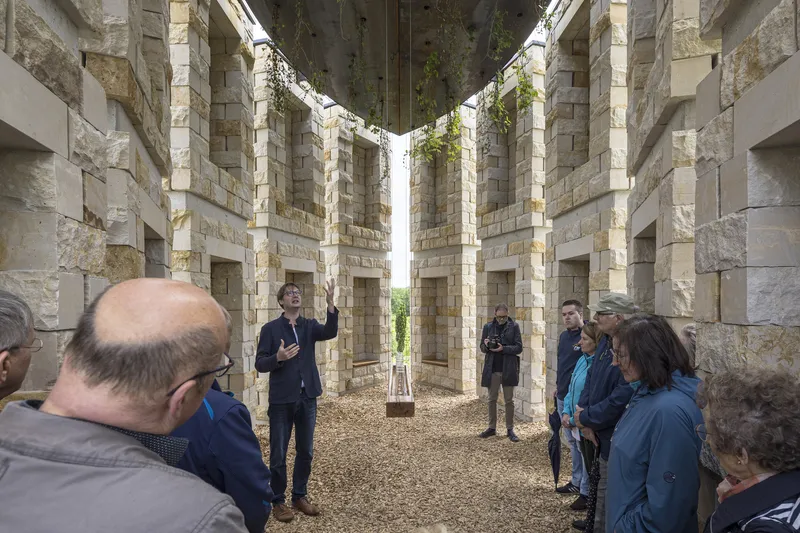
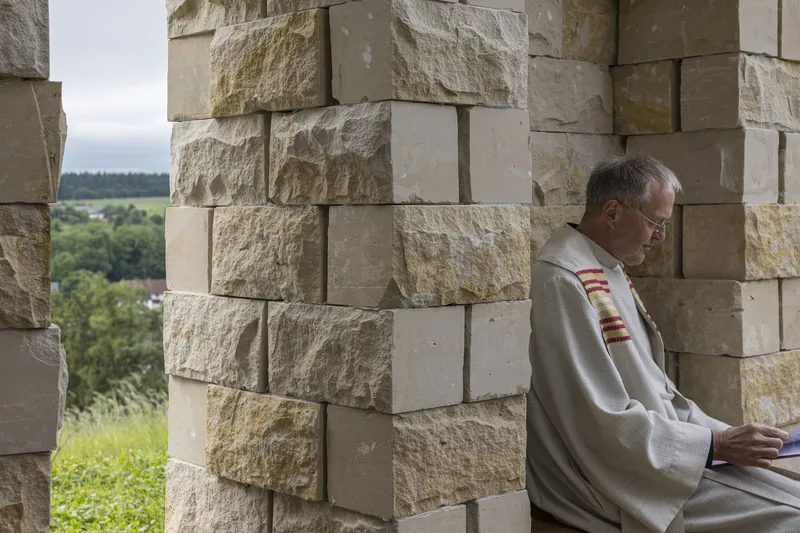
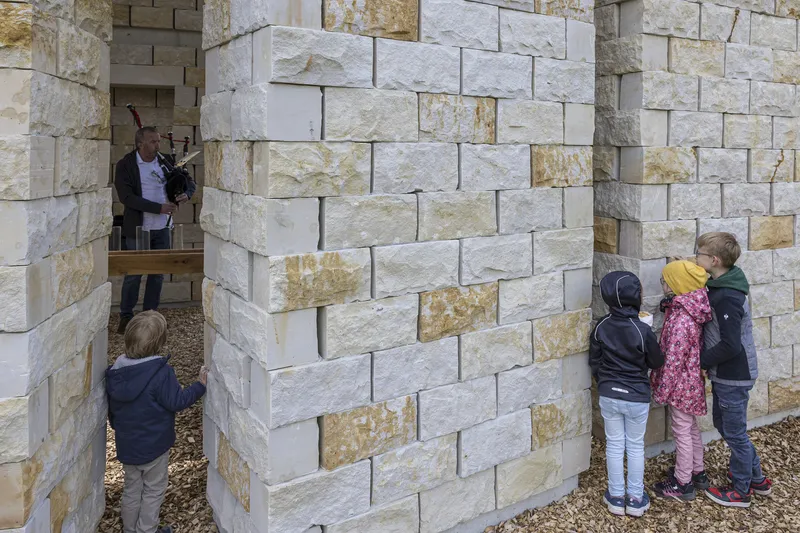
The chapel is used for ecumenical services, weddings, funerals, concerts, and community gatherings. The oval ring accommodates around fifty people seated on the gravel floor or on benches. A priest or speaker stands at the centre. Children explore the niches. The community photographs show the building in use: the architect speaking at the opening, a priest reading, children peering through the openings. The chapel works because it was designed for these moments.
Construction: Stone, Steel, and Volunteers
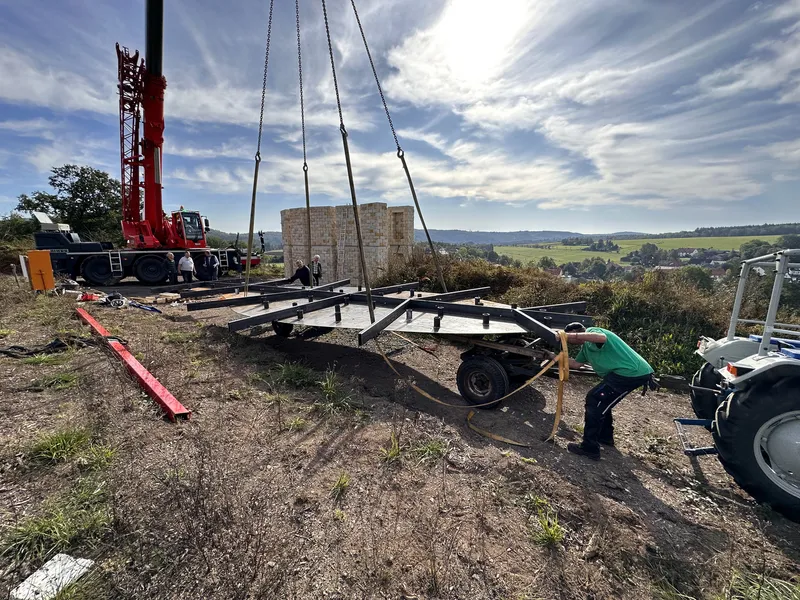
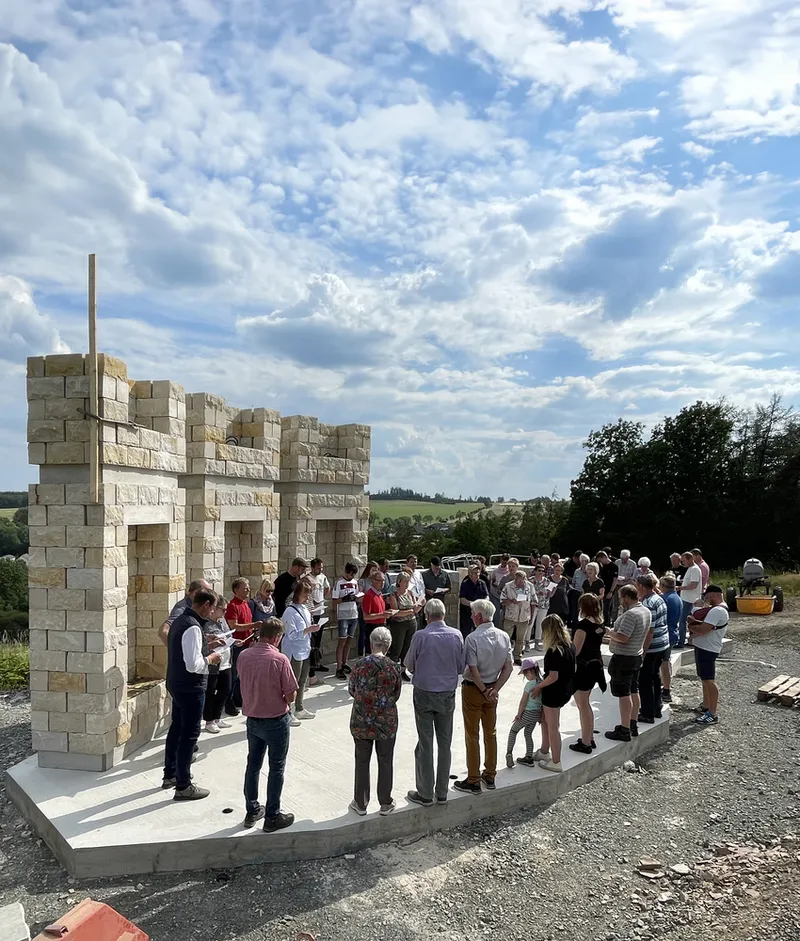

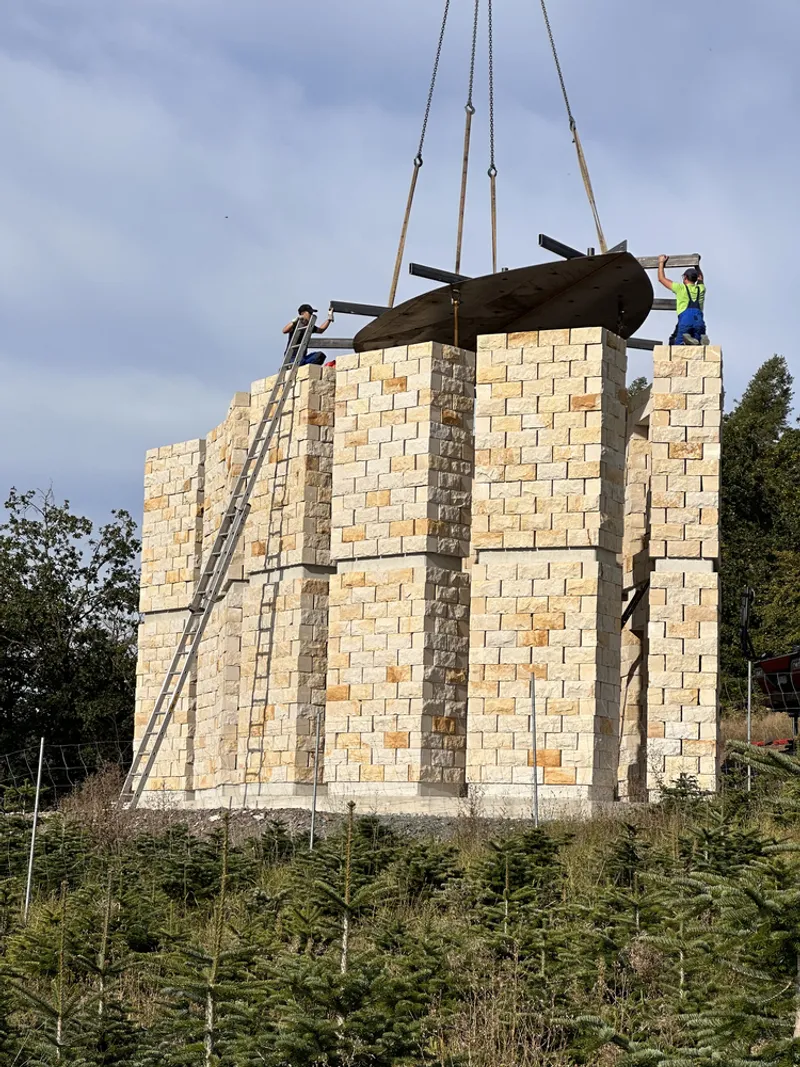
The construction sequence is documented in the photographs. The site started as a clearing in the forest with an oval foundation marked out. A steel ring beam was prefabricated and lifted into place by crane. The sandstone columns were built up between the foundation and the ring beam course by course, with masons hand-cutting and laying each block. Volunteers from the community participated in the build, learning traditional stonework as they went.
Drawings
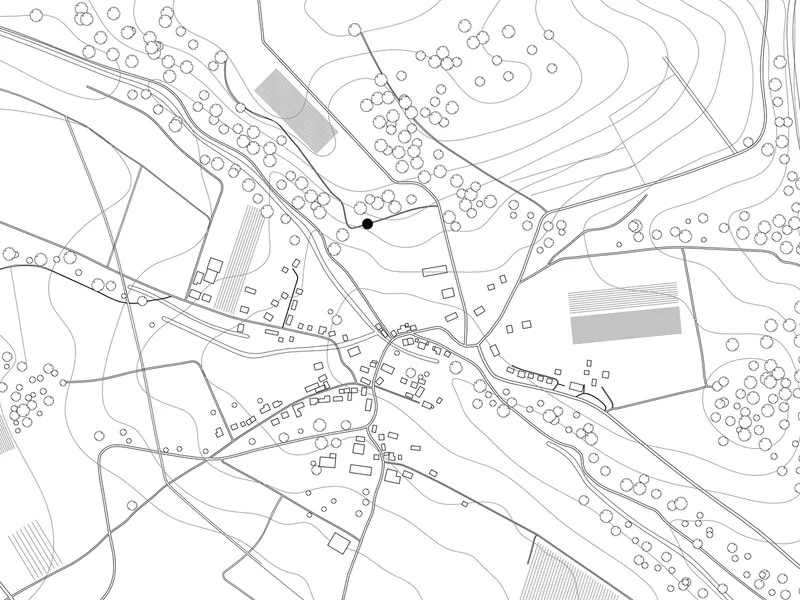
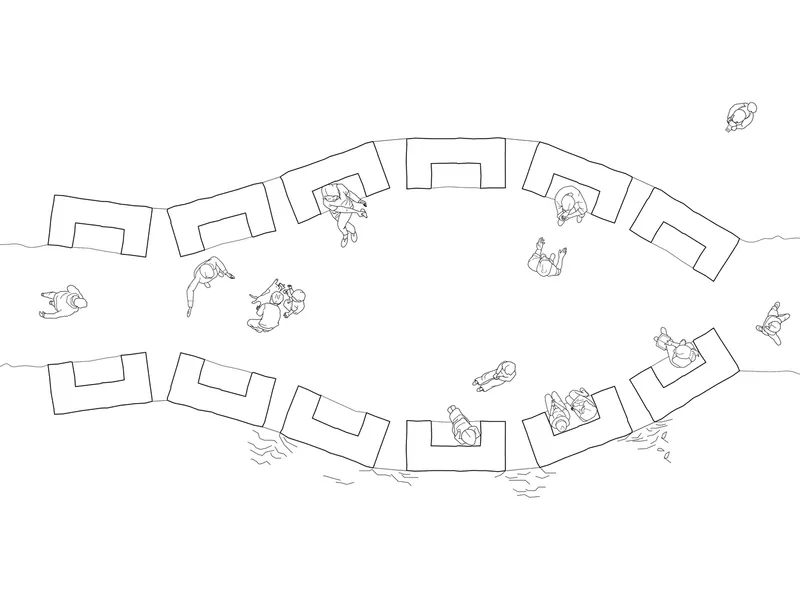
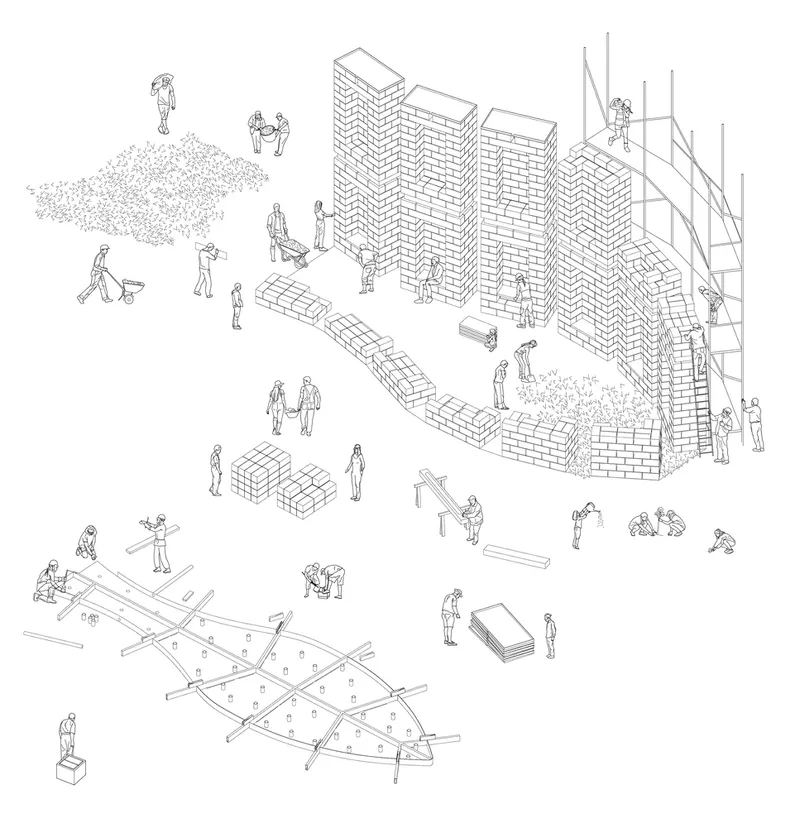

The site plan shows the chapel on the hilltop above the village, set into the contour lines of the hill. The plan diagram shows the oval ring of columns with figures indicating how people occupy the space (seated, lying, standing). The construction axonometric details the steel ring beam, the sandstone column build-up, and the masonry technique. The aerial during the opening shows the chapel in use with the audience seated for the ceremony.
Why This Project Matters
Religious architecture in contemporary Europe has shrunk to a tiny category. New churches are rare. New chapels are rarer. Open Chapel shows what is still possible: a small sacred building that uses local materials, community labour, and simple geometry to create a space that serves a village without imposing on it. The chapel is not enclosed because the village did not need another enclosed church. It is open because the views, the sky, and the seasons are part of the worship experience.
If you are designing a small public building, a memorial, a chapel, or any project where community participation and local materials are central, Open Chapel is worth studying for how stone, steel, and an oval plan can create a sacred space without walls.
About the Studio
Share Your Own Work on uni.xyz
If you are working on religious architecture, community buildings, or sustainable masonry construction, uni.xyz is a place to publish your work and connect with a global design community.
Project credits: Open Chapel by Christoph Hesse Architects. Germany.




Popular Articles
Popular articles from the community


The Earth Pod: 3D Printed Homes for Resilient Refugee Communities
The Earth Pod reimagines refugee housing through 3D printed homes made from clay, combining resilience, self-sufficiency, and rapid shelter.

Riyadh For All: Intergenerational Urban Design for Active Aging in Rabat
Riyadh For All reimagines urban design in Rabat with intergenerational co-living, adaptive courtyards, and Moroccan cultural exchange today.

AL-JANNAH: Sustainable Architecture and Permaculture for Afghan Widows
AL-JANNAH uses sustainable architecture and permaculture to create resilient oasis of housing, learning, work and renewal for Afghan widows.

Hill & Cross Opera: Sculptural Opera House Architecture Shaped by Tallinn’s Landscape and Identity
Hill & Cross Opera reimagines opera house architecture in Tallinn through its sculptural hill, civic plaza, glass wave and a luminous cross.


Similar Reads
You might also enjoy these articles


Hodi-Mandai Geram
Project Function: Preservation and revitalization of the Intangible heritage and socio-spatial identity of the Hodi by Housing, Cultural Memory Center, Sacred Grove, landscape, local tourism economy


Olio Towers: A Mid-Rise for Performers That Fuses Housing, Rehearsal, and Stage
Located blocks from Houston's Theater District, this modular tower stacks living units around a central performance atrium.

Oasis: Modular Green Housing Carved into Dhaka's Urban Fabric
A shortlisted Plugin Housing entry reclaims unauthorized settlements in Dhaka with stepped concrete volumes, green roofs, and ventilation-driven design.

Black Hole: A Floating Megastructure for the Post-Physical Era
Emiliano Mazzarotto envisions a spherical, self-scaling arena where e-sports, digital hotels, and holographic stadiums replace traditional public space.


Explore Chapel Competitions
Discover active competitions in this discipline



Challenge to reimagine the Iron Throne


Photograph architecture without architects


Illustrate the lost glory of Angkor Wat - Render Challenge


Design challenge to reuse E-waste
Comments (0)
Please login or sign up to add comments
No comments yet. Be the first to comment!