

PAIR Pavilion by Pezo von Ellrichshausen: A Poetic Architectural Installation in Seoul
A sculptural pavilion exploring human connection through mirrored geometry, intimacy, and spatial tension, designed for Seoul Biennale and relocation.


The PAIR Pavilion, designed by the renowned Chilean architectural duo Pezo von Ellrichshausen, is a striking installation located in Jongno-gu, Seoul, South Korea. Completed in 2023, this compact yet profound structure spans just 30 square meters, yet it powerfully conveys complex ideas about human relationships, space, and presence.


Concept and Design Philosophy
At the heart of the PAIR Pavilion lies an exploration of the individual mirrored in another individual, symbolizing the fundamental unit of a couple — be it two people, friends, family, or abstract relationships between self and other. This conceptual framework draws from artistic traditions of the double portrait, referencing works from Jan van Eyck to David Hockney. The pavilion itself acts as a modern-day double portrait in architectural form, a sculptural expression of intimacy and duality.
The structure’s geometry is rooted in the equilateral triangle, rendered almost as a thin, scaleless pediment, free from conventional building thickness. This creates a theatrical space — a minimal yet powerful frame that blurs boundaries between inside and outside, self and other, here and elsewhere. The pavilion’s sole entrance projects beyond the interior volume, transforming its facade into a symbolic threshold.
Inside, the design intentionally fosters an intimate encounter between two occupants positioned at opposite ends. This spatial dialogue evokes questions: Are the pair a real couple—a mother and son, friends, strangers—or a metaphorical one, embodying dreams, memories, or shadows?

Architectural Features and Materiality
Visually, the PAIR Pavilion stands out through its elegant simplicity and monumental presence. Its mirrored facade clad in a meticulously arranged pattern resembling stacked stones responds dynamically to the local climate and light conditions. This reflective surface creates a visual dialogue with its surroundings, capturing seasonal changes such as sunlight glinting off snow or the pavilion’s silhouette shifting in summer.
A unique design element is the asymmetric peephole, a narrow vertical slit opening towards the sky from an interior corner. This subtle architectural gesture introduces a sense of mystery and tension, marking a spatial division that transcends everyday experience and transforms the pavilion into a contemplative, almost supernatural realm.
Installation and Future Plans
Originally conceived as a temporary installation for the Seoul Biennale of Architecture and Urbanism, the PAIR Pavilion is planned for complete recycling and relocation to a permanent site in a botanical garden in Gyeonggi Province. This sustainable approach emphasizes the architects’ commitment to adaptive reuse and environmental responsibility, ensuring the pavilion’s lasting impact both physically and conceptually.
All Photographs are works of Pezo von Ellrichshausen




Popular Articles
Popular articles from the community


The Musturak Paradise: Senior Living Architecture for a Connected Future in Temara, Morocco
The Musturak Paradise reimagines senior living architecture in Temara via private homes, social spaces, culture, community, and shared care.

AL-JANNAH: Sustainable Architecture and Permaculture for Afghan Widows
AL-JANNAH uses sustainable architecture and permaculture to create resilient oasis of housing, learning, work and renewal for Afghan widows.
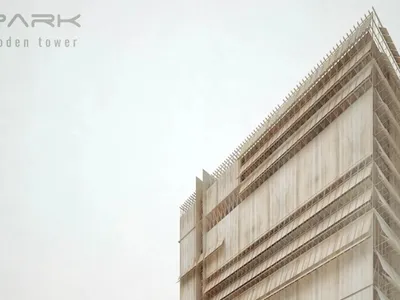
EW PARK: Sustainable Architecture Reimagines the Future of Urban Parking
EW PARK reimagines city parking as a modular wooden tower combining automation, solar energy, electric mobility, and adaptable urban design.

Conexión: Biophilic Design Reimagines High-Rise Living in Hong Kong
Conexión reimagines high-rise living in Hong Kong through biophilic design, green facades, shared spaces, daylight, water and nature within.


Similar Reads
You might also enjoy these articles


Hodi-Mandai Geram
Project Function: Preservation and revitalization of the Intangible heritage and socio-spatial identity of the Hodi by Housing, Cultural Memory Center, Sacred Grove, landscape, local tourism economy


Olio Towers: A Mid-Rise for Performers That Fuses Housing, Rehearsal, and Stage
Located blocks from Houston's Theater District, this modular tower stacks living units around a central performance atrium.

Oasis: Modular Green Housing Carved into Dhaka's Urban Fabric
A shortlisted Plugin Housing entry reclaims unauthorized settlements in Dhaka with stepped concrete volumes, green roofs, and ventilation-driven design.

Black Hole: A Floating Megastructure for the Post-Physical Era
Emiliano Mazzarotto envisions a spherical, self-scaling arena where e-sports, digital hotels, and holographic stadiums replace traditional public space.


Explore Remembrance Pavilion Competitions
Discover active competitions in this discipline



Challenge to design a portable theatre


Challenge to design a portable music platform


Challenge to design an open learning module for the elderly


Challenge to reimagine the Iron Throne
Comments (0)
Please login or sign up to add comments
No comments yet. Be the first to comment!