

Pavilion Atlas by Praktika: Reimagining Vilnius History Through Cultural Architecture
Pavilion Atlas in Vilnius reimagines history through modular, open-air design, immersive 3D city models, interactive exhibits, and adaptive temporary architecture.


Architects: Praktika (Dalia Puodziute Seniuniene & Julius Seniunas)
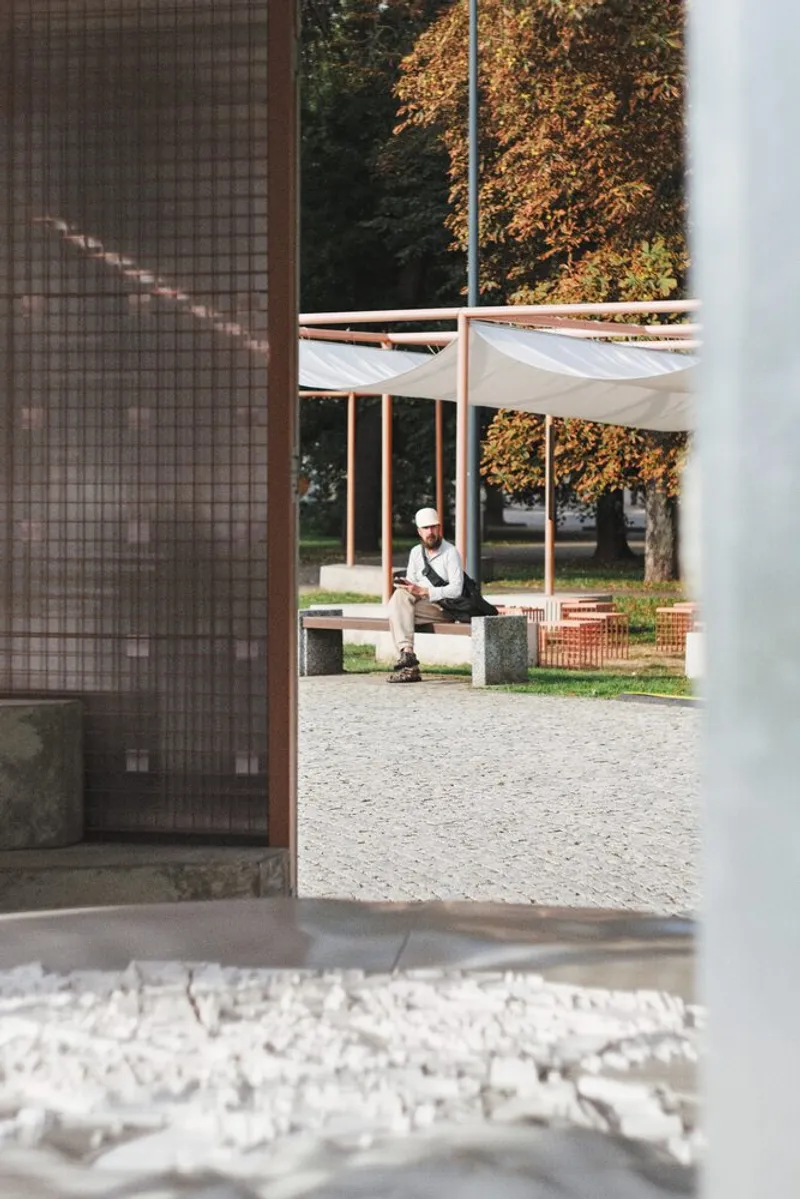
In 2023, emerging Lithuanian architects Dalia Puodziute Seniuniene and Julius Seniunas unveiled Pavilion Atlas, a temporary cultural pavilion designed for the 700th anniversary of Vilnius. Commissioned by the Lithuanian National Museum, this innovative pavilion, titled “Vilnius 200 Years Ago”, brought the museum’s collection out of enclosed spaces and into the historic New Arsenal park, facing the iconic Gediminas Castle Hill in Vilnius’ UNESCO-protected Old Town.


Heritage Context and Concept
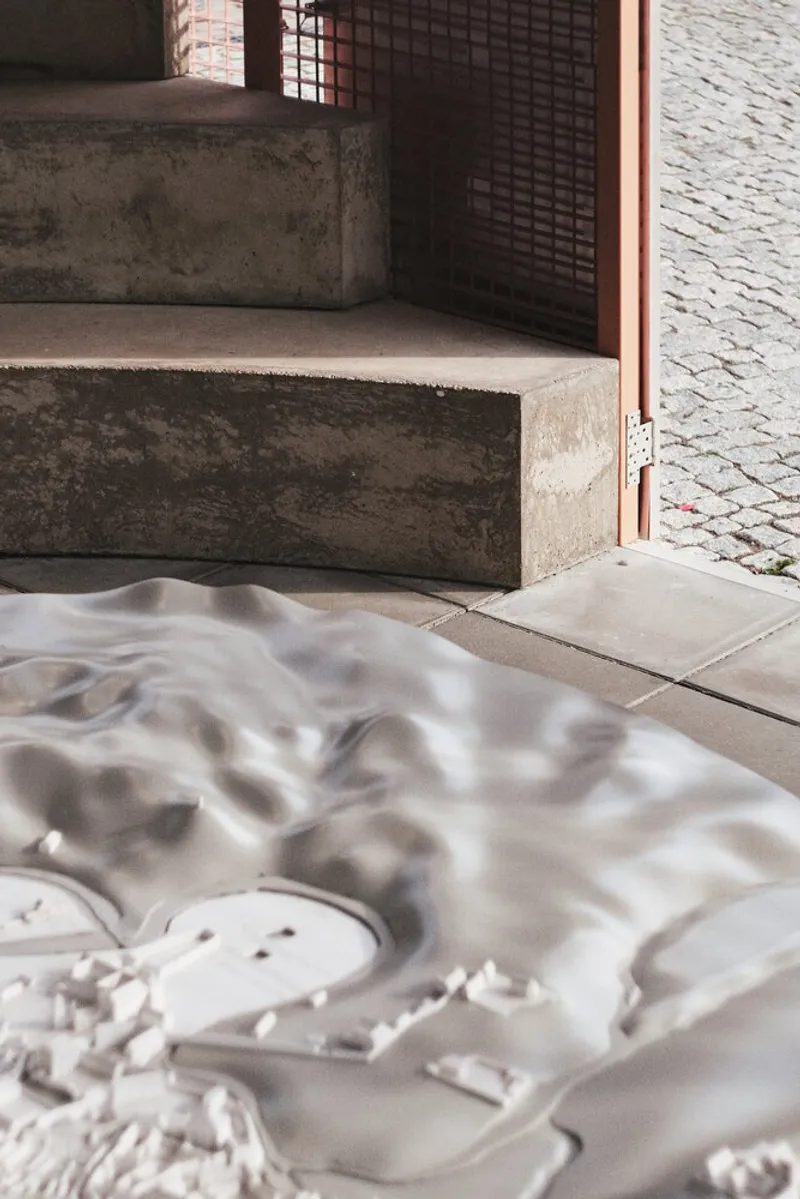
The open-air pavilion concept aimed to redefine the museum experience by dispersing the exhibition throughout the park rather than confining it to traditional galleries. Over six months, Pavilion Atlas became one of the most visited exhibitions of the Lithuanian National Museum, offering a meticulous reconstruction of Vilnius as it appeared 200 years ago. Using newly discovered historical maps, archival drawings, and city plans, the architects recreated the city’s landscape, combining 3D-printed models, ambient soundscapes, historical narratives, and video projections to immerse visitors in Vilnius’ past.

Architectural Design and Spatial Strategy
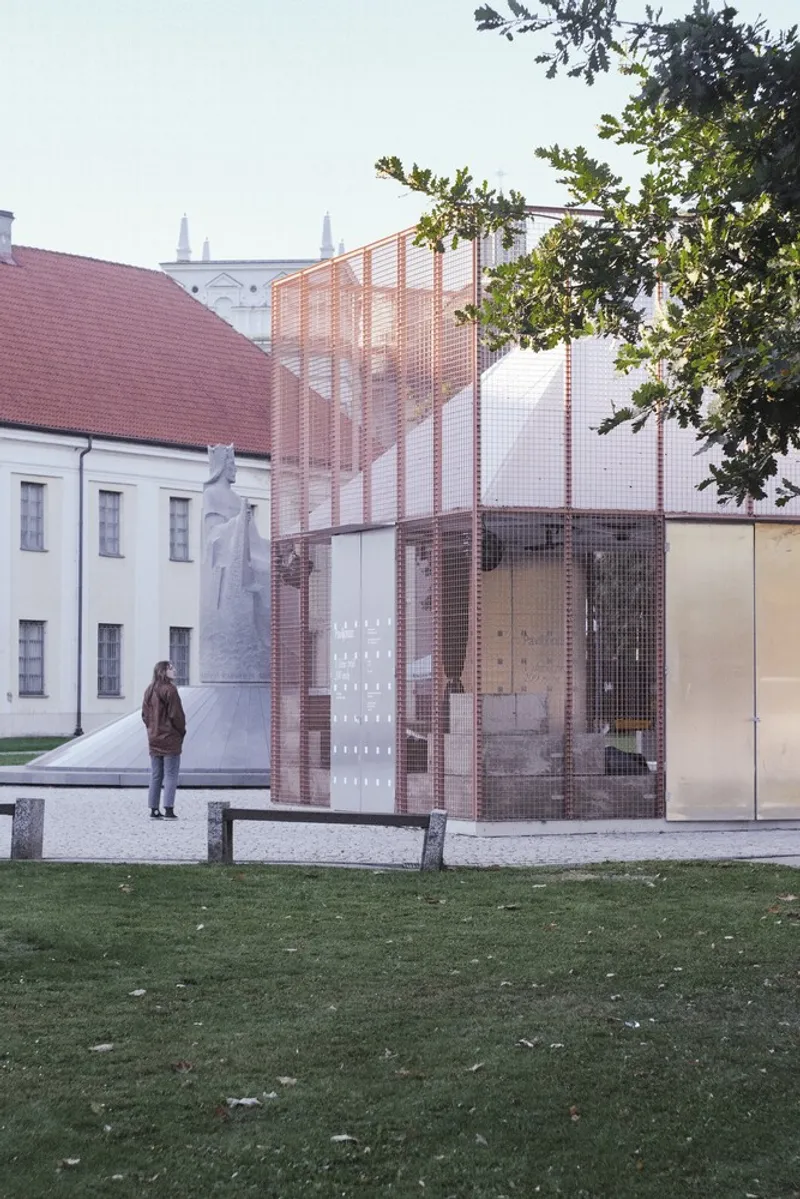
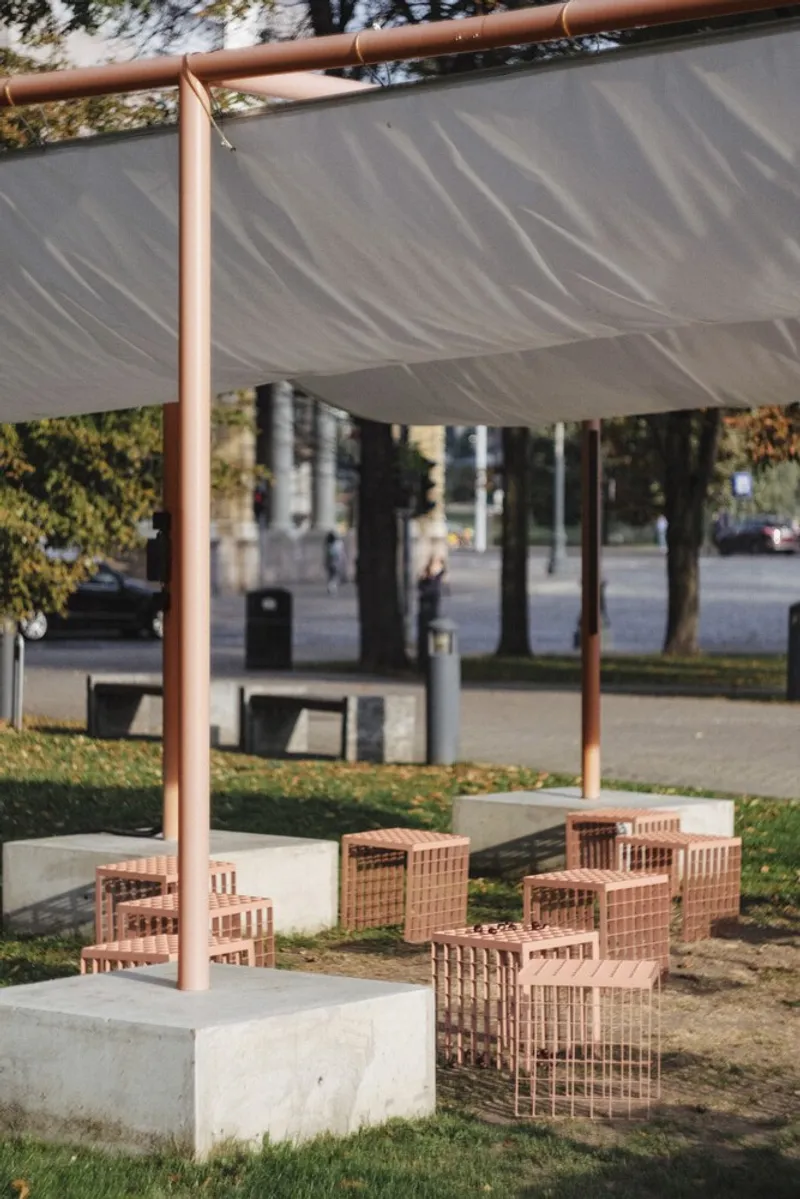
Pavilion Atlas is composed of 16 modular structures strategically scattered across the New Arsenal park. This dispersed pavilion design interacts with the park’s existing pathways, natural elements, and archaeological artifacts, creating multiple points of engagement for visitors. Each pavilion object: including the Amphitheater, Triptych, Rotonda, Walls, Forum, Flags, Stage, and Information Stands, acts as an information carrier, blending exhibition content with architectural form.
The Rotonda, for example, displays a historical map printed on flowing curtains, animated by the wind, while four Walls project recreated visuals of historical Vilnius. The flexible spatial arrangement allows visitors to navigate the pavilion from multiple directions, fostering diverse narratives and personal exploration, effectively turning the pavilion into a city within a pavilion.

Adaptive Reuse and Sustainability
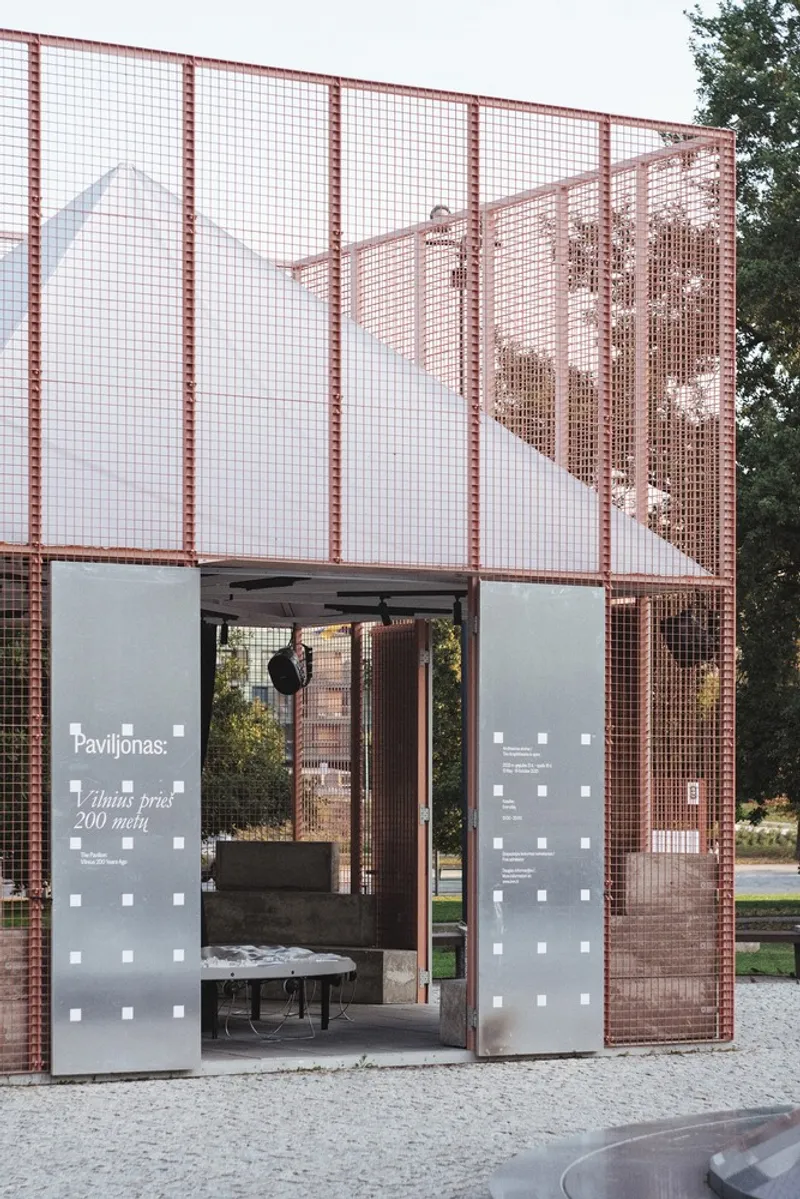
Beyond its temporary role, Pavilion Atlas was designed with adaptability and reuse in mind. The modular structures can be easily assembled, compactly stored, and reconfigured for new contexts or exhibitions. This approach not only ensures sustainability but also allows the pavilion to serve diverse cultural and educational purposes in future scenarios. The design demonstrates how temporary architecture can remain functional, engaging, and contextually relevant, far beyond its initial installation.

Pavilion Atlas: Impact and Legacy
Pavilion Atlas exemplifies how cultural architecture can bridge history, public engagement, and urban space. By integrating heritage preservation, contemporary design, and open-air museum principles, Praktika’s project successfully activated a historic park, transforming it into a living exhibition space. Its innovative approach to temporary pavilion design, modularity, and interactive storytelling sets a precedent for future cultural projects in Lithuania and beyond.


All photographs are works of Gabija Strockyte


Popular Articles
Popular articles from the community


Cube Design Draws an Ecological Corridor Between Two Shenzhen Hills with the Nankai Building
Beside Shenzhen's container docks, the Nankai Building pairs stacked balconies with a climbing green screen to connect two hillsides across its height.

U.GA Architects Wraps an Oval Rooftop Pool in Curved Board-Formed Concrete on Busan's Jeollidan-gil
In Busan's Jeonpo-dong, a 454 m² mixed-use block stacks a neighborhood facility, guest rooms and an oval rooftop pool inside spiraling concrete walls.

David Macias Steps a Doorless Stone and Plaster House Down a Tropical Colombian Hillside
In the humid hills of Colombia, Threshold House replaces the front door with an open void and terraces its 850 m² down the slope instead of fighting it.

Juan García Correa, John González and Claudia Rueda Sink a Circular Amphitheater into a Manizales Engineering Building
On the La Nubia campus in Manizales, Colombia, the S1 Building folds labs and offices into a hillside of ramped lawns that double as a campus route.

Similar Reads
You might also enjoy these articles


Hodi-Mandai Geram
Project Function: Preservation and revitalization of the Intangible heritage and socio-spatial identity of the Hodi by Housing, Cultural Memory Center, Sacred Grove, landscape, local tourism economy


Olio Towers: A Mid-Rise for Performers That Fuses Housing, Rehearsal, and Stage
Located blocks from Houston's Theater District, this modular tower stacks living units around a central performance atrium.

Oasis: Modular Green Housing Carved into Dhaka's Urban Fabric
A shortlisted Plugin Housing entry reclaims unauthorized settlements in Dhaka with stepped concrete volumes, green roofs, and ventilation-driven design.

Black Hole: A Floating Megastructure for the Post-Physical Era
Emiliano Mazzarotto envisions a spherical, self-scaling arena where e-sports, digital hotels, and holographic stadiums replace traditional public space.

Explore Cultural Architecture Competitions
Discover active competitions in this discipline

Challenge to reimagine the Iron Throne

Photograph architecture without architects

Illustrate the lost glory of Angkor Wat - Render Challenge

Bring back Drive In's
Comments (0)
Please login or sign up to add comments
No comments yet. Be the first to comment!