
Pichi Country House by IN Estudio Arquitectura: A Rational and Contextual Approach to Contemporary Rural Living
Pichi Country House explores modular grids, steel structure, and rural typology, creating a serene, efficient, and contemporary architectural living environment.

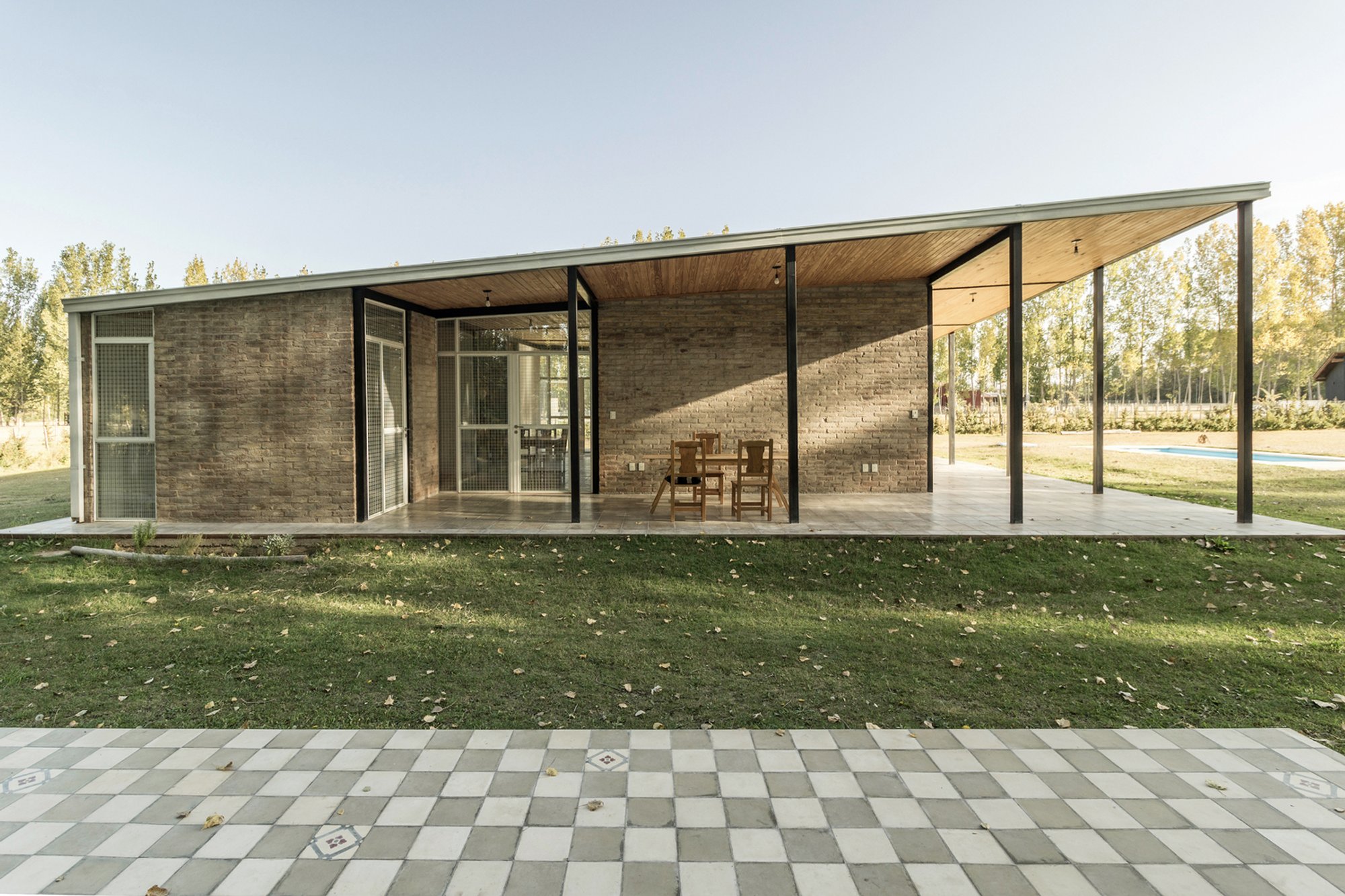
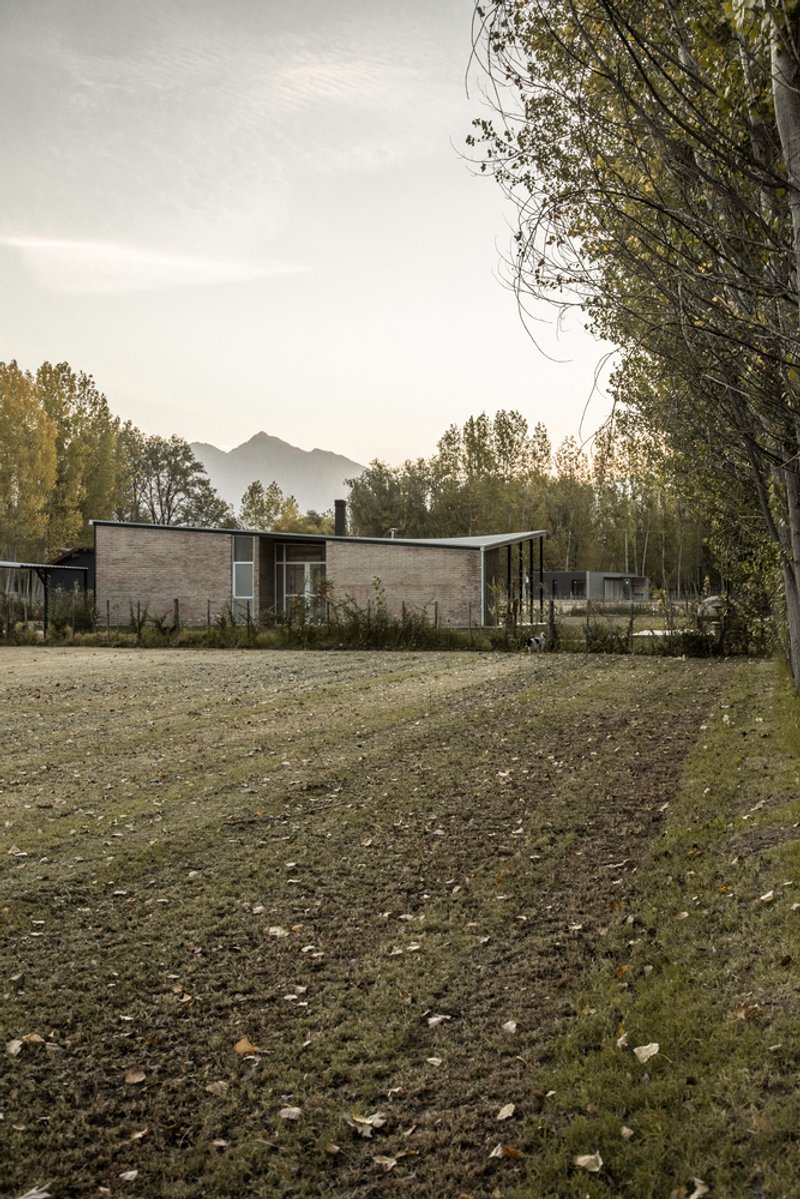
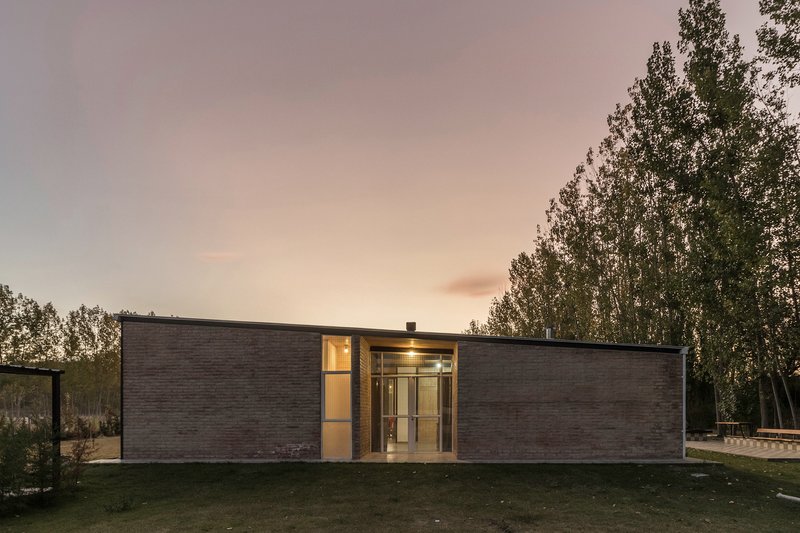
Located in the serene landscape of Colonia las Rosas, Argentina, the Pichi Country House by IN Estudio Arquitectura exemplifies a refined approach to contemporary rural architecture. Designed by Daniel Gelardi and Agustina Gelardi, this 2021 residential project spans 2110 square feet and reflects a deep exploration of typology, material logic, and spatial organization. Rooted in the traditions of country house design, the project reinterprets vernacular concepts through a modern architectural lens.
Conceptual Framework: Typology and Architectural Reflection
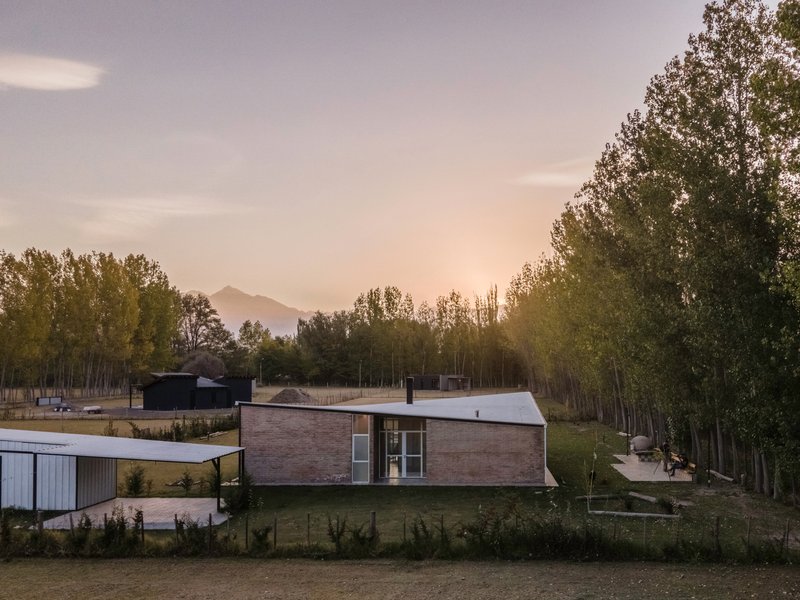
The design of Pichi Country House originates from a critical reflection on the historic typology of rural dwellings. Rather than merely replicating traditional forms, the architects reimagine the country house as a system governed by order, structure, and material clarity. The project balances formal expression with constructive logic, creating a cohesive architectural language that is both rational and poetic.
This typological exploration becomes the driving force behind the house’s spatial organization, where geometry and structure define both form and experience.
Structural Grid and Modular Design Strategy
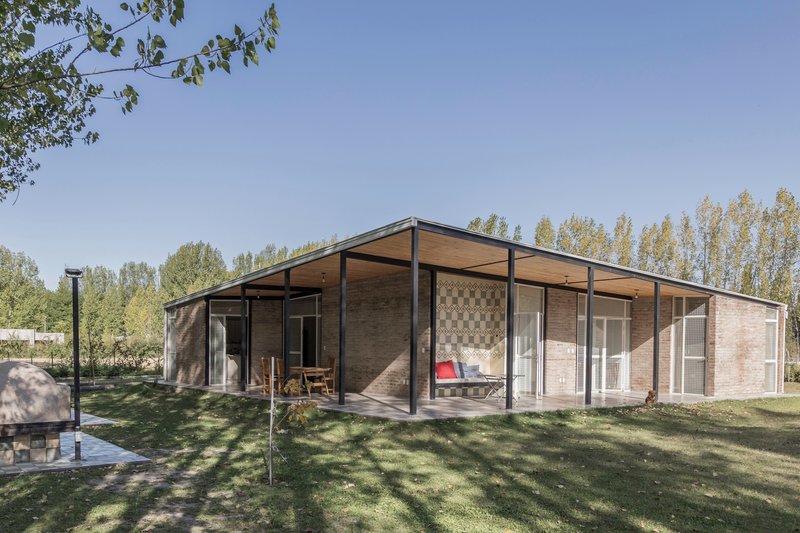
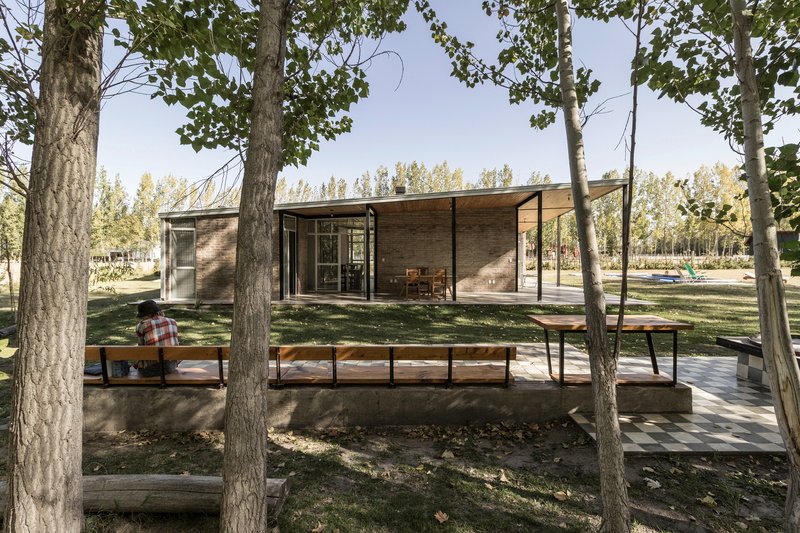
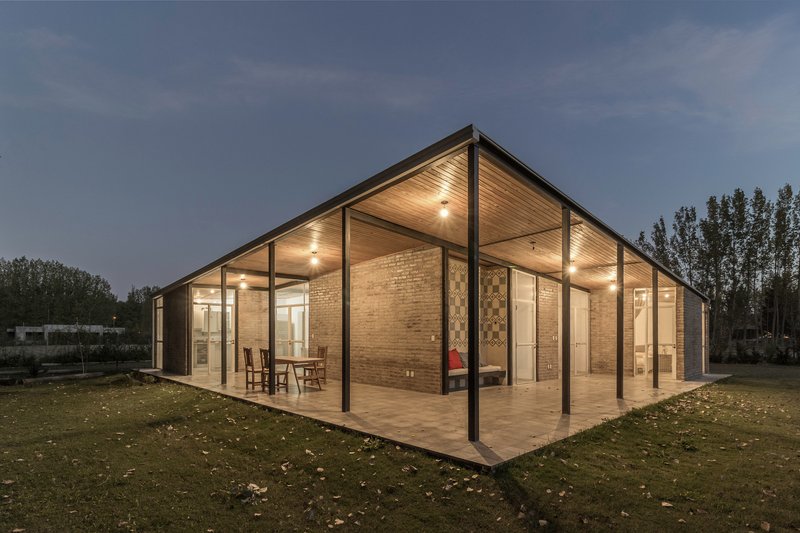
At the heart of the project lies a disciplined structural grid measuring 14m x 14m, subdivided into 16 equal modules of 2.60m x 2.60m. This modular framework establishes a systematic construction approach, enabling efficiency, clarity, and adaptability.
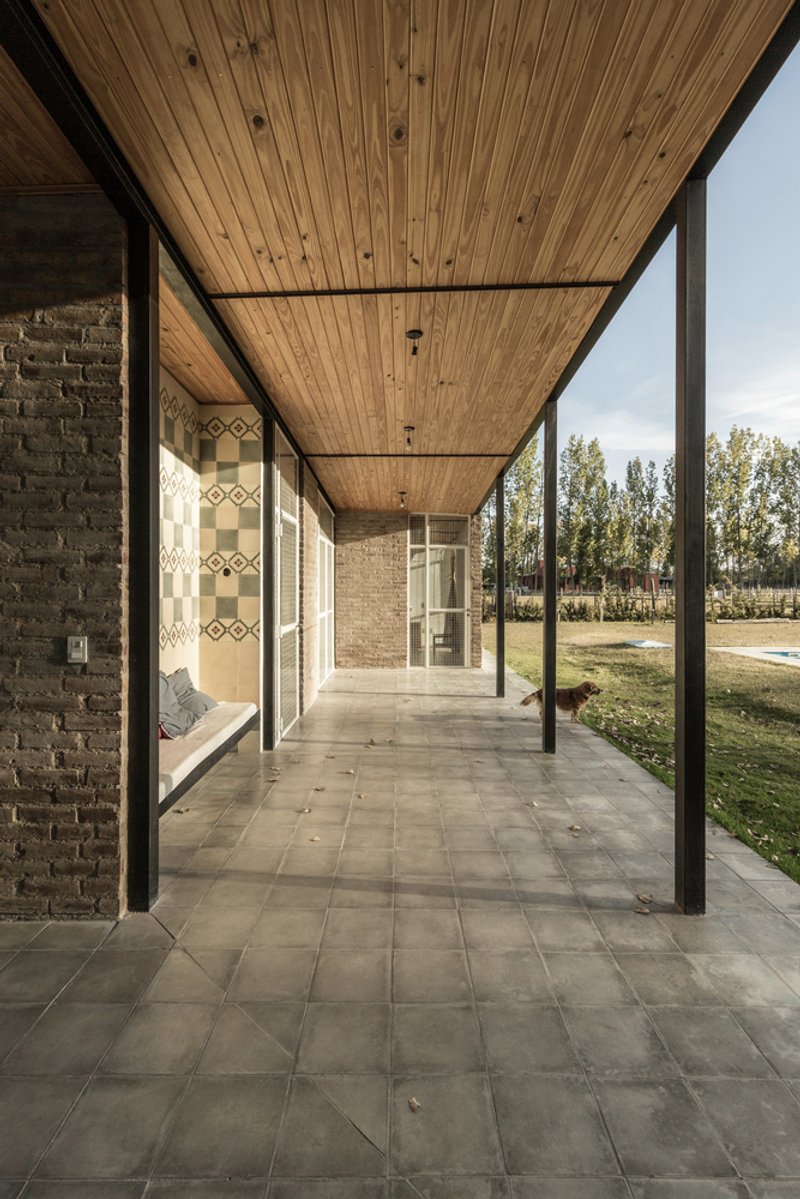
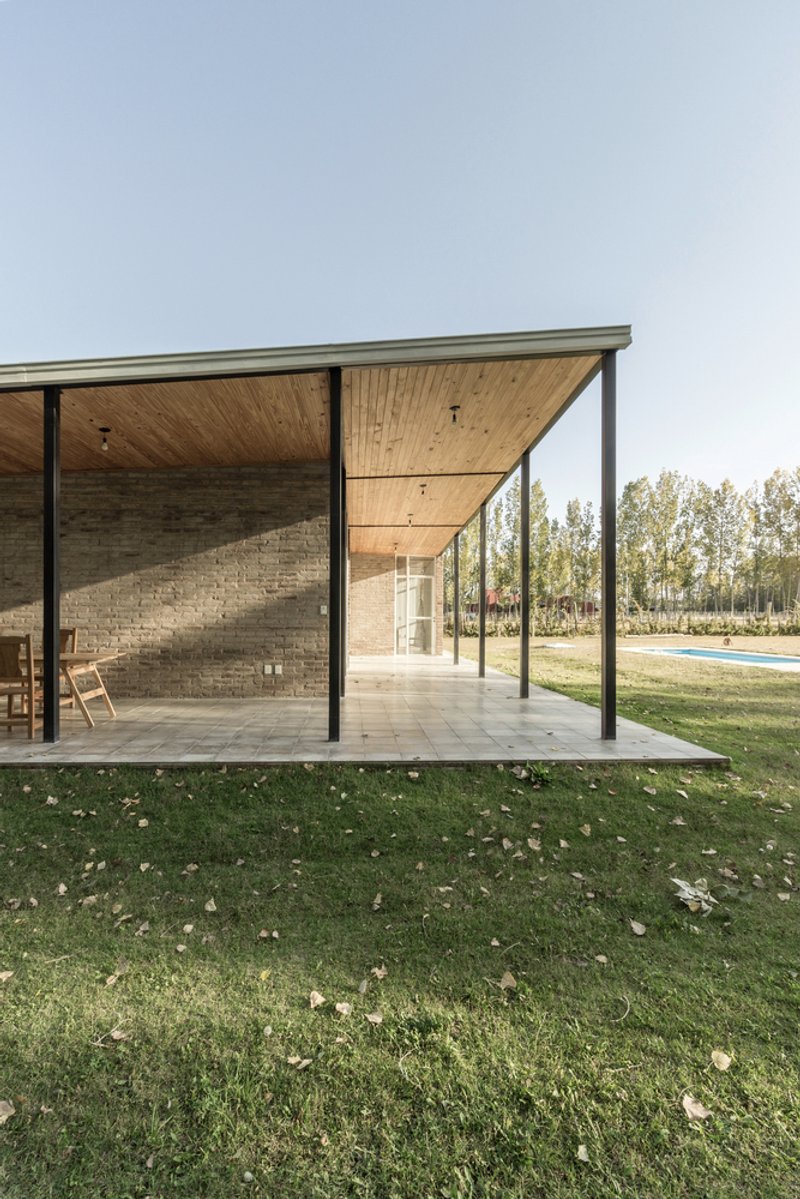
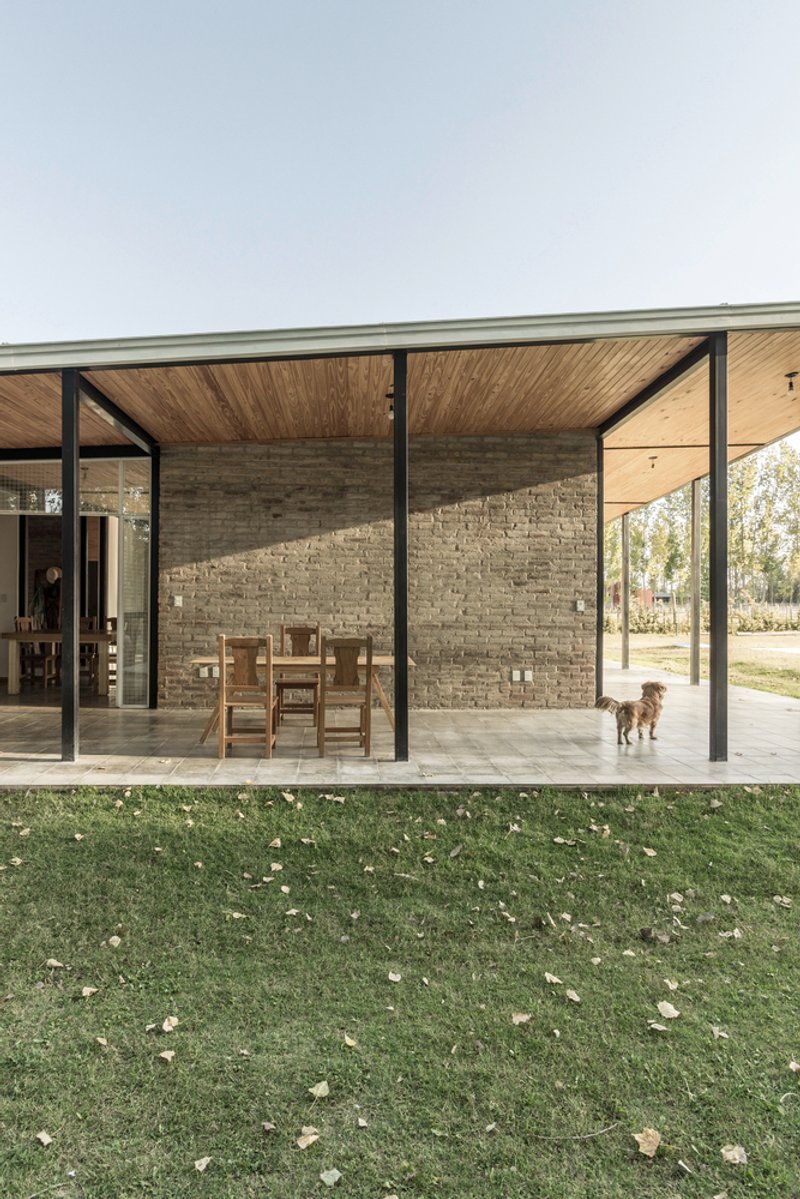
The structure is materialized using slender steel columns measuring 10x10 cm, supporting a lightweight metal purlin roof system. This grid not only defines the structural logic but also orchestrates spatial relationships, circulation paths, and visual connections throughout the house.
Innovative Roof Geometry and Spatial Dynamics
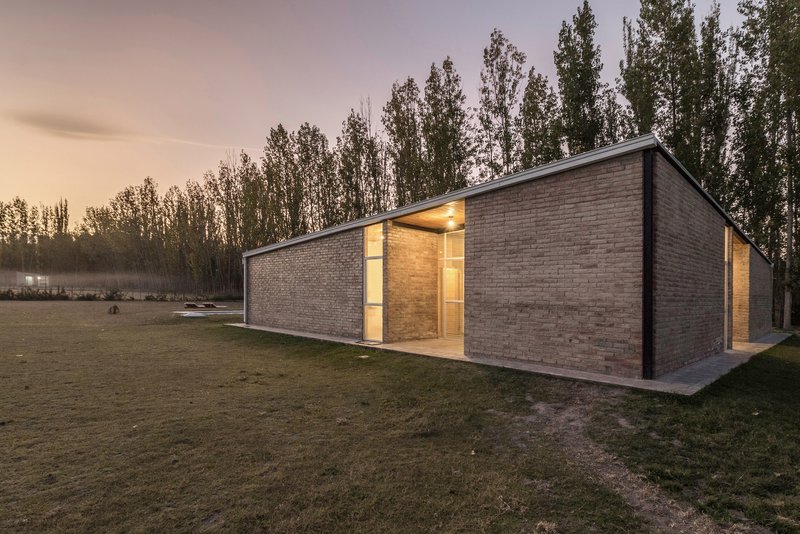
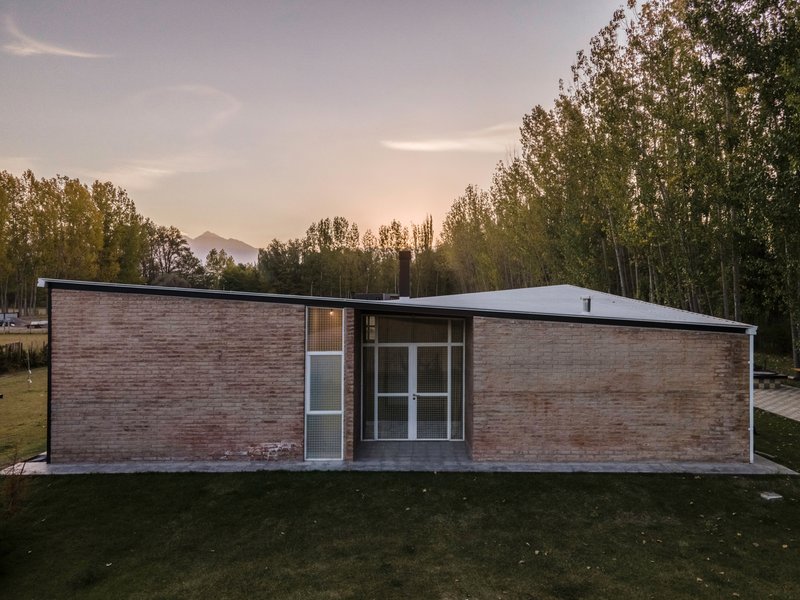
One of the most distinctive features of the Pichi Country House is its geometrically dynamic roof. While appearing as a continuous planar surface, the roof subtly deforms through variations in parallel alignments. This results in cross slopes that enhance drainage and spatial articulation without disrupting the visual continuity of the plane.
The roof design demonstrates a sophisticated integration of geometry and function, reinforcing the project’s emphasis on constructive rationality.
Spatial Organization and Interior-Exterior Connectivity
The grid system extends beyond structure, shaping the experiential quality of the house. It organizes a network of pathways that intersect and overlap, creating fluid movement across spaces. These paths connect different rooms while maintaining a constant dialogue with the surrounding landscape.
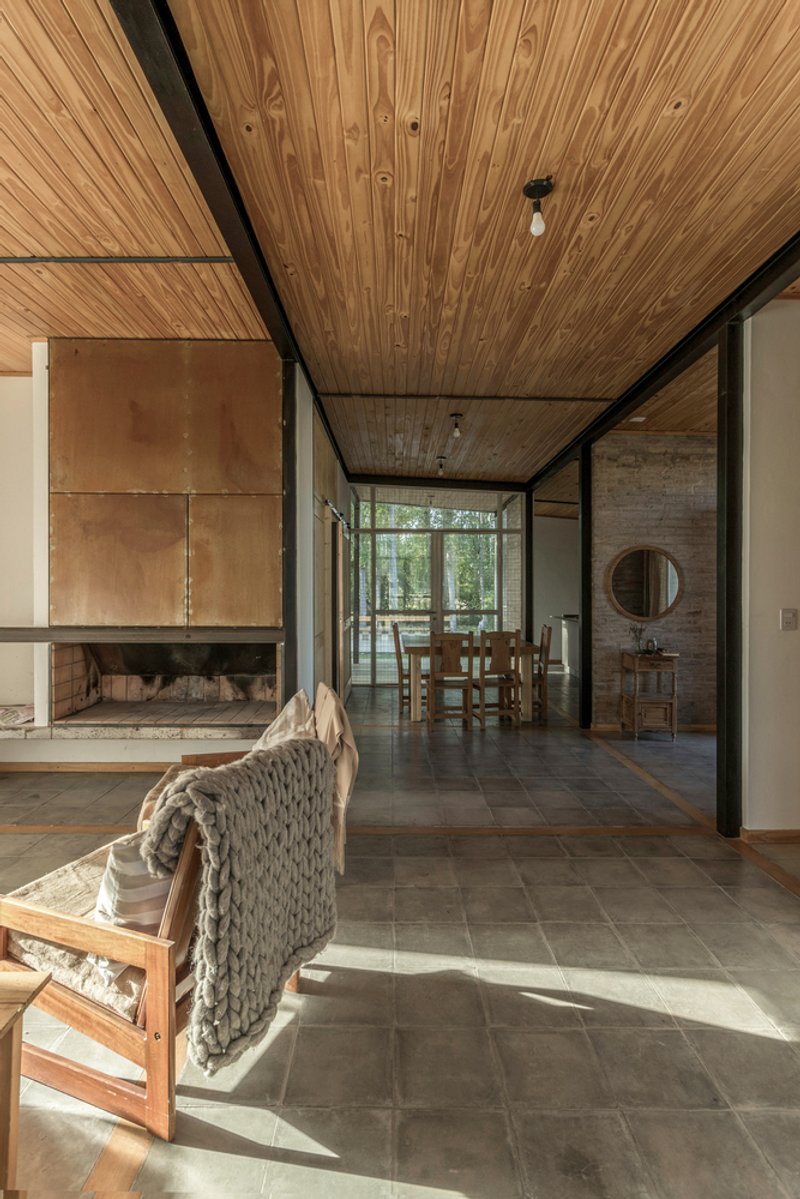
At the center of this spatial composition lies the hearth, a symbolic and functional core around which domestic life revolves. This element reinforces the traditional essence of the country house while anchoring the modern spatial arrangement.
Large openings and carefully positioned windows blur the boundaries between interior and exterior, allowing natural light, views, and ventilation to permeate the living spaces. The result is a harmonious integration with nature, enhancing the overall living experience.
Materiality and Construction Logic
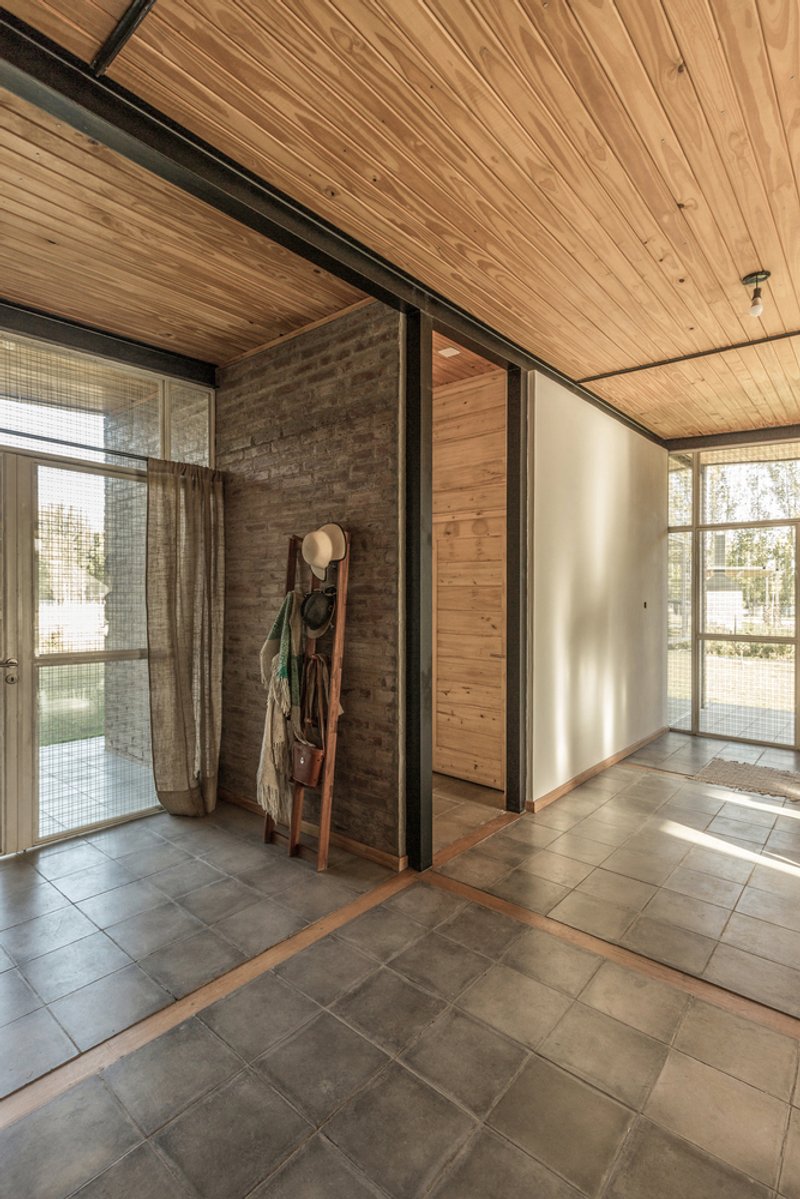
The architectural expression of Pichi Country House is defined by a restrained and thoughtful use of materials. The construction is composed of four primary elements:
- A base slab incorporating radiant floor heating
- A steel structural framework organized in a precise grid
- A multilayered metal roof combined with a warm wooden ceiling
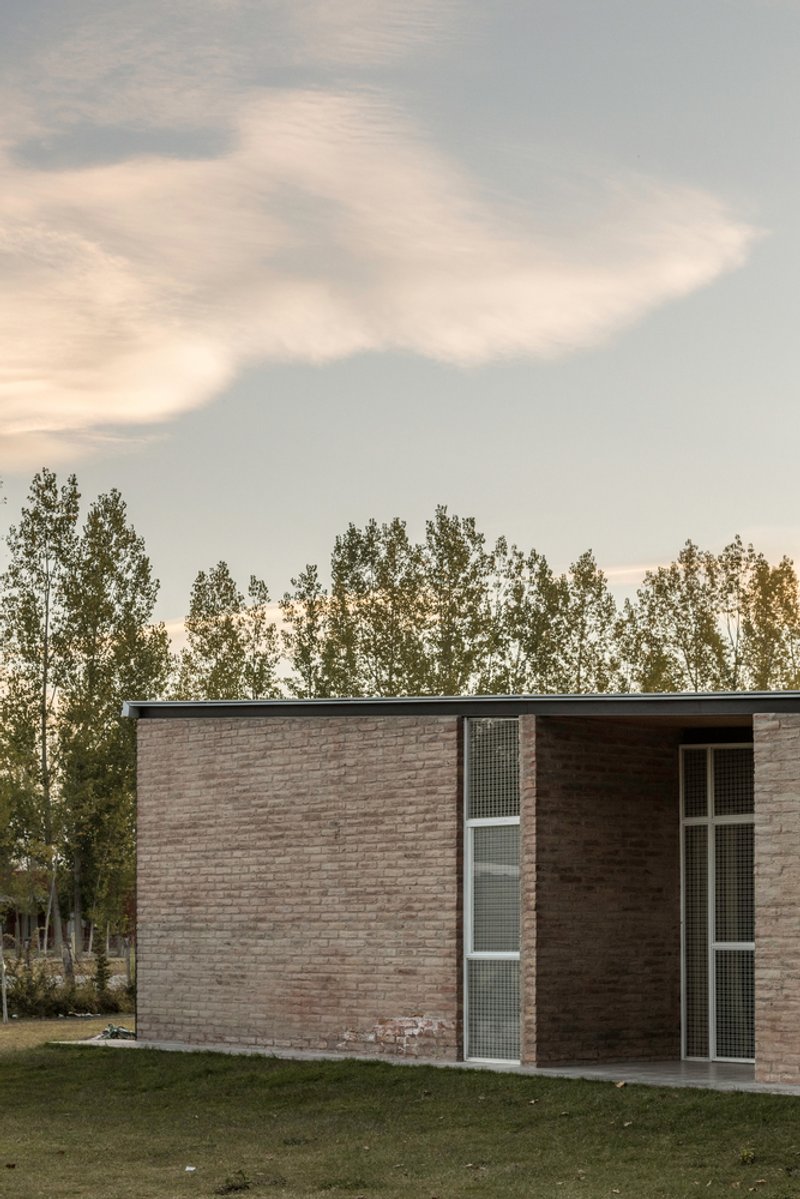
- Enclosures formed by brick partition walls with plaster finishes and metal carpentry
The façade incorporates large hermetic double-glazed windows, reinforced with handcrafted internal metal mesh. These elements provide enhanced thermal insulation, safety, and durability while maintaining a refined aesthetic.
The Hearth as a Central Architectural Element
A defining feature of the project is the firebox or hearth, which serves as both a functional and symbolic centerpiece. Rooted in traditional country house design, it reinforces a sense of warmth, gathering, and domestic identity.
This element anchors the spatial organization and enhances the experiential quality of the interiors, connecting past traditions with contemporary living.
Sustainable and Rational Architectural Approach
Pichi Country House embodies an architecture of economy, efficiency, and conscious material use. The project’s technical rationality is evident in its modular system, material selection, and construction methodology. By minimizing excess and focusing on essential elements, the design achieves a sense of serenity and balance.
This approach aligns with contemporary sustainable architecture principles, emphasizing durability, energy efficiency, and contextual sensitivity.
A Contemporary Interpretation of Rural Architecture
Pichi Country House stands as a compelling example of how traditional architectural typologies can be reinterpreted through modern design strategies. Through its modular grid, innovative roof geometry, and restrained material palette, the project achieves a harmonious balance between tradition and innovation.
The house is not only a physical structure but also a reflection of thoughtful architectural processes, where logic, materiality, and spatial experience converge to create a timeless rural dwelling.
All photographs are works of Luis Abba



Popular Articles
Popular articles from the community

Inverted Architecture Installation by Studio Link-Arc: Exploring the Intersection of Architecture and Living Organisms
Inverted Architecture Installation by Studio Link-Arc blends mycelium, sustainability, inverted design, ecological cycles, and urban adaptive architecture in Shenzhen.
Treehouse Apartment: A Warm Timber Interior Blending Craft, Play, and Contemporary Living
Warm timber apartment with integrated treehouse, combining natural materials, craftsmanship, and playful design to create a flexible, family-oriented living environment.
A Contemporary Take on Iranian Residential Architecture
A modern interior design in Mashhad that reinterprets brick, light, and spatial flow to create a warm, contemporary residential architecture.
On the Brooks House by Monsoon Collective – A Contemporary Kerala Home Rooted in Tradition
Kerala home blending tradition and modernity with water-inspired design, brick architecture, courtyard planning, and sustainable rainwater harvesting strategies.


Similar Reads
You might also enjoy these articles

Top 15 Architecture Competitions to Enter in 2026
From student-friendly idea competitions to prestigious international awards, here are the best architecture competitions open for entries in 2026. Updated regularly.

DIY & Engineering in Computational Design : Enter the BeeGraphy Design Awards
Showcase Your Creativity with Computational Design and Open Source Projects
Innovative Design Solutions: Award-Winning Projects from Recent Architecture Competitions
Exploring award-winning architectural projects shaping the future of design, sustainability, and community.



Explore Architecture Competitions
Discover active competitions in this discipline




The International Standard for Design Portfolios


The Global Benchmark for Architecture Dissertation Awards


The Global Benchmark for Graduation Excellence


Challenge to reimagine the Iron Throne
Comments (0)
Please login or sign up to add comments
No comments yet. Be the first to comment!