
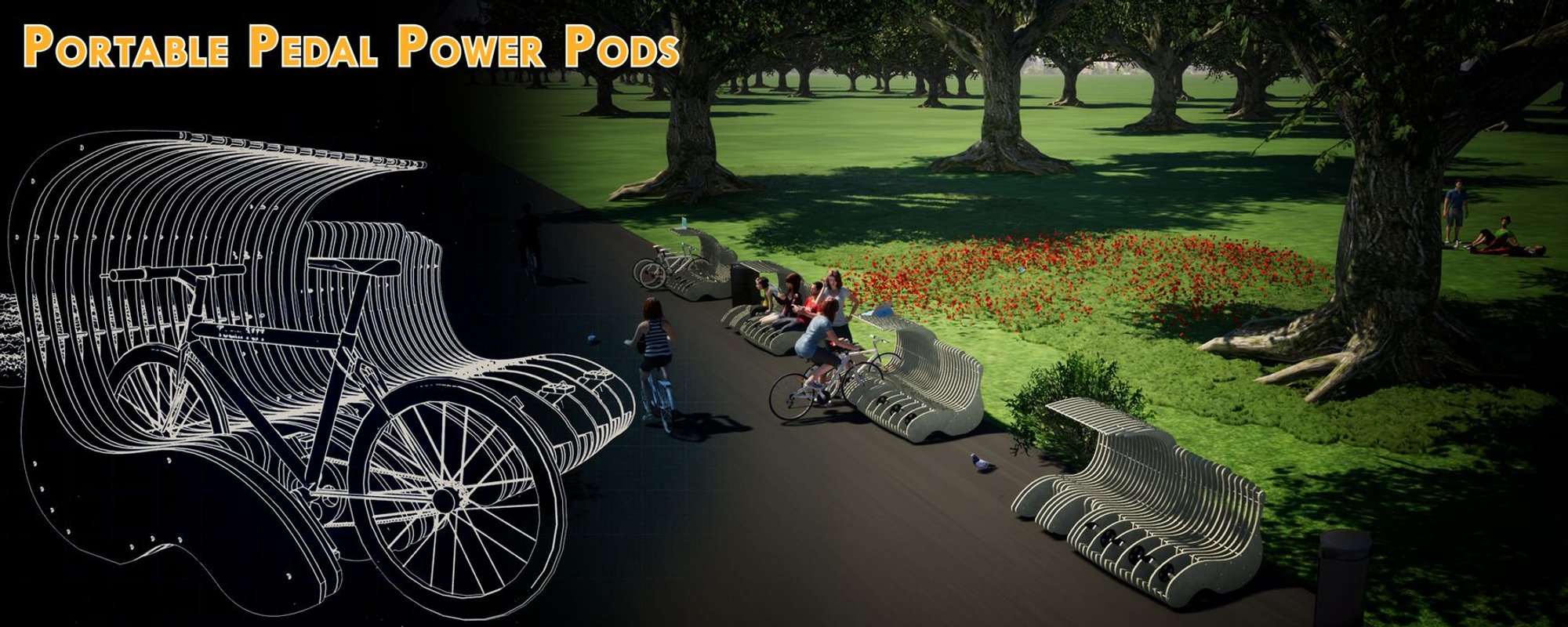
Portable Pedal Power Pods: Sustainable Urban Furniture for the Future
An eco-friendly pedal-powered urban furniture design combining fitness, renewable energy, and smart technology for healthier cities.

Energy consumption, pollution, and obesity are three of the most pressing global challenges of our generation. Addressing these issues requires innovative design solutions that merge sustainability, functionality, and public well-being. The Portable Pedal Power Pods, designed by Sean Johns and Nadia Lazaridou, reimagine urban furniture through the lens of sustainable architecture and public health. This forward-thinking project combines eco-friendly design, fitness, and renewable energy, transforming public spaces into hubs of health and sustainability.
Concept and Vision
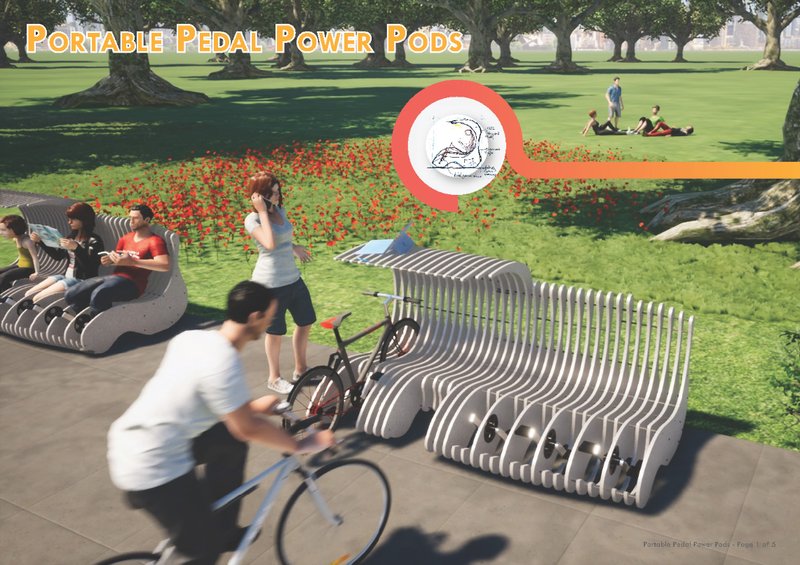
At its core, the Portable Pedal Power Pod is not just a bench — it is a multifunctional unit that acts as:
- An exercise machine encouraging physical activity.
- A charging hub for mobile devices and bicycles.
- A WiFi hotspot for digital connectivity.
- A secure bicycle lockup for urban commuters.
This multifunctionality aligns with the growing movement in urban architecture toward integrating technology, sustainability, and health-conscious design into everyday life.
Design Precedent and Inspiration
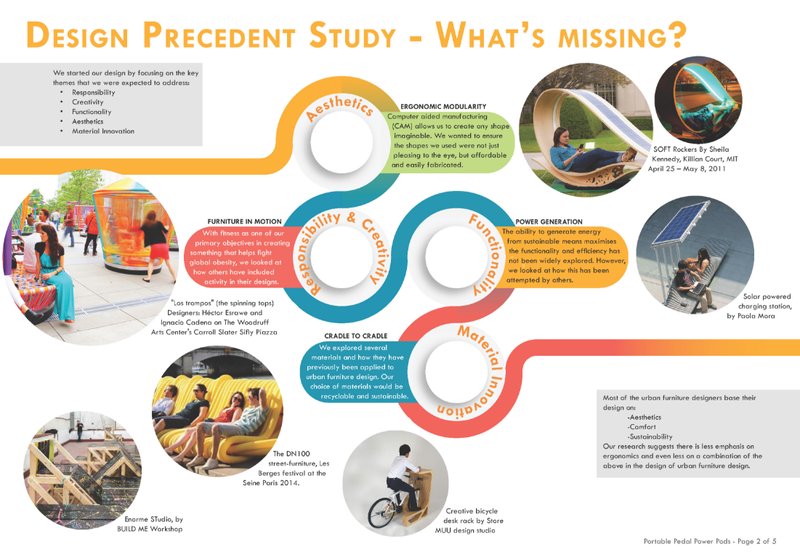
The project draws inspiration from key themes in design innovation: responsibility, creativity, functionality, aesthetics, and material innovation. Precedents such as Sheila Kennedy’s Soft Rockers, solar-powered charging stations by Paola Mora, and modular urban furniture designs have informed the development of the pods. However, Johns and Lazaridou push the concept further by combining ergonomic modularity with sustainable power generation and fitness promotion.
Material Innovation
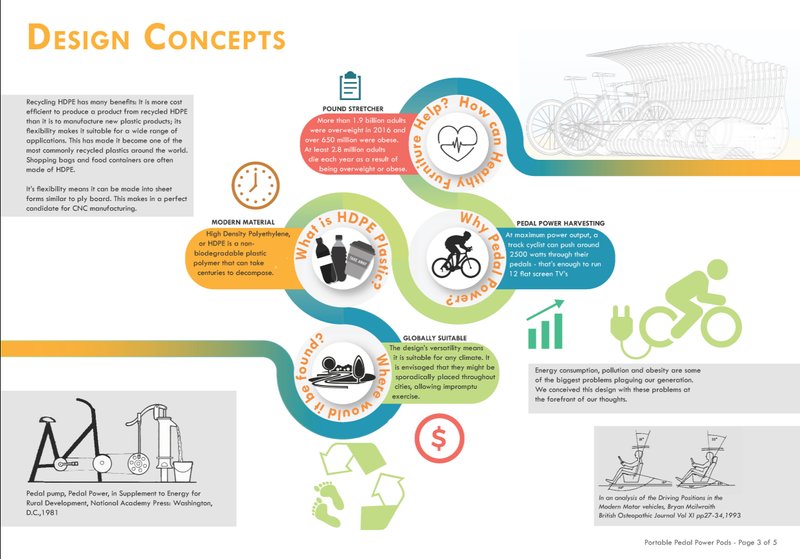
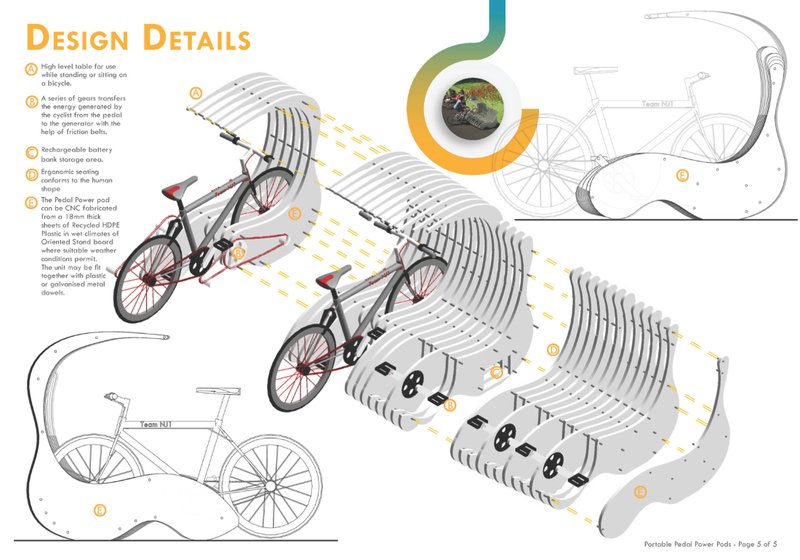
A crucial aspect of the pods is their construction from recycled HDPE (High-Density Polyethylene). This modern material is cost-effective, widely available, and suitable for CNC manufacturing. By transforming recycled plastics into durable, flexible, and ergonomic furniture, the design contributes to circular economy principles while reducing environmental impact.
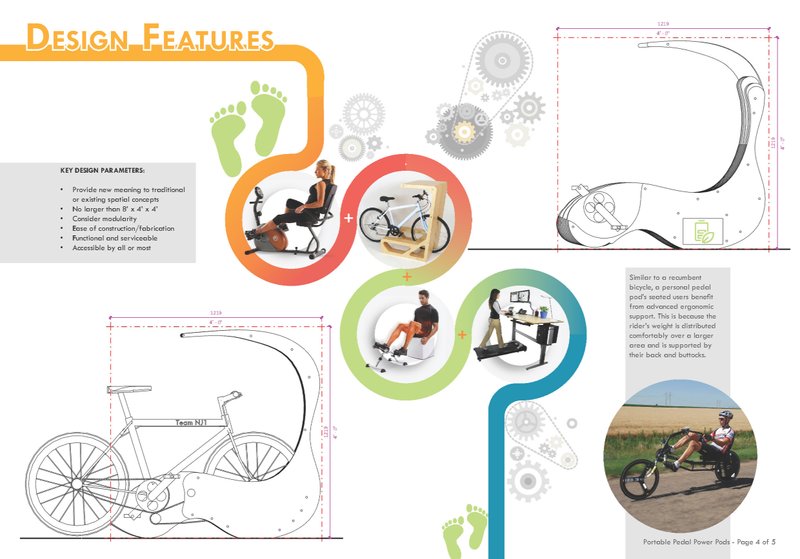
Functionality and Features
The Portable Pedal Power Pods embody a unique fusion of architecture, design, and sustainability. Key features include:
- Pedal Power Harvesting: Cyclists generate up to 2500 watts at peak, enough to power multiple devices or small appliances.
- Rechargeable Battery Storage: Energy harvested from pedaling is stored for later use.
- Ergonomic Seating: Inspired by recumbent bicycles, the design supports comfort during use.
- Smart Modularity: Units are scalable and adaptable, allowing easy installation across parks, campuses, and public spaces.
- WiFi & Charging Integration: A technological layer that enhances usability for modern urban life.
Global Relevance
With over 1.9 billion adults overweight worldwide, and pollution levels rising, projects like these are more relevant than ever. By situating the pods in urban parks, plazas, and campuses, cities can:
- Encourage impromptu exercise in public spaces.
- Reduce reliance on non-renewable energy.
- Enhance public engagement with sustainable infrastructure.
- Provide multifunctional urban seating that improves community well-being.
The Portable Pedal Power Pods by Sean Johns and Nadia Lazaridou present an innovative step forward in sustainable architecture and urban design. By merging fitness, renewable energy, and smart urban furniture, the project envisions healthier, cleaner, and more connected cities. It is a blueprint for the future of eco-friendly urban spaces, where design not only supports function but also empowers communities to engage with sustainability on a daily basis.




Popular Articles
Popular articles from the community

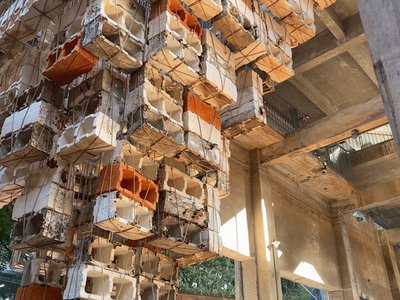
Inverted Architecture Installation by Studio Link-Arc: Exploring the Intersection of Architecture and Living Organisms
Inverted Architecture Installation by Studio Link-Arc blends mycelium, sustainability, inverted design, ecological cycles, and urban adaptive architecture in Shenzhen.
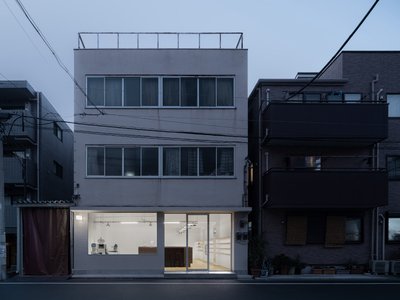
Atelier Macri Concept Store Interior Design by CASE-REAL
Atelier Macri store features a "ko" counter, walnut wood details, cork displays, blending retail, gallery, and seamless customer experiences.
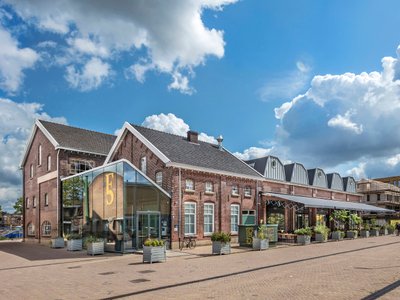
Fifth NRE Jazz Club – De Bever Architecten: Eindhoven’s Revitalized Cultural Hub
Historic gas factory transformed into Fifth NRE Jazz Club blending modern sustainability, jazz culture, dining, and heritage architecture seamlessly.

Free Architecture Competitions You Can Enter Right Now
No entry fees, real prizes. Here are the best free architecture competitions open for submissions in 2026.


Similar Reads
You might also enjoy these articles
Digital Façade Design for our cities’ urban fronts
Prima Facie - Result Story
Protecting avian biodiversity: Bird observatories to help spread awareness & save rare bird species.
Results for ‘Fly’ - Landscape design competition out now
Connecting with nature: Forest interpretation center in Australia's Wollemi National Park
‘Asatti’ - Landscape design competition - Result story


Explore Product Design Competitions
Discover active competitions in this discipline




The Global Benchmark for Architecture Dissertation Awards


Design challenge to equip cities with modern furniture


Packaging challenge - Design meets sustainability
Comments (0)
Please login or sign up to add comments
No comments yet. Be the first to comment!