
Quintana Roo Park by AIDIA Studio: A Landmark in Biophilic Urban Park Design
AIDIA Studio’s Quintana Roo Park reimagines biophilic urban park design for tropical climates through ecological sensitivity and cultural expression.

Transforming a Fairground into a Year-Round Public Sanctuary
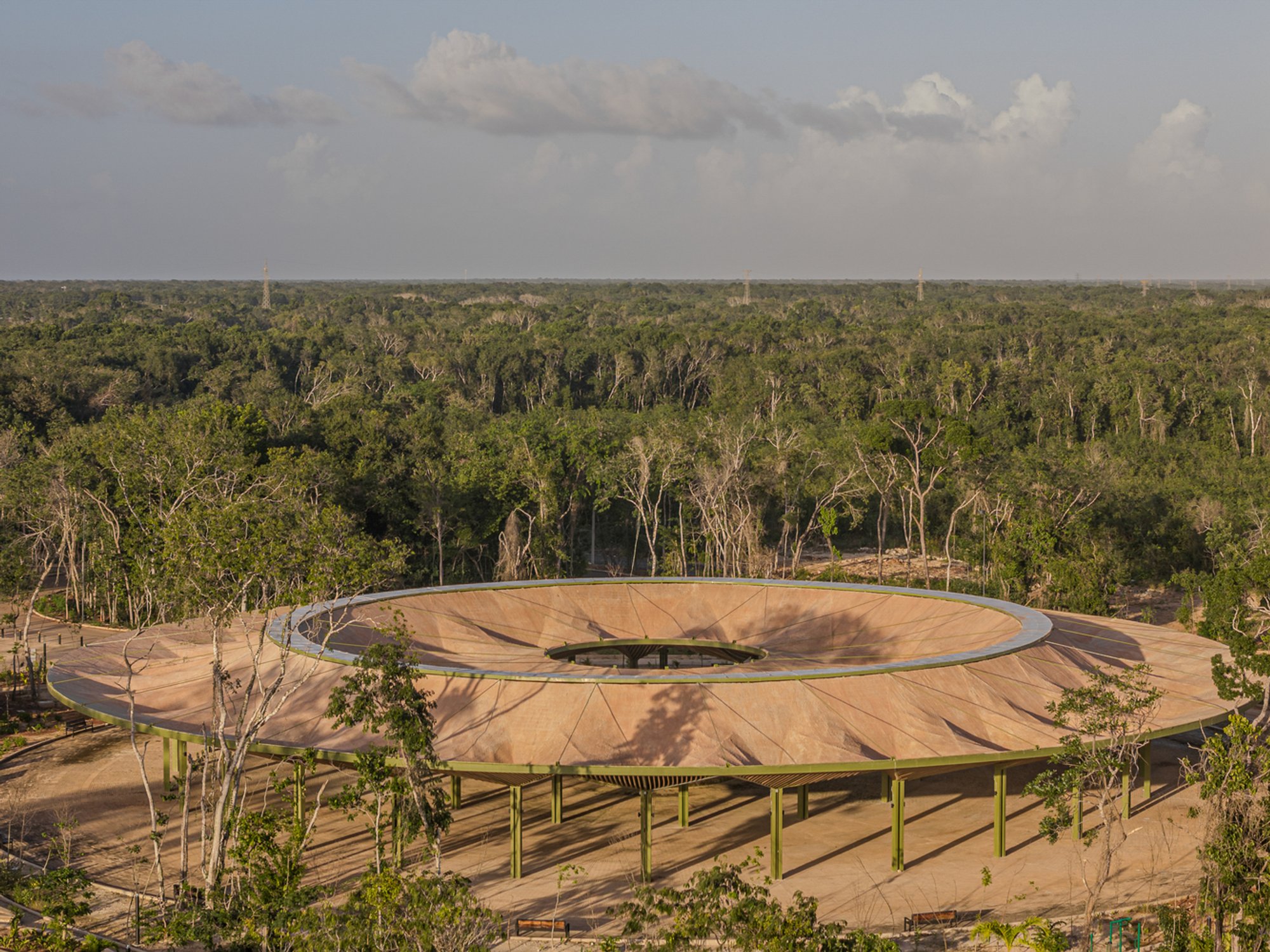
In the subtropical city of Chetumal, Mexico, Quintana Roo Park by AIDIA Studio redefines the potential of public space through an innovative approach to biophilic urban park design. Originally conceived to accommodate an annual fair, the 10-hectare site has evolved into a lush, multi-functional public park, deeply rooted in ecological sensitivity, cultural symbolism, and inclusive urban planning.
Contextual Design for Community and Climate
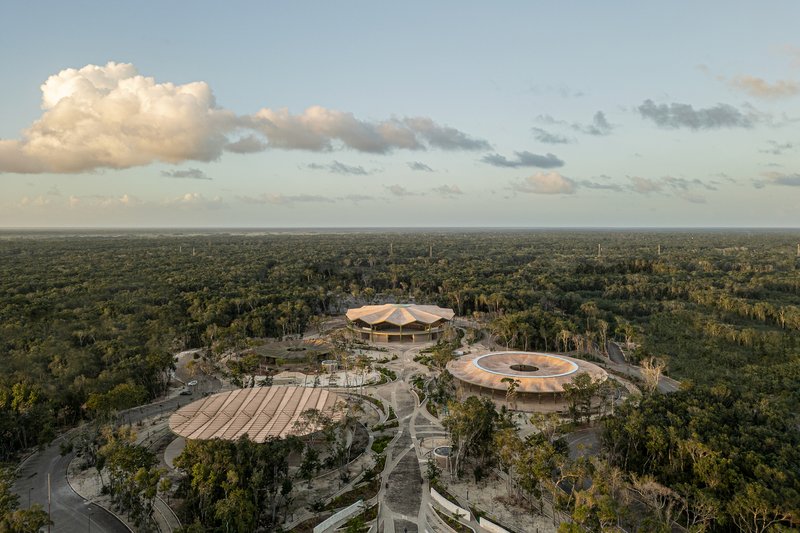
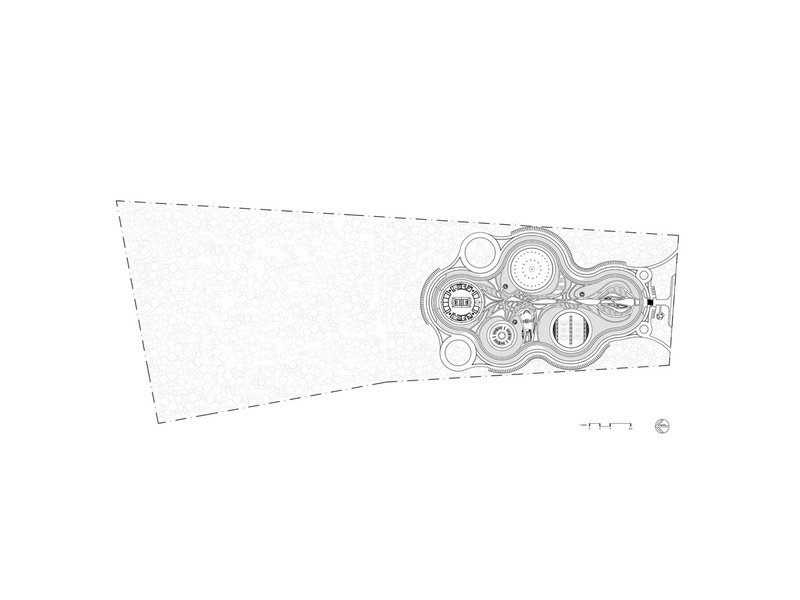
Nestled within the tropical jungle, the park is surrounded by dense natural growth, which posed both challenges and opportunities. AIDIA Studio embraced the unique environment, crafting a site plan that maximizes ecological preservation and user experience. A single entry point necessitated a creative solution—a looped road circuit along the site’s perimeter, complete with off-street parking and integrated 800-meter running and cycling tracks. This strategy distributes access equitably while respecting the integrity of the natural landscape.
A Network of Civic and Recreational Venues
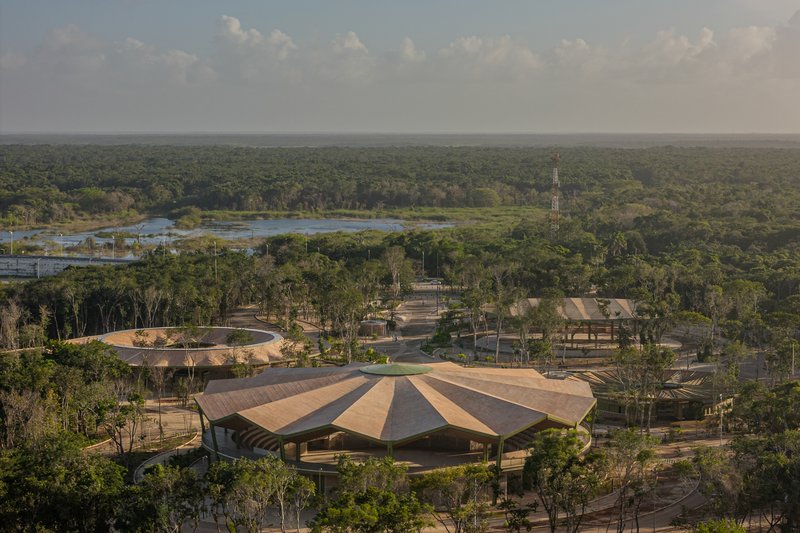
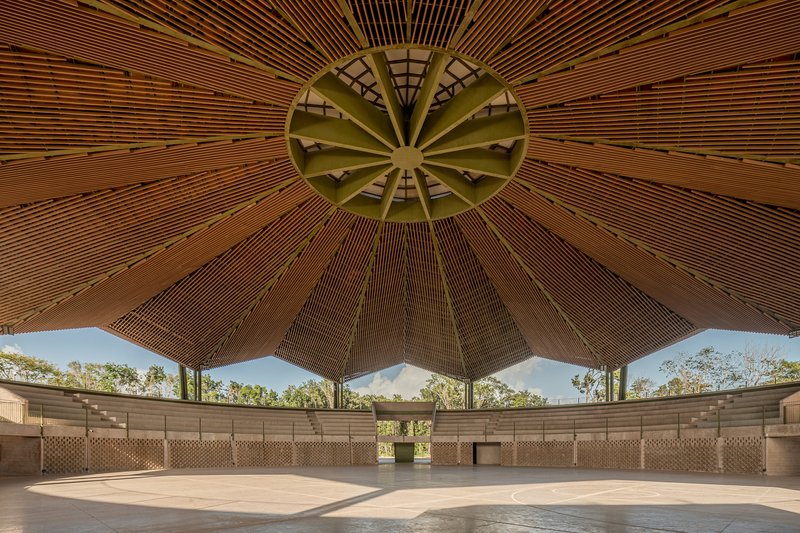
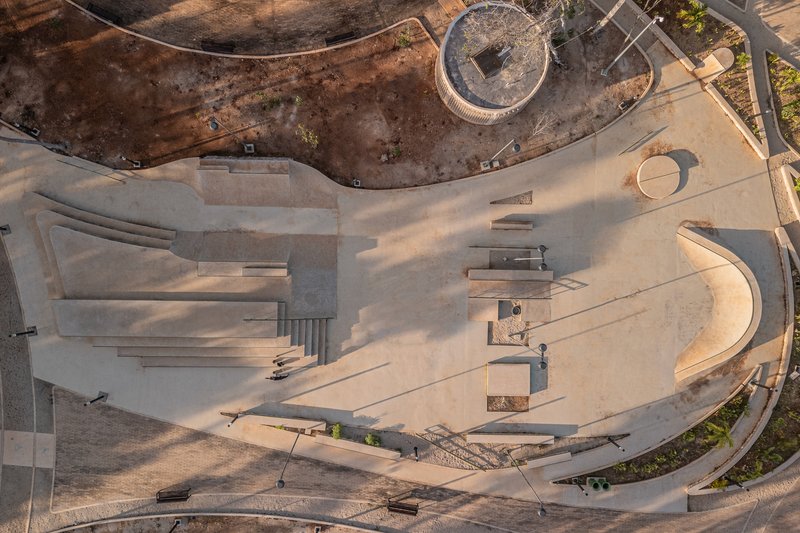
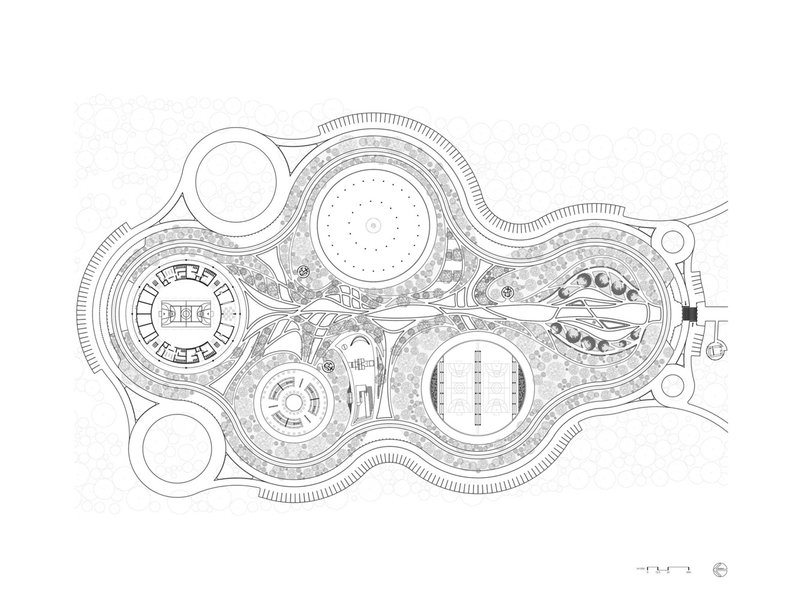
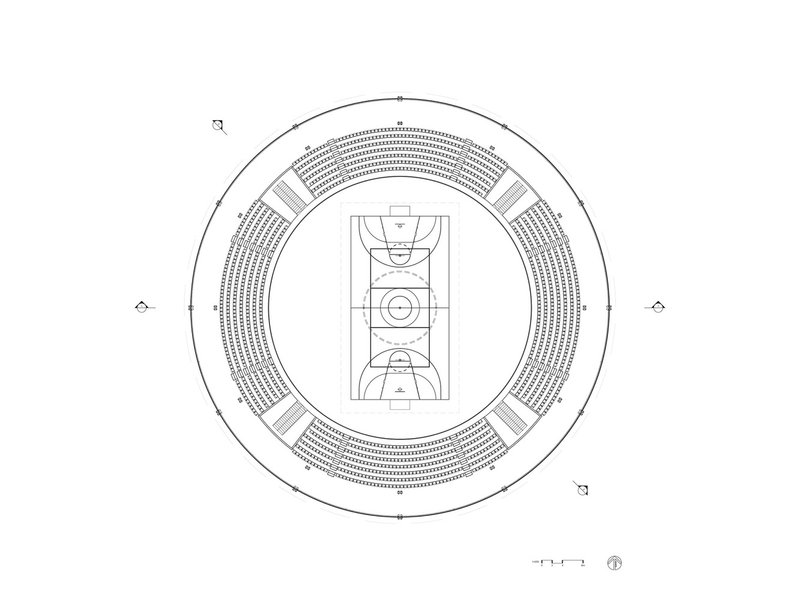
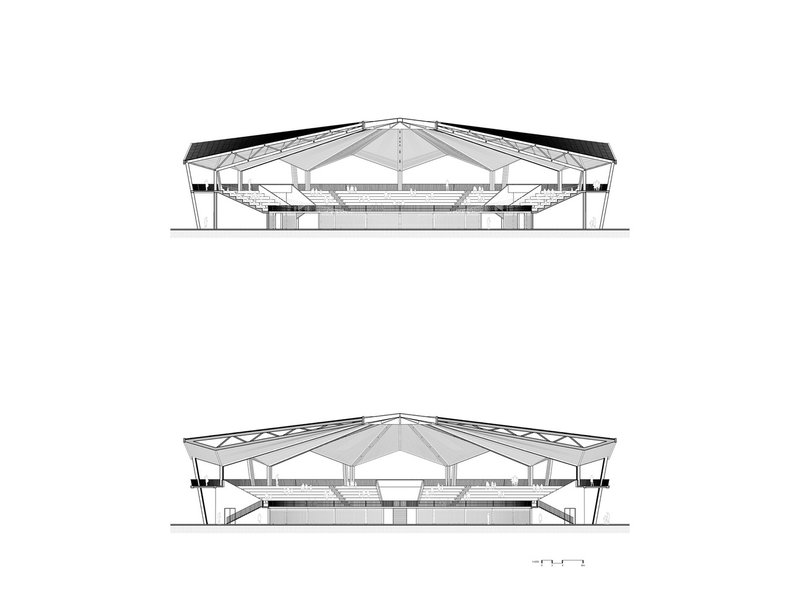
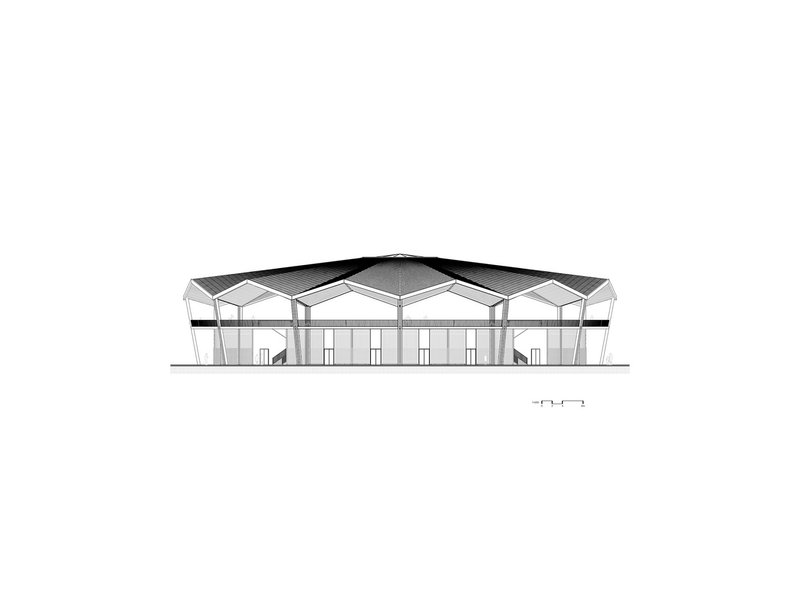
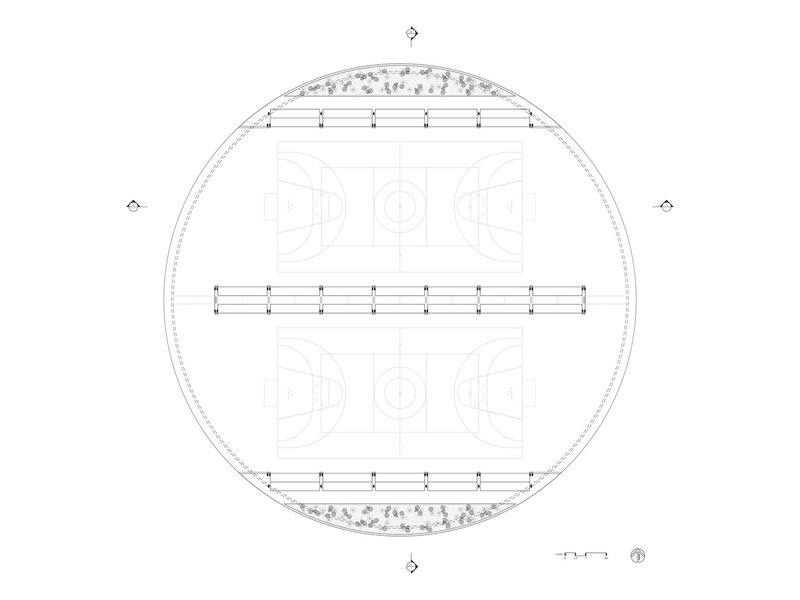
The design integrates a wide variety of programmatic elements, from a 1,000-seat arena for concerts and sporting events to multi-purpose pavilions, basketball courts, retail shops, and children’s playgrounds. The park also features a skate park, civic square, calisthenics equipment, and shaded gathering spaces. This low-density arrangement ensures generous green buffers between each facility, enabling airflow and passive cooling while inviting users to wander through a fluid, interconnected experience.
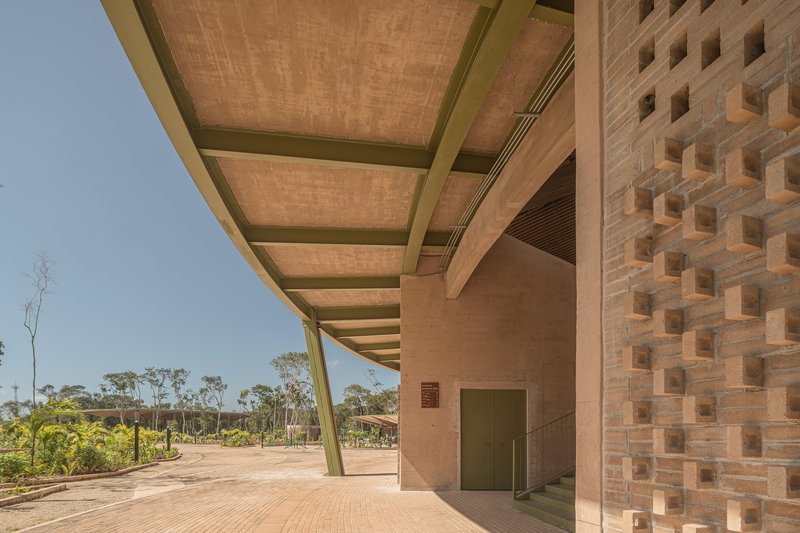
Organizing Space with Nature-Inspired Geometry
The circulation strategy is inspired by organic forms and radial geometries. Rather than adhering to a rigid grid, the park unfolds through a network of tangent arcs and circular nodes, softening the spatial transitions and allowing for a continuous loop through all venues. The entrance civic square, lined with eleven ancestral ceiba trees, signals the cultural significance of place, while streams and pathways guide visitors through shifting natural and built landscapes.
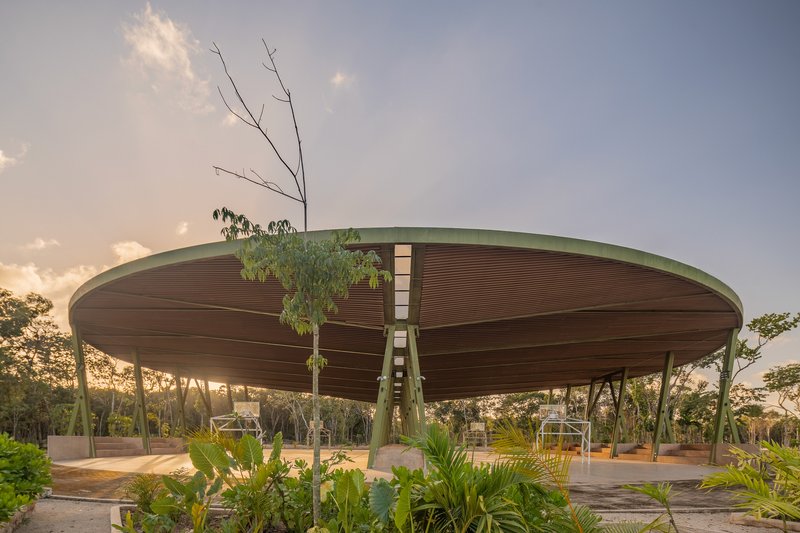
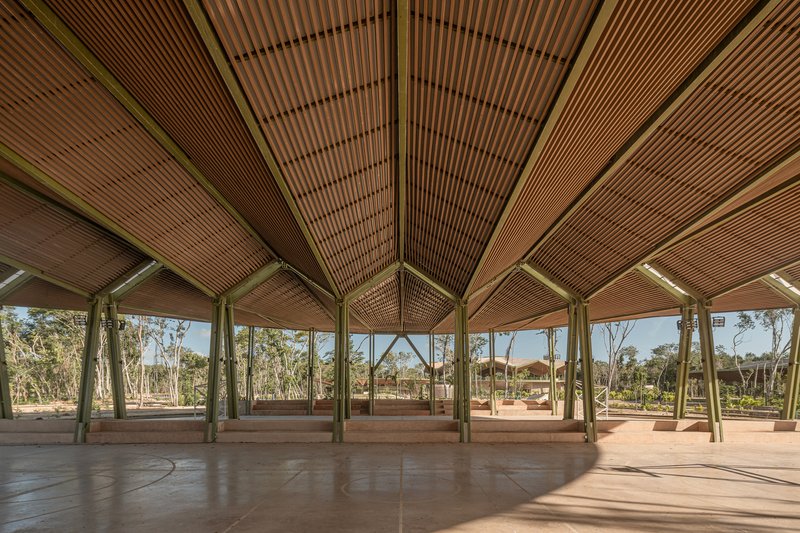
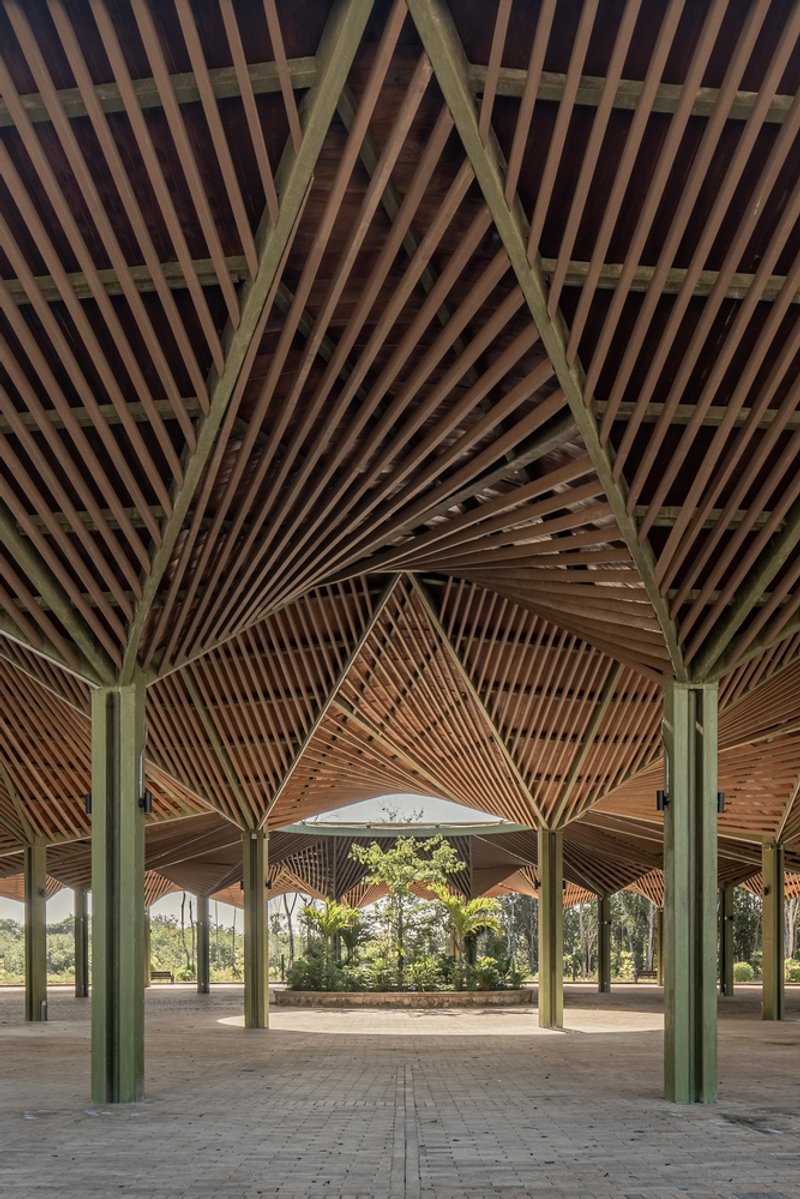
Advancing Biophilic Principles Through Design Innovation
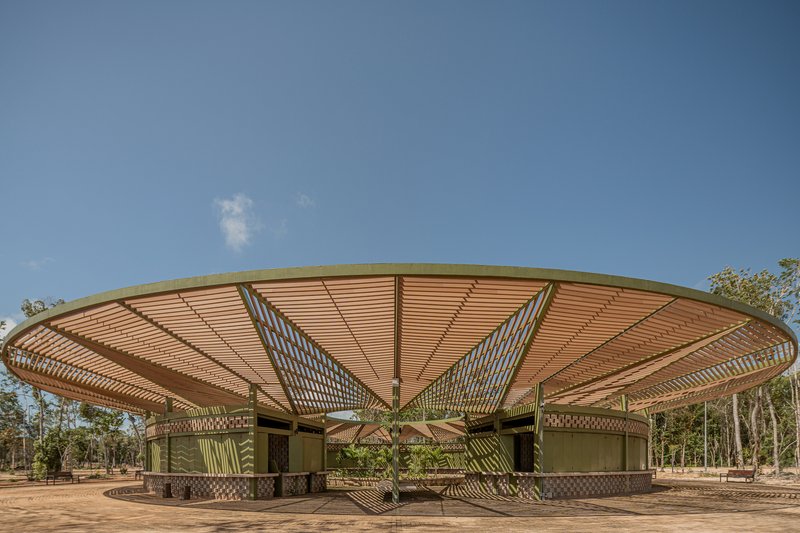
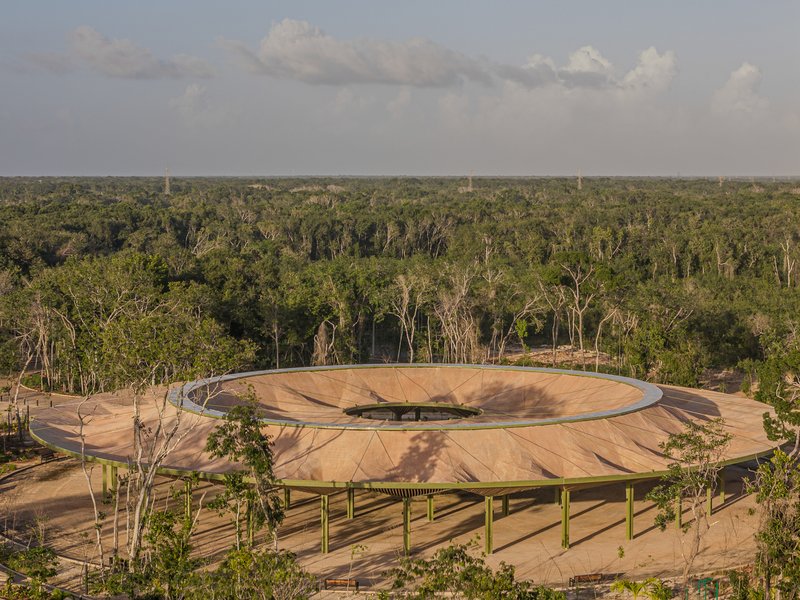
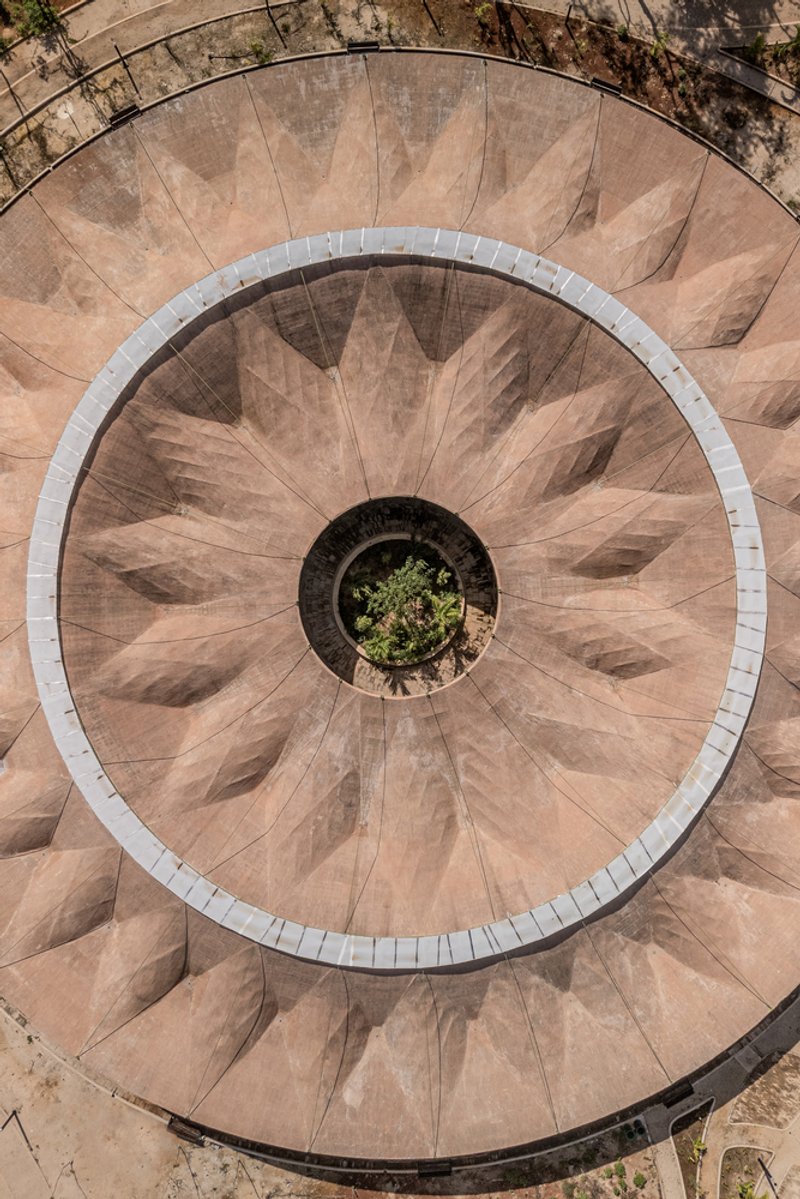
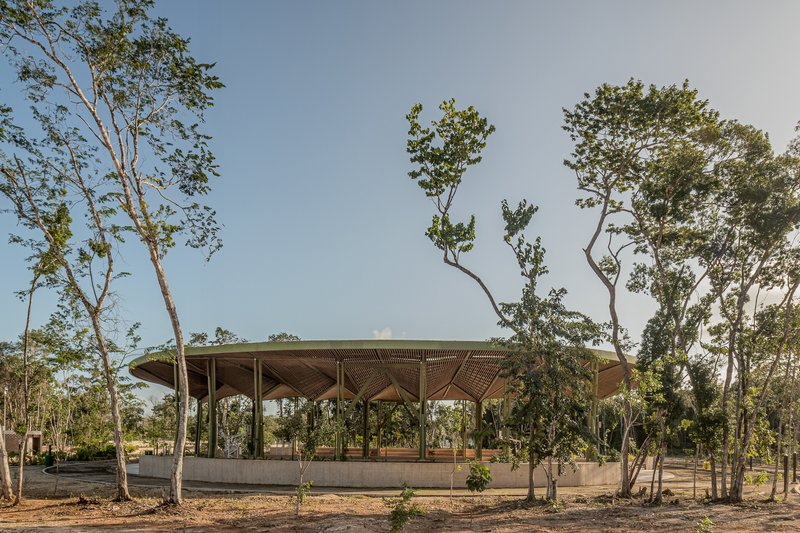
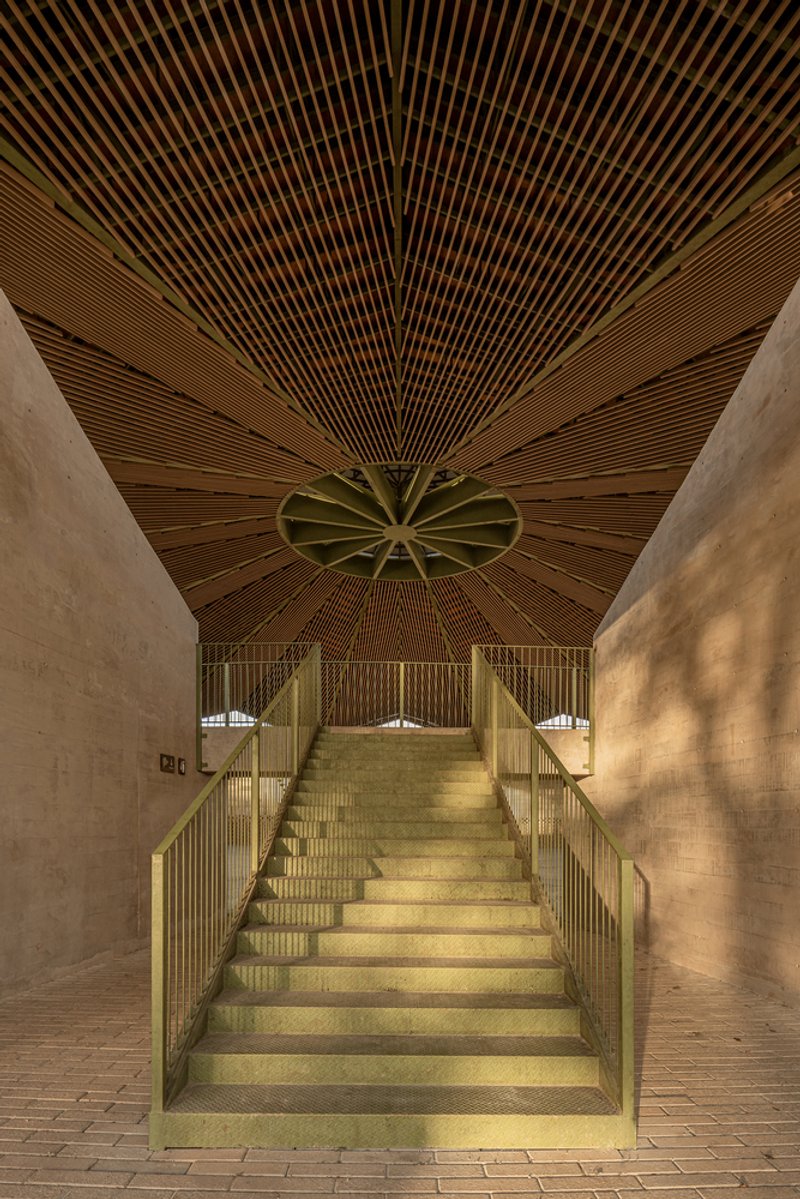
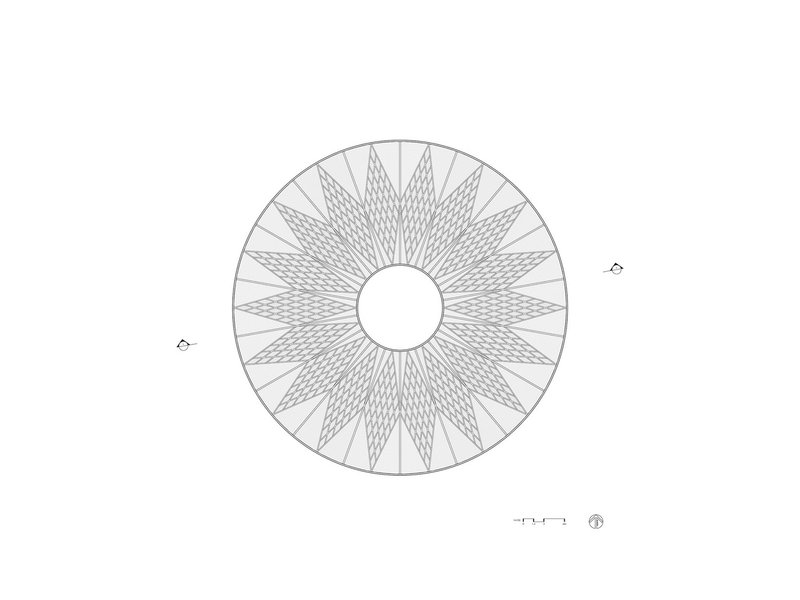
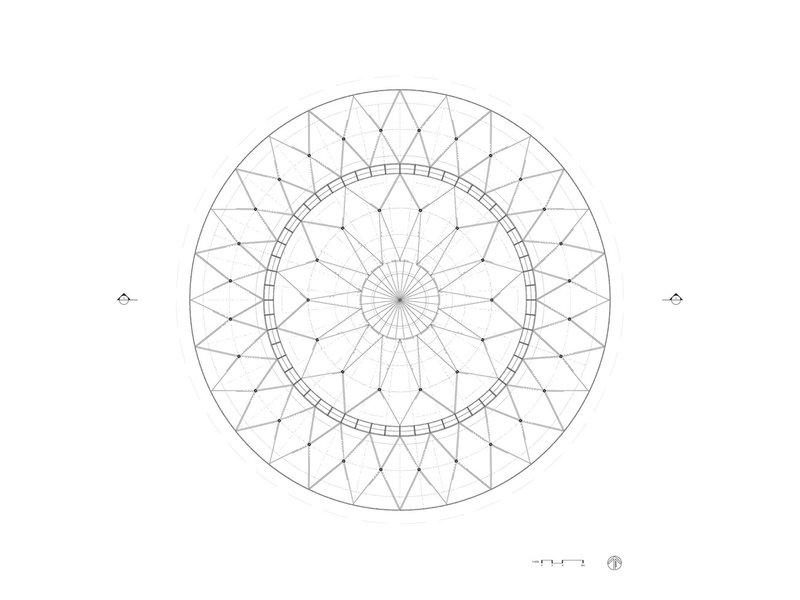
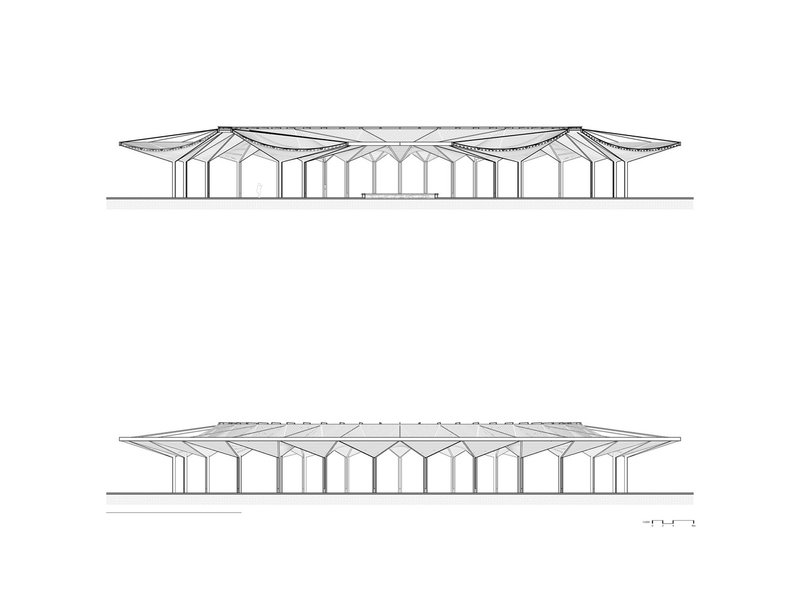
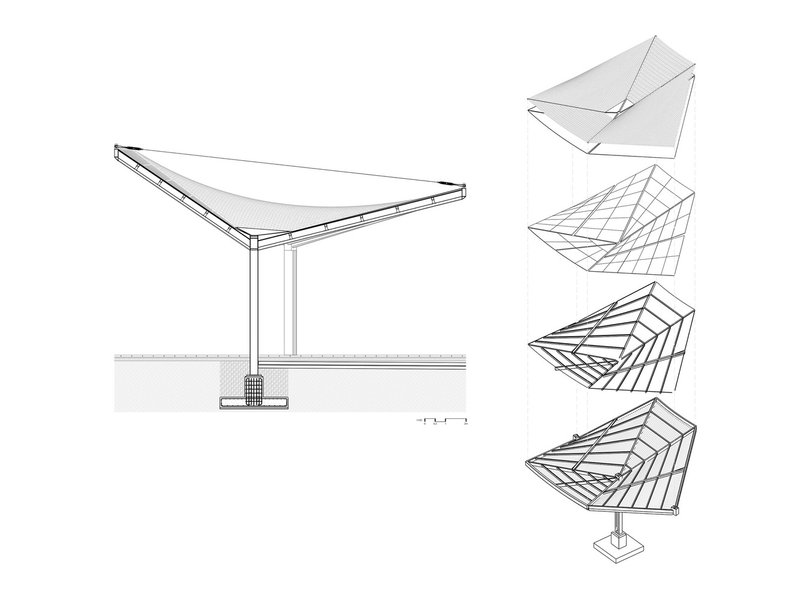
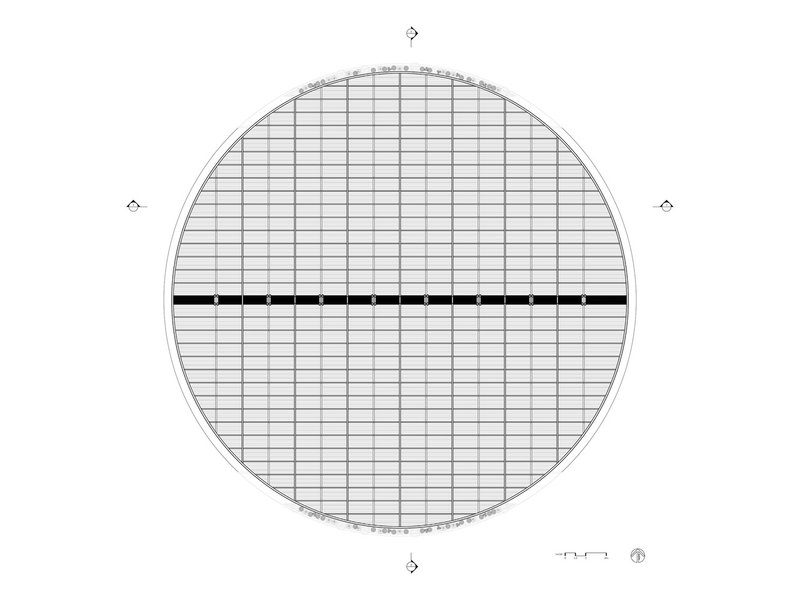
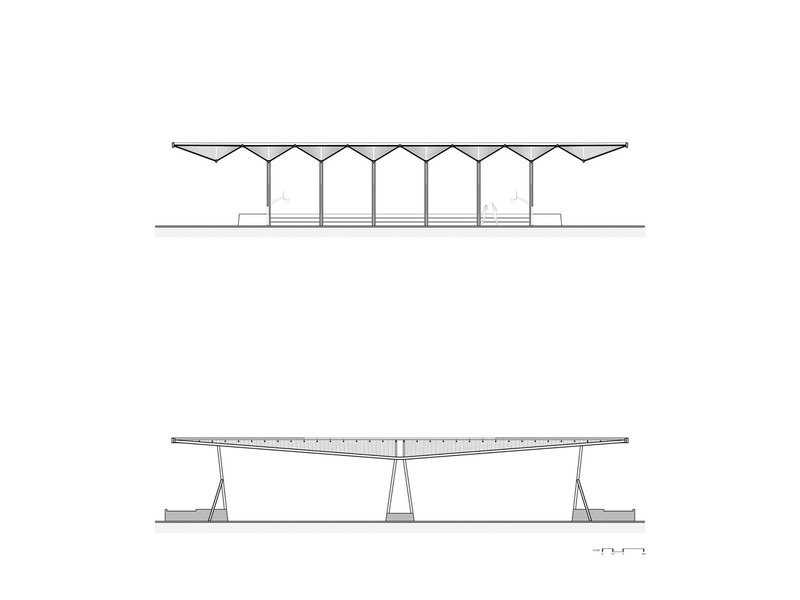
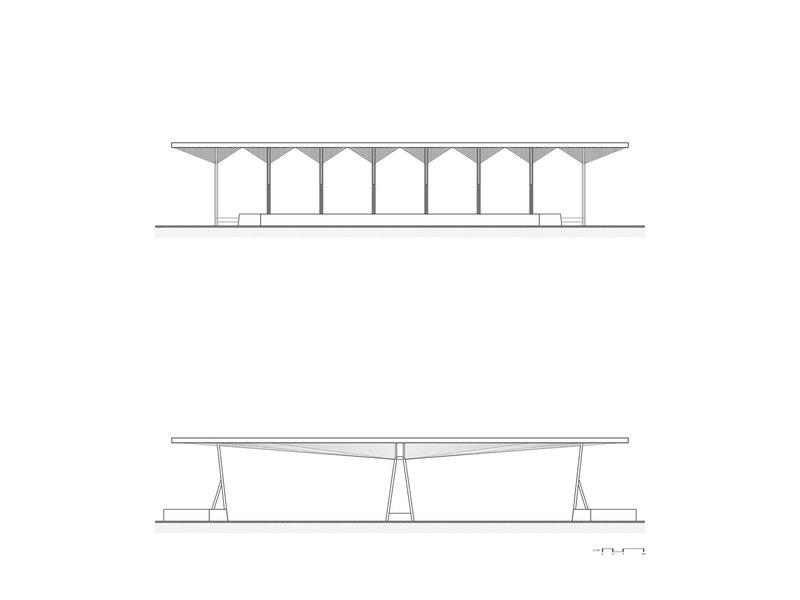
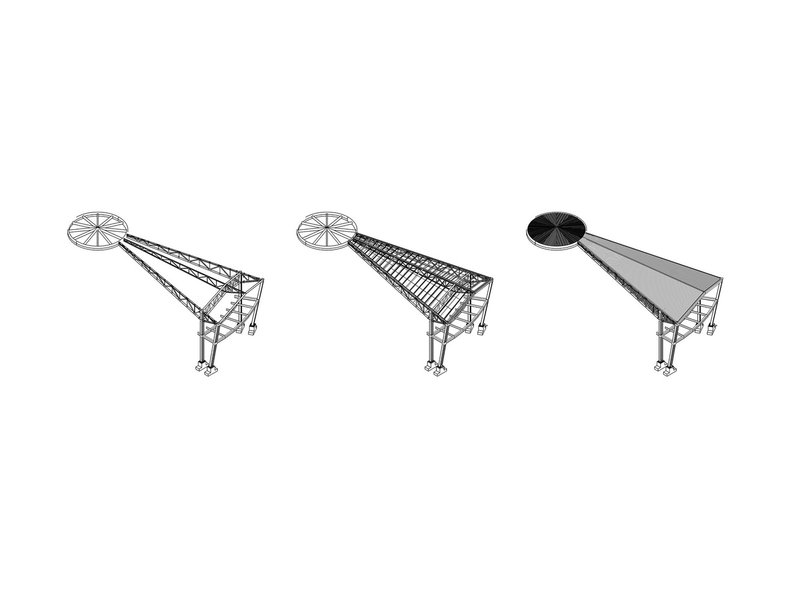
Biophilia is at the heart of the project’s conceptual and material development. A top-down planning approach ensures the masterplan aligns with ecological patterns, while a bottom-up design process considers individual sensory experiences. AIDIA Studio employed parametric design tools to derive formal solutions such as hyperbolic paraboloid roofs with circular footprints. These structures, optimized for both aesthetics and structural performance, reflect the flowing quality of the surrounding forest canopy.
Climate-Responsive and Regionally Grounded Materials
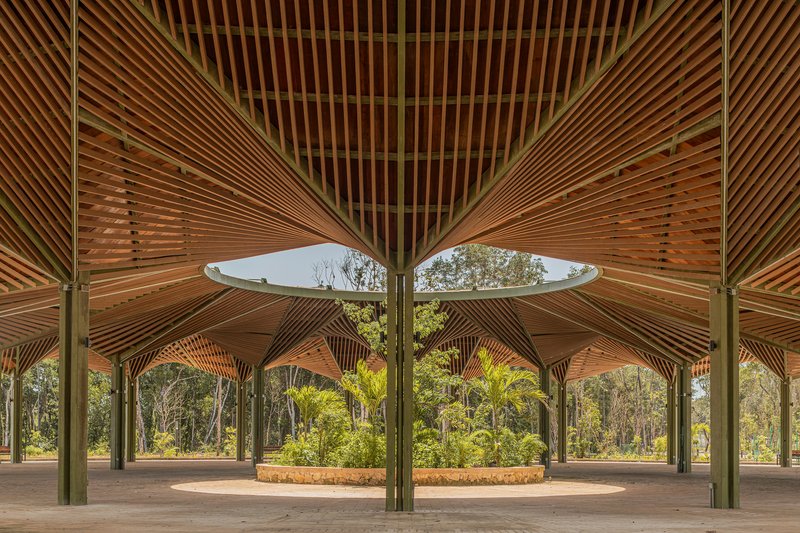
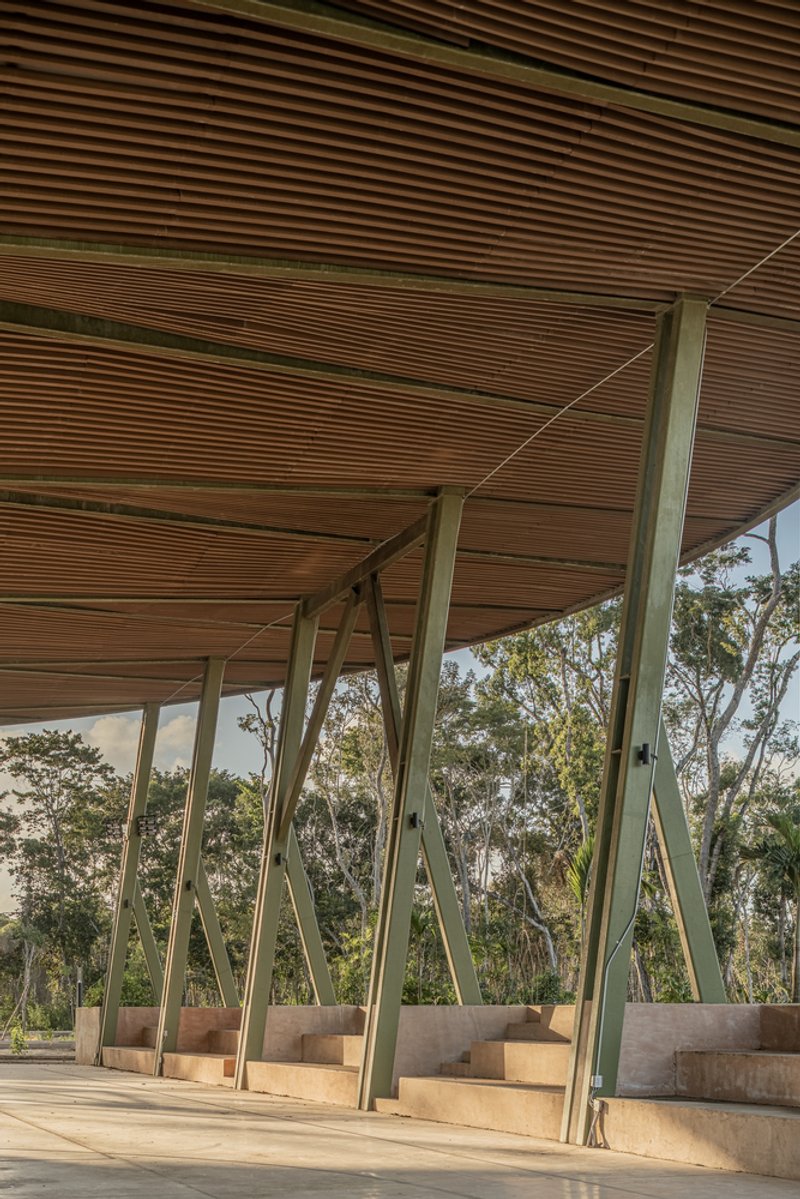
In response to the intense heat and humidity of the region, the architects chose light beige paving and finishes that mirror the local limestone. This palette minimizes thermal absorption while visually blending into the environment. Structures utilize lightweight metal frameworks, slender olive-green columns, and undulating wood detailing. The brick-patterned radial walls not only add tactile interest but also support cross-ventilation and passive cooling. Each element reflects a commitment to contextual materiality and climate responsiveness.
Modular Construction for Sustainable Growth
All park structures were designed with modularity in mind—streamlining construction, reducing costs, and allowing for future flexibility. This sustainable strategy aligns with the project's low-impact ethos while enabling scalable development in response to evolving community needs.
A New Model for Public Space in Tropical Climates
Quintana Roo Park is not just a civic project—it is a biophilic urban park design blueprint for the future. It bridges community programming with environmental mindfulness, offering a recreational landscape that celebrates cultural heritage, encourages active lifestyles, and reintroduces the public to the rhythms of nature. In doing so, it positions Chetumal as a leader in eco-conscious urban design across Latin America.
All photographs are works of Andrés Cedillo




Popular Articles
Popular articles from the community

Rede Arquitetos Builds an Open-Air School in Fortaleza That Doubles as a Neighborhood Living Room
Educar II SESC-CE folds sports, dance, and community gathering into a courtyard campus wrapped in mesh and tropical color.
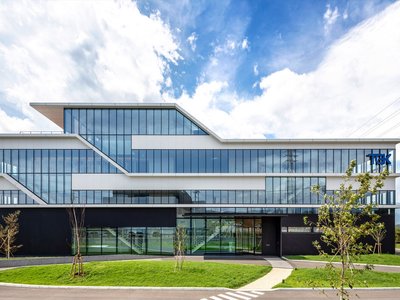
TGK Nirasaki Plant: A Smart Factory Blending Technology, Landscape, and Wellness
Smart factory in Japan blending IoT manufacturing, scenic trail design, natural ventilation, and landscape integration to enhance user experience and sustainability.

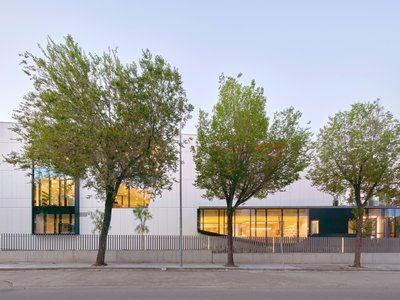
Magic Box Office Barcelona Innovative Sustainable Workplace Design
Innovative sustainable office design featuring triangular form, ceramic façade, flexible interiors, natural light optimization, and creative workspace for modern work culture.


Similar Reads
You might also enjoy these articles

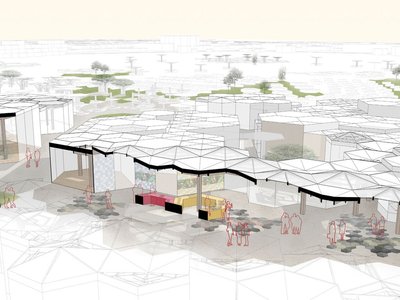
20 Most Popular Commercial Architecture Projects of 2025
From sustainable market concepts to heritage factories, the commercial buildings and proposals that drew the most attention on uni.xyz this year.
Free Architecture Competitions You Can Enter Right Now
No entry fees, real prizes. Here are the best free architecture competitions open for submissions in 2026.

Top 15 Architecture Competitions to Enter in 2026
From student-friendly idea competitions to prestigious international awards, here are the best architecture competitions open for entries in 2026. Updated regularly.

DIY & Engineering in Computational Design : Enter the BeeGraphy Design Awards
Showcase Your Creativity with Computational Design and Open Source Projects


Explore Architecture Competitions
Discover active competitions in this discipline




The International Standard for Design Portfolios


The Global Benchmark for Architecture Dissertation Awards


The Global Benchmark for Graduation Excellence


Challenge to reimagine the Iron Throne
Comments (0)
Please login or sign up to add comments
No comments yet. Be the first to comment!