

O'Sullivan Skoufoglou Architects Turn a Dark Victorian Terrace into a Live-In Gallery in Clapham
RAW House reconfigures 140 square meters of south London terraced housing into a hybrid family home and art exhibition space.


Most gallery-residence hybrids treat one function as the host and the other as a guest. RAW House, completed in early 2023 by O'Sullivan Skoufoglou Architects, refuses that hierarchy. The Clapham project for creative directors Tanya Grigoroglou and Rupert Worrall of RAW Editions takes a formerly gloomy Victorian terraced house and reorganizes its 140 square meters so that domestic life and art curation share equal footing, literally floor by floor. The ground level becomes a gallery and social space, the basement becomes the kitchen and living heart, and the upper floors hold bedrooms. No extension was added. The entire transformation happens within the existing envelope, which makes the project both architecturally disciplined and, at a construction cost of £2,800 per square meter, unusually efficient.
What makes this project genuinely interesting is the way it solves the tension between openness and privacy through material specificity rather than spatial excess. Sliding shutters, a carefully choreographed staircase, and a material palette that ranges from Portuguese flamed granite to red terrazzo and linseed-oil-stained birch plywood give each zone its own character without walling anything off. The architects chose not to build a white-cube gallery; instead, they used muted pinks, yellows, and greens that double as a domestic backdrop and as a curatorial surface. It is a house that treats art display and family dinner with equal seriousness.
The Rear Elevation as a Vertical Manifesto


The rear facade of RAW House tells you almost everything about the project's logic before you step inside. Four apertures are stacked vertically in the London stock brick wall, each scaled differently to serve the room behind it. At the basement level, triangular oriel windows push outward to scoop light and garden views into the kitchen below grade. At the ground floor, floor-to-ceiling glazing transforms the gallery into a lantern visible from the garden at dusk. It is an elevation that reads as a sectional diagram: you can see how the house is zoned just by counting windows.
The exposed red downpipe running the full height of the facade is a minor gesture that says a lot about the architects' comfort with honest detailing. Rather than concealing services, they let infrastructure register as a vertical accent against the brickwork. The terraced garden below, designed with landscape consultant GRDN, uses angular hardscaping and climate-resilient planting to extend the house's sculptural sensibility outdoors without the cost and carbon of a ground-floor extension.
Gallery Ground: Where Art Meets Daily Life


The ground floor is the project's public face. Tall windows flood the space with natural light, and the red terrazzo fireplace wall anchors the room with a bold, unapologetic warmth. This is not a neutral white box waiting for art to give it personality; the architecture is already making a statement, and the artwork has to hold its own against it. That is a deliberate provocation. The couple wanted a gallery that felt lived-in, and the architects delivered a room where a framed piece and a crackling fire coexist without awkwardness.
Sliding shutters allow the gallery to open toward or close off from adjacent spaces, so the room can host a private viewing one evening and a children's playdate the next morning. An architectural model on a pedestal, illuminated by warm gallery lighting, sits comfortably in a room that is also clearly someone's living room. The pale timber flooring runs continuously, tying the gallery identity to the domestic one.
The Basement Kitchen as the True Living Room


By pushing the kitchen and dining area into the basement, the architects freed the ground floor for its gallery function. But this is no compromise. The basement kitchen is arguably the most materially rich room in the house. A veined marble countertop determines, through a zero-waste logic, both the height of the backsplash and the length of the units. Pale green cabinetry, imported from Danish maker Brouns and Co, pairs with inlaid concrete floor tiles to create a space that feels earthy and precise at the same time.
The two triangular oriel windows are critical here. Without them, a below-grade kitchen in a Victorian terrace would be dim and oppressive. Instead, these geometric openings frame oblique garden views and pull daylight deep into the plan. A glazed door opens directly to the courtyard, dissolving the boundary between a below-ground room and the landscape above it. Red curved faucets and open shelving visible through to the hallway add small moments of color and visual depth that keep the eye moving.
Staircase as Threshold


In a house where public and private programs are stacked rather than spread, the staircase becomes the primary instrument of spatial transition. O'Sullivan Skoufoglou treated it accordingly. White plaster surfaces, a slender metal handrail with thin circular details, and pale painted treads give the stair a lightness that contrasts with the heavier material palette elsewhere. It feels more like a gallery corridor than a domestic stair, which is exactly right: you are moving between modes of inhabitation as you ascend.
At the upper level, a plywood-lined opening and a white balustrade allow visual connection between floors without sacrificing acoustics or privacy. The stair opening acts as a kind of internal light well, pulling illumination down from the new mansard roof above. These are simple moves, but they accumulate into something that makes a 140-square-meter terraced house feel considerably more generous than its footprint.
Private Quarters: Bedrooms and Bathrooms


The upper floors belong to the family. A master bedroom on the first floor and children's rooms on the second, within the new mansard, are quieter in palette but no less considered. Built-in white storage cabinets and a timber platform bed with concealed skylight above show the same obsessive detailing found downstairs, just turned down in volume. The children's rooms use dark curtains and autumn-toned textiles to create cozy enclosures that contrast with the openness of the gallery below.


Each floor has its own bathroom, and the architects used these small rooms as opportunities for material experimentation. Matte-colored tiles in cream, brown, and pale pink create distinct identities floor by floor, while bespoke circular door pulls in black recur throughout, providing a thread of continuity. A white metal-framed vanity in one bathroom reads as furniture rather than fixture, reinforcing the gallery-like precision that runs through the entire house.
Study and Threshold Moments


A small study tucked behind dark timber paneling is one of the house's quieter pleasures. A horizontal window frames a courtyard view, turning the desk into a place where work feels deliberate rather than residual. Linseed-oil-stained plywood lines the walls, giving the room a warmth and density that is completely different from the airy gallery one or two floors away. It is a reminder that hybrid living requires not just big public gestures but also small, focused rooms where concentration is possible.


Thresholds throughout RAW House are treated with unusual care. A stepped transition between tiled and terrazzo flooring marks the shift from entry to dining zone. Glazed doors with sidelights frame views to the courtyard and its concrete steps. A timber lattice screen filters garden light. None of these moments are structurally necessary; all of them are architecturally meaningful. They slow you down and make you aware of the boundary you are crossing, which is the whole point of a house that negotiates public and private with every door.
Doorways and Corridors as Curatorial Devices


Walk through RAW House and you notice that doorways are rarely just openings. They frame sequences: a hallway terminates in a framed botanical print; a staircase corner reveals a light switch beside a precisely turned handrail bracket. The architects understand that in a gallery-home, every wall is a potential display surface, and every sightline is a curated view. Even the corridors, lined with pale oak flooring and white walls, function like gallery circulation, connecting rooms while offering their own moments of pause.
Plans and Drawings


The floor plans confirm what the photographs suggest: a compact, vertically organized house where each level serves a distinct programmatic role. The basement plan shows the kitchen and dining area flanked by the angled oriel extensions that bring light below grade. The ground floor plan reveals the gallery's openness and its relationship to the central stair. Upper plans show bedrooms tightening around the stair core, with the angular balcony on the first floor providing a small outdoor moment. The section drawings are particularly revealing, exposing the full four-story stack from basement seating area to pitched mansard roof, with the chimney running as a continuous vertical spine.
The front elevation drawing shows the house's public face: a narrow, symmetrical Victorian facade with dormers marking the mansard addition. It is deliberately modest, giving no hint of the spatial complexity behind it. That restraint is strategic. In a terraced street, the architecture of transformation should be invisible from the front and legible only from the garden and the interior.
Why This Project Matters
RAW House matters because it demonstrates that the gallery-home hybrid does not require a warehouse conversion, a rural site, or a bloated budget. It can happen inside the constraints of a narrow Victorian terrace, within 140 square meters, for under £400,000 in construction costs, and without a single square meter of extension. By working entirely within the existing envelope, O'Sullivan Skoufoglou Architects produced a lower-carbon alternative to the typical London rear-extension playbook, proving that spatial ambition and environmental responsibility are not opposed.
More broadly, the project offers a persuasive model for how architecture can support the blurred boundaries between work, life, and creative practice that define how many people actually live now. The sliding shutters, the stacked program, and the material richness calibrated room by room all serve a household that does not separate art from breakfast. That condition is increasingly common, and RAW House addresses it with intelligence, generosity, and not a single white wall too many.
RAW House by O'Sullivan Skoufoglou Architects. Clapham, London, United Kingdom. 140 m². Completed 2023. Photography by Ståle Eriksen.
About the Studio
Share Your Own Work on uni.xyz
If projects like this are the kind of work you want to make, uni.xyz is a place to publish your own, find collaborators, and enter design competitions.


Popular Articles
Popular articles from the community

Opera by the Sea Estonia: Three Shells Dissolving Architecture into Tallinn's Coastline
A winning opera house proposal replaces monumental form with interconnected shells that blur the boundary between building, park and Baltic Sea.
Temporary Home for Dogs: A Reversed Zoo Rethinks Animal Shelter Architecture
In Bucharest, a sinuous corridor and freed landscape flip the logic of containment, designing a shelter that works to make itself unnecessary.
Extended Shell: Retrofitting Kolkata's Balconies as Living Urban Thresholds
A modular retrofit system recovers the social and environmental intelligence of Kolkata's historic verandas for contemporary Park Street residents.
Tsunami Convergenics: Turning Catastrophic Ocean Forces into Underwater Housing Infrastructure
A speculative underwater settlement off the coast of Onagawa, Japan, treats tsunamis and typhoons as energy sources rather than threats.

Similar Reads
You might also enjoy these articles

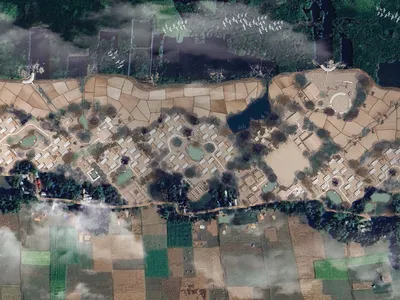
Hodi-Mandai Geram
Project Function: Preservation and revitalization of the Intangible heritage and socio-spatial identity of the Hodi by Housing, Cultural Memory Center, Sacred Grove, landscape, local tourism economy

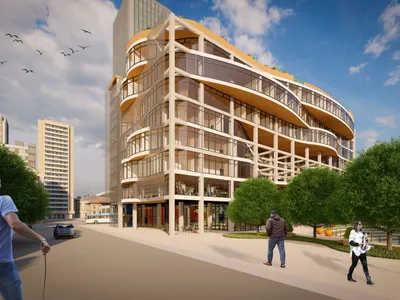
Olio Towers: A Mid-Rise for Performers That Fuses Housing, Rehearsal, and Stage
Located blocks from Houston's Theater District, this modular tower stacks living units around a central performance atrium.
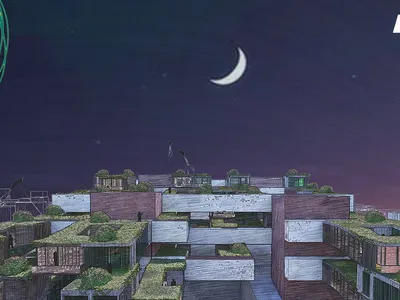
Oasis: Modular Green Housing Carved into Dhaka's Urban Fabric
A shortlisted Plugin Housing entry reclaims unauthorized settlements in Dhaka with stepped concrete volumes, green roofs, and ventilation-driven design.

Black Hole: A Floating Megastructure for the Post-Physical Era
Emiliano Mazzarotto envisions a spherical, self-scaling arena where e-sports, digital hotels, and holographic stadiums replace traditional public space.

Explore Architecture Competitions
Discover active competitions in this discipline

Challenge to reimagine the Iron Throne

Photograph architecture without architects

Illustrate the lost glory of Angkor Wat - Render Challenge

Design challenge to reuse E-waste
Comments (0)
Please login or sign up to add comments
No comments yet. Be the first to comment!